

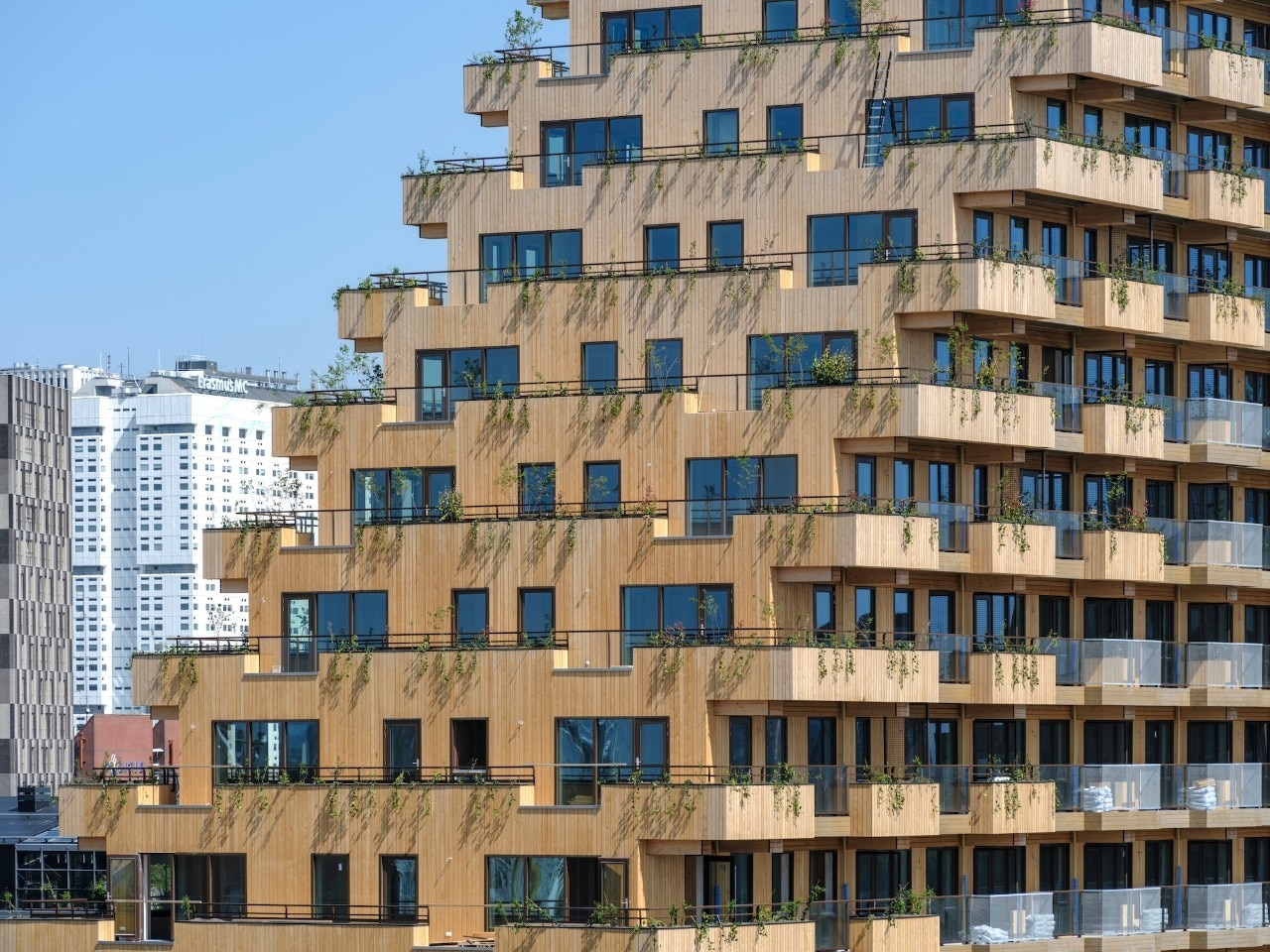

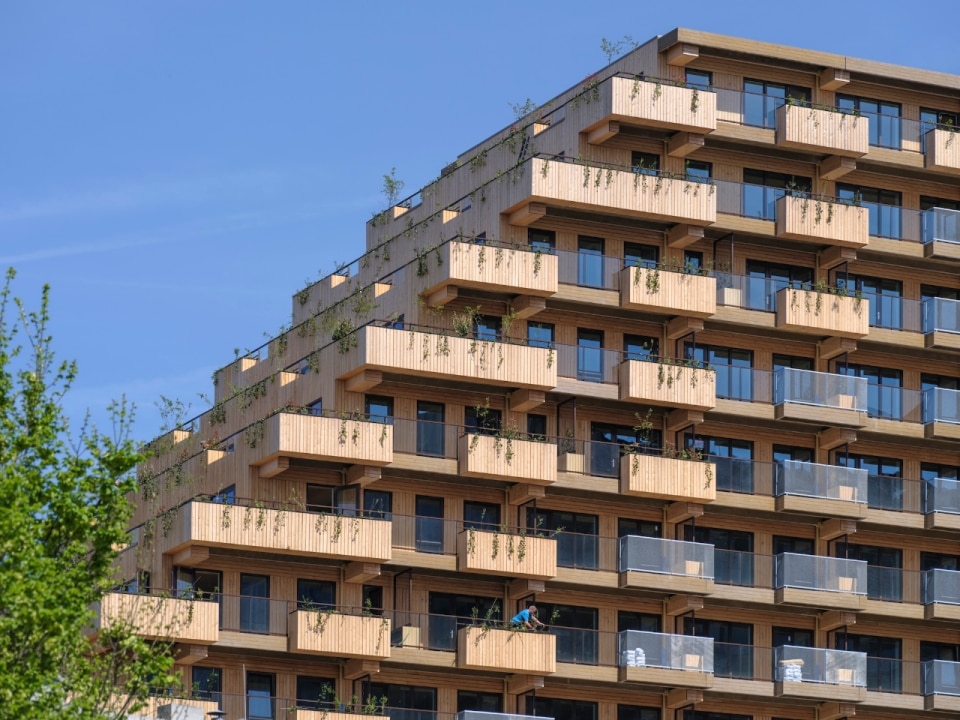
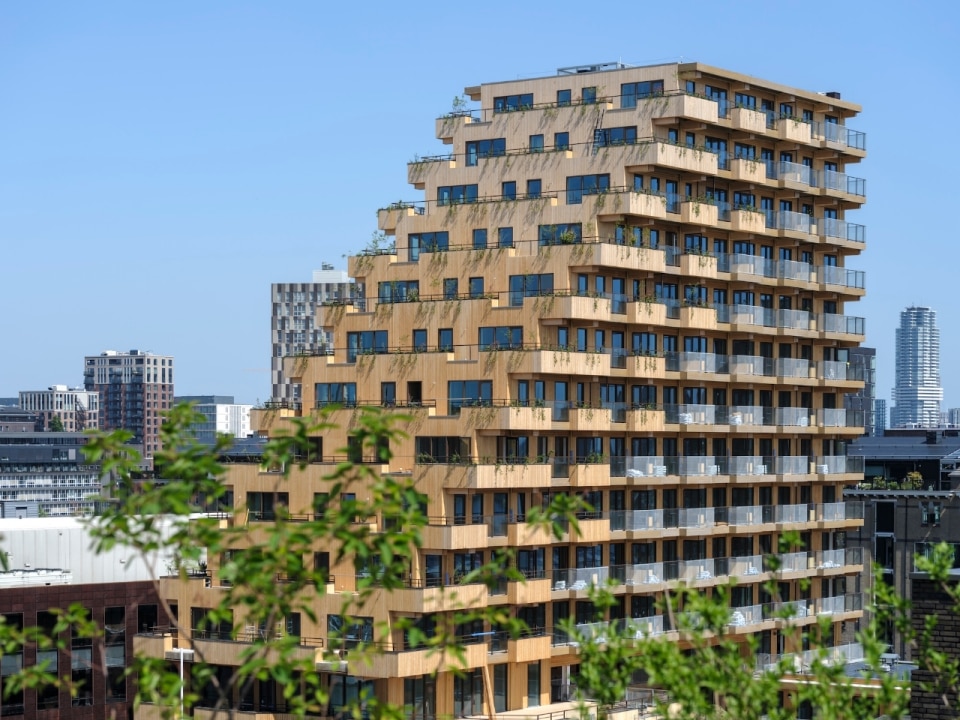
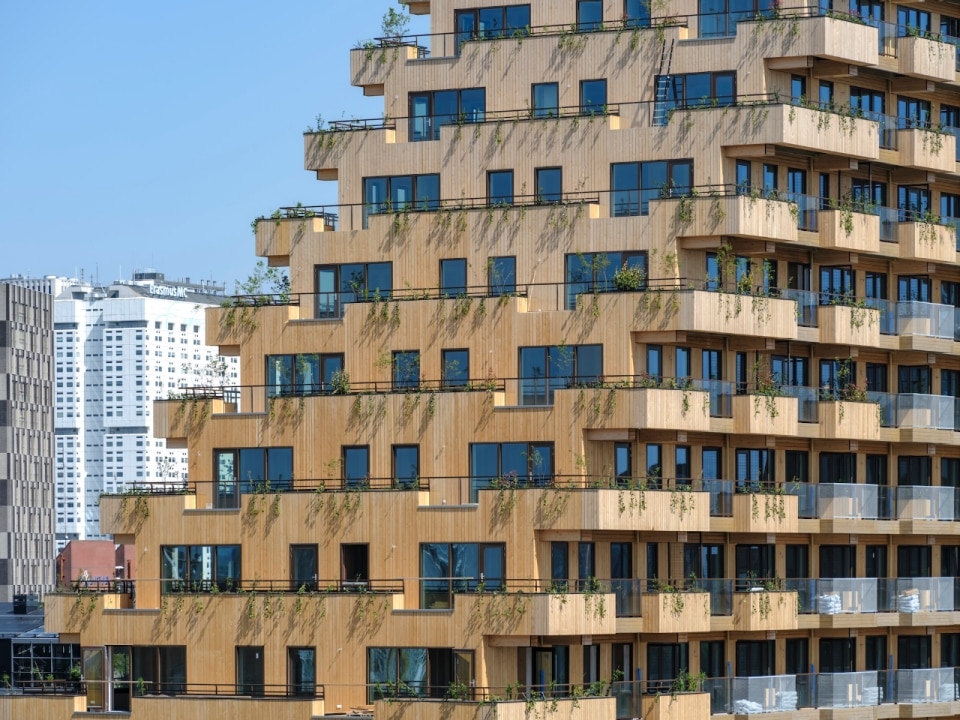
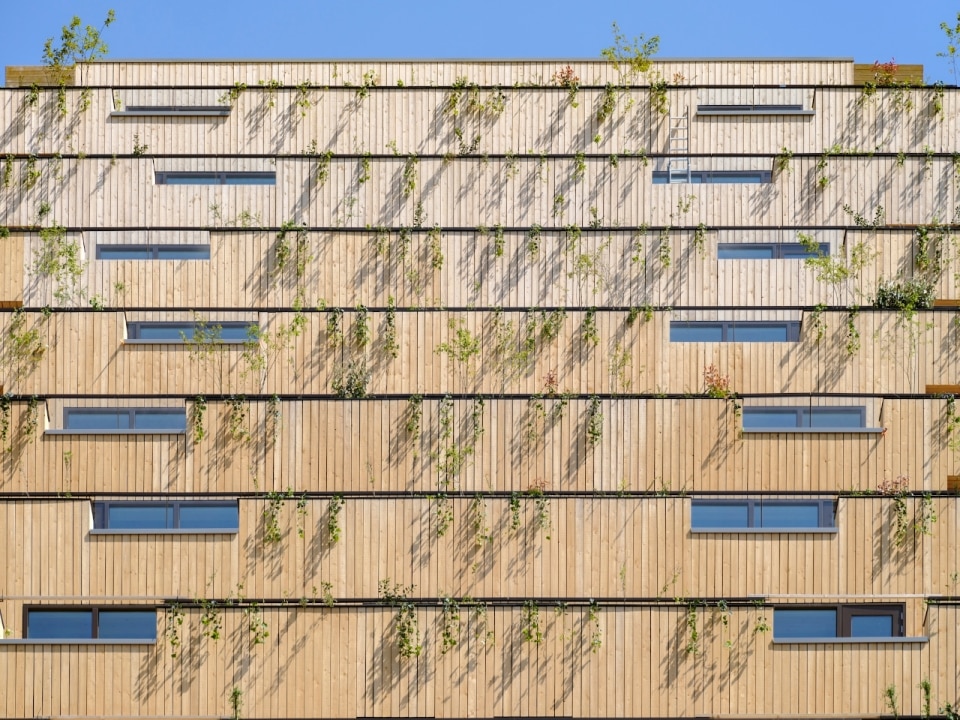
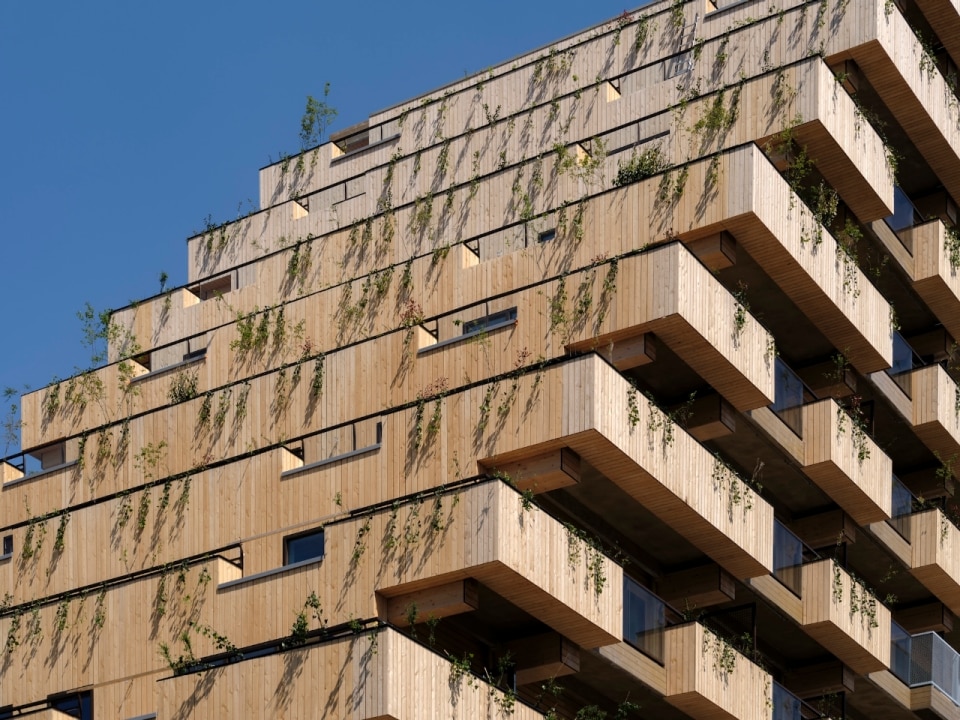
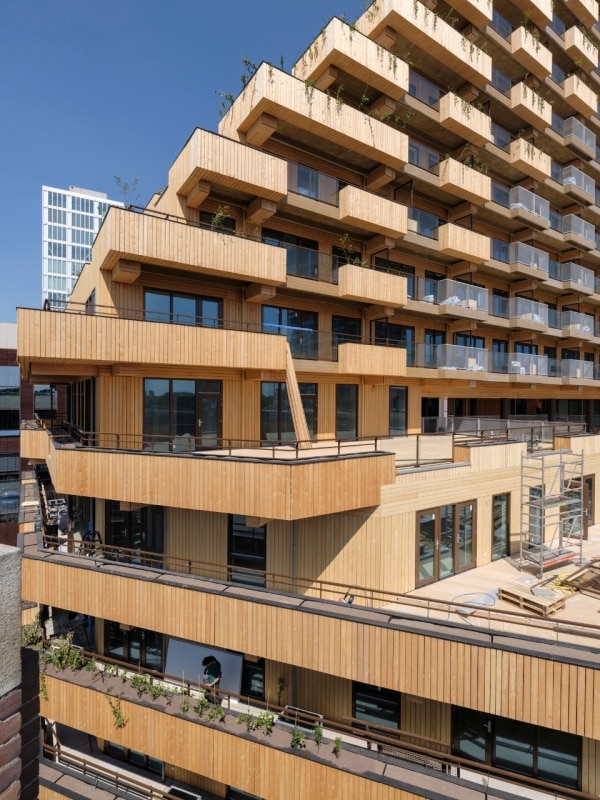
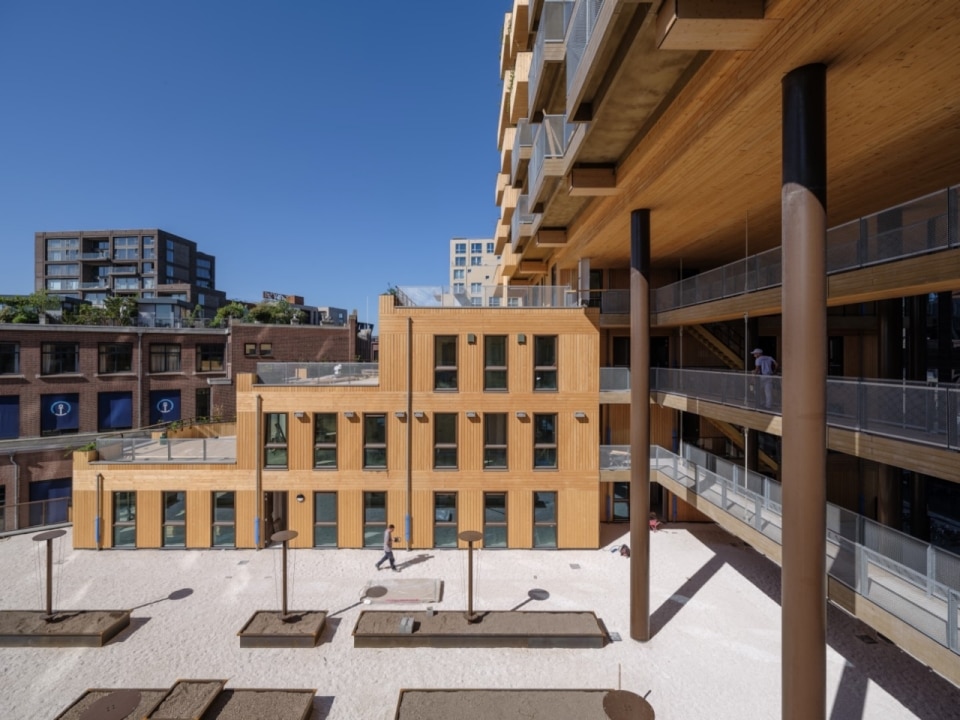
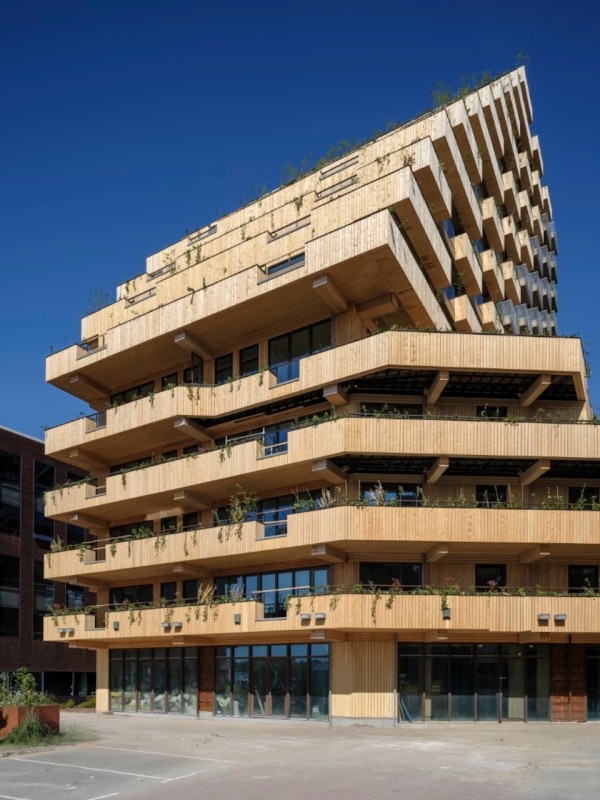
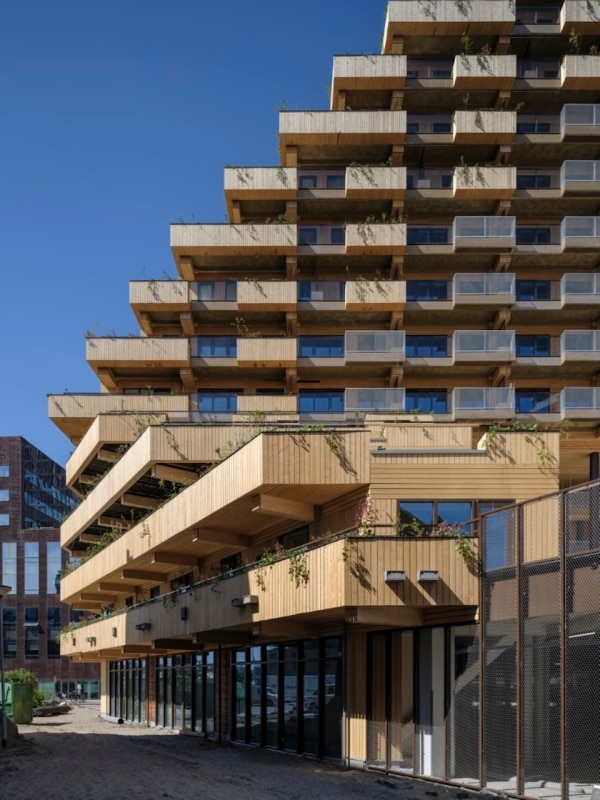
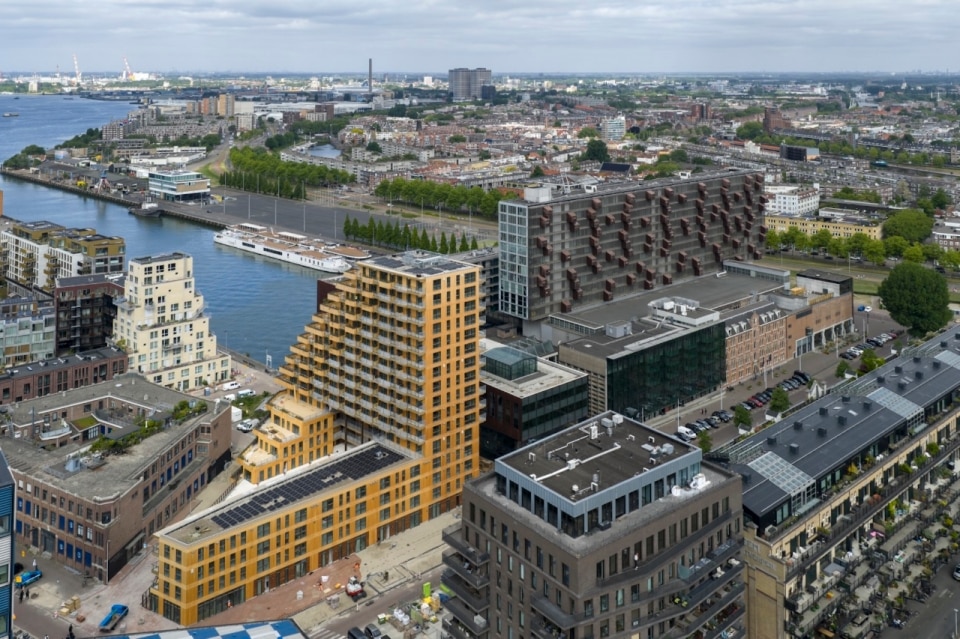
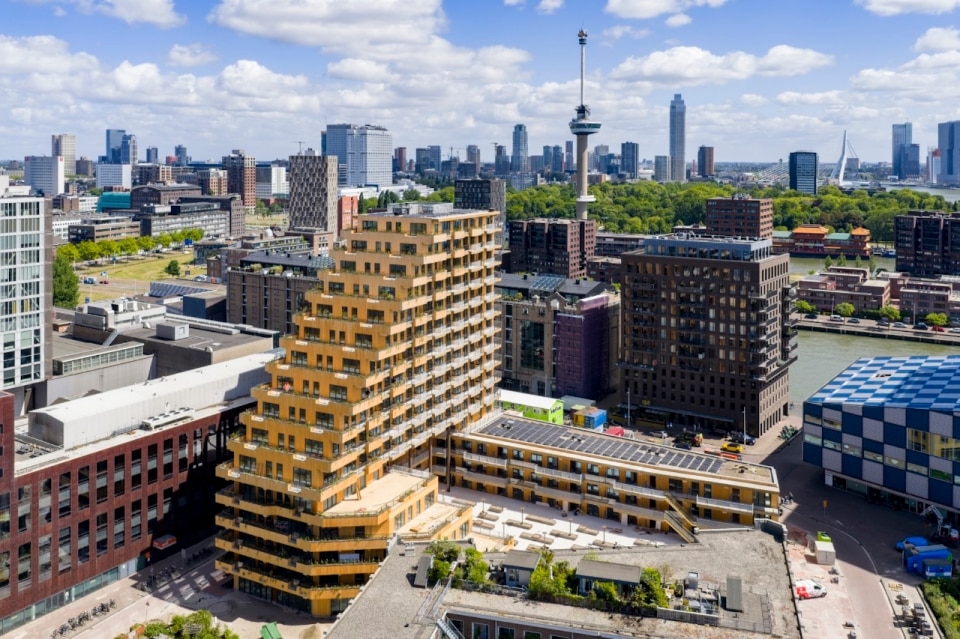
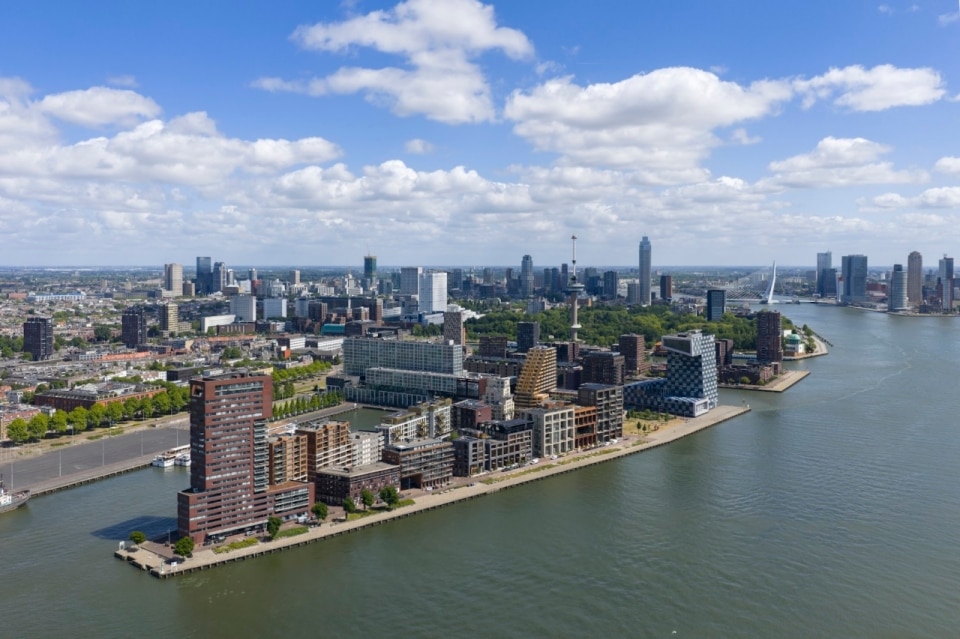
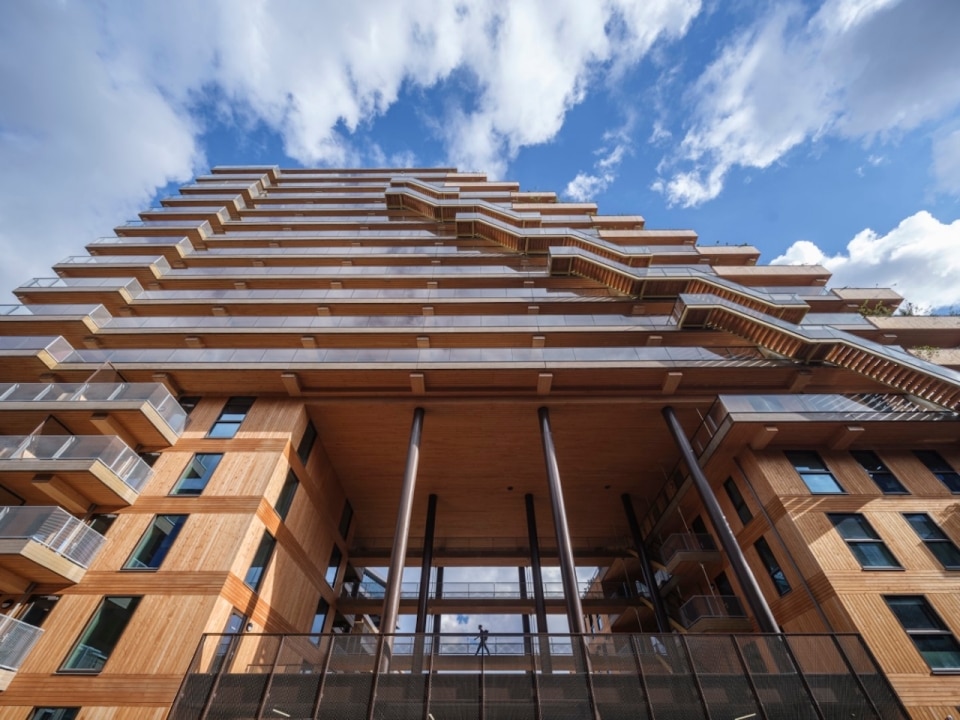
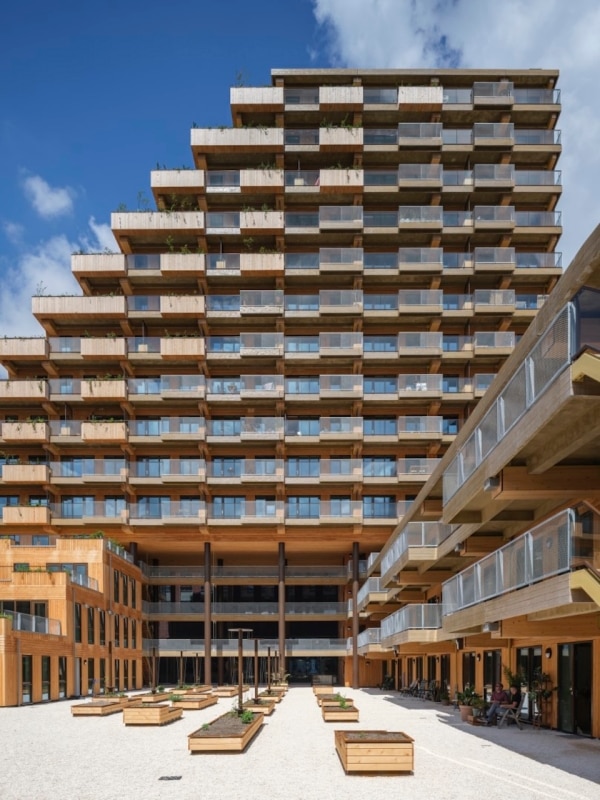
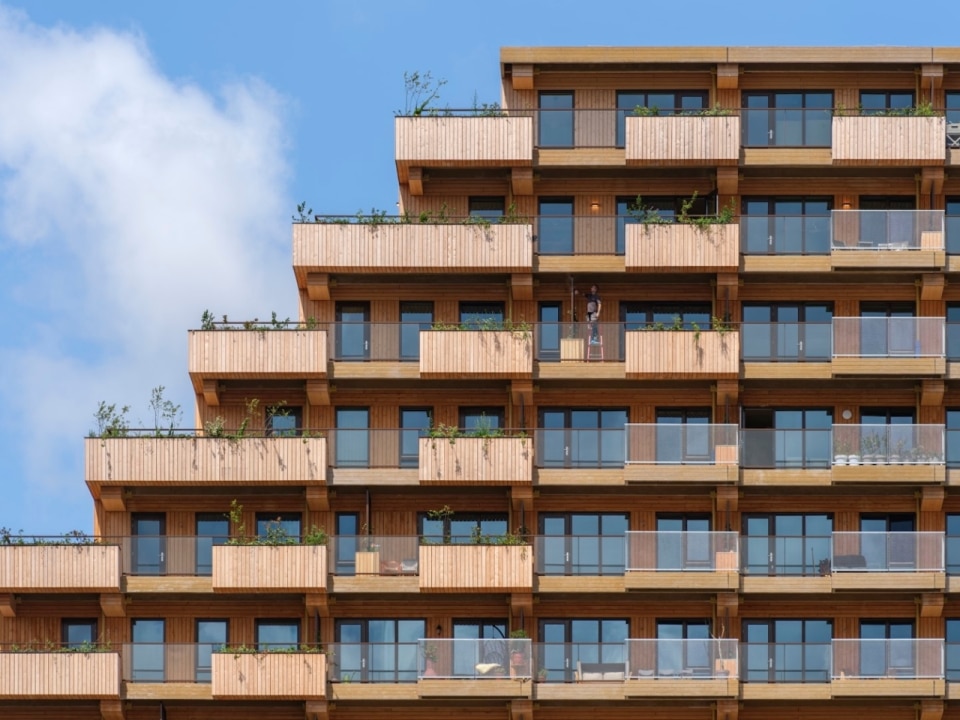
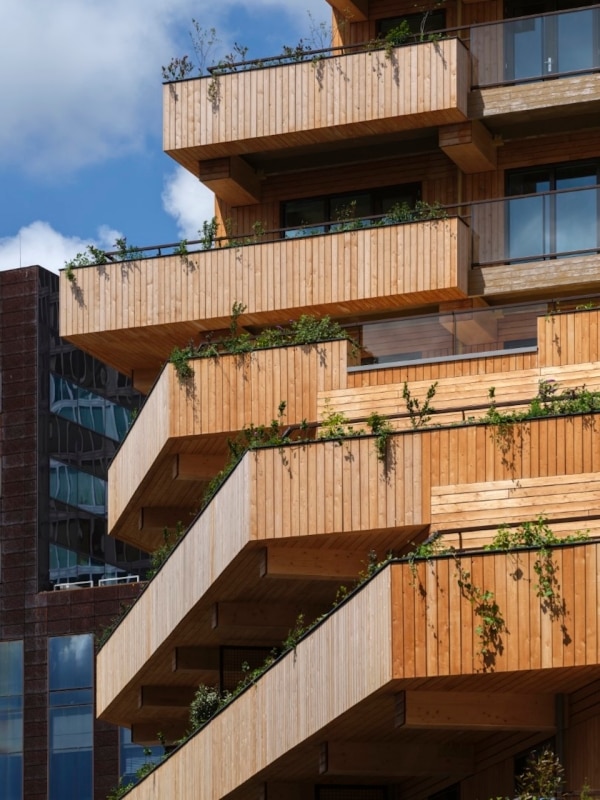
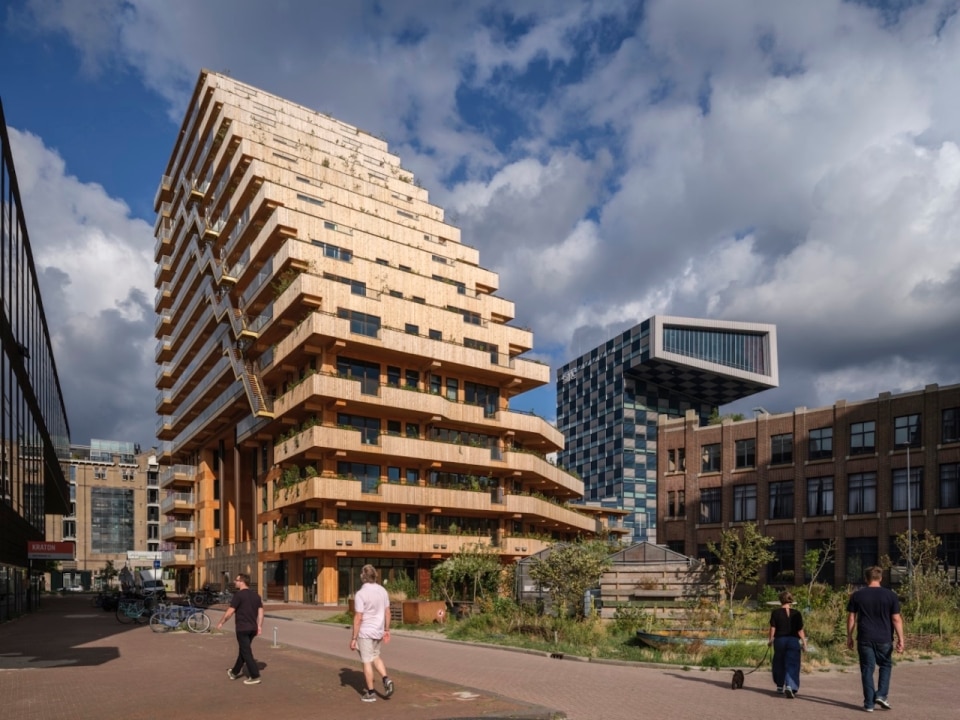
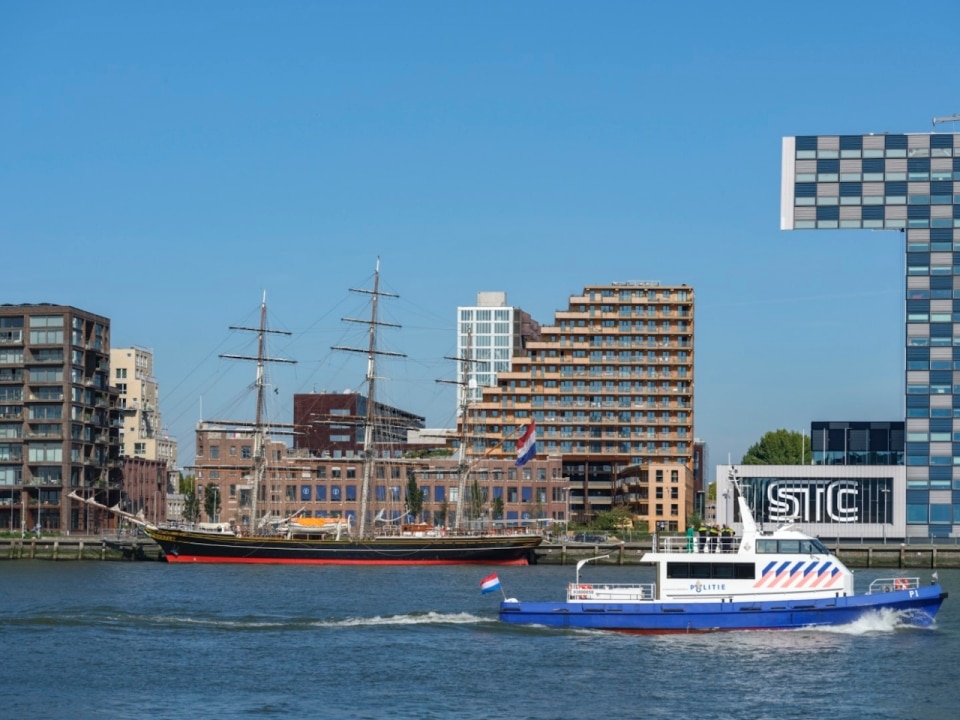
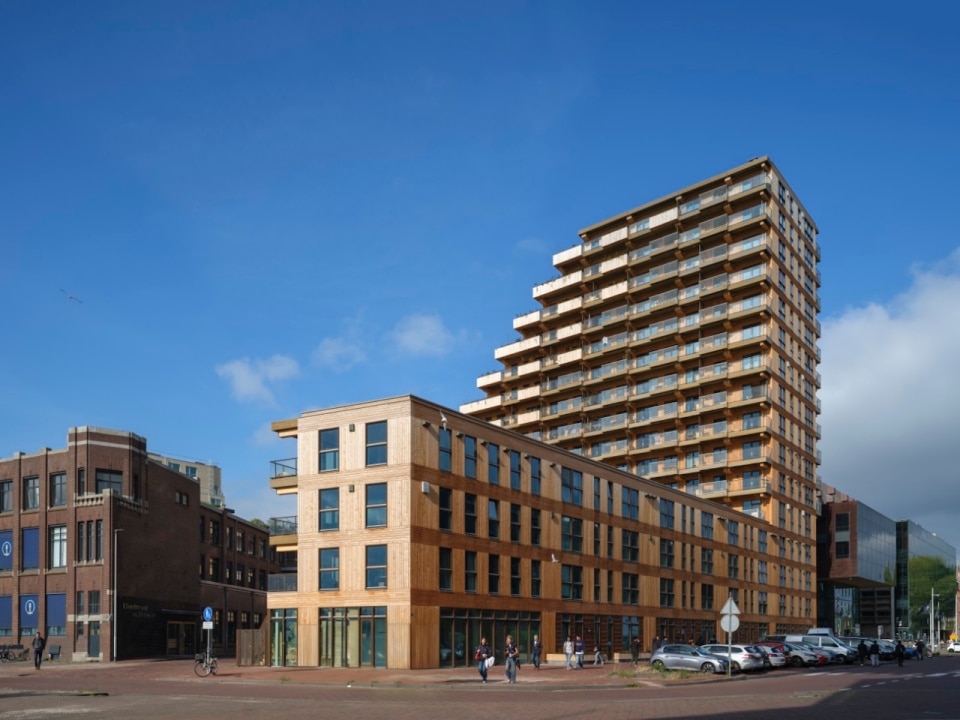
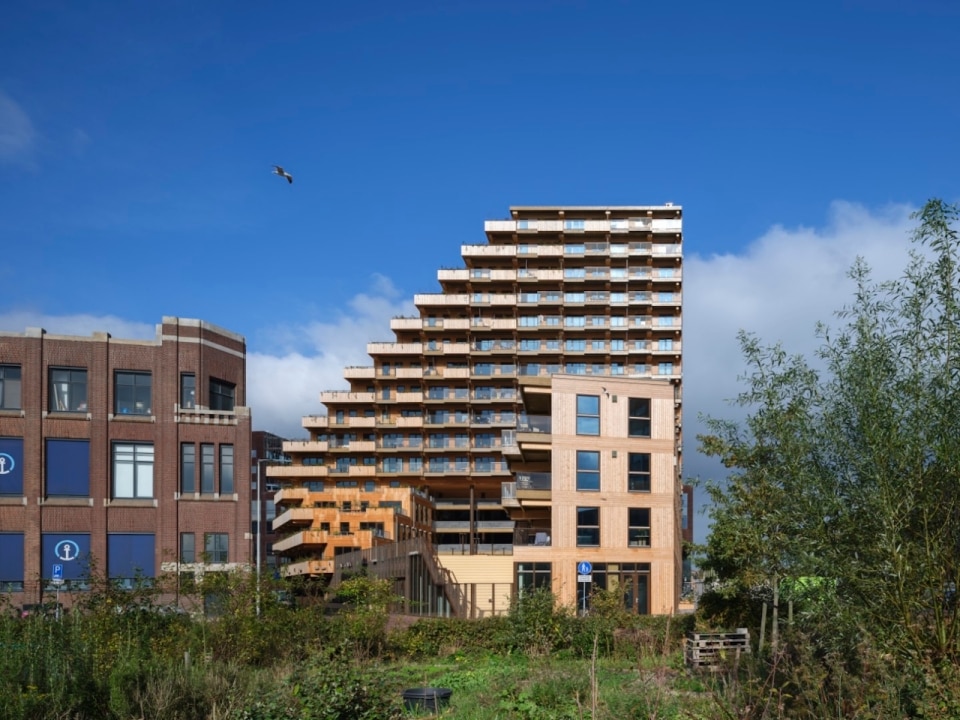
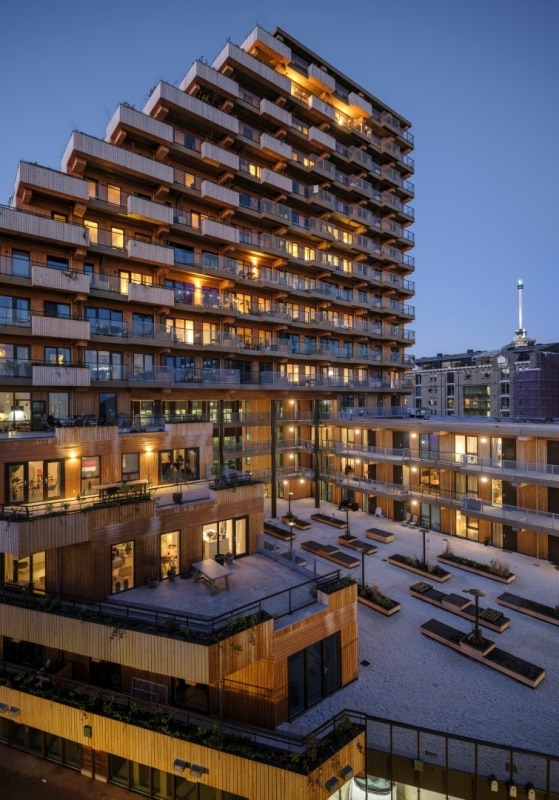
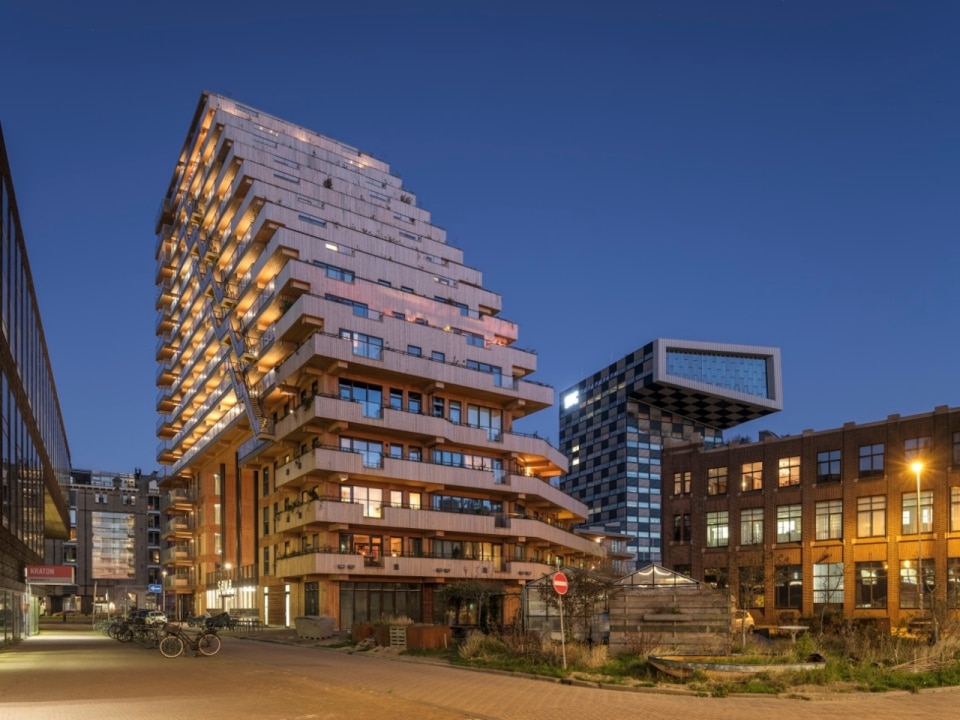
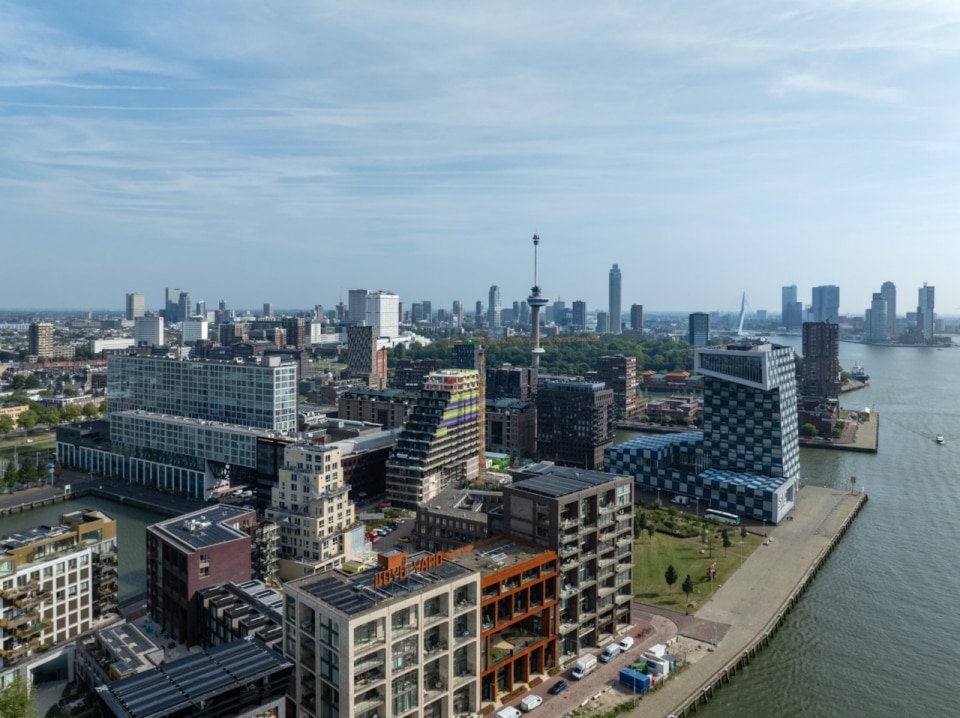
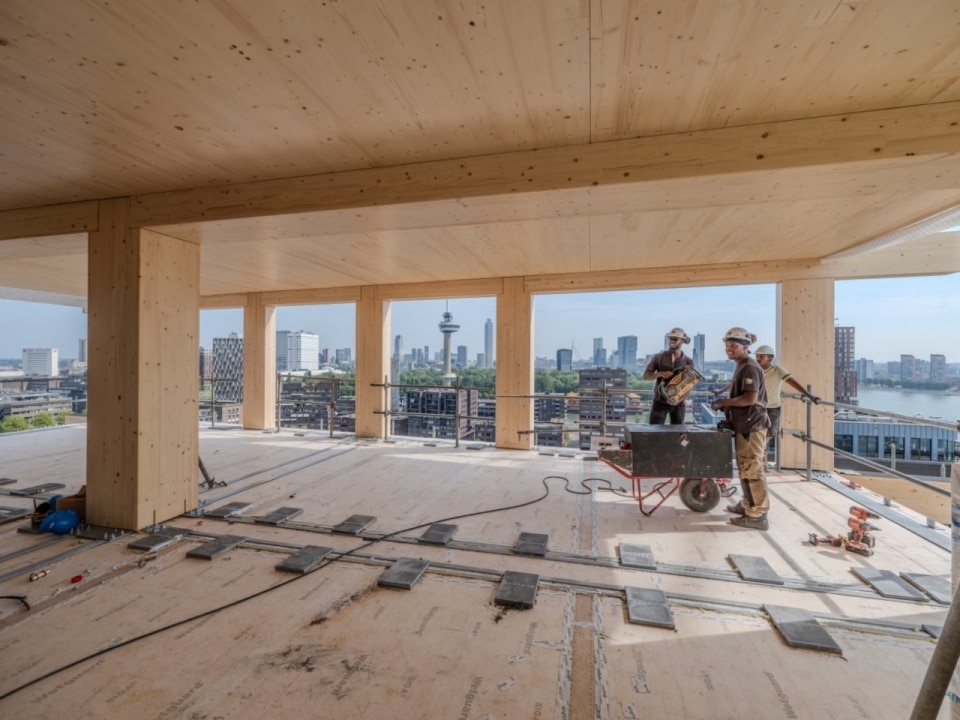
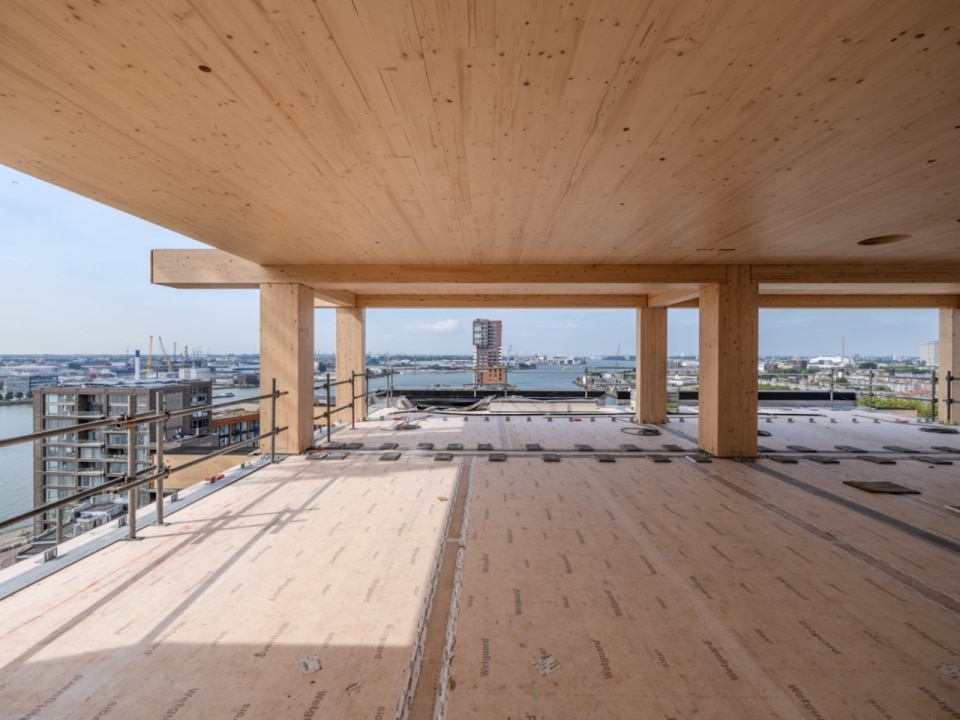
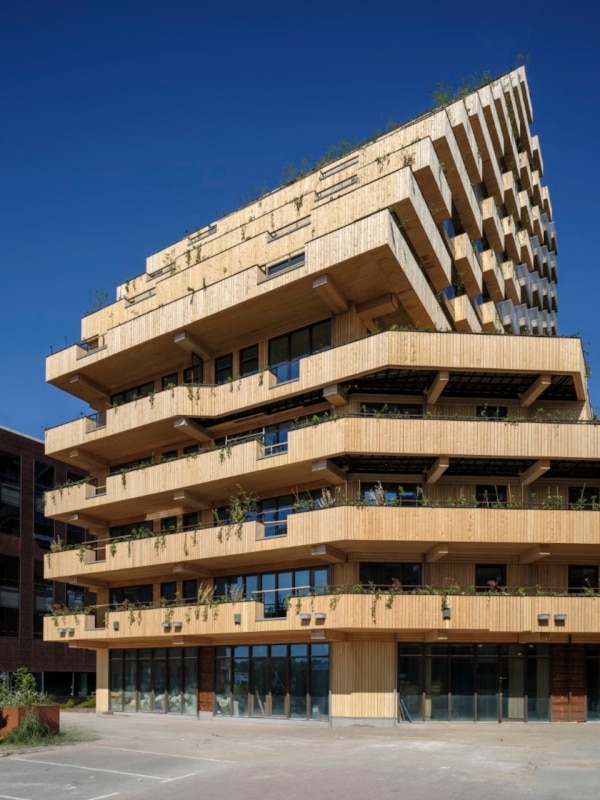
In Rotterdam, one of Europe’s architecture capitals, the residential building SAWA has opened in the Lloydkwartier, a former port area now transformed into an urban district. The 50-metre-tall timber structure introduces a new housing typology defined by a series of green terraces that reshape the riverfront.
The project is by Mei architects and planners, a studio founded by Robert Winkel and well known in the Netherlands for its work on the regeneration of industrial structures, large-scale urban transformations, and a “circular” approach to architecture that focuses on the full lifecycle of materials. SAWA continues their research into buildings that combine residential density, landscape, and high-quality collective spaces.
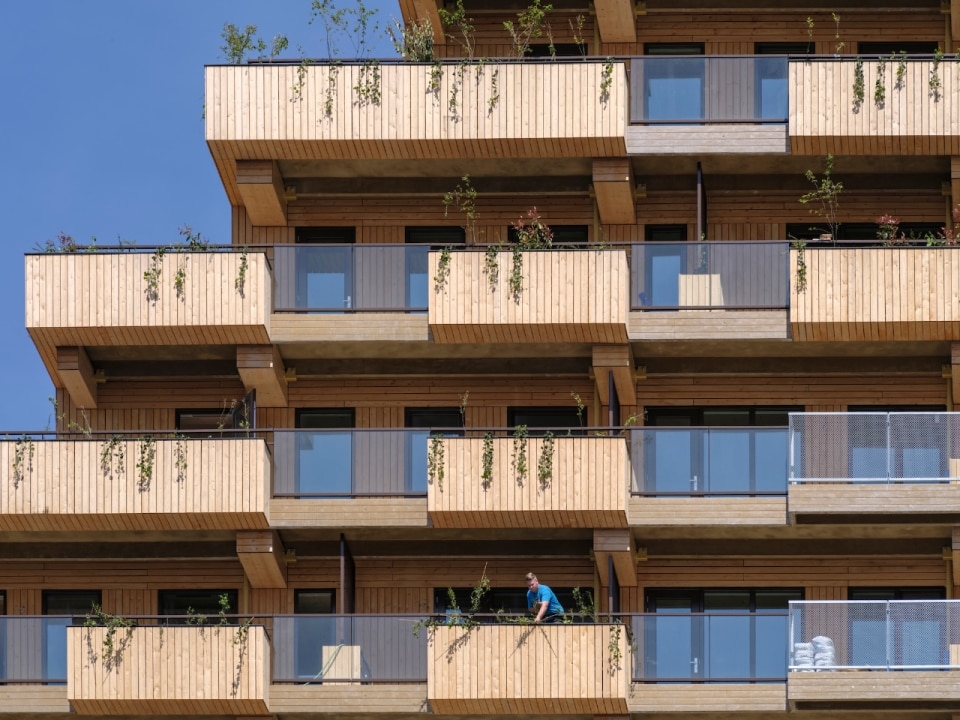
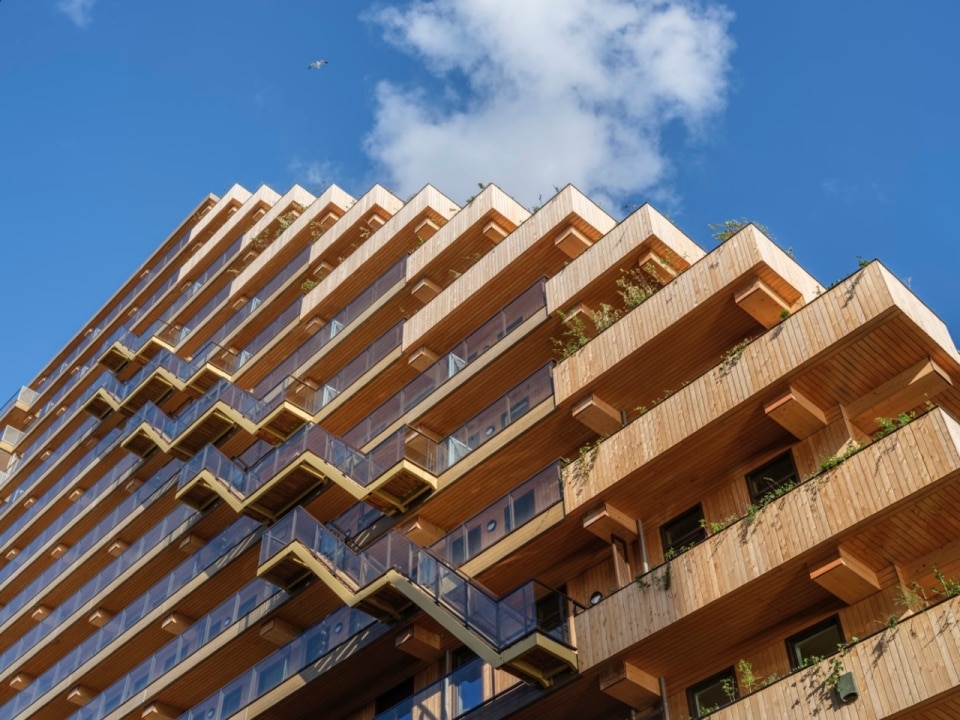
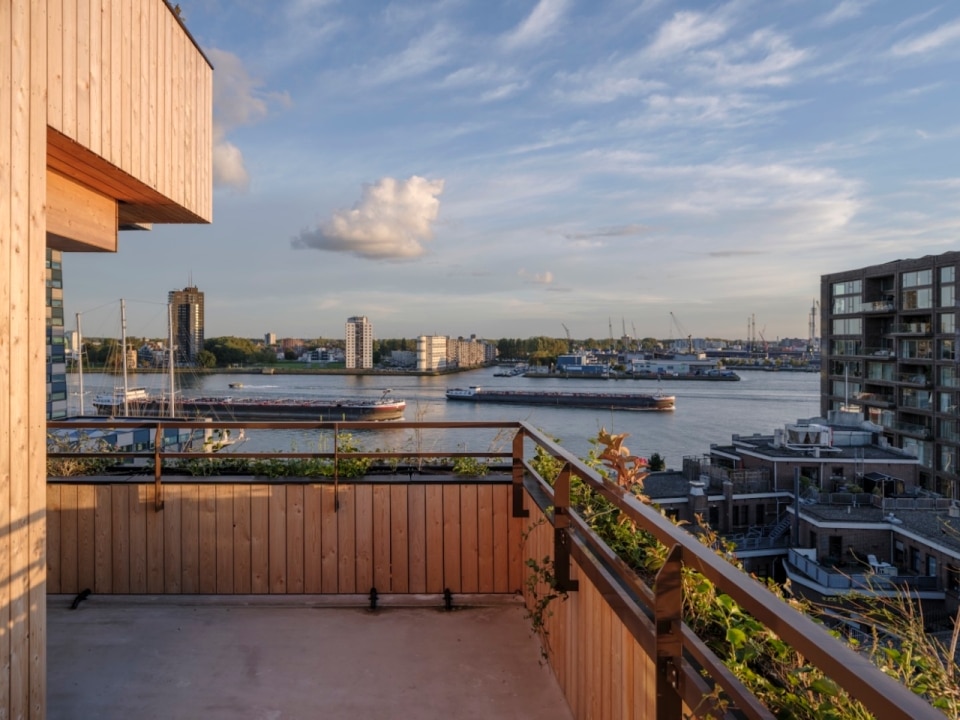
In a context marked by the conversion of warehouses and factories into new residential and cultural spaces, SAWA represents an intervention of densification within an already densely inhabited neighbourhood. Its stepped volume negotiates the threshold between inside and outside: deep loggias and planted terraces open both towards the water and the city, establishing a visual and functional relationship with the public realm and the port landscape.
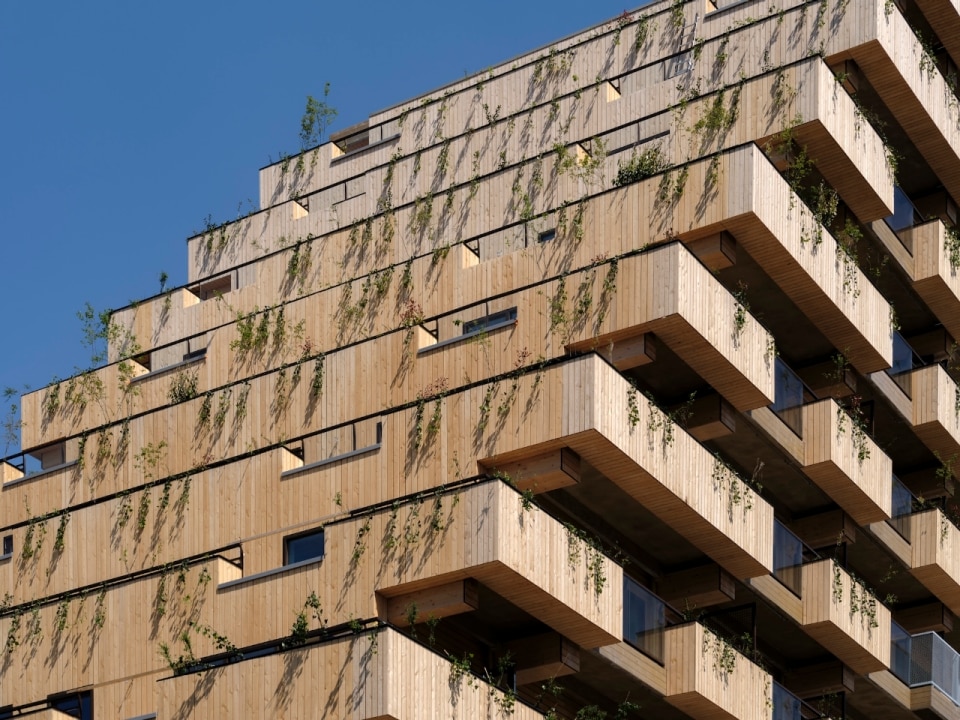
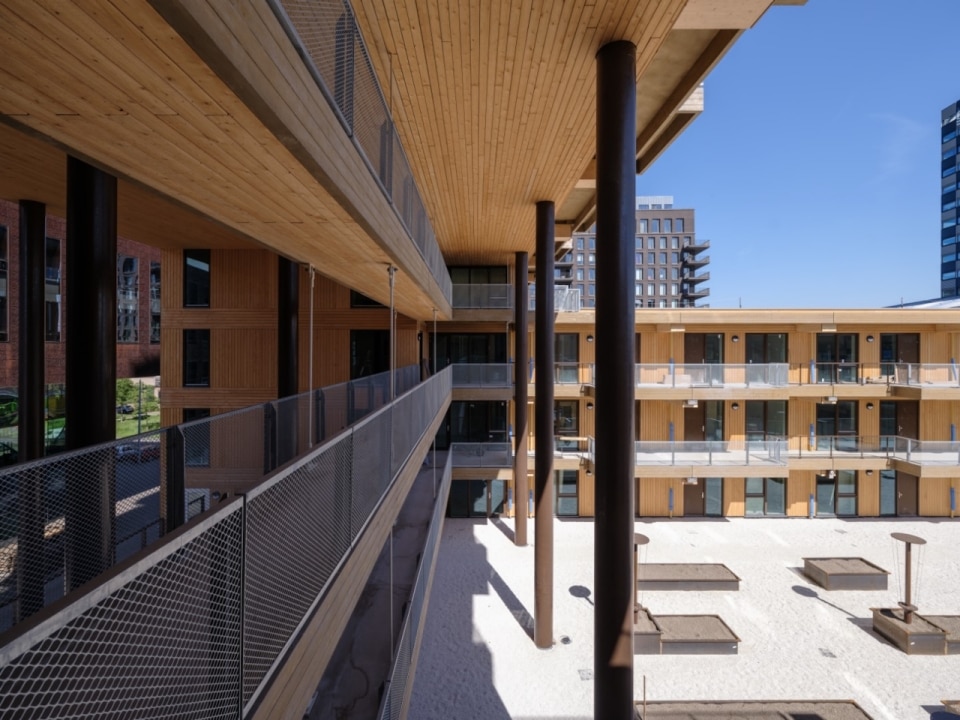
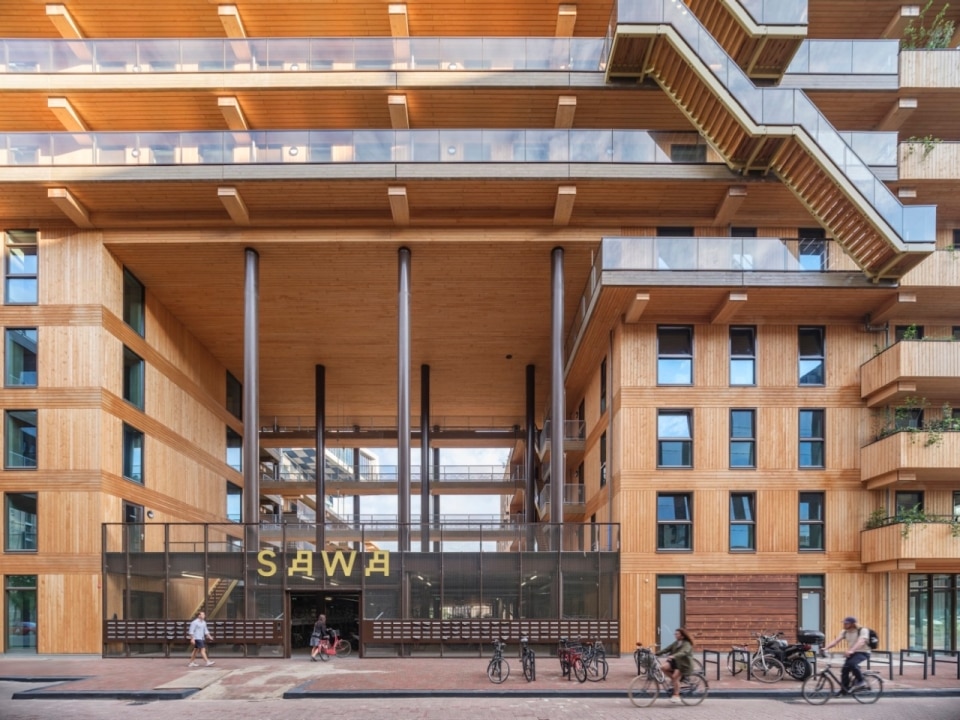
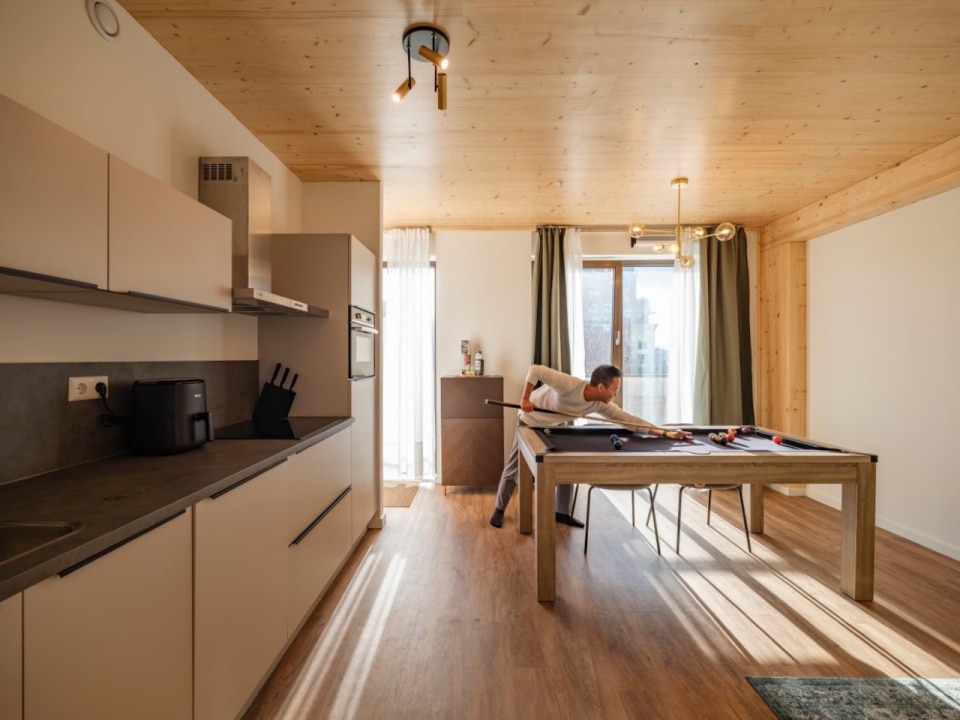
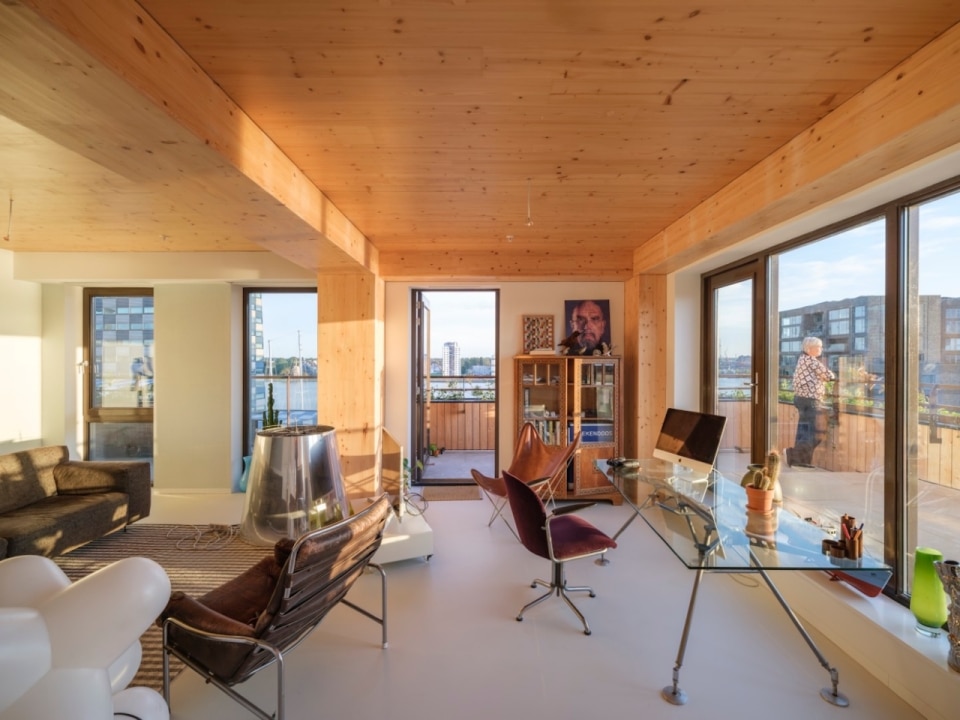
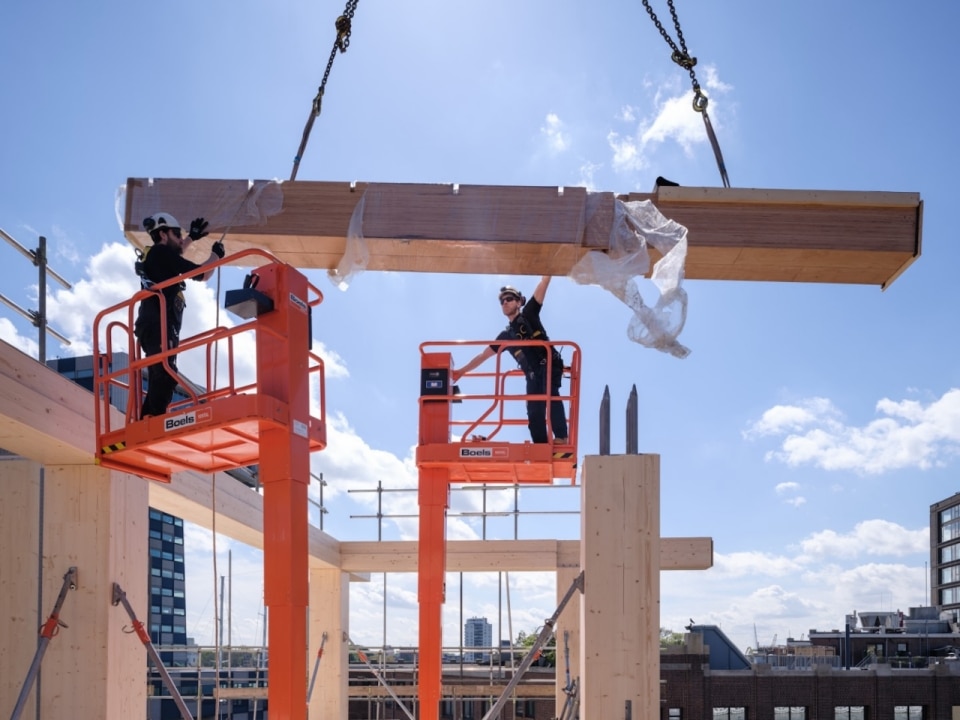
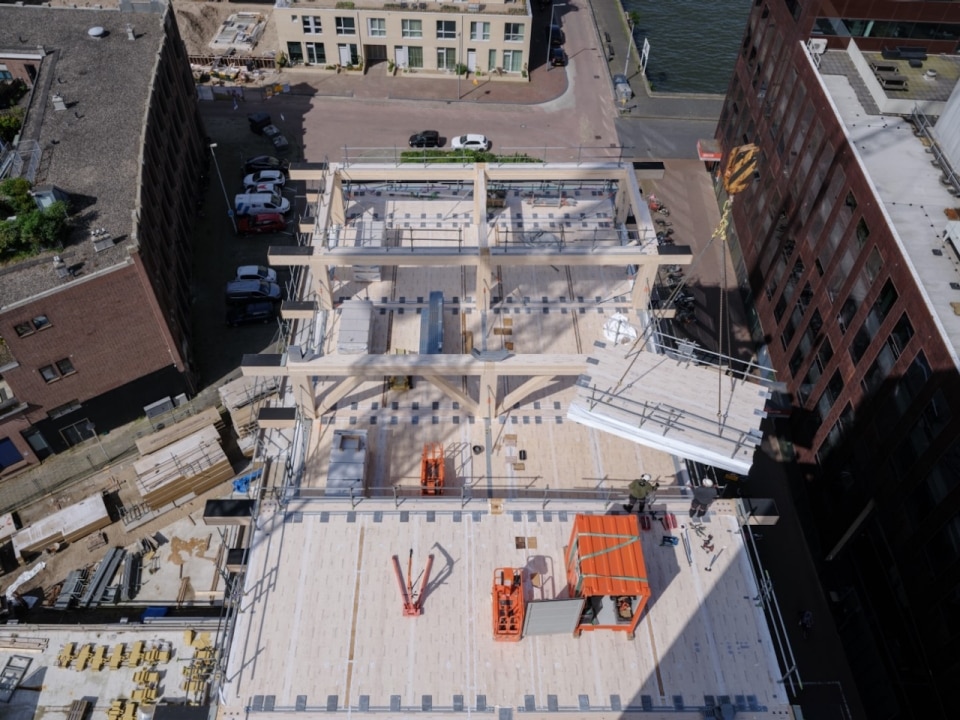
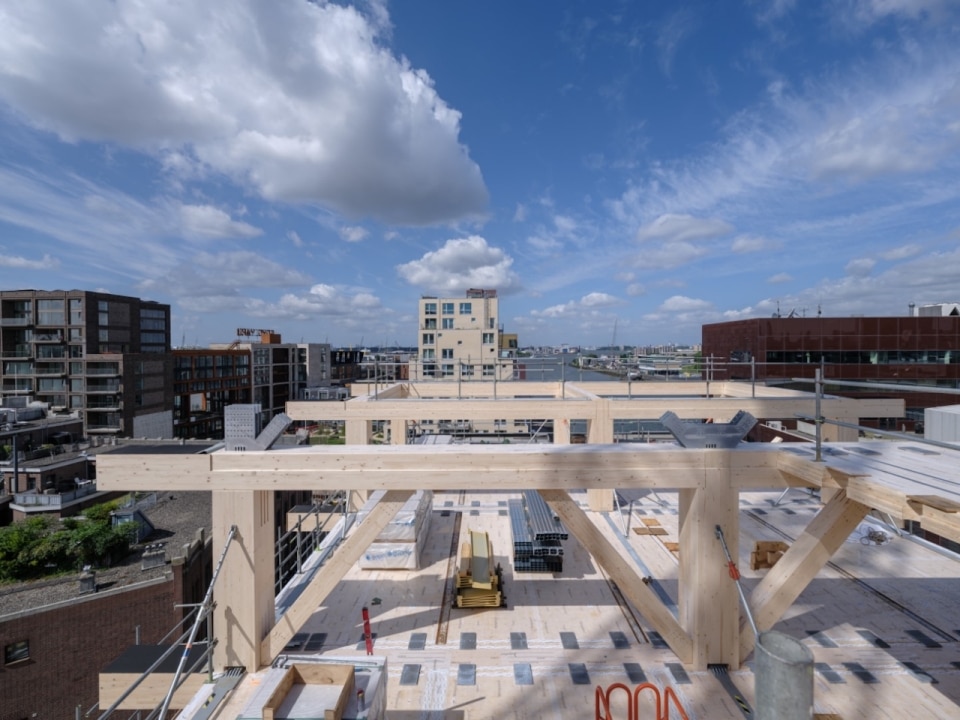
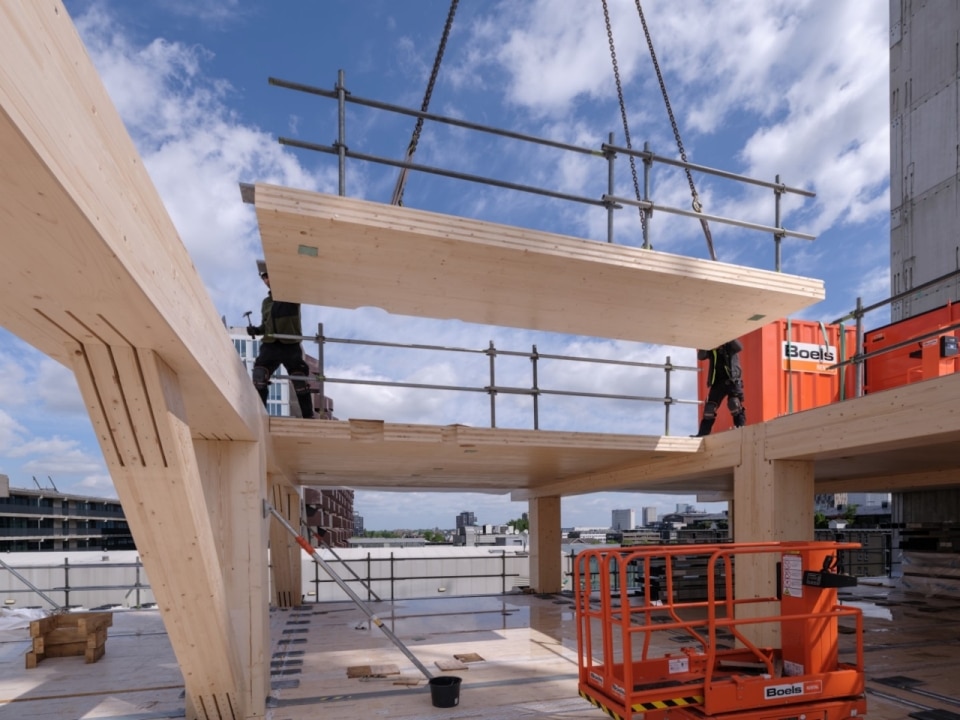
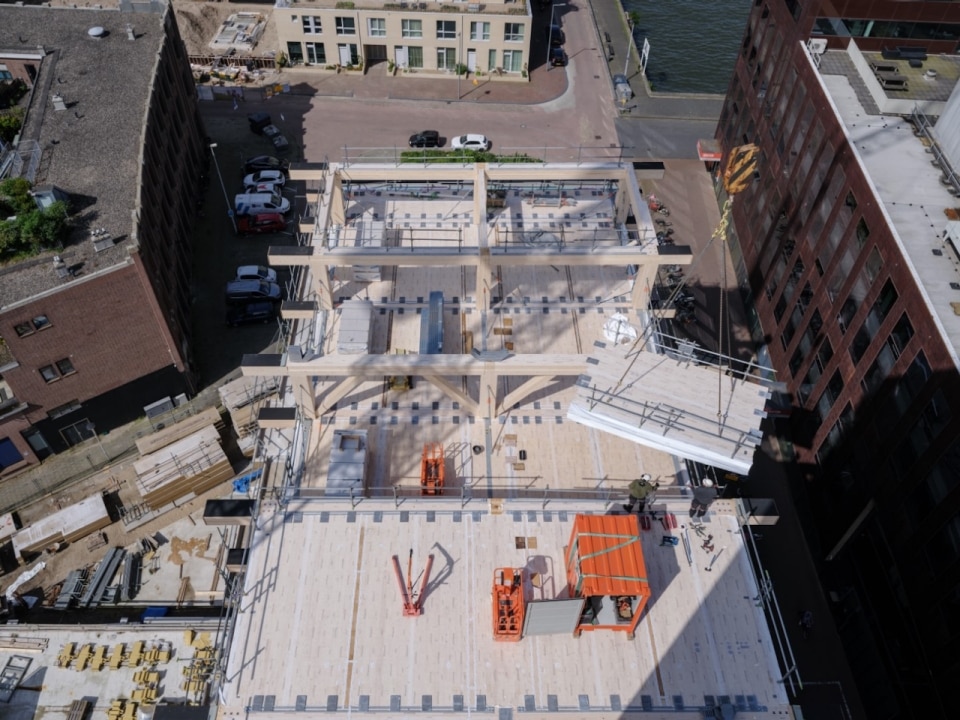
The project is structured around four "shared values": reduced CO₂ emissions, increased biodiversity, circularity of materials, and housing affordability. The load-bearing structure is mostly made of CLT, cross laminated timber, with reduced use of concrete and steel, making SAWA one of the first Dutch residential buildings of this height made of wood. Wood elements are left exposed in the interiors and distribution galleries, making the building system legible.
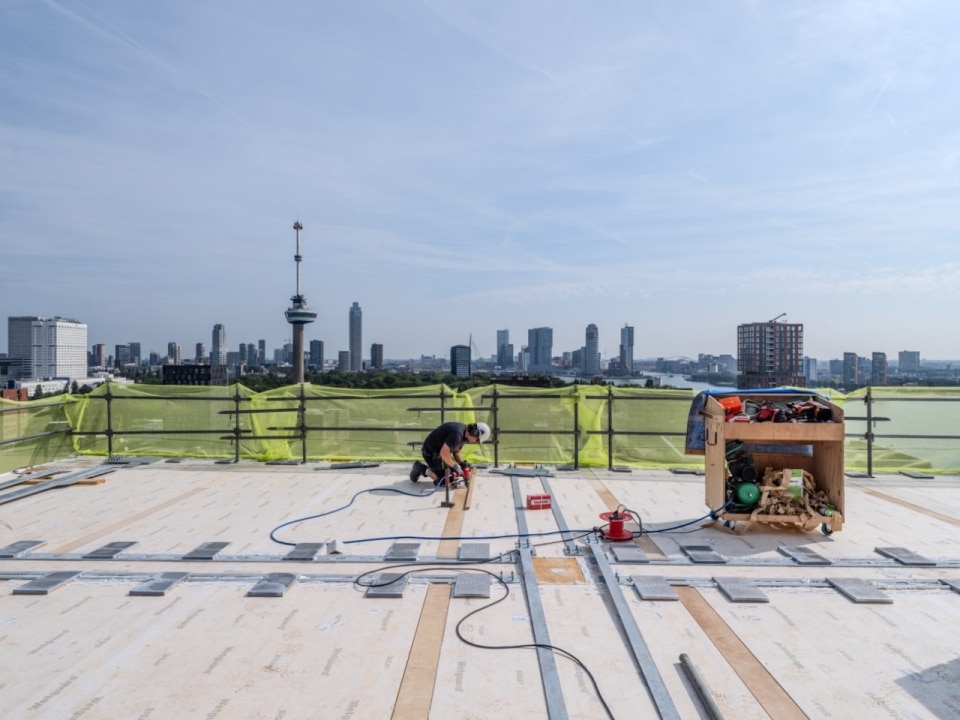
The building adopts a modular dry system based on decomposable floors, beams and columns. The floor packages employ dry ballast layers in place of concrete casting, to allow for future disassembly and reuse of components in urban mining.
Increasing biodiversity is addressed through devices defined with urban ecologists and biologists. Terraces host planters and flower beds with species selected by elevation and orientation to provide habitat and nourishment for pollinating insects, birds and small mammals. Artificial nests, cavities and microhabitats are distributed on facades and in open spaces, with the aim of connecting the building to existing green infrastructure at the neighborhood scale.
Typologically, the apartments are served by galleries designed as living spaces rather than simple distribution corridors. These are complemented by a series of collective services - repair room, communal gardens, shared spaces for electric mobility - and a basement with functions that are also accessible to neighborhood residents, in continuity with the neighborhood garden and public areas.
The housing mix includes apartments of between 50 and 165 square meters.
The housing mix includes owned and rented apartments between 50 and 165 sq m, with about half of the units earmarked for the middle-rent segment to encourage a heterogeneous social composition in terms of age and income. On the energy side, SAWA adopts a low-technology complexity system, based on natural cross-ventilation and passive air quality control, supplemented by rooftop photovoltaic panels and connection to city district heating, in line with local emission reduction goals.