


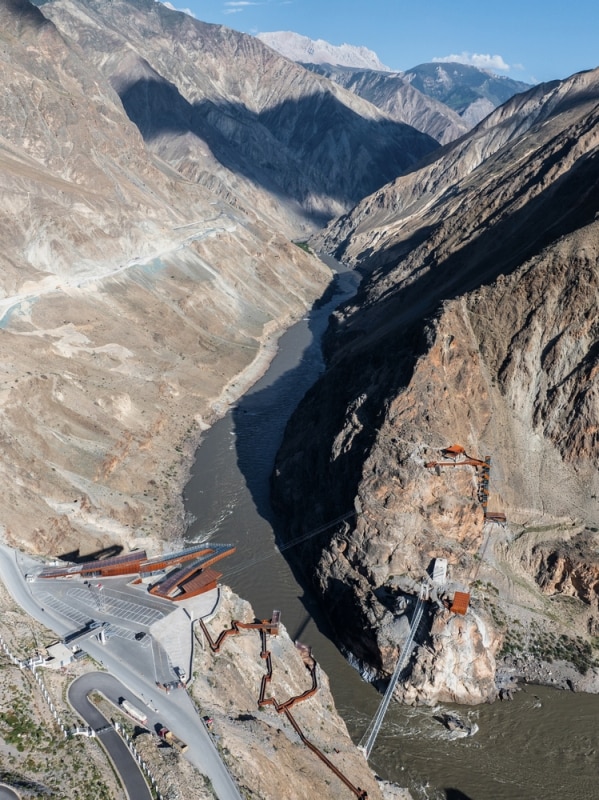
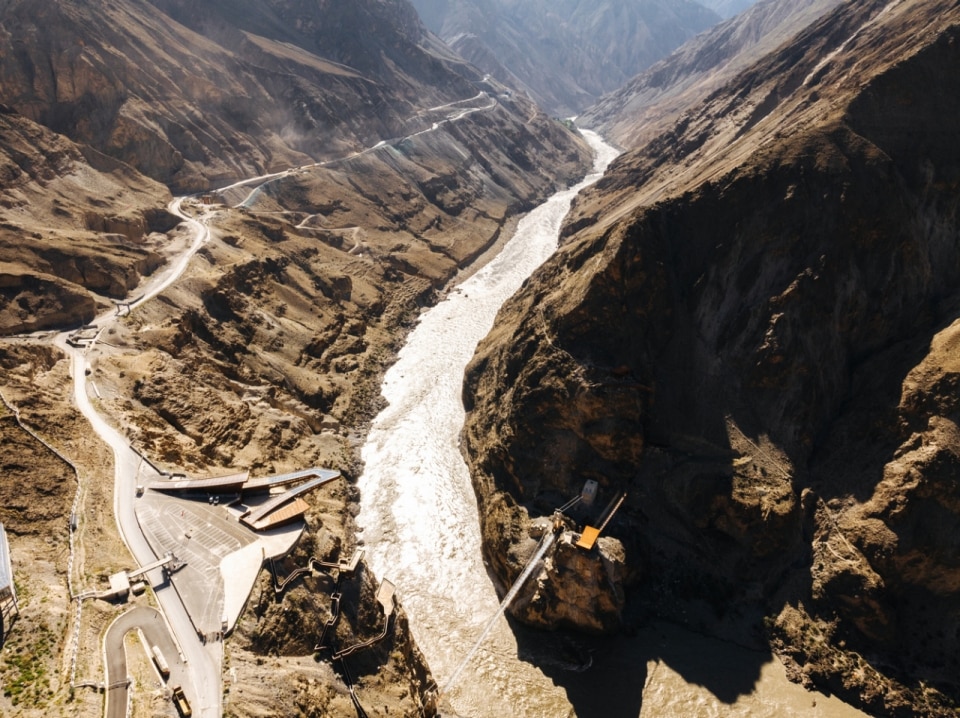
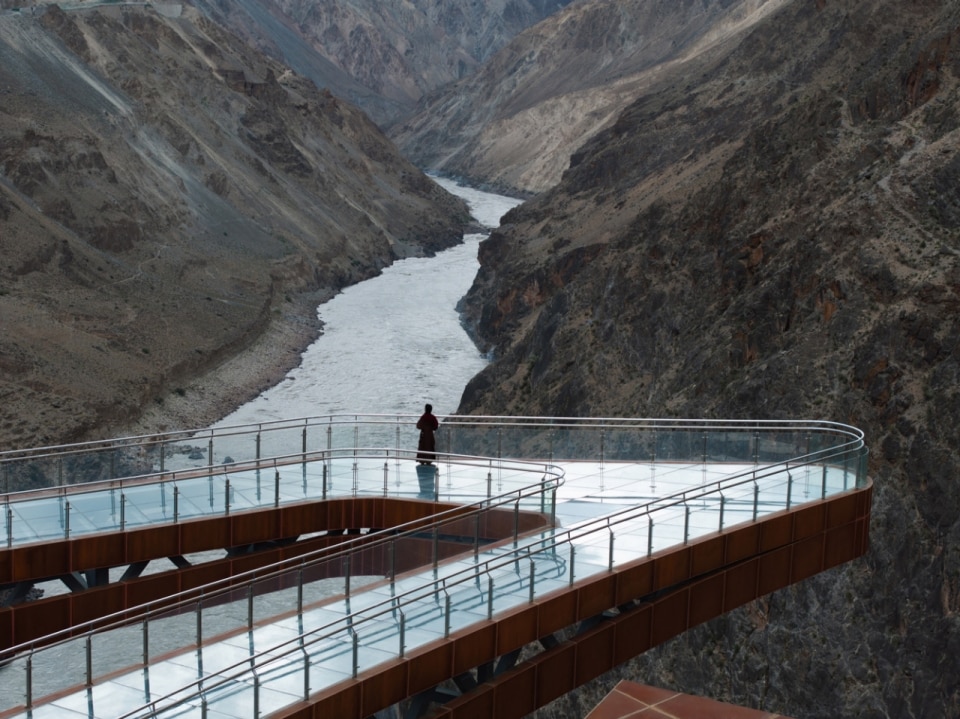
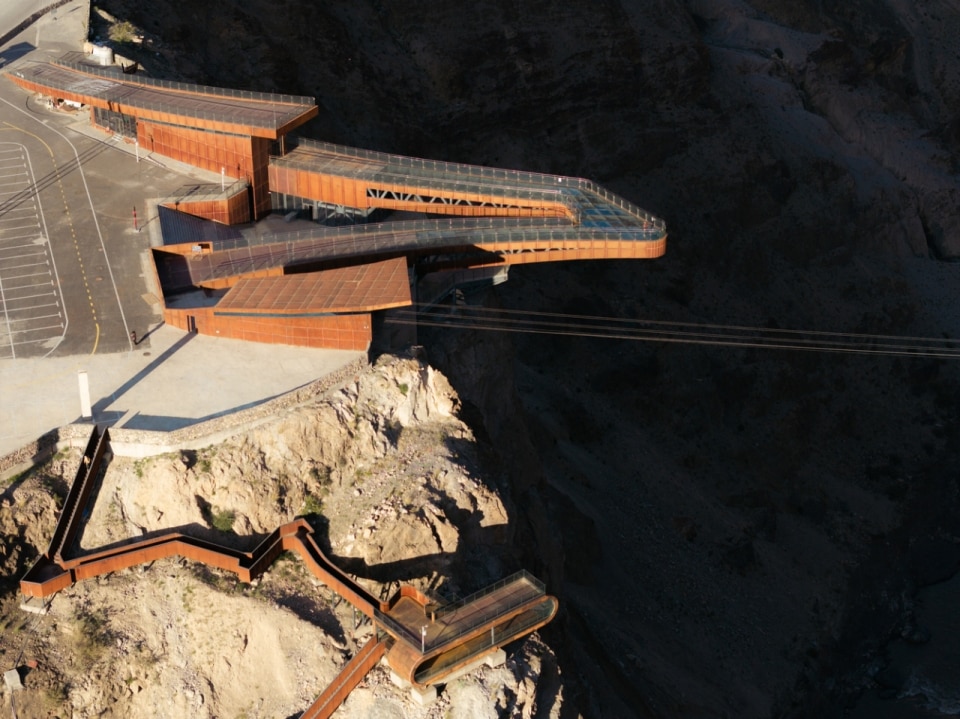
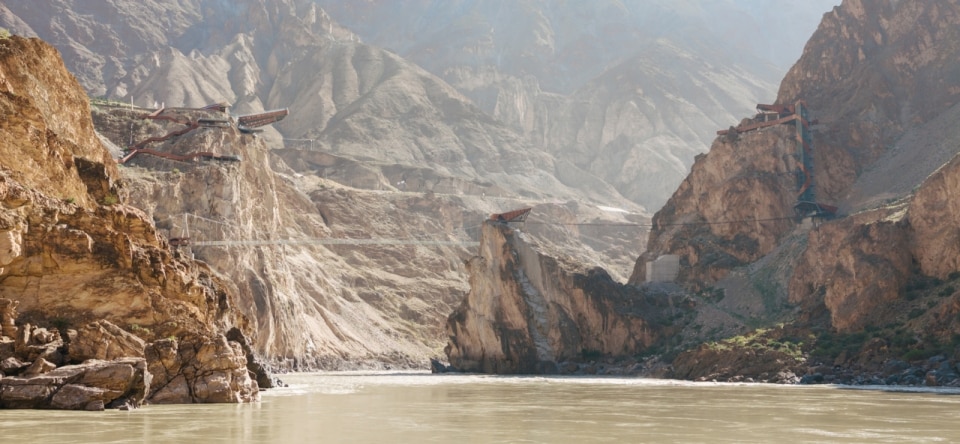
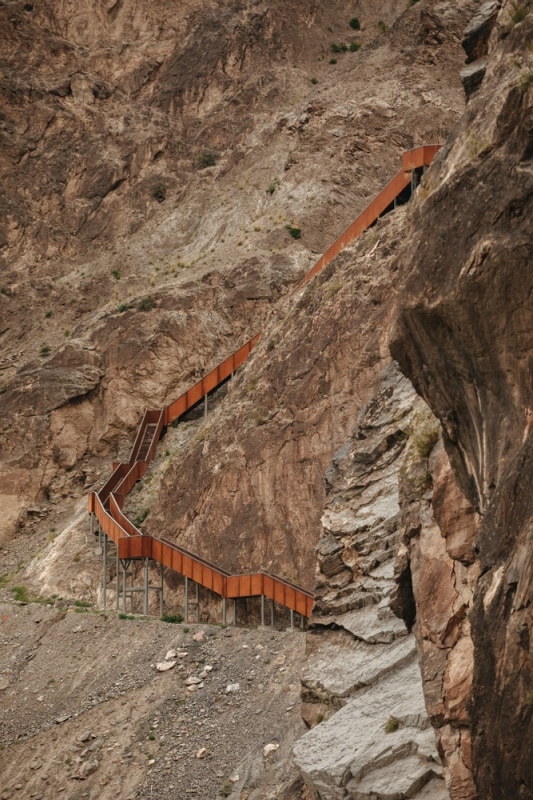
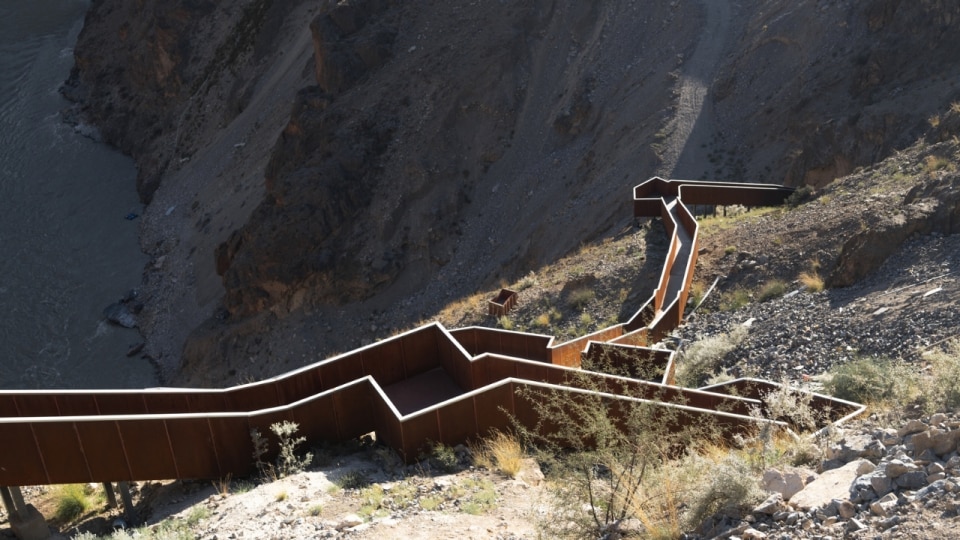
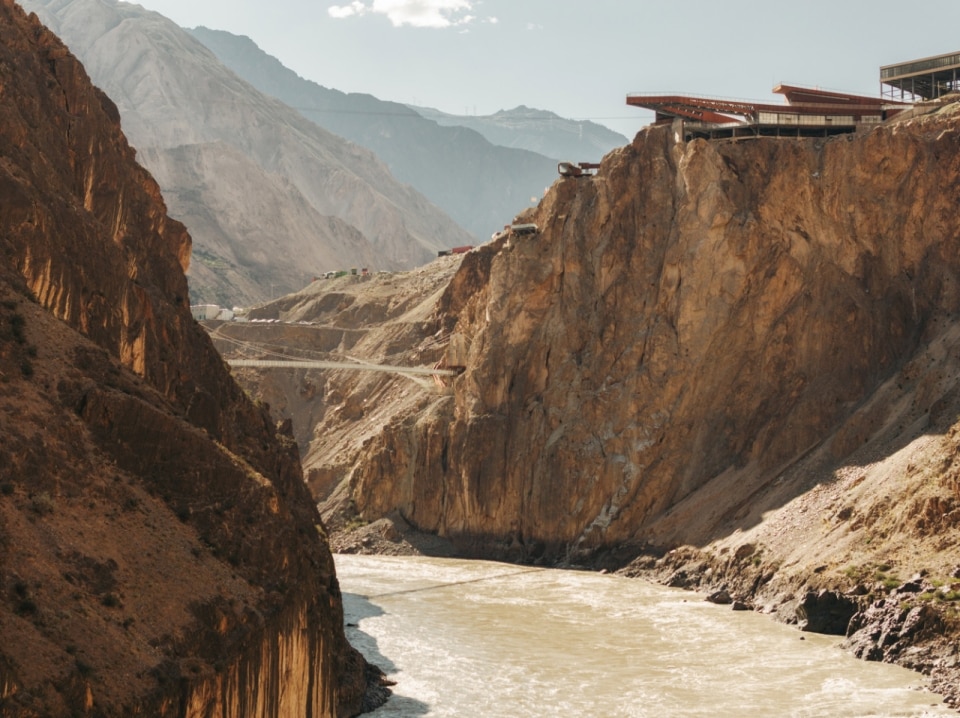
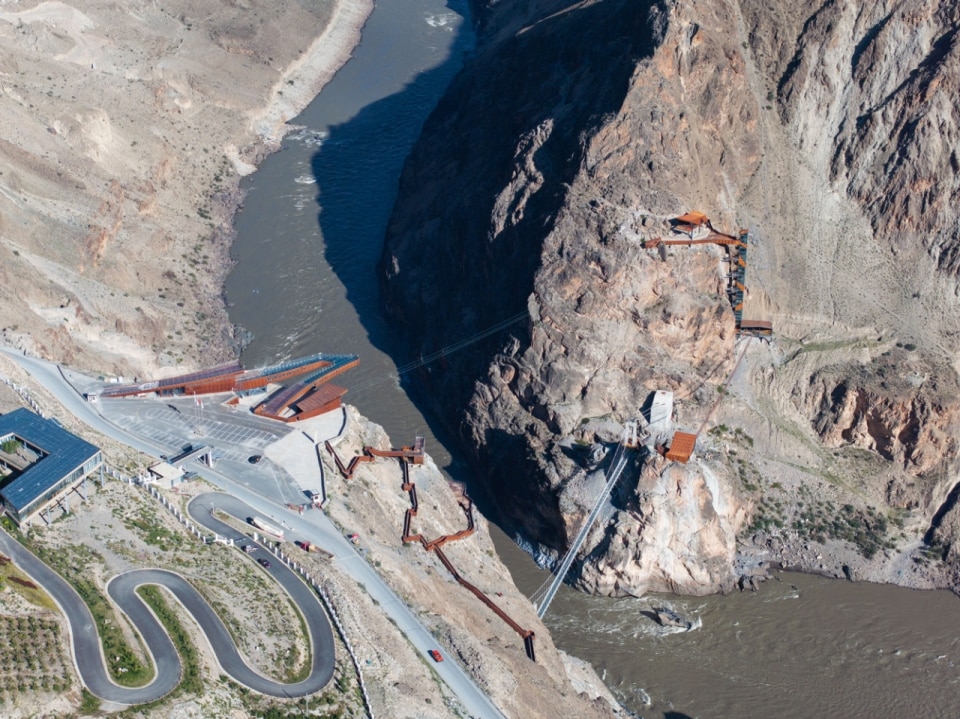
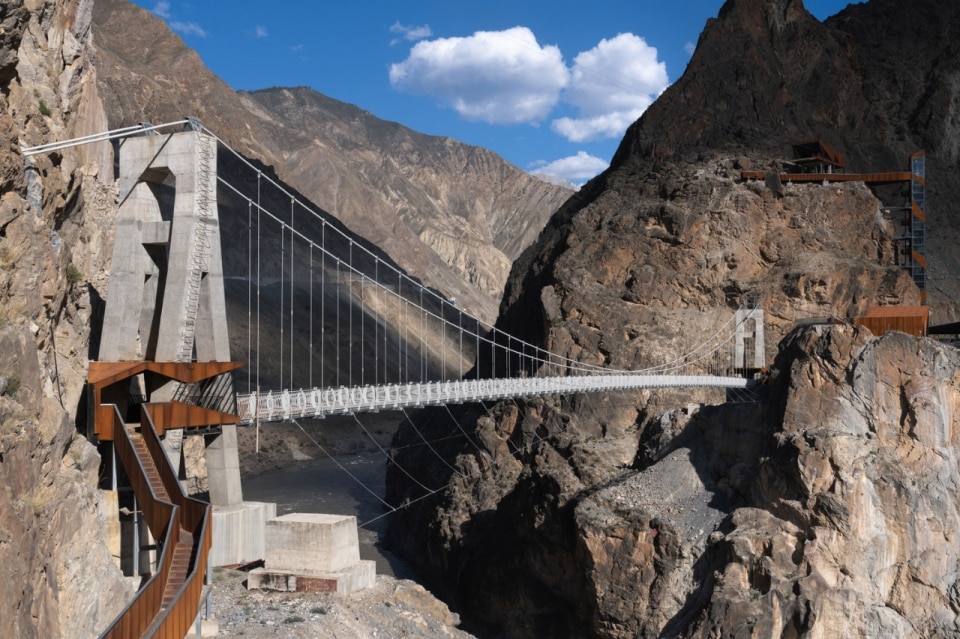
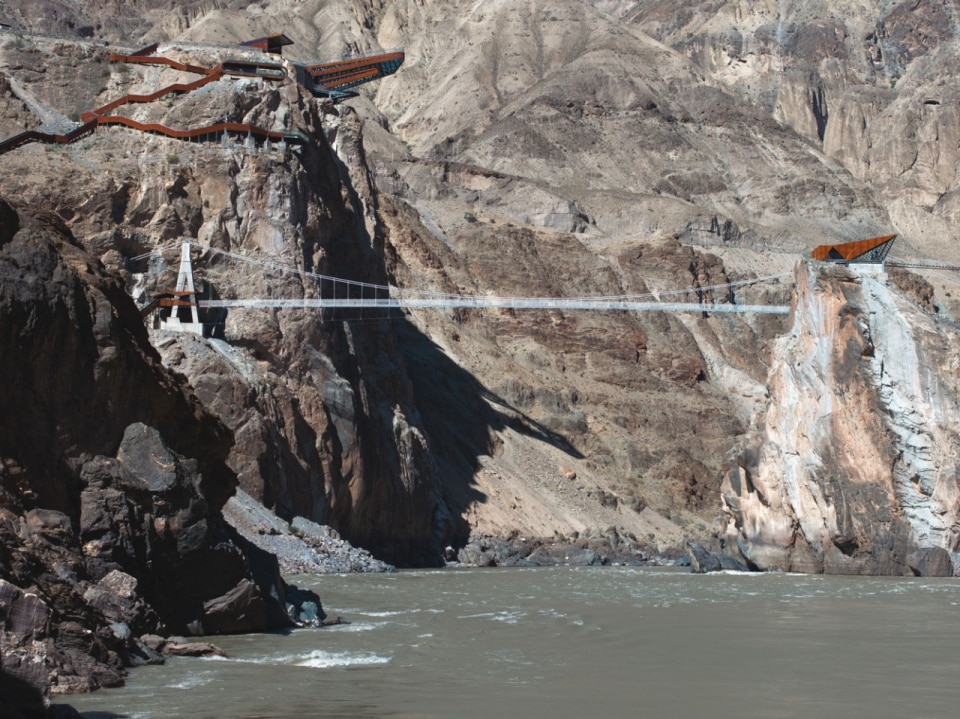
Suspended above one of the deepest gorges in eastern Tibet, Archermit's signature intervention fits along an iconic section of the Sichuan-Tibet road (G318), famous for its seventy-two hairpin bends carved into the rock and the extreme conditions under which it was built. The architecture was created as a device for observation and crossing, designed to transform a historic infrastructure into a direct experience of the landscape and its scale.
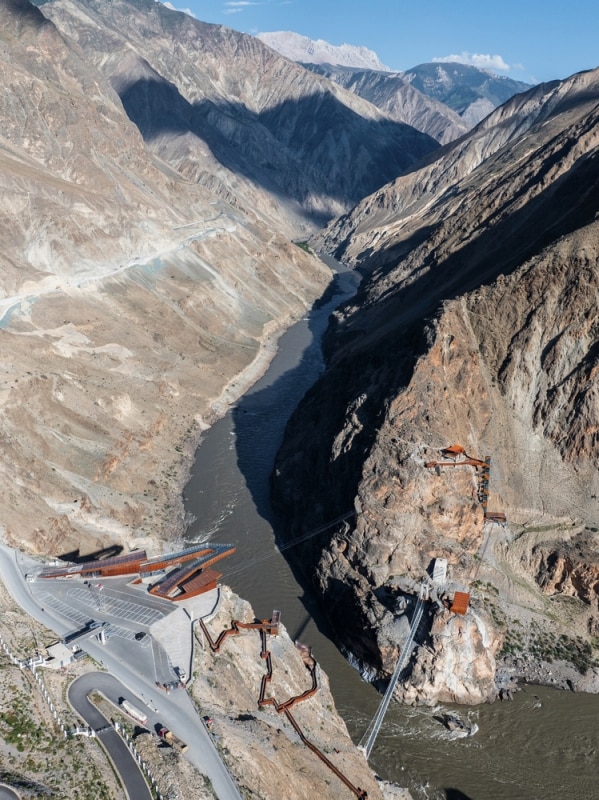
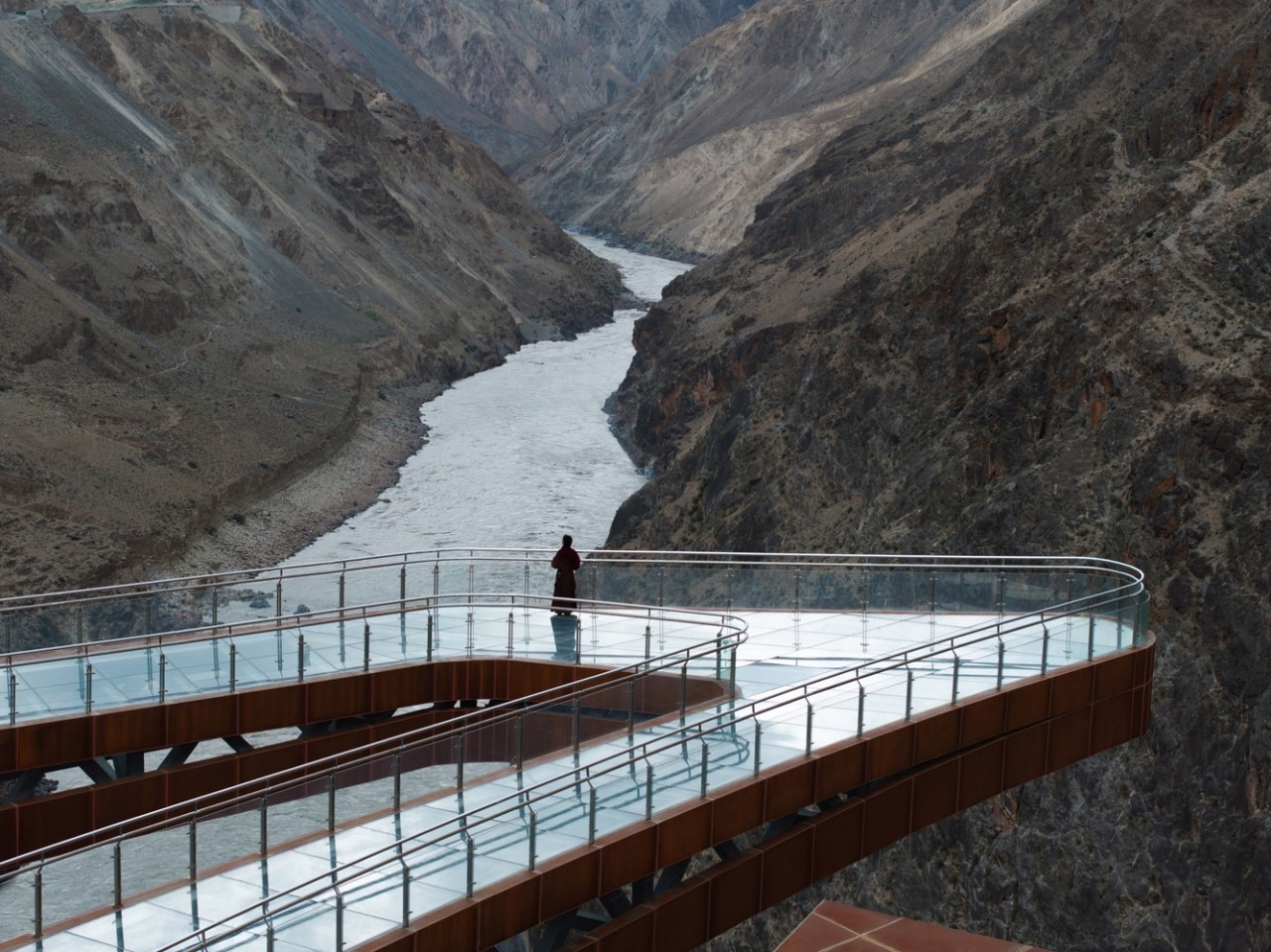
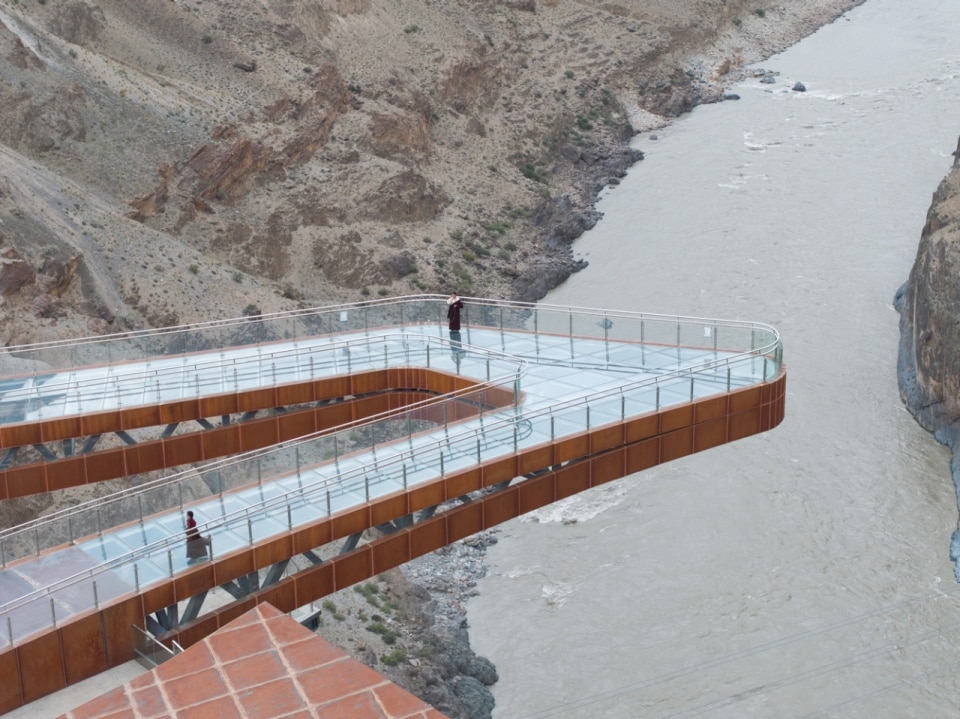
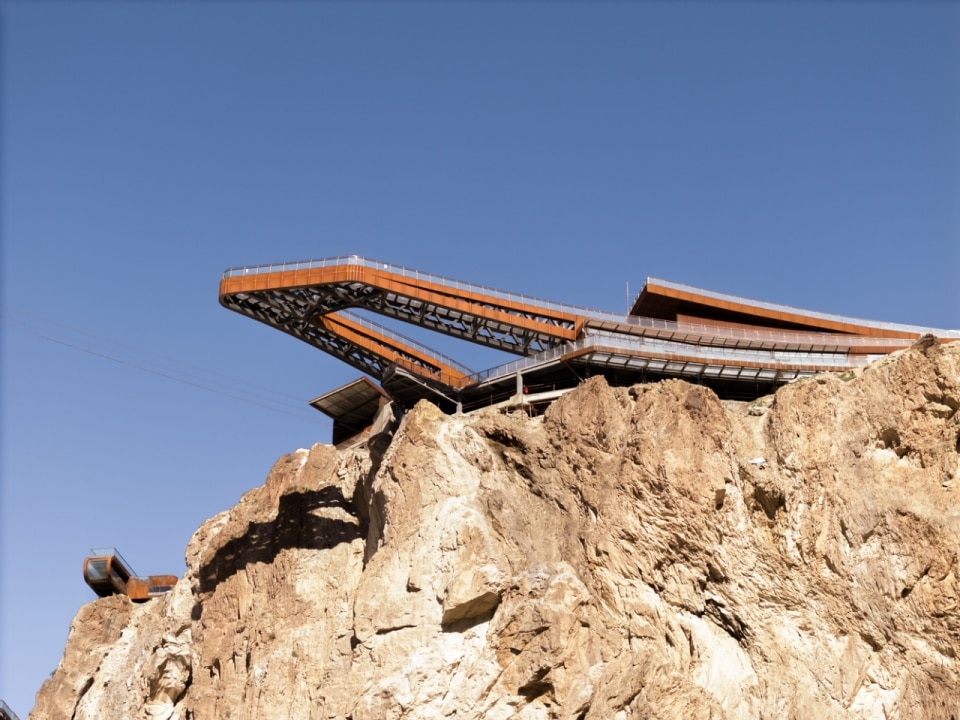
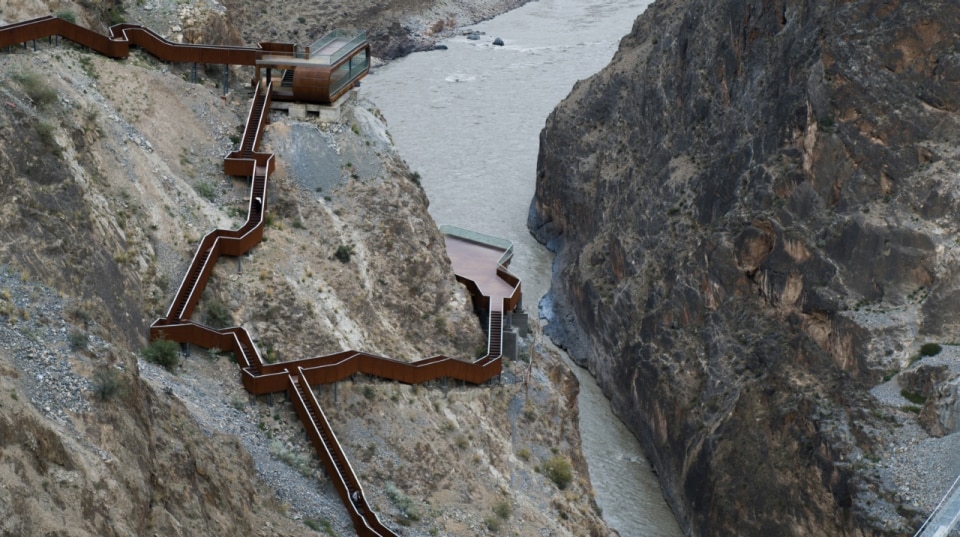
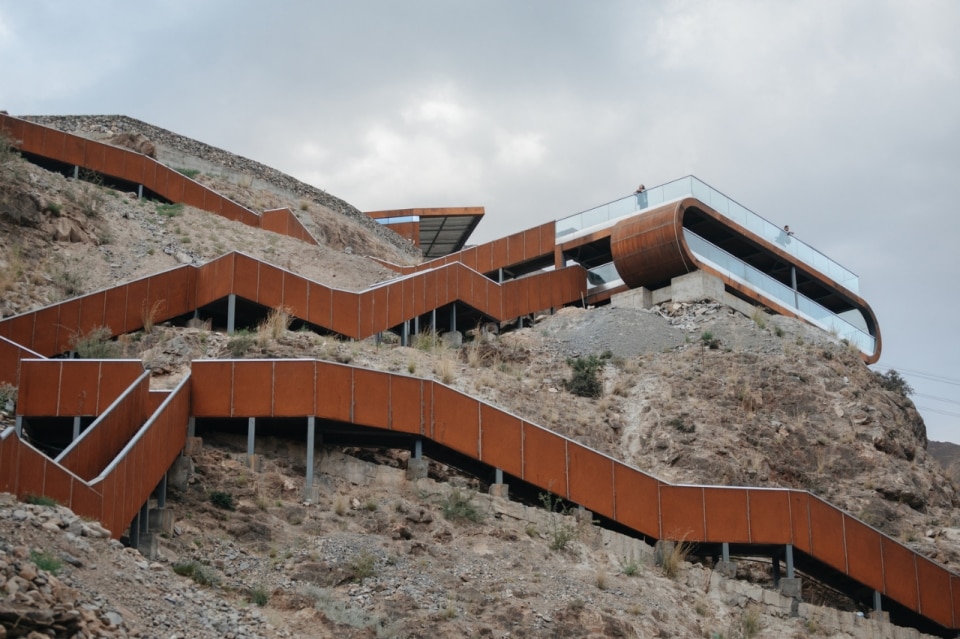
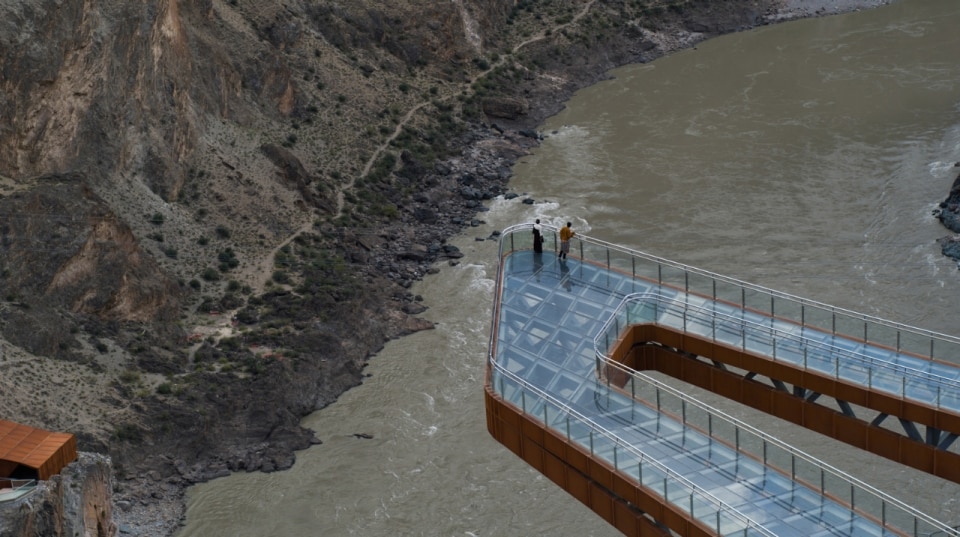
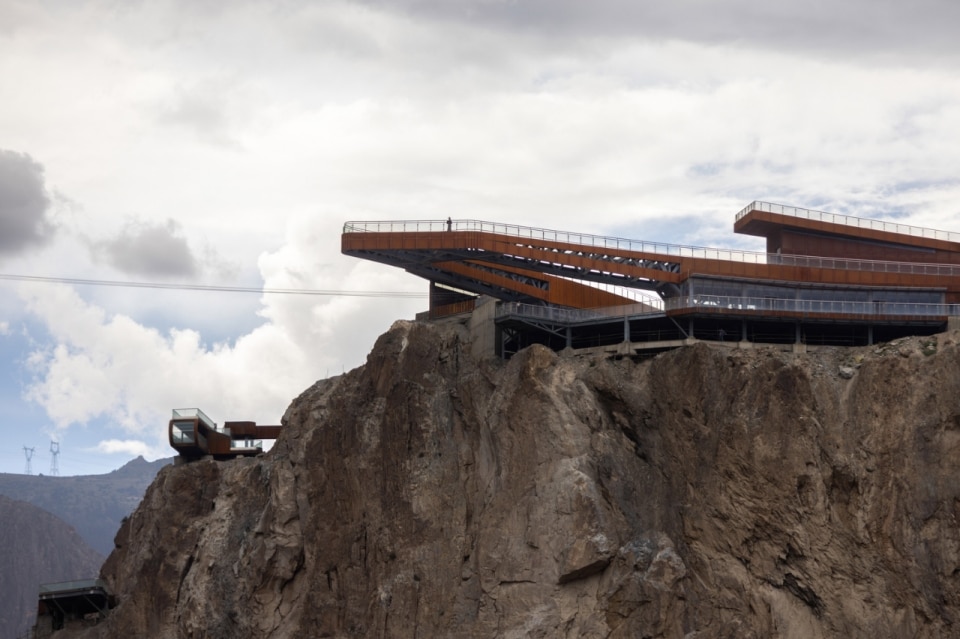
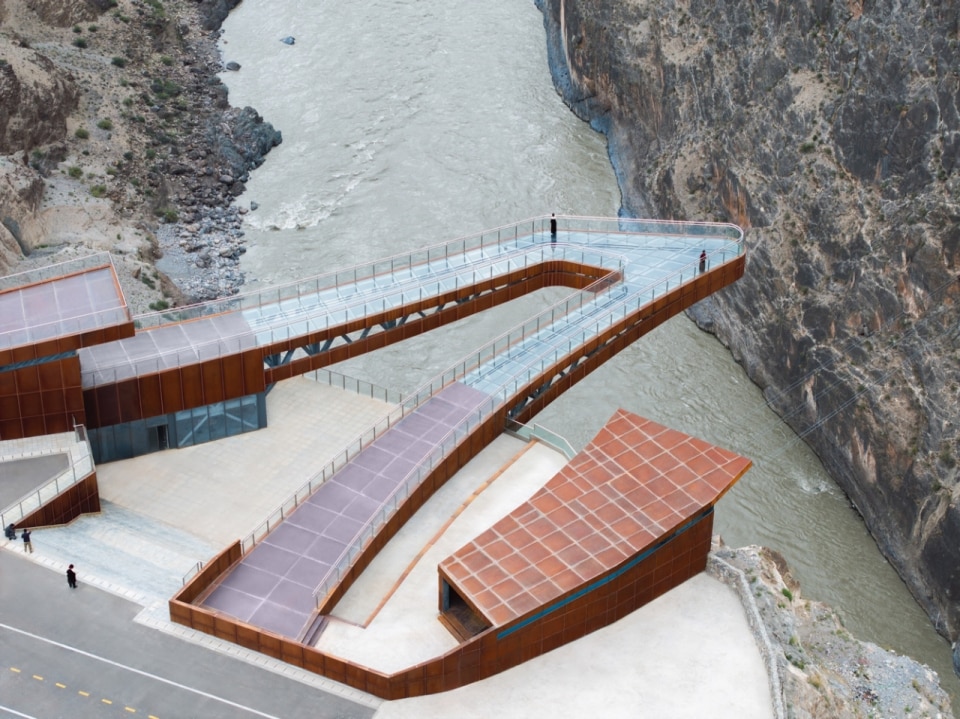
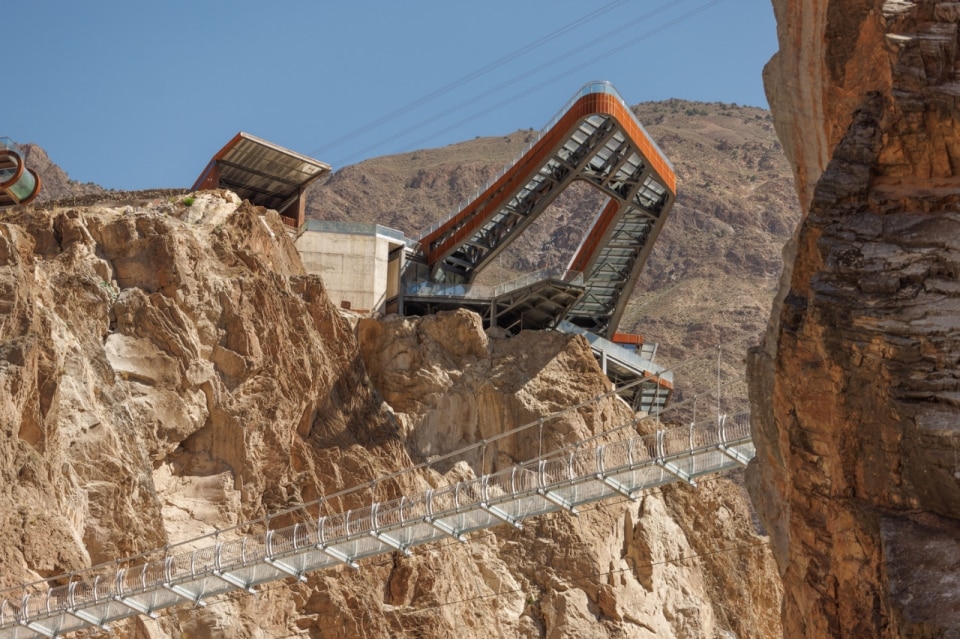
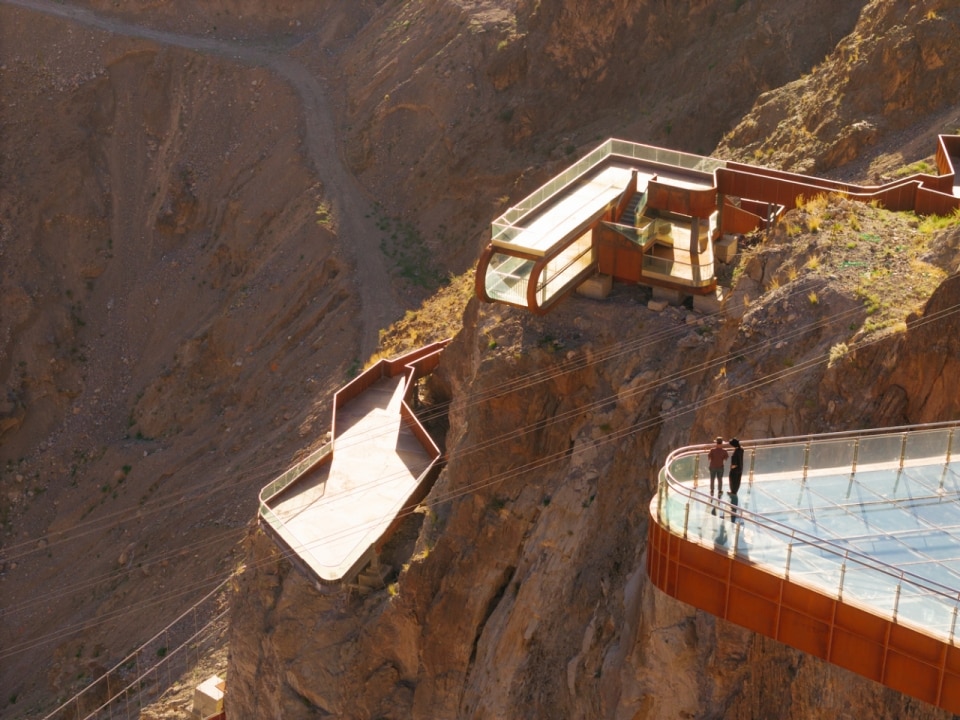
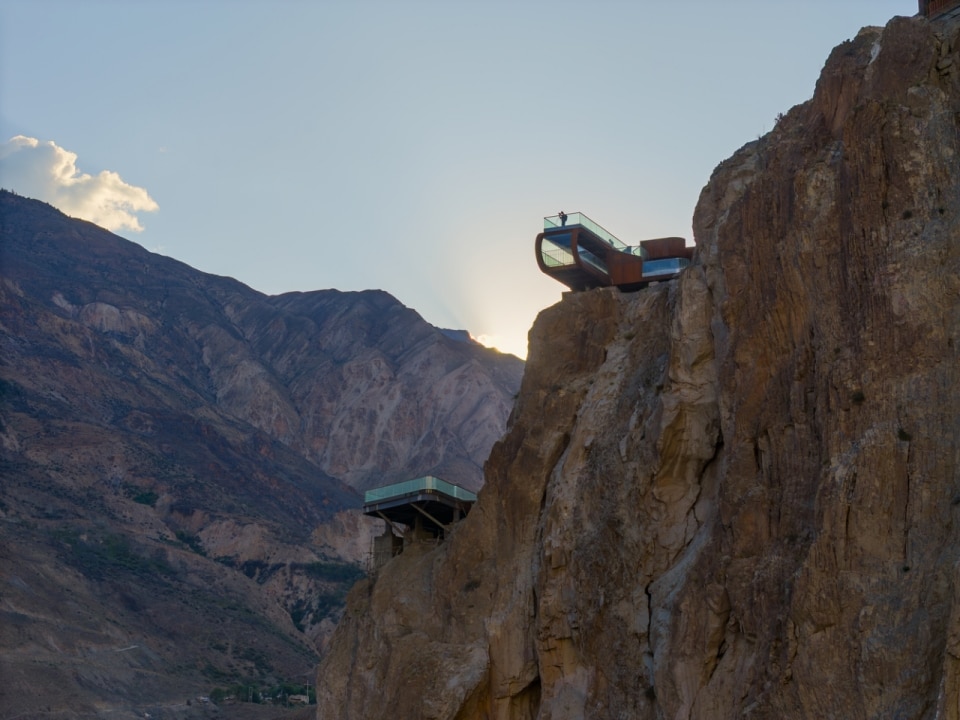
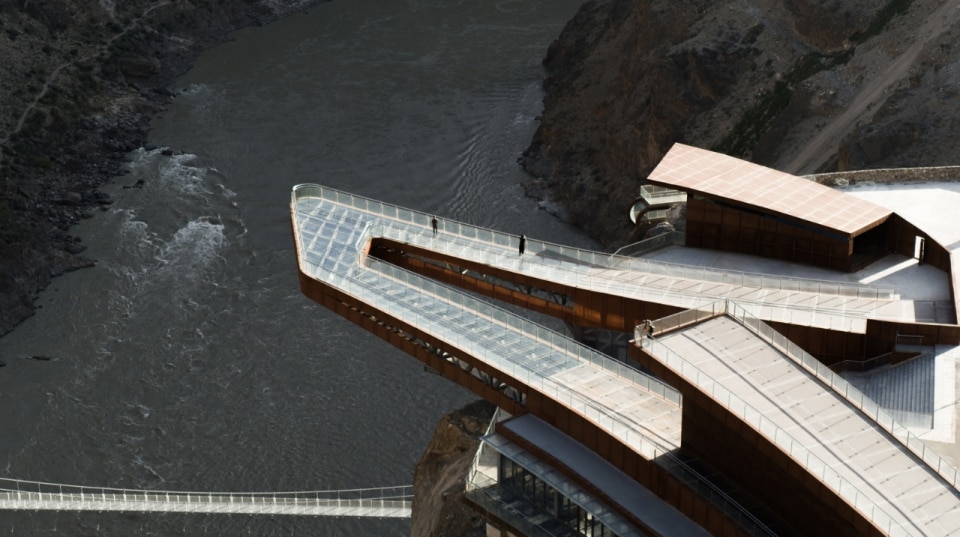
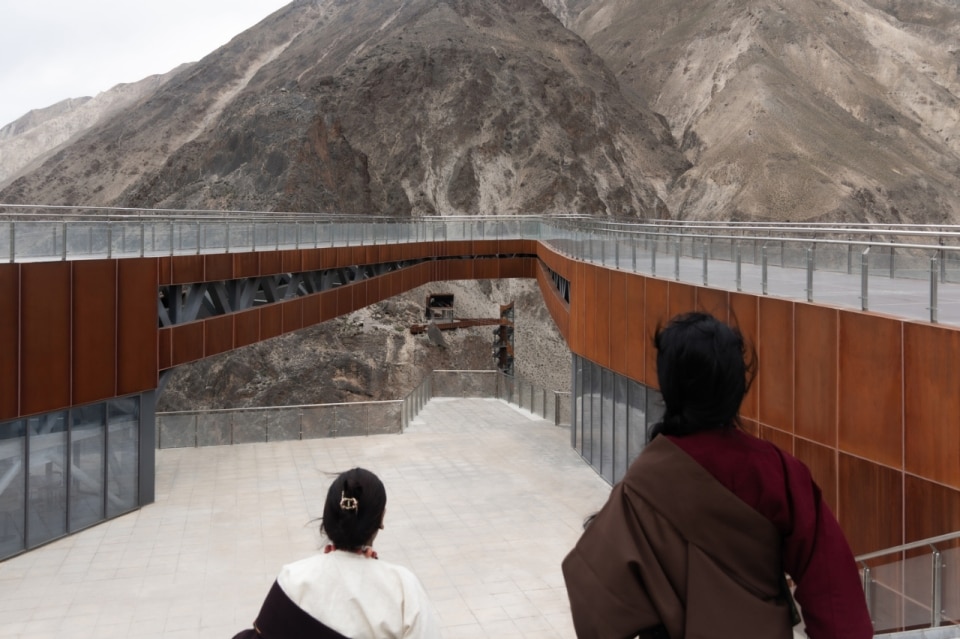
The centerpiece of the project is a panoramic glass walkway that cantilevers from the canyon wall, reaching an elevation of more than 130 meters above the Nujiang River. The structure, about 37 meters long, echoes in its broken geometry the pattern of road switchbacks, translating an automobile track into a suspended pedestrian path. The walkable floor, which is completely transparent, exposes the visitor to the void below, accentuating the perception of the depth and verticality of the site.
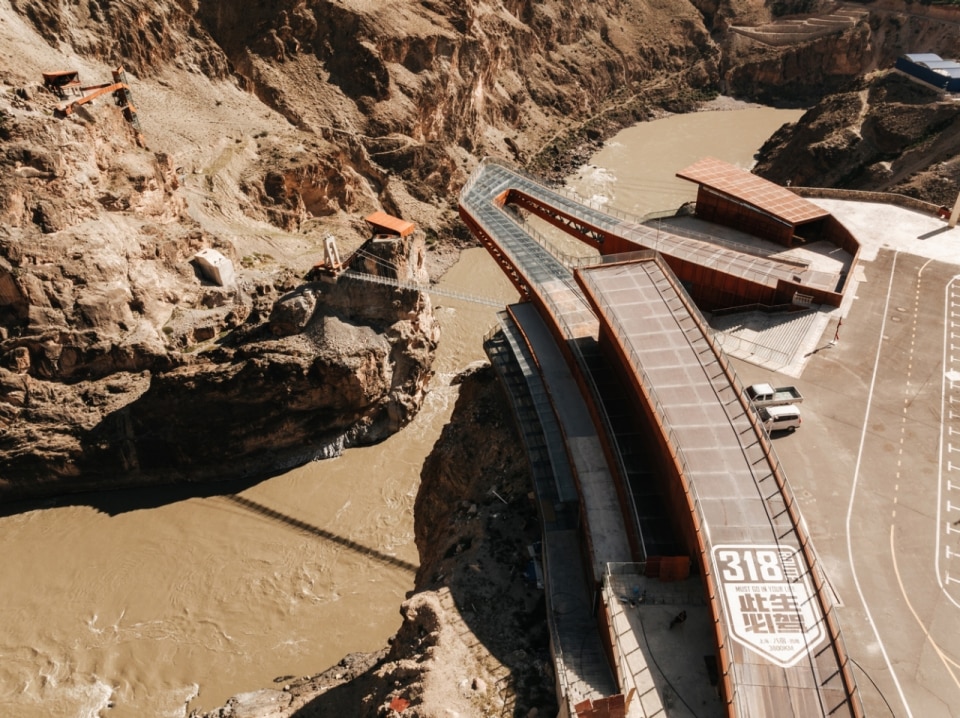
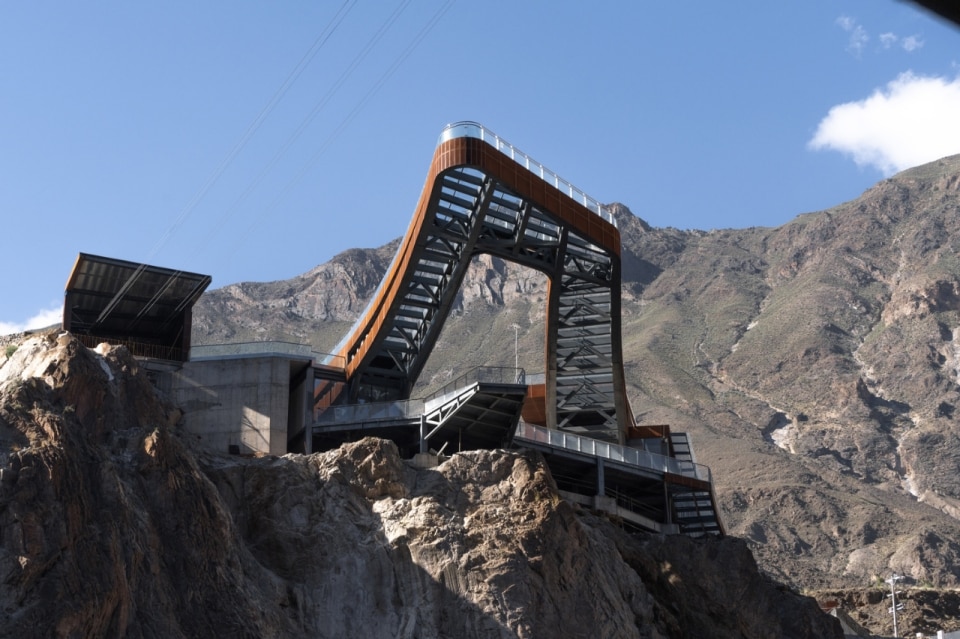
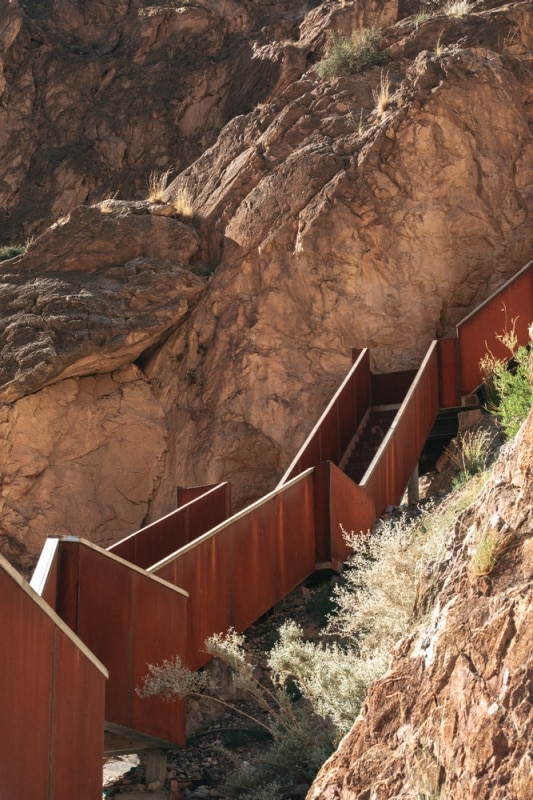
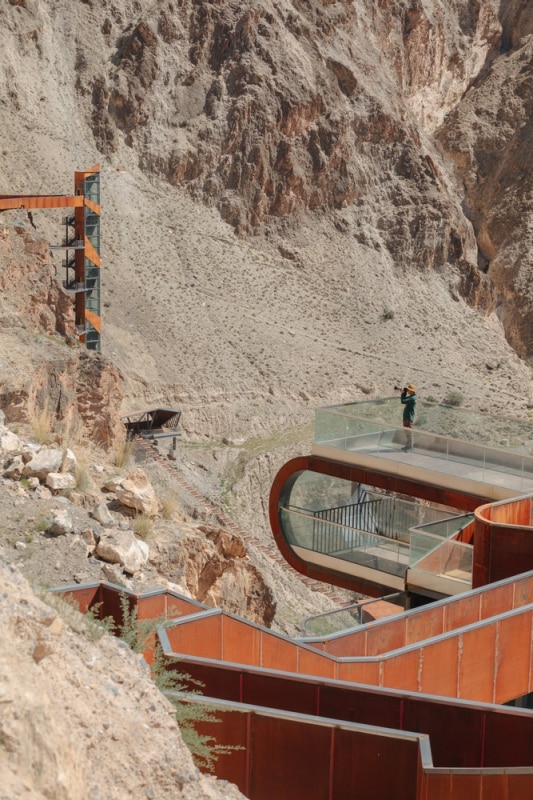
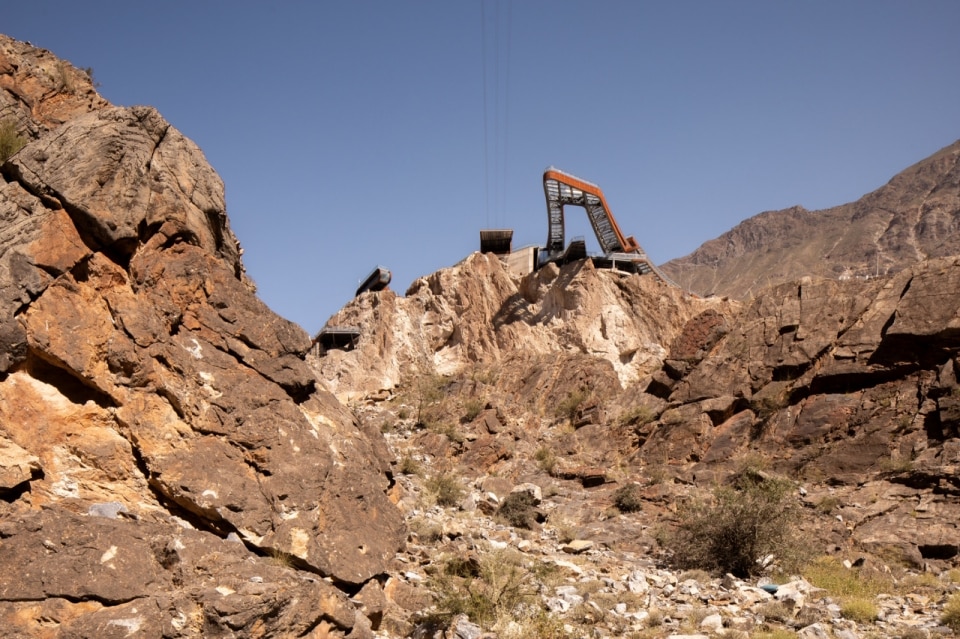
Constructively, the platform is made of high-strength steel truss beams anchored directly to the rock. The exterior cladding, treated with a deep red finish, recalls traditional shades of the local context and helps make the intervention readable from a great distance, without hiding its artificial character. The choice of materials also responds to the environmental conditions of the site, which is characterized by large temperature ranges, wind and long periods of frost.
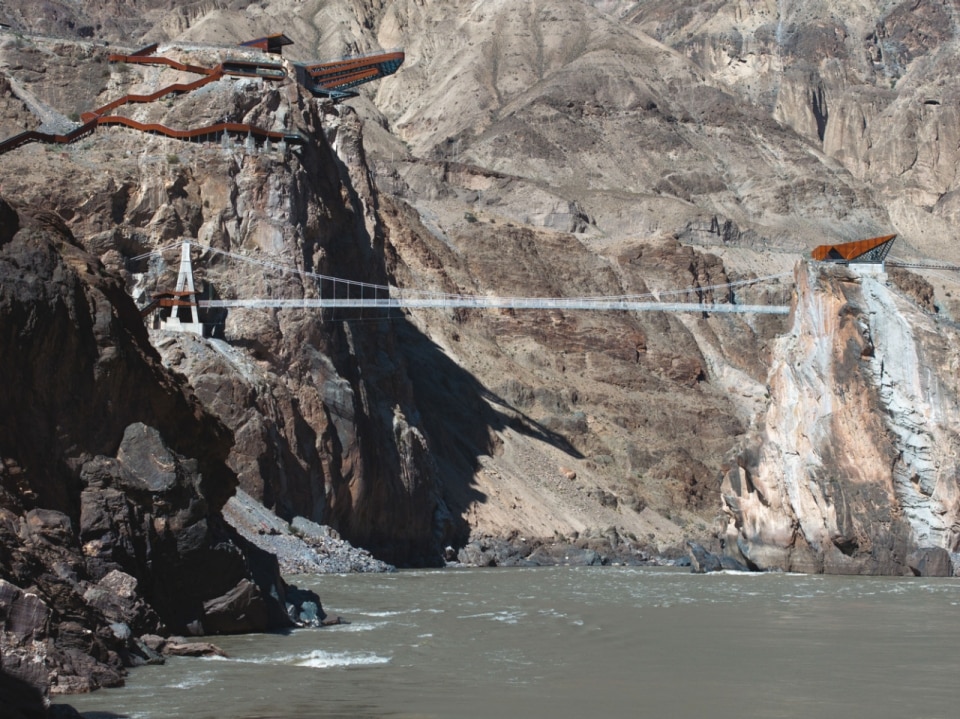
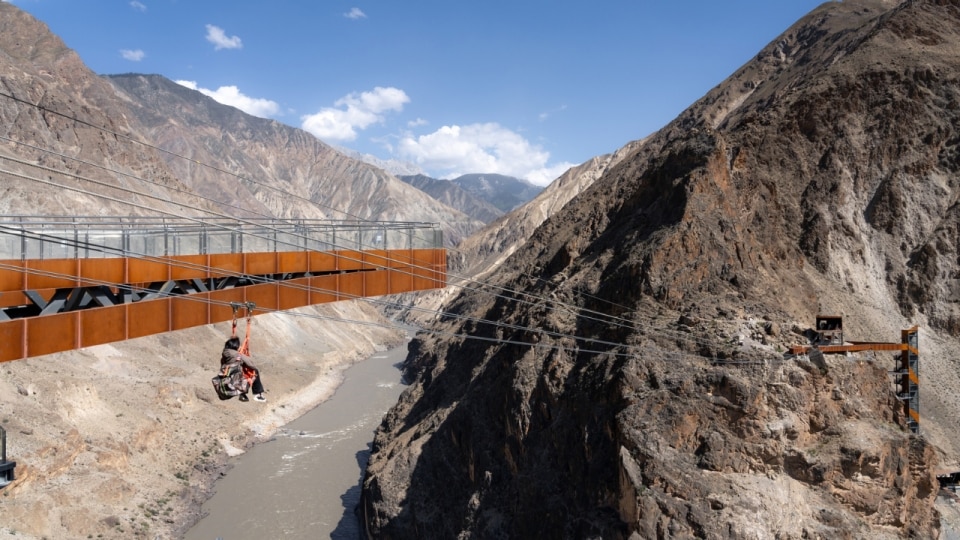
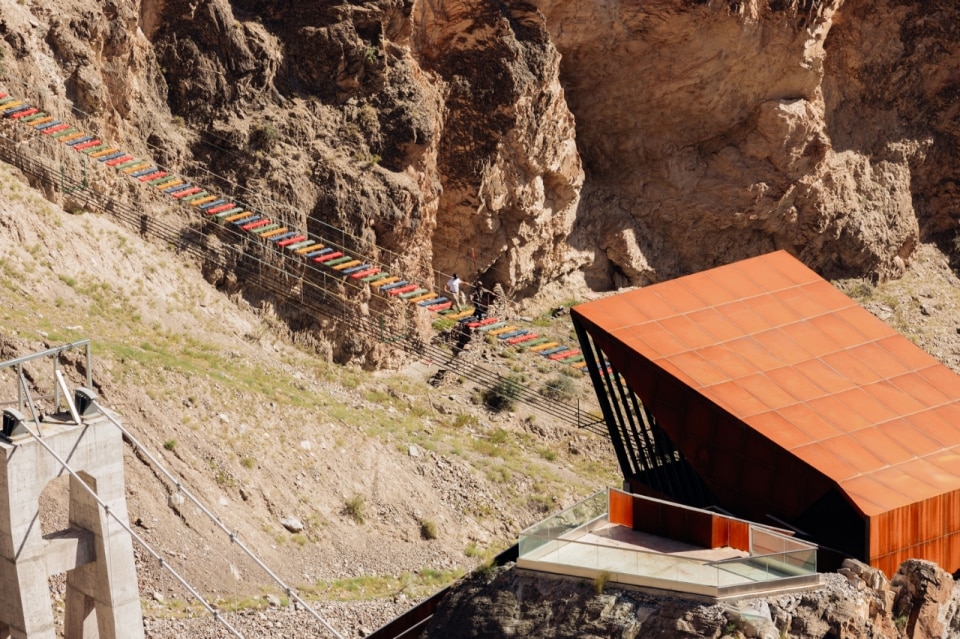
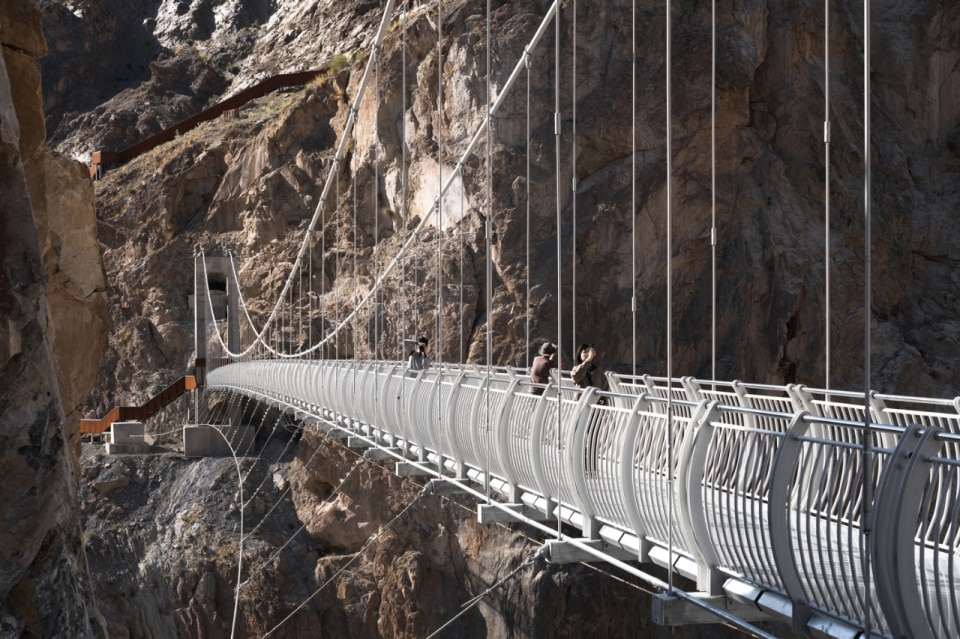
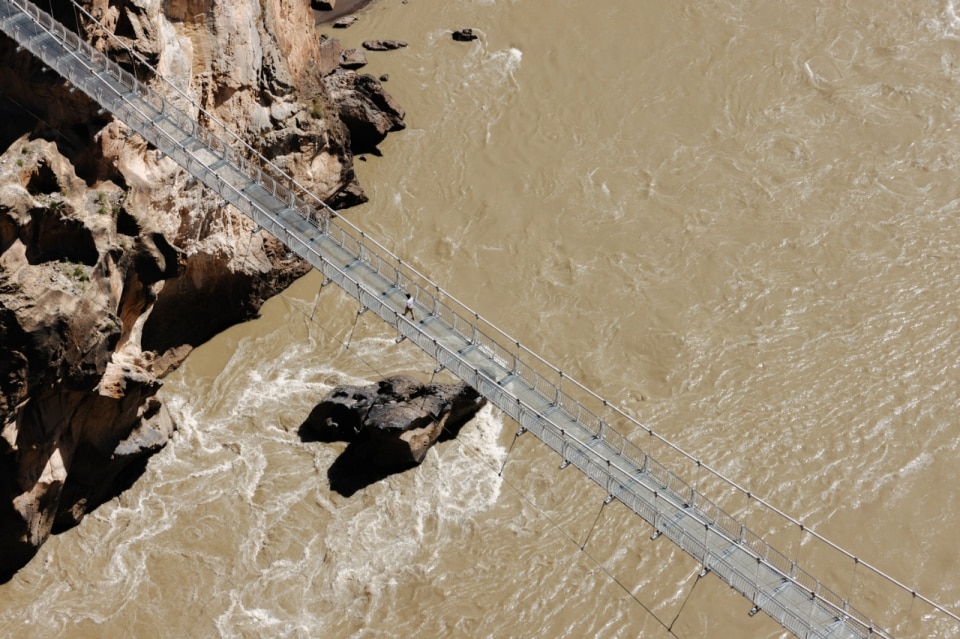
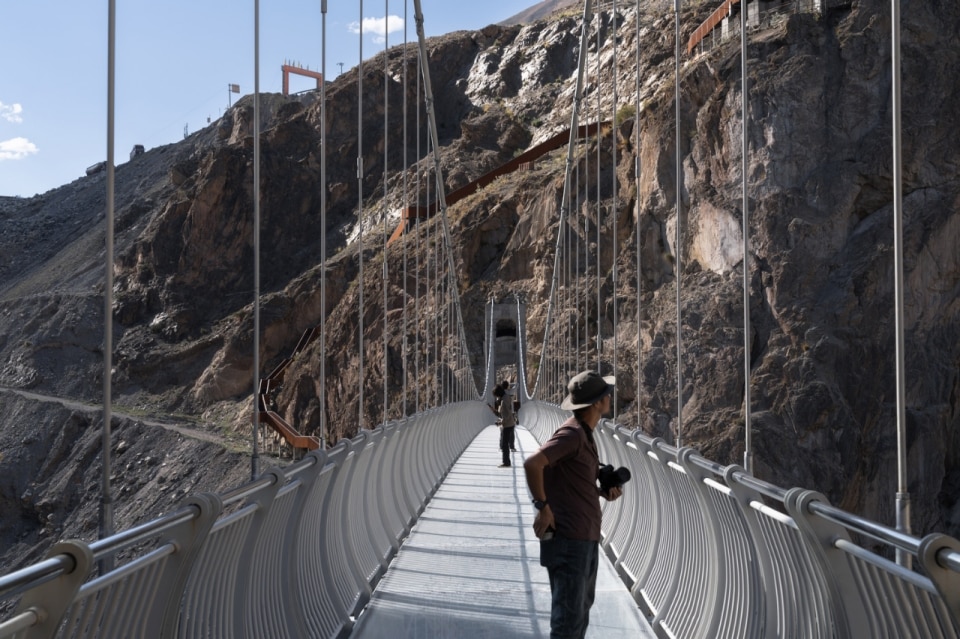
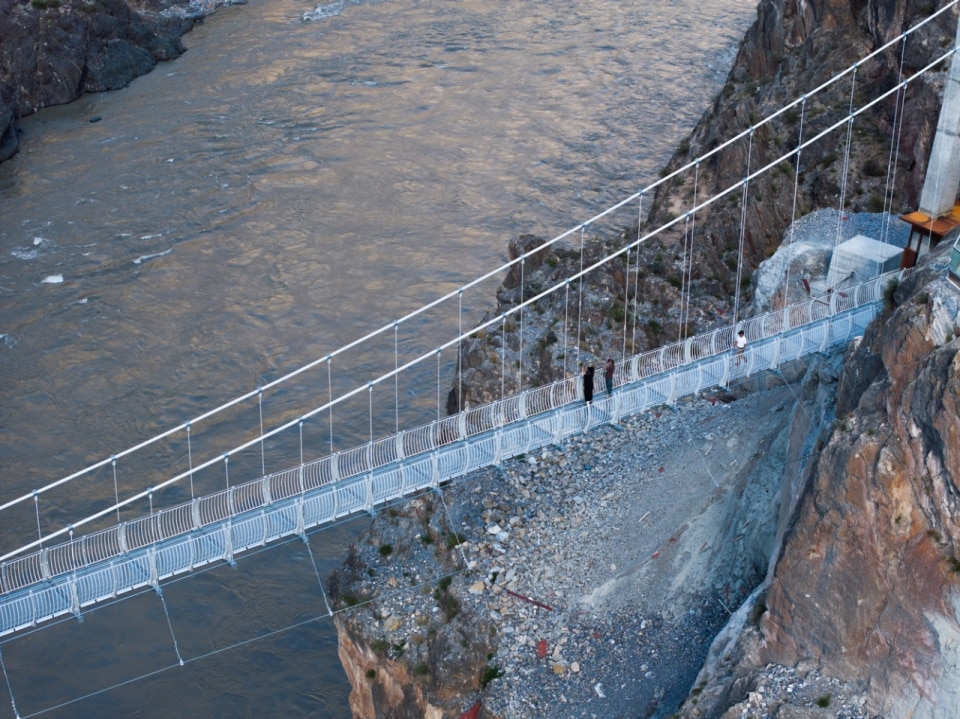
Around the main walkway, the project integrates a series of experiential devices that extend the route: a glass suspension bridge, a zipline that crosses the canyon, and a vertical staircase attached to the rock, designed as an element of physical and symbolic challenge. These elements are not conceived as isolated attractions, but as parts of a sequence that builds a progressive relationship with the landscape, shifting attention from mere contemplation to bodily participation.
The realization of the work required a long and complex construction process over several years, made difficult by the site's limited accessibility and the absence of flat surfaces. Much of the structures were prefabricated and assembled on site under extreme operating conditions, reaffirming the infrastructural character of the intervention.
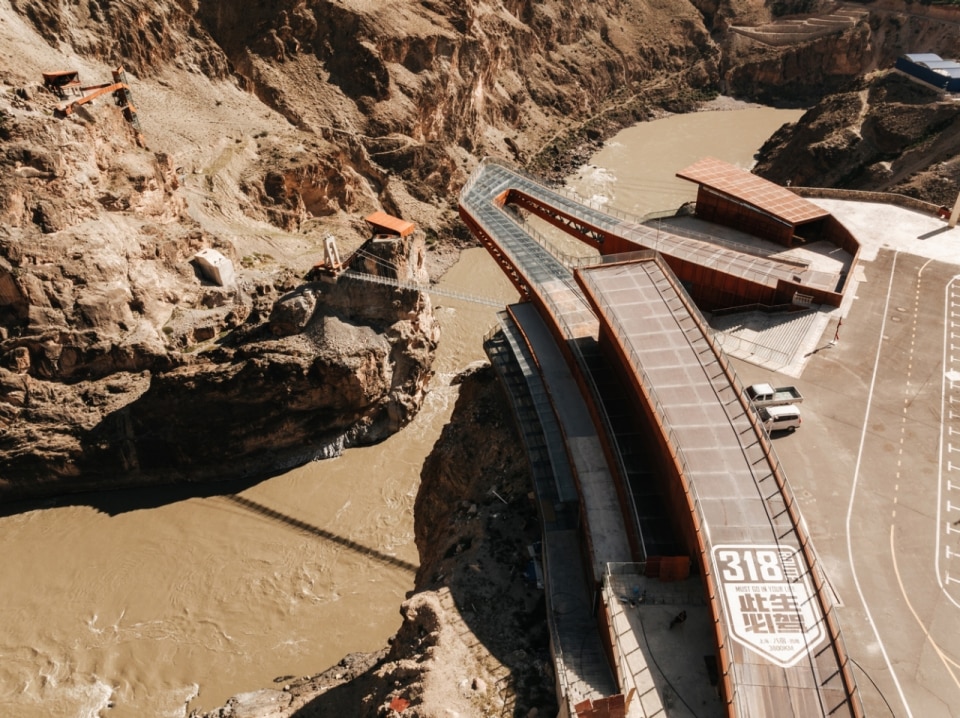
As a whole, the project proposes a contemporary reading of the Tibetan mountain landscape, in which architecture does not merely frame the view, but constructs an experience of exposure, risk, and measurement of the land. The canyon is treated not as a natural backdrop, but as an active space, traversable and walkable, in continuity with the history of the road through it.