

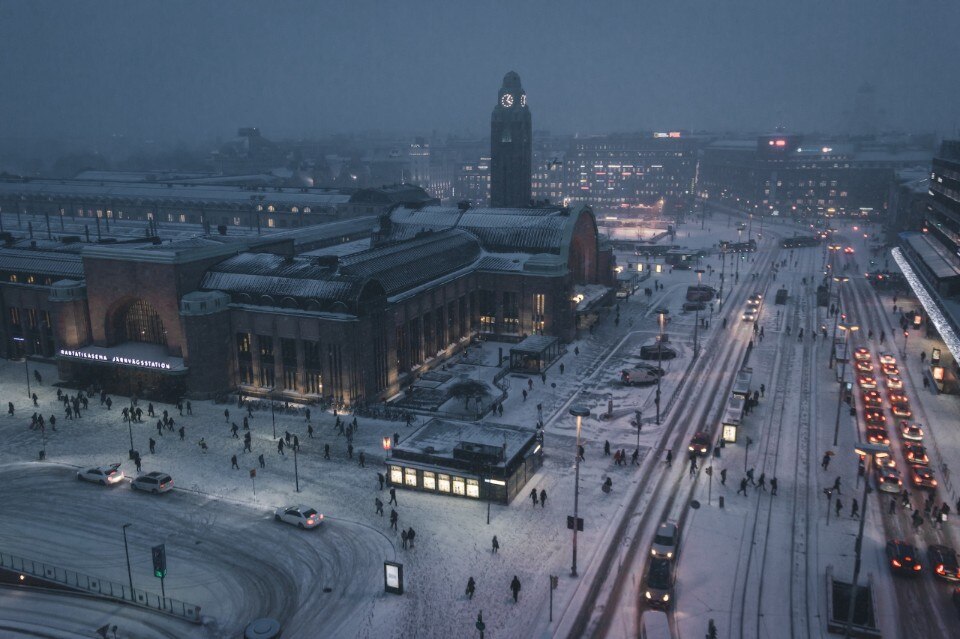
Despite the harsh climate and ice-covered roads, the Nordic nation's road accident rate is falling significantly compared to the rates of years past. To manage traffic, the city of Helsinki commissioned a transport master plan, drawn up by the US firm Wilbur Smith & Associates and the Finnish firm Pentti Polvinen ky, in the 1960s – at that time, rising post-war incomes allowed an increasing number of residents to buy cars, and the number of vehicles registered in the city tripled in just seven years. In 1968, the consultants delivered their proposal comprising almost 200 miles of new motorways in the Helsinki region, with much of the city centre razed to create space for high-speed motorways.
After rejecting the proposal, which was considered too invasive even by the Finnish government, the country decided to invest in a massive transport expansion instead. The city built the world’s northernmost underground, which opened in 1982. In 2016, about a quarter of urban travel in Finland is done on foot, more than 9 per cent by public transport and 7.5 per cent by bicycle. Furthermore, Helsinki officials have focused on slowing down cars, rather than drastically limiting their use in the city centre or building a comprehensive network of separate bicycle lanes.
To curb road hazards, Helsinki has also installed some 35 automatic cameras to catch motorists exceeding the 20 km/h speed limit and receive a 200 euro fine in the mail. Not all of the city’s cameras are switched on at the same time, but more importantly, motorists do not know which ones are switched off.
But the Finnish approach to speeding is unique. If a Finn is caught exceeding the posted limit by more than 20 km/h, the resulting fine is proportional to the offender’s income.
Thanks to this sequence of urban planning, Finnish roads are able to maintain a very low accident rate: fatal accidents fell by 50 per cent between 2001 and 2019, while in 2021 only 219 people died on Finnish roads, or four per 100,000 inhabitants.
Opening image: photo Alexandr Bormotin, via Unsplash