

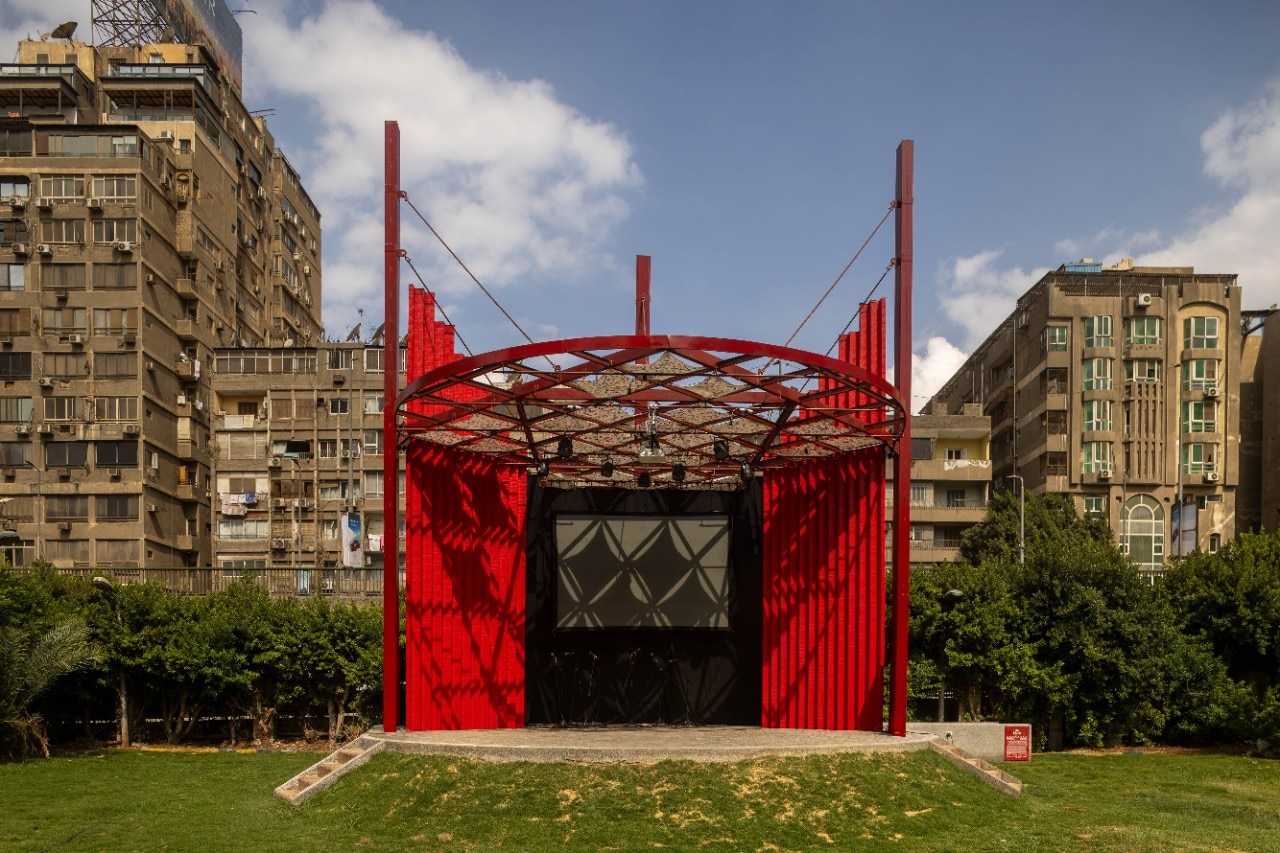

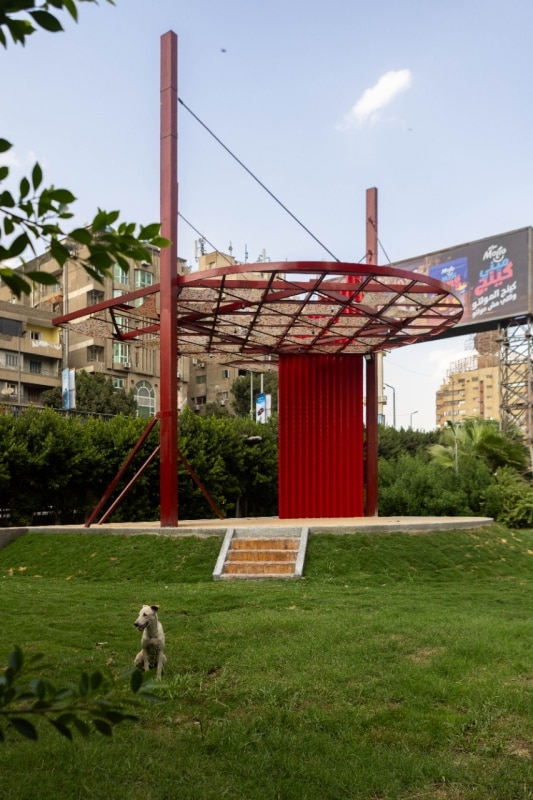
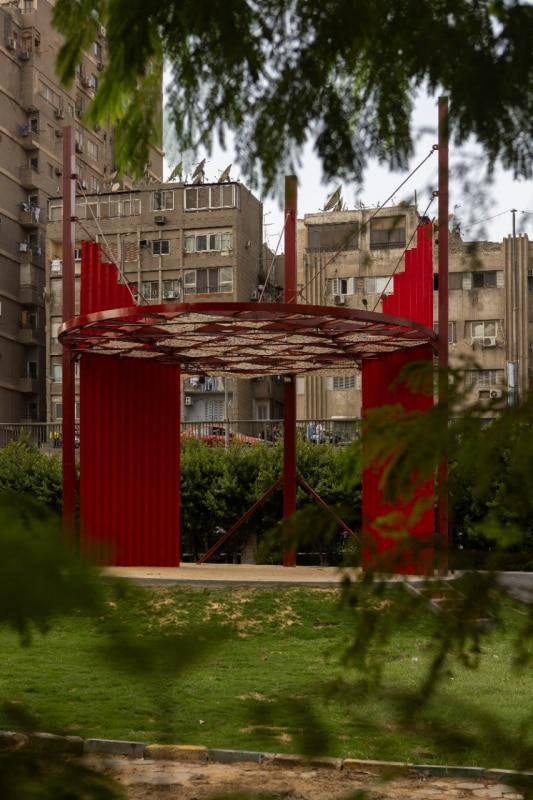
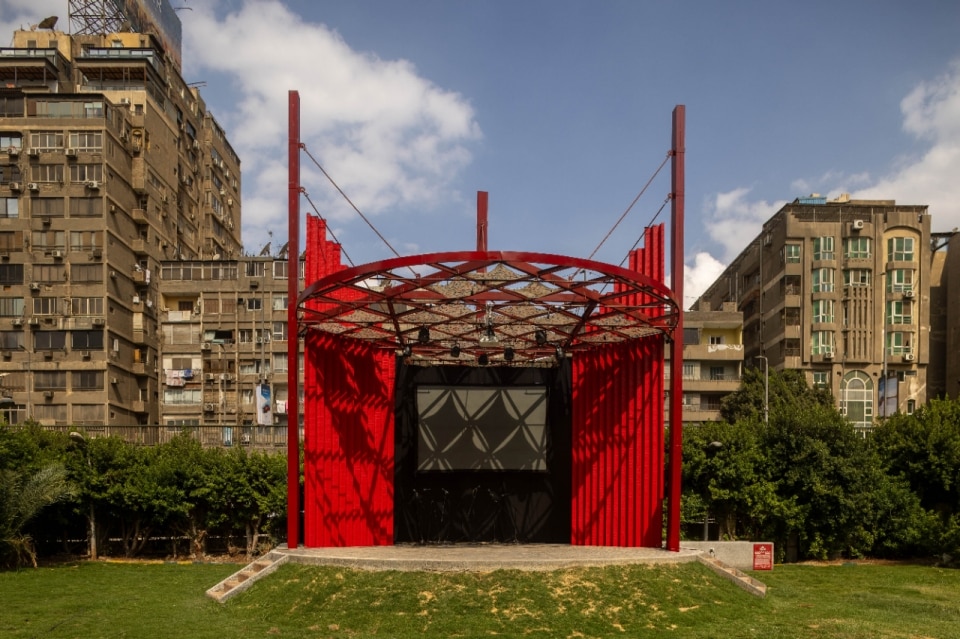
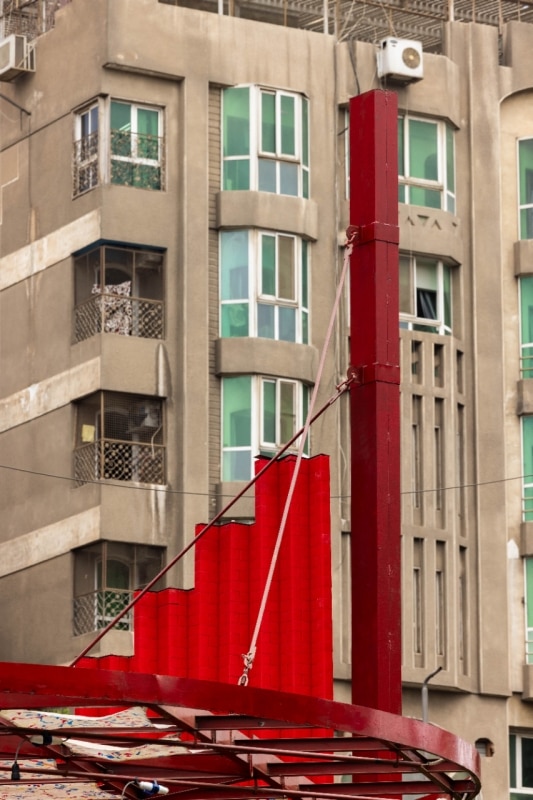
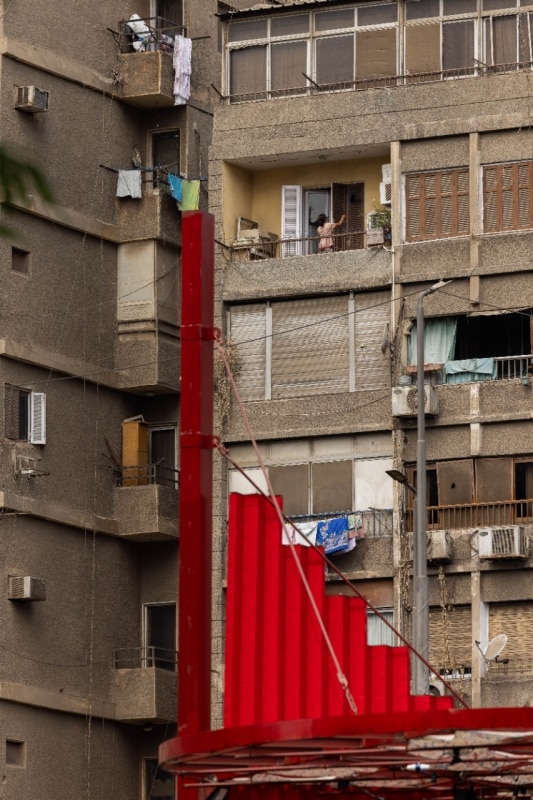
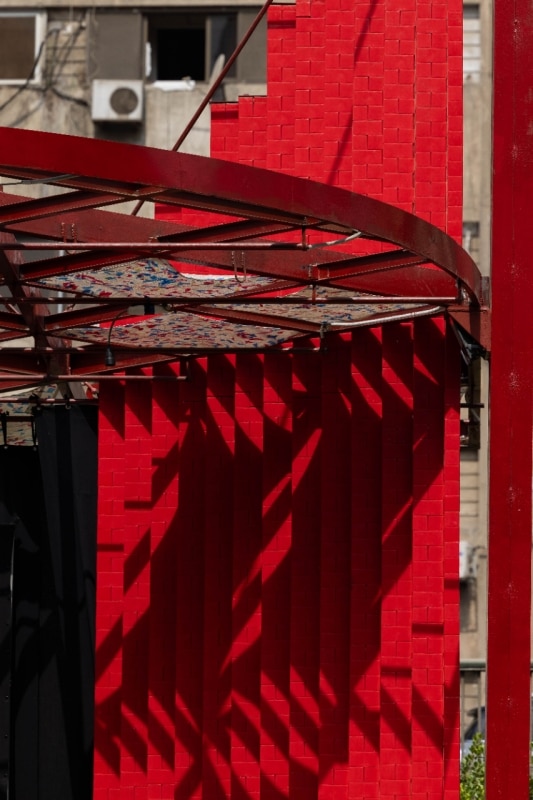
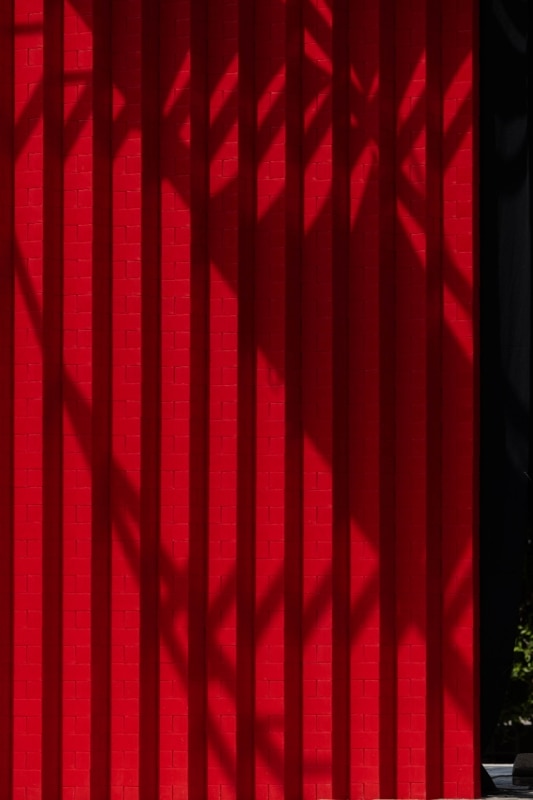
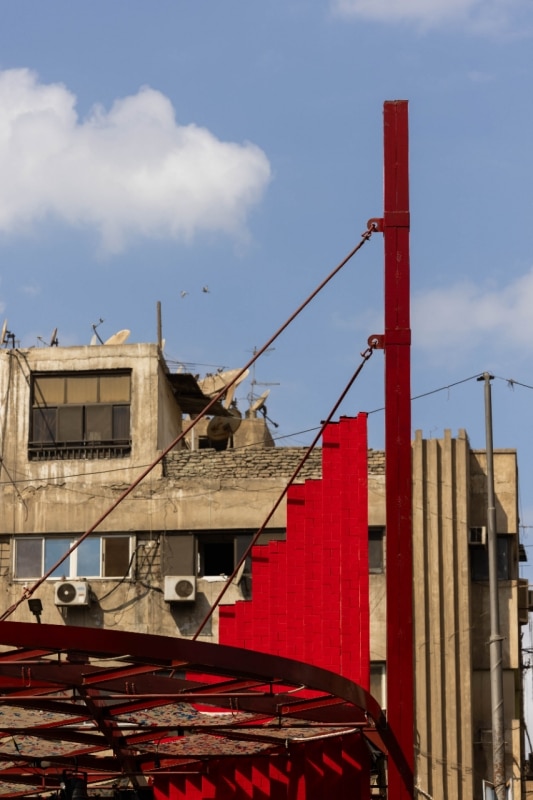
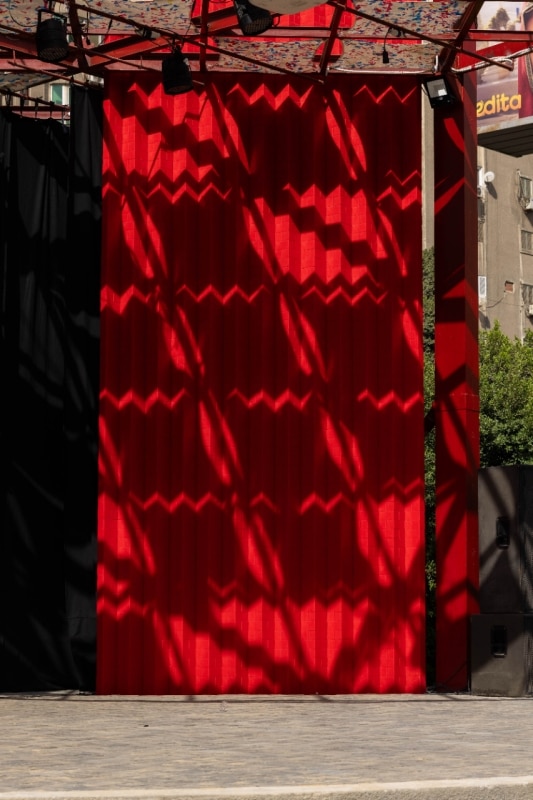
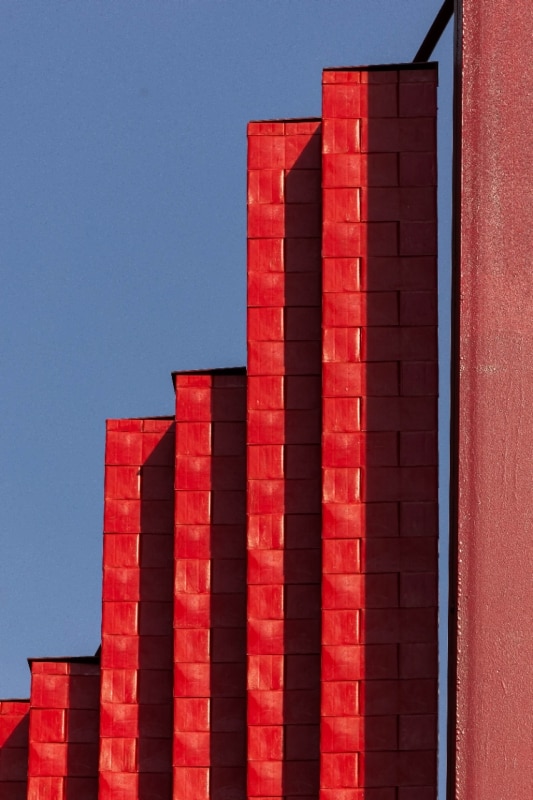
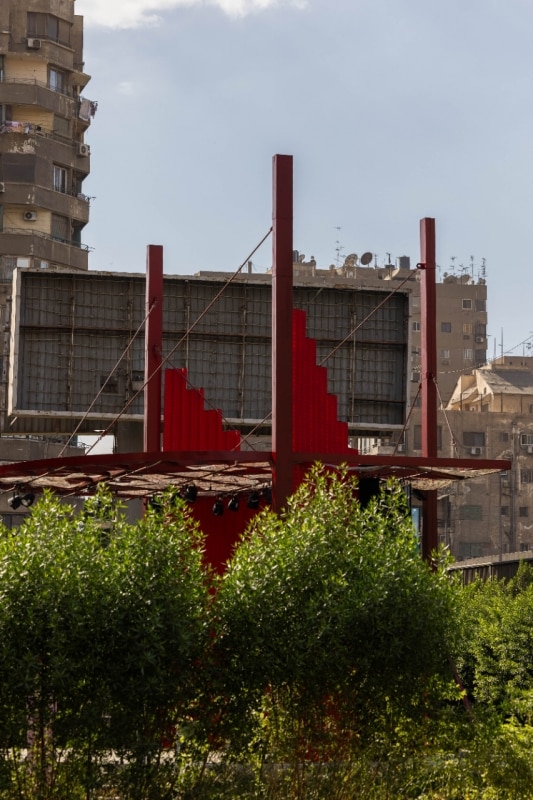
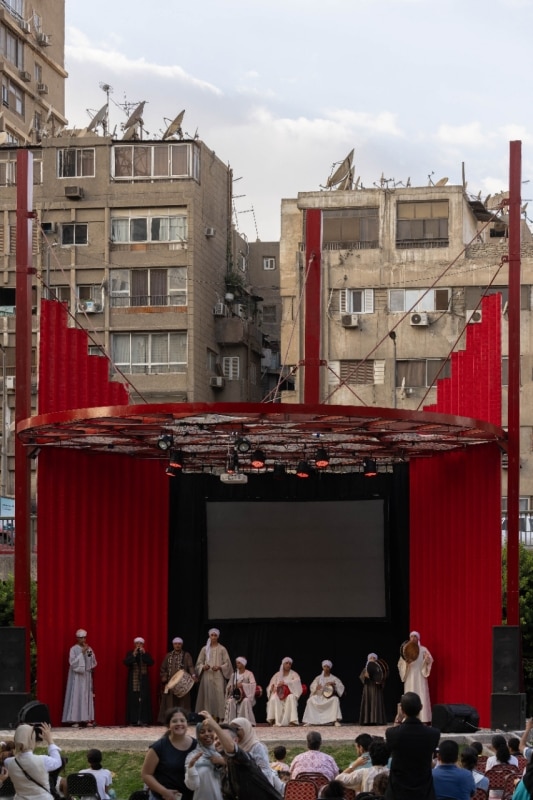
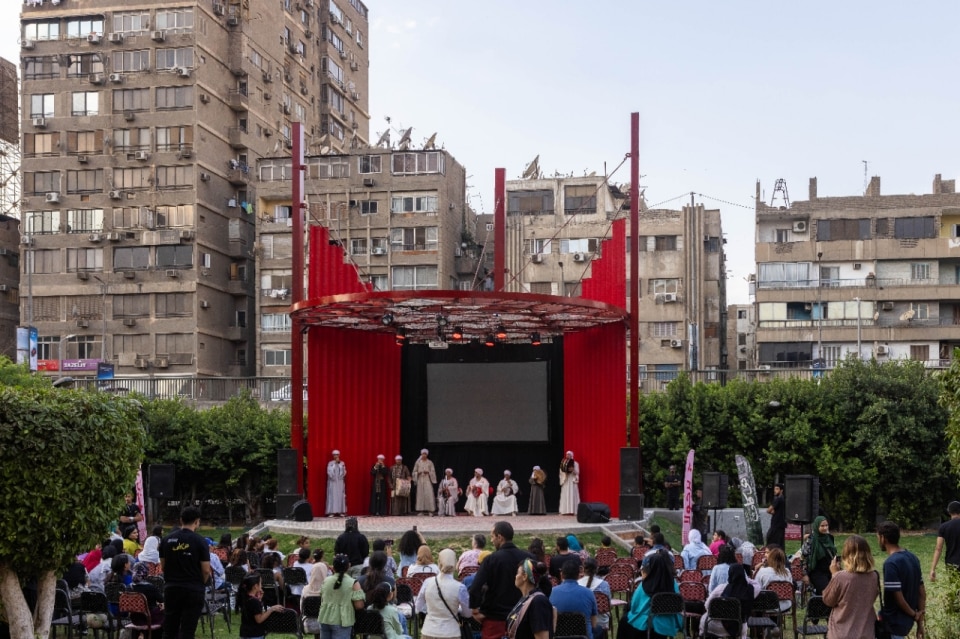
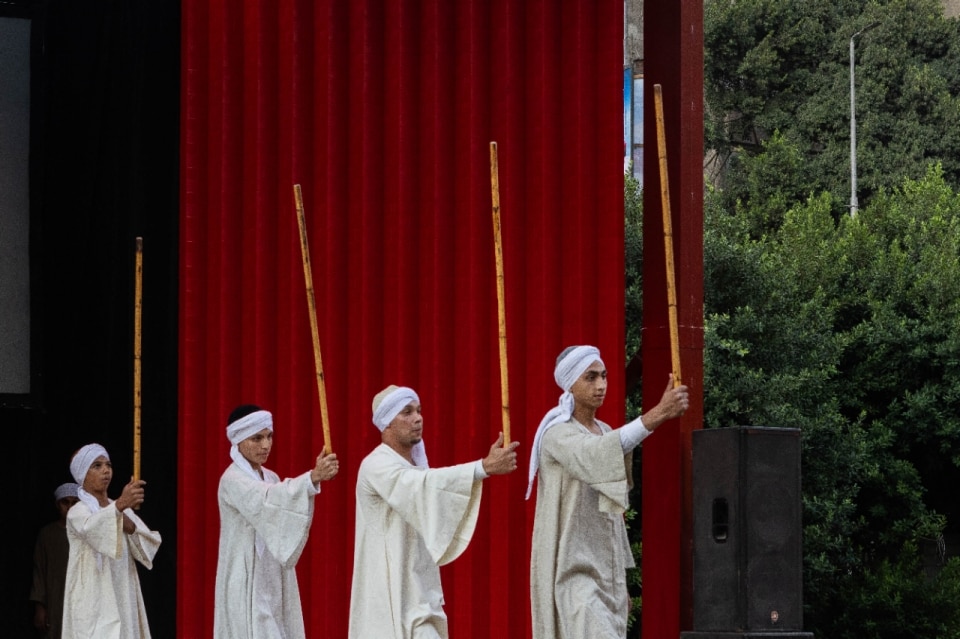
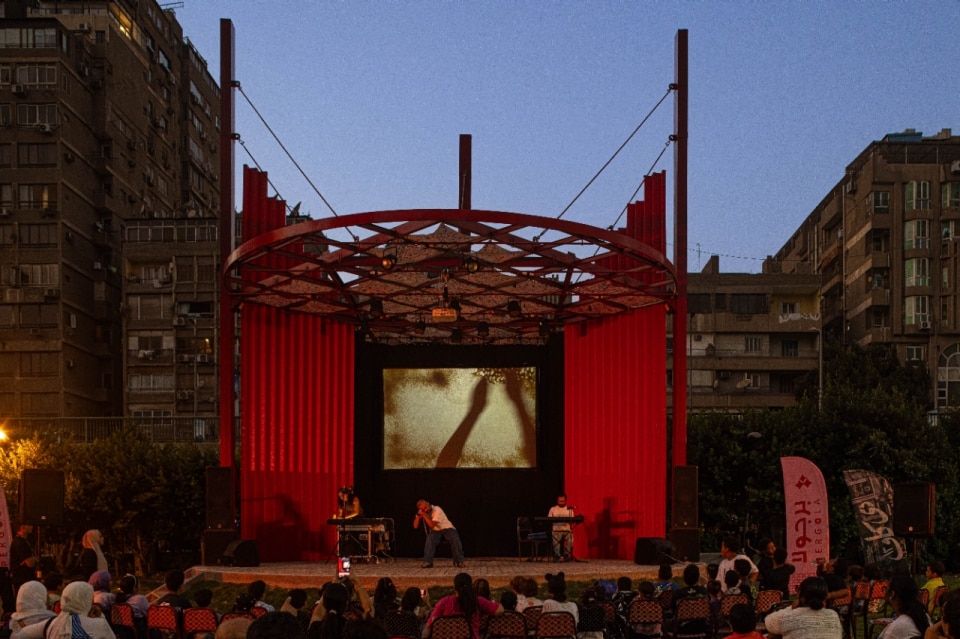
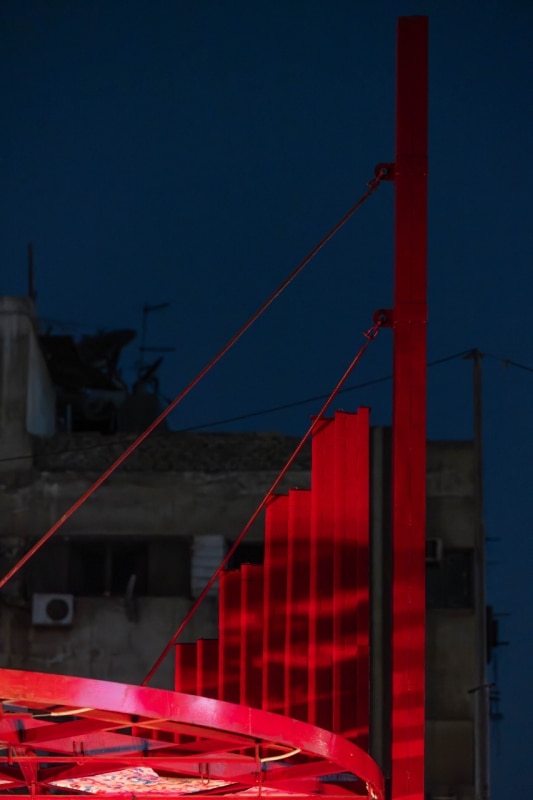
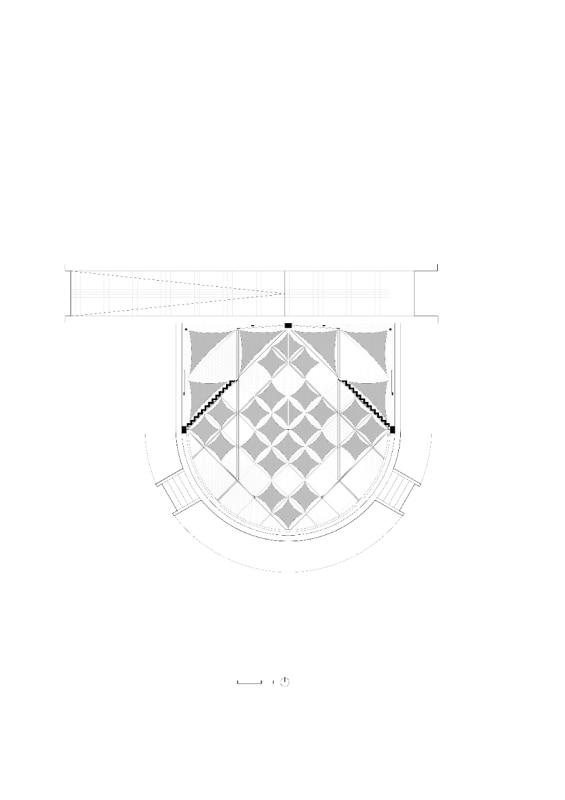
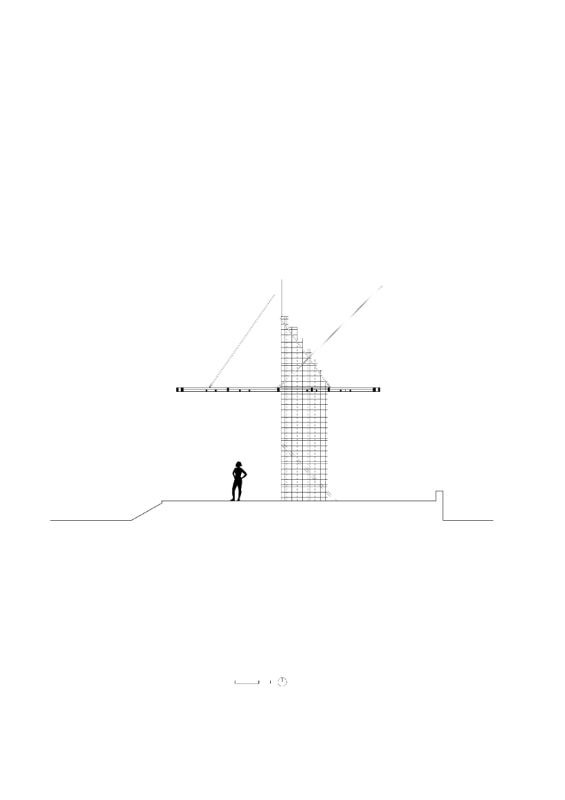
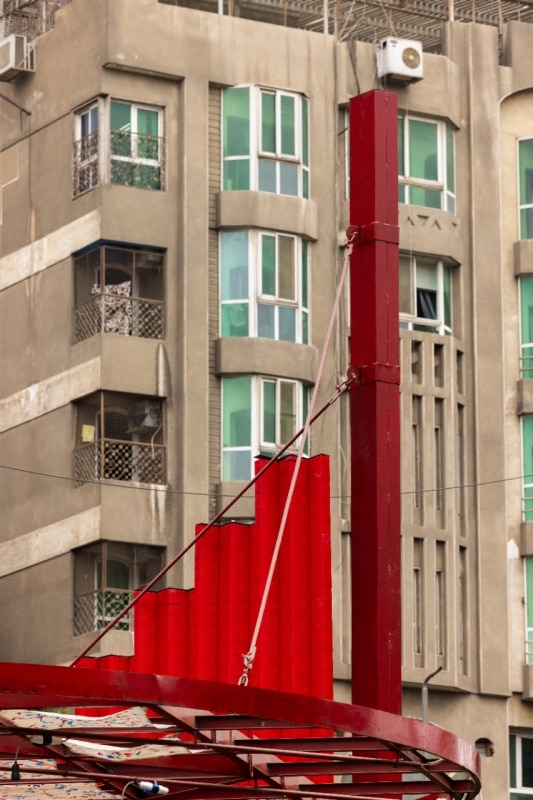
In Agouza Children's Park, one of the few green spaces still accessible in Cairo, stands a ten-meter-high red structure: Pergola, a new community and cultural space designed by CLUSTER (Cairo Lab for Urban Studies, Training and Environmental Research) in collaboration with London-based studio THISS and company Orient Productions. Placed along the west bank of the Nile, next to the heavy traffic of the 6th of October bridge, the installation takes on the role of an urban signal and public presidium in a city where building pressure is progressively reducing open and shared places.
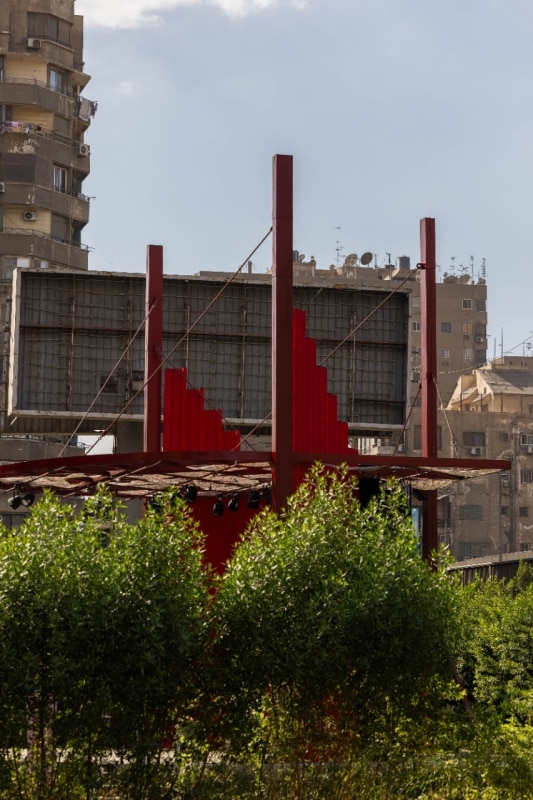
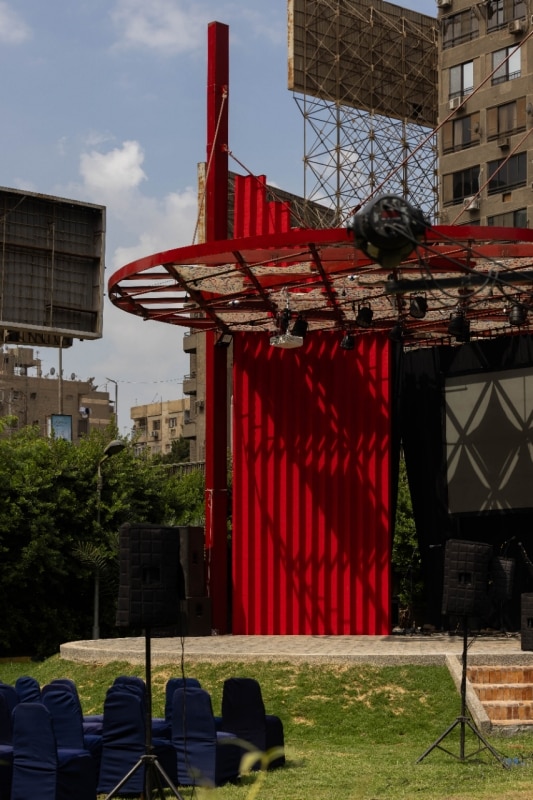
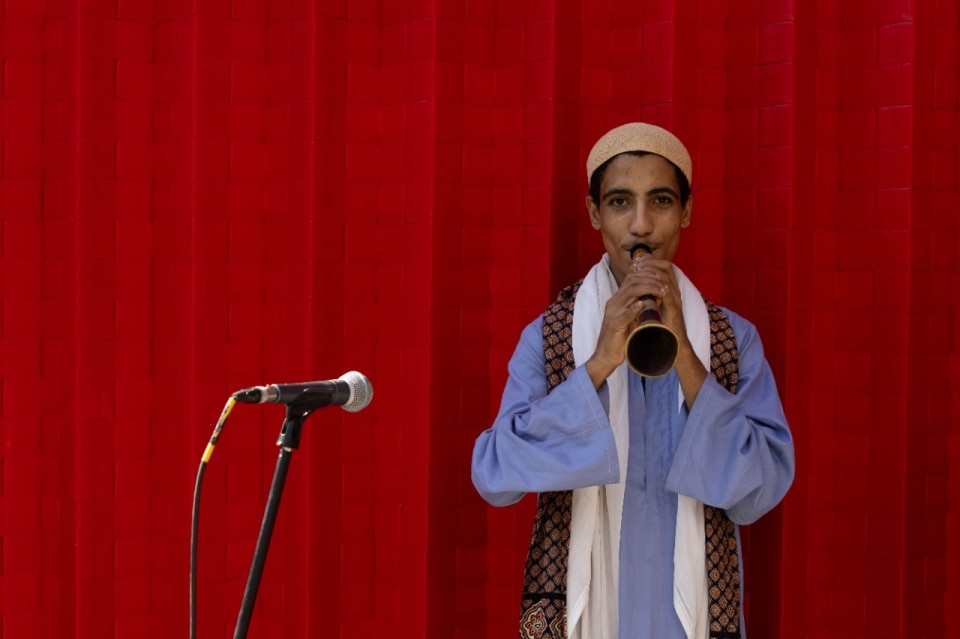
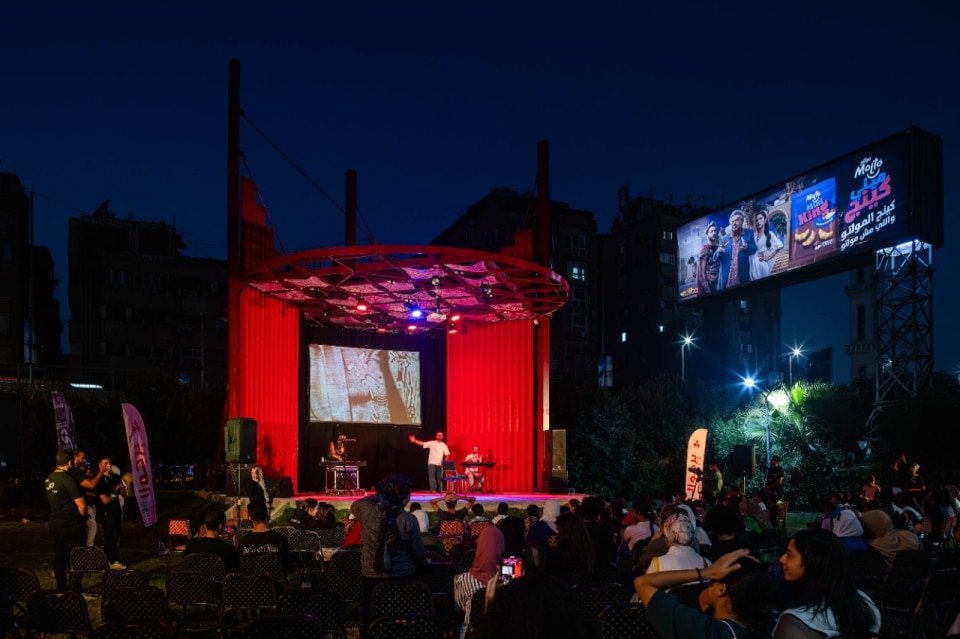
Inspired by traditional nineteenth-century bandstands, the project is proposed as a device of resistance to the privatization and commercialization of public space. The structure, completed in September 2025 and inaugurated as part of a city arts program, is conceived as a flexible infrastructure: outdoor theater, meeting point, shade cover. Equipped with sound and lighting systems, it hosts concerts, performances, and screenings, but can be reconfigured for informal uses, from block parties to community gatherings.
The intervention is part of CLUSTER's larger Along-the-Line program, dedicated to the reactivation of contested spaces along the Nile. The park itself has been undergoing transformation and appropriation for years: fences, billboards and speculative projects have reduced the green space, fueling fears that it may disappear altogether. In this context, the visibility of Pergola -- a red tower that stands out against the backdrop of billboards and traffic -- becomes a political and urban act.
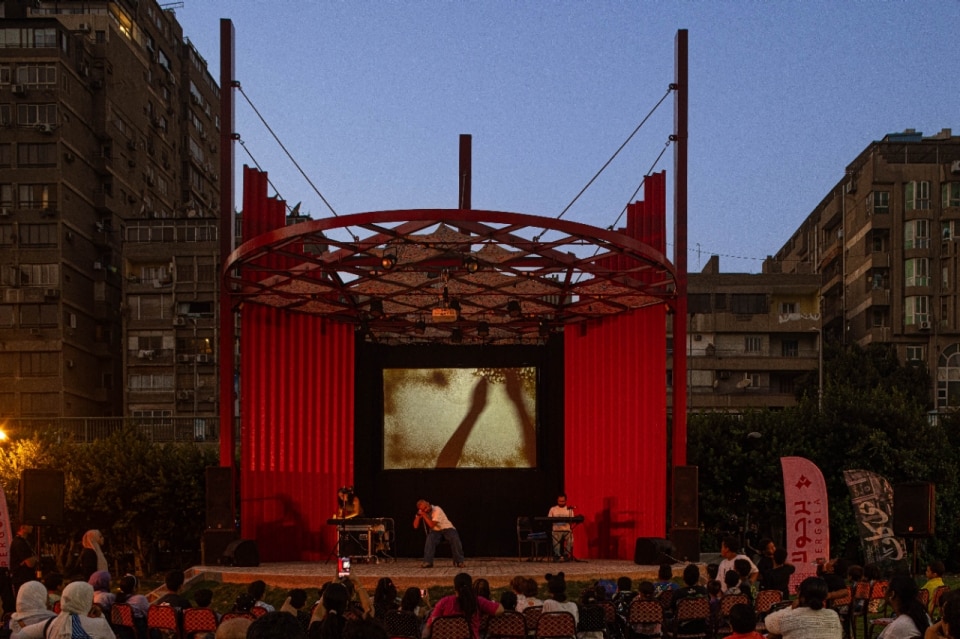
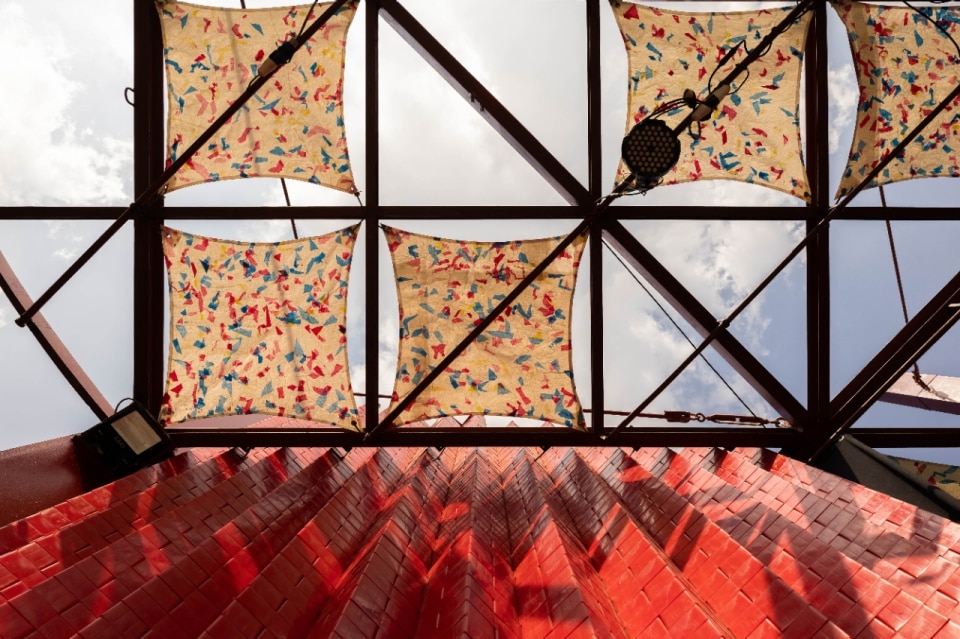
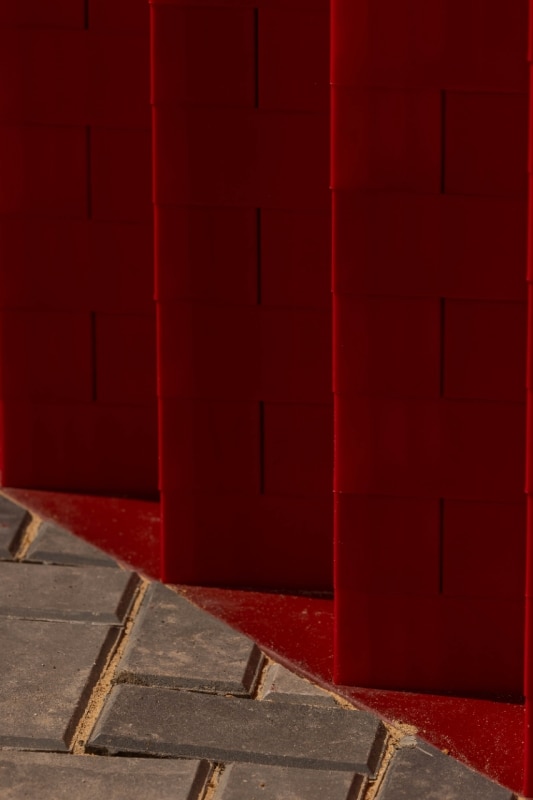
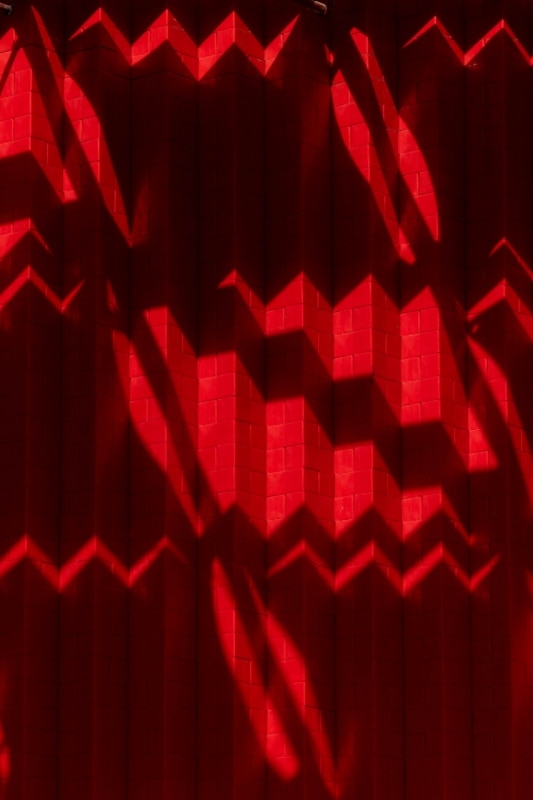
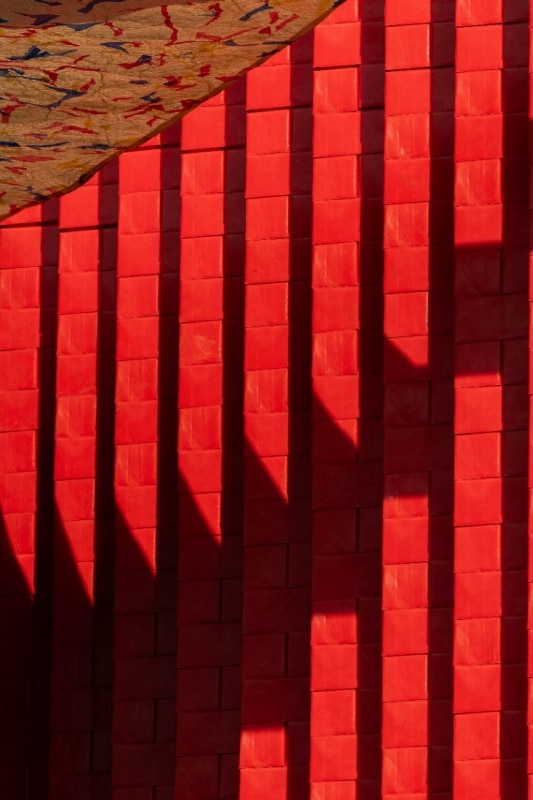
The building, almost entirely made of recycled plastic, represents another level of experimentation. The materials come from waste collected in the Nile and from construction sites, processed by Egyptian companies that specialize in reusing polymers. The metal frame supports panels and blocks of regenerated plastic, demonstrating the structural and symbolic feasibility of recycling in a context of serious environmental and waste management concerns.
The project grew out of a participatory process conducted through workshops and public consultations. During a week of work in Cairo, CLUSTER involved students, artisans, and residents in defining the program and form.
In addition to its architectural dimension, the pavilion is also a curatorial device. In the six months following its opening, Orient Productions will coordinate a calendar of free events dedicated to the theme of sustainability: popular music, contemporary dance, cinema, and clownish performances. The goal is to consolidate the relationship with the park's audience while opening a new space for Cairo's independent art scene, which has very little permanent infrastructure.