

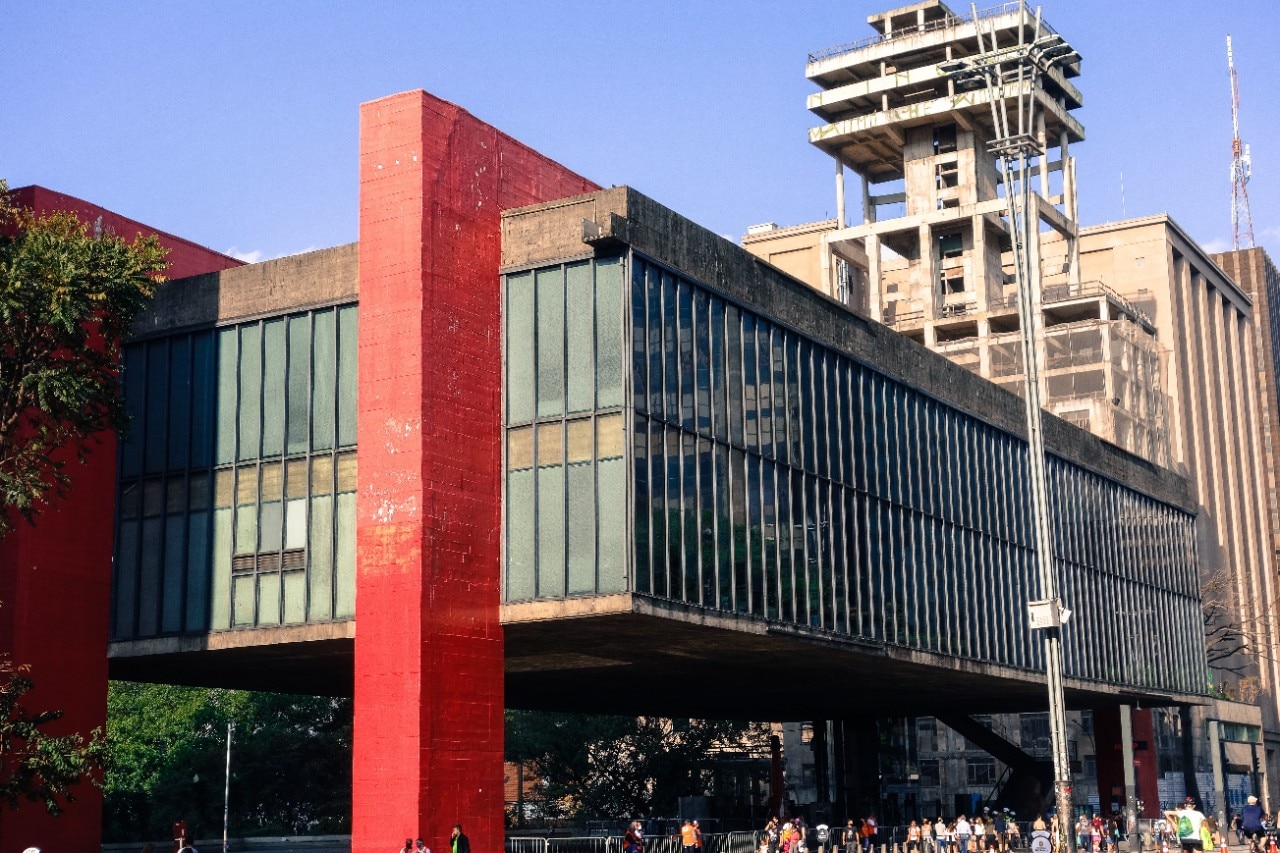

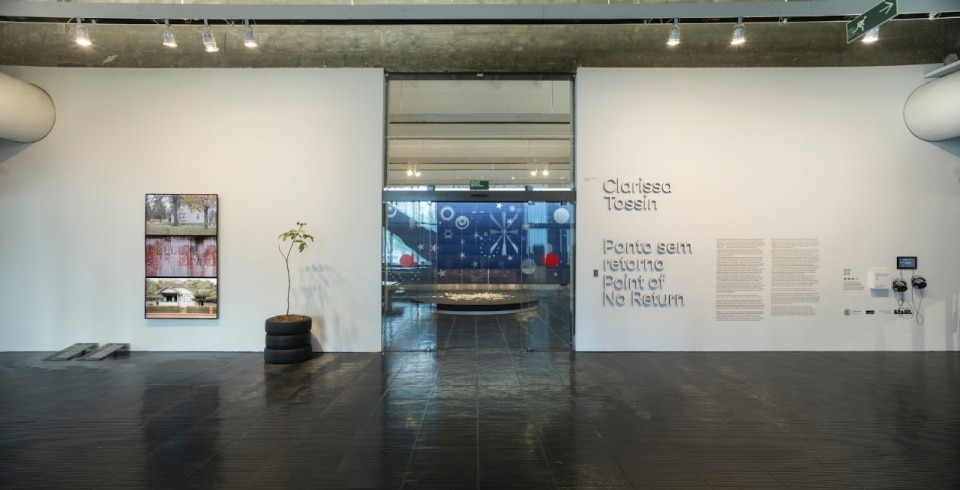
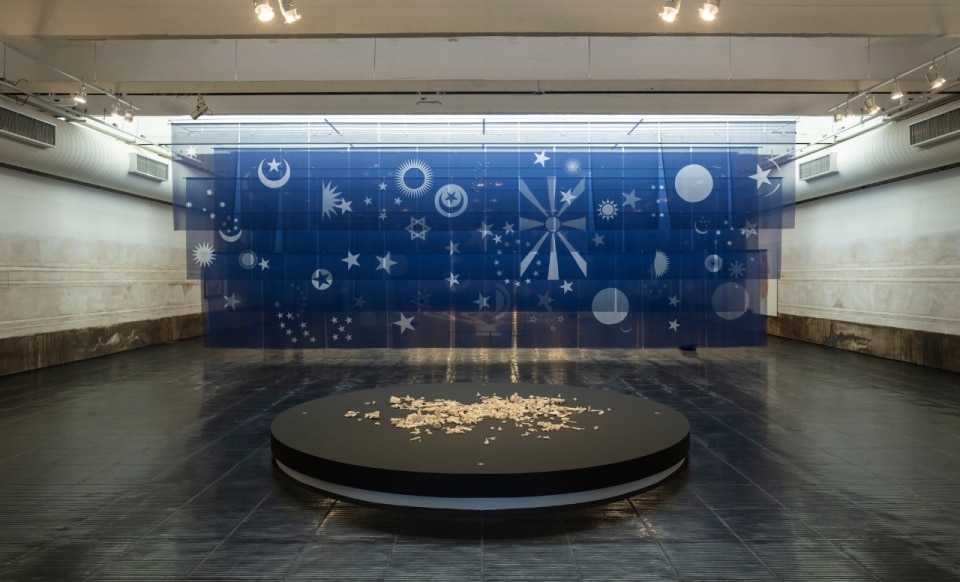
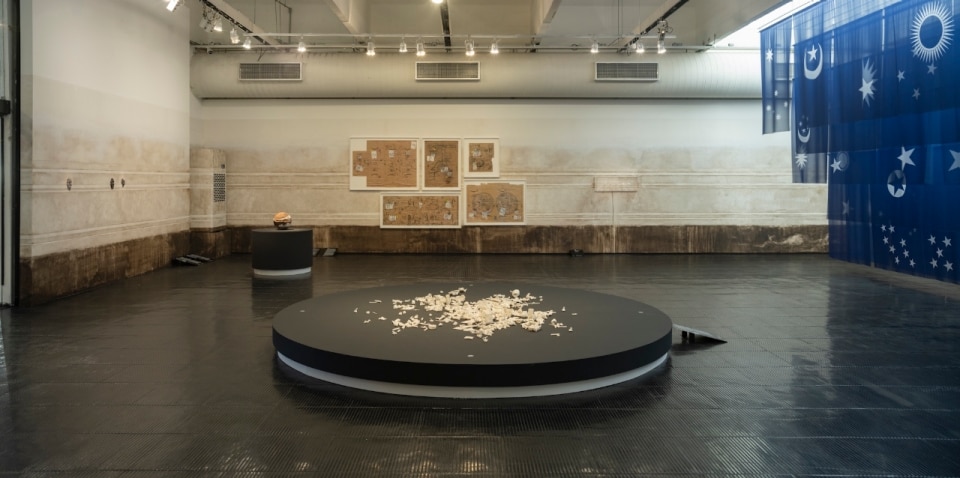
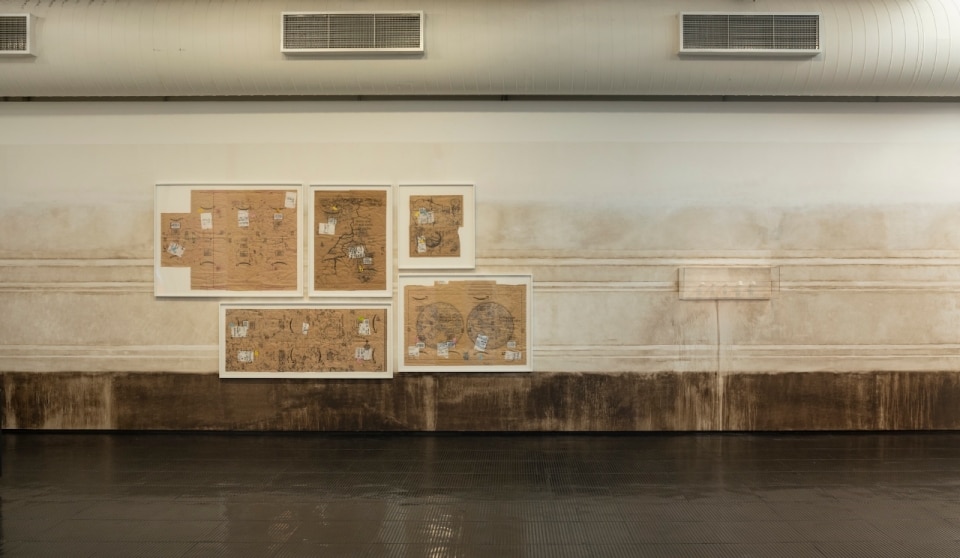
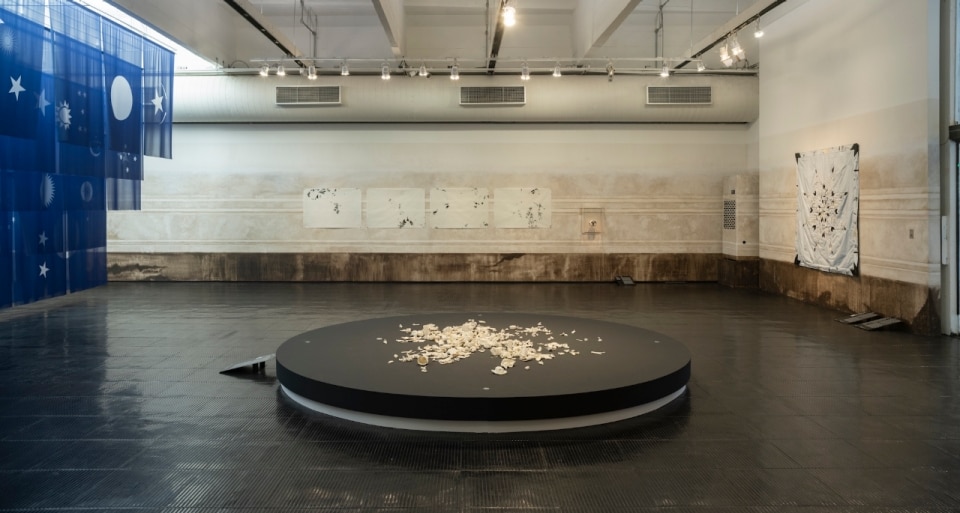
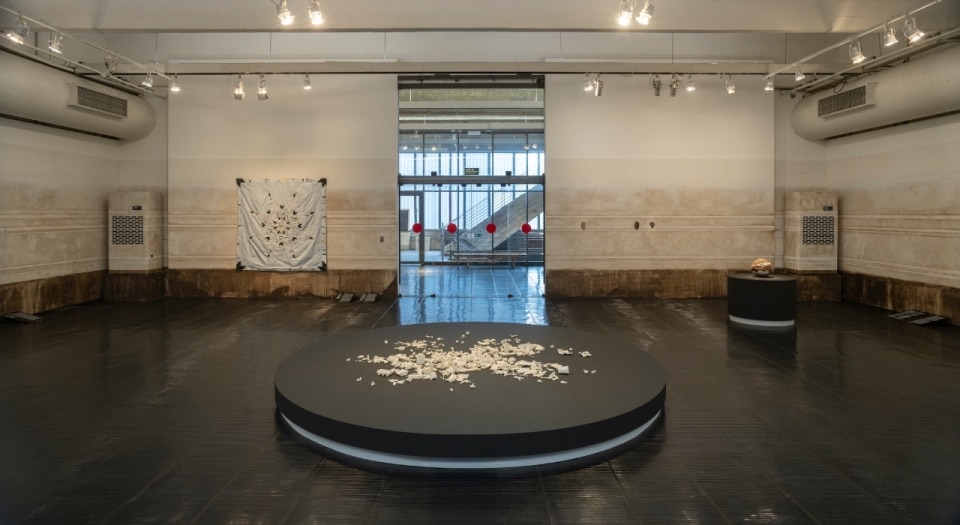
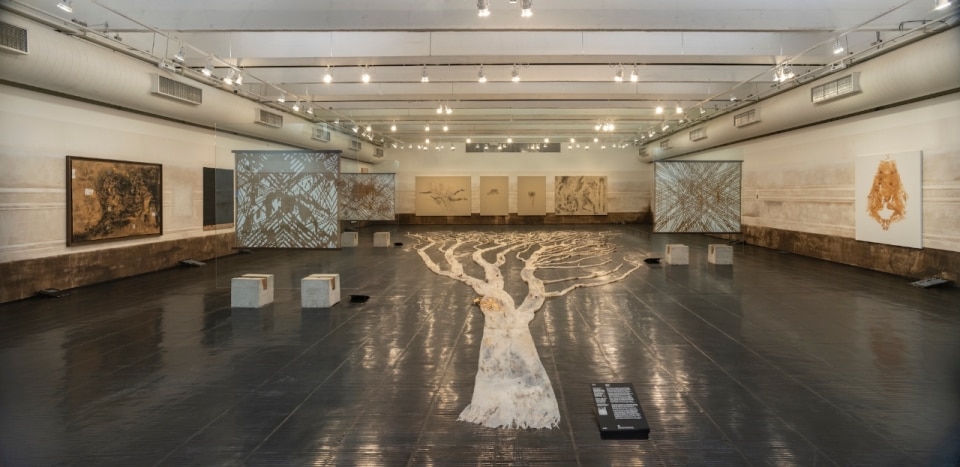
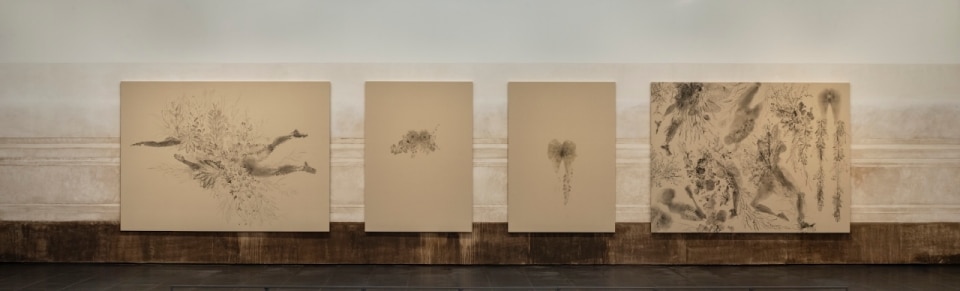
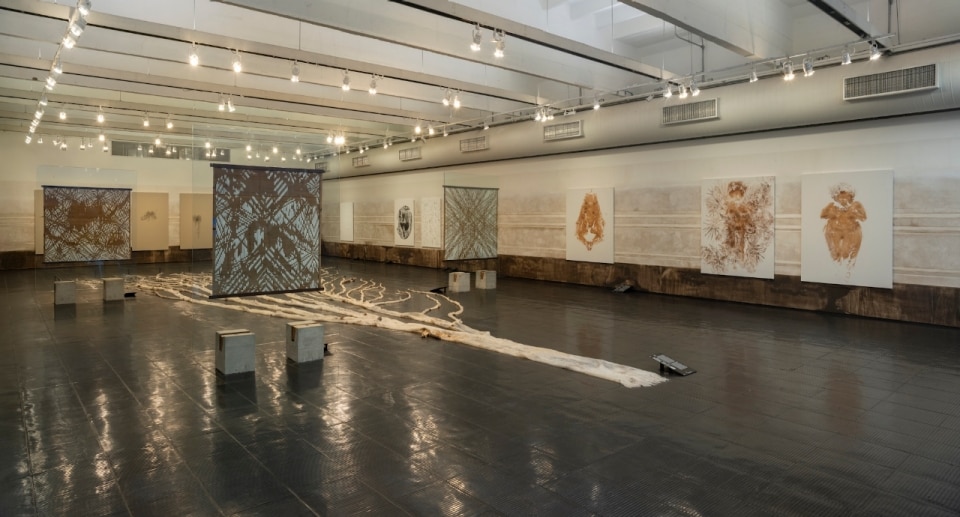
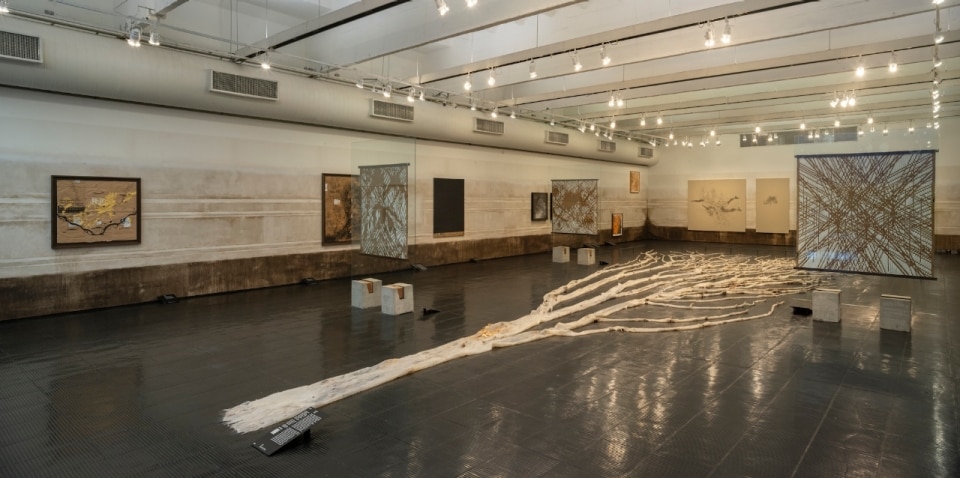
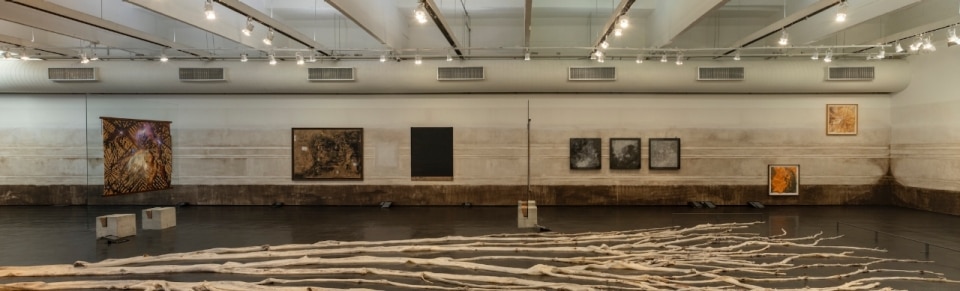
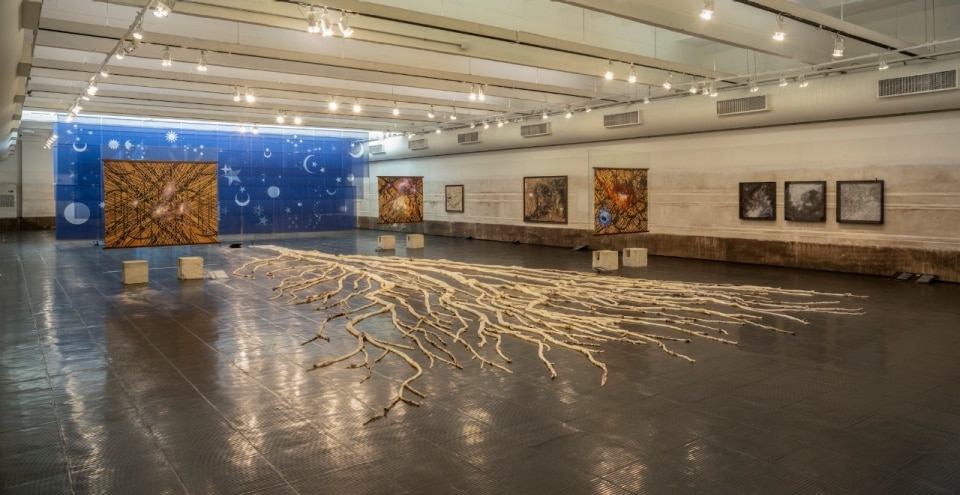
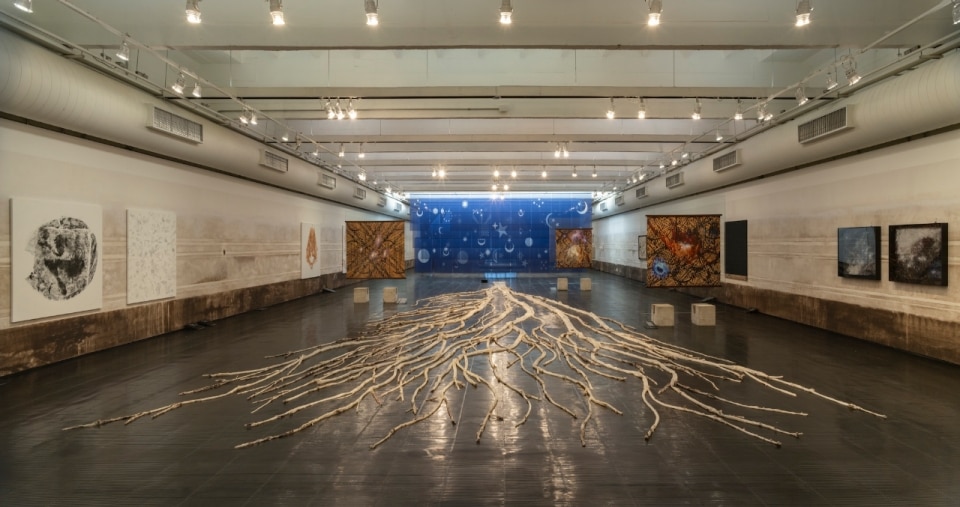
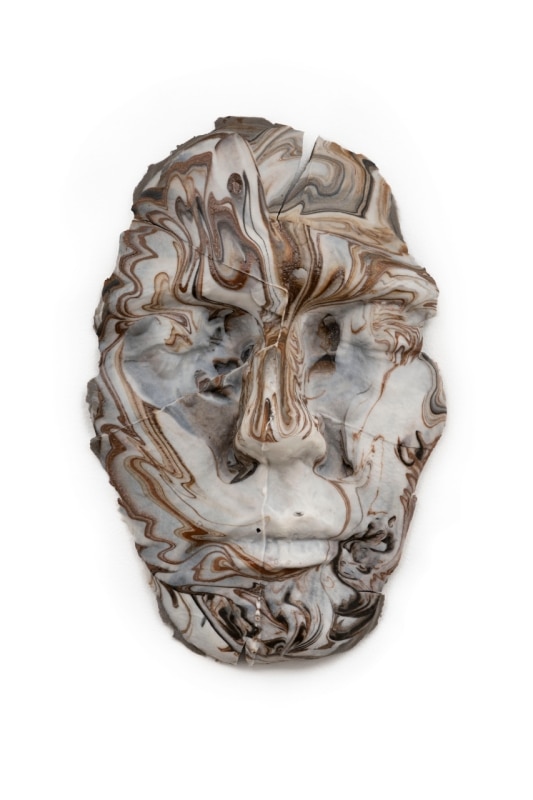
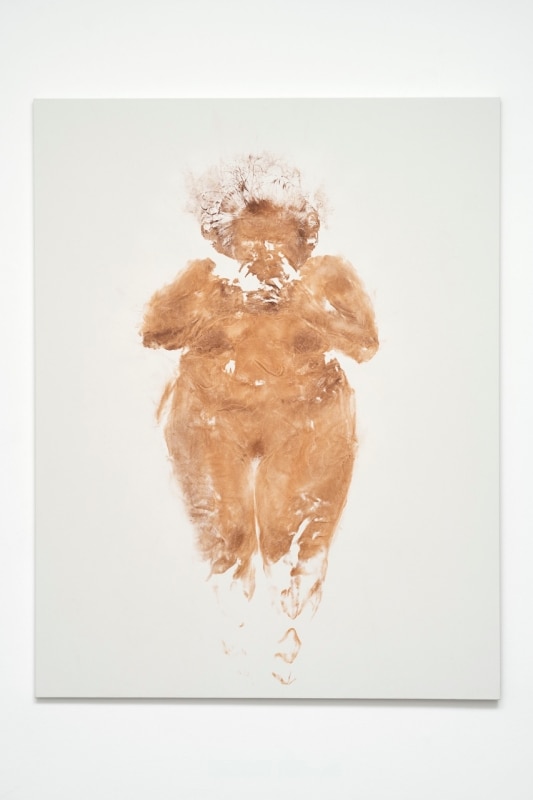
The MASP – Museu de Arte de São Paulo Assis Chateaubriand presents “Clarissa Tossin: Point of No Return”, an exhibition-installation that transforms the museum’s spaces into the setting of an environmental catastrophe. Curated by Adriano Pedrosa and Guilherme Giufrida, the show brings together more than forty works created over the past twenty years by the Brazilian artist, in her first solo exhibition in a museum in her home country.
The exhibition unfolds as an immersive experience — a kind of post-apocalyptic museum built from what remains after the flood. “It’s as if the museum had been submerged and we were exhibiting what survived,” explains Giufrida. Tossin’s works intertwine reflections on the consequences of ecological collapse with the material traces left behind by recent natural disasters.
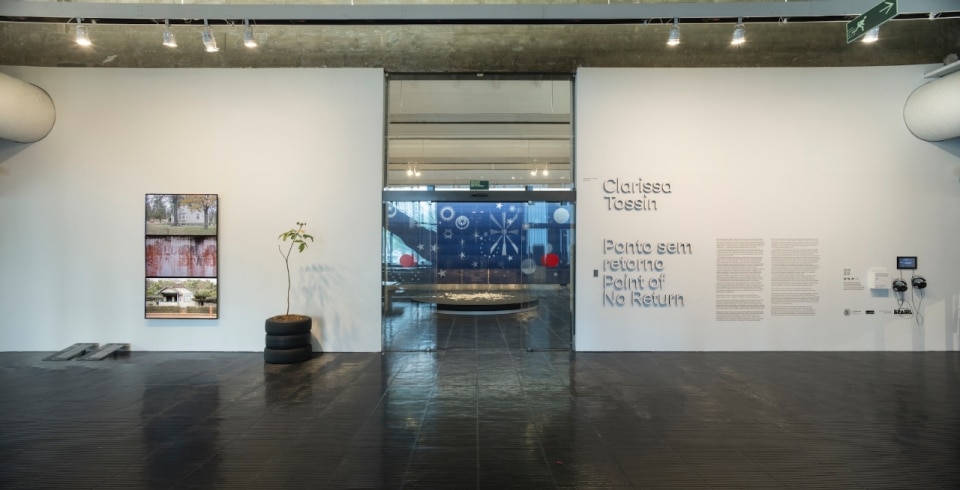
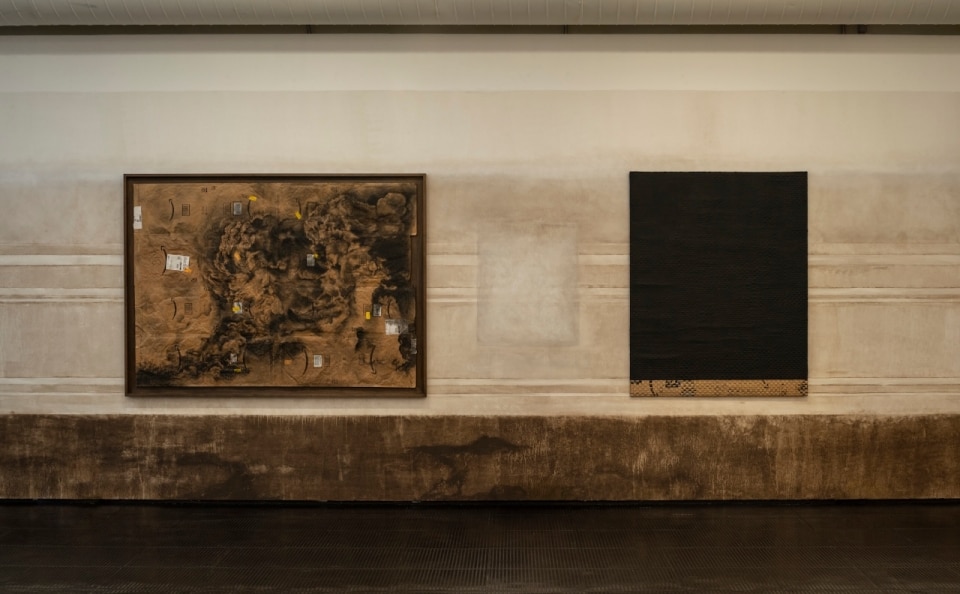
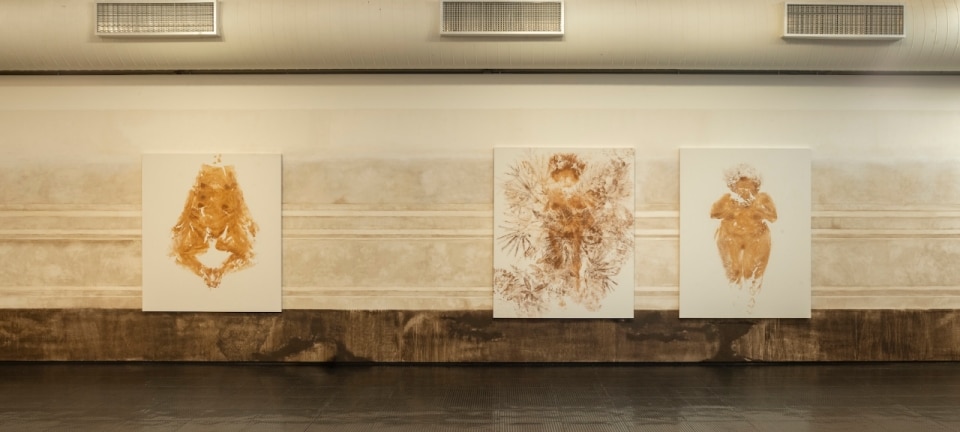
Among the new works stands Dead Pool (2025), commissioned by MASP and made with pigments derived from the soil of three areas in Rio Grande do Sul affected by the 2024 floods. The installation reconstructs on the museum’s walls the lines of mud that once marked the submerged buildings, also recalling the mining tragedies of Mariana and Brumadinho. The use of material as a direct testimony to environmental disasters becomes a physical archive of loss.
It’s as if the museum had been submerged and we were exhibiting what survived.
Guilherme Giufrida
Other works evoke destruction and memory. You Gotta Make Your Own Worlds (2019), for instance, is present only through a caption and a wall trace: the original piece was destroyed in the fires that ravaged California in early 2024. The title, taken from Parable of the Sower by Octavia Butler, evokes the act of rebuilding worlds amid climate and political collapse.
In Death by Heat Wave (Acer pseudoplatanus, Mulhouse Forest) (2021), trunks and branches of a tree that died during a heat wave in France are scattered on the floor among other works. As Giufrida states, Tossin's installations appear "as undead remnants of post-human landscapes," fragments that suggest a future fossil archaeology of the present.
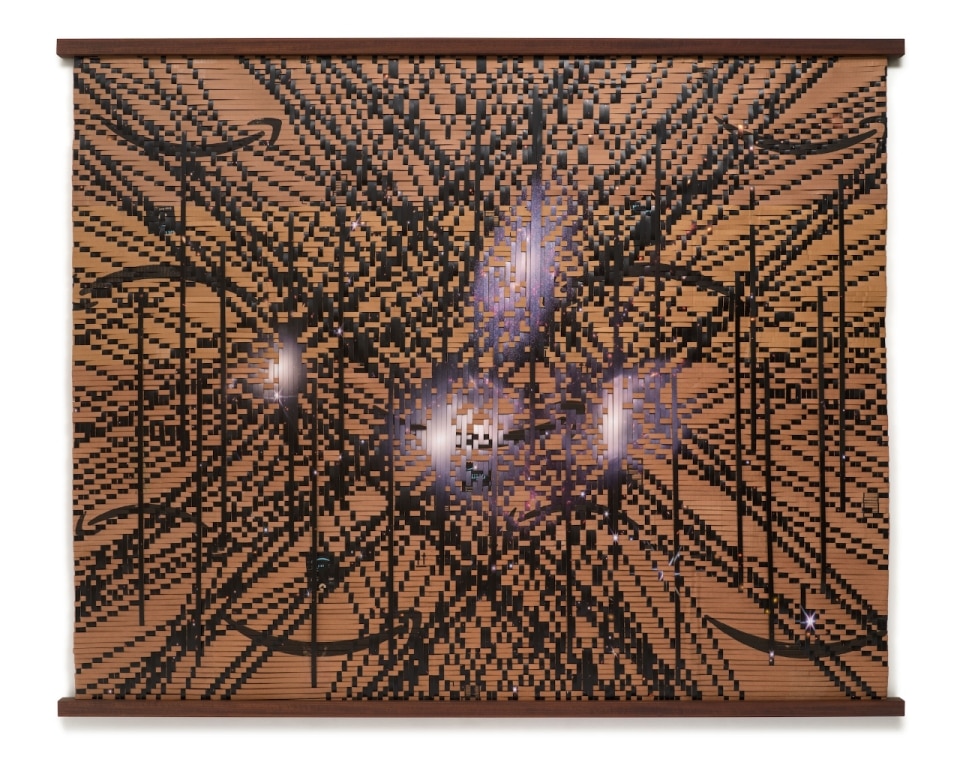
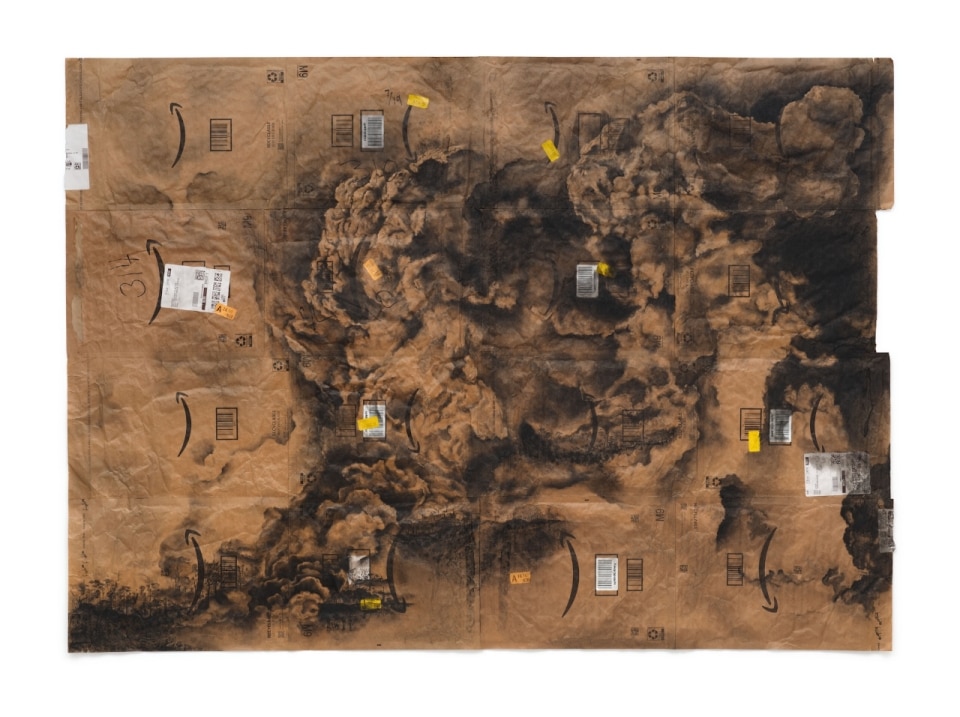
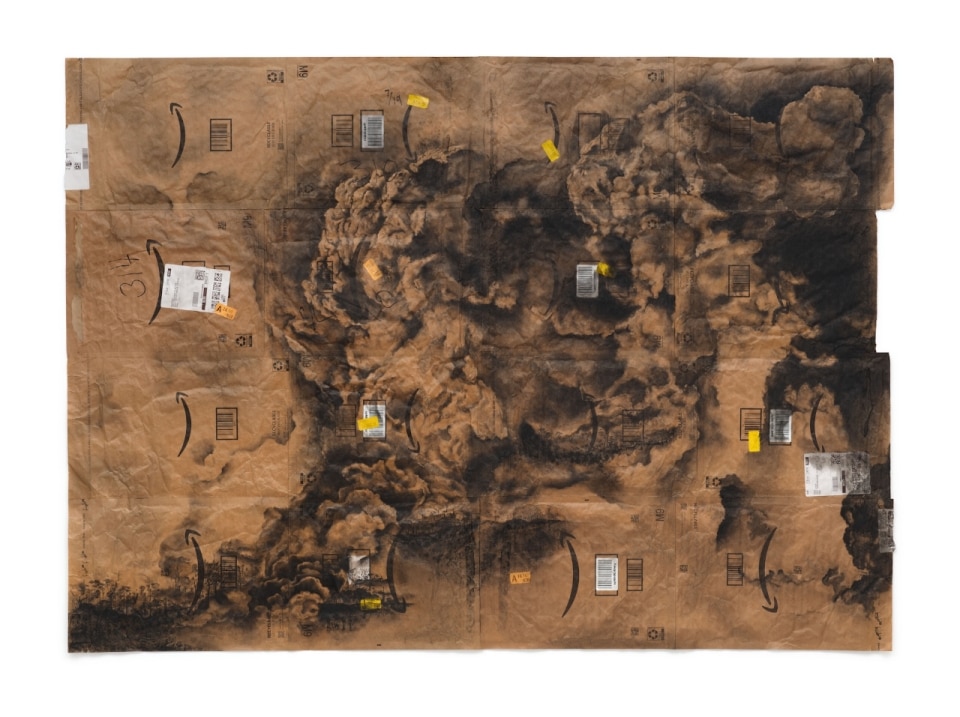
The artist also extends reflection to the relationship between cartography and colonialism, juxtaposing historical maps and satellite images of the search for resources on other planets. Amazon's packaging, recurring in his works, adds another layer of reading on mass consumption and new forms of economic and digital colonization.
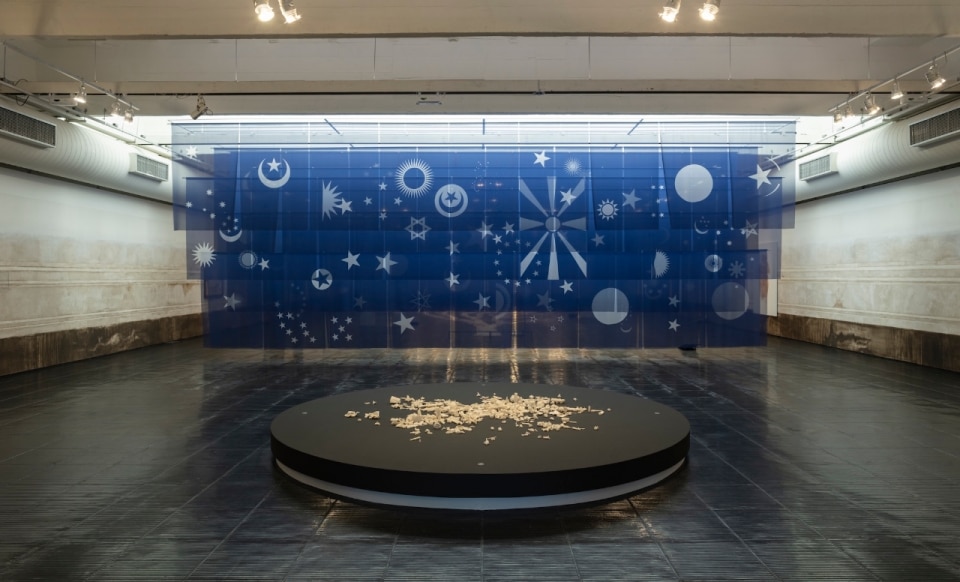
Through sculpture, weaving, video and performance, Tossin interweaves geopolitical critique, speculative fiction and craft practices to interrogate narratives of memory, consumption and environmental crisis.“Point of No Return” is part of MASP's annual program dedicated to the Histories of Ecology, alongside exhibitions by Claude Monet, Frans Krajcberg, Abel Rodríguez, Hulda Guzmán, Minerva Cuevas, and the Mulheres Atingidas por Barragens collective