


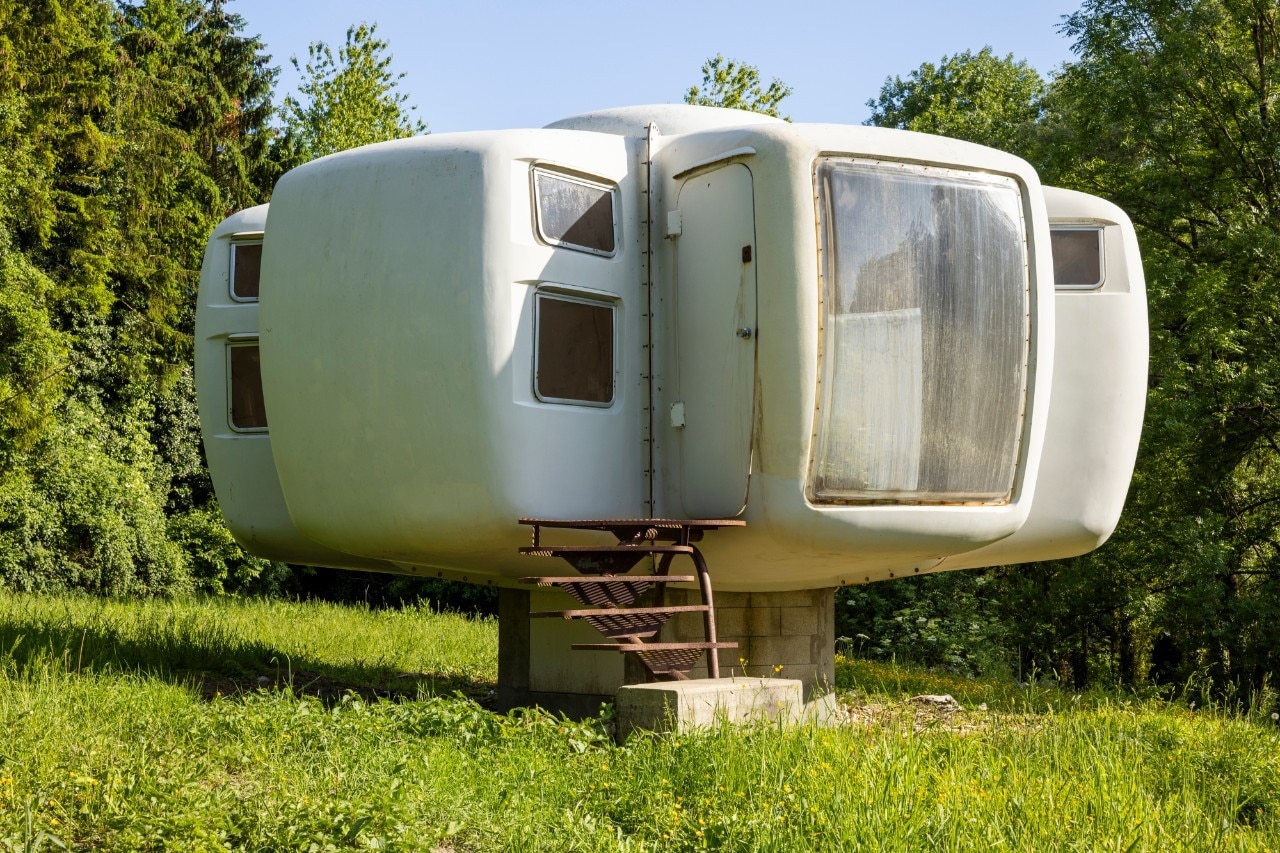

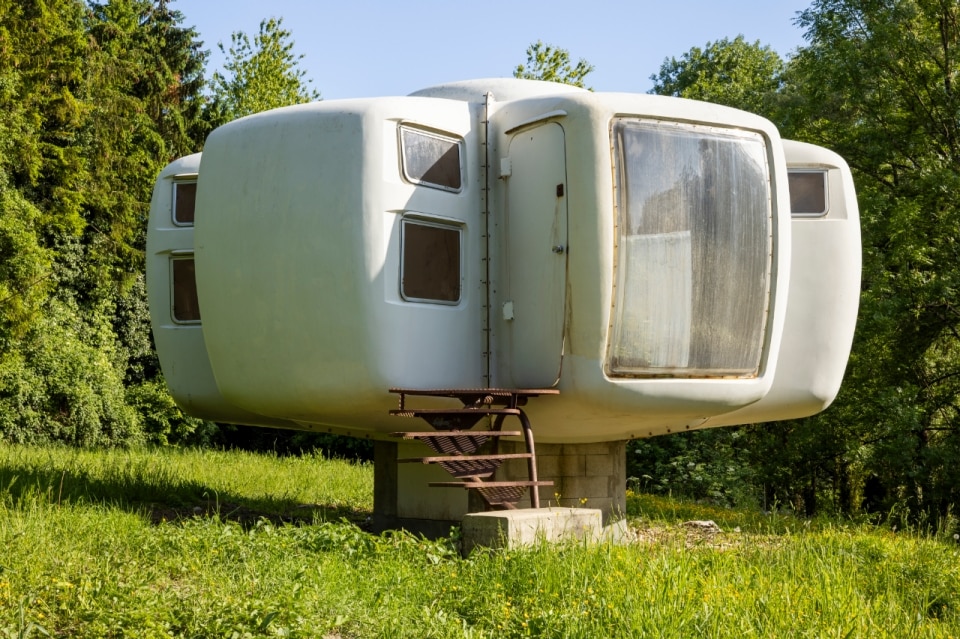
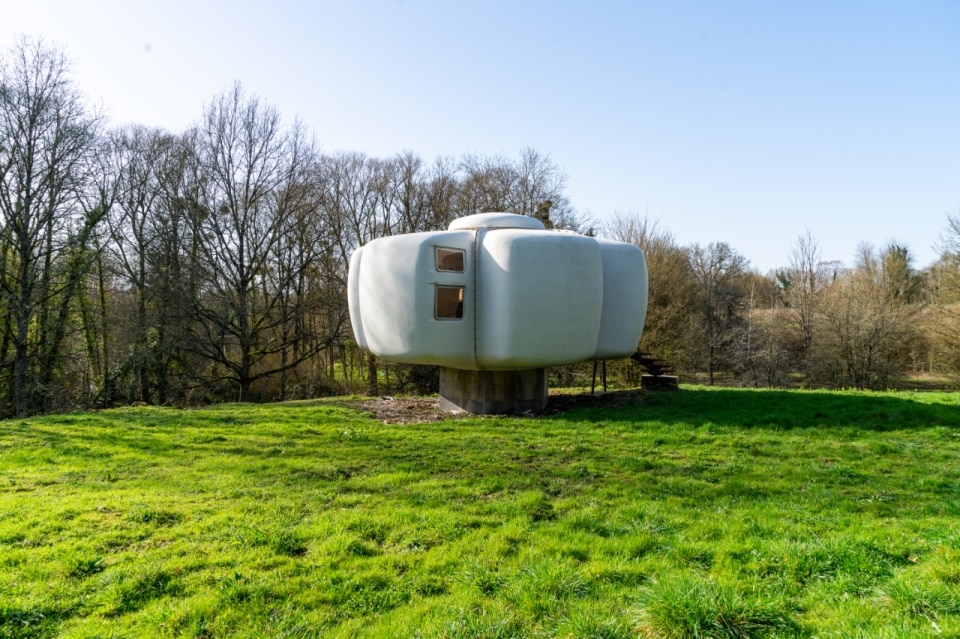
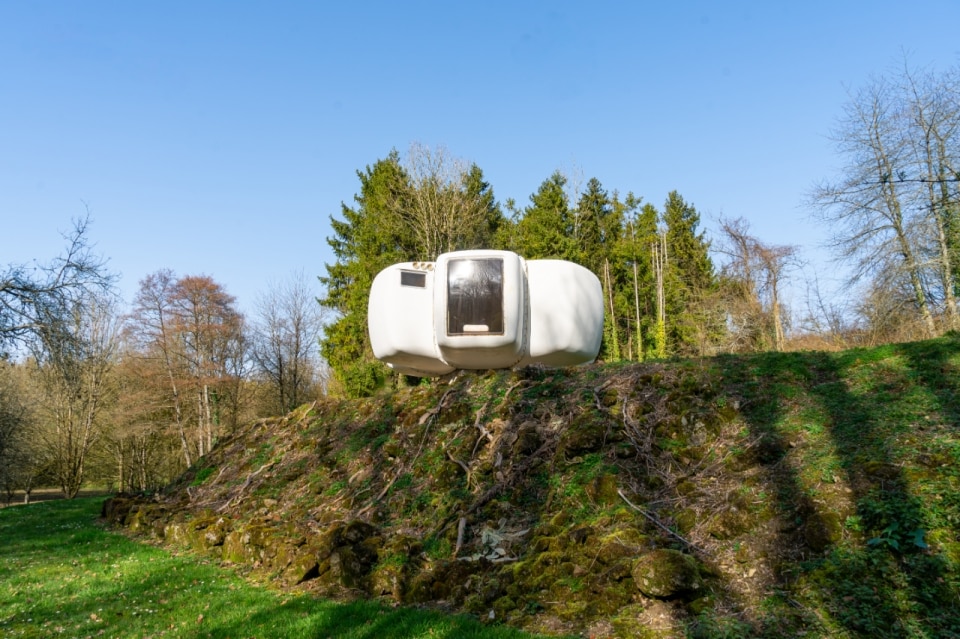
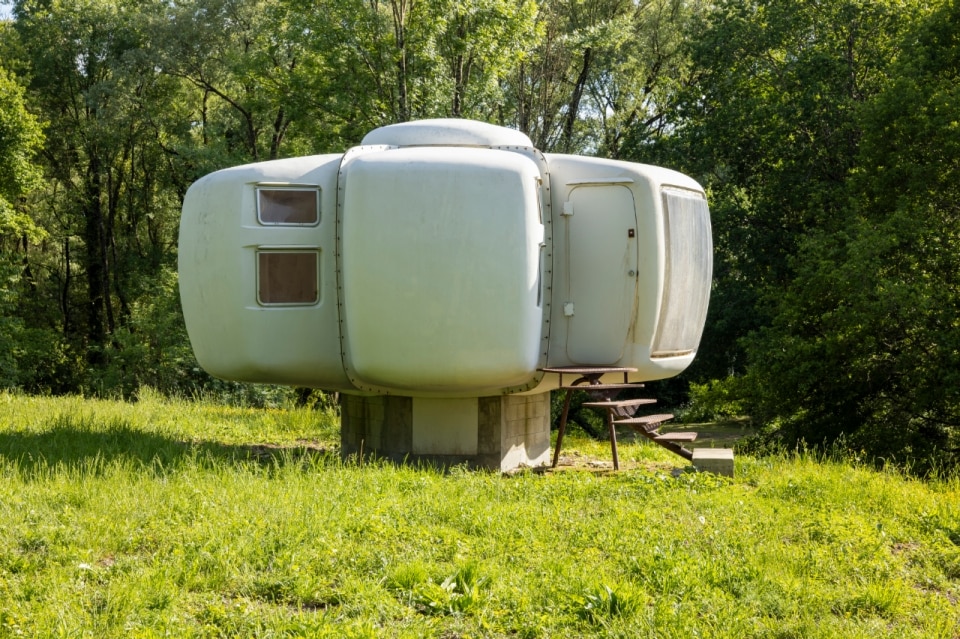
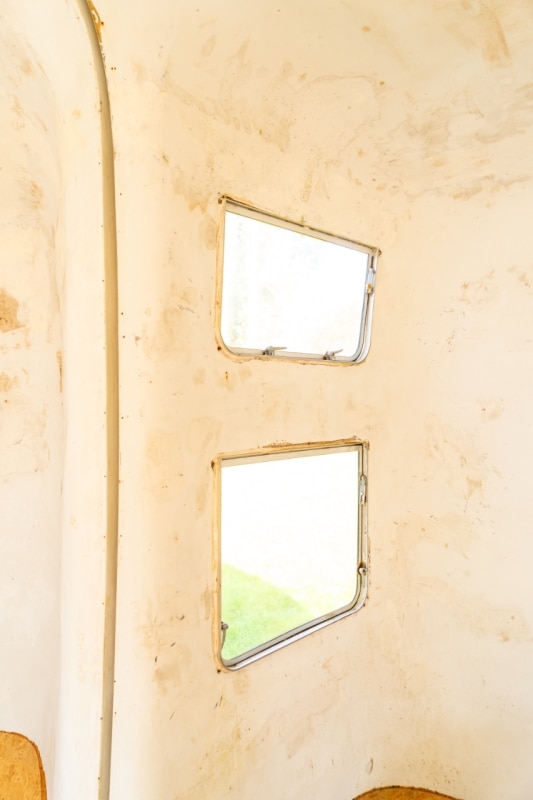
In the 1960s, in reaction to the Modern Movement rigidity, architecture underwent a period of radical experimentation, amid infinitely expandable housing capsules (Japanese Metabolism), pneumatic cities (Archigram) and geodesic domes (Buckminster Fuller). Some of that visionary enthusiasm has survived to the present day, re-emerging on the real estate market: In fact, one of the Bulles designed by Jean-Benjamin Maneval, “landed” in a collector’s garden, is currently for sale in France.
With around three hundred units produced between 1964 and 1968 within the research on plastic materials (including the first “maison tout en plastique” by Ionel Schein and René-André Coulon, presented in 1956 at the Salon des Arts Ménagers in Paris), the Bulle is a manifesto of the technical and figurative potential of this material and transposes the idea of “nomadic”, light and economical living into a compact house (approximately 36 square metres).
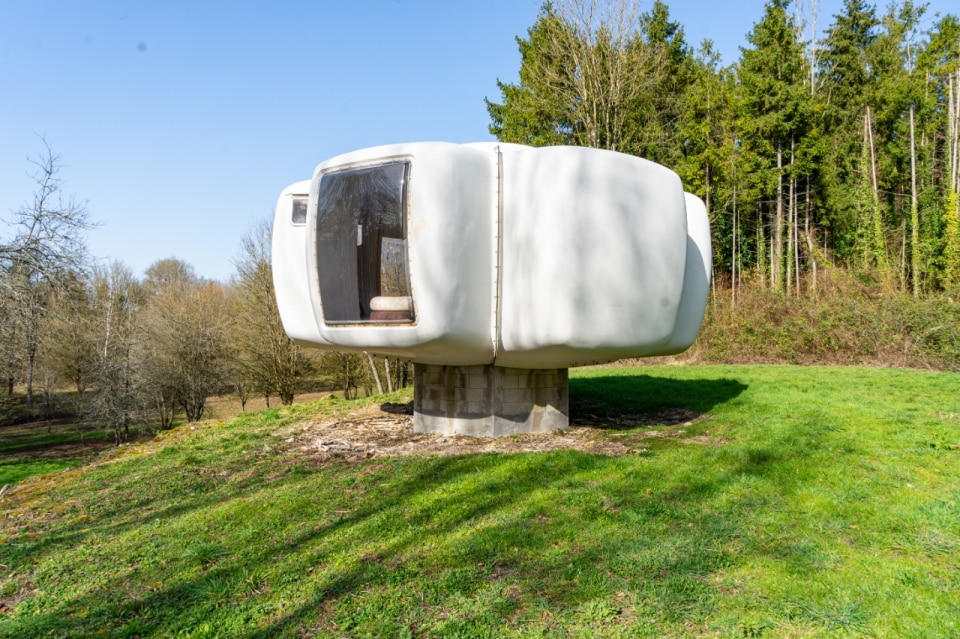
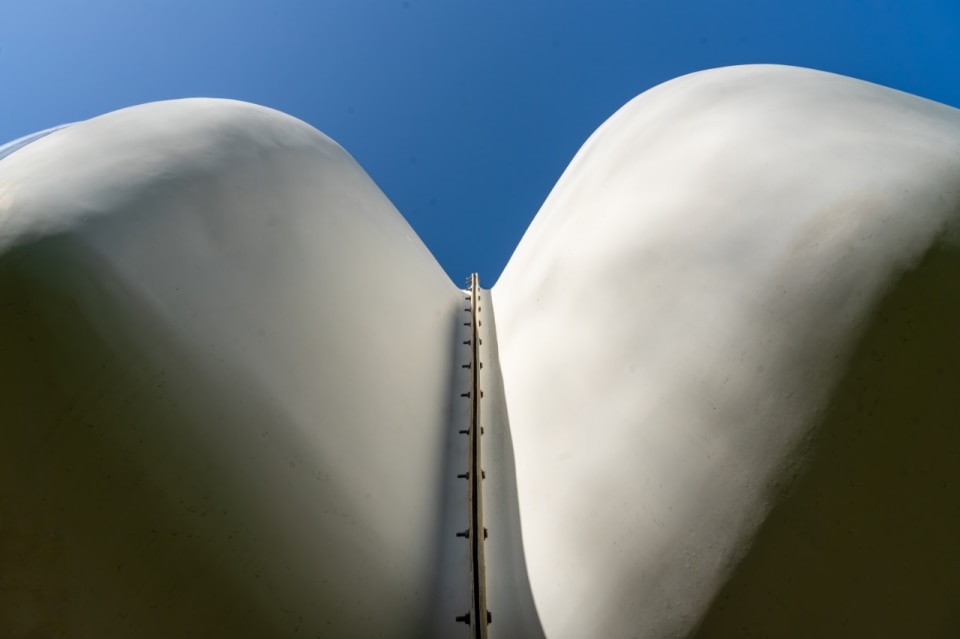
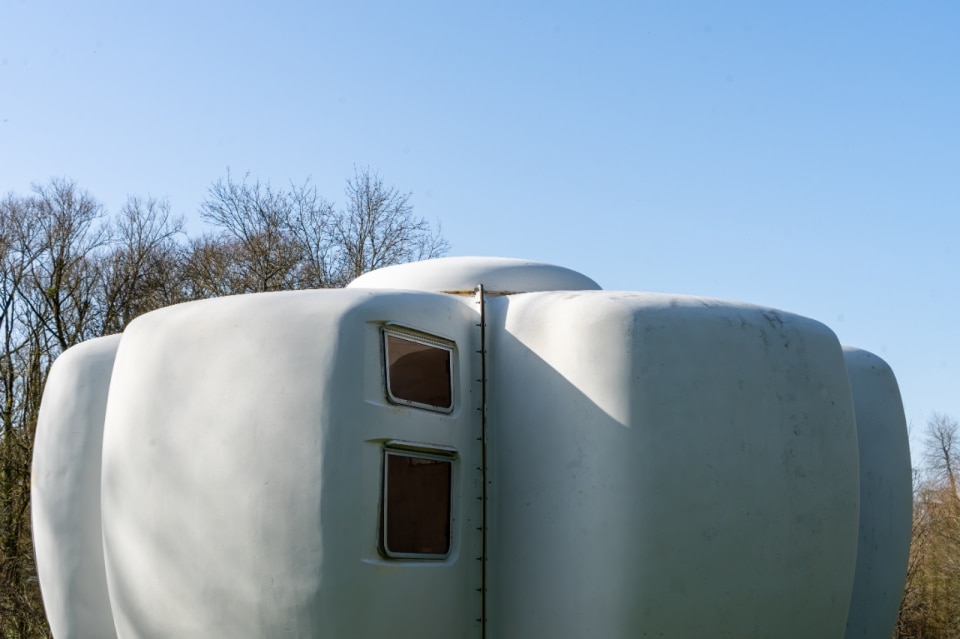
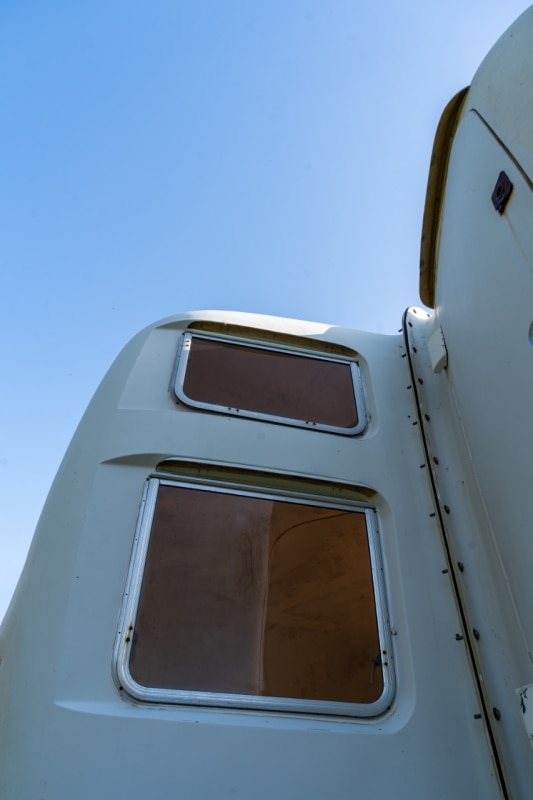
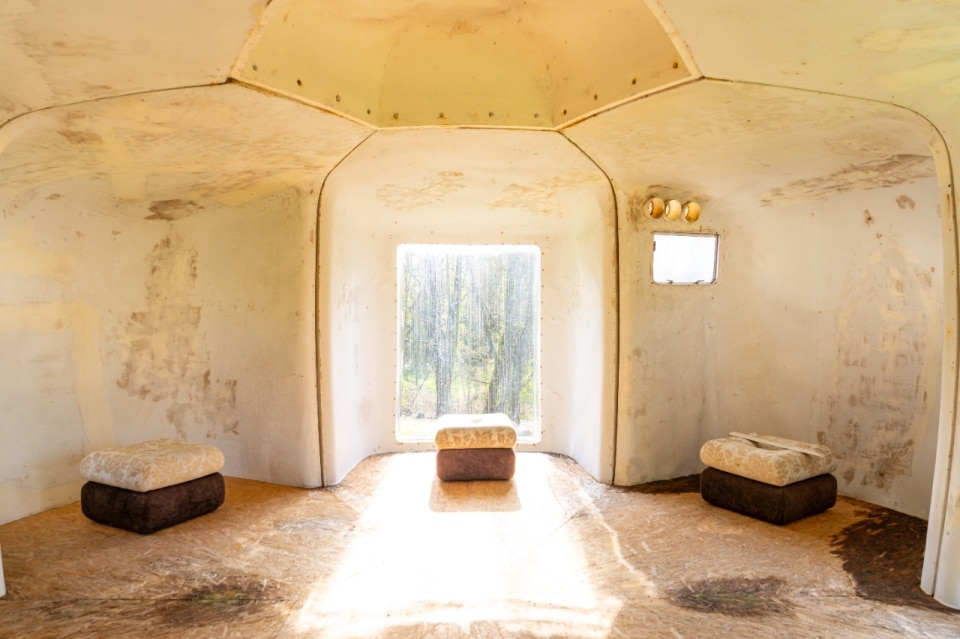
The Bulle à six coques is a multi-lobed bulb suspended on a concrete base, composed of six prefabricated double-layered shells made of fibreglass-reinforced polyester, insulated with polyurethane foam. Produced from a single mould, these elements are quickly assembled on site without permanent foundations, making the structure easily dismountable and relocatable. The sinuous, flower-like form—made possible by plastic’s flexibility beyond the constraints of orthogonal geometry—inspires a sense of freedom (not merely expressive). Inside, each “coque” corresponds to a function — entrance, living area, bathroom, bedrooms — resulting in a “cellular” structure perceived as a fluid and organic space, punctuated by furnishings integrated into the shell and illuminated by large openings in smoked methacrylate.
Designed primarily for mass tourism, the Bulle's production and distribution were made possible through collaboration with the petrochemical industry. However, despite its ambitions, the project never achieved the commercial success hoped for.