


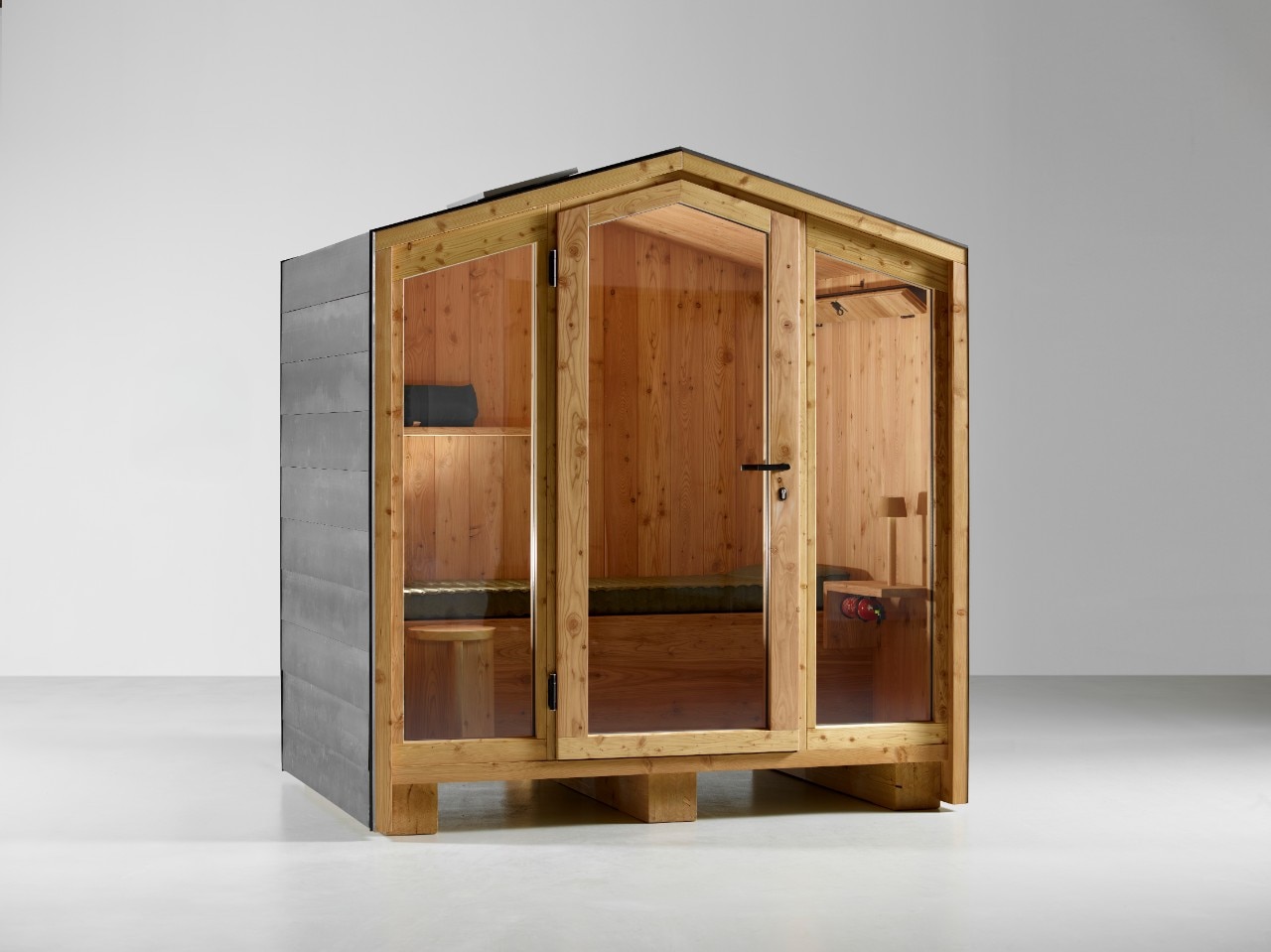

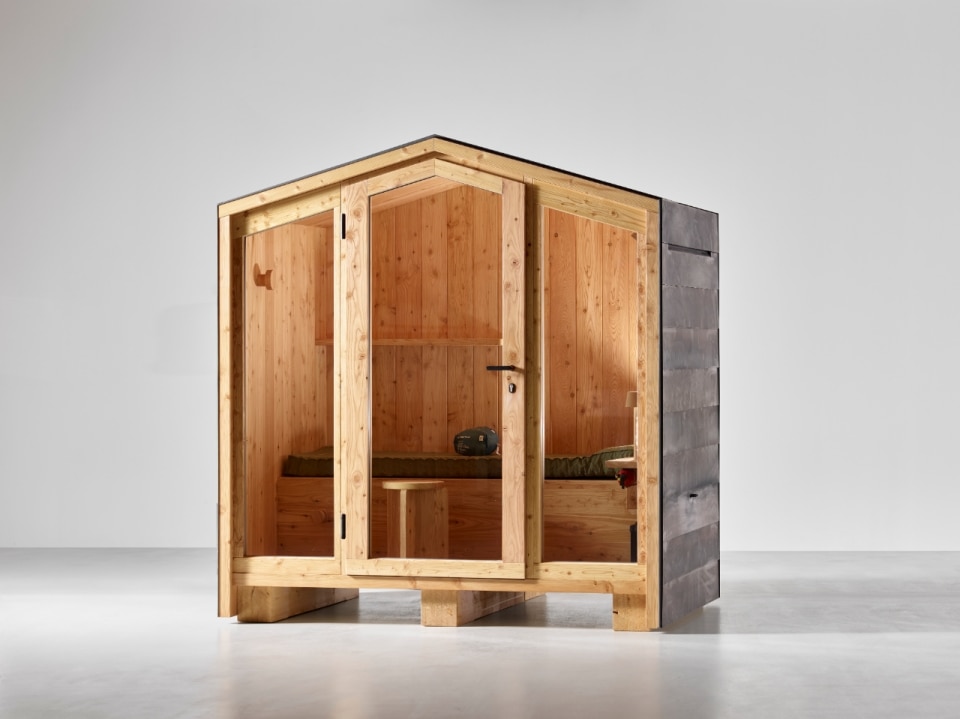
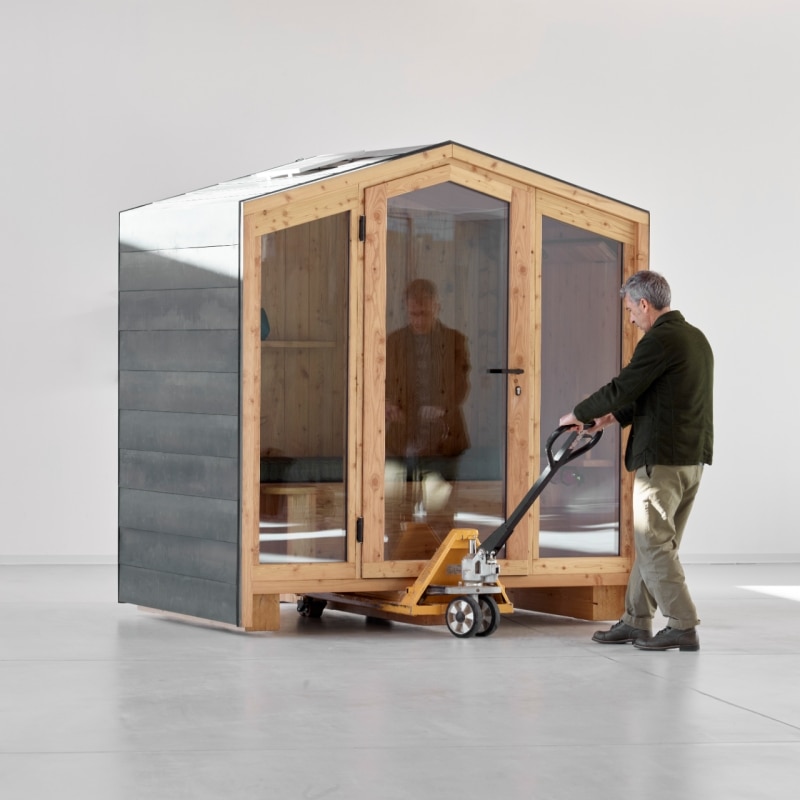
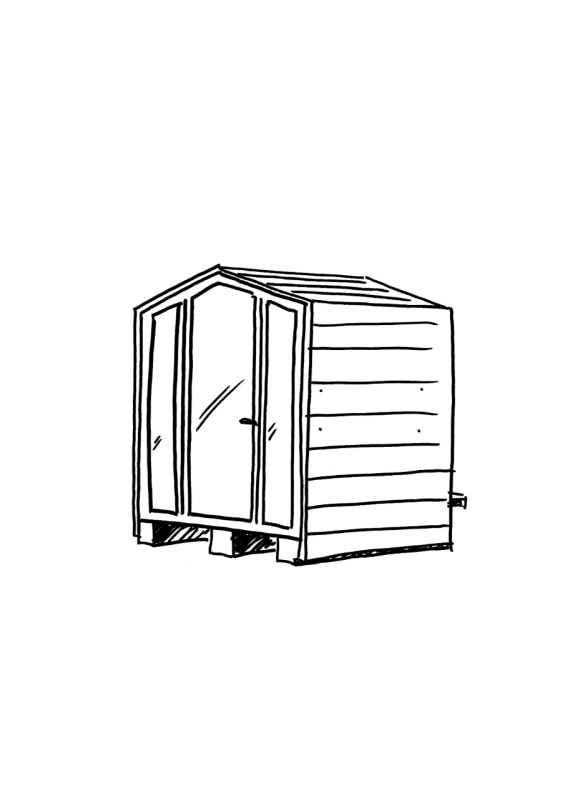
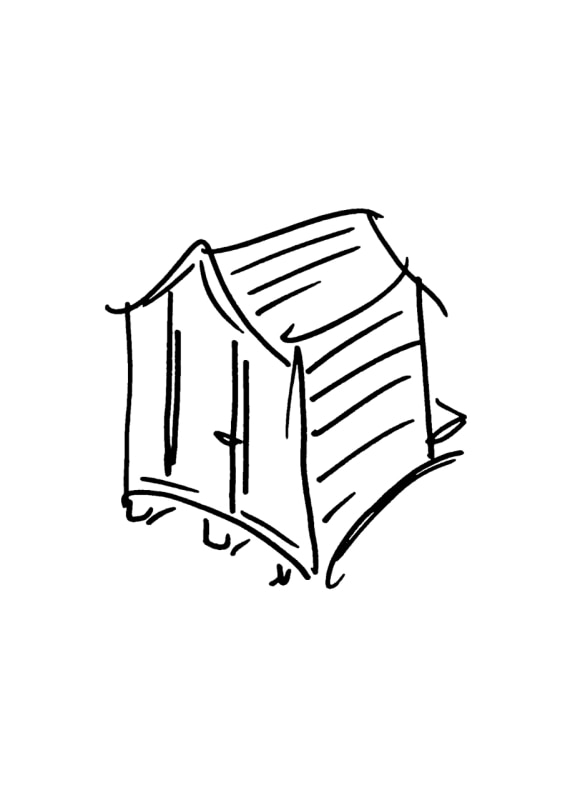
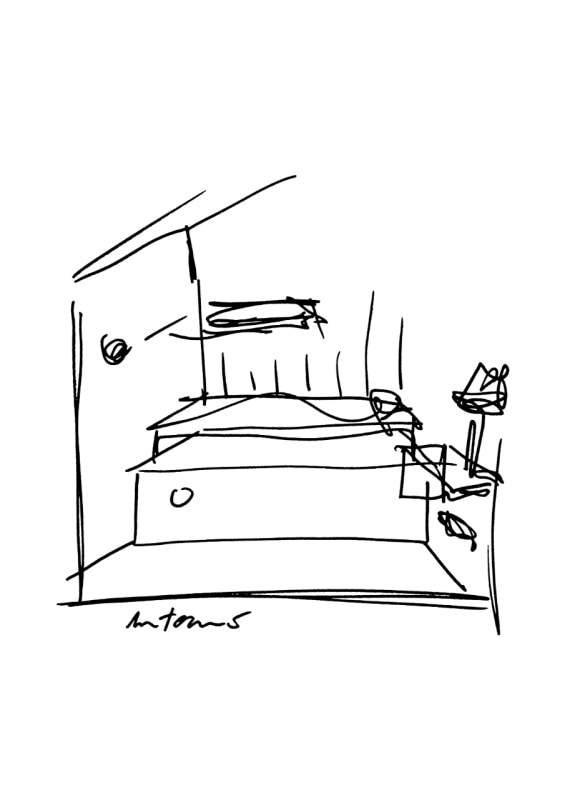
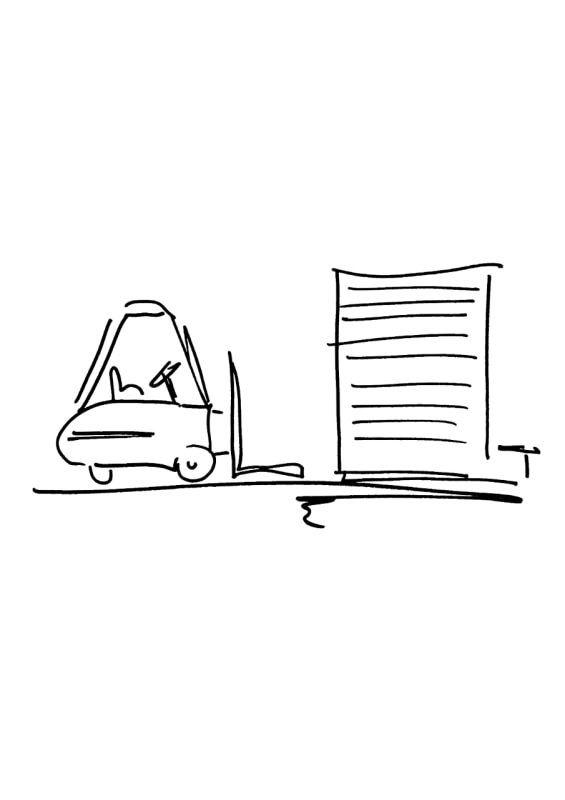
A house no bigger than a bed. It is from this minimal—both physical and symbolic—dimension that Street Bed Unit begins, a project through which Lorenzo Damiani attempts to answer a simple question: what does it mean to design for those who don’t have a home?
As part of an initiative promoted by the Autonomous Province of Trento, 15 Italian designers were invited to engage with the theme of hospitality, collaborating with local companies in the wood supply chain for an exhibition open at the ADI Design Museum (NODI. Cultura, impresa e design del legno trentino) from March 28 to April 12, 2026. It is a theme that usually evokes the world of hospitality and luxury markets, but Damiani—together with the Scaiarol carpentry workshop—chose to shift the focus radically toward something more urgent: housing for the homeless.
With Street Bed Unit, hospitality becomes a transportable micro-architecture: an essential mini-home designed to provide shelter, safety, and a concrete sense of residential dignity. It is not just about building a protective shell against danger and the elements, but about interpreting specific needs and translating them into spaces, surfaces, and everyday objects.
Very often my objects are small environments: even a chair can contain functions and become a space
Lorenzo Damiani
The “minimalist home” typology, which emerged at the beginning of the last century, has evolved over time—from workers’ housing to holiday retreats, and eventually into a response to housing emergencies. Street Bed Unit finds its place within this evolution, bringing to the forefront a problem that is visible to all yet rarely enters architectural discourse. Lorenzo Damiani discussed the project with Domus.
Designing a house as an object
In Damiani’s work, design and architecture are inseparably linked. More than architecture in the traditional sense, Street Bed Unit is conceived “as an inhabitable object,” the designer explains. “Very often my objects are small environments: even a chair can contain functions and become a space,” like the Soleil folding chaise longue designed for Campeggi in 2019, which incorporates a small table into the armrest, or L’Arcobaleno senza tempesta, exhibited during The New Poetic Activism show.
Silvana Annicchiarico has described him as a “designer of surprise,” creating “objects capable of doing things you wouldn’t expect.” Street Bed Unit follows the same approach, as a natural and inevitable extension of his research.
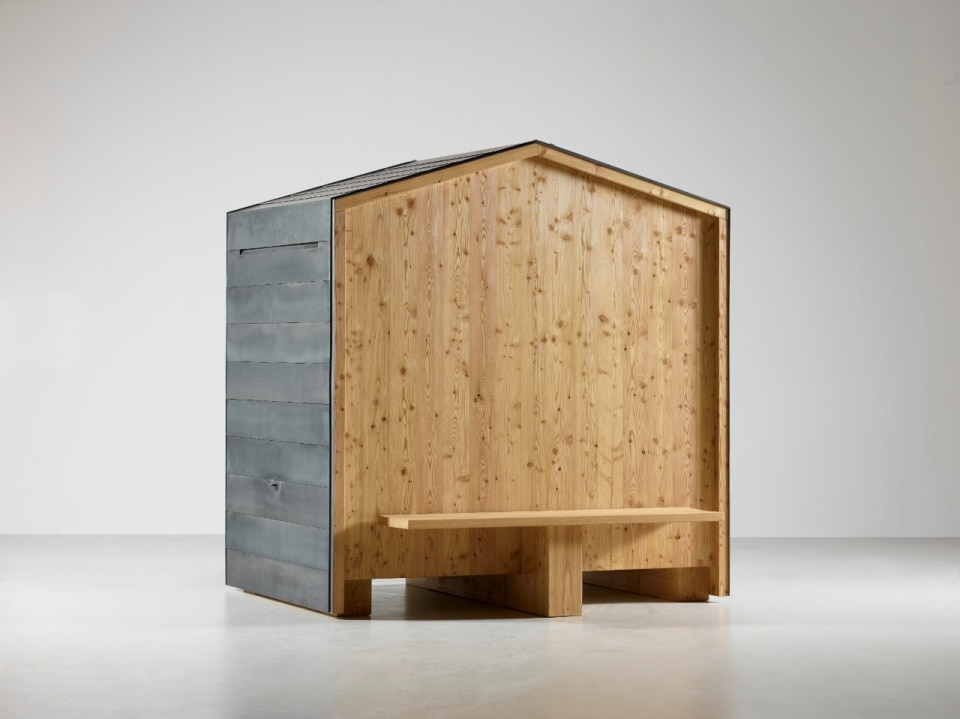
The result is a compact, transportable module that draws on the construction logic of a “flying office” designed in 2004 for flexible interior spaces. “I was interested in imagining a sleeping unit that could be moved like a pallet,” Damiani explains, “but at the same time I wanted this object to convey a recognizable idea of home.” Hence the pitched roof—archetypal and immediately legible.

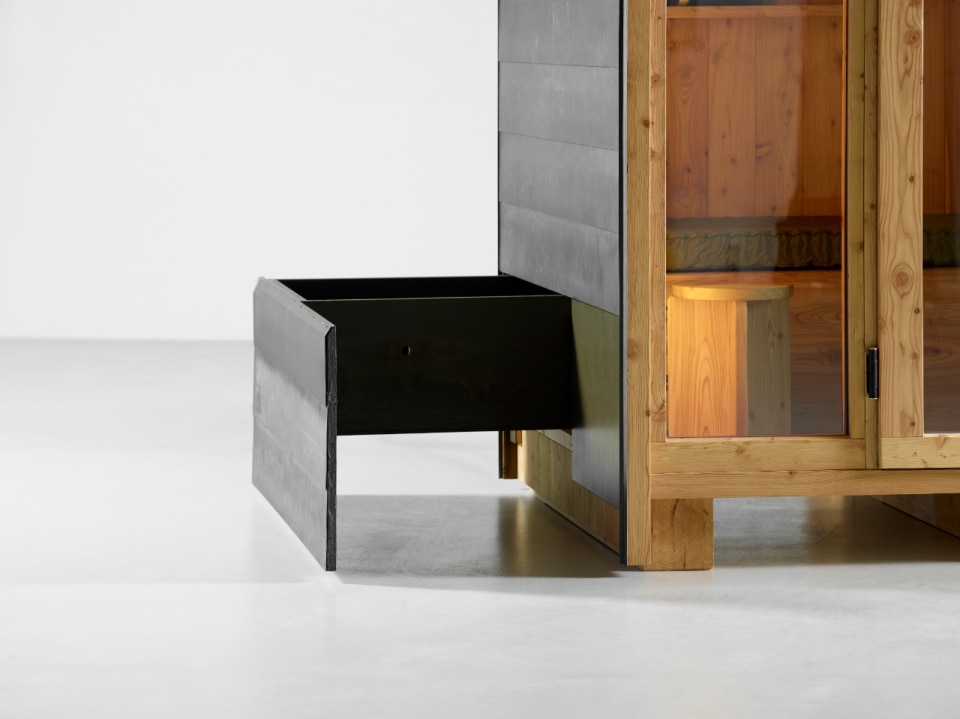
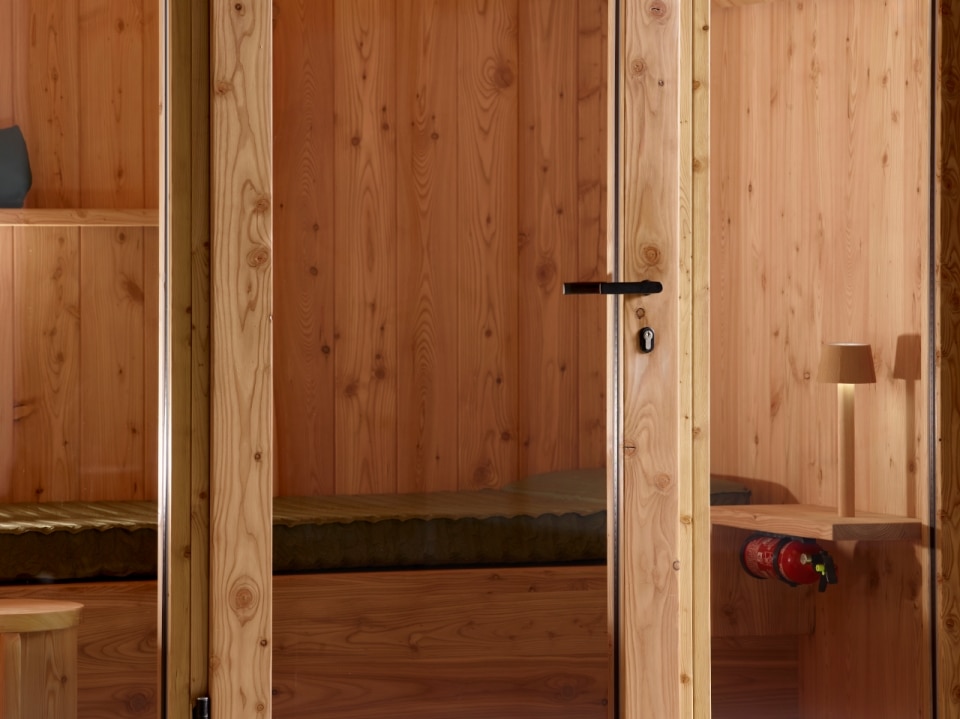
Inside, the space is reduced to the essentials: a raised bed with an inflatable mattress, a shelf, a small bedside table, a stool, and a coat hook. Everything is designed to be functional, hygienic, and easy to maintain. “The environment is deliberately basic, almost Franciscan: what isn’t there can’t break, and it’s easier to clean.” Outside, photovoltaic panels provide electricity for lighting and charging electronic devices, while a pull-out storage unit integrated into the steel-clad façade offers space for personal belongings and clothing.
The right to housing
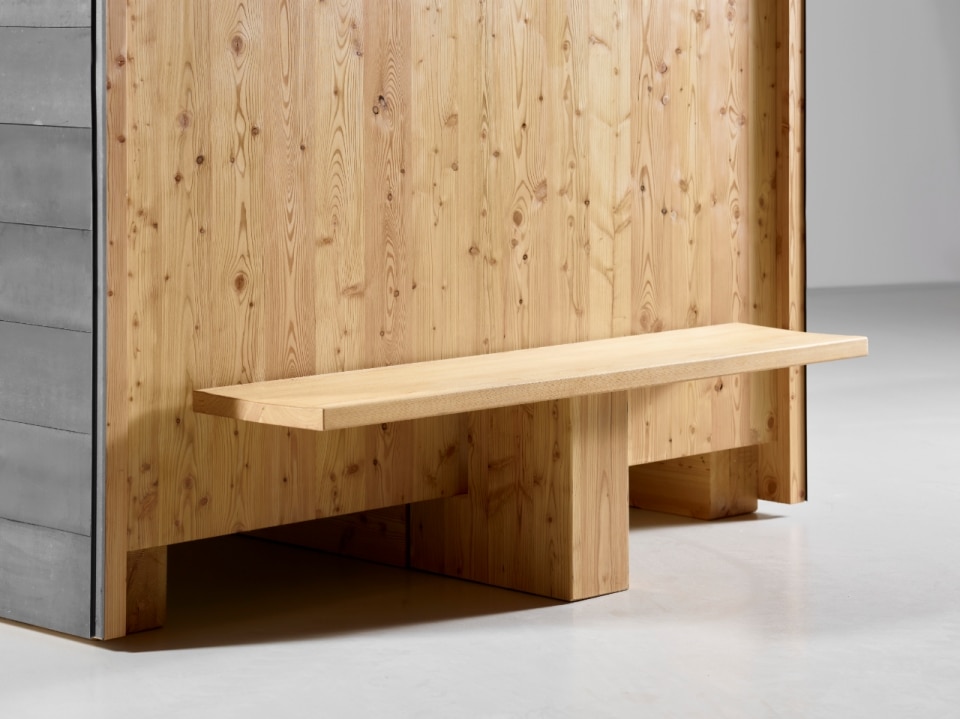
This is not a permanent home, but a concrete alternative to the street. “The goal is not to compete with traditional housing,” Damiani clarifies, “but to offer a better situation than a bench.” Still, a natural question arises: if design provides a tangible response to an emergency condition, does it risk turning precarity into something designed—and therefore, implicitly, acceptable?
“A project like this is just one cog,” the designer observes. “To function, it needs a network of intent: municipalities, associations, communities.” More than a definitive solution, Street Bed Unit appears as a device that forces us to confront the problem. The real question is whether anyone will take up the designer’s challenge, which aspires to something larger than the small scale of housing design: to remind us that design can help guarantee a fundamental right for all—the right to have a home. But how willing are we to design for those living on the margins, and how willing are we instead to change the conditions that produce marginalization?