


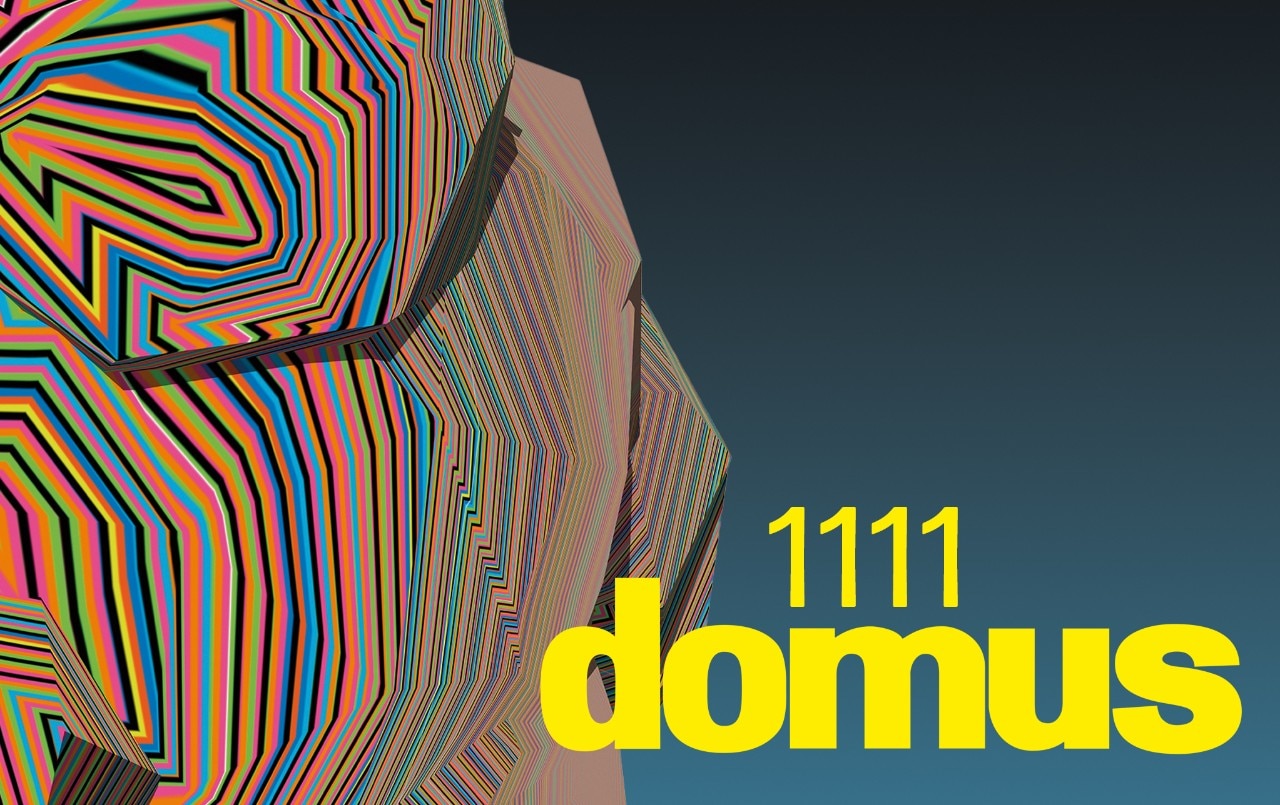

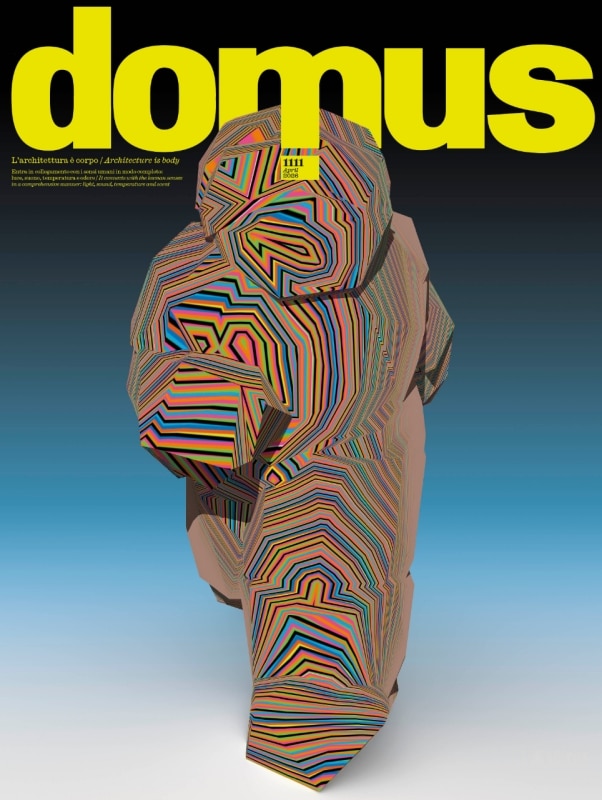
There is a threshold, on the path toward understanding architecture, beyond which you stop looking at it and begin to feel it. Domus 1111 lives entirely in that passage, from the visual to the sensory, from object to organism, from form to flesh. This issue poses a radical question about what it means to build for the body, with the body, as though one were a body.
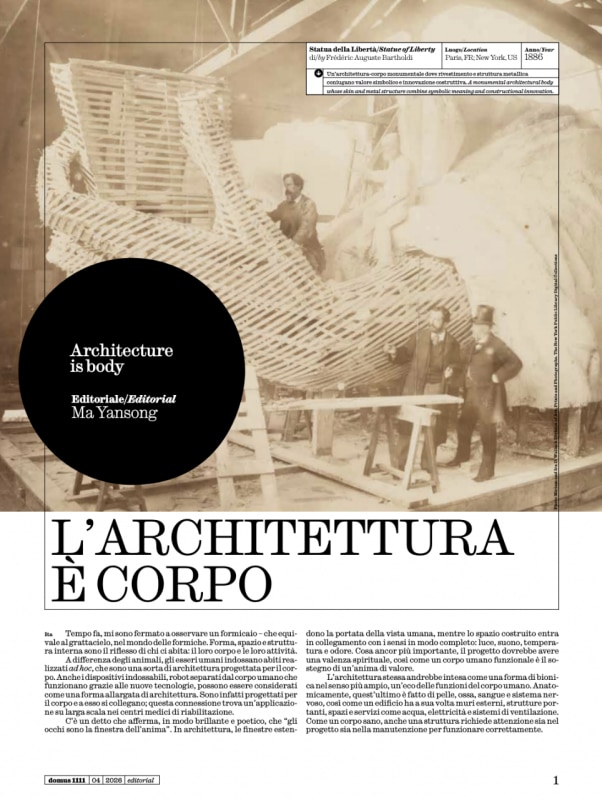
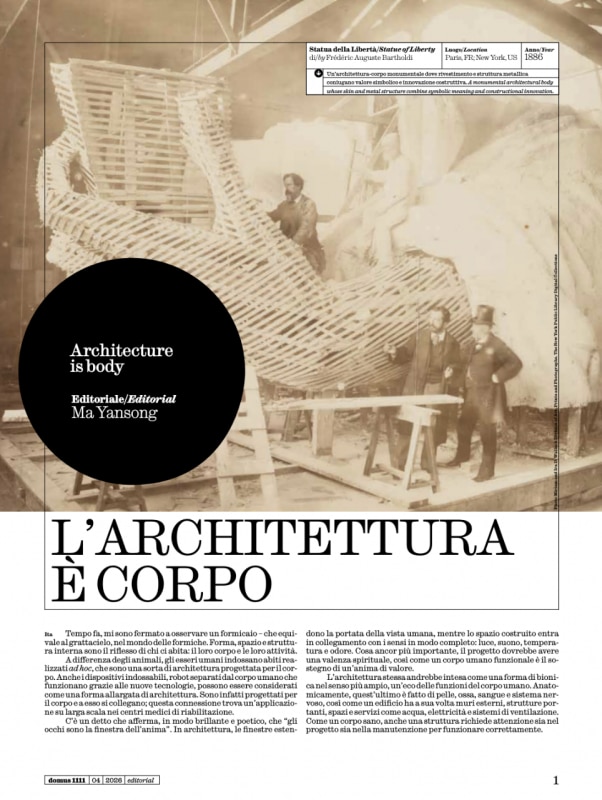
Ma Yansong, guest editor for 2026, opens with an editorial that carries the force of a poetic act. From an ant colony observed by chance, the skyscraper in the world of ants, where form, space and structure mirror those who inhabit them, to the Statue of Liberty taking shape beneath the frescoed vaults of a church, he traces a genealogy of the body in architecture that doubles as a critique of the present: too many cities, too many public spaces designed against the human body, against its freedom, its dignity, its desire to be together. Architecture as body is, then, also a civic act.
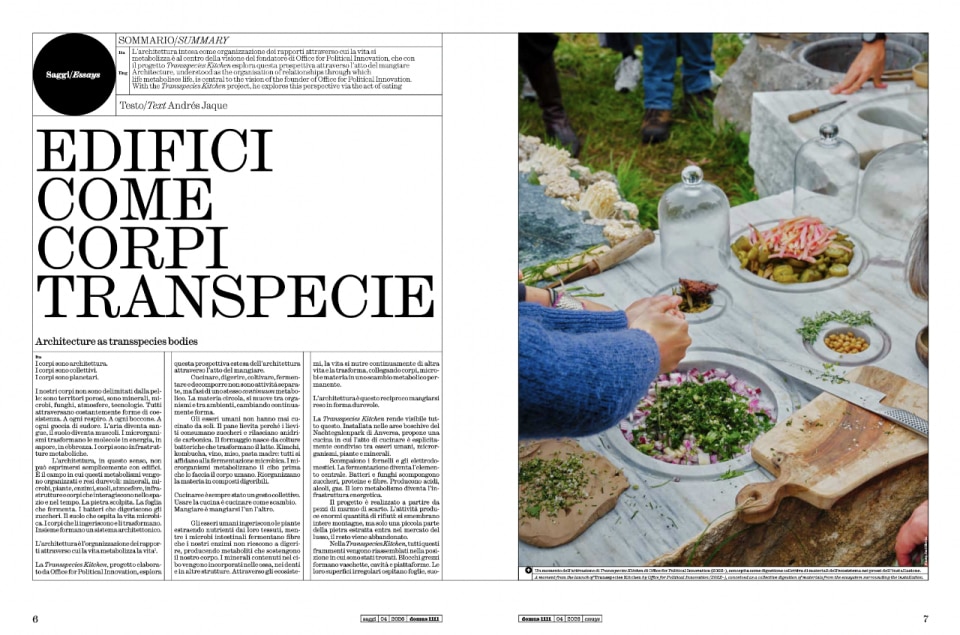
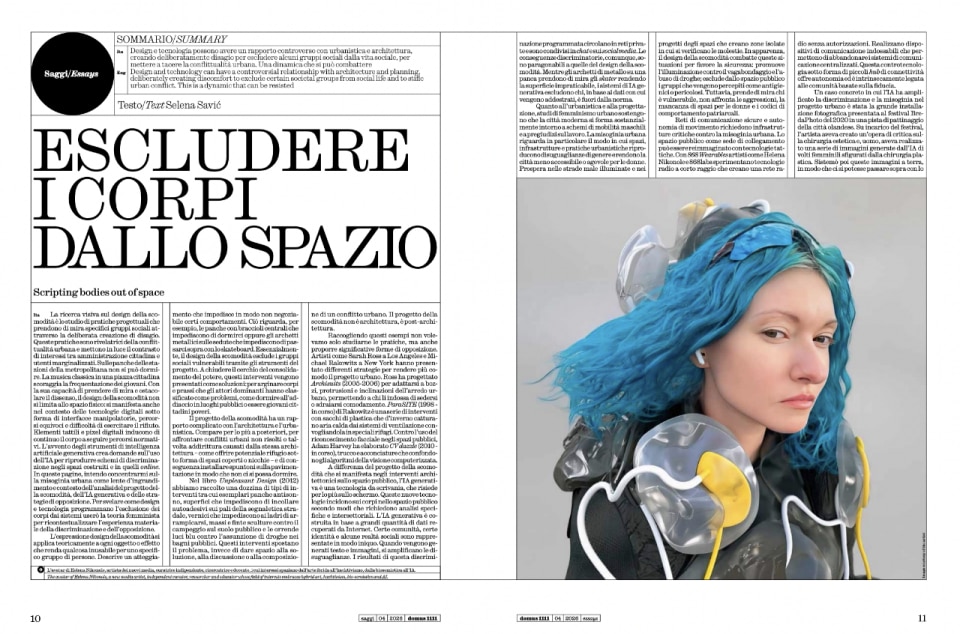
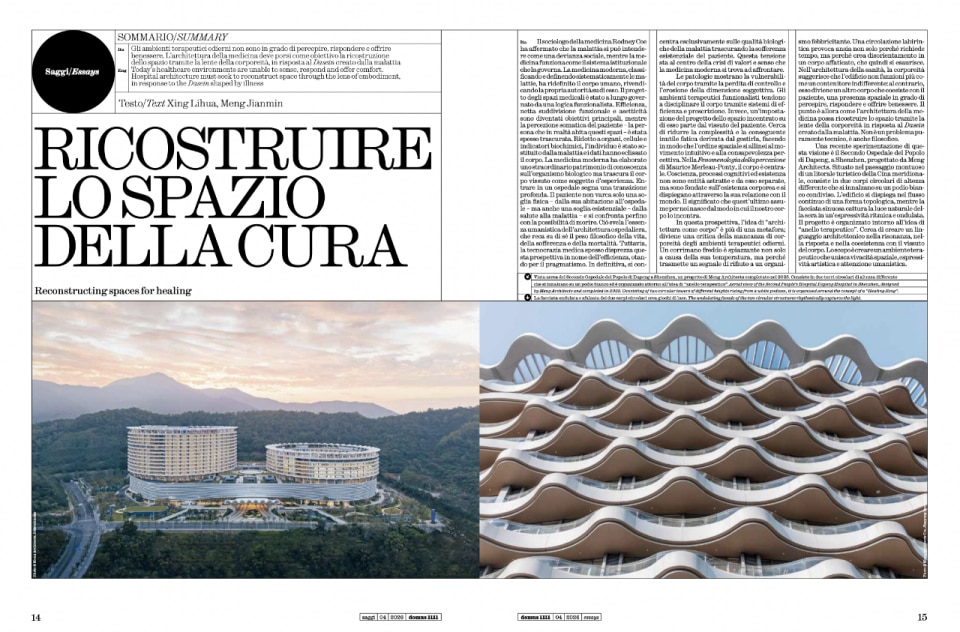
The essays develop this vision along three complementary lines. Andrés Jaque, with his Transspecies Kitchen installed in Antwerp's Nachtegalenpark, dissolves the boundaries between kitchen, digestion and architectural space into a metabolic continuum involving human beings, microorganisms, plants and minerals. Architecture, he writes, is the organization of the relationships through which life metabolizes life, a definition worth more than many treatises. Selena Savić takes on the design of discomfort: benches fitted with anti-sleeping armrests, floor spikes, classical music piped into squares to drive young people away, drawing a direct line between hostile architecture and digital discrimination as forms of systematic exclusion of the body from urban life. Xing Lihua and Meng Jianmin bring the body into the hospital: their Second People's Hospital of Dapeng in Shenzhen, organized around the concept of the Healing Ring, three multisensory courtyards introducing tactile physicality, tempered microclimates and diffused natural light, demonstrates that medicine can return to caring for the whole person, not just the disease.
There is a threshold, on the path toward understanding architecture, beyond which you stop looking at it and begin to feel it.
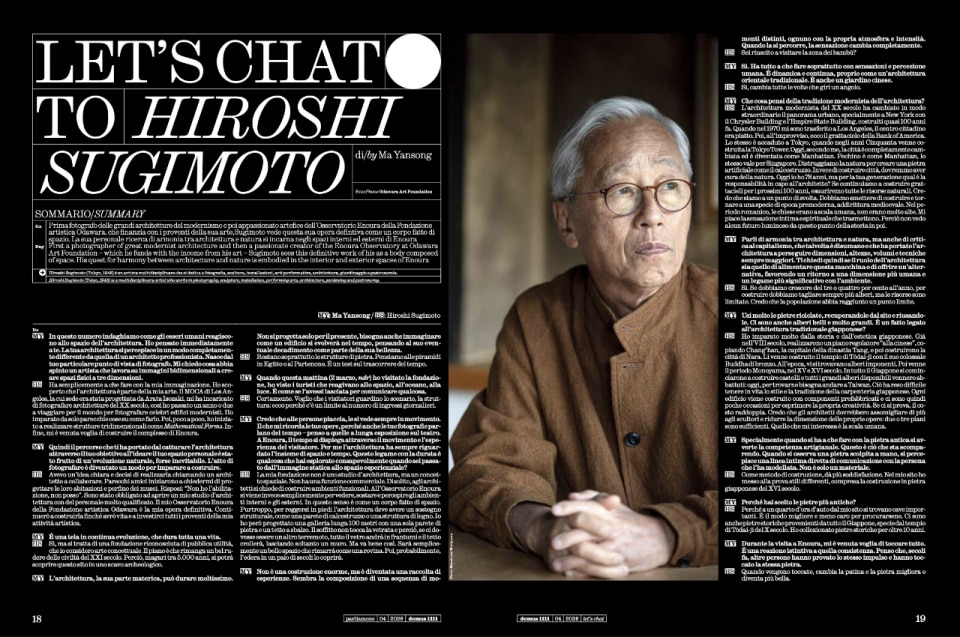
The conversation between Ma Yansong and Hiroshi Sugimoto is one of the issue's most compelling moments. Sugimoto speaks of his Enoura Observatory, funded entirely through the proceeds of his own artistic practice, a lifelong work he intends to keep building for as long as he lives, as a body made of space: stone galleries aligned with the solstices, bamboo that shifts with every angle, five-hundred-million-year-old fossils set beside stones from the Tōdaiji temple. An architecture that measures time without clocks, that makes you feel the weight of light on the floor like the press of a finger. His critique of triumphant modernism, of the globalized Manhattan-city that destroys nature to raise artificial stone, is not nostalgia: it is an ethics of permanence.
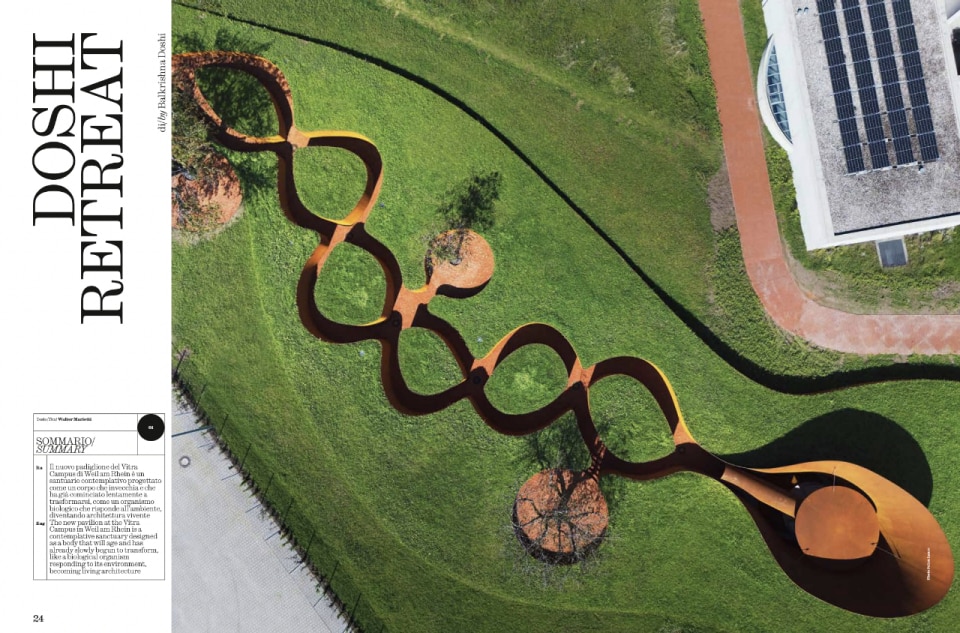
At the heart of the issue, the projects speak different languages but share the same gravitational pull toward the sensory. Walter Mariotti writes about the Doshi Retreat on the Vitra Campus in Weil am Rhein, the first and last work built outside India by Balkrishna Doshi, completed posthumously in 2025, as a metallic, musical body that moves through the visitor before it even reveals itself: gongs and flutes emerge from the ground, resonate through concave steel walls, pass through the body; a brass mandala, hammered by hand, refracts light through the space, while rain enters through a zenithal opening. A sanctuary born from a dream, two entwined cobras, an image of kundalini, that will one day become a ruin, and in that ending will find its eternity.
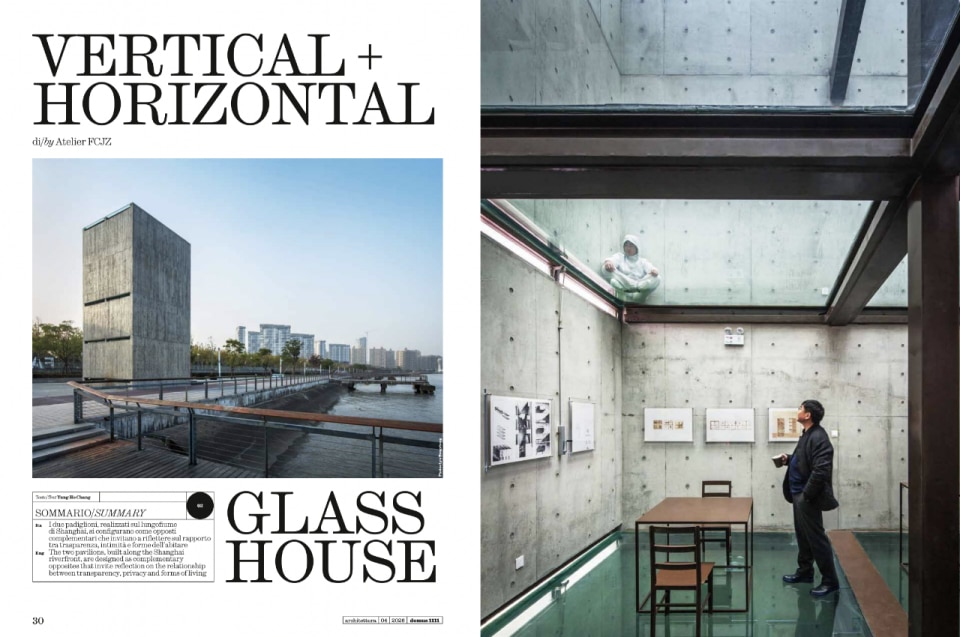
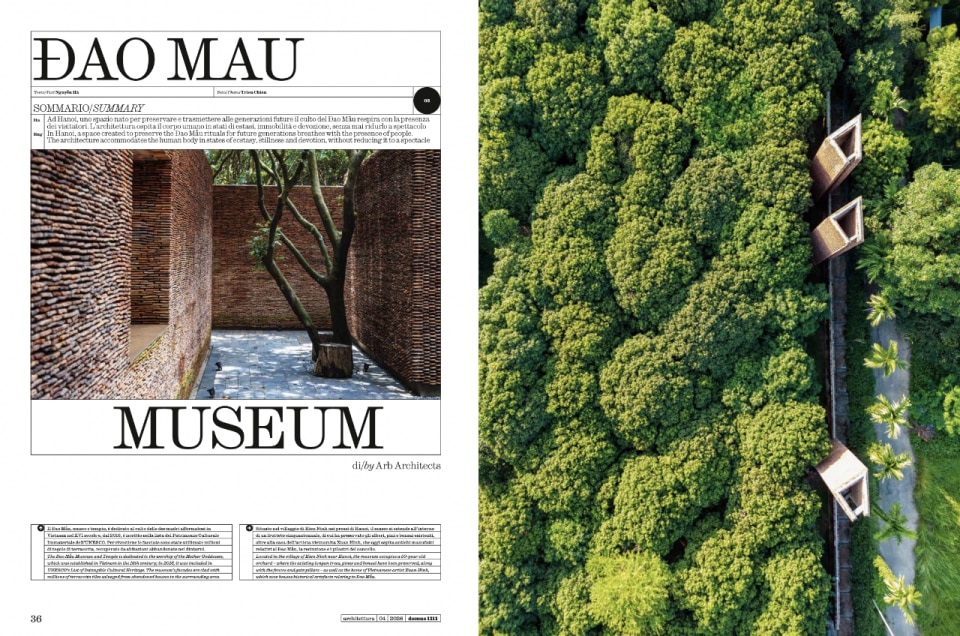
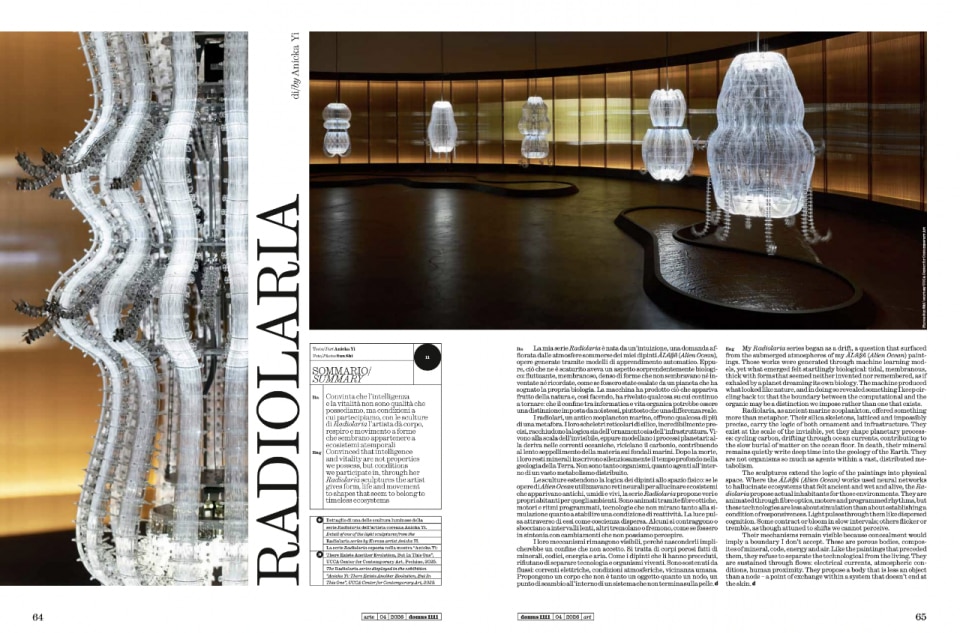
Yung Ho Chang writes about the Vertical and Horizontal Glass Houses by Atelier FCJZ on Shanghai's riverfront: every New Year's Day, around eleven in the morning, the shadow of one falls in perfect alignment with the shape of the other. Like a body and its shadow: inseparable. Nguyễn Hà presents the Đao Mẫu Museum and Temple by Arb Architects in Hanoi, built with five million reclaimed terracotta tiles sourced within a thirty-one-kilometer radius, a skin that tells time, bones anchored to the longan trees already growing in the garden, flesh made of Hầu Đồng ritual. Anicka Yi brings her Radiolaria series, luminous sculptures animated by fiber optics and motors, inspired by ancient marine zooplankton whose silica skeletons write deep time into the geology of the Earth, as her answer to what it means to be a porous body, made of minerals, code, energy and air.
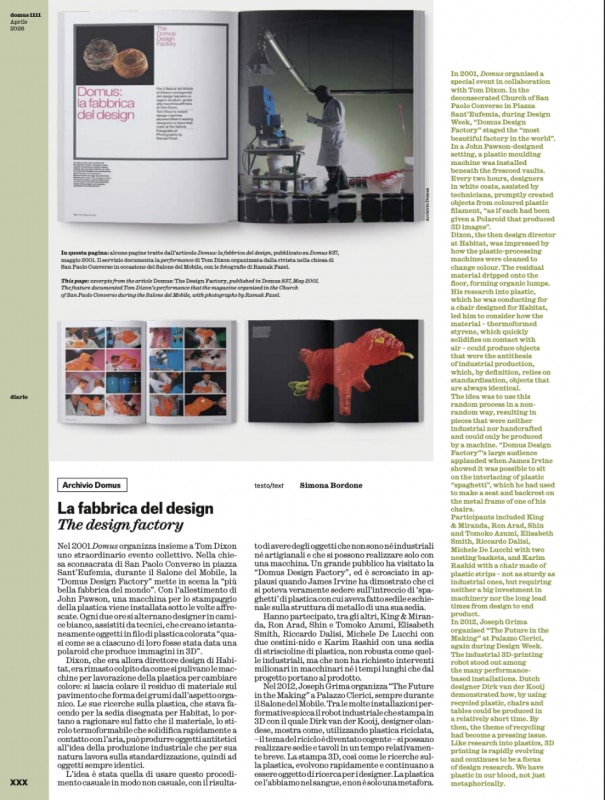
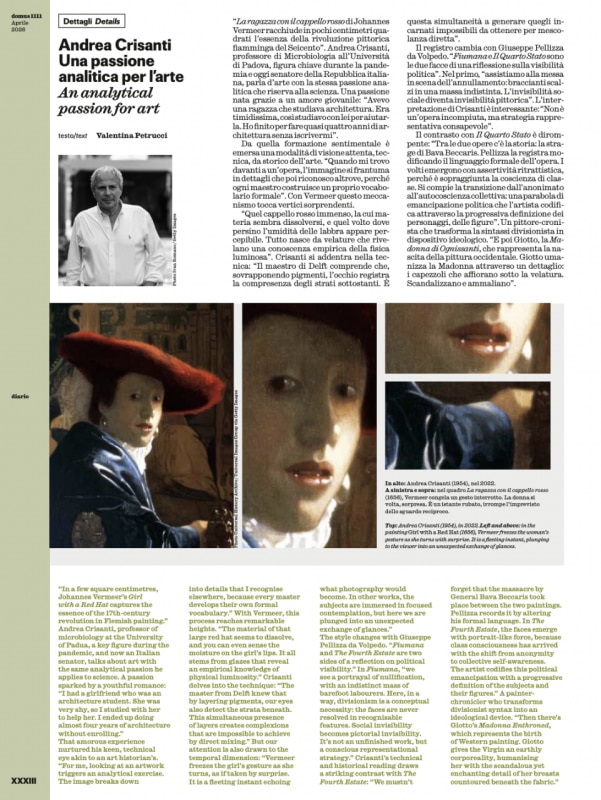
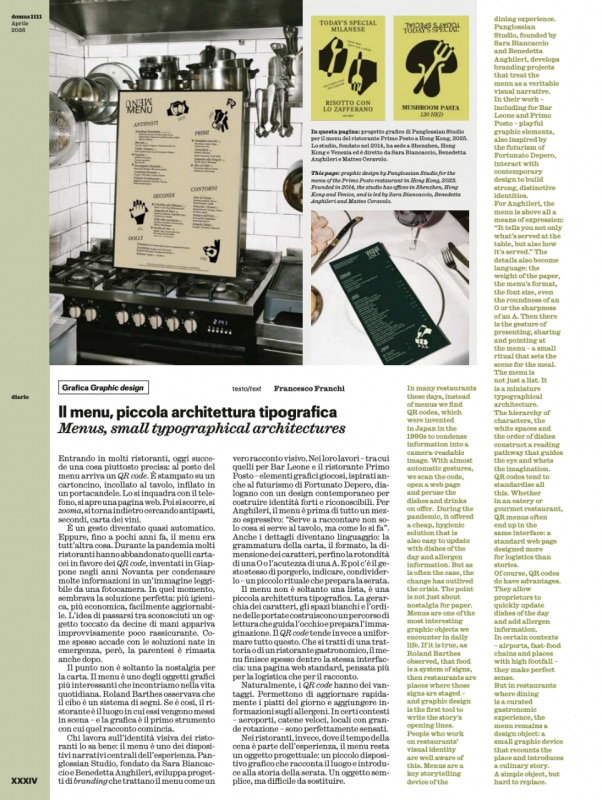
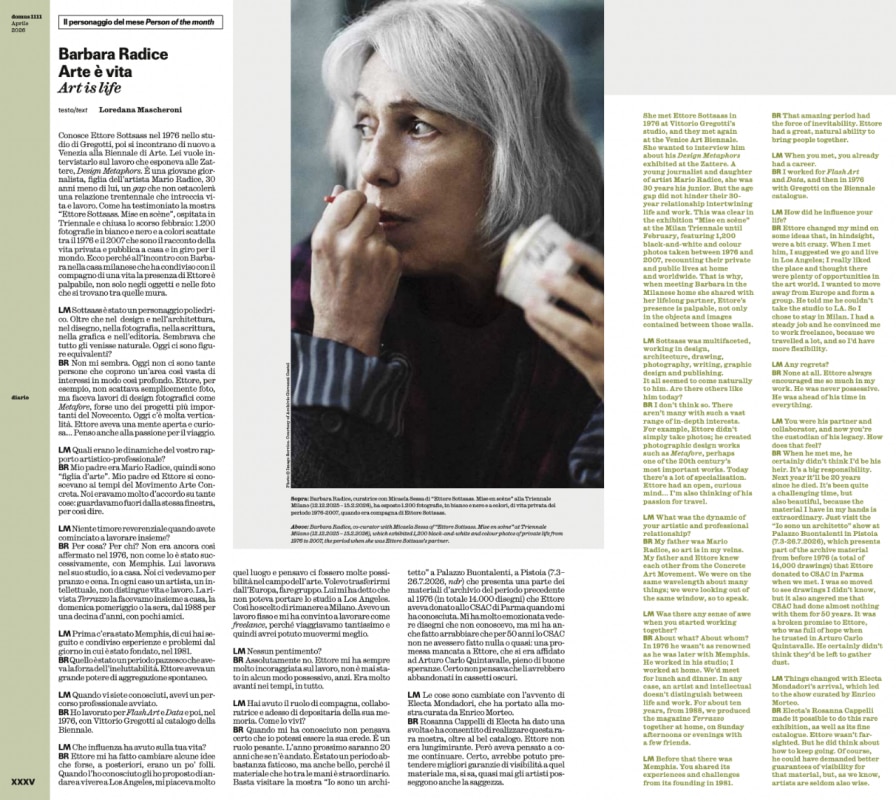
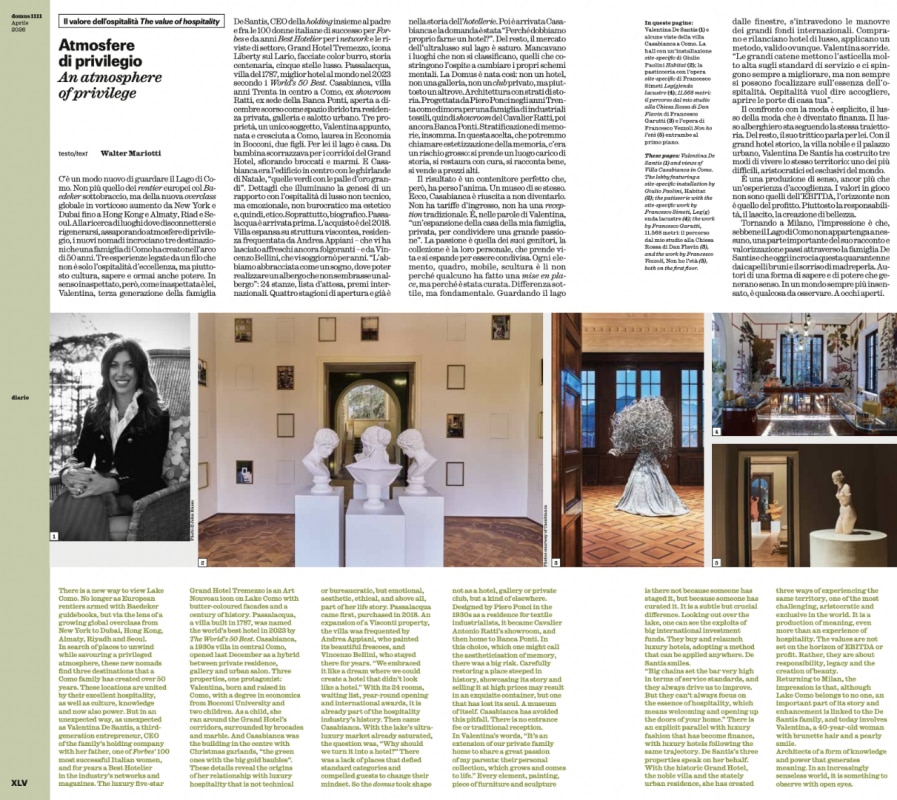
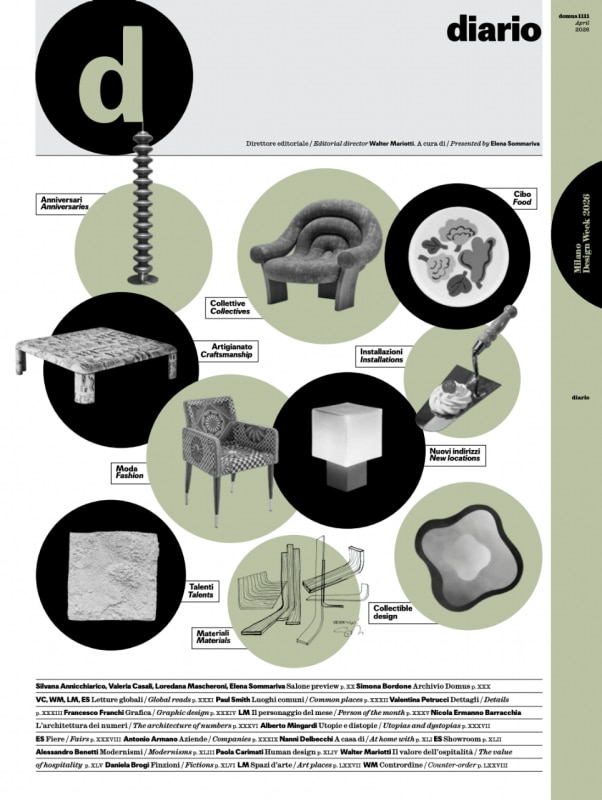
The Diario is where Domus holds its conversations: from a 2001 archive piece on the Domus Design Factory in the deconsecrated church of San Paolo Converso, fitted out by John Pawson, to Paul Smith's meditation on mosaic, from the Nando's down the road to the twelfth-century Cappella Palatina in Palermo, as a form of time: durable, adaptable, irreproducible by artificial intelligence. Valentina Petrucci interviews Andrea Crisanti, who speaks about art with the same analytical intensity he brings to science. Francesco Franchi reflects on the menu as a small typographic architecture, and on its gradual replacement by the QR code. Loredana Mascheroni visits Barbara Radice in the Milanese apartment she shared with Ettore Sottsass for thirty years. Walter Mariotti writes about Valentina De Santis and the Lake Como triptych as an act of meaning-making rather than a hospitality experience, not a standardizable service, but the act of opening one's own front door.
Architecture is the organization of the relationships through which life metabolizes life.
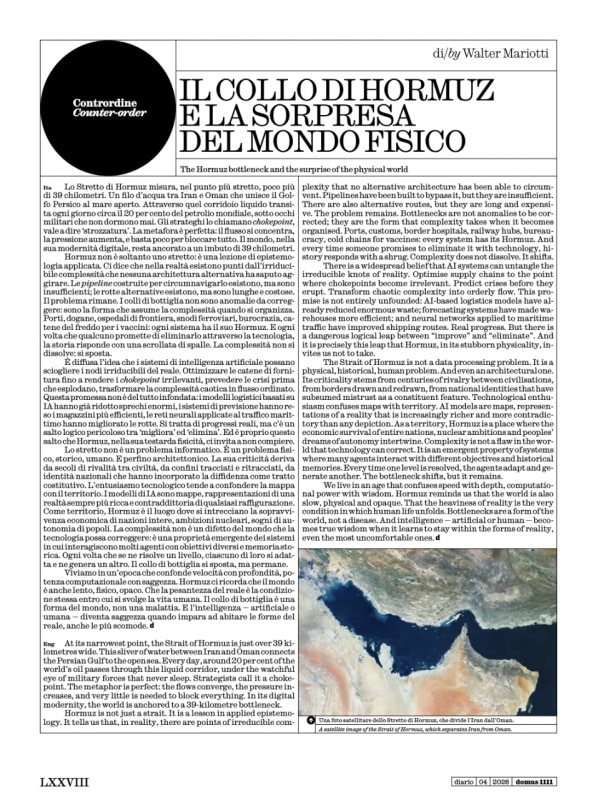
The Contrordine section carries this architecture of thought out into the world: thirty-nine kilometers, the width of the Strait of Hormuz at its narrowest point, through which roughly twenty percent of the world's daily oil supply passes. AI models are maps, not territory. There is a dangerous logical leap between simplifying complexity and eliminating it. The bottleneck is a feature of the world, not a malfunction. And intelligence, artificial or human, becomes wisdom when it learns to inhabit the shapes of reality, even the most uncomfortable ones.
The dossier on the retrofitting of EY's Milan headquarters makes the case for the contemporary urban condition. The Piuarch project, spanning via Meravigli and piazza Cordusio, reinterprets this logic of a hidden Milan at the scale of a modern headquarters. EY in Milan is a professional community of several thousand people , carbon chains, as EY Italy CEO Stefania Boschetti calls them, that has built, over time, a deep relationship with the university system, with institutions, with the world of corporate culture. Milan enters EY. EY enters Milan.
Leaf through these pages as you would move through a space you never quite finish inhabiting: with the awareness that each time you pause, something shifts, in the light, in the sound, in the temperature. In understanding. And so, good reading.