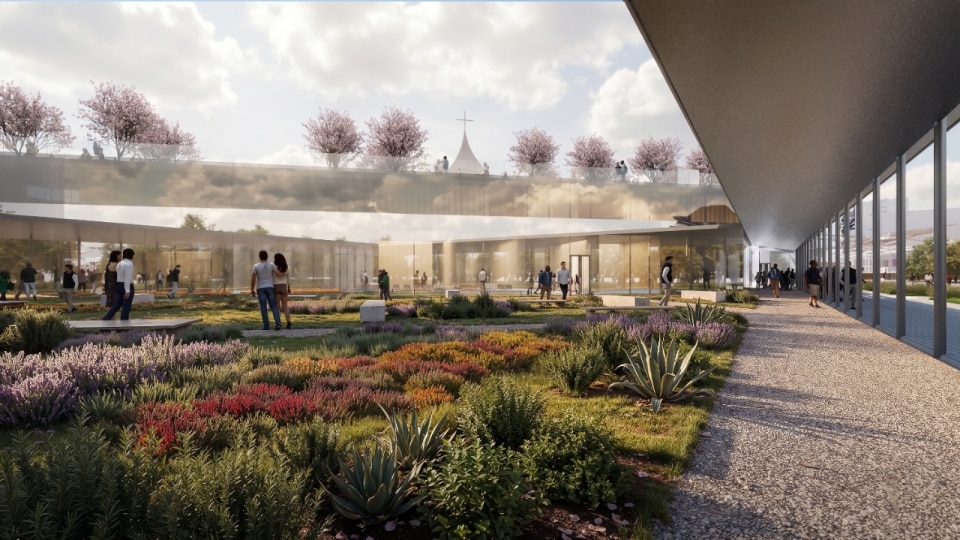
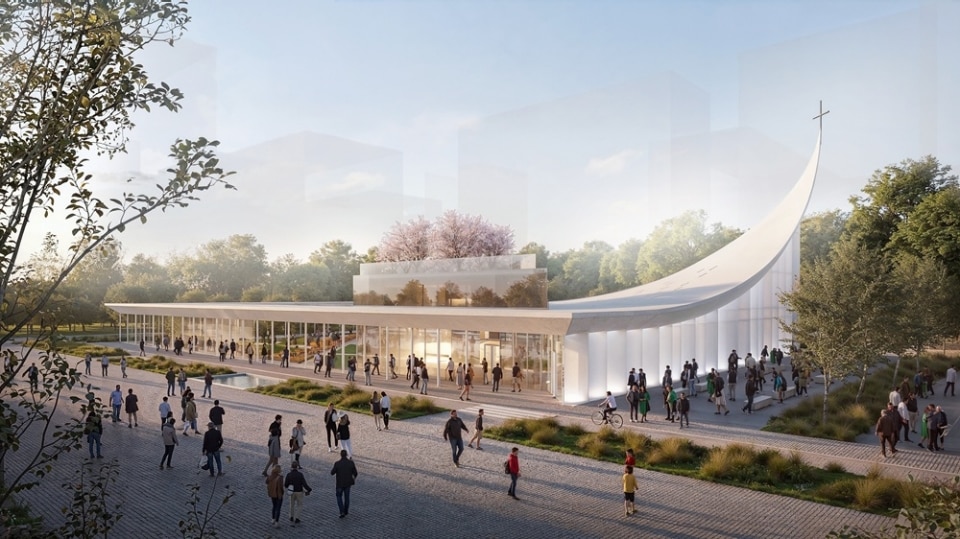
University campuses, laboratories, research centers, bars, shops and… a monastery. In Milan, within Mind, the innovation district born on the Expo site, Stefano Boeri signs a religious architecture that reinterprets the archetypal features of the monastery. The space is protected yet permeable: within a large hortus conclusus, the Cloister of Religions is born. A place, as Boeri explains, “designed to respond to the needs of a plural society and to promote interreligious dialogue.”
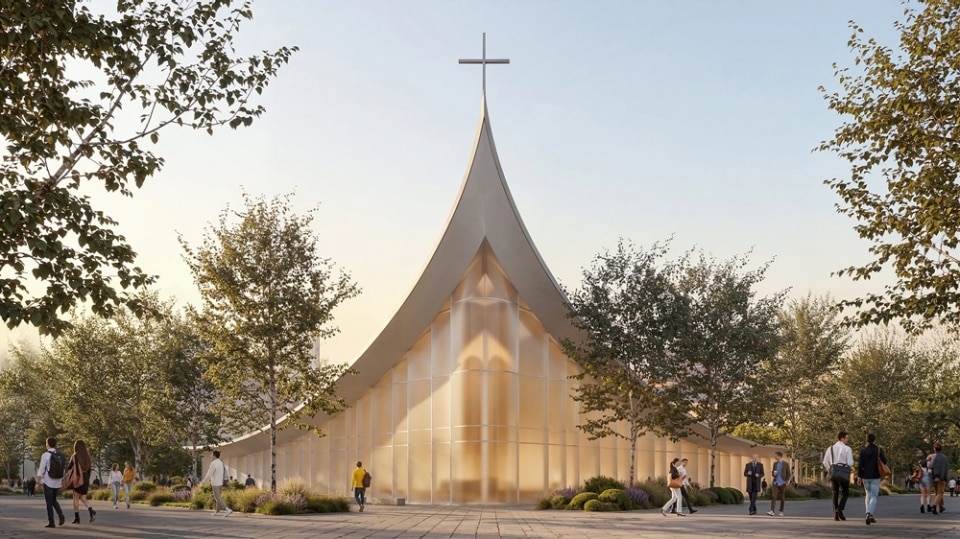
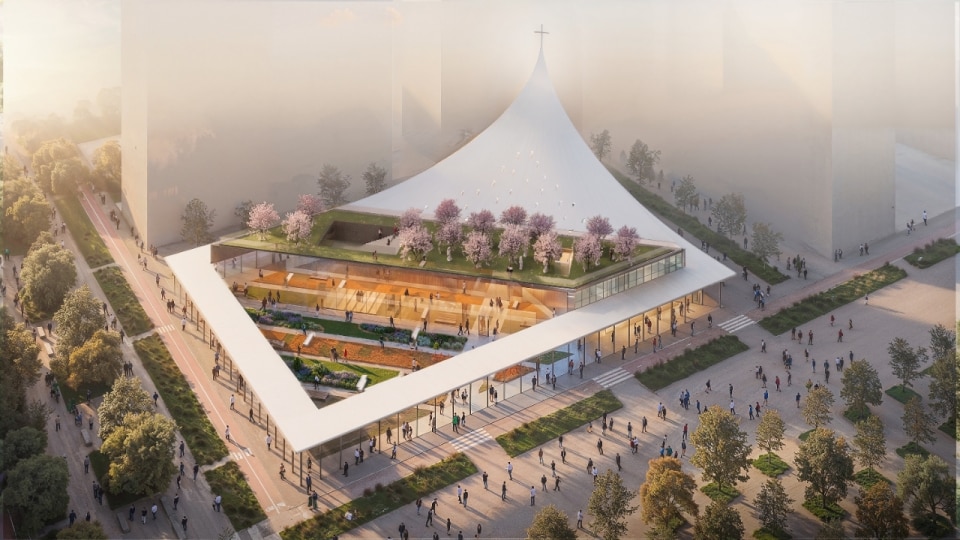
The Ambrosian Monastery, commissioned by the Diocese of Milan and expected within three years, will rise in the area where the Cardo and Decumanus cross and will occupy a surface of 2700 square meters, almost half of which are intended as open spaces. In addition to the cloister, in the Garden of Religions, the different monotheistic traditions present in Milan will be represented by different tree species. Among the spaces dedicated to pastoral activity, the church with over 300 seats concludes, with a trigonal layout, the design of the cloister, accompanying two of its vertices upwards as a tribute to the Gothic facade of the Milan Cathedral.
A monastery in the innovation district
The project’s intentions include the construction of a space destined for dialogue, exchange, and research, as evidenced by the presence of a Library of Religions next to a small cherry grove, where several statues from the sculpture archives of the Veneranda Fabbrica del Duomo will be placed. The structure will also house study rooms, an outdoor amphitheater, multifunctional spaces, and a section dedicated to pastoral care with five annexed residences.
A contemporary monastery designed to meet the needs of a plural society and to promote social cohesion, interfaith dialogue and knowledge production.
Stefano Boeri
Launched in 2023 through a call for ideas that involved institutions, research centers and architectural firms, the project outlines the presence in the Mind district of a church founded on three pillars: liturgical life, interreligious dialogue and the encounter between humanistic knowledge and the life sciences. This vision, translated into Boeri's architectural sign, was presented at Chiaravalle Abbey, where since 1135 the Cistercian monks have been not only spiritual guides but also innovators capable of regenerating the territory between hydraulic engineering and agricultural experimentation.
If the presence of a religious building in a district devoted to technological innovation may appear anachronistic, the project seems to want to bet on a different function: to offer a space for reflection, meeting and research within one of the symbolic places of Milan's scientific and contemporary technology. More than just a church in the of AI, the Ambrosian Monastery thus tries to introduce within the technological capitalism a place designed for slowness, silence and contemplation.