


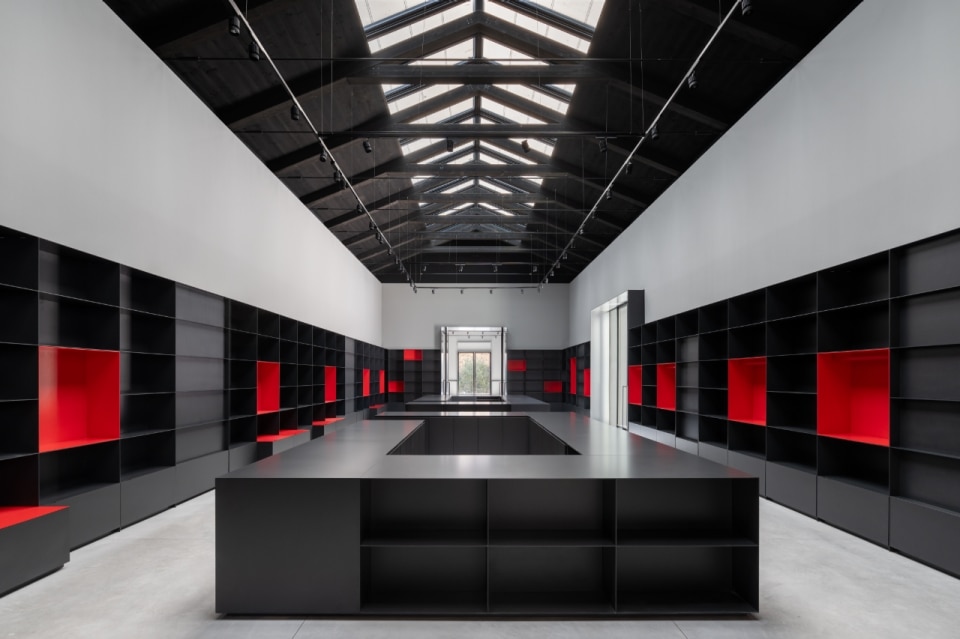
There is something paradoxically Venetian about the way Labics approached the Central Pavilion at the Gardens of the Venice Biennale. The Rome-based firm founded by Maria Claudia Clemente and Francesco Isidori – active since 2002 with a long history in the cultural architecture sector – understands that rewriting the existing does not mean erasing it.
Venice, after all, has survived for centuries this way: not as a museum, nor as a construction site, but as a city in perpetual negotiation between what was and what is yet to be. It is from this very logic that the project takes shape.
A true project of re-invention, because the architecture of the past, to keep living, must know how to renew itself.
Francesco Isidori
The Central Pavilion was born between 1894 and inaugurated in 1895 as the home of the first International Art Exhibition, but the building we know is the result of over a century of interventions, additions, and overlaps. Duilio Torres, Carlo Scarpa, and then the projects of Louis Kahn and Francesco Cellini, among the many that remained on paper: every era left a mark, often without communicating with the previous one.
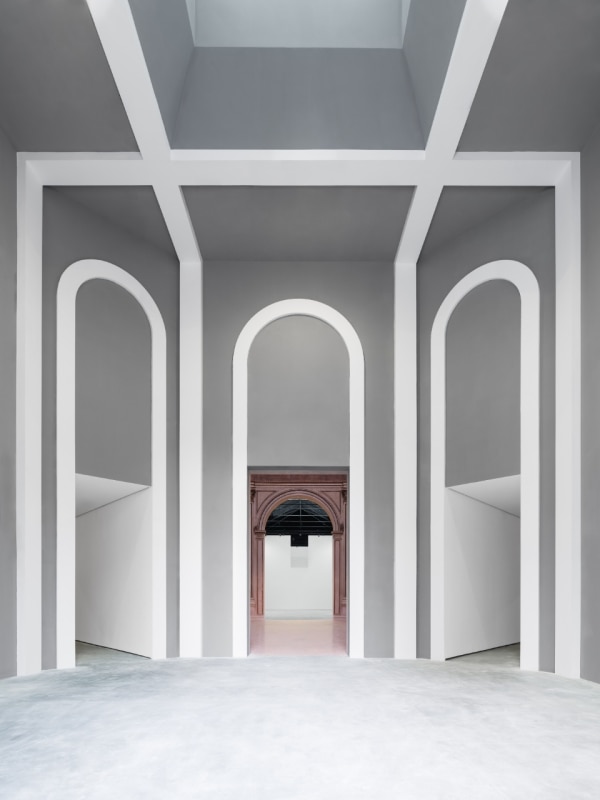
In 1909, Galileo Chini had meanwhile frescoed the dome of the octagonal entrance hall, adding a further layer to the building’s memory. The result was a stratified and precious architectural organism, yet spatially unresolved – a building that carried history as a burden, not as a resource. The intervention completed in March 2026, funded by the PNRR with 31 million euro, starts exactly from here.
Isidori was explicit about the nature of the operation: “It is not a restoration project, nor conservation in the strict sense, but a true project of re-invention, because the architecture of the past, to keep living, must know how to renew itself, to exist within time.” This is a clear stance that rejects both the paralyzing reverence of philological restoration and the hubris of a gesture that imposes itself on the existing.
A finally coherent space
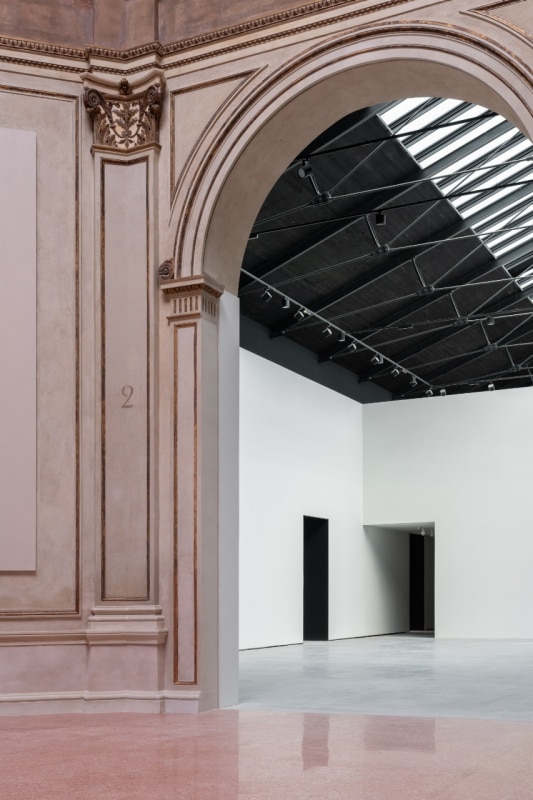
The result is a pavilion that, for the first time in its history, functions as a coherent system. The Chini Room – with its frescoed dome – becomes the main distribution node, the heart around which both exhibition rooms and service spaces are organized: café, bookshop, and educational room.
The exhibition rooms themselves have been conceived as neutral and flexible white boxes, with all technical systems integrated and hidden behind the walls. No visible technical intrusion. The result is that quality of intelligent and essential emptiness, which makes an exhibition space truly capable of hosting anything.
But Labics did not stop at functional makeup. One of the most significant interventions concerns accessibility. “Following the logic of design for all, we tried to make the pavilion entirely accessible,” explains Clemente. “Before the intervention, the complex presented numerous critical issues: small level changes, height differences between inside and outside, and above all the presence of a mezzanine and a basement floor that were practically inaccessible. Today, everything is usable, with the visitor routes rationalized.” That a monumental building from 1895, adjusted in a thousand ways over a century, finally becomes accessible to everyone is, in its own way, a small revolution.
The “altane” and lightness
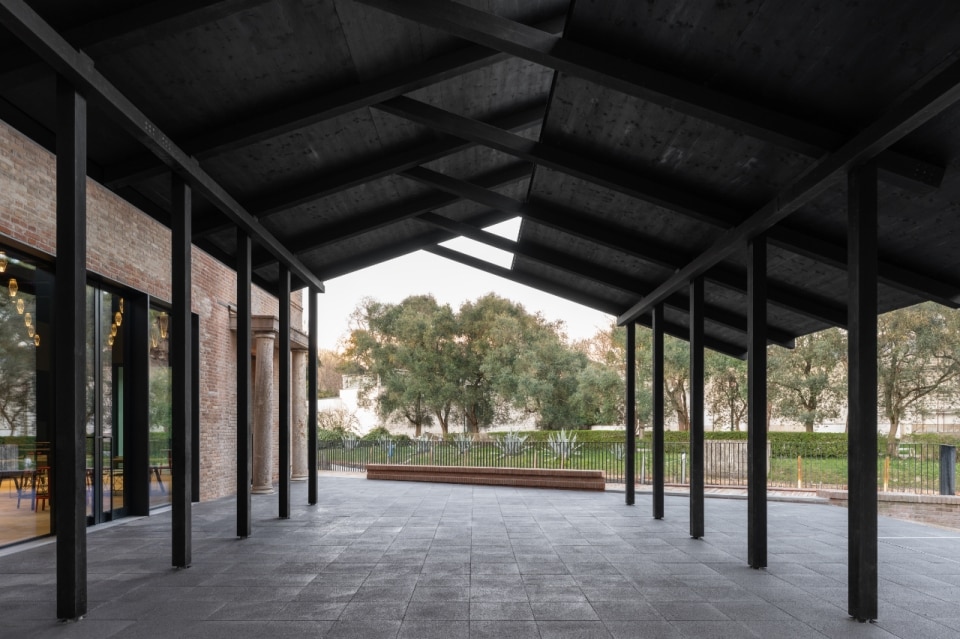
The most scenic intervention, and perhaps also the most Venetian, are the altane, the two external structures in charred laminated timber and X-lam panels built in correspondence with the café and the multipurpose space. The gesture is deliberately measured: the altane do not compete with the pavilion’s masonry mass; they do not seek contrast. They are aerial, almost ephemeral structures that reinterpret the tradition of Venetian belvederes and establish a dialogue with the landscape of the Giardini and the canal.
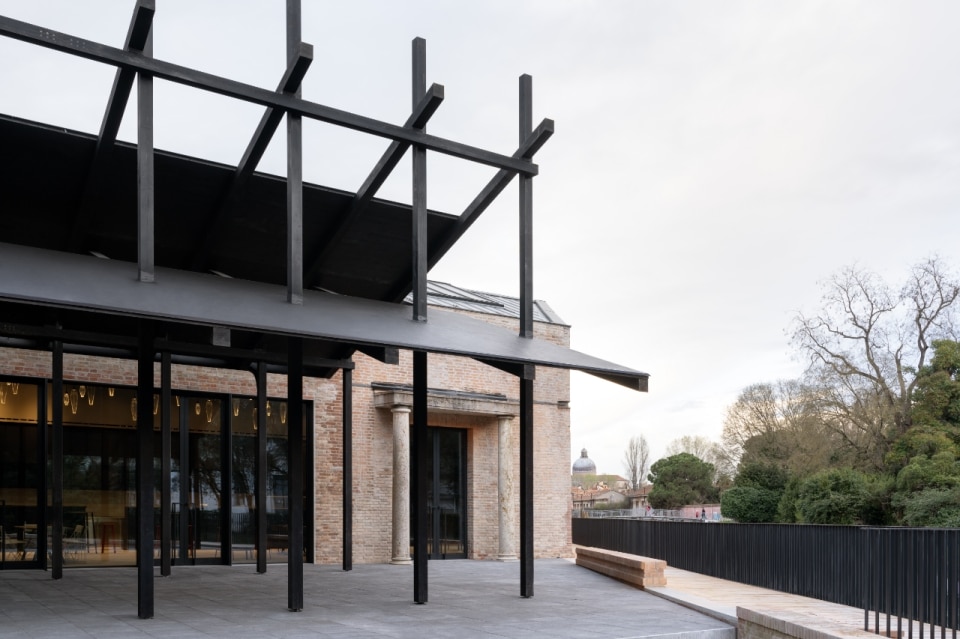
It is a conscious tribute to Venetian culture – and, indirectly, to the design sensitivity of Carlo Scarpa, whose fixtures were restored and reintegrated into the building. “We sought to expand the café space, creating a new outdoor room covered with a light wooden structure,” says Labics, and indeed there is something elegantly contradictory in the idea of adding lightness to Venice, a city of stones and water. The emphasis was placed on social spaces and resting areas.
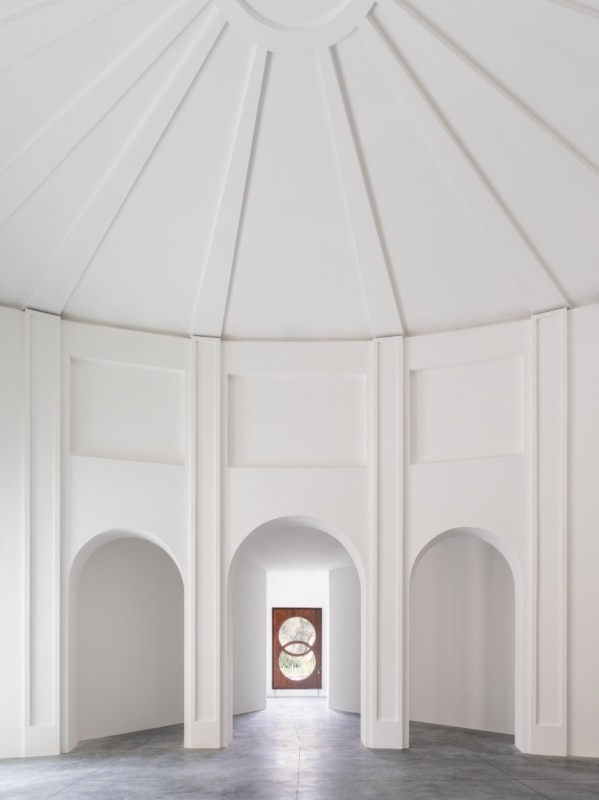
On a technical level, the project aims for Leed Gold certification: new skylights in photovoltaic and diffusing glass guarantee uniform natural lighting and contribute to energy production, while the ventilated roof and high-efficiency technical systems significantly reduce consumption.
Architecture and sustainability are integrated, not overlapping. In this sense, we can say that the project for the Central Pavilion was born from the desire to reconcile conservation and renewal, making the pavilion adequate for the modern standards required by prominent exhibition spaces.
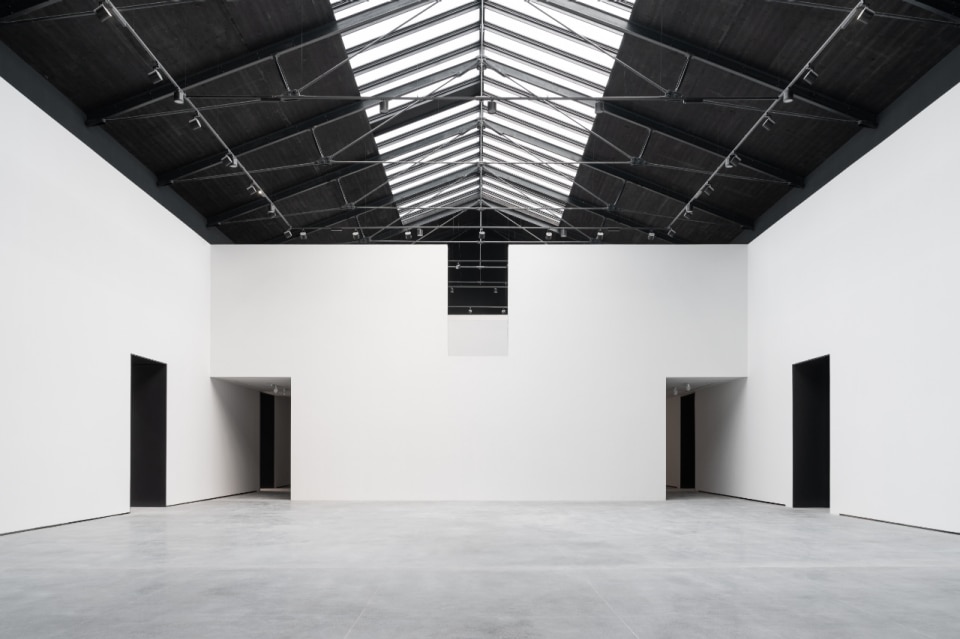
The pavilion will reopen on May 9 for Biennale Arte 2026, on the occasion of In Minor Keys by Koyo Kouoh. It will be an important test: an exhibition space is ultimately measured by what happens inside. But the structure that the Roman firm has delivered is something rare on the Italian scene: an intervention on a historical building of great significance that was not afraid to be architecture, that knew how to choose what to preserve and what to let go, and that restored clarity without erasing memory.
In Italy, where the word "restoration" is often synonymous with immobilism and the word "innovation" with a break with the past, Labics proves - once again - that there is a third way: that of re-invention.
Opening image: Cafeteria Loggia, Central Pavilion redeveloped with funding from the Ministry of Culture as part of the PNC at PNRR. Photo Giuseppe Miotto / Marco Cappelletti Studio, Courtesy La Biennale di Venezia / MiC