

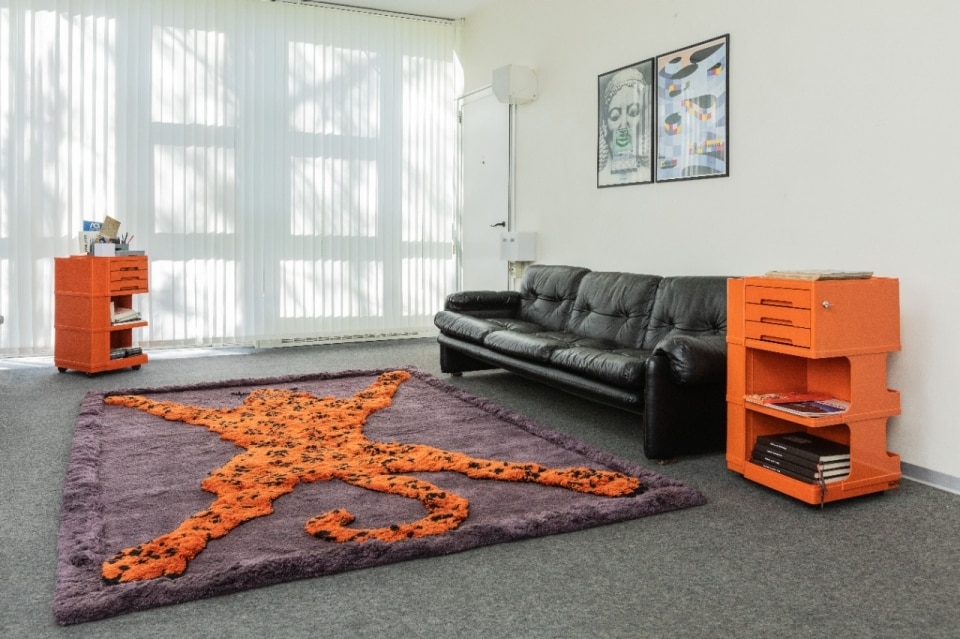
The new Casa Museo olivettiana, located just minutes from the center of Ivrea, inside the West Residential Unit – also known as Talponia – is neither purely a museum nor simply a lived-in residential unit within a UNESCO World Heritage architectural complex. It is not solely a domestic archive nor merely the model of a utopian social experiment: the Casa Museo is all of this at once, and more. Thanks to the foresight of collector Giovanna Faso, it revives the breakthrough power of Adriano Olivetti’s pioneering vision.
Buying a flat in Talponia it’s a symbolic gesture towards reconnecting with that Italian past of Italy, a big player when it came down to developing technological products.
Designed in the late 1960s by architects Roberto Gabetti and Aimaro Isola, Talponia was a semi-underground complex created to temporarily host company employees visiting Ivrea, offering them modern, dignified living spaces conceived to fully meet their material and social needs. The entire structure – a semicircular “horizontal skyscraper” of 85 units – was designed as a laboratory of coexistence, functionality, and technological innovation: a two-story architecture that dissolved its monumentality in favor of shared spaces, walkable roofs, and direct access to nature through a planted inner courtyard.
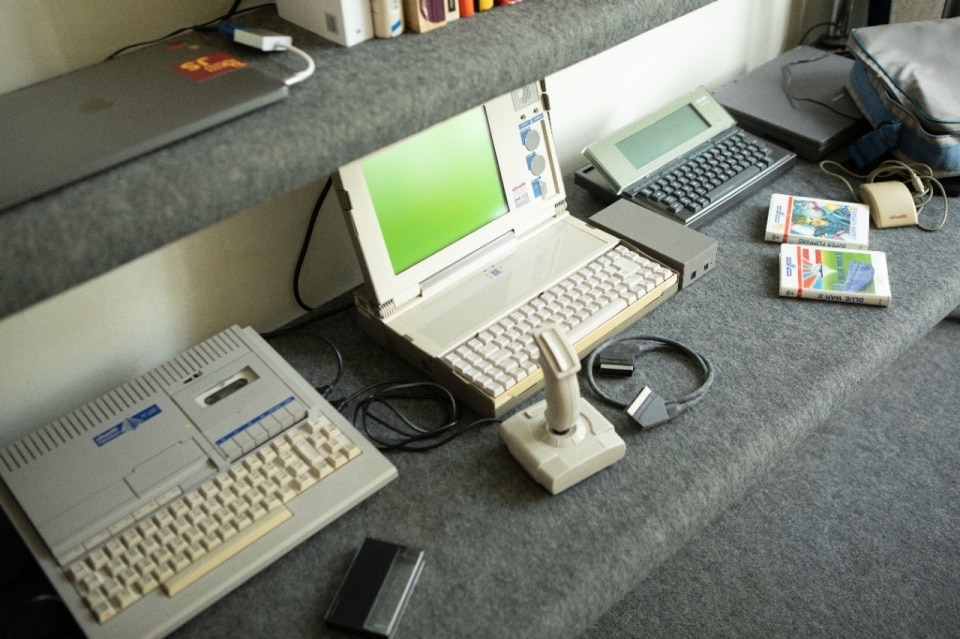
Within this framework, the Casa Museo olivettiana becomes a kind of time capsule – as well as an intimate and private space where daily life is both form and content – that restores and preserves the building’s original vocation, with a special focus on Olivetti’s electronic objects from the late 1960s, such as the Programma 101 or the first transistor-based computer Elea 9003. Through its three themes – architecture, informatics, and interior culture – the project becomes a privileged observatory of a forgotten future, one in which design and electronics collaborated as instruments of cohesion and collective imagination.
The collection curated by Giovanna Faso highlights Olivetti’s central role in conceiving technology not only as a functional tool, but as a true cultural language. By pairing historic computers with original furnishings, magazines, manuals, and design objects, Faso reconstructs the avant-garde vision of a company that saw technological innovation as an expanding horizon, integrating it into a new corporate humanism, into domestic space, and into a phase of Olivetti’s history that is often overlooked.
.jpg.foto.rmedium.jpg)
Opening image: Interior, photo by Davide Aichino. Courtesy of Casa Museo Olivettiana