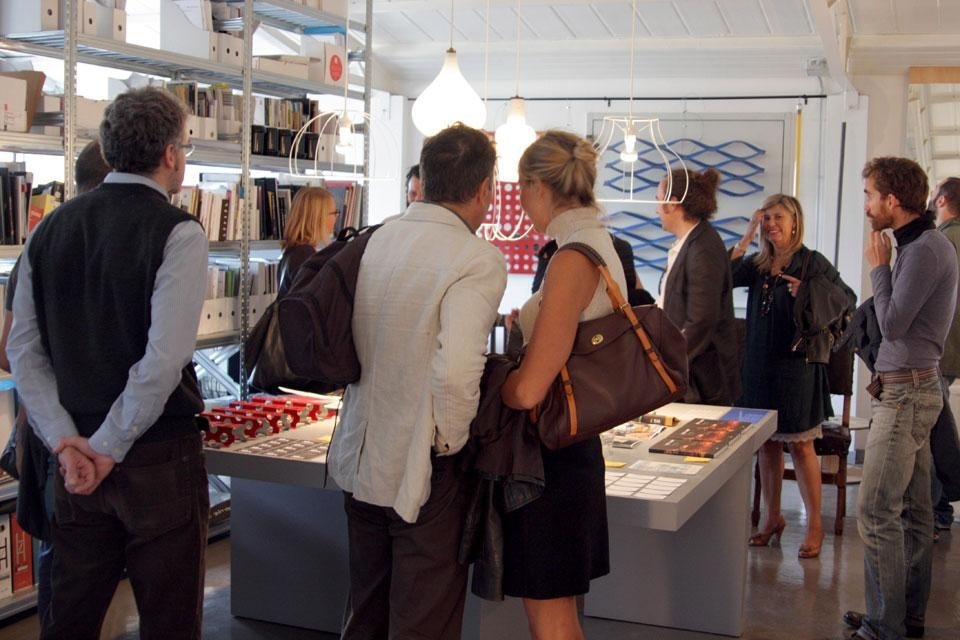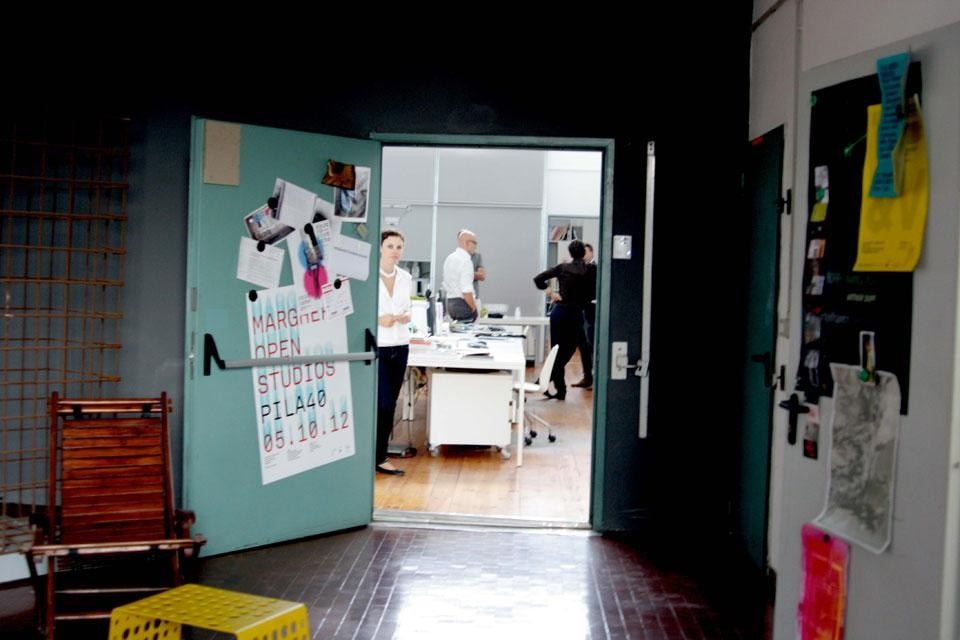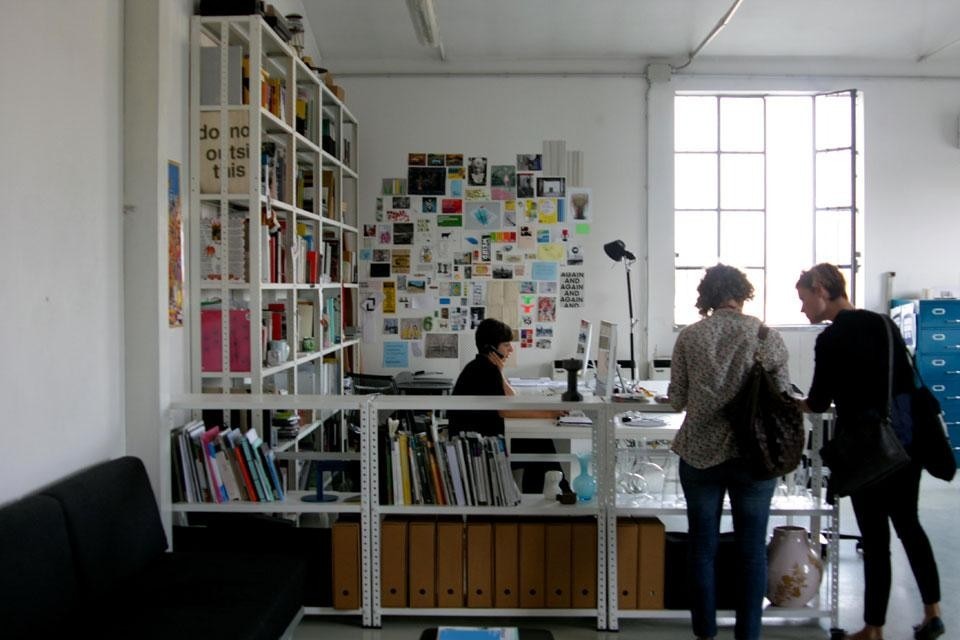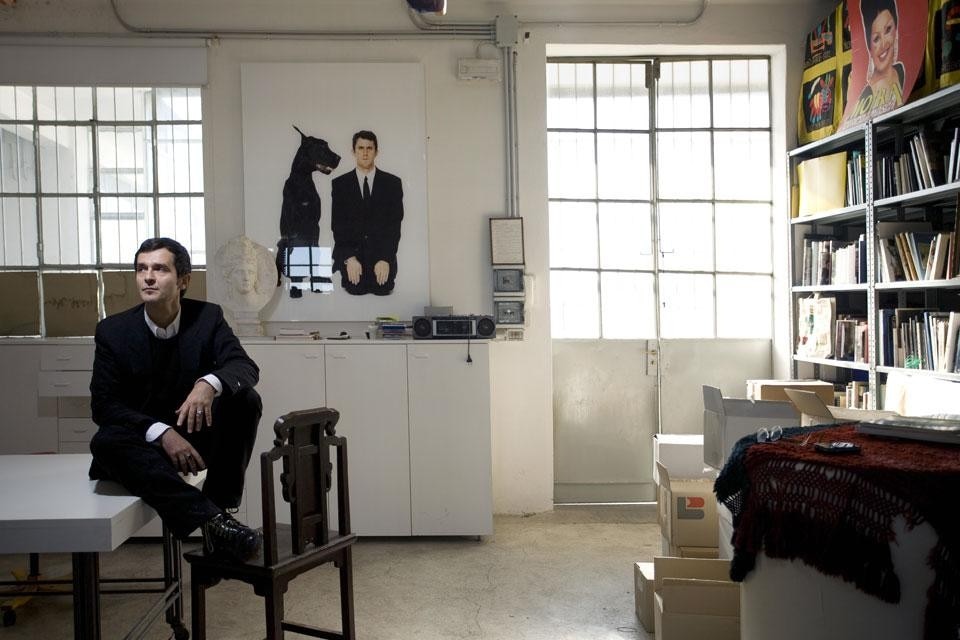
What exists today at Pila 40 was constructed by the Pasqualetto brothers. The history of the building began in 1920, when the family arrived to Marghera during the first phase of industrialization. The building was originally used as a stable to house and transport horses, and then later used to transport operative machinery specialized for civil and industrial reclamation and demolition. Since the 1990's Guido Pasqualetto, along with his children Raffaele, Anna, Cristina and Amedeo began the conversion of the space into a different type of use, a container of creativity. They transformed the former warehouses into studios ideally suited for young and emerging artists and designers.
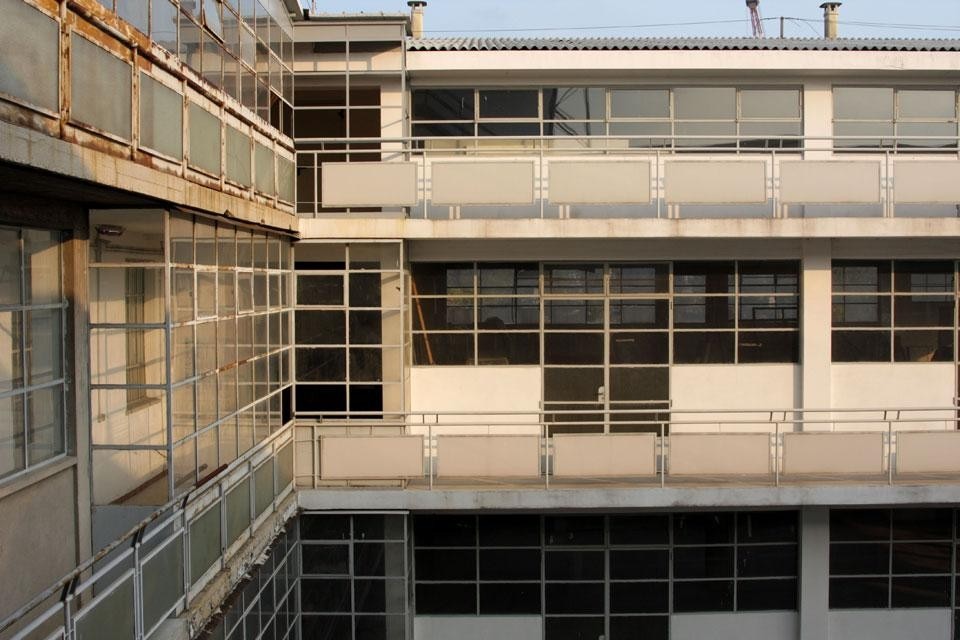
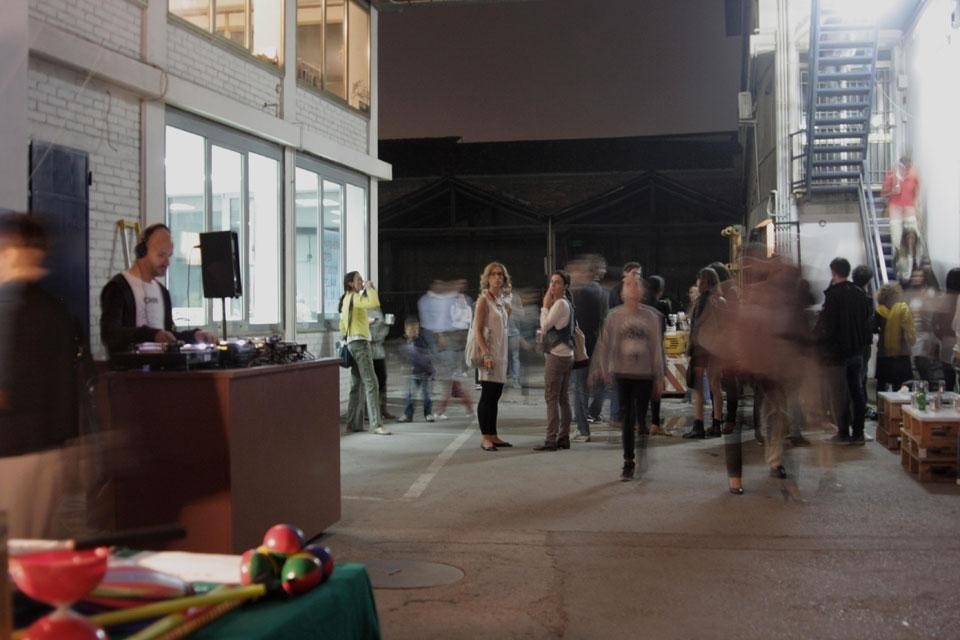
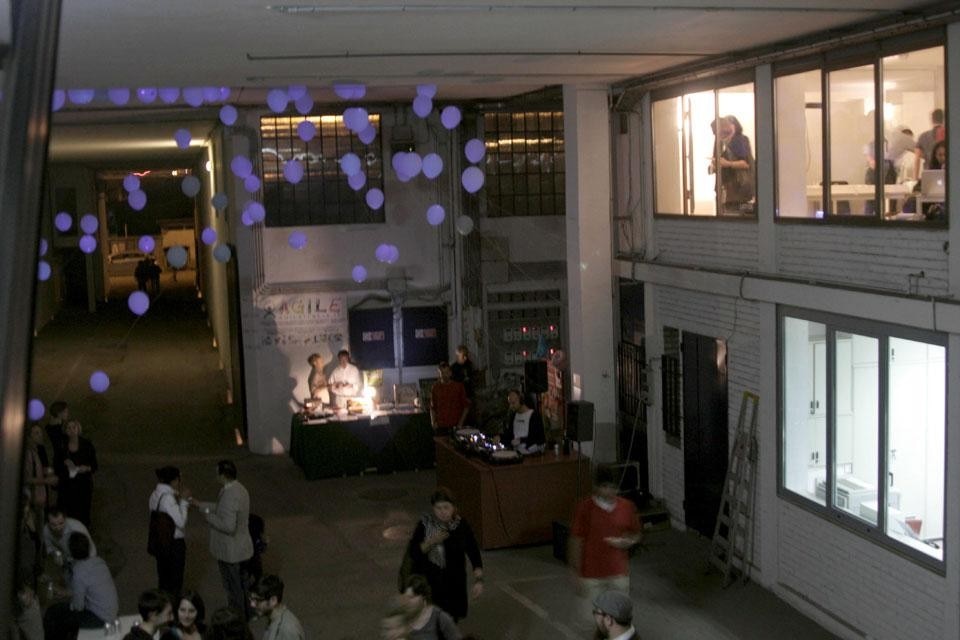
What remains is an industrial building evoking Modernism, made of steel, concrete and glass and composed of three rectangular masses organized into a u-shaped plan around a central courtyard space. The external walls enclose the internal space from the immediate urban context, but are simultaneously opened by tall glass windows on the upper floors providing spectacular views overlooking Marghera. Through the use of a reinforced concrete structural system, the internal façade is strikingly light. The internal strip windows and balconies flood the interior spaces with light, creating optimal working spaces for creative purposes.
The first floor of the main building houses Corde Architetti an architectural firm collaborating with industrial designers, architects and regional planners and the studio of Arthur Duff, a German-born American artist whose work is focused on the elements of light, language, and motion and the movement of the body through space.
Pila 40 is just one example of its type. There are many similar sites in the area, creating a map of creativity in the once flourishing industrial core of Marghera