

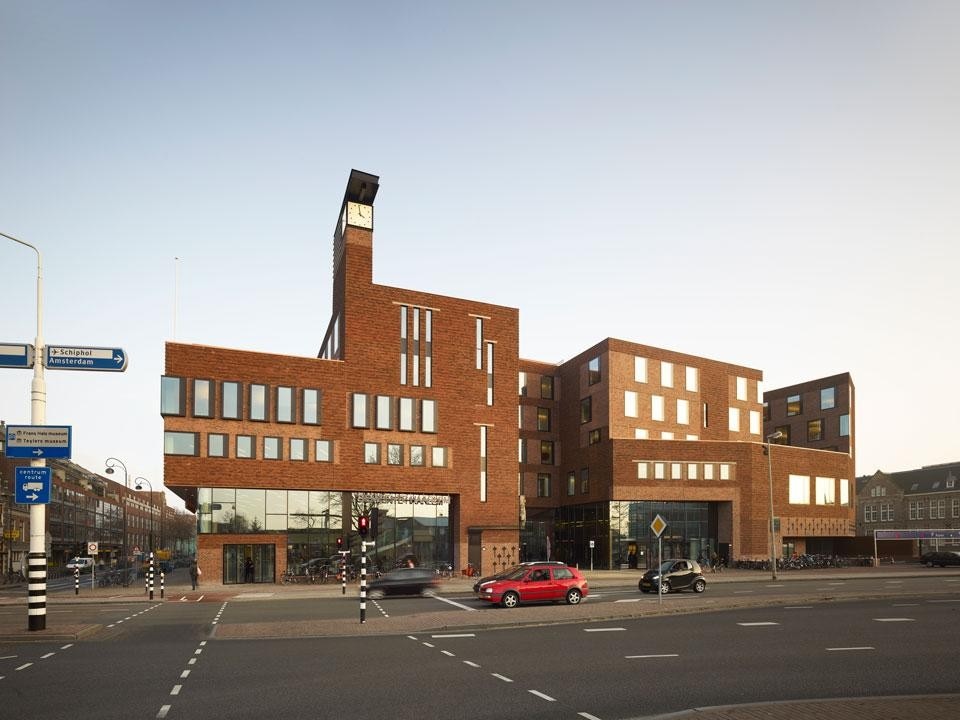
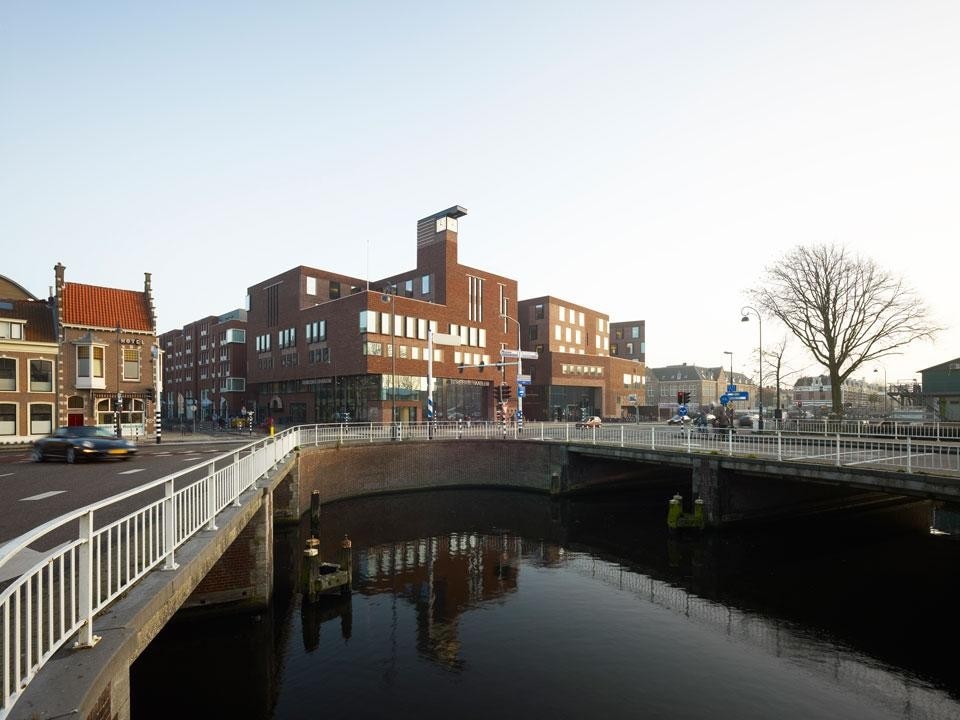
At the outset, Bolles + Wilson were given responsibility for the outermost block of this closely packed, highly urban redevelopment precinct—which as it turns out (and as the masterplan prescribed) intertwines almost seamlessly with the adjacent small-scale urban fabric—a neighbourhood. The designed edge block must both shield the traffic and invite pedestrians, calling attention to itself as well as respectfully taking its place in the sequence of façades that define the historic limit of the medieval city. Initiating site workshops brought together neighbourhood representatives, city representatives, developers and architects—Bolles + Wilson, Claus en Kaan, Jo Crepain and Kraaijvanger Urbis (who also had responsibility for the large format carpark below).
The complex functional mix began with one large and seven smaller cinemas on the upper levels, a subterranean casino, and below that a parking deck (for croupiers and gamblers). At this stage the two functions were divided by a bisecting passage leading from the visible and representative outside facade to the networked block interior. The question of scale and historic referencing of the windowless cinema monolith at this stage engendered a cinema screen-like facade with an almost pop graphic, a giant screen-printed historic Haarlem Plan, suspended on the reverse side of the cinema projection screens (the stable image of the city vs. the fleeting reality of media). At this point the cinema went underground and the Casino colonized the upper levels. They also required few windows (too distracting from the serious business of throwing money into machines). Simultaneously, a complex steel skeleton was introduced to suspend upper functions above large format cinemas below.
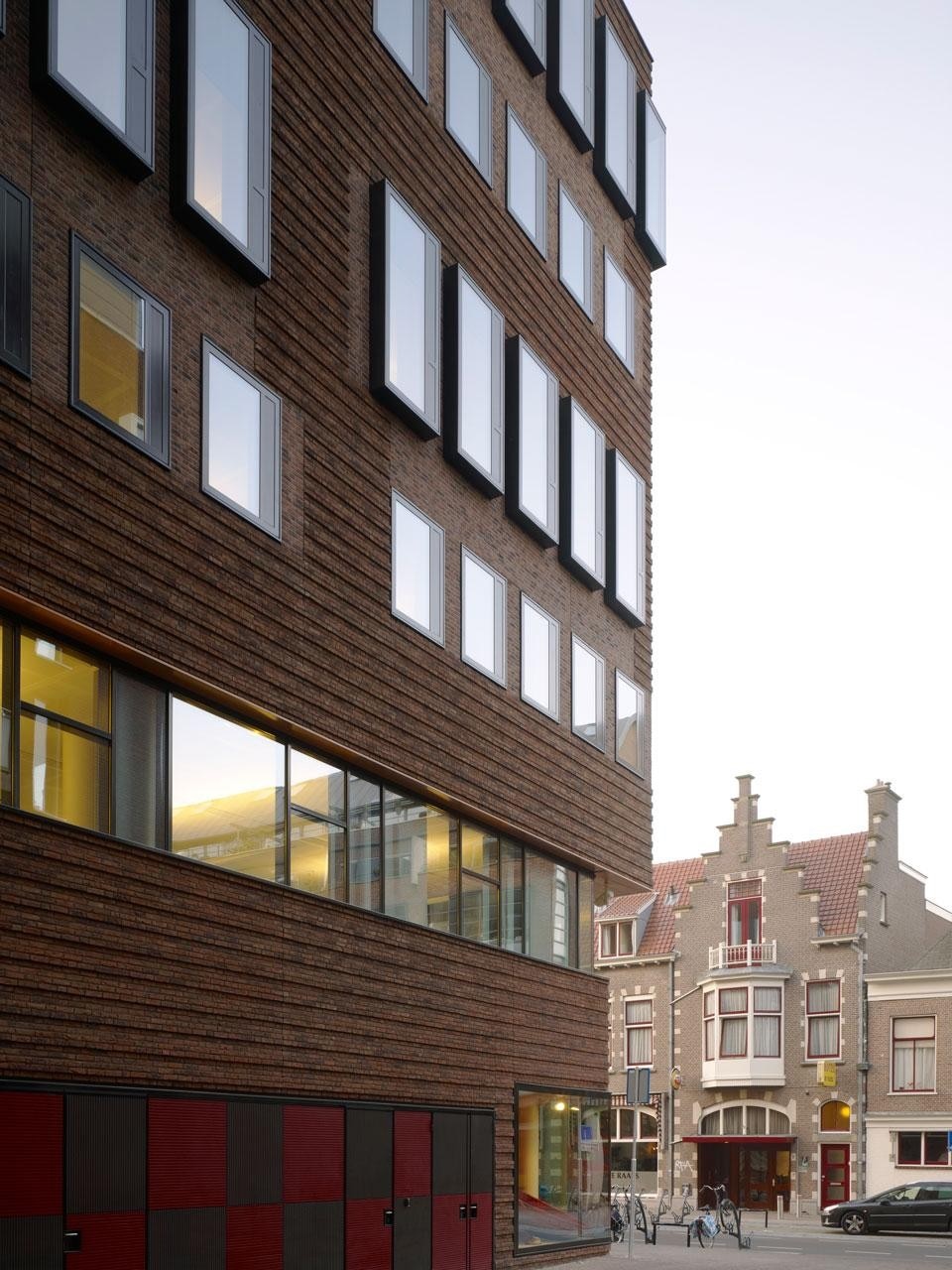
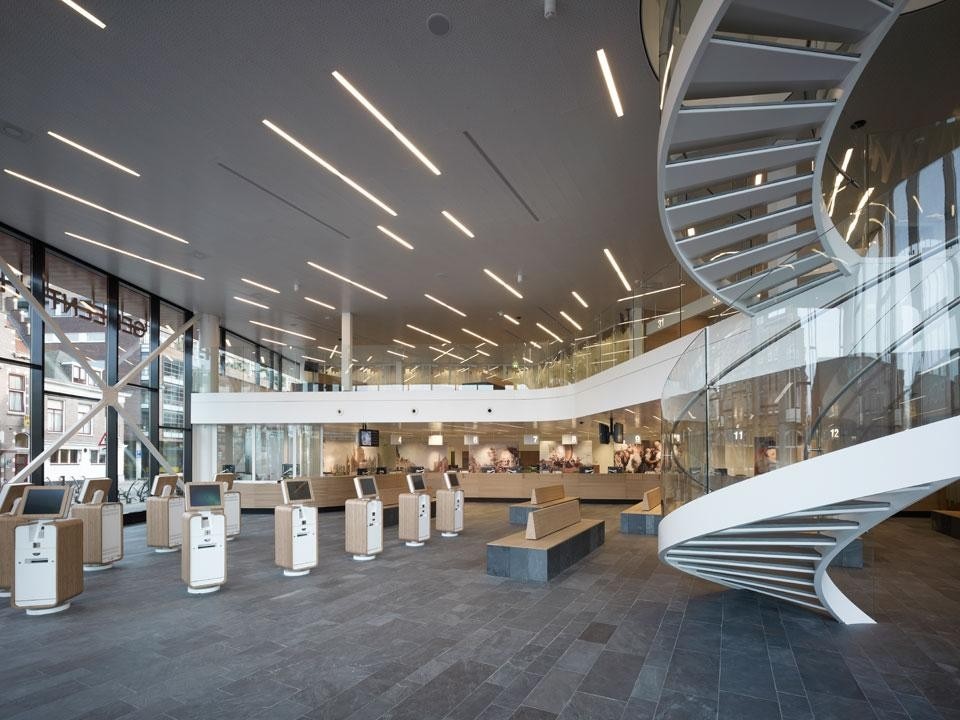
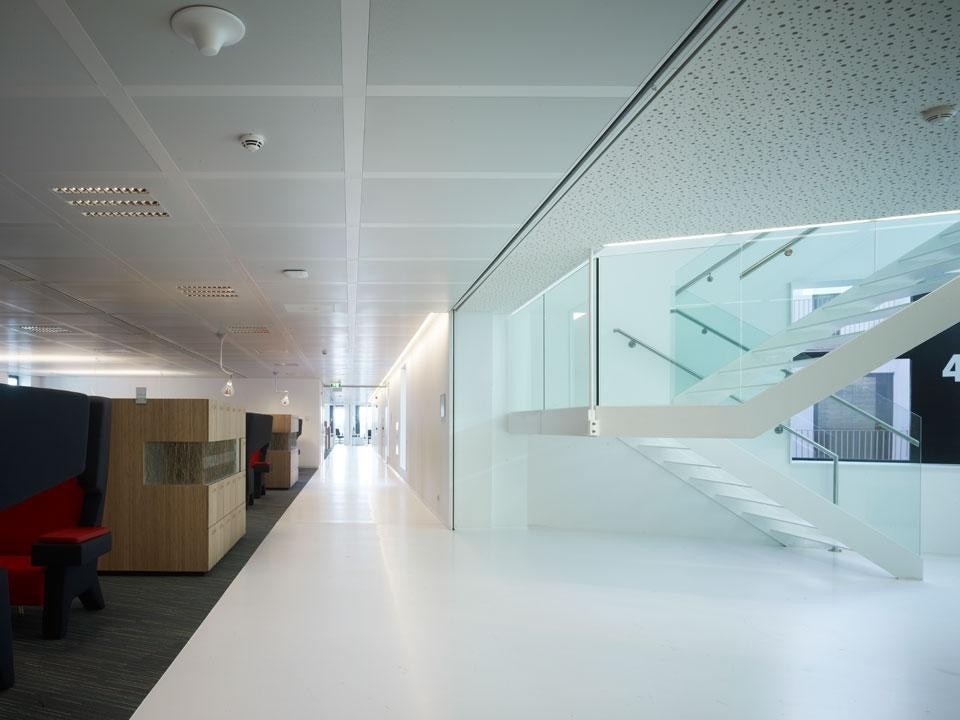
A city hall is of course a significant and representative building — taking up their responsibility, the new users instigated another series of design workshops steered by the perceptive ambitions of Alderman Chris van Velzen. The result was the development of an articulated brick skin—a texture of shadow stripes and flat fields with a lighter coloured mortar joint. The necessary overall volume was massaged into a Haarlem-appropriate scale with corner setbacks, and scale reducing volumetric articulations. The office of Henk Döll had already designed a new Haarlem City Hall; they now joined the workshop as architects of the city administration interiors.
Raakspoort — City Hall and Cinema
Architects: Prof. Julia B. Bolles-Wilson, Peter L. Wilson
Project leader: Christoph Macholz, Remco de Graaf
Project assistant:: Heiko Kampherbeek, Susanne Asmuth
In cooperation with: Döll architecten, Rotterdam (Interior City Hall)
Client: MAB Development Nederland B.V.
Size: 18,500 m²
Costs: 18.3 Mio Euro
Realisation: July 2008 - October 2011
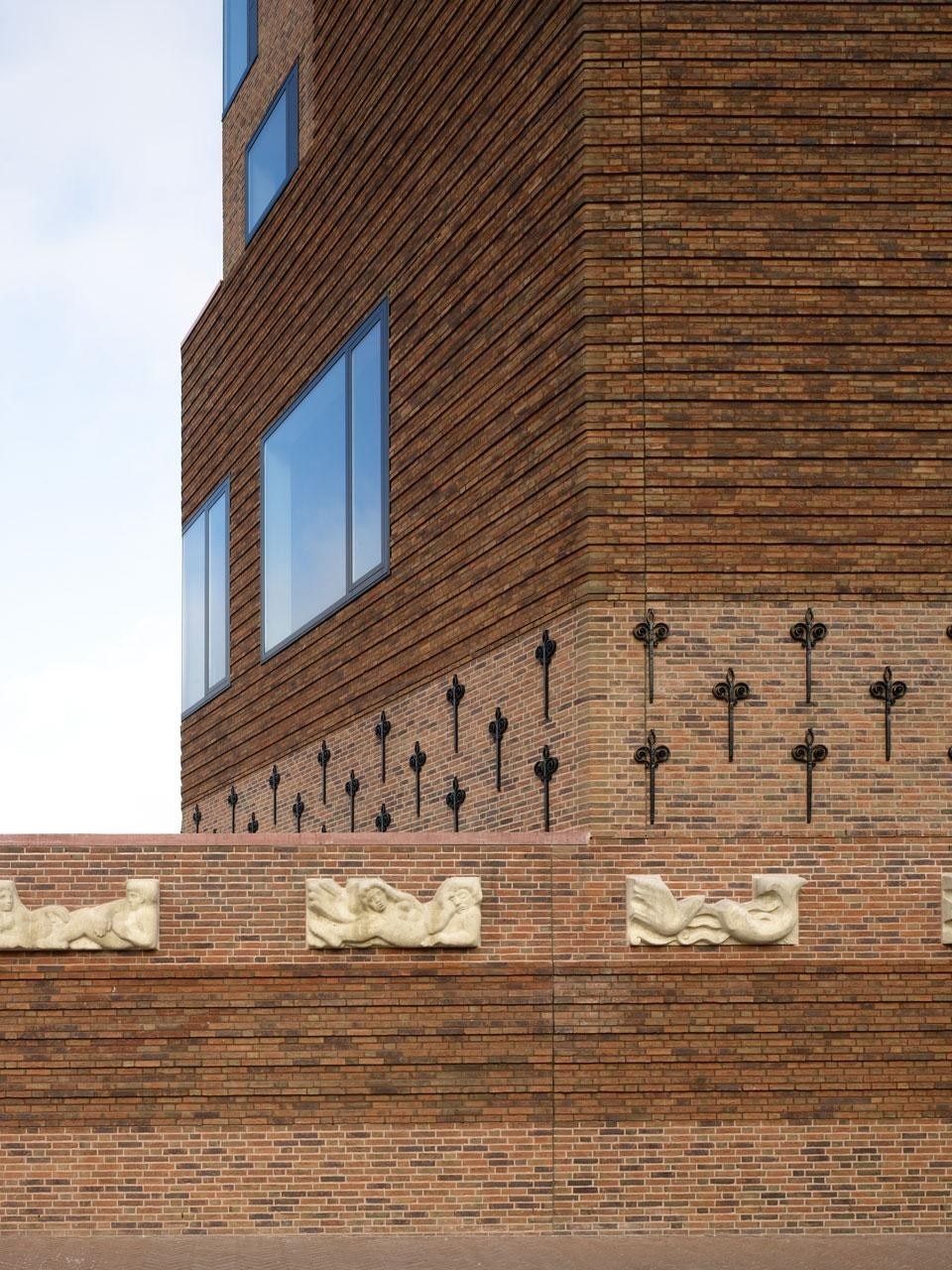
The adoption of Carlo Scarpa's Verona technique of suspending signifying fragments in front of supporting walls here circumvents pastiche and offers for the attentive viewer a historic layering, a subtext that animates and articulates localised moments

 View gallery