Pierfrancesco Cravel: Did you meet at the university?
James Russel: Yes we met at our school, at the foundation courses.
P.C.: When did you start working together?
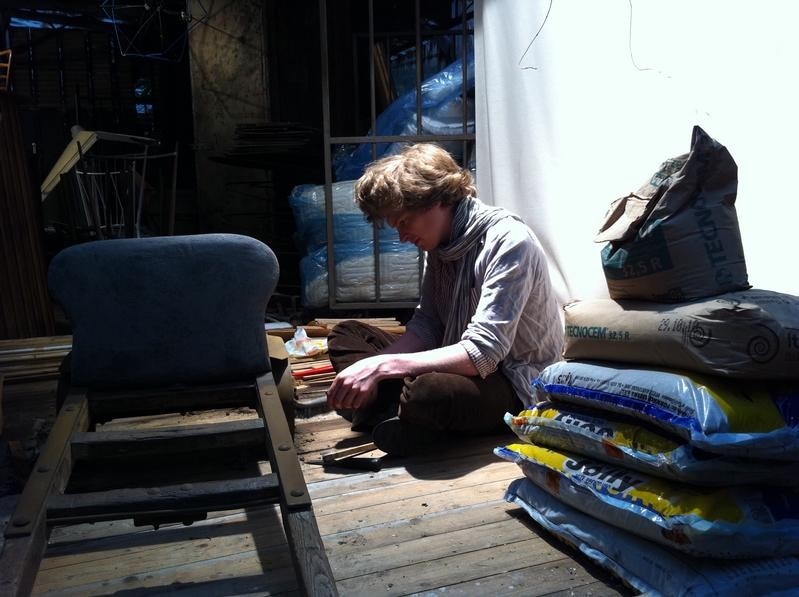
J.R.: We studied final sculpture and it took several years before we actually started working together. We had kind of individual tasks, individual works, interior designers … us to do lights or furniture and we undertand that we we were really enjoying working together and that our ideas is combined very well. About five years after we graduated from sculpture we decided to start working together more properly. It was 2007, three years ago.
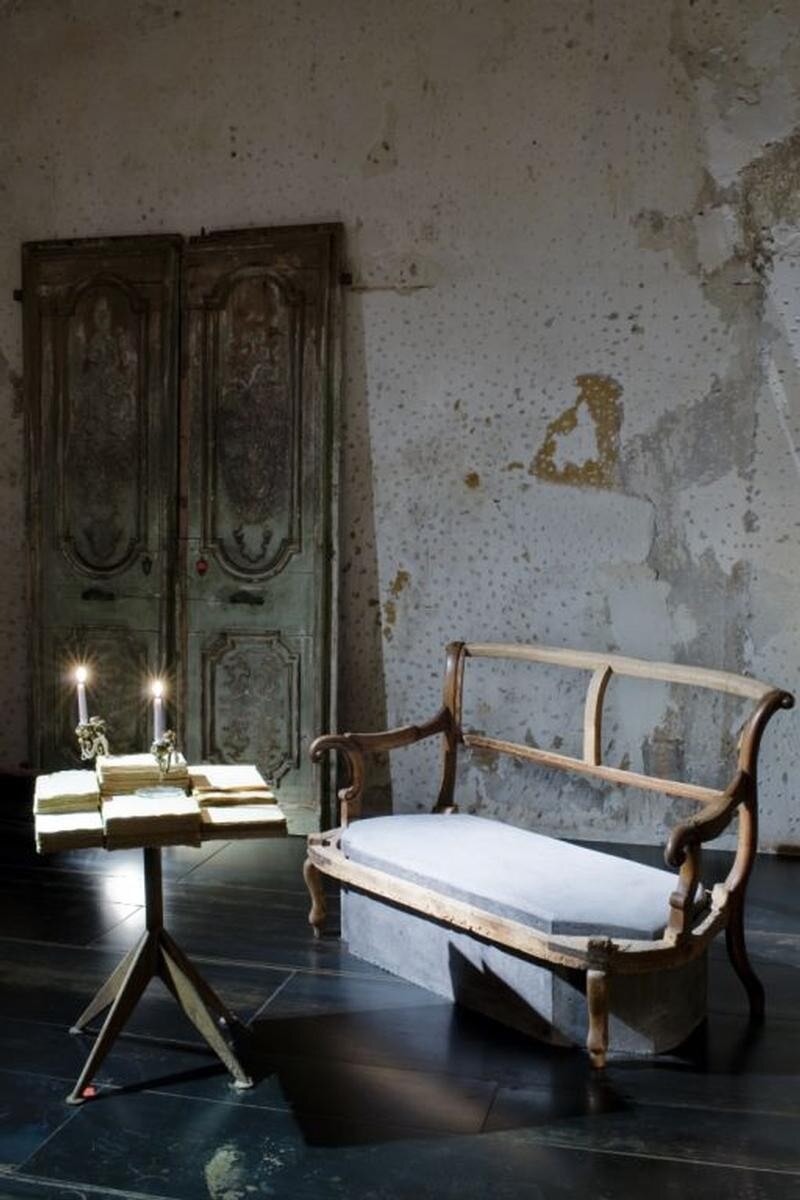
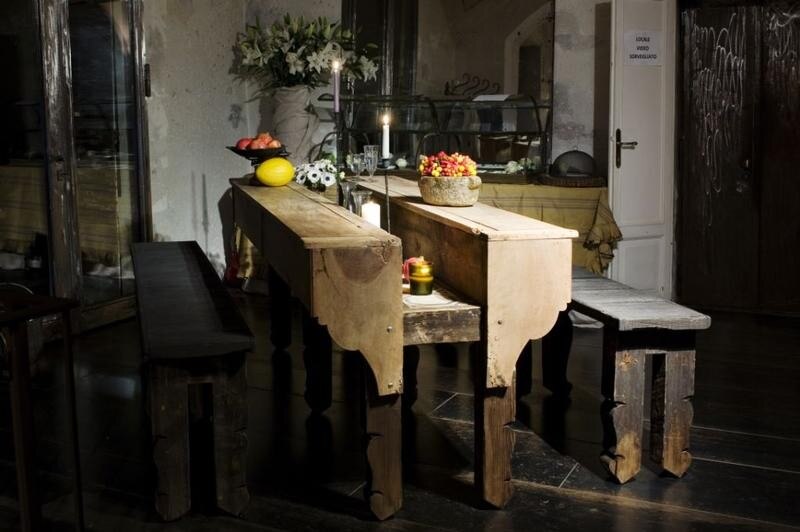
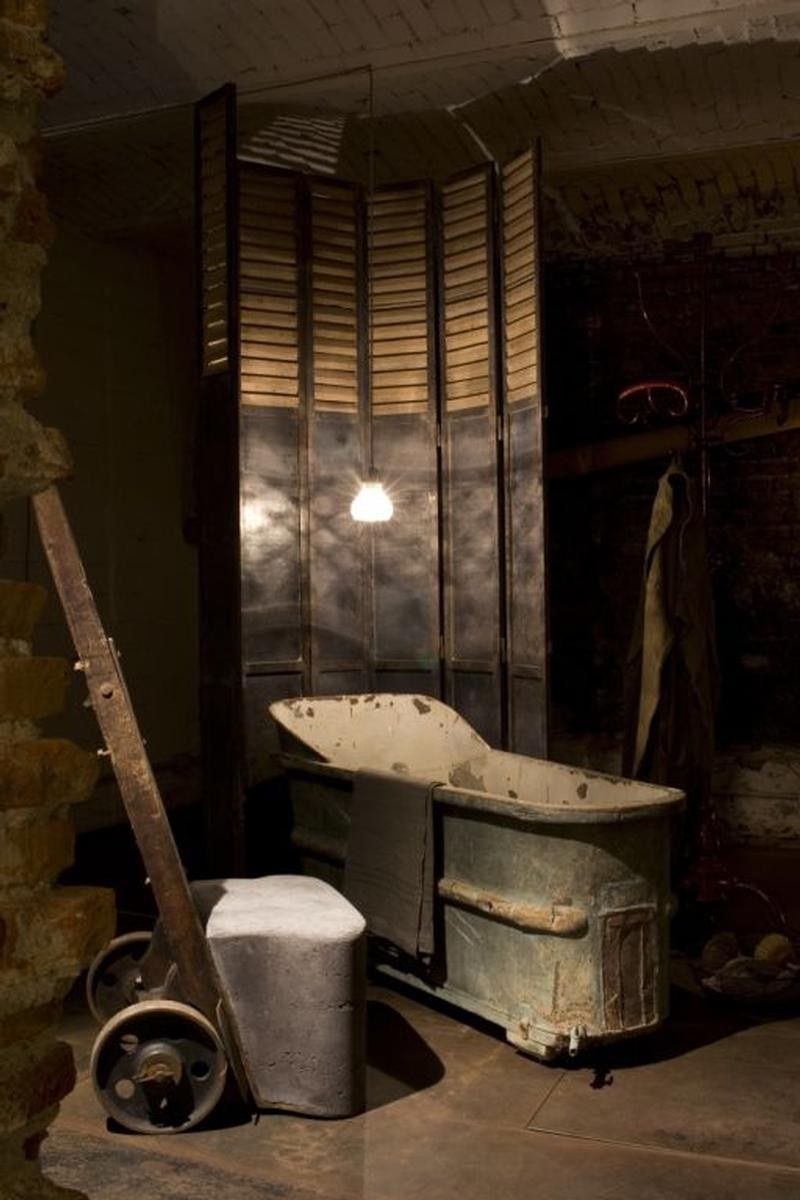
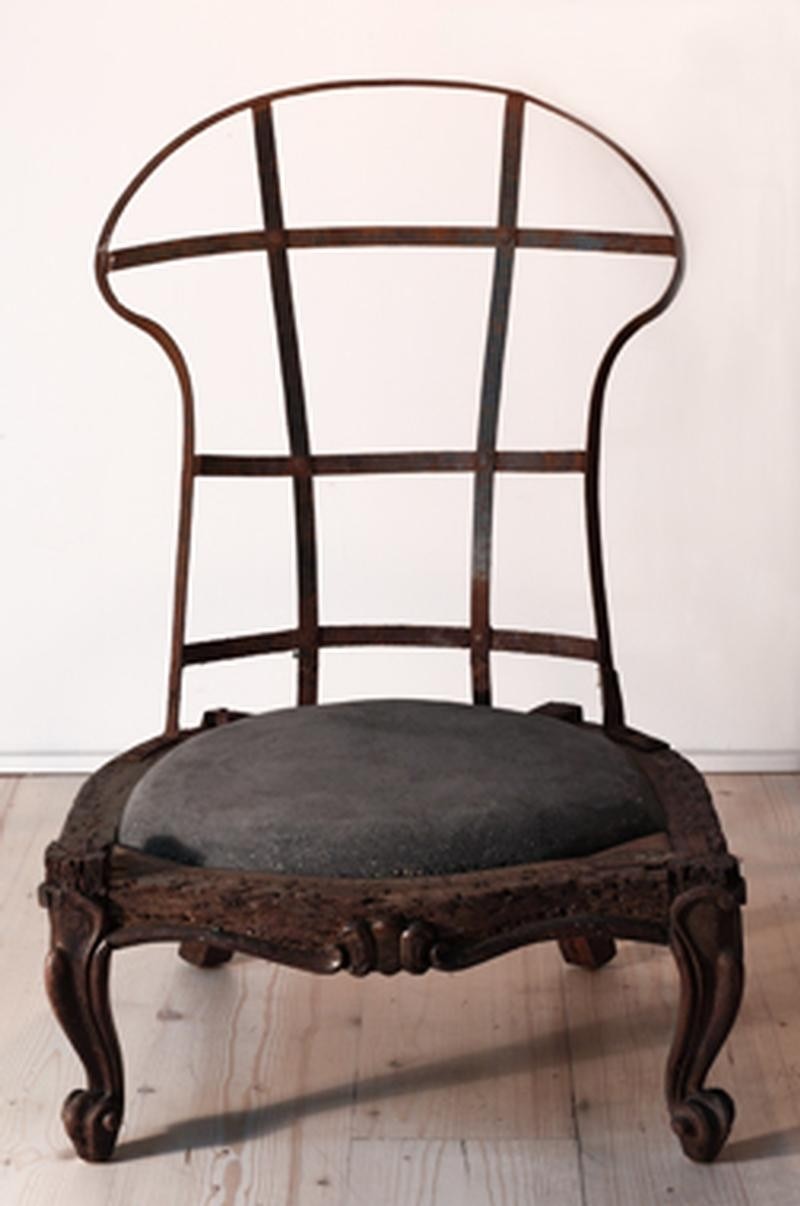
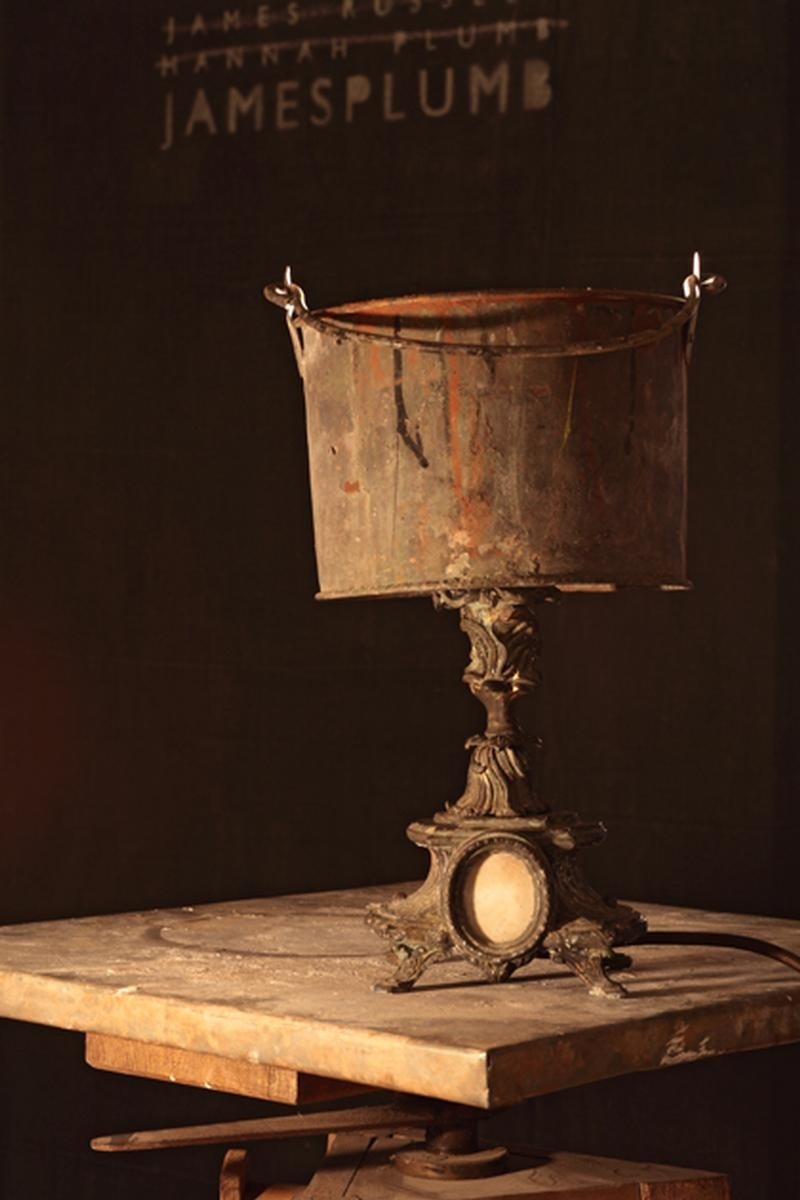
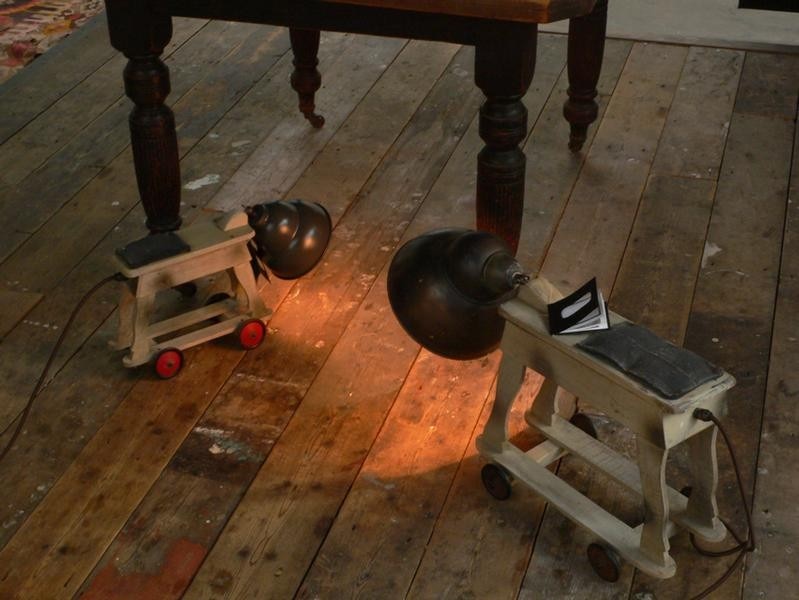
P.C.: If I see the room that you are setting up in Galleria Orlandi I could say that your pieces are quite unique because they come from an accidental found could be seen as part of a set, far from being design pieces.
J.R.: Yes, we cross boundaries, Some of our work is still very sculptural, on a very fine border between functional ...some pieces are very very functional but we really enjoy creating interiors, creating the whole environment to show the work.
P.C.: If I see your exhibition at Orlandi’s, the ambiance justifies your work. An industrial designer usually creates pieces that go basically everywhere and realized in x copies. What about your approach to design?
J.R.: The starting point of our work are pieces that we find, usually old things, broken things that other people throw away. So because we are responding to things that we find, often… there are many reasons why they end up in pieces. Because even if we make something we are really exited by, if we try to make it again we can’t because we can’t find another thing with the same history, the same patterned old age.
P.C.: Did you feel any difference between pieces that you found here in Orlandi’s old warehouse and in the U.K.?
J.R.: Perhaps some of the things here to us seem quite unusual because you don’t see them in England, and the italians they seem more common. I think there i a similar thread, similar traces.
P.C.: Maybe you have seen Domestic Animals, Pistoletto or Martino Gamper?
J.R.: Yes I know a little about his work. I think he uses part of found and kind of thrown away objects. I think that there is a little more feeling of a story in our objects. No to say that one is is better than the other. Anyway i don’t know very well his work.
P.C.: What would you say to explain your objects?
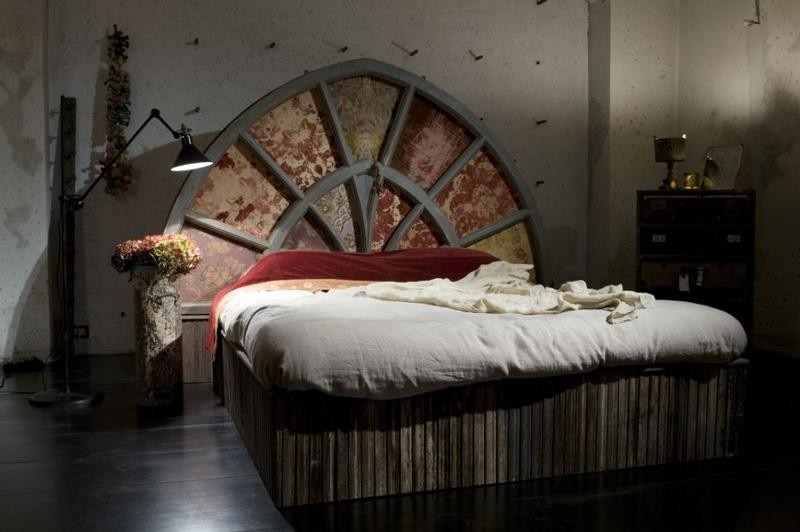
J.R.: It is very interesting making our work. We get to know the objects. We feel kind of responsibility. You saw the bed at Orlandi’s. It is an old window and all the fabric we found among miscellaneous items. In the Preparing the fabrics we found a lot responsibility to make the patches very well, to give it a new use and make it a part of a a so beautiful bed, I could describe sewing the fabric like repairing butterfly’s wings. It was so fragile because the fabric was so thin and try to repair it very carefully. And also with the would work we could see other people’s repares and patches because you know that someone before you has taken care. They wanted to maintain and repair it. So we felt kind of responsibility to continue. Rather then to throw it away and get a new one, there was care and love, time and attention.
P.C.: If I ask you to describe your work with a few adjectives, what would you say?
J.R.: There is history, timelessness, stories, I think i have always been interested in seeing the potential stories. Our work is about the life and beauty of these objects, of these things which are around us and are commonly thrown away.
P.C.: Where dose your imagination come from? Which are your cultural references?
J.R.: There so many interests. Could be everything from walking down the street seeing a beautiful reflection in a puddle. But there are also other artists like Louise Bourgeois to which we might refer. But also just life itself and we really enjoy to make installations which are a bit of installation, a bit of interior.anything.
P.C.: If I consider your installation I have the impression of having already been in such an ambiance. At it is not a negative impression.
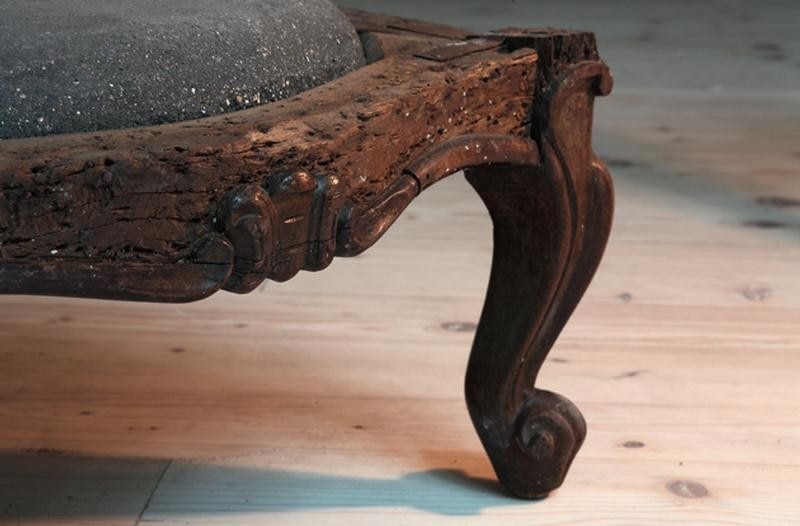
J.R.: We love the quality and simplicity of the things of the past. I guess there is a feeling of familiarity.The whole material is very honest. There is nothing too clever, anything which seems like a trick. We like things that just look what they are and not to pretend to be anything else. So the wood is often very bare or ruffle. We don’t like to put very glosses finishing on things because we want people that like to use not be very careful siting on this chair or thinking :”i cant put glasses on that table…” we want pieces made to be used that is all familiar.