

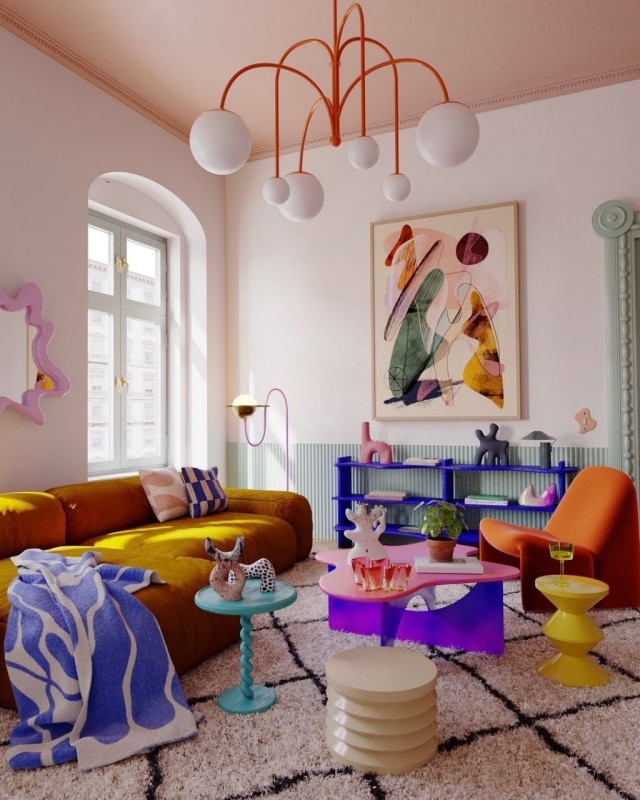
In recent years, the domestic interior has increasingly become an explicit projection field for emotional expectations. No longer just a refuge or a functional device, it is now a sensitive surface on which moods, desires for control, and needs for reassurance are measured.
It is within this context that the recent rise of what is called dopamine decor or dopamine interiors takes shape — a useful label to describe a set of practices and imaginaries that place perceptual pleasure, sensory stimulation, and a certain idea of everyday happiness back at the center.
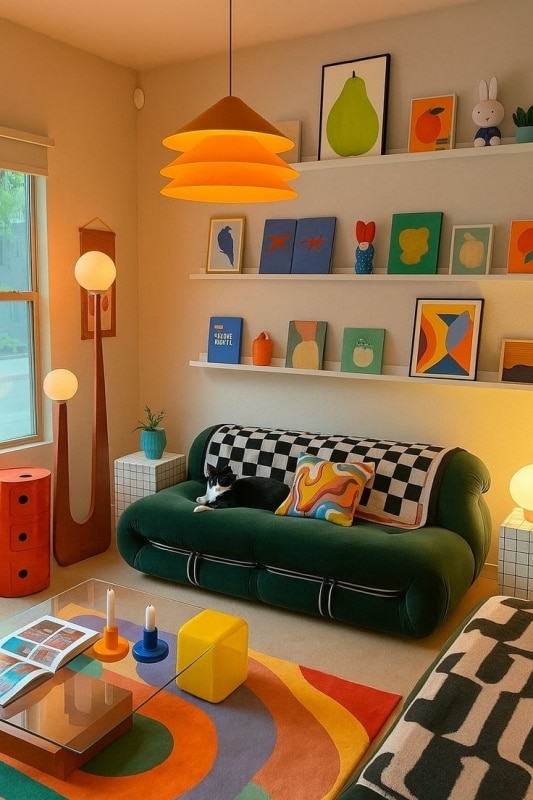
The term comes from social media, which partly explains its success and rapid spread. Yet reducing the phenomenon to an algorithm-driven trend would mean overlooking its cultural genealogy.
It does not emerge out of nowhere but is grafted onto a long tradition of emotional design that runs throughout the twentieth century. The optimistic curves of the 1960s Space Age, the ironic and anti-normative chromatic language of the Memphis Group in the 1980s, the decorative confidence of Art Deco — all these languages resurface today in remix form, stripped of their original ideological charge but still capable of producing an immediate sensory response.
In this scenario, designing environments that ‘make us feel good’ is not a luxury but an adaptive strategy.
The underlying assumption, often made explicit, is neurobiological. Dopamine is associated with mechanisms of reward and motivation, and several studies have shown how exposure to visual stimuli perceived as pleasant activates brain areas similar to those involved in affective pleasure. The relationship is not mechanical — it is not color itself that “produces happiness,” but the meaning we project onto it — yet contemporary design seems increasingly interested in constructing environments as devices for emotional modulation.
In this sense, dopamine decor can be read as a reaction to the long dominance of minimalism. For more than a decade, the aesthetics of neutrality, reduction, and subtraction have been presented as synonymous with good taste and wellbeing. Today, that promise appears worn out. Hyper-neutral interiors, designed not to disturb, often end up amplifying a sense of distance and abstraction, especially in a historical moment marked by instability and cognitive overload. The return of color, materiality, and recognizable form is therefore not merely a stylistic matter, but a demand for emotional proximity.
@haikettua_atl The easy way to turn your home into a happy place is adding more dopamine decorations. Anything with fun shapes, bold colors will boost your dopamine level to the max. #dopaminedecor #home #decoration #interior #vibe ♬ dog cuddles - dad sports
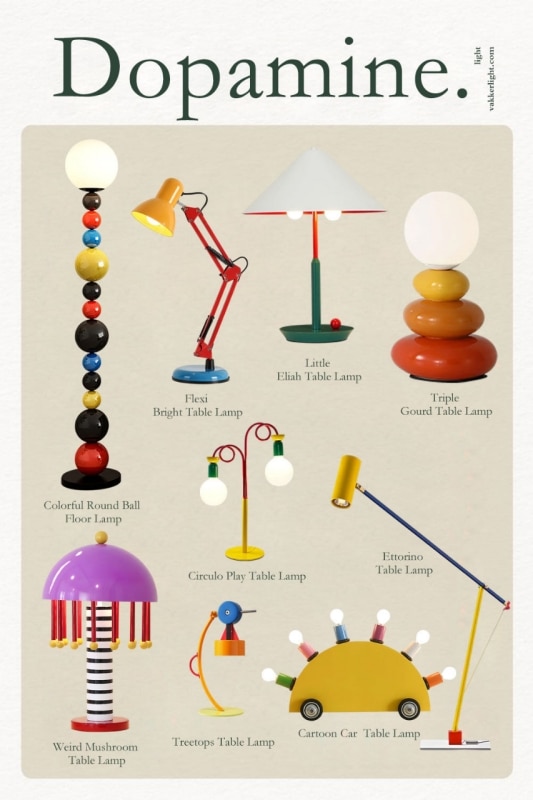
Dopamine decor, however, does not coincide with indiscriminate accumulation or permanent visual euphoria. The more mature interpretations of this approach emphasize care, selection, and the intentional use of stimulus. The idea of introducing “jewels” into space — an iconic object, a sculptural lamp, an unexpected surface finish — serves as a catalyst for attention and affection.
Even compositional rules, seemingly denied, remain operative. The use of schemes such as the 60–30–10 rule in color distribution, the repetition of forms or patterns to build visual rhythm, and the insertion of neutral materials as perceptual anchors show how a design discipline lies behind the aesthetics of joy.
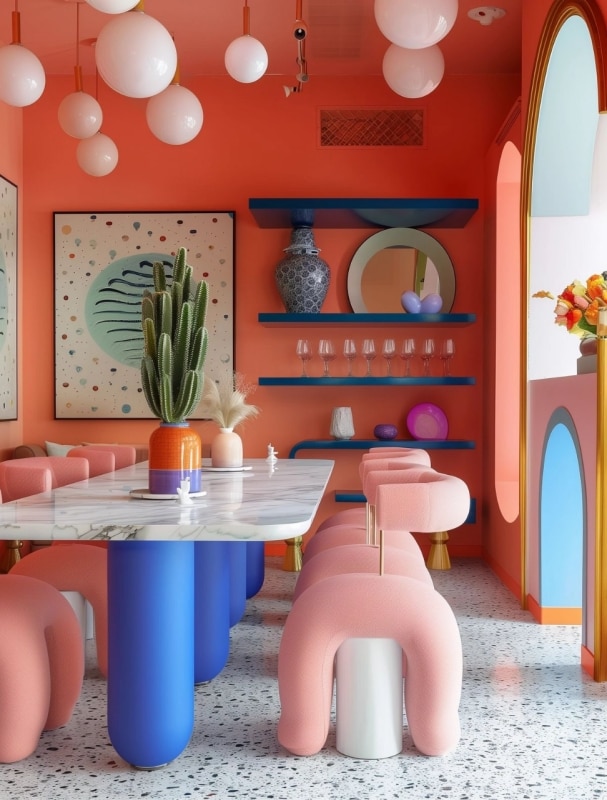
Another key aspect is the multisensory dimension. Color and form are not enough. Textures such as velvet, chenille, lacquered or chromed surfaces work on tactile memory and bodily response; materials that reflect or filter light introduce variation and movement, key elements in keeping attention alive. Here, dopamine decor intersects with research on cross-modal perception, according to which a visual stimulus can alter the quality of a gustatory or tactile experience. The interior thus becomes a synesthetic machine, capable of influencing seemingly neutral everyday practices.
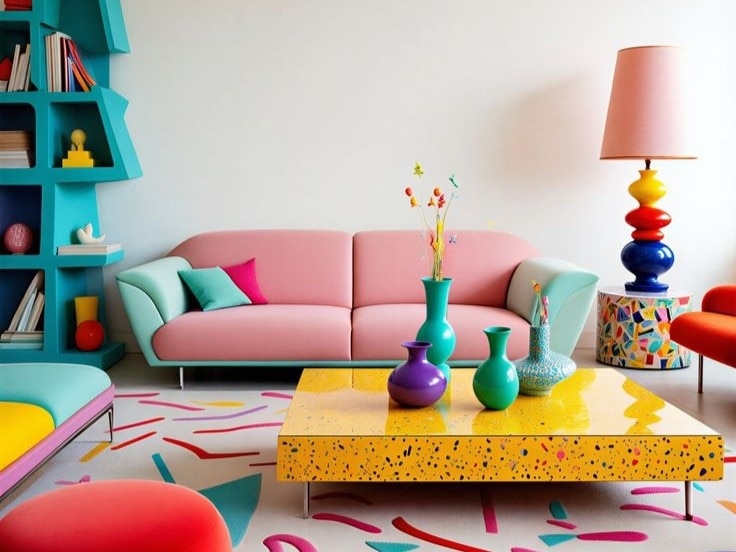
From a sociological point of view, the success of these interiors says a great deal about the present. After the pandemic, the home has become a place overloaded with functions and expectations. Work, rest, social life, and self-care overlap within the same space. In this scenario, designing environments that “make us feel good” is not a luxury but an adaptive strategy. Dopamine decor taps into this need, offering a visual grammar that legitimizes personal pleasure against the idea of a universal and normative taste.