

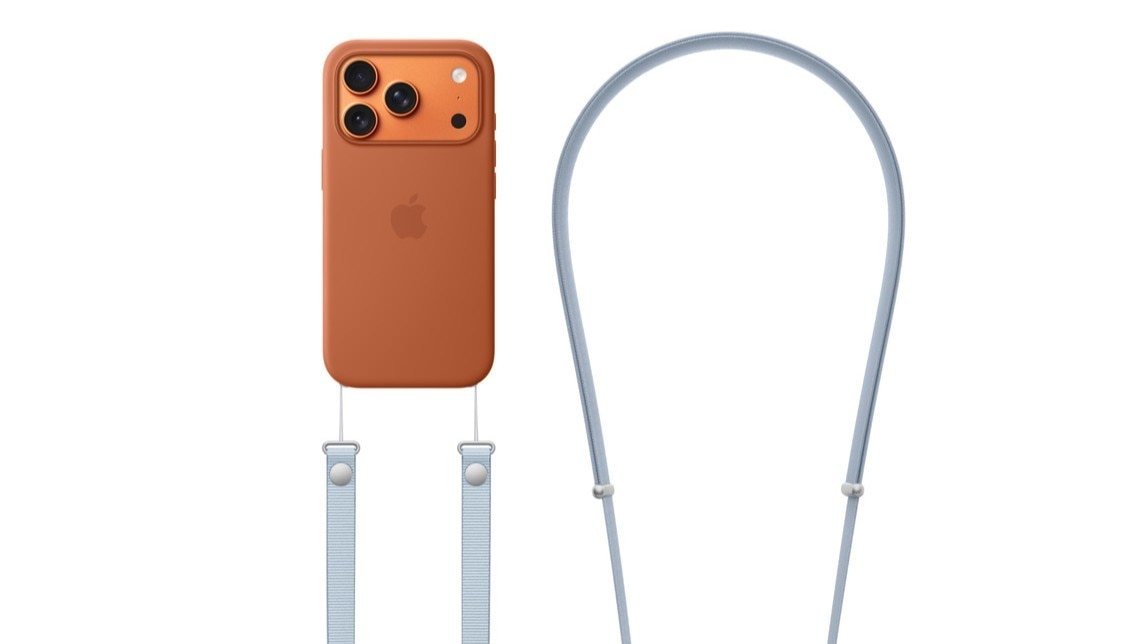

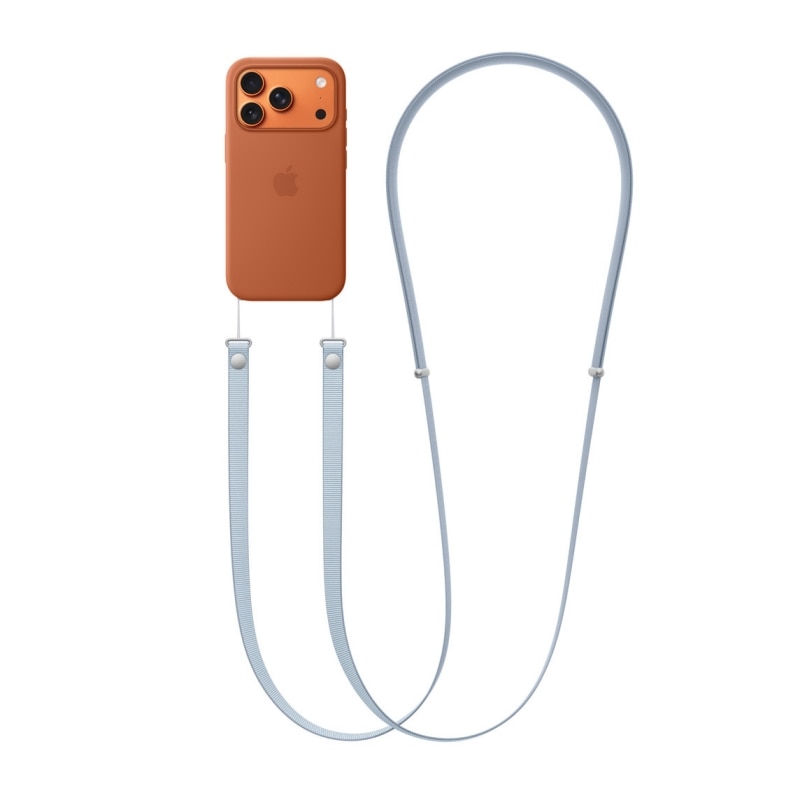
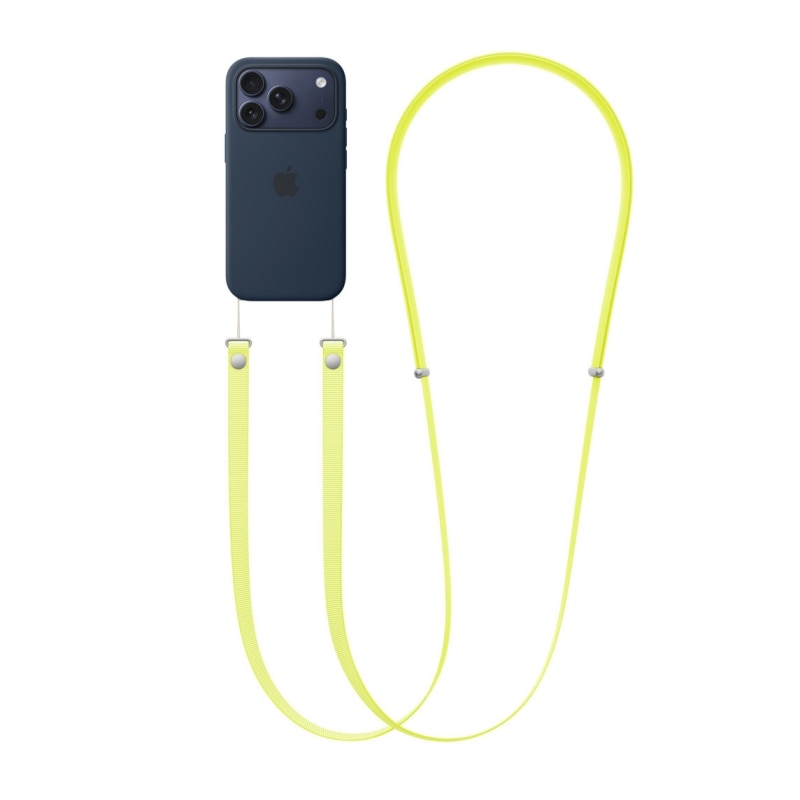
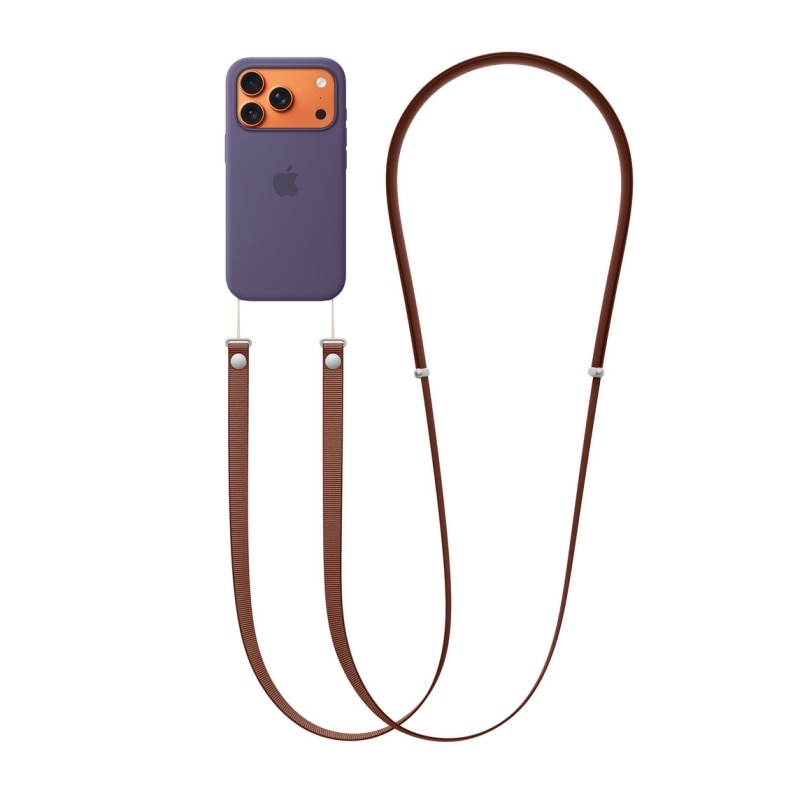
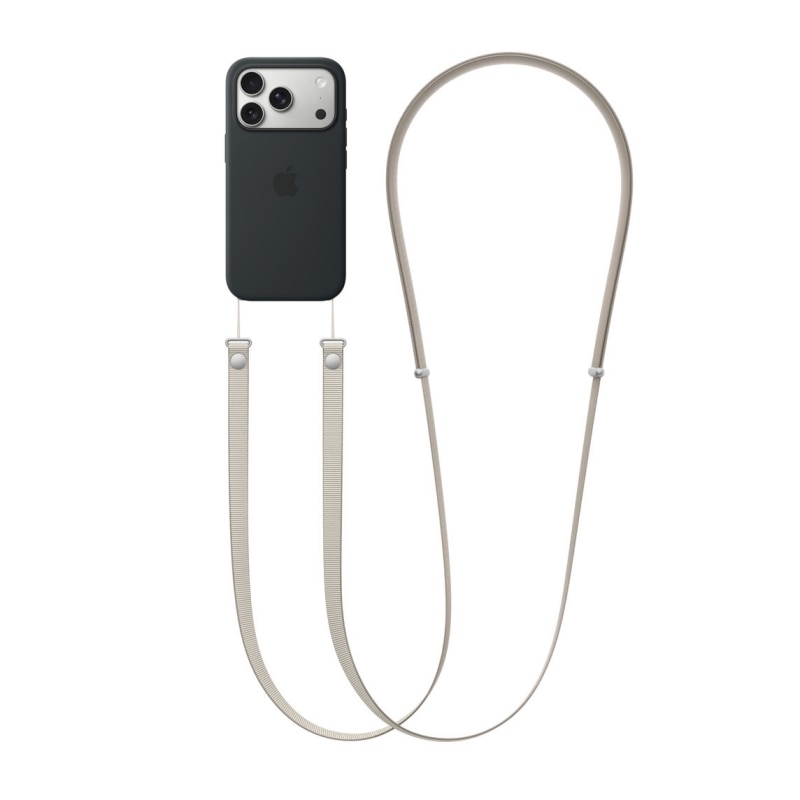
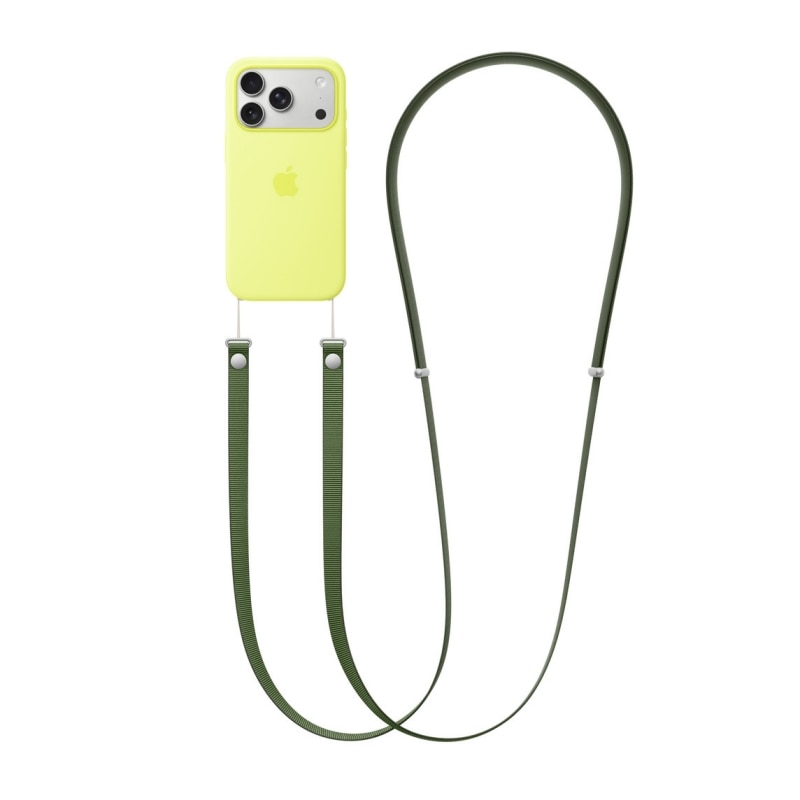
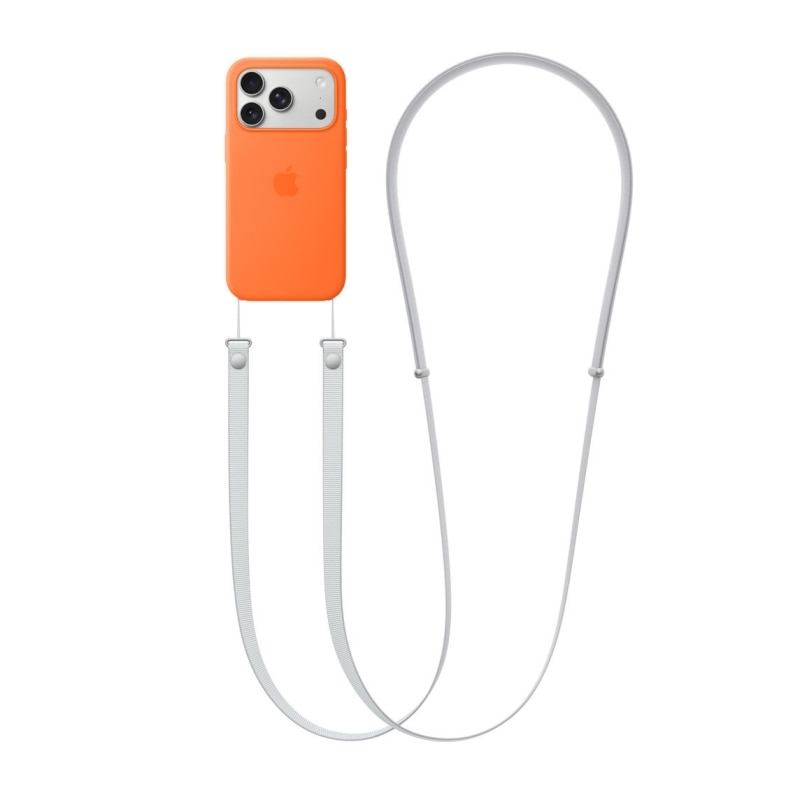
Apple’s new Crossbody Strap marks its debut in an entirely new category. It’s not an unseen idea, but Apple has redefined it in its own way: giving shape, substance, and purpose to an accessory we already knew — just never this well made. And there’s nothing new about that, right?
Wireless earbuds. The smartphone. The all-in-one computer. The graphical interface with windows. The tablet. The smartwatch. The mp3 player. The app store and the cloud.
Or, more simply: AirPods, iPhone, iMac, iPad, Apple Watch, iPod, App Store, and iCloud.
Apple hasn’t invented much from scratch, but it has redefined most of the consumer electronics we use today — even in the smallest details, later copied by everyone else. Like the camera button recently introduced on the iPhone.

This year’s fall event felt slightly more disruptive than usual. The new iPhone Pro features a redesigned camera module that spans the phone’s entire width — a ceramic-and-glass rectangle — bold colors like orange, and a full visual refresh with iOS 26: 3D icons, “liquid glass” transparencies, and a new skeuomorphic aesthetic. Reactions have been mixed (we at Domus aren’t huge fans, for instance).
And then, right in the middle of the Keynote, the Crossbody Strap appears — quick, almost like an apparition.
A strap designed to carry the iPhone across your shoulder. Two buckles adjust the length in seconds, adapting to different bodies and situations. Ten colors, some matching the new phones, like the orange one.
Its quality is as high as its price: 59 dollars for an accessory you can find at street markets for ten euros.
By interpreting a lifestyle trend, Cupertino’s design team may have just created what we’ll soon consider the definitive strap.
With the Crossbody Strap, the iPhone becomes a wearable. It works with specific cases and pairs perfectly with the iPhone Air, Apple’s new ultra-thin, lightweight phone. It’s the classic Apple move: announced quietly, seemingly awkward or unnecessary, yet potentially destined to become a style must-have.
It hasn’t appeared on the radar of fashion or design magazines yet — this might be the first article from a non-tech outlet.
A pity, because the Crossbody Strap is genuinely well designed — a perfect example of wearable design done right.
Premium materials (recycled PET), spot-on colors, and an intuitive adjustment system — though it could shorten a bit more.
There are some downsides: it’s only compatible with certain cases and lacks a quick-release system, so once attached, it stays on.
According to The Sun, carrying your phone like this might attract thieves; in reality, if you keep it in your jacket pocket, the strap can even add a level of safety.
There’s also a cultural angle: in Southeast Asia, where “dressing” your phone is the norm, theft simply isn’t a concern like it is in the Western countries.
@bytereview Apple makes the best camera strap now 😅 This is just the crossbody strap for the new iPhone 17 series, but it works crazy good as a compact camera strap, defo worth playing with 🤩 #apple #fujifilmx100vi #iphone17 #iphoneair ♬ sonido original - Selectomusic | #GoodMusic
For American and European tech media — or at least the few that covered it — reactions are mixed: smart design, strange price, unclear purpose. Popular tech media outlet The Verge labels it as “misunderstood”.
But on Reddit, opinions are far more enthusiastic. And not from iPhone users, but from photographers — especially in compact camera subreddits.
“I bought one today and I like it, works well with my GC-12 case,” one user writes. Another adds: “Excellent for shooting from the hip… super comfortable since the Ricoh is so light.”
Straps have always been essential accessories for photographers.
At nearly 60 dollars, Apple’s Crossbody Strap isn’t overpriced — Ricoh’s official GR strap costs about 30 dollars but offers far less in terms of material quality and versatility.
Of course, using it with a heavy camera would be a stretch; it’s better suited to compacts, the kind that fit in a jacket pocket.
Apple’s design excellence shines through these details. By interpreting a lifestyle trend — those crossbody straps already popular in Asia and increasingly seen in Europe — Cupertino’s design team may have just created what we’ll soon consider the definitive strap.
As has happened many times in Apple’s history.
But this is the first time it’s done so with something not purely technological — even if it’s made to serve technology.
All images: courtesy Apple