



While the Trump administration promises — without so far delivering — major revelations about UFOs, and Spielberg returns to cinema with a film about aliens decades after Close Encounters of the Third Kind and E.T., Chloe Wise makes her debut with “Extrasensory”.
“It’s the zeitgeist,” she says as we go to get iced coffees behind the Kulturstiftung Basel H. Geiger in Basel, where the exhibition has just opened. “I’ve been working on this for two years. I’ve been obsessed with this topic for six years,” she explains
She paints, and when she paints she listens to audiobooks. In recent years she has listened to and read everything she could find on consciousness, biocentrism, quantum physics, UFO experiences, religion, divinity. “I don’t want to call it a rabbit hole because it’s actually a really big, open topic. It’s not a spiral: it’s an expansive form of questioning.”
It is not the first time something like this has happened to her. In 2019, in her exhibition “And Everything Was True” at Heart – Herning Museum of Contemporary Art in Denmark, Wise worked around images of hygiene, isolation, protection, medical surfaces, Kleenex, Purell, gloves. At the beginning of the following year, COVID-19 terrified the world, freezing it and redesigning its face in a way we still need to understand precisely.
he laughs under the hot mid-June sun in Basel, or maybe she is not really laughing, because deep down this thing about coincidence interests her a lot. “But also maybe it’s a simulation run. I could have been running that.” Meanwhile, down the street, a café is about to open called Bagel No. 5, just like the sculpture that made Chloe Wise globally famous. It’s the zeitgeist, baby. I show her a photo. I thought it was a pop-up connected to the exhibition. Instead, it is yet another coincidence.
We live in a scientific, militaristic moment, so we perceive something so unfathomable that it defies physics.
Chloe Wise
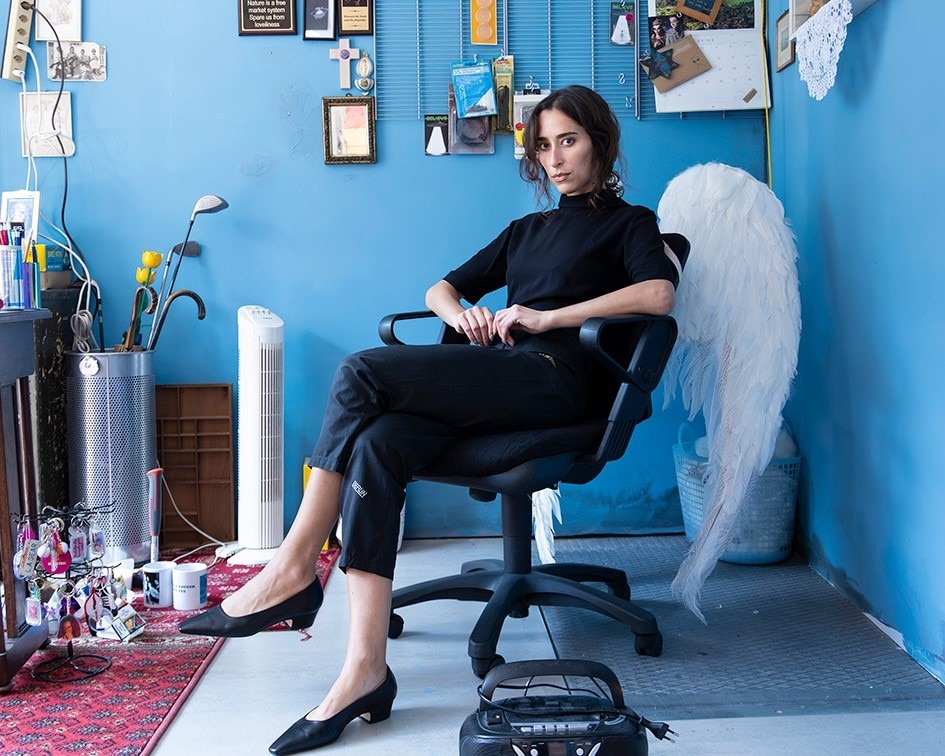
Chloe Wise could be the young contemporary artist par excellence. There would be no work without the artist, and vice versa. Like a perfect hyper-millennial, she speaks about the world always placing herself at the center, but with ease and without any arrogance. A Balenciaga bag, tabi on her feet, and hair pulled back by a pair of streamlined Oakley-style sunglasses.
We take a photo together and she approaches it with the ease of an actress who has won Sundance a couple of times. Charismatic and always in motion, her conversation is so fluid that it gives you the impression she could record ten podcasts in a row. She has even painted Olivia Rodrigo, and what could be cooler in the pop-sphere? Not coincidentally, Wise has more than 200,000 followers on Instagram. Chloe Wise is someone dancing a waltz with the zeitgeist, and it is going very well.
The biggest film she could make
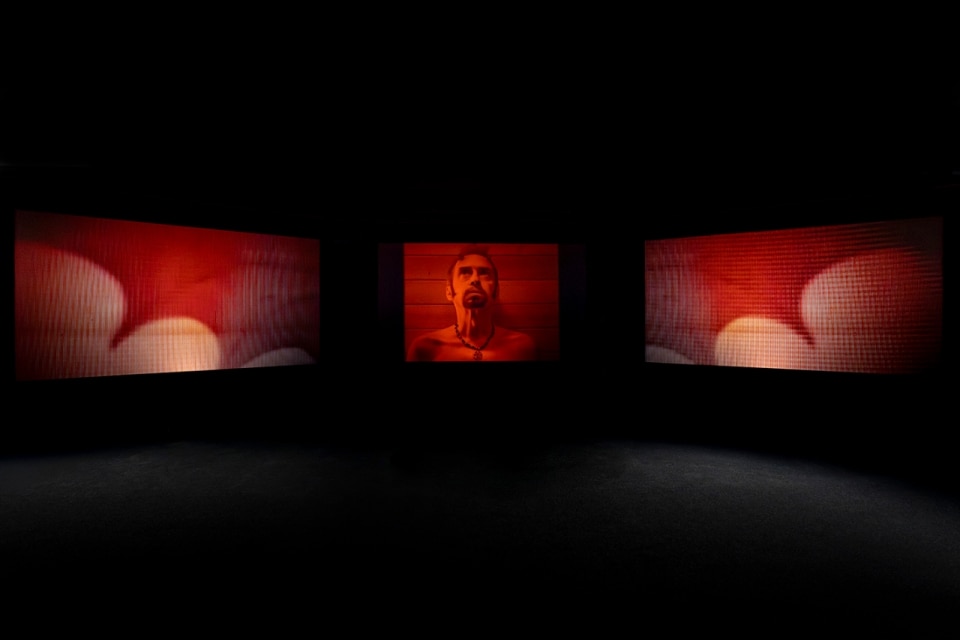
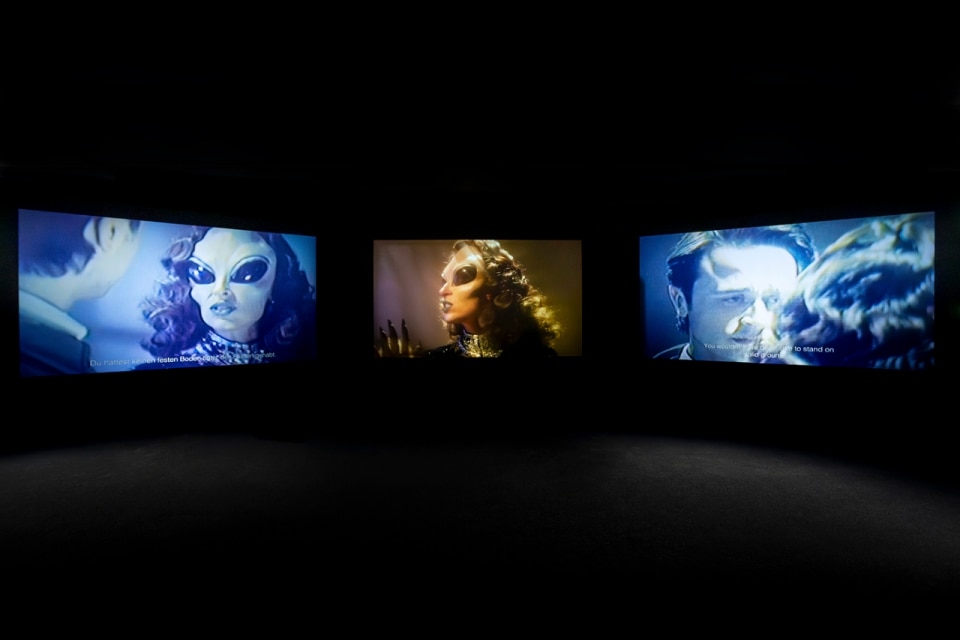
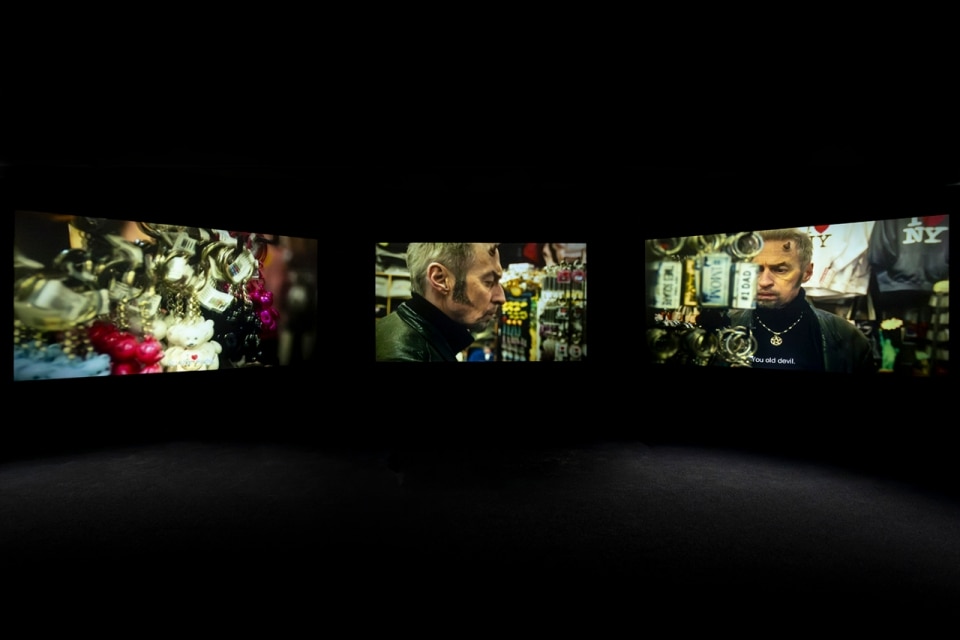
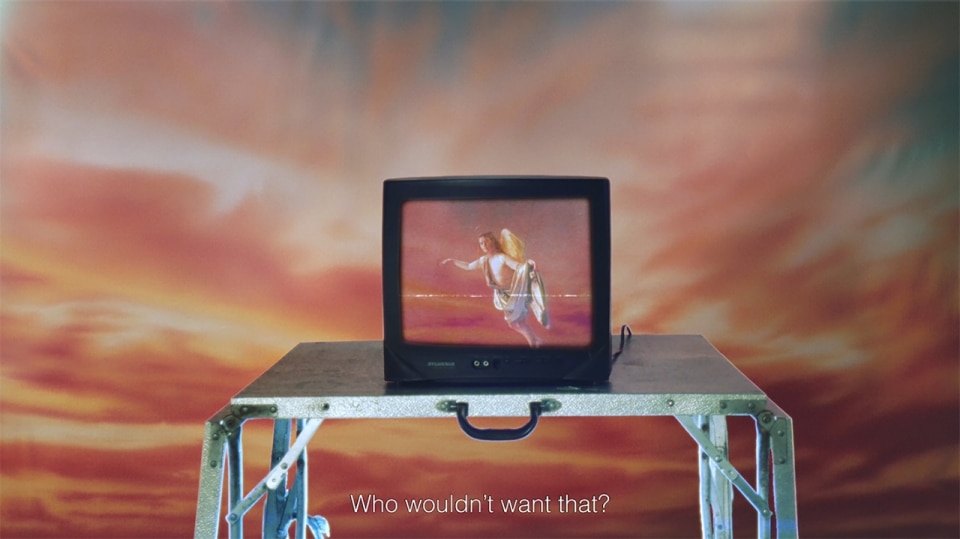
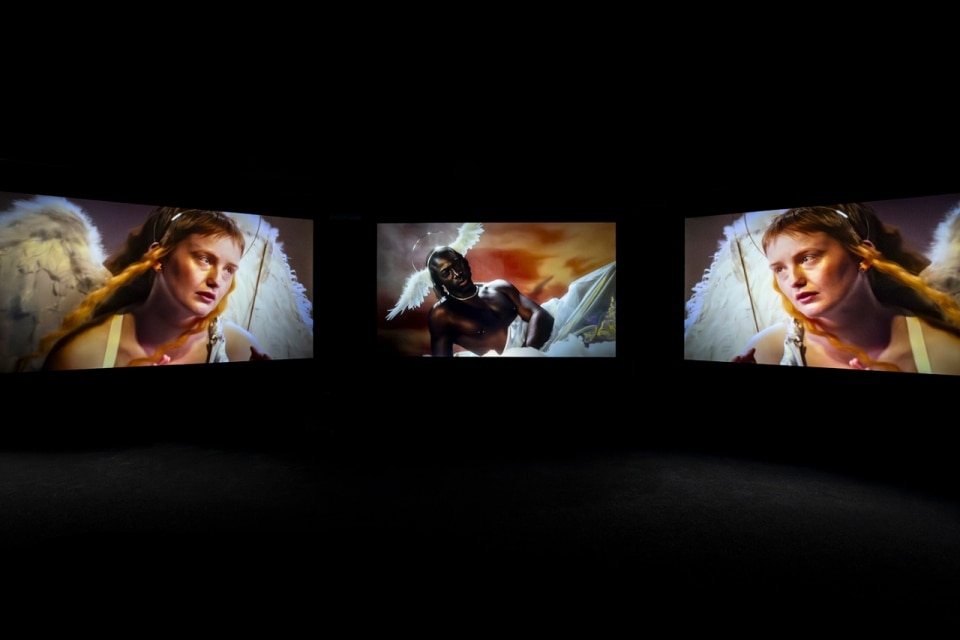
At the heart of “Extrasensory” is a film of about 30 minutes, which is actually three films projected simultaneously. A huge undertaking. “We shot for seven days, plus a pickup day,” Wise says. “It’s thirty minutes. But it’s three screens.
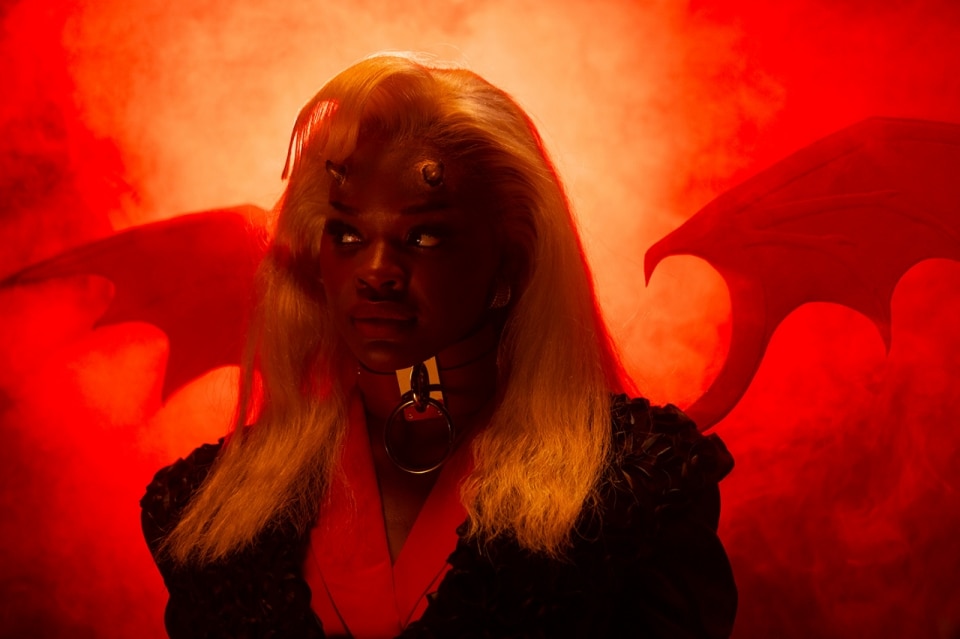
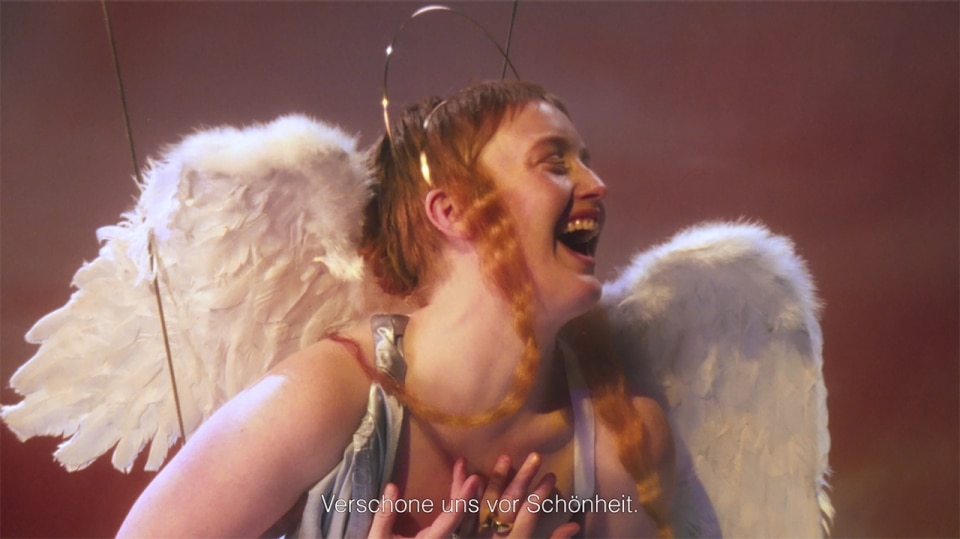
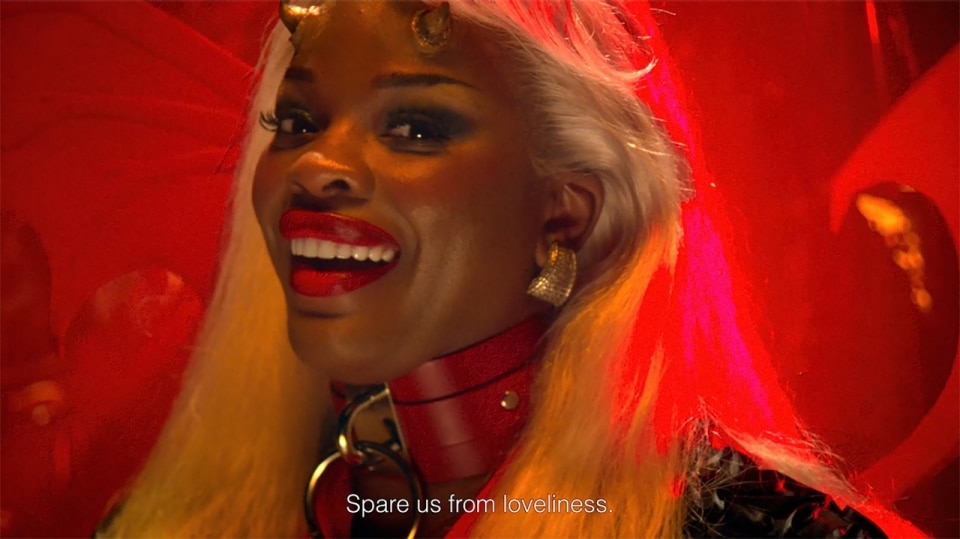
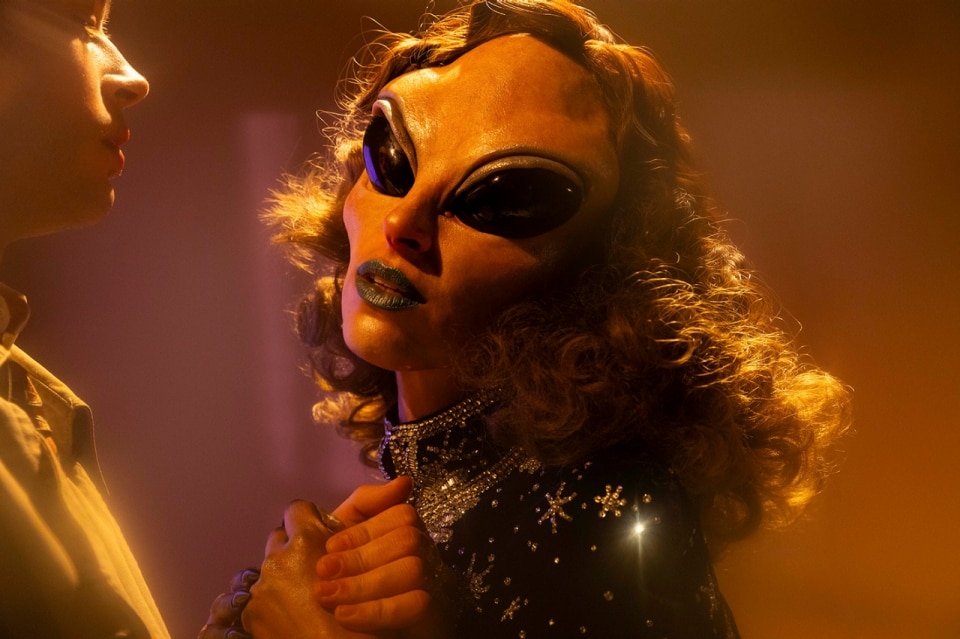
So it’s closer to being twenty-one movies than one movie.” In the film, angels on Fiorucci-like backdrops alternate with urban demons and baby aliens, Satan walking through Times Square, Victoria’s Secret Angels becoming literal angels again, and a cult whose object of worship we never fully understand. A grammelot between rom-com, contemporary gothic, emo-horror and fake rococo theatre, as if every genre were only a temporary disguise for the unknown.
Wise is known above all as a painter, and it is true that painting remains the most visible part of her practice, the one that brought her into the art system, collections, galleries, and the portraits of a generation. But she insists: she has been making videos for ten years. “This was the opportunity to say: I’m not going to show any paintings, so you can really see the video. You can’t get distracted by the paintings.”
And yet it is not a betrayal of painting. “It’s like a painting. It’s the biggest painting I could make.” Only instead of the canvas there are people moving, phrases returning, sounds overlapping, figures passing from one screen to another, layered audio, portals, mistakes, improvisations, cuts. “For me it’s the most abstract painting, but at the same time it’s very figurative.”
“Extrasensory” is not an exhibition about UFOs, nor about angels, demons, cults and white lights. Or rather: it does not investigate their existence. The question is another one: why do human beings continue to need these forms? Why, every time something exceeds our ability to name it, do we produce images, stories, divinities, superstitions, apparitions, technologies, conspiracies, souvenirs? The paranormal, in this sense, is not an escape from reality.
Whether what they’re seeing is angels or aliens, or a UFO or ghosts, or the devil or belief itself, it’s like they’re interfacing with something that can’t be named
Chloe Wise
“For me, it’s about language failing to come close to talking about something as ineffable as the phenomenon,” Wise says. “Whether what they’re seeing is angels or aliens, or a UFO or ghosts, or the devil or belief itself, it’s like they’re interfacing with something that can’t be named.”
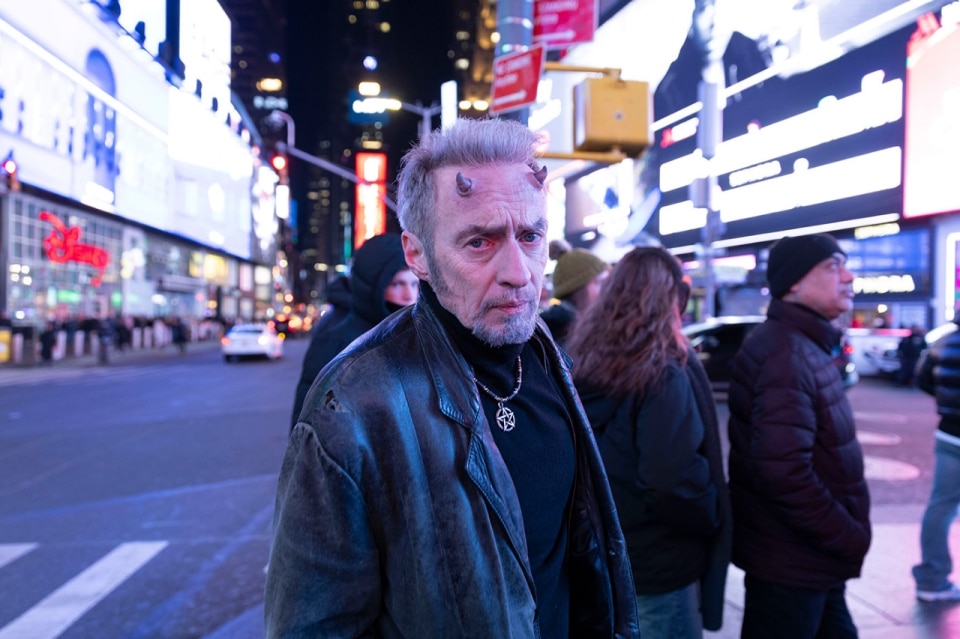
Wise puts it this way: throughout history, human beings have always tried to confront something greater than themselves. They have invented stories, mythologies, gods, goddesses, religions, systems of belief. “Perhaps it is the same phenomenon that now, in a technological era, when we look up, we call UFOs.
UFOs are a white light that evades us and defies physics.” Moreover, Wise notes, “we live in a scientific, militaristic moment, so we perceive something so unfathomable that it defies physics.” We perceive it through the lens of technology. “But if you lived in the year one thousand, in the year zero, in Sumerian times, whatever that exact same experience is, you would simply have a different language to describe it.”
When the Earth frightens us, we look to the sky
The exhibition arrives at a moment when the paranormal seems to have returned everywhere, or perhaps it never really left. The world is full of data, images, maps, measurements, notifications, tools that promise control, and yet it seems increasingly difficult to understand what is really happening. The more everything is documented, the more everything seems to escape us. The more reality becomes legible, the more it fills with holes.
Wise does not treat this as a new paradox. On the contrary, she places it within a long history. “Throughout history, in moments of political unrest, military anxiety or, for example, nuclear anxiety in the 1940s and then again in the 1960s and 1970s, whenever there is war, there are a lot of UFOs.” UFO sightings become our escapology. The sky that remains above our heads when the earth becomes unbearable. “Whenever there is terrestrial anxiety, we look up for better answers.”
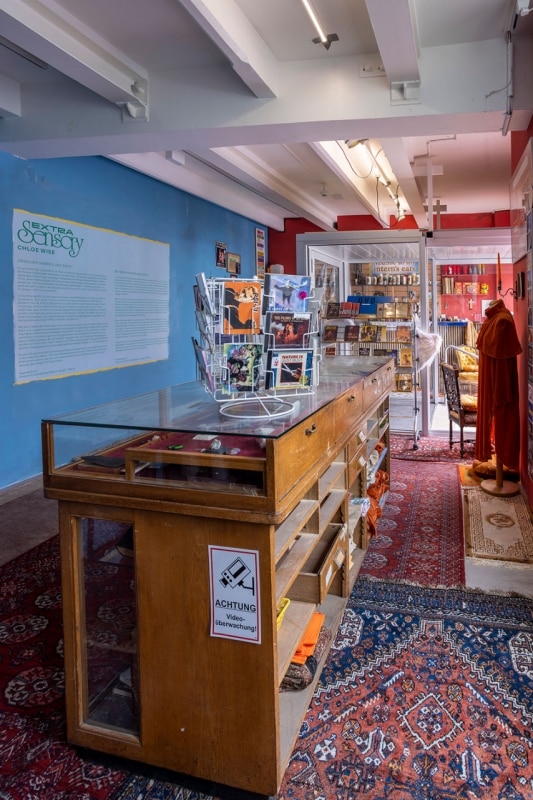
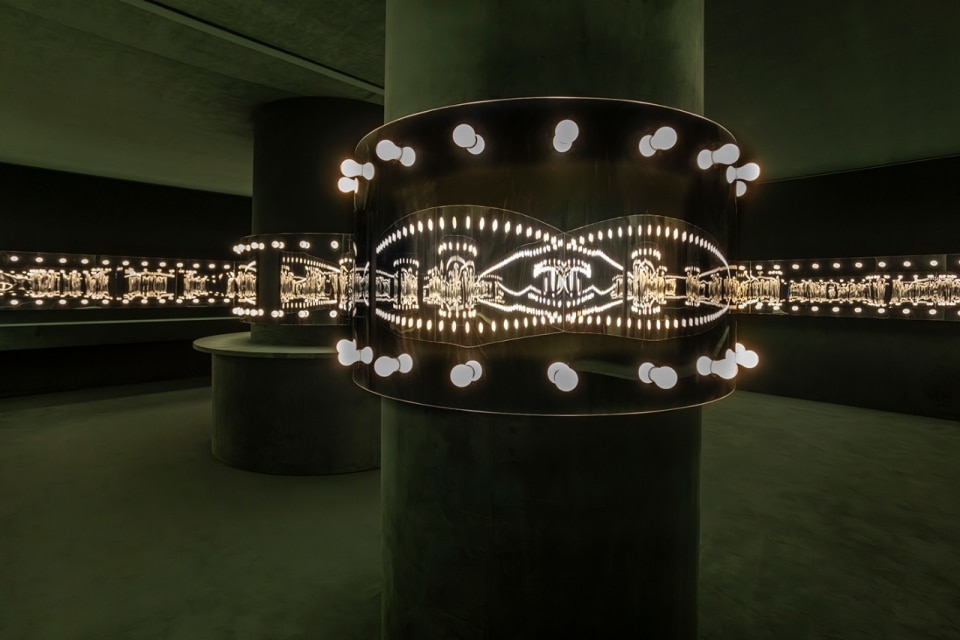
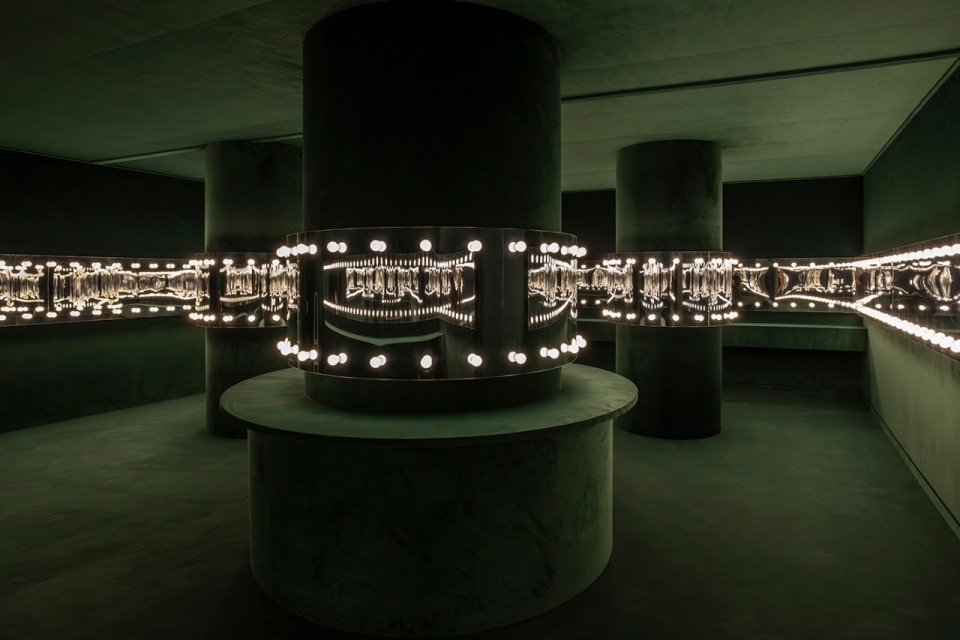
Kulturstiftung Basel H. Geiger is known for adapting its spaces to the exhibition on view. And it does so this time too. From the outside, it looks like a souvenir shop. With Wise, we talk about the link between the Italian words mostro, monster, and mostra, exhibition. She is a native English and French speaker and speaks a little Italian, “I never studied it, maybe in another life I was Italian,” she smiles. And what is a souvenir, its meaning in French.
That word which in Italian we confine to a very precise space between a holiday trinket stall and a fridge magnet bought at the last minute at the airport before leaving, for Wise is an explosion of meaning that coils and uncoils around the French verb meaning to remember.

“A souvenir, etymologically, means to remember,” she says. And the fake shop at the entrance is exactly that: a device for remembering something that perhaps cannot really be remembered. “You have a souvenir shop full of stupid little objects, necklaces, postcards and bumper stickers. They are meant to try to remember something that was so meaningful: a sunset, a beach vacation, the Virgin Mary at a pilgrimage site.” For Wise, once again, everything returns to an essential question: “For me it’s about how language fails when it tries to address the unknown.”
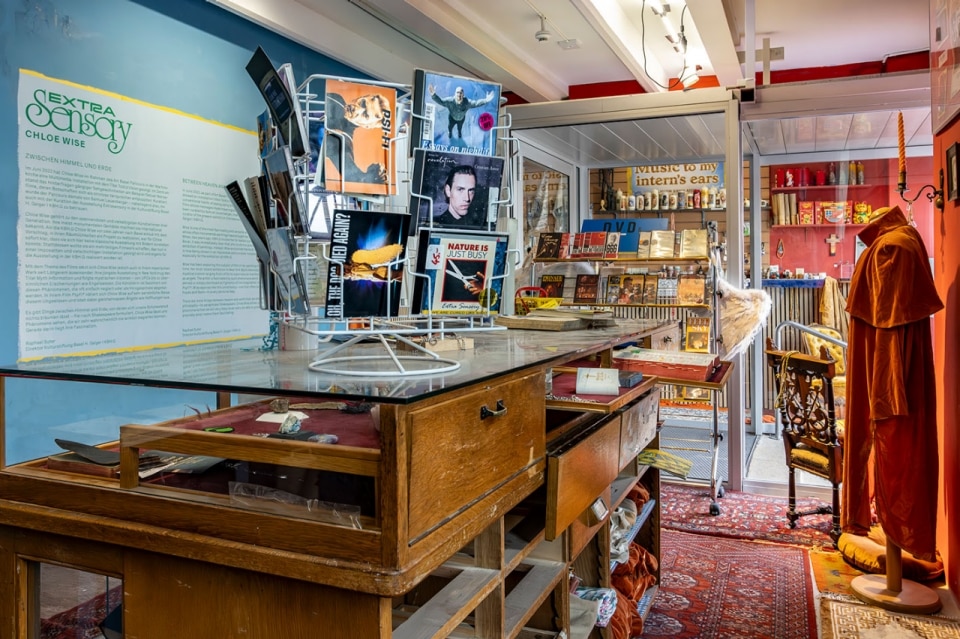
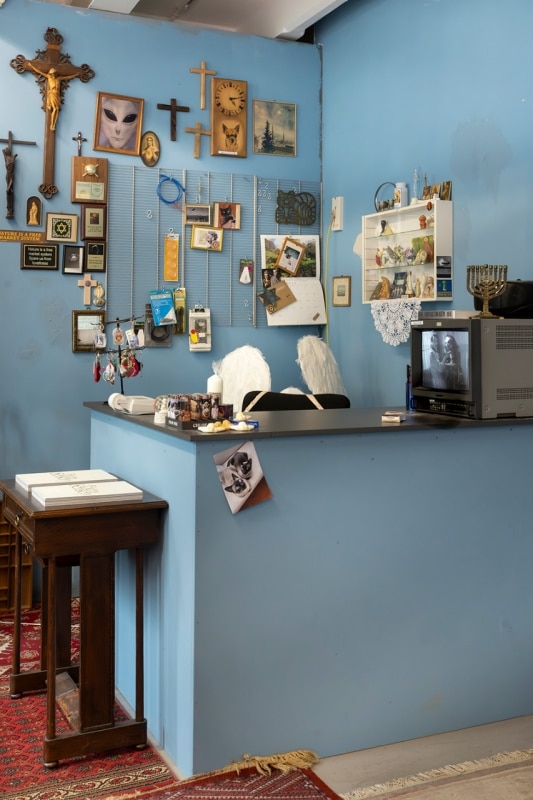
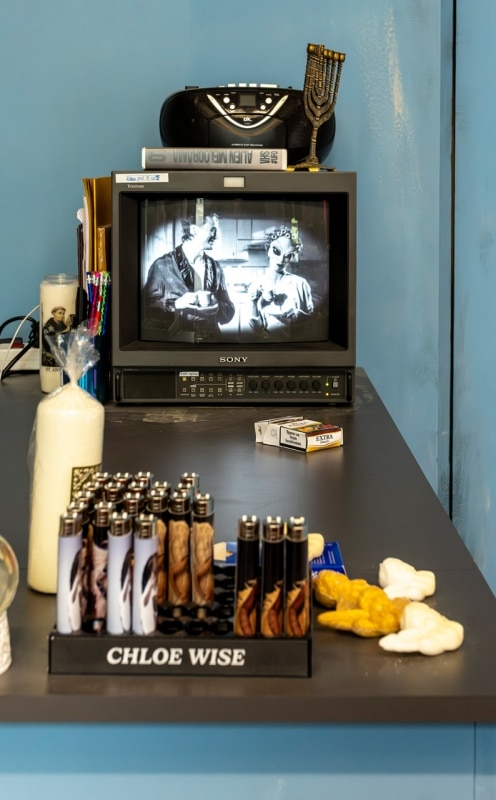
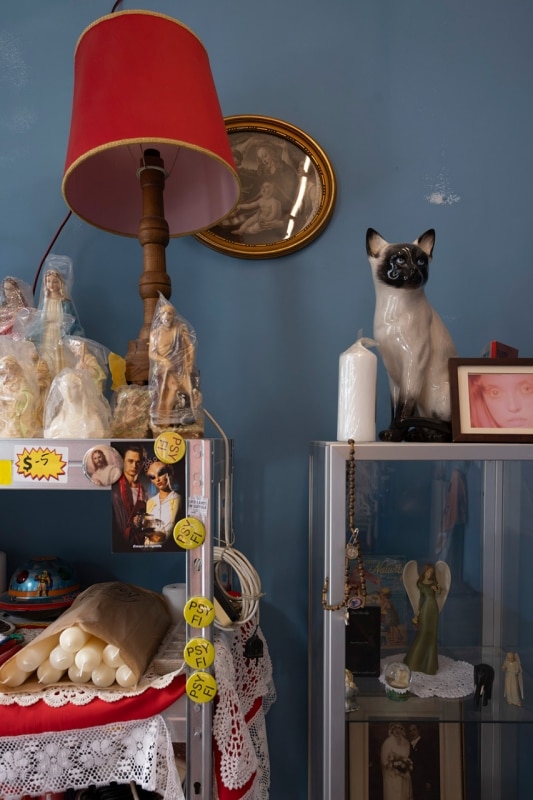
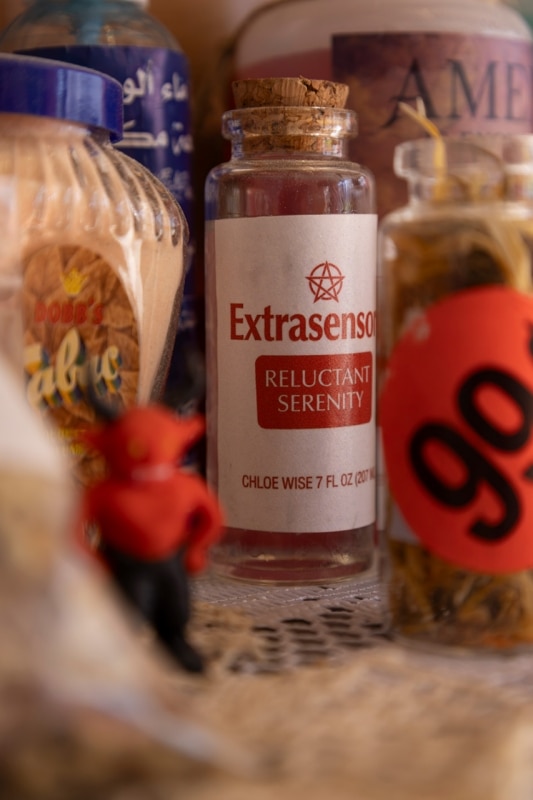
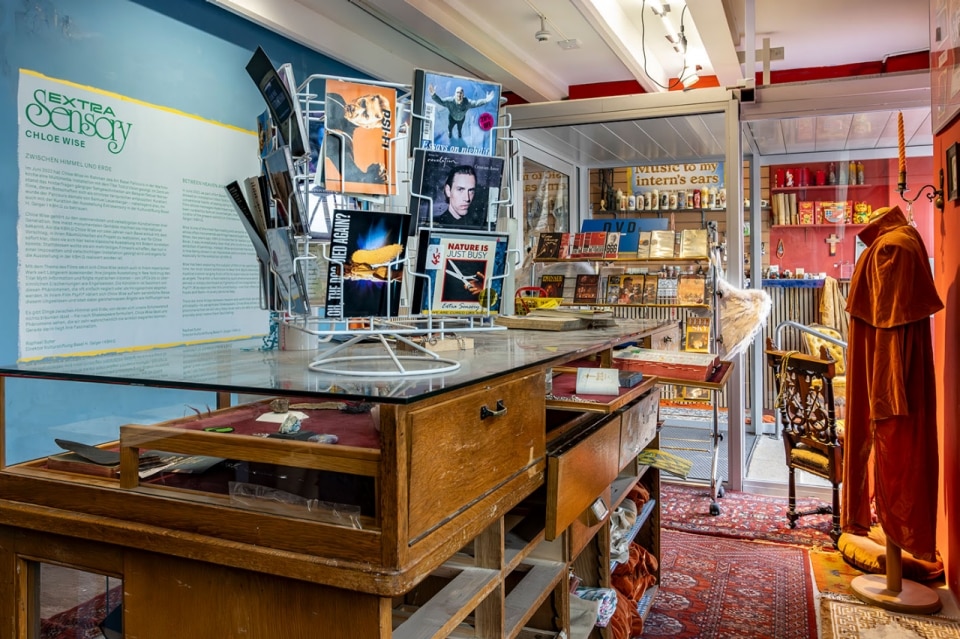
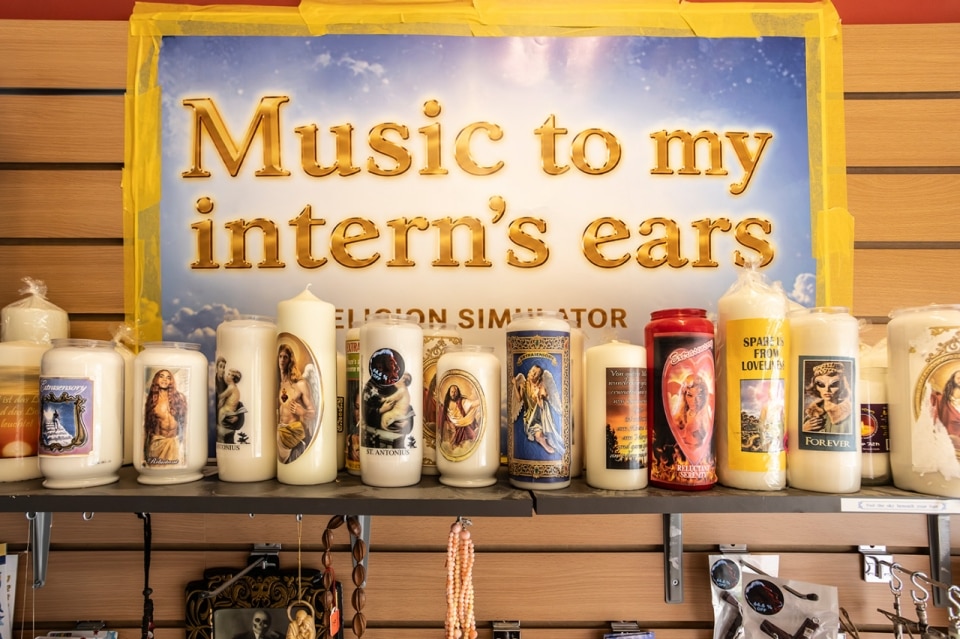
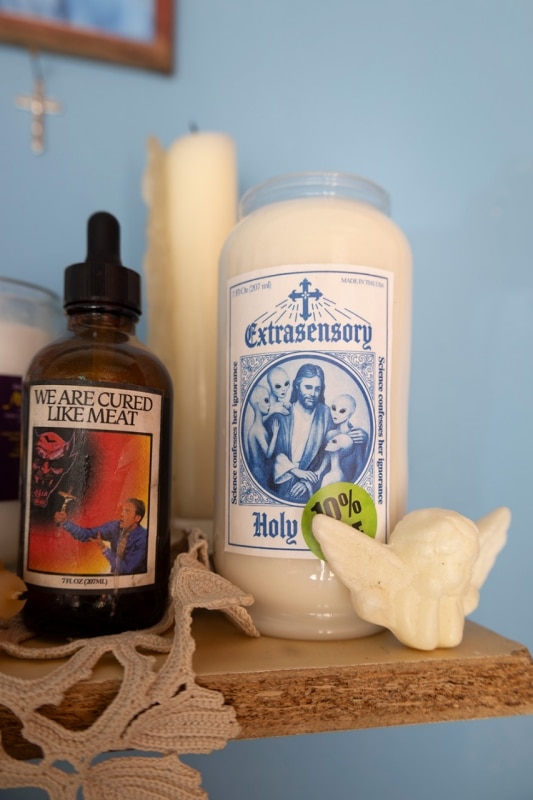
The gift shop looks like a space-time booth connected by a back door to Area 51. Here there are crosses, candles, lighters, stickers, magnets, posters, fake pamphlets, alien holy cards, t-shirts, necklaces, postcards, religious objects, highway-stop objects, cult objects, souvenir-counter objects near a shrine or a UFO museum in the middle of nowhere. But also many objects found here in Switzerland, such as a collection of old Bibles, Wise tells me. And unfortunately, no, you cannot take anything home.
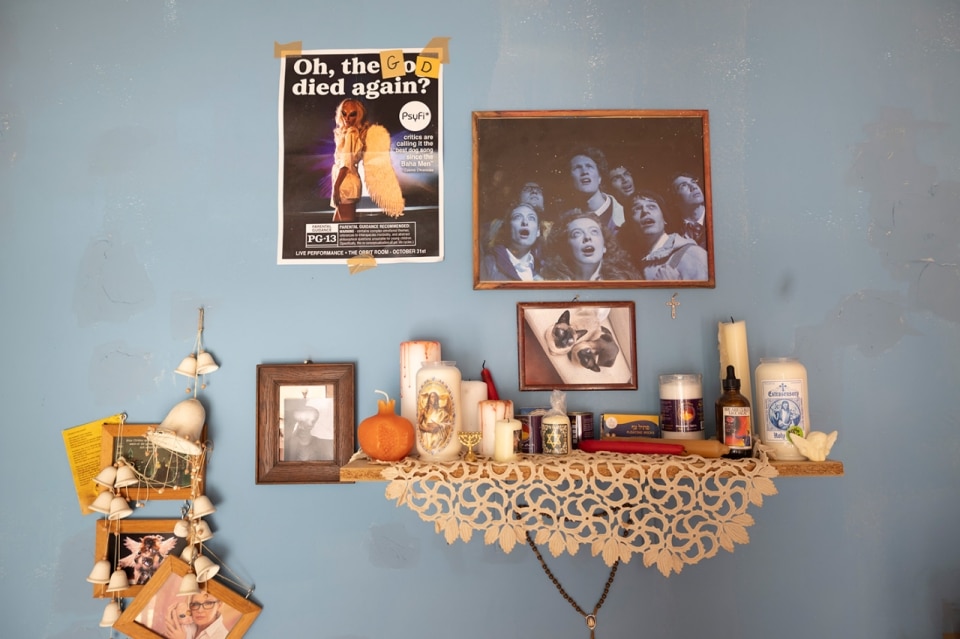
The recurring phrases are a fundamental part of the project. They return almost obsessively in the film and can also be read in the fake gift shop, printed as bumper stickers, magnets, absurd slogans, little fridge oracles: “Science confesses her ignorance,” “Nature is just busy,” “Pure uselessness,” “The planet is a mess, it deserves a rest,” “Look at this, forget about that,” “Amen is enough, and yes.” They do what Wise wants language to do: stumble, repeat itself, lose and regain meaning. And then “the dog has died again.” But in the fake gift shop, dog becomes “god.”
The gift shop of the unknown
Chloe Wise has always been very good at looking at objects not as things, but as systems of desire. At the beginning there were the fake bagels disguised as luxury handbags, food as status symbol, consumption as identity, fashion as a device of social belief.
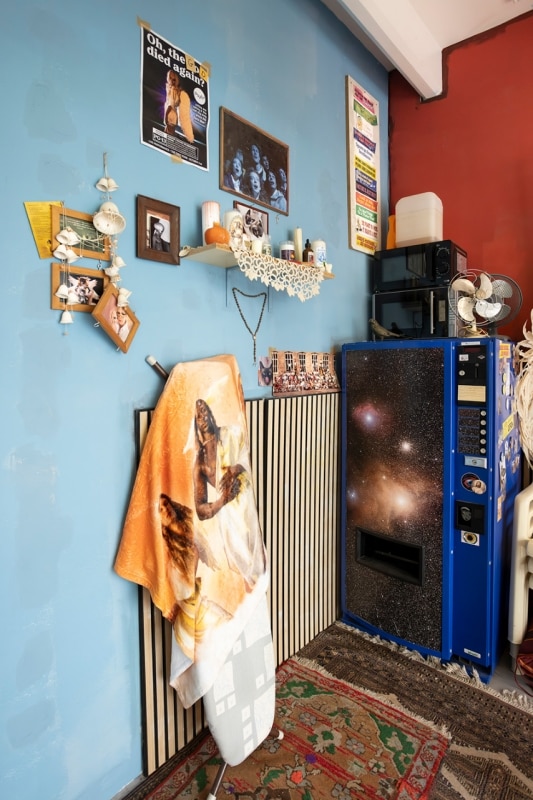
With “Extrasensory”, that mechanism shifts onto a different plane: no longer only luxury, the body, food, seduction, but faith. What do we do when we turn a revelation into a magnet? There is a wall where crucifixes alternate with alien icons. I point out to her that in Italy, something like this would certainly cause an uproar. She replies with a look that says: “excellent information, maybe I’ll think about it.” Then she adds: “Maybe aliens are angels.”
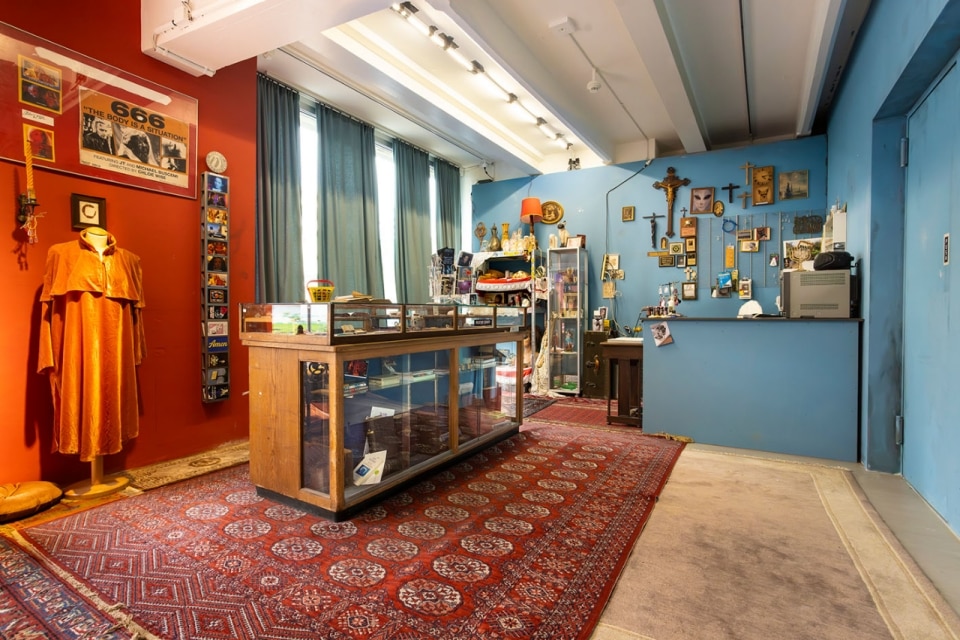
The shop looks shabby, improvised, a little ugly, and yet every detail has been designed. “It took so much work to make something look this ugly.” The shop is both the entrance gate and the exit gate, and it could not have been any different, Wise says, “because the way we start building our beliefs, as children or in our first relationship with faith, passes through objects.
I don’t want to call it a rabbit hole because it’s actually a really big, open topic. It’s not a spiral: it’s an expansive form of questioning.
Chloe Wise
You have a cross, a menorah or a t-shirt showing which band you like. We represent faith with icons, objects, commercial things.” Before, the artist seemed to be saying that we consume identities, bodies, status, desires. Now she says that we also consume faith. “We commodify something as meaningful and transcendental as belief. We turn it into an object to exchange.”
Among all the pieces in the fake shop, when I ask her which one she prefers, Wise points to the drinks vending machine. There are no drinks and there are no words. Only a stylized starry night. As if to say that whatever you buy here, whatever drink might come out of this machine, it could only be one thing. The unknown. In the end, this is the hypercube of all of “Extrasensory”. The drinks machine without drinks. A promise of consumption that delivers no product. An automatic dispenser of the cosmos. A black surface full of stars, inside a shop that sells nothing, at the entrance to an exhibition that wants to prove nothing. The paranormal, then, does not explain aliens. It explains what we are.
Opening image: Chloe Wise, 2026. Courtesy of Kulturstiftung Basel H. Geiger