

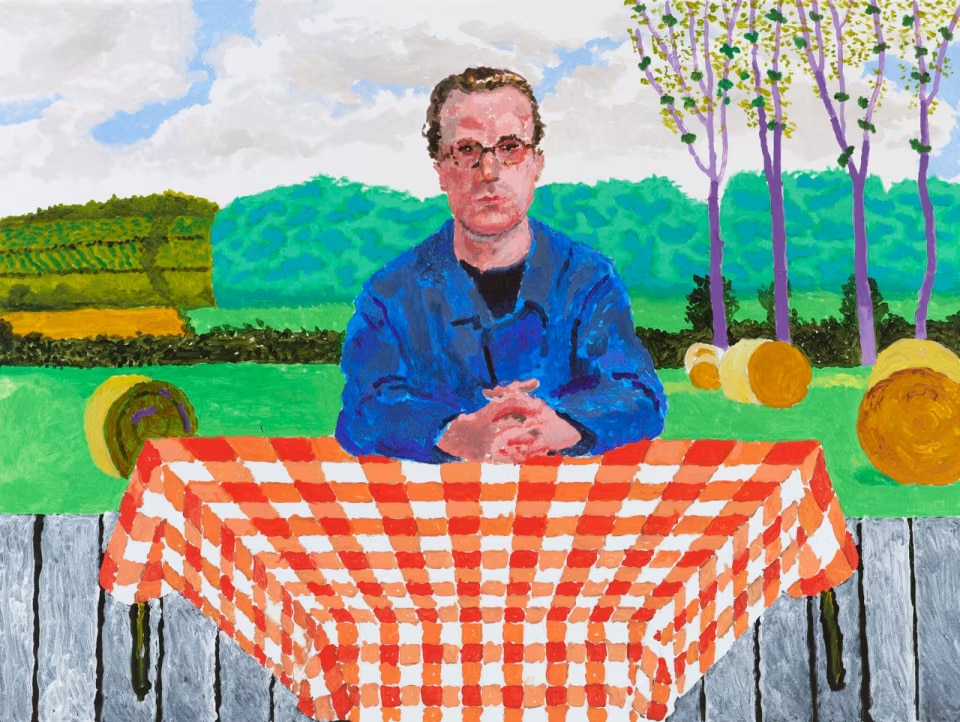
A rebel of British Pop Art, a painter of Californian light, an untiring experimenter, and the author of some of the twentieth century’s most iconic images, David Hockney has been one of those very rare artists capable of speaking simultaneously to the general public and to insiders.
Over a career spanning more than sixty years, he has traversed painting, photography, set design, video, and digital drawing without ever losing his distinctive voice. From the swimming pools of Los Angeles to the landscapes of Yorkshire, all the way to works created with the Brushes app on the iPad, we look at five reasons why he changed art history.
A new landscape for a new California
A typical Californian day. There is a cloudless sky, a straight and geometric sun, and the bright colors of villas and swimming pools. Two distant palm trees stand in place of skyscrapers, and a yellow diving board guides the eye toward the center of a pool, where splashes of water rise against gravity.
Someone has dived in, but we do not know who. With A Bigger Splash, one of the works that consecrated his imagery, David Hockney changed the rules of landscape painting, a genre that many in the 1960s considered dead.



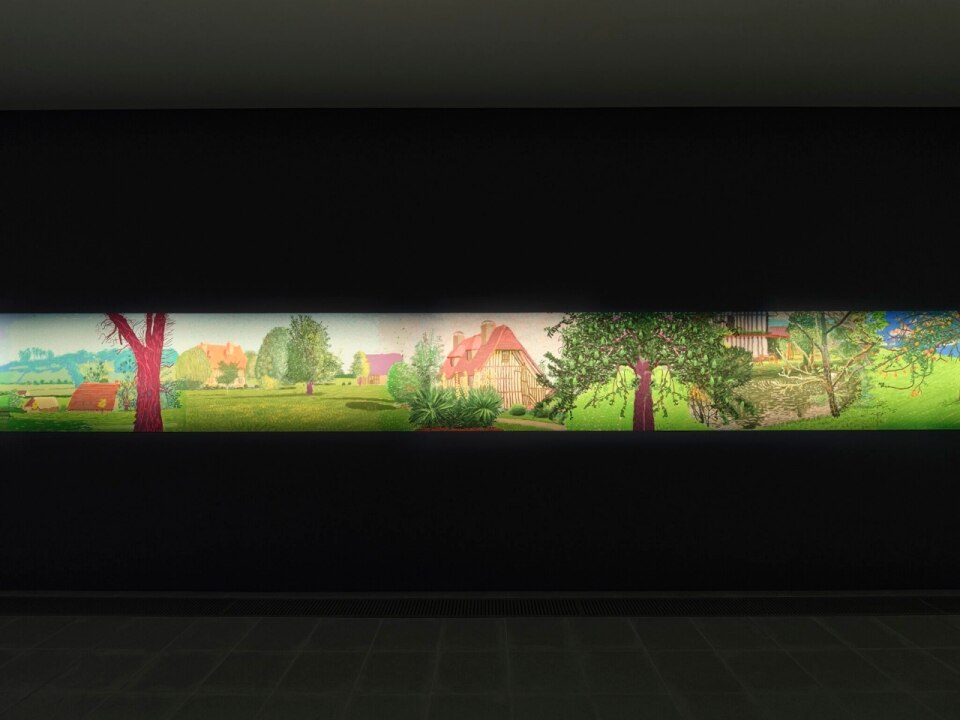
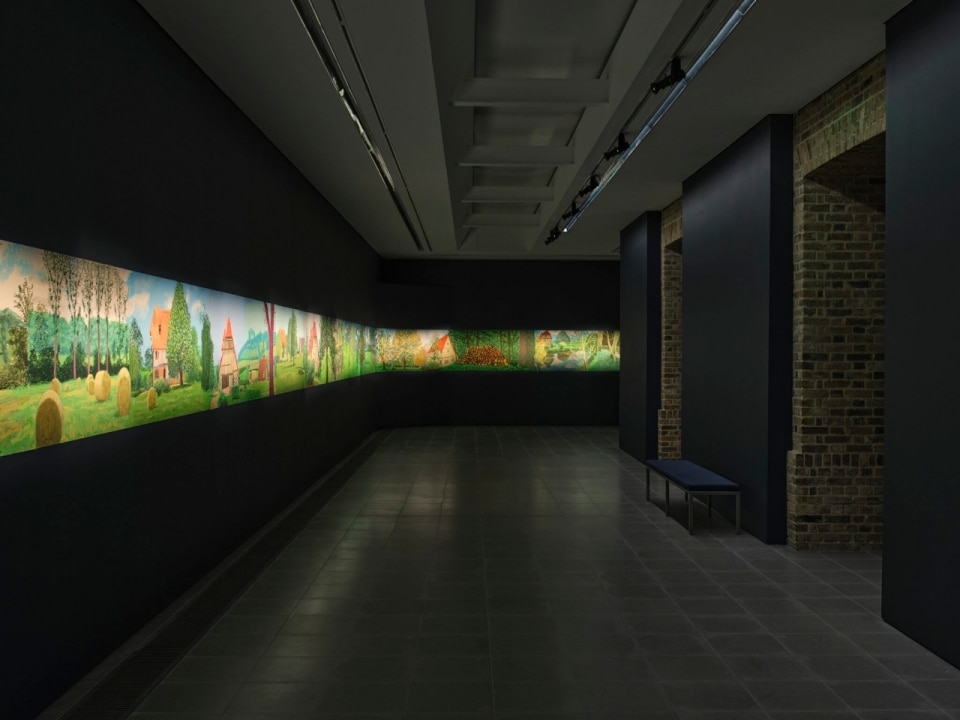
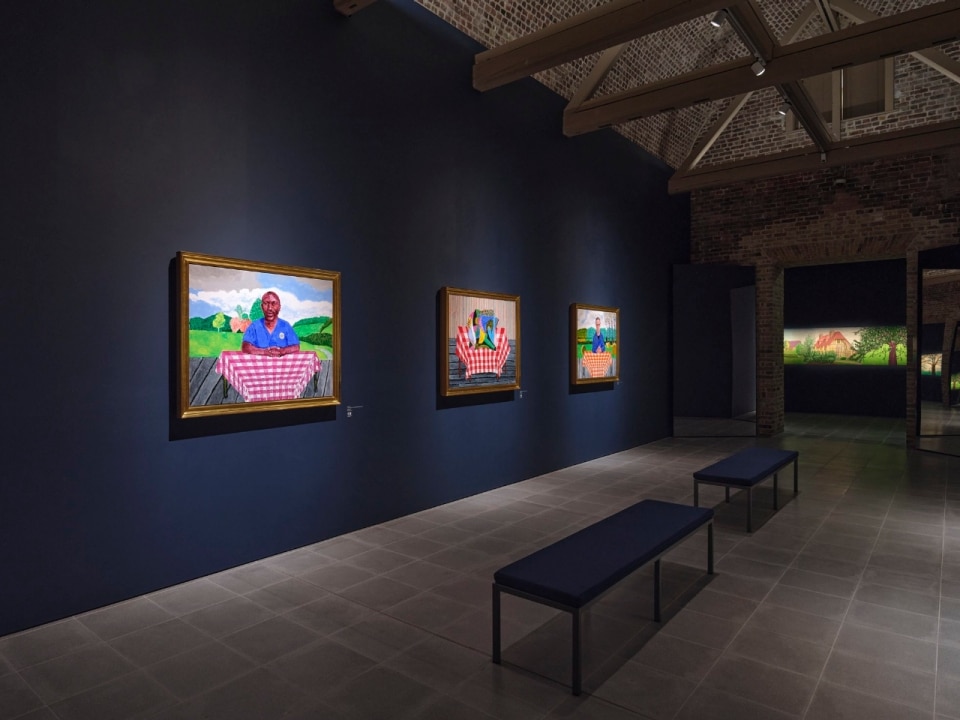
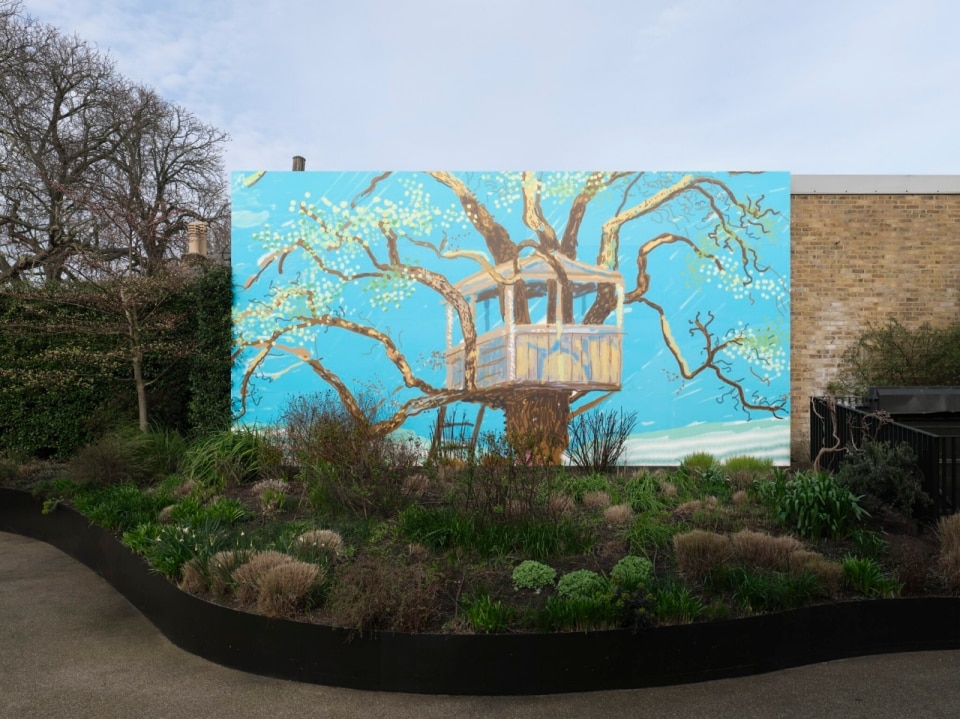
With him, the West Coast lifestyle became a universal artistic subject. The California he depicts is not the romantic one of American tradition, but an artificial territory made of swimming pools, modernist villas, manicured lawns, and perfect skies. His pools became the symbol of an era and of a new relationship between nature, design, and desire. Even today, much of the aesthetic associated with California passes through the images he created.
The depiction of homosexuality
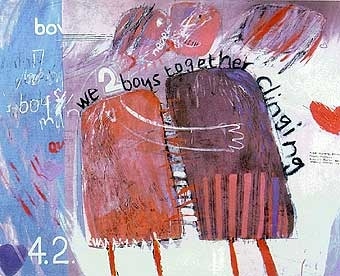
The year is 1961, and Hockney is in his second year at the Royal College of Art. He paints We Two Boys Together Clinging: two boys embracing, a quote from Walt Whitman in the title, and a series of references ranging from poetry to pop culture.
The style is still far from the Californian pools and bright colors that would make him famous, but the themes are already all there. In England, homosexual acts between men are still illegal, yet Hockney chooses to speak openly about desire, attraction, and identity. He does not do so with the tone of a political manifesto, but with that of irreverence, curiosity, and desire.
It is an attitude that would run through his entire career. In his paintings, there are neither heroes nor victims, but friends, lovers, bodies sunbathing, and relationships beginning or ending.

In an era when homosexuality was still confined to the margins of official culture, Hockney brought it to the center of the stage with a revolutionary naturalness.
Photography and cinema
Even before the debate on artificial intelligence and digital images became central, Hockney was questioning an apparently simple issue: how do we see the world?
In the 1980s, he created his famous joiners, compositions obtained by assembling dozens of photographs taken from different viewpoints. The result is an image that challenges the very idea of perspective and anticipates many contemporary reflections on the fragmentation of the gaze.
His influence soon left museums and reached cinema. The most obvious case is Luca Guadagnino’s A Bigger Splash, which pays homage to the famous 1967 painting right in its title. But the imagery created by Hockney — made of modernist pools, blinding sun, desire, luxury, and melancholy — has spanned and continues to define decades of photography, fashion, advertising, and cinema.
Portraits that retrace the second half of the twentieth century
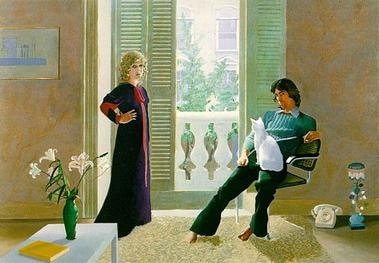
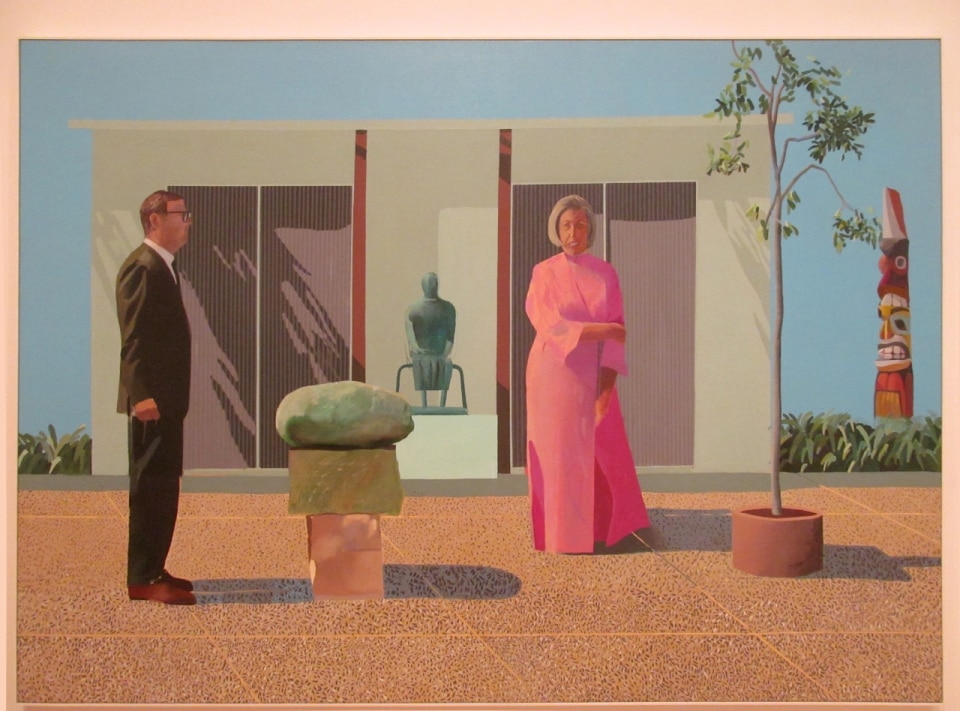
Mr and Mrs Clark and Percy: this is the title of one of Hockney’s best-known portraits, painted in 1971 for his friends Ossie Clark and Celia Birtwell. He was a fashion designer among the protagonists of Swinging London; she was a textile designer and muse to an entire creative season.
Hockney had been the best man at their wedding, and by the time he painted the picture, the marriage was already in crisis. The light entering from the windows of the Notting Hill apartment, the cat named Percy in the title — although it was probably Blanche — and the almost imperceptible distance between the two protagonists transform a domestic scene into something much more complex.
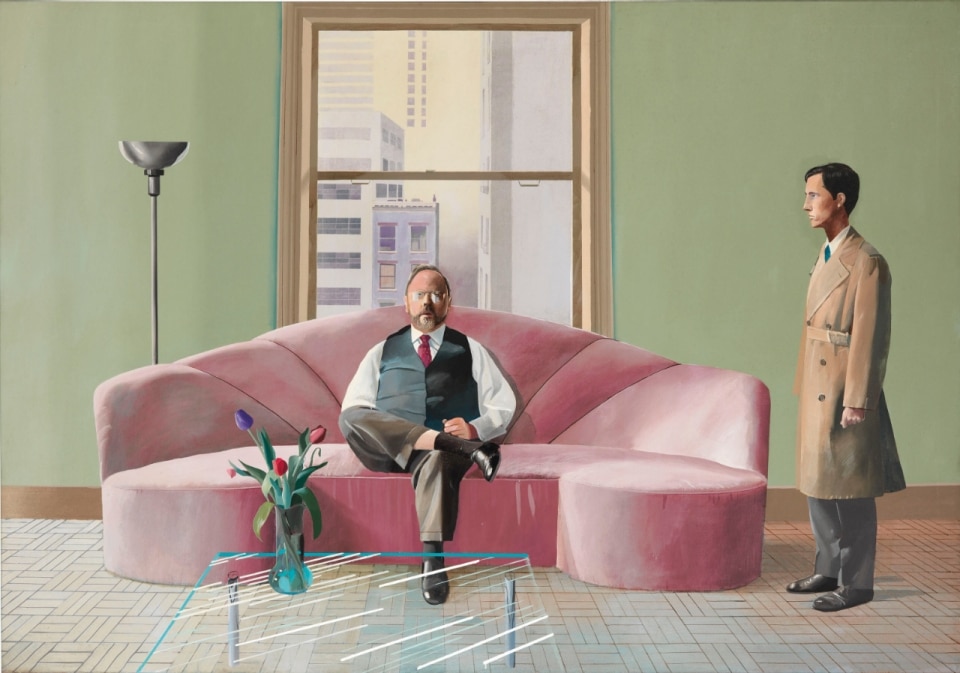
The painting is one of the chapters in a long human gallery that Hockney built over the course of his career. Friends, companions, collectors, designers, artists, and intellectuals became the protagonists of a sort of collective portrait of the second half of the twentieth century. From Christopher Isherwood to Henry Geldzahler, from Celia Birtwell to dozens of figures crossing the worlds of art, fashion, and design, Hockney used the portrait to recount a new way of experiencing relationships, affections, and ambitions.
The iPad artist who never stopped experimenting
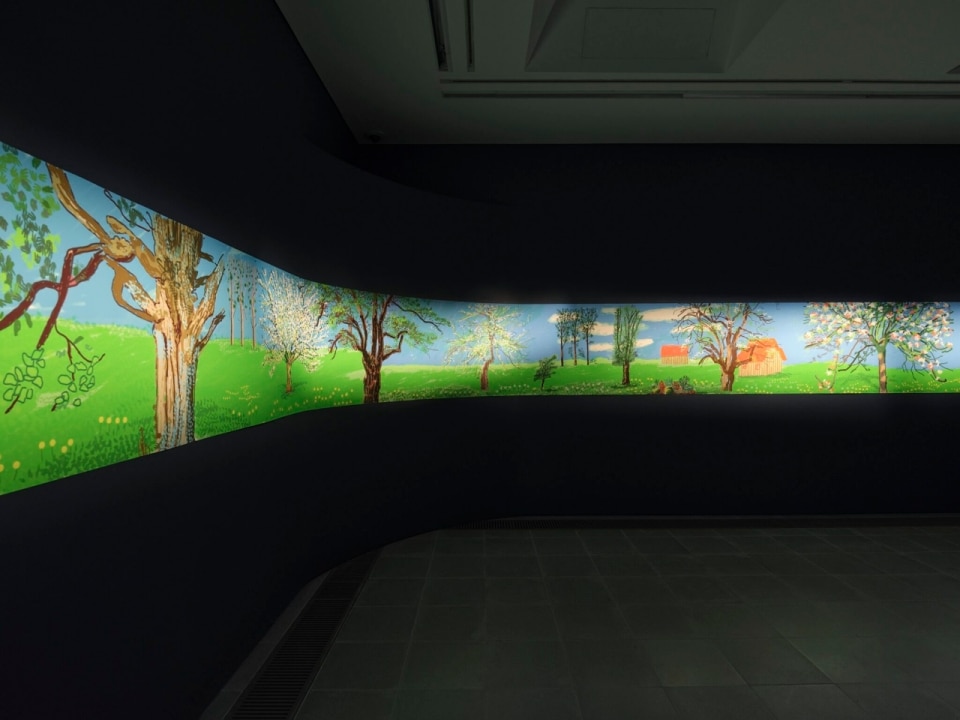
There are artists who find a formula and repeat it for a lifetime. Then there is David Hockney. In the 1960s, he painted the pools of California; in the 1980s, he dismantled and recomposed photography with his famous joiners; in the 2000s, he began drawing on the iPhone and then on the iPad. While many of his peers looked upon new technologies with suspicion, he adopted them with the enthusiasm of a beginner.
For years, he created landscapes, blossoming trees, skies, and the English countryside using the Brushes app. These are works that keep his obsession with light and color intact, proving that the tool does not make the difference, but rather the gaze of the person using it.
But the most surprising example came in 2018, when he was commissioned to create The Queen’s Window for Westminster Abbey, one of Britain’s oldest and most symbolic institutions, and Hockney started precisely from a drawing made on an iPad. From a touchscreen monitor, a large stained-glass window was born, destined to enter one of the most solemn places in British history. It is an almost perfect parable.
Featured image: David Hockney, Jack Ransome Resting on an Orange and White Checkered Tablecloth, 2025. Acrylic on canvas, 36 x 48 in. (91.4 x 121.9 cm) © David Hockney. Photo: Prudence Cuming.