



There are designers who create objects. Others build systems. And then there are those rare figures who move like diviners, following invisible currents and sensing human energies before they become creative ones. Alessandro Guerriero belongs to this category.
Since the days of Alchimia, his path has never been that of a conventional designer. Instead, he has acted as a cultural instigator, a builder of relationships, someone capable of bringing design into places where no one had imagined it could go.
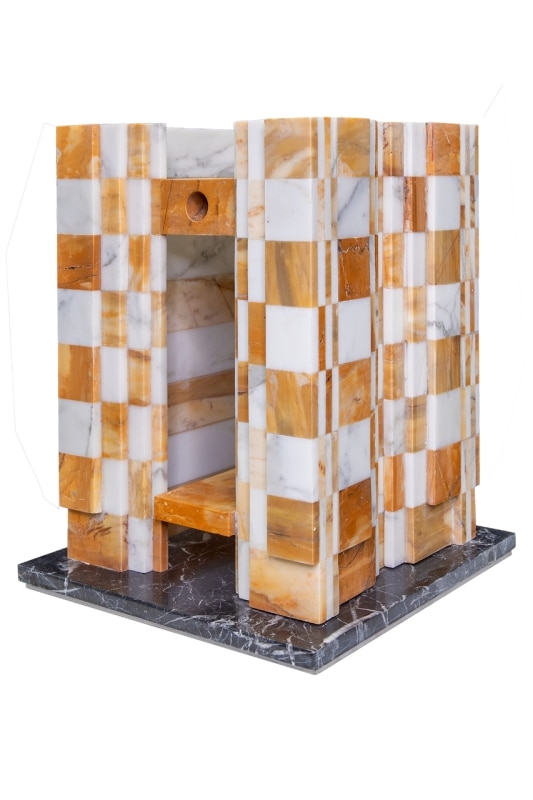
“Opera Buona” is another expression of this ability. It is not simply a collection of objects or an exhibition. It is a relational device that brings architects, designers, chefs, writers, and an institution such as Opera San Francesco around the same table.
Twenty designers imagine a temple. Twenty chefs inhabit it through a preserve—a small edible treasure containing an offering. Twenty writers entrust it with a story, a reflection, or a memory. The result is a landscape of works that speak about nourishment, hospitality, solidarity, and sharing.
The words Guerriero uses to introduce the project reveal its deeper nature: “Small architectures for spiritual use. Small architectures as critical tools.” These are not buildings meant to be inhabited, but places meant to be contemplated. Not functional architectures, but symbolic presences designed to safeguard something precious.
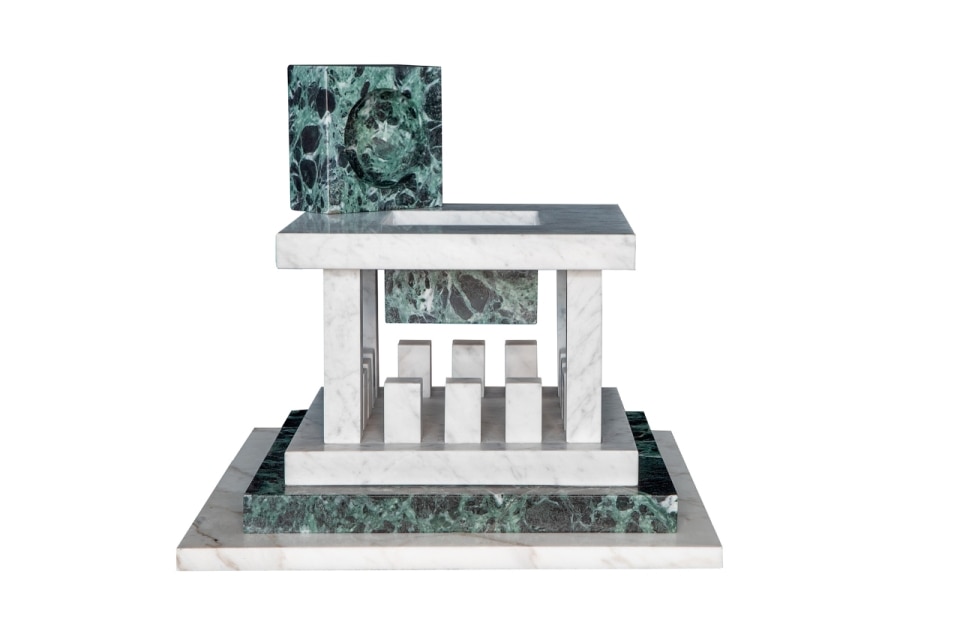
“They could be a temple, a tabernacle, a shrine, a shelter, a small monument,” Guerriero writes, adding that their purpose is to represent “the simple or complex rituals that arise from their use: working, speaking, thinking, meditating, and eating.”
The choice of the temple is no coincidence. It is one of humanity’s oldest inventions: a place created to protect what a community considers valuable. In this case, it houses neither relics nor deities, but something equally essential: food. Not food as a product or gastronomic spectacle, but food as an act of care.
Preserving, offering, sharing. Actions that run through every culture and find their most authentic expression around the communal table. Ultimately, every soup kitchen is a secular temple. And every donated meal is an offering.
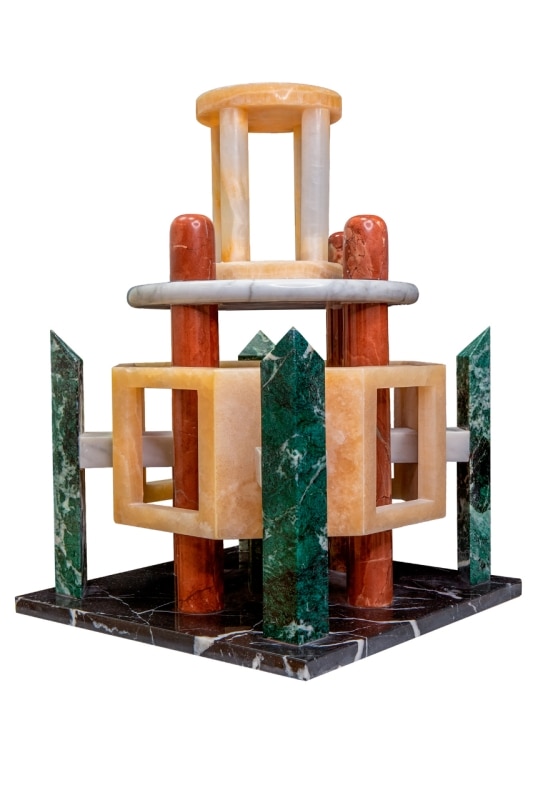
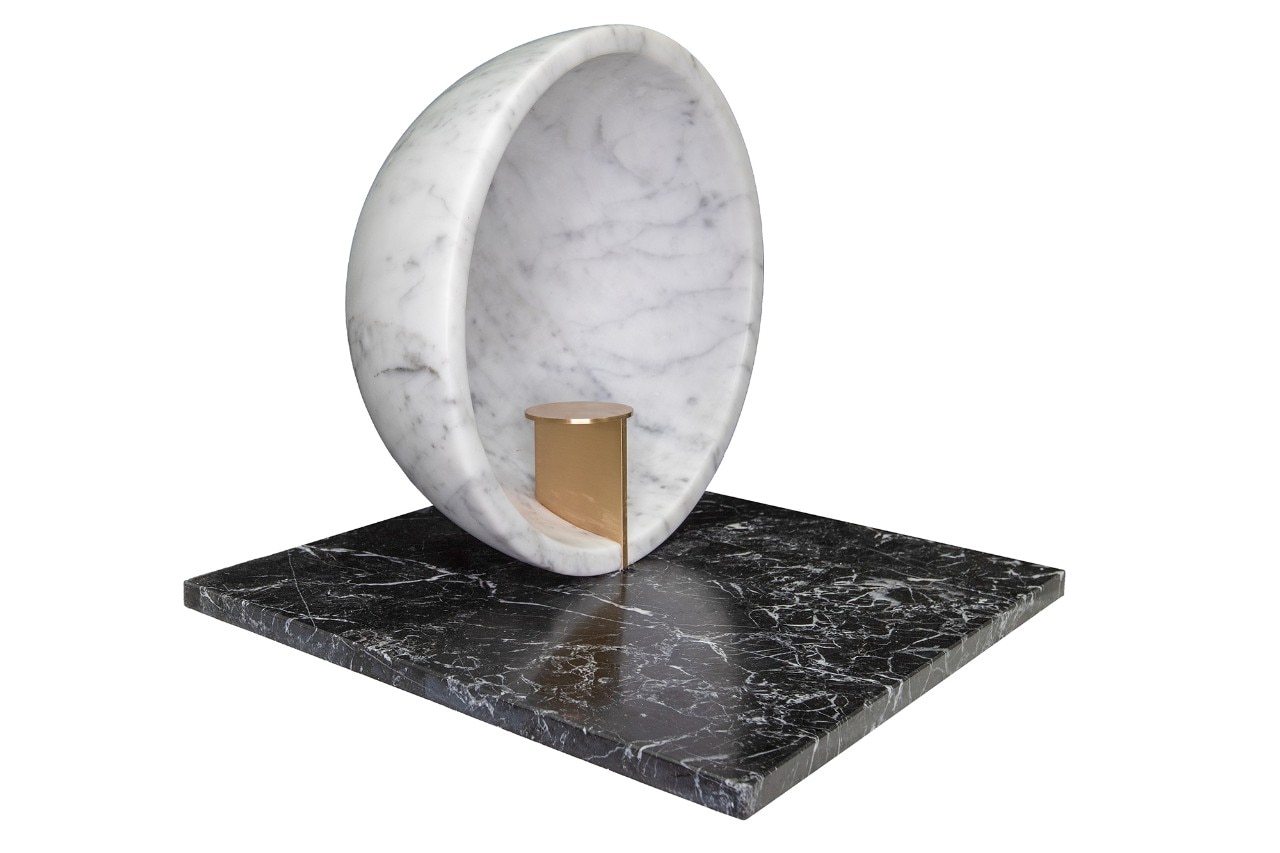
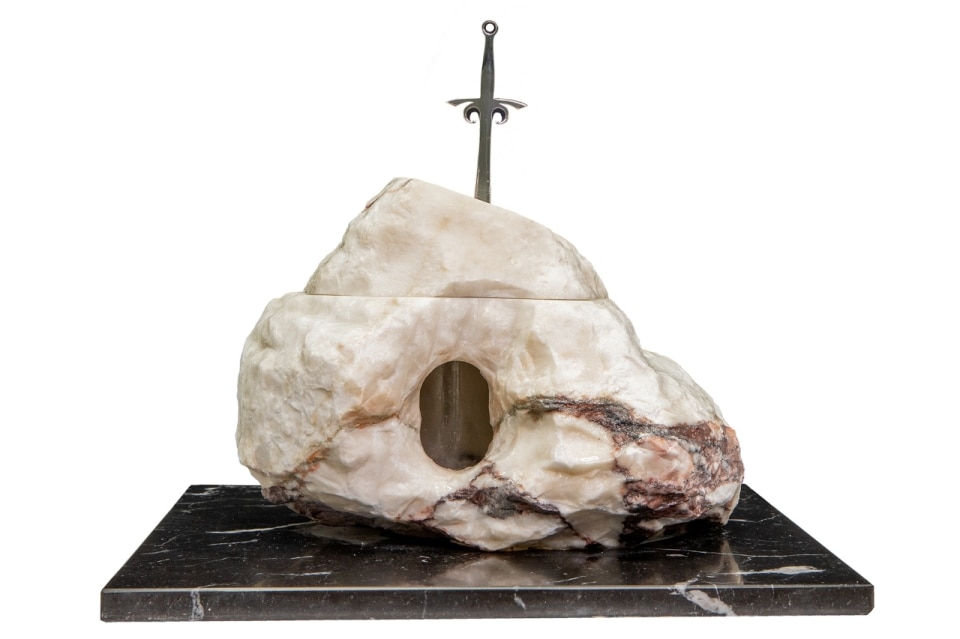
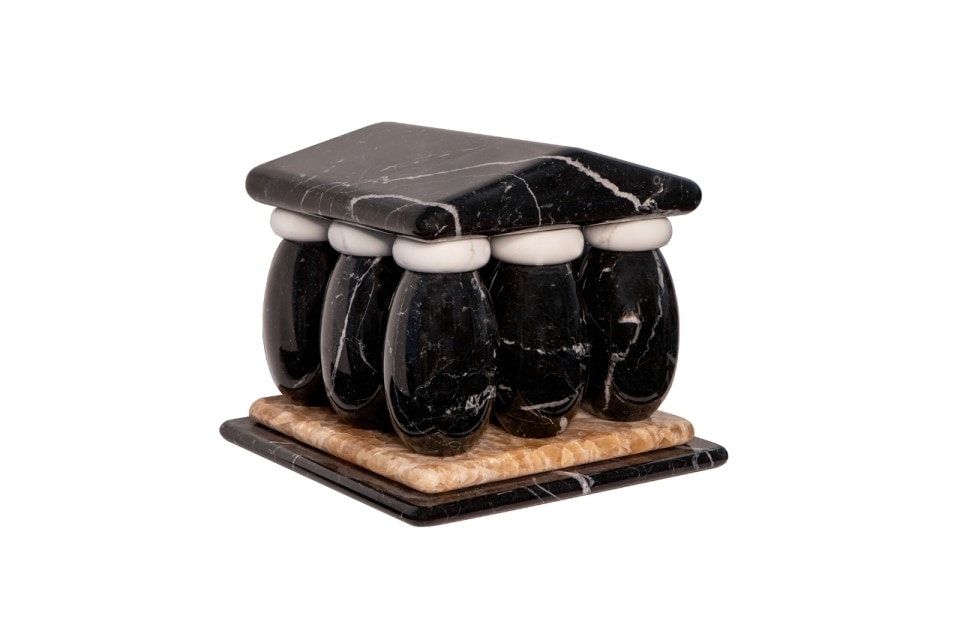
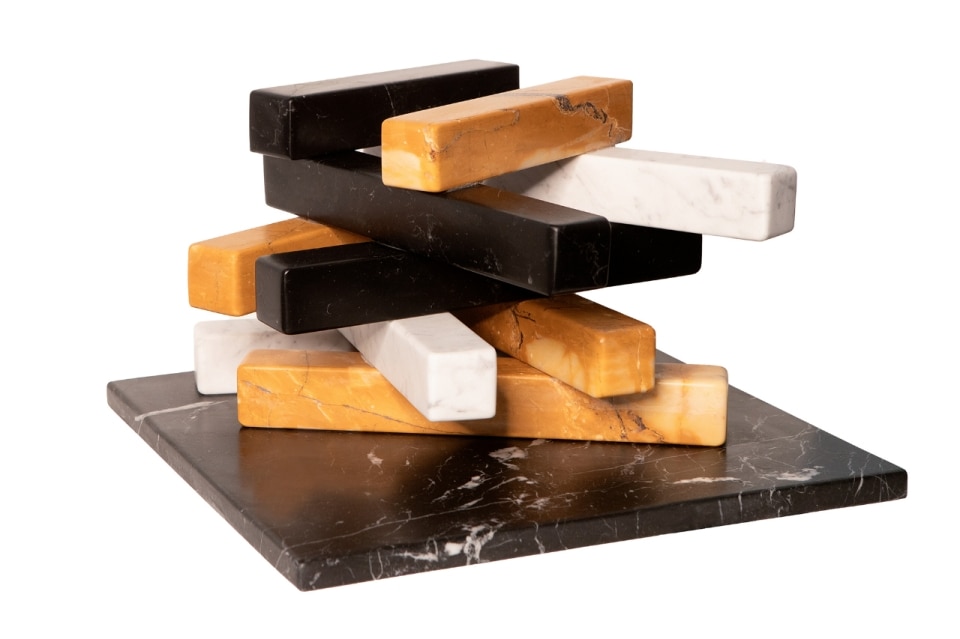
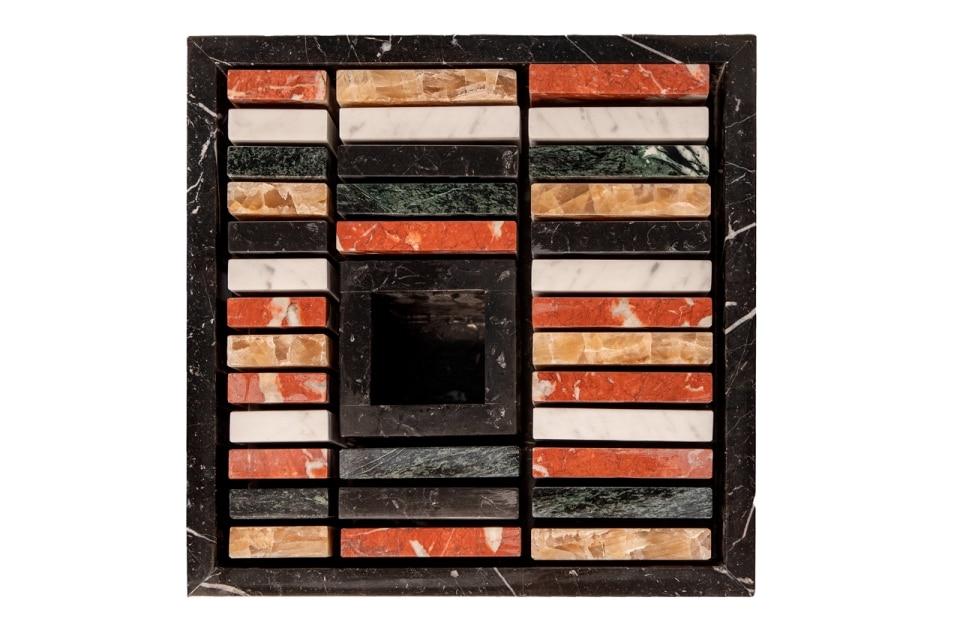
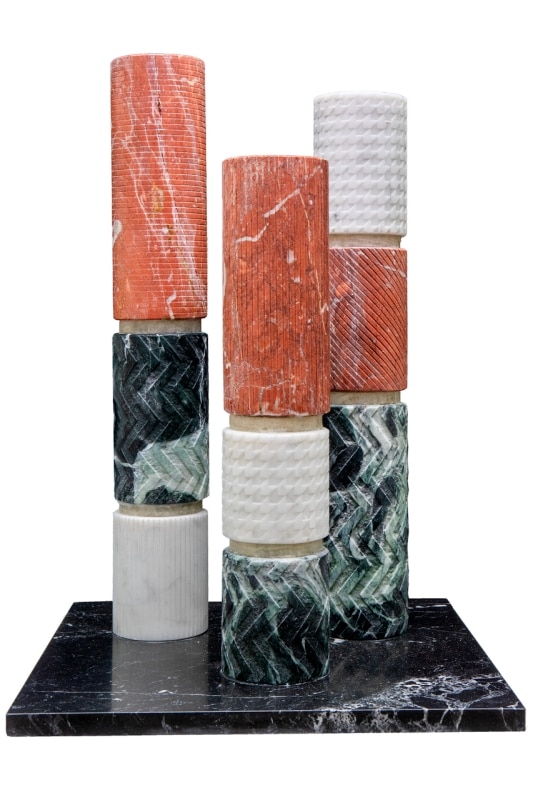
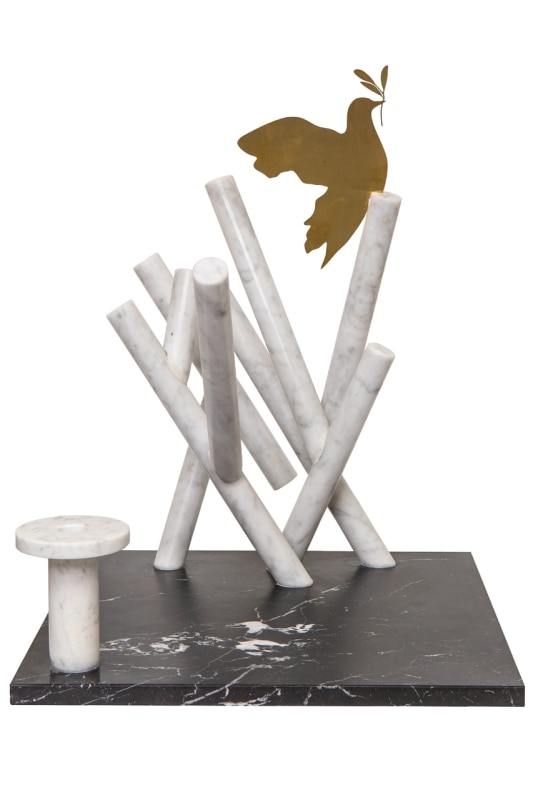
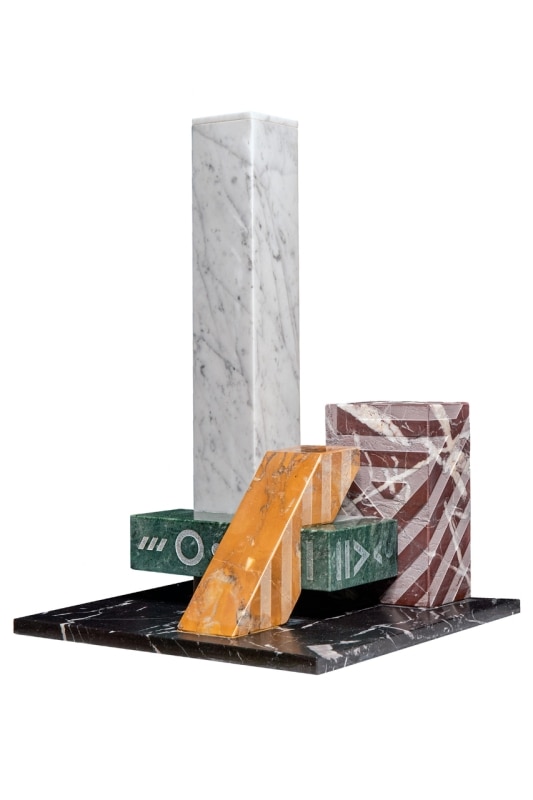
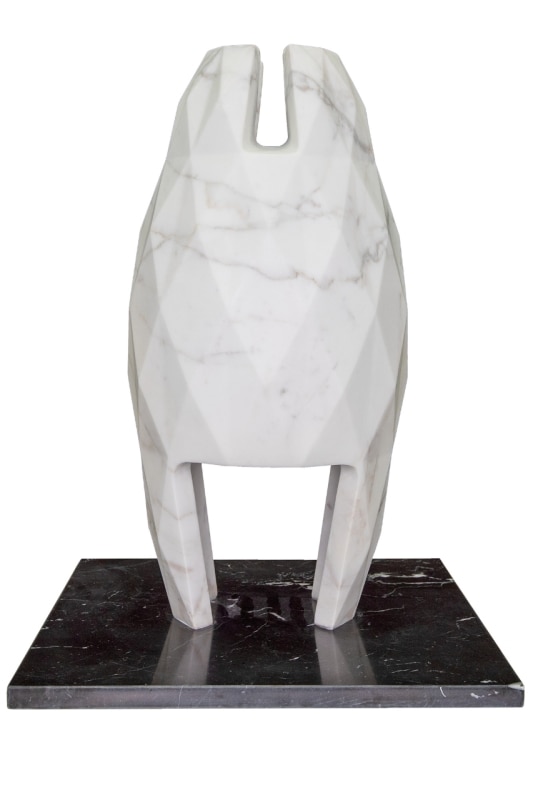
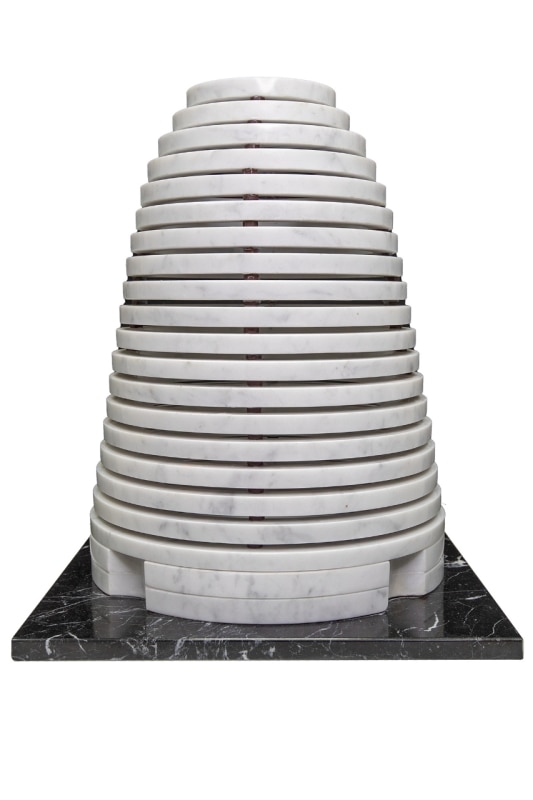
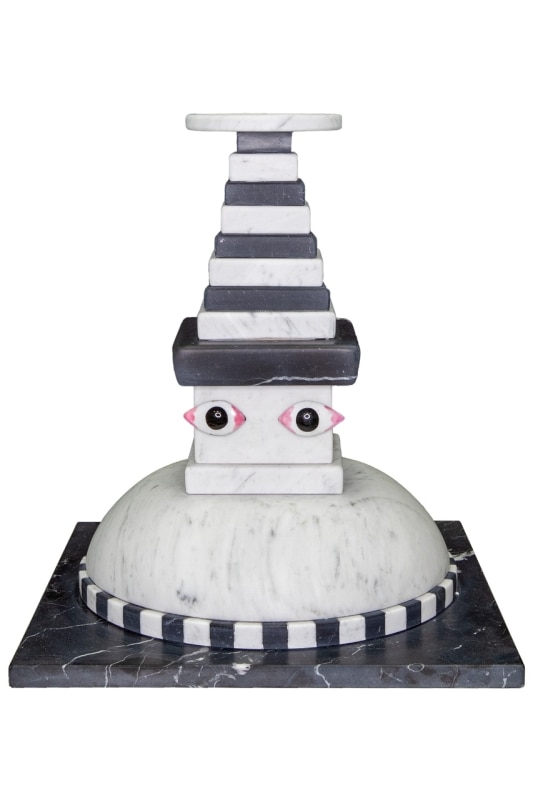
For this reason, the small polychrome marble structures—produced pro bono by Silvestri Marmi of Carrara—should not be read as mere formal exercises. They are miniature self-portraits. Microcosms in which each designer condenses the themes, obsessions, and visions that have defined their work for years.
Cino Zucchi’s temple is perhaps the most explicitly archetypal. Its plan and openings revisit a theme that has long accompanied the architect’s work: the relationship between body and architecture, construction and origin. The openings seem to evoke a female figure, almost an abstract quotation of Courbet’s L’Origine du Monde. The temple becomes a matrix, a generative place, a space of birth.
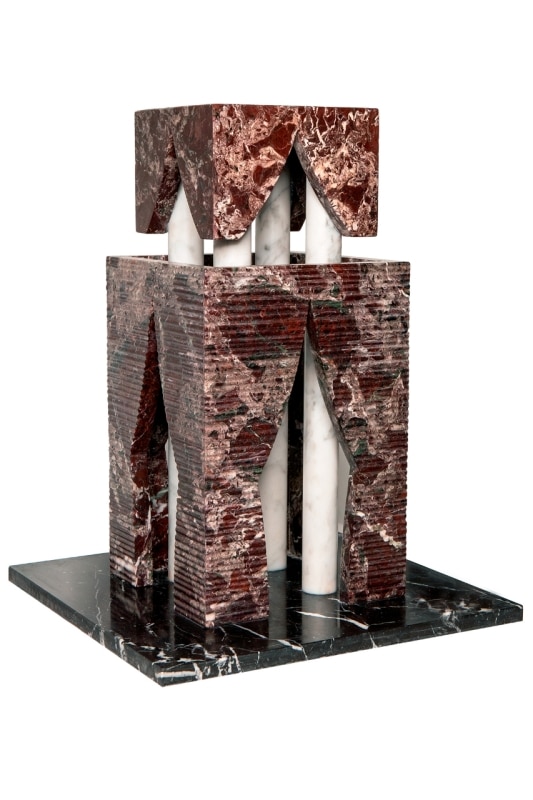
With Ugo La Pietra, one of the central themes of his lifelong research resurfaces: dwelling. For decades, La Pietra has argued that “to inhabit is to feel at home everywhere.” His small building appears as a threshold, a house-temple that dissolves the boundary between inside and outside, transforming the idea of shelter into a mental condition before a physical one.
Giulio Iacchetti, Peter Pichler, and Atelier Biagetti, despite their very different visual languages, reduce the temple to its primordial essence: four supports and a roof. The archetype of the hut returns—the original form of habitation condensed into a few essential gestures.

Paola Navone introduces an ironic and fantastical dimension, transforming the structure into a kind of Mediterranean pagoda. Mario Trimarchi allows his poetic universe of signs, routes, and light creatures to emerge, turning the temple into a landing place or a suspended nest.
Elena Salmistraro creates a totemic and chromatic presence that seems to come from an imaginary civilization, while Sara Ricciardi explores the ritual and theatrical dimensions of space, transforming architecture into a narrative machine.
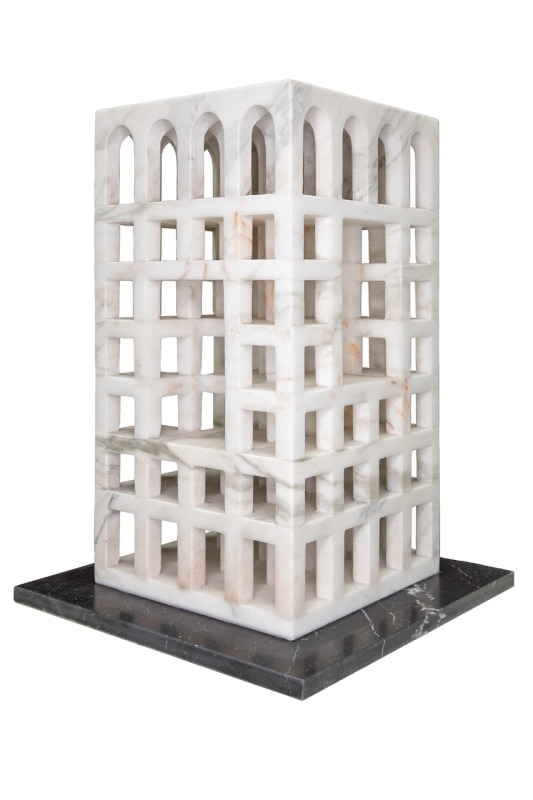
Marco Ferreri approaches the theme from a different perspective, faithful to his language of rigor and reduction. His temple develops as an essential vertical composition built around the dialogue between two colours. The overall image suggests an upward movement, a tension toward the sky that evokes spirituality itself.
Yet within this severe balance, Ferreri introduces an element of asymmetry—a subtle deviation that interrupts geometric perfection. It is a hallmark of his work: questioning order without destroying it, introducing a degree of instability that makes the object feel alive. His temple seems to reflect the human condition itself, suspended between the desire for the absolute and the inevitability of imperfection.
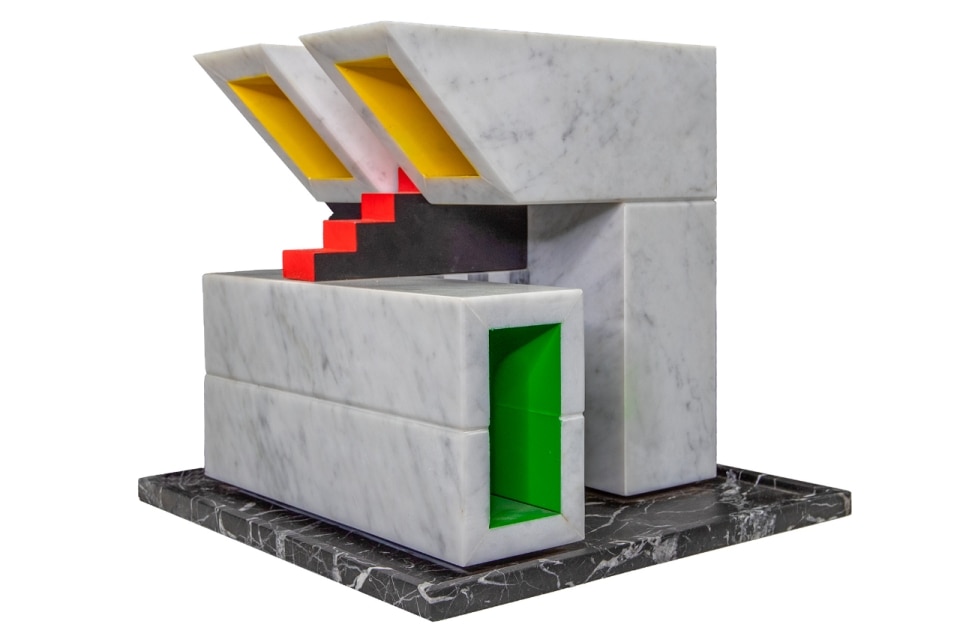
Viewed together, these twenty works resemble an ideal city. Not a city governed by urban planning rules, but a geography of ideas, memories, and visions.
They could be a temple, a tabernacle, a shrine, a sanctuary, a small monument [...] the simple or complex rituals that arise from their use: working, speaking, thinking, meditating, and eating
Alessandro Guerriero, designer, artist, and founder of the renowned Alchimia collective.
Guerriero himself speaks of “things/non-things,” of “sub-objects that are almost unusable both by people and by the system”—scenic objects conceived for an “imaginary urbanism, a tabletop urbanism.” More than complete forms, they are “proto-forms”: the simplest possible way of representing an idea, a memory, a recollection.
For this reason, they are not design objects in the conventional sense of the term. Rather, they are objects that help people reflect upon themselves, organize their symbolic and emotional surroundings, and extend their inner concerns into the external world.
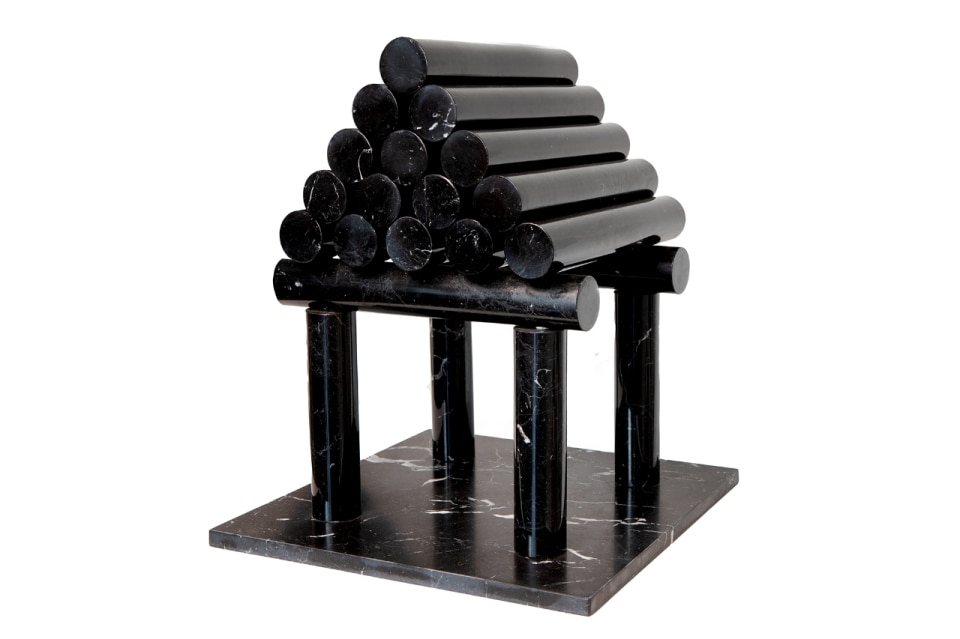
Each temple contains a preserve prepared by a chef. A food item destined by nature to be consumed is protected within a container intended to endure. The ephemeral meets the permanent. Hunger meets culture. Need meets beauty.
At a time when design often seems obsessed with the next novelty, “Opera Buona” reminds us of a simple truth: design can still be an act of civic responsibility. Not merely the production of forms, but the construction of relationships.
Perhaps this is Guerriero’s most important lesson. To keep searching for unlikely connections. To bring together worlds that would otherwise never speak to one another. To transform design into a tool for encounter. Because nourishment is not only about the body. It is also about memory, imagination, the ability to share meaning, and the recognition that we belong to the same community. In this sense, “Opera Buona” perfectly embodies Guerriero’s vision: a form of design that abandons self-referentiality to become a civic gesture, an opportunity for connection, and a tangible practice of solidarity.
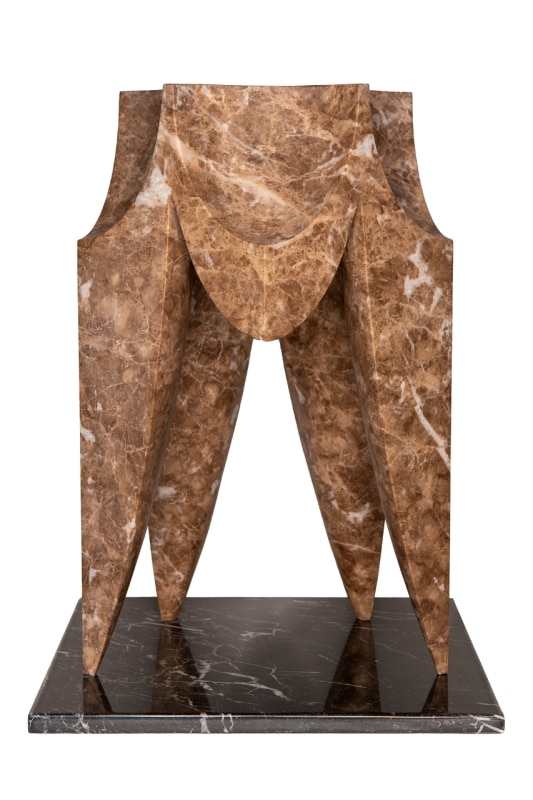
The collection will be showcased at ADI Design Museum from June 16 to 21, with the goal of providing concrete support for the activities of Opera San Francesco per i Poveri. Founded in 1959 as a dining hall offering warm meals with dignity to those in need, the institution has grown into a vital point of reference where women, men, and families facing hardship can access services and support to regain confidence, dignity, and the possibility of looking toward the future. The twenty works will ultimately be auctioned by Sotheby’s.
Opening image: Stefano Boeri, “Opera Buona” project, Adi Design Museum, Milan, 2026. Courtesy of the Adi Design Museum