


What happens when a piece of furniture stops being a simple object and begins to behave like an actor?
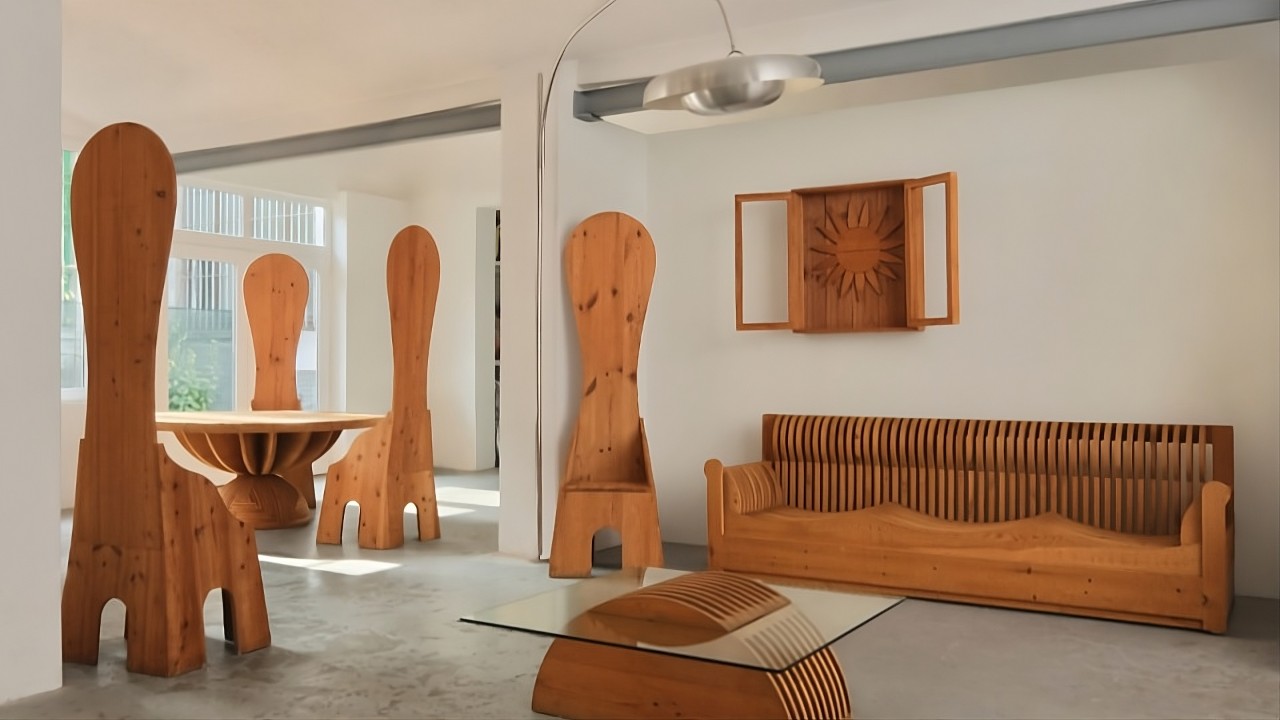
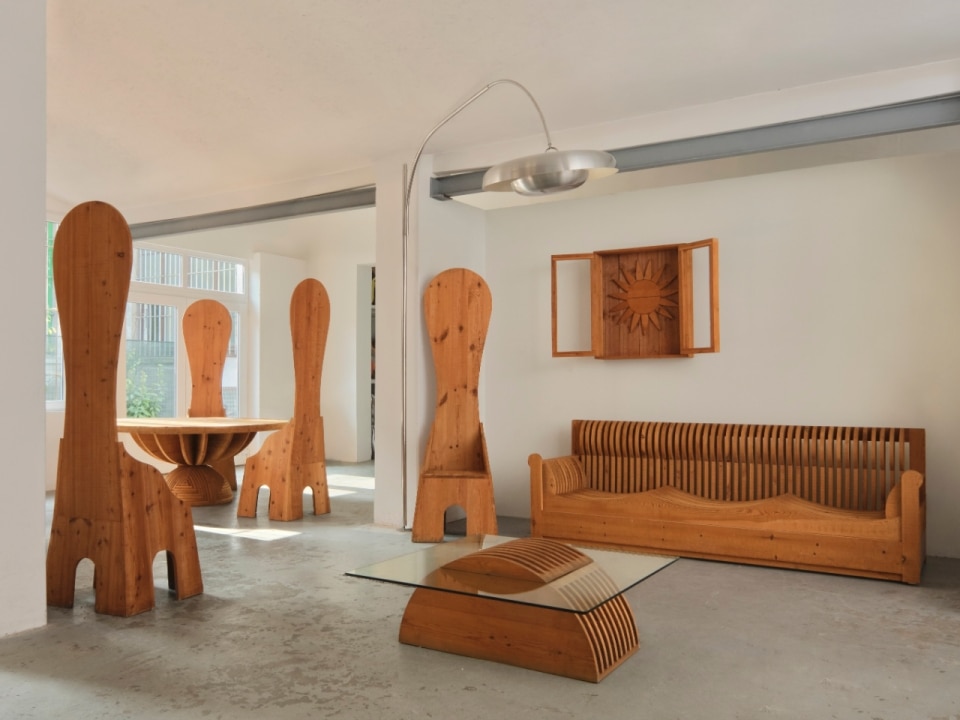
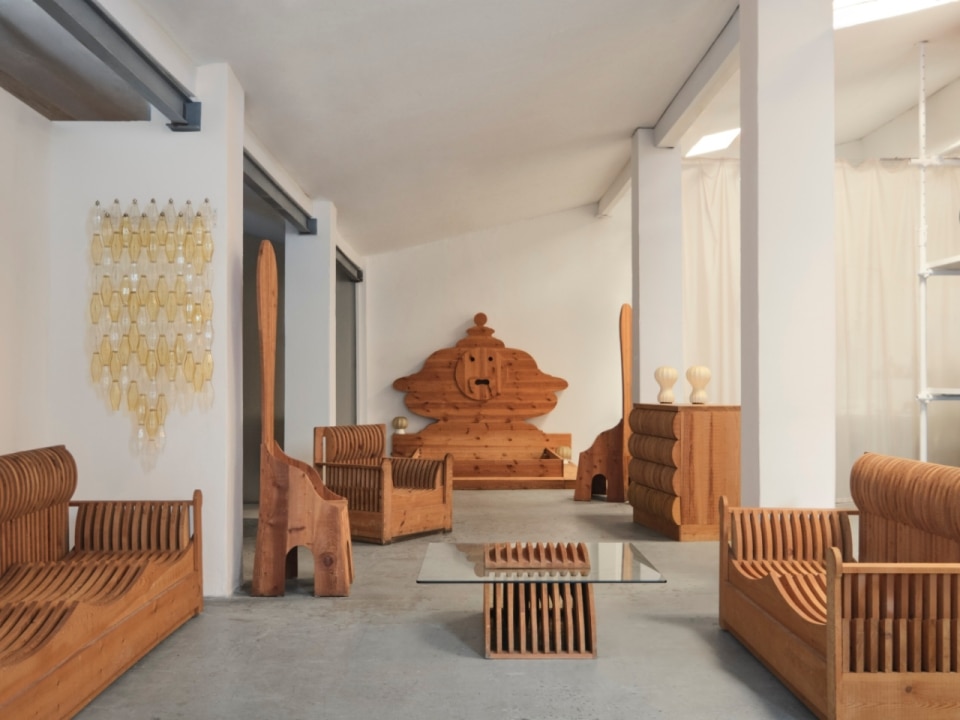
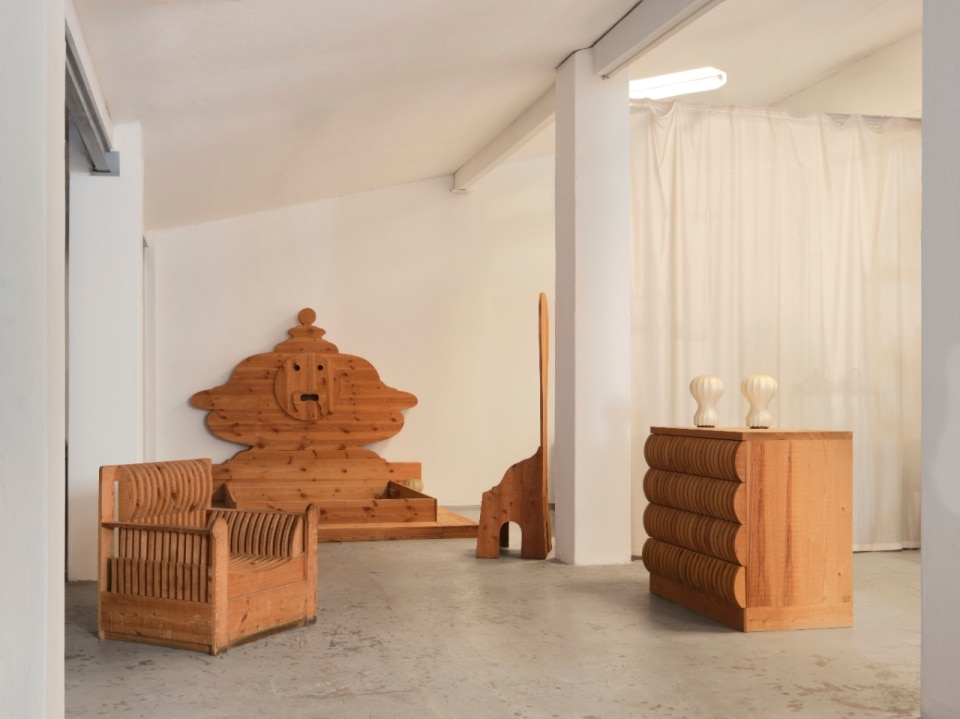
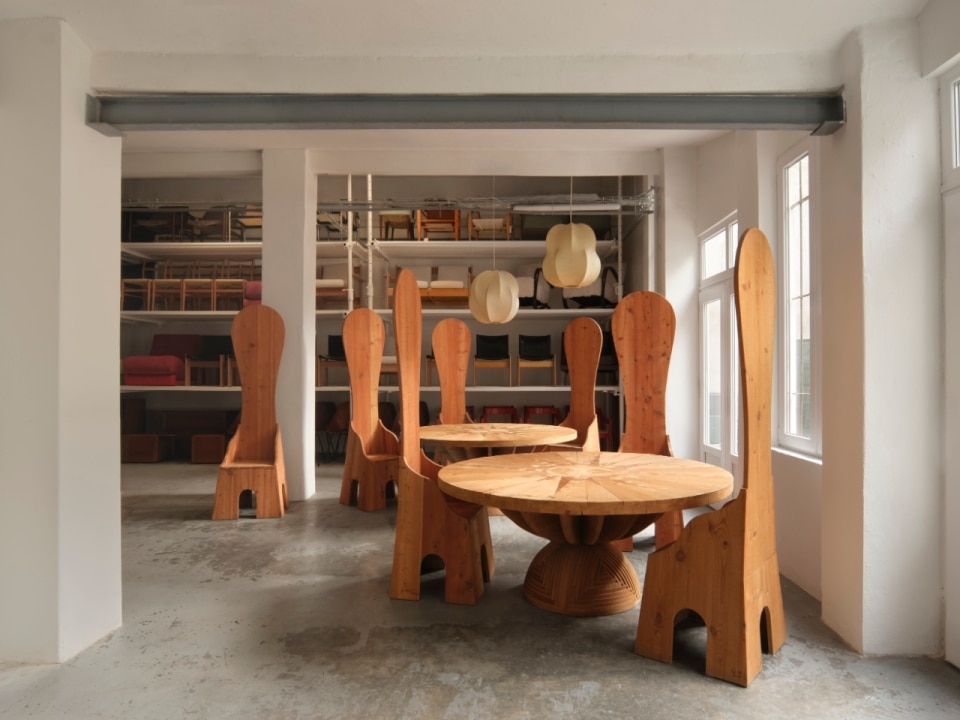
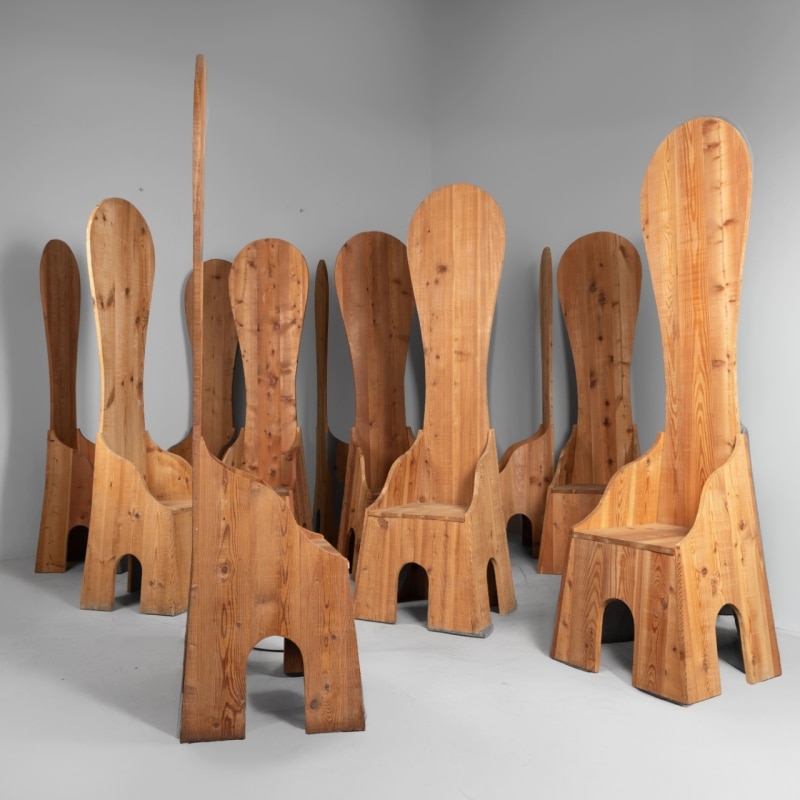
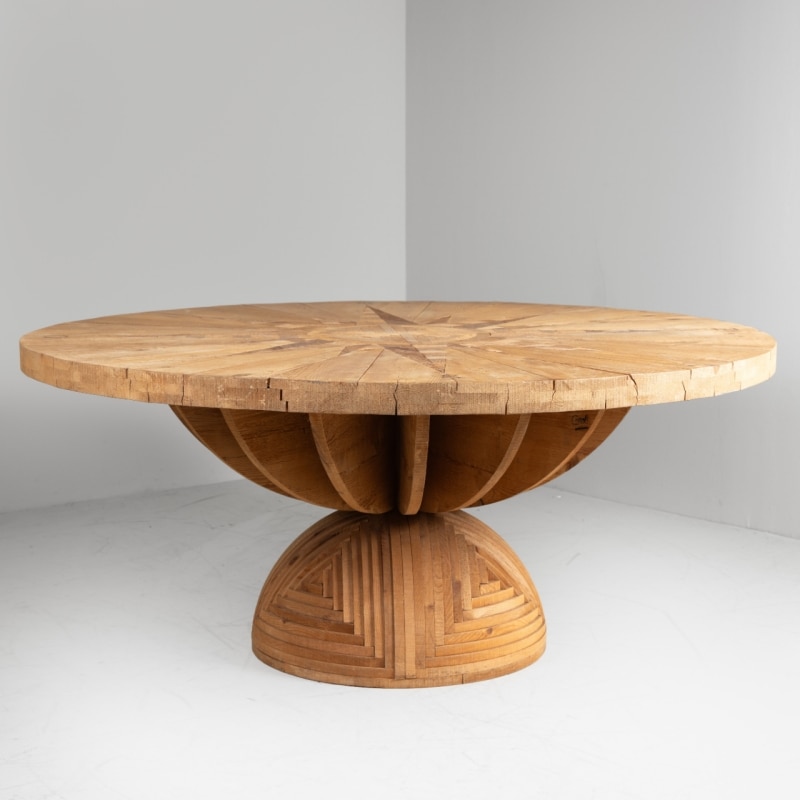
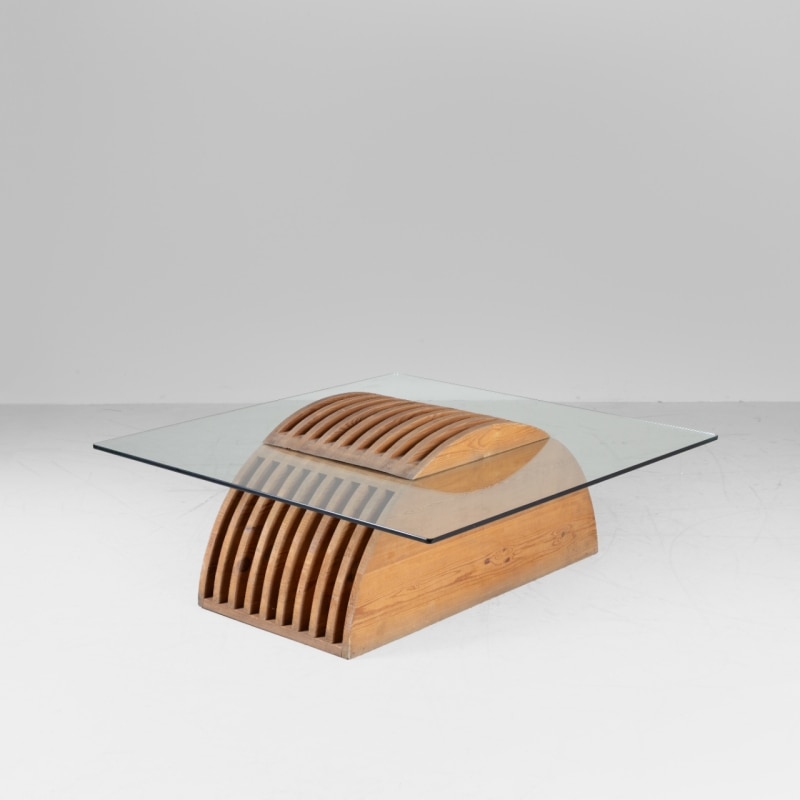
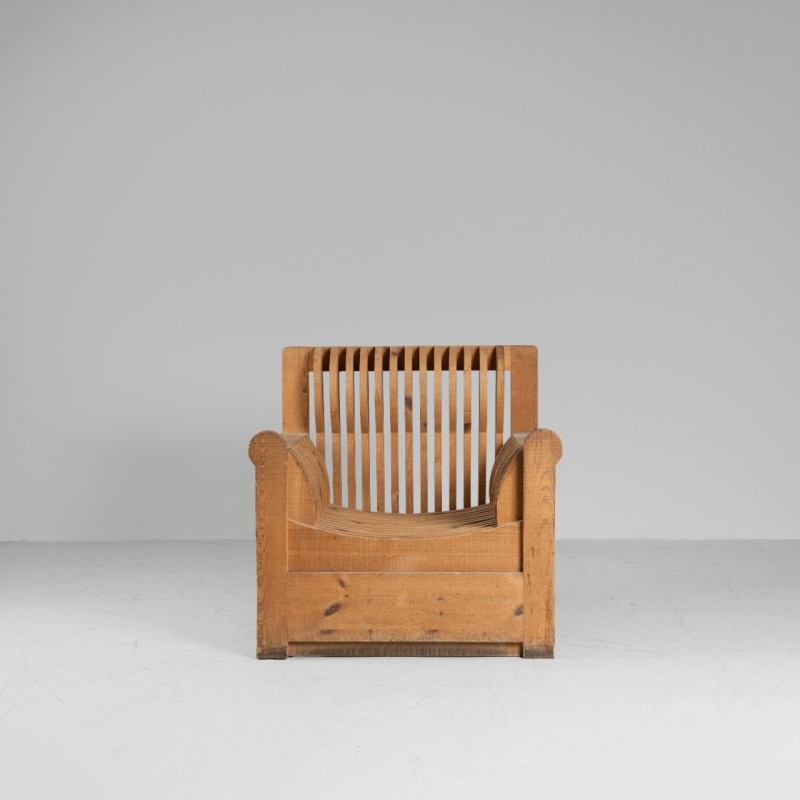
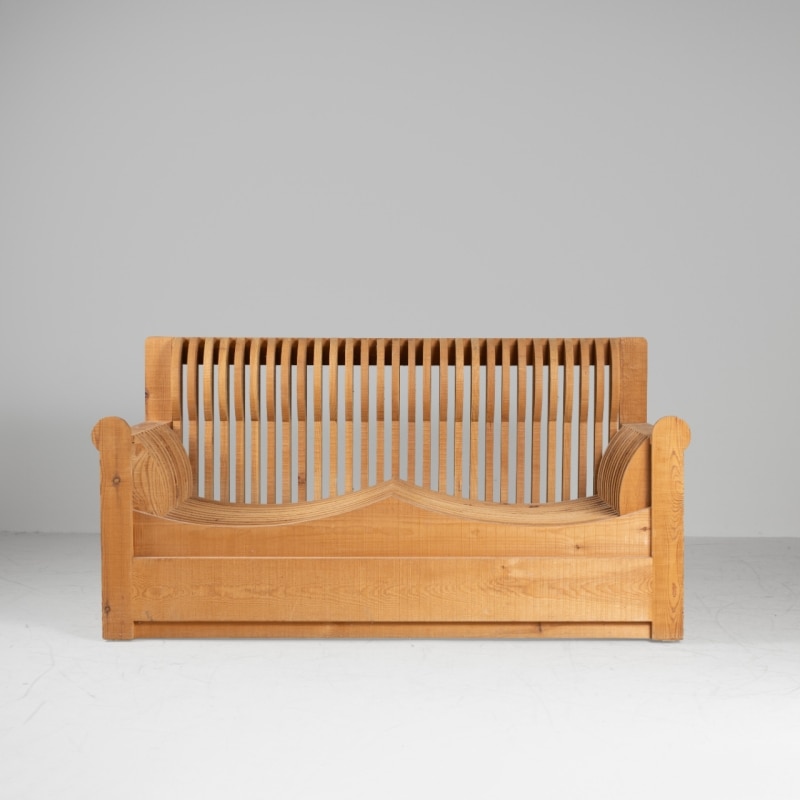
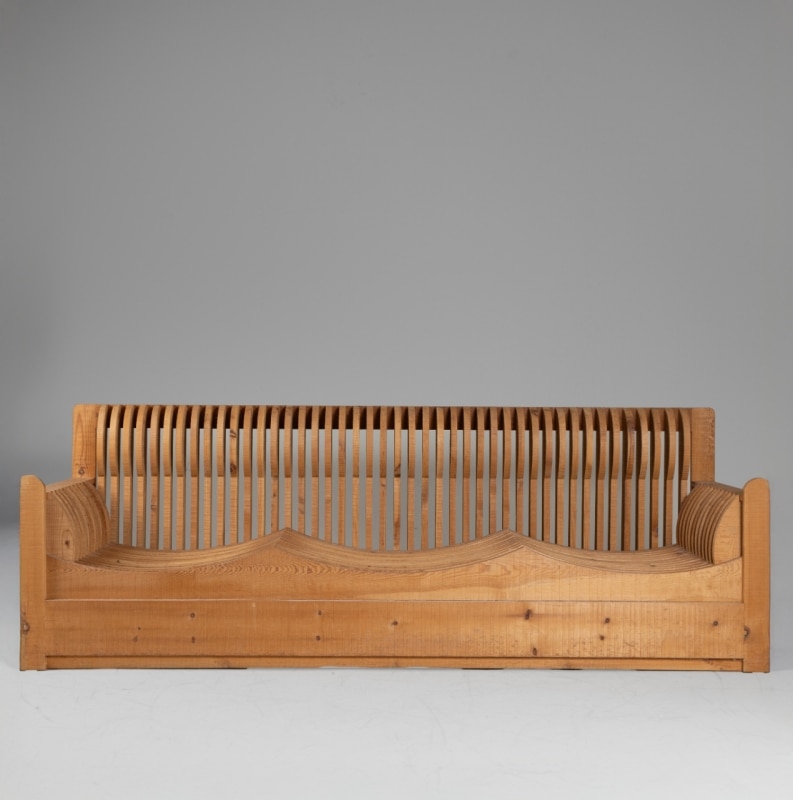
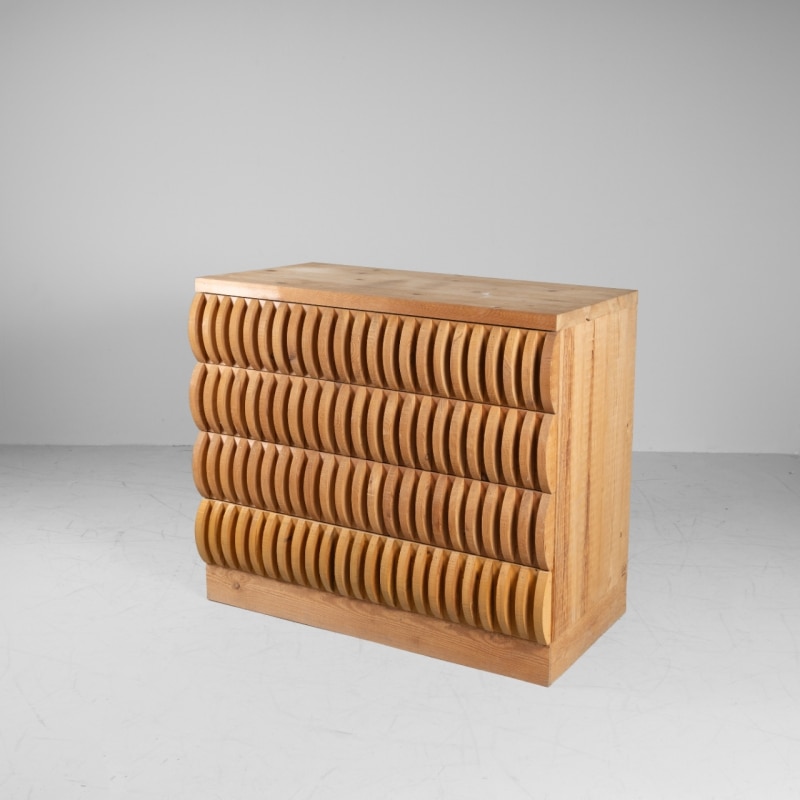
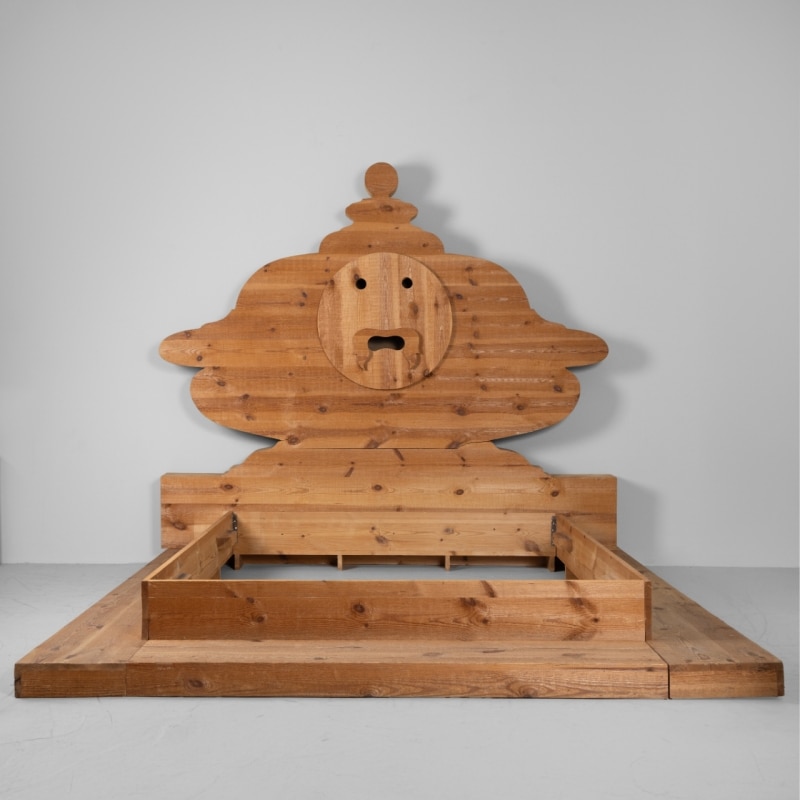
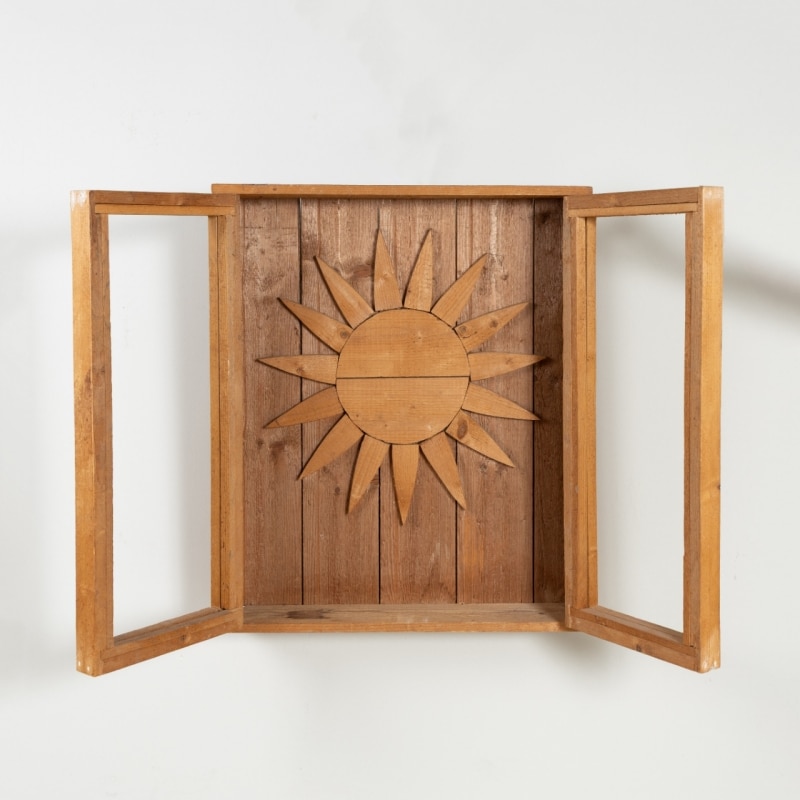
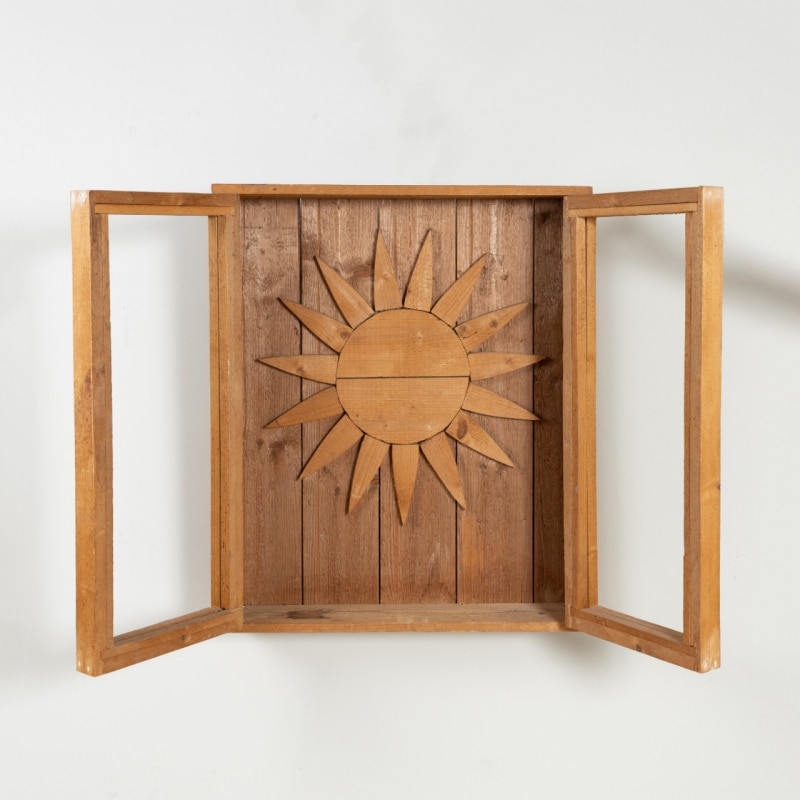
The Mario Ceroli | Domestic Theater exhibition at Carrozzeria900 demonstrates this by reconstructing an interior from Mobili nella Valle, the series that Mario Ceroli designed in 1972 for Poltronova in Russian pine. The pieces on display — from chairs as thin as silhouettes to inlaid tables, from carved sofas to chests of drawers, armchairs, the “Annabella” bed and the wooden sun “outside the window” — all share the same history: they come from the same country house, where they remained sealed away for almost fifty years.
An encounter with the public is something these works have awaited for a long time, and now that they are reunited in the gallery they appear like actors preparing for a second debut.
Every object has two aspects: a common one and a spiritual and metaphysical one, which only a few can see
Giorgio De Chirico
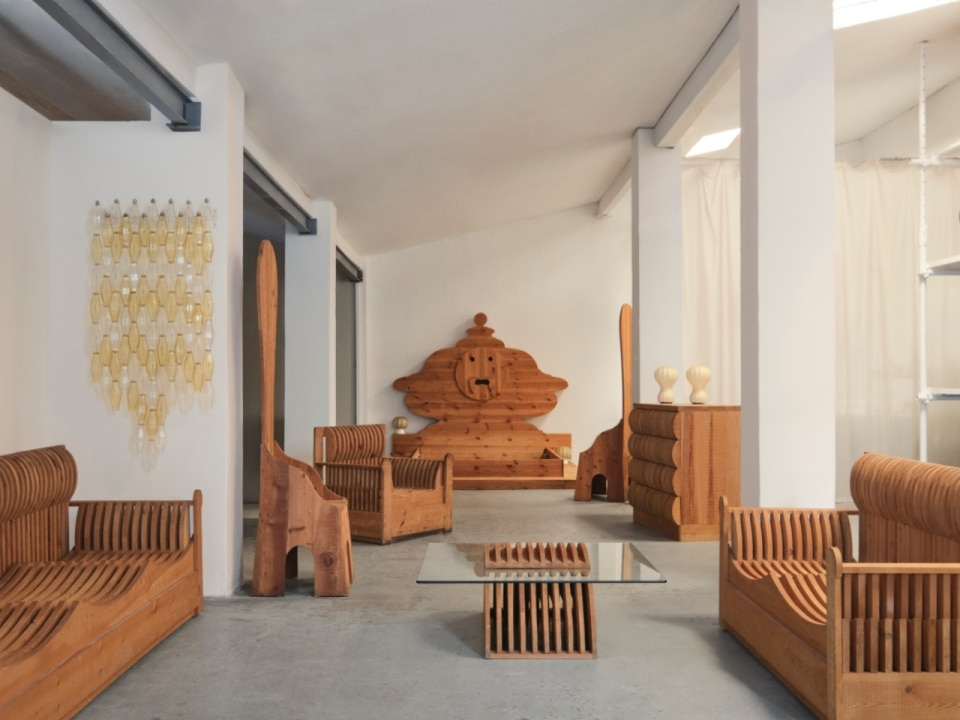
Seeing them together reveals how they were conceived from the outset as elements of a single theatrical frame.
In addition to being a sculptor associated with Arte Povera, Ceroli is also a set designer: in both his installations and his design work, he has always conceived environments as visual devices. These two traits — and his sensitivity to space as a stage — bring him close to another great master of the twentieth century.
And this is where Giorgio de Chirico comes in.
My room is a beautiful vessel where I can make adventurous journeys worthy of a stubborn explorer.
Giorgio De Chirico
In Mobili nella Valle, Ceroli draws directly on a De Chirican intuition: the idea that every object contains another dimension, invisible yet active.
The series explicitly references a group of twenty metaphysical paintings in which De Chirico isolates ordinary objects, enlarges them, and places them in improbable perspectives, amid shadows that seem to detach themselves from their source. If an object ceases to be mere function and becomes presence, it can be understood as a point of tension in space. Ceroli absorbs this principle and translates it into wood — a material that is itself alive, as suggested by the grains and knots that surface in both his sculptures and his furniture.
“In designer furniture, the relationship between the object and the person is often missing,” he noted.
And, speaking of this series: “For me, these furnishings are sculptures to touch, to use.”
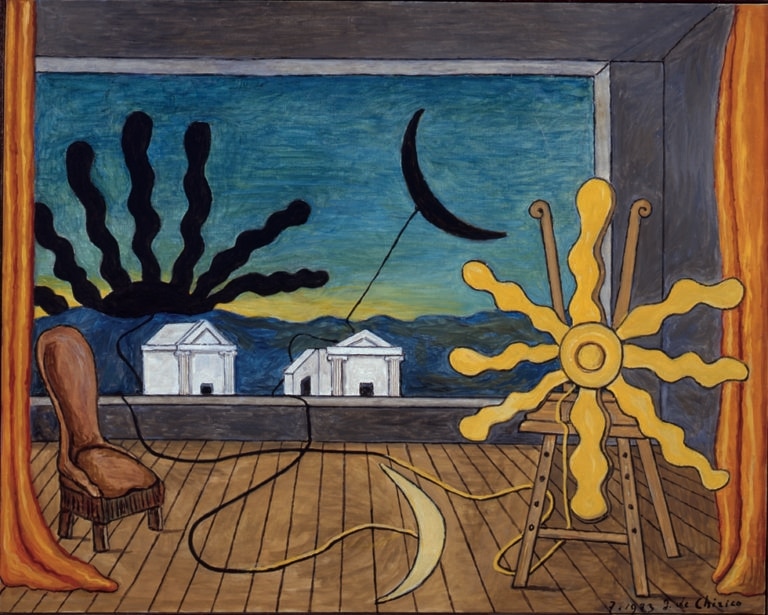
The chairs, slender and upright, seem like the three-dimensional translation of metaphysical mannequins and their elongated shadows.
The tables from Rosa dei venti echo the Maestro’s still squares, where architecture becomes symbol before function.
The undulating surfaces of the sofa and armchair from the Acqua e Terra series recall the distorted shadows that stretch across metaphysical floors — volumes that appear to float and then suddenly solidify.
The Annabella bed, with its anthropomorphic silhouette, has the almost ritual monumentality of the statues that populate De Chirico’s paintings. And then there is the wooden sun carved “outside the window”: a direct reference to motifs recurring throughout De Chirico’s work — Il sole sul tempio (1969), Sole che nasce sulla piazza (1976), Sole sul cavalletto, the piece De Chirico painted live on RAI television in 1973.
The most distant memory I have of my life is the memory of a large, high-ceilinged room. It was in the evening, in that dark and gloomy room; the oil lamps stood lit and covered by the lampshade.
Giorgio De Chirico
At Carrozzeria900, what is on view is not a house, but rather an idea of a “house.” And it is in this shift — from domestic environment to mental space — that the extraordinary, once impossible dialogue between Ceroli and De Chirico becomes unexpectedly natural.