




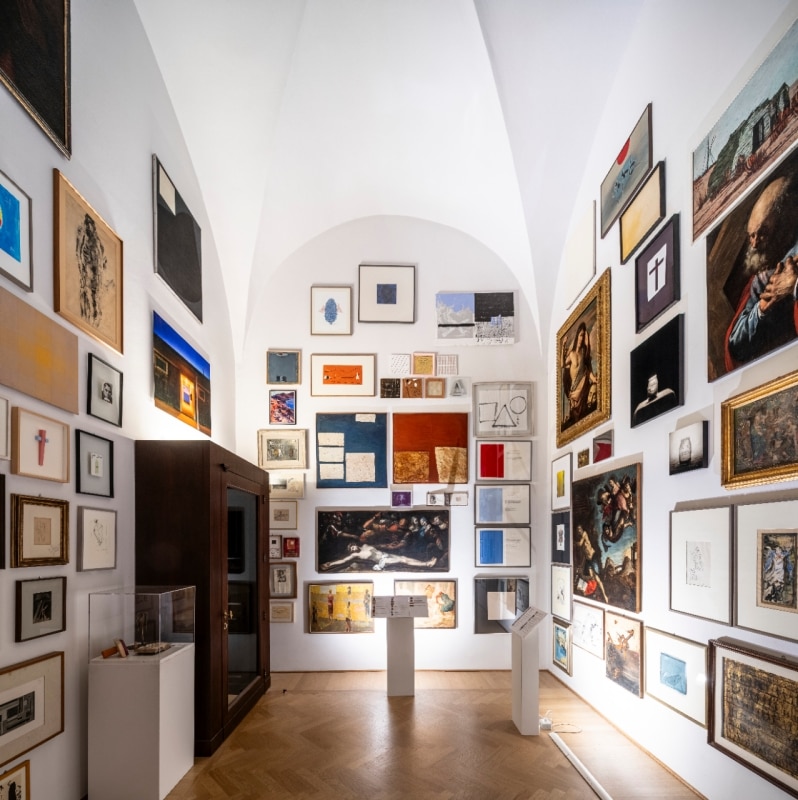
The works of Piero Manzoni, with whom she had a relationship in her twenties, were all placed close together on a shelf: Merda d’artista, Corpo d’aria. One of Lucio Fontana’s 1961 Concetti Spaziali, instead, Nanda Vigo hung above the headboard of her bed. She said it helped her fall asleep, allowing her—while dreaming—to enter one of the “cuts” by the master of Spatialism and access that other dimension of the canvas that the artist had so thoroughly theorized throughout his life.
Little is known about Nanda Vigo’s house in Milan: that it was in Porta Romana, that it also served as her studio, and that it was designed like the homes she imagined for others: lunar, spatial, interstellar. Even less is known about the works that inhabited that space: a private collection that was not exactly a collection. Yet, today, conveys everything necessary to understand the state of art in Milan between the 1950s and 1970s.
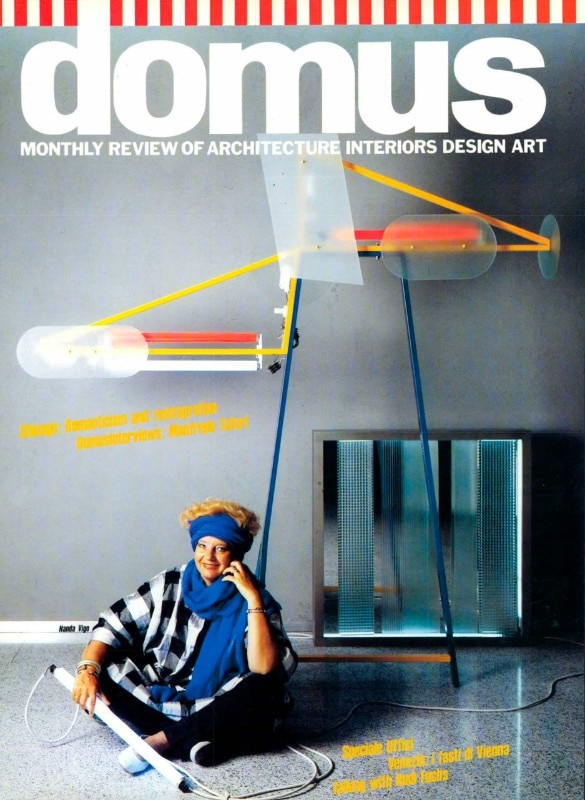
Vigo’s non-collection: an archive for contemporary art
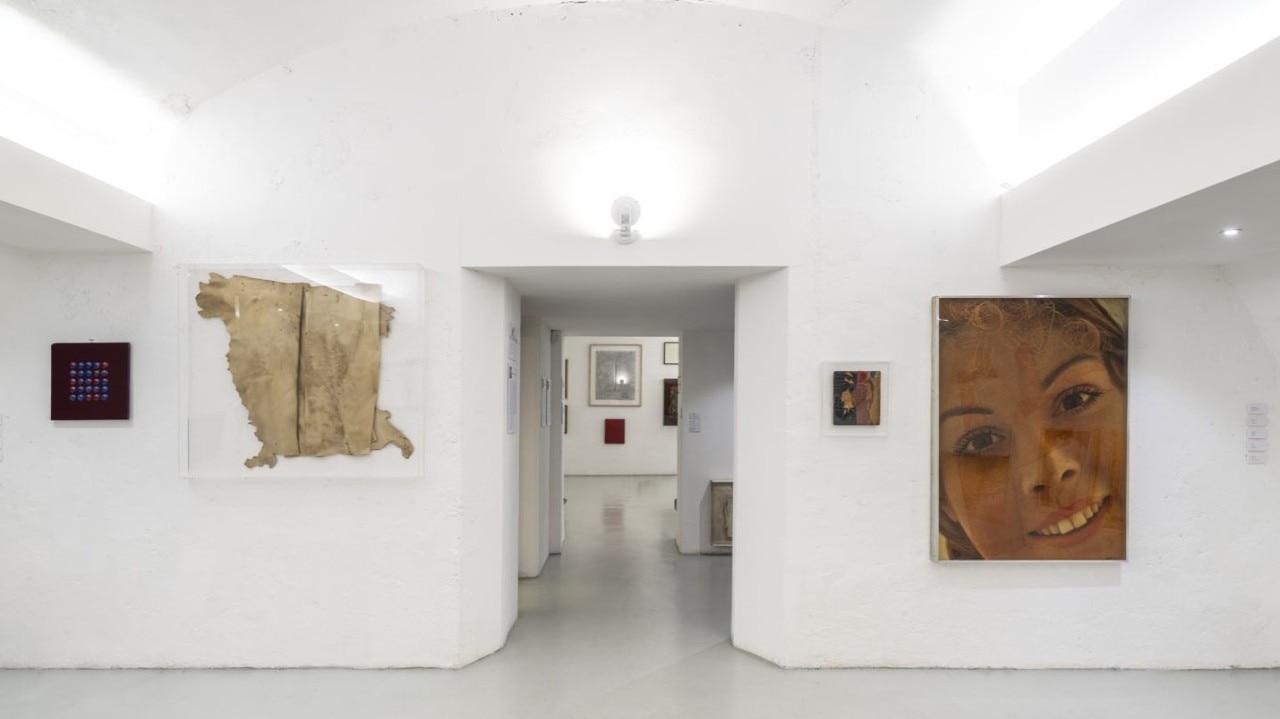
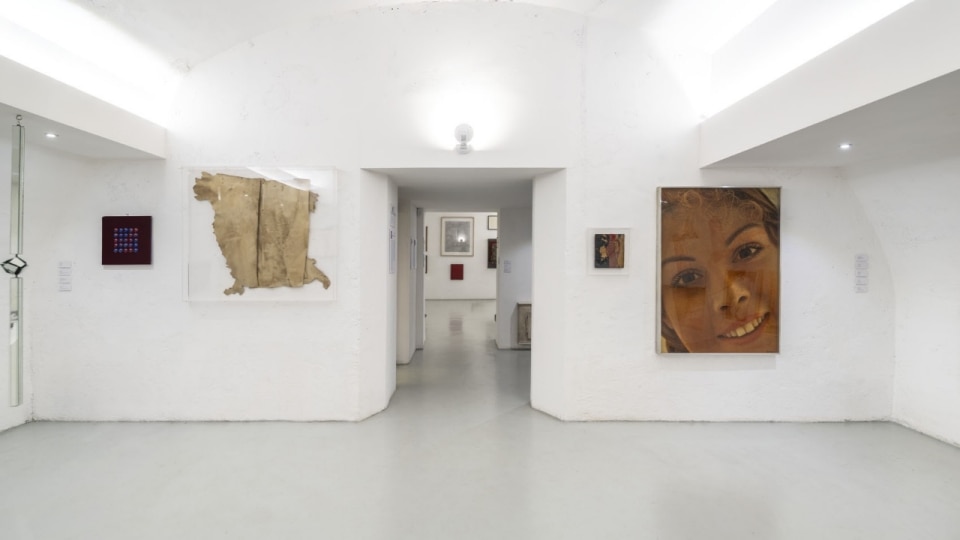
Pop Art, Spatialism, Arte Povera, Conceptual Art, décollage, the Zero Group, Arte Programmata, and all those artists who—like Vigo—built their work around reflections on light: between the 1950s and 1970s, the Italian architect brought together over 108 works that trace the course of part of a century, from the postwar period to the experimental movements of the neo-avant-gardes, from Italy to Germany and even China.
These artworks are all testimonies of a certain sensibility of the new avant-gardes born after World War II, those that wanted to clear the art world from all its conventions.
Luca Ilgrande, coordinator of the San Fedele Museum
She brought them together, yes, but she did not buy any: these artworks were gifts from artist friends, collectors, writers, and curators. Some came from the many exhibitions Vigo organized while accompanying the artists of the Zero Group around the world to spread the idea of a new art. Among these shows, the most legendary was the Zero avantgarde exhibition Vigo set up in Lucio Fontana’s Milan studio.
“These artworks are all testimonies of a certain sensibility of the Zero Group, of the new avant-gardes born after World War II, those that wanted to clear the field of all conventions of the art world as it had been known until then,” explains Luca Ilgrande, coordinator of the Museo San Fedele in Milan, referring to the movements and artists in Italy orbiting around Lucio Fontana, the man who redefined twentieth-century painting.
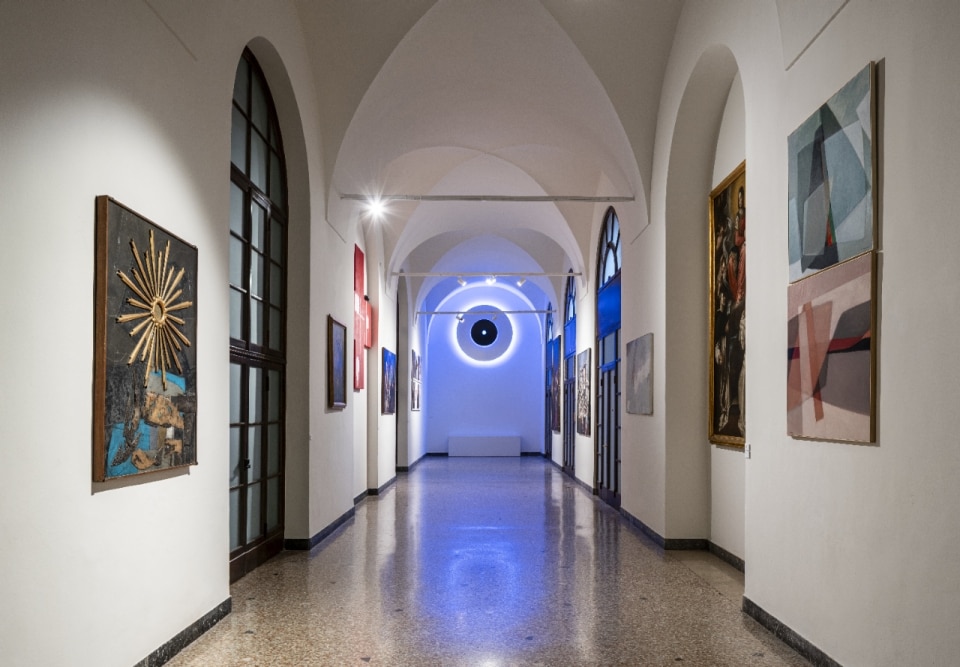
Alongside Manzoni and Fontana, there are Joseph Beuys, Christo, Andy Warhol, Luciano Fabro, Mimmo Rotella, Mario Schifano, and Jan Fabre, as well as Vincenzo Agnetti, Hisiao Chin, Emilio Isgrò, and Otto Piene: all present in Nanda Vigo’s studio-apartment. They surround her, safeguard her, and protect her. So much so that she herself defined that home and that collection as “a collector of memories”. Also, “my second skin.”
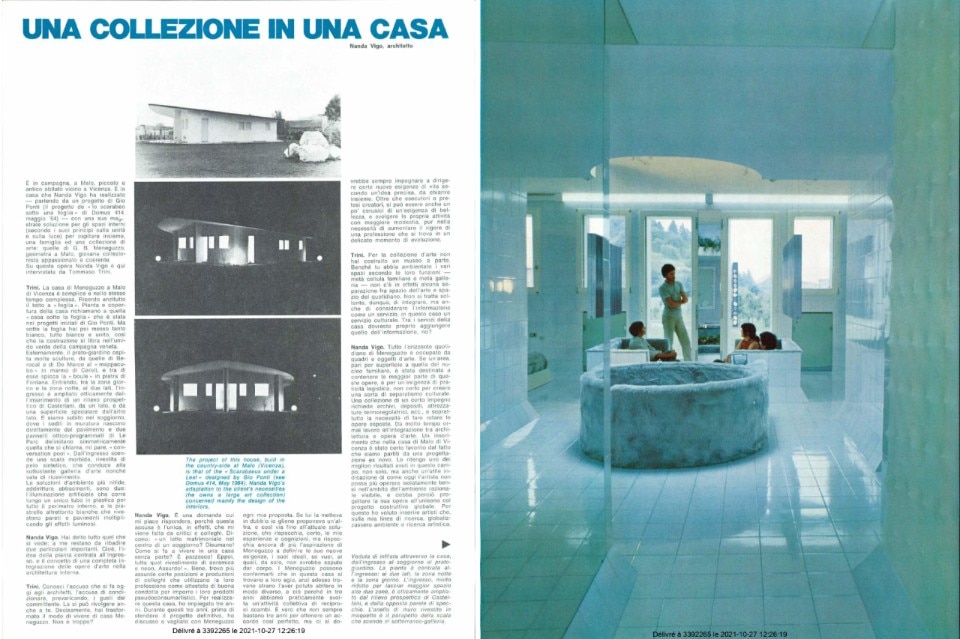
The collection also includes an artwork of Gio Ponti, architect and founder of Domus, with whom Vigo had collaborated on the design of the house named Lo Scarabeo sotto la foglia (The scarab under the leaf).
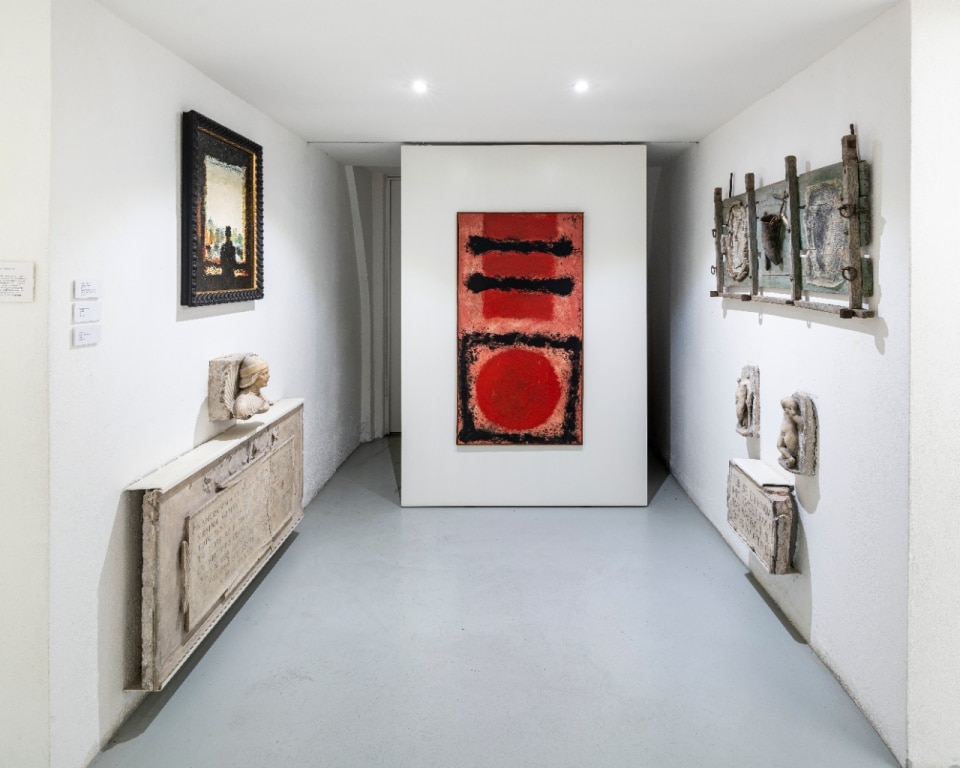
Nanda Vigo’s art collection at Museo San Fedele in Milan
After her passing in 2020, Vigo donated the collection to the Museo San Fedele through a testamentary bequest.
Inaugurated in 2014, the museum is housed in the historic sixteenth-century church of San Fedele, very close to the Duomo of Milan, and is an offshoot of the Galleria San Fedele, which, founded in the 1950s, built a long history of relationships with experimental postwar artists, designers, and curators—including Vigo herself, whose funeral in 2020 was held inside the church, beneath a work by Lucio Fontana.
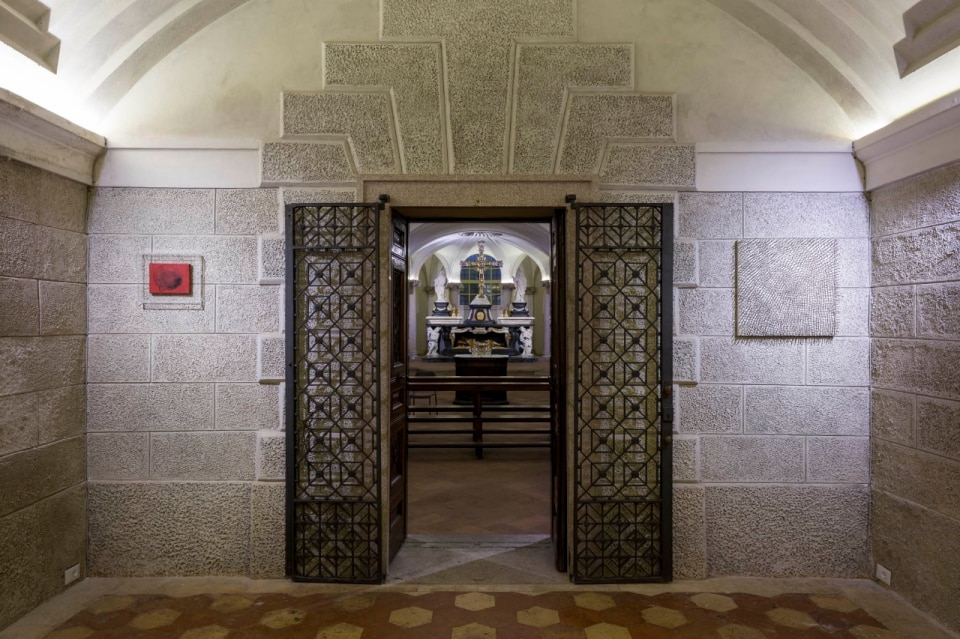
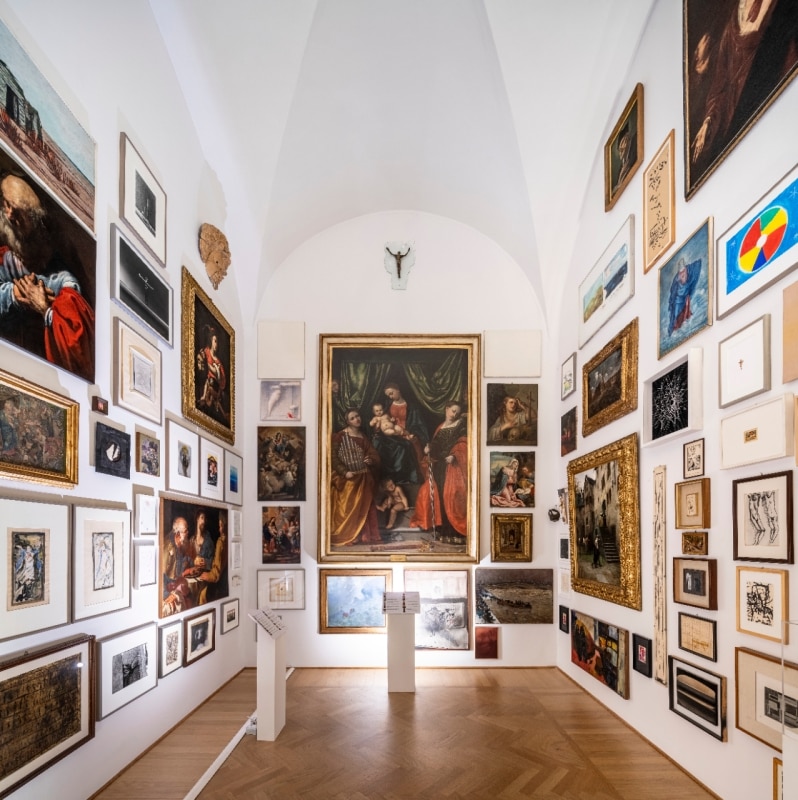
Today, Nanda Vigo’s “Private Collection” occupies two rooms connected to the crypt (called Genesis Space) and, like the rest of the contemporary collection, is displayed alongside a series of paintings—mainly from the Mannerist period—belonging to the church’s centuries-old heritage.
Nanda Vigo and Museo San Fedele at BookCity 2025
On the occasion of BookCity 2025, the annual literary festival promoted by the Municipality of Milan, this experience—and this previously little-known collection—finally takes shape in a volume: Nanda Vigo. Private Collection. From Lucio Fontana to Piero Manzoni: the Fabulous ’60s, published in Italy by Ancora Editrice. The book will be presented on Tuesday, November 11, at 6:00 pm at the Church of San Fedele, followed by a visit to the collection.
- Show:
- Un salto nei favolosi anni ‘60: Nanda Vigo Private Collection (A Leap into the Fabulous ’60s: Nanda Vigo Private Collection)
- Where:
- San Fedele Cultural Foundation
- Dates:
- 11 November 2025, 6:00 pm
- During:
- Bookcity Milano 2025