


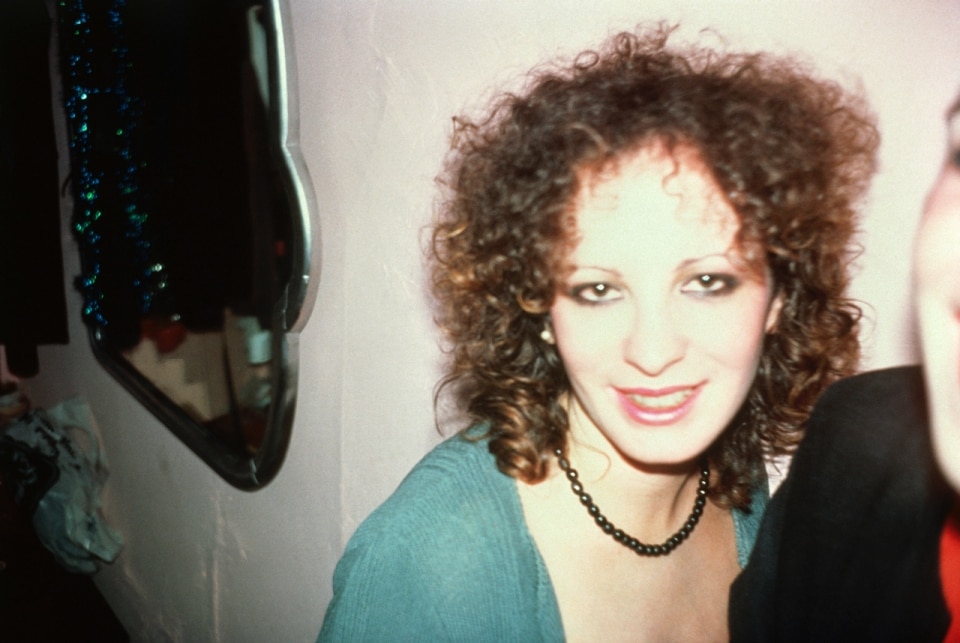
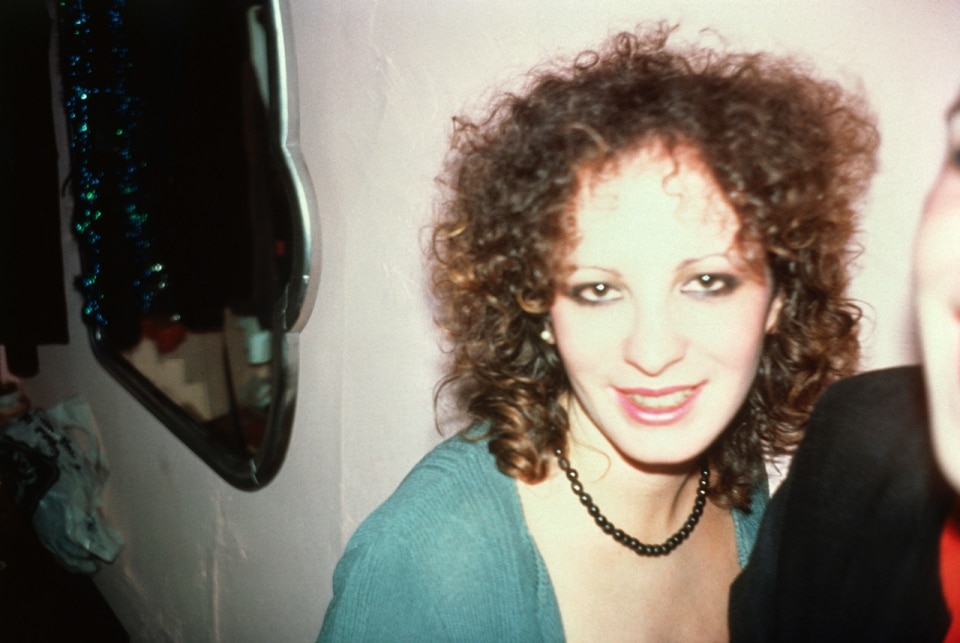
"I would like to talk about more elegant things, or about my works, but for the last two years I have lived only thinking about what you have just seen." This is how U.S. photographer Nan Goldin closes the press conference presenting the exhibition This Will Not End Well in Milan, at the Pirelli HangarBicocca through February 15, 2026, after showing her latest work titled Gaza (2025): an unedited and harrowing montage of soundless images from Palestine, taken from the social profiles of journalists and ordinary people who helped document the genocide of the Palestinian people. Initially planned only for the press preview, the video remained on loop for the first days of the exhibition, visible to the public as well. With the exhibition's opening speech at the Neue Nationalgalerie in Berlin, Nan Goldin had already drawn the attention of the German and international public to Gaza, and even last summer in Arles, at the presentation of the Women In Motion Award, she had shown some images of death and destruction, defining what's happening in Gaza as the first genocide to be streamed live.
As she herself states in a dialogue with Mahmoud Khalil published in Dazed in September 2025, in which she also reports on the negative reactions she received from the art world and collectors regarding her actions for Gaza, "I do all the things that activists do without the label. It's what keeps me alive" ("I do all the things that activists do without the label [of activist]. It's what keeps me alive.").
To explain why Nan Goldin's work is so naturally and inherently political, there is a passage from a 1989 text by the artist, writer, activist, and close friend of hers, David Wojnarowicz, published in the exhibition catalog, in which Wojnarowicz reflects on how the variety of representations of reality makes the world more welcoming to the individual. Turning private experience into public, he says, is a subversive act that dismantles the illusion of a homogeneous society and reveals the plurality of identities. Even personal pain, when made public, becomes a political tool: it breaks down prejudices and denounces the indifference of institutions, transforming absence into presence.
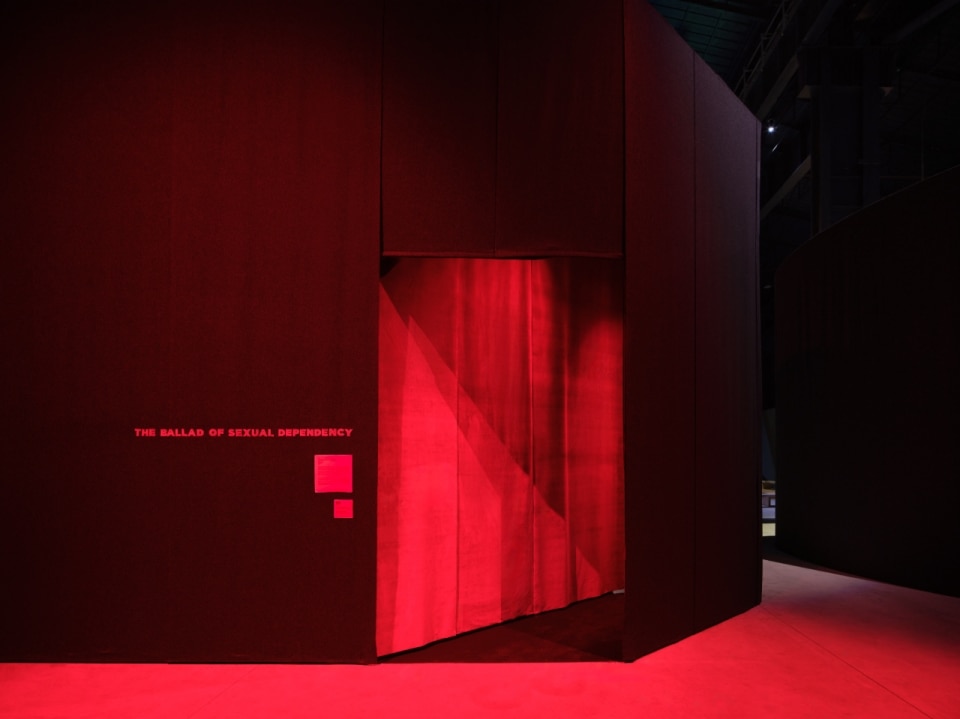
The exhibition at Pirelli HangarBicocca
"In art school you had to show what you were doing, but there was no darkroom, so I couldn't show the prints. That's why I had to show them as slideshows", Goldin says in a 2020 Darryl Pinckney interview on Aperture. Out of a necessity then, but also out of a passion for Hollywood classics and avant-garde European cinema, come Nan Goldin's slideshows, presented in an exhibition that really does allow the possibility of entering without knocking, and being welcomed, into the intimate and painful story not only of Nan Goldin's art, but also of her life. The title This Will Not End Well, introduces with grim irony that complex sensibility characteristic of Goldin's work, and even more so of these "cinematic" compositions, where joy and pain, tenderness and violence, loss and love, find space simultaneously without leaving the viewer with the possibility of distinctly reading their own emotions, as one image fades to make way for the next. Through her photographs, Nan Goldin delves into the memory and sensibility of those who look, bringing to the surface in each the lexicon of a silent love discourse, which as Barthes writes "is of an extreme loneliness."
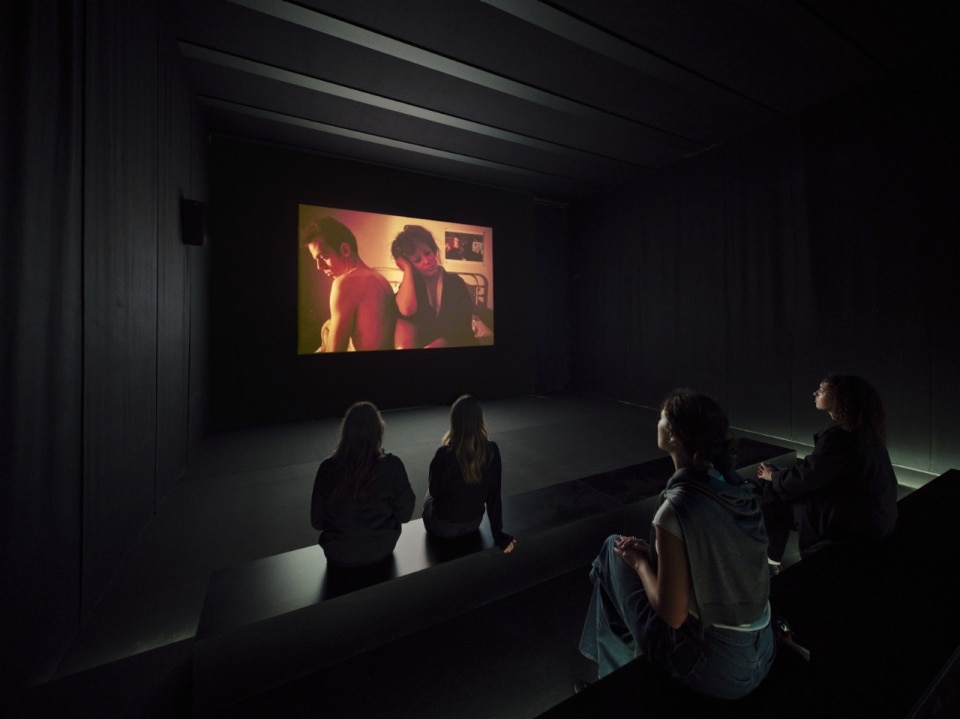
This retrospective presents Nan Goldin as a filmmaker: editing turns out to be for the artist an operation of care, of emotional exploration, whether understood as an extemporaneous act – as in the early screenings of The Ballad of Sexual Dependency in New York clubs in the 1980s, when Goldin inserted slides into the projector almost choosing them on the spot for her chosen audience, the protagonists of the shots – both by thinking of it as a looking back process, considering the continuous rearrangement of the sequences elaborated by the artist over the decades, bringing back into the present a reality of which she was not only a witness, but also a participant.
There is another important element: as Roberta Tenconi and Lucia Aspesi, curators of the Milan exhibition along with Nan Goldin, recount, collaboration between institutions and with other artists has been a founding element of this retrospective, just as relationships have been and still are the lifeblood of the work of the American photography. The architectures designed by Hala Wardé host the slideshows in a kind of "village", where each pavilion dialogues with the images, recreating a cinematic, screening room dimension. The velvet walls at the entrance to each space are illuminated and distinguished by precise color choices, and in the darkness of the aisles they become an invitation for the visitor to enter.
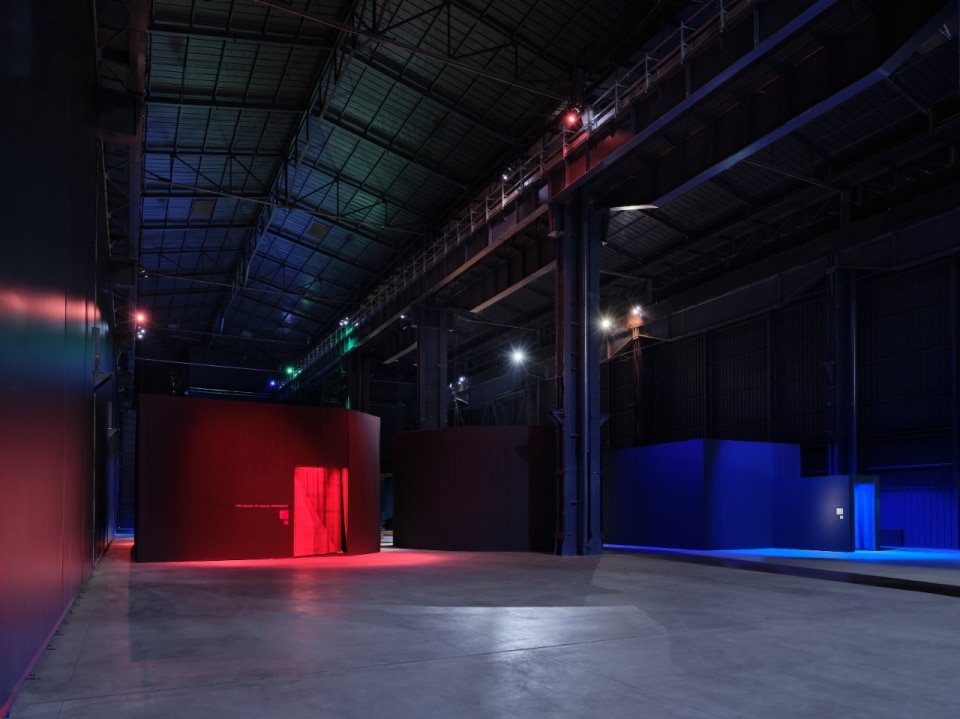
The five thousand square meters housing the seven pavilions are flooded by the sound of Bleeding (2025), a site-specific installation by Soundwalk Collective. The "sound bleed" is an unwanted sound that creeps into a microphone from a source other than the intended one. From the exhibition halls there is a continuous sound leakage into a substrate of echoes and vibrations in space, which Stephan Crasneanscki and Simone Merli have chosen as the basis for this work. Binaural recordings from previous retrospectives in Stockholm, Amsterdam and Berlin reworked by a regenerative synthesizer, create an acoustic threshold suspended in the penumbra of the aisles, creating a kind of decompression space for those who walk through it after seeing the exhibition and at the same time a waiting space for those who approach the works. The seven pavilions are all arranged at the bottom of the floor plan, each somewhat shaped in relation to the content of the works. There are eight slideshows on display: alongside the six already known, the exhibition at Pirelli HangarBicocca presents two works for the first time in a museum space – You Never Did Anything Wrong (2024) and Stendhal Syndrome (2024).
Friends, a family
To fully understand Nan Goldin's works, it's necessary to look at the biographical aspect that permeates her work. Born in Washington D.C. in 1953, Nan Goldin's life as a young teenager is marked by the trauma of the suicide of her older sister Barbara Holly Goldin, who would become a constant presence in her work. Sisters, Saints, Sibyls (2004-2022) especially honors her memory: a three-channel video installed in the rough, bare space of the Cube along with sculptural elements, recalling the work's first Parisian exhibition at the Hôpital de la Salpêtrière in 2004. Here a structure of innocent tubes is transformed as if into a women's gallery from which to watch a sacred scene, with sunlight entering through a small window reopened for the occasion. Nan Goldin's voice greatly amplifies the power of the composition, narrating the Santa Barbara story, that of her sister, her own adolescence, and some later moments characterized by addiction, hospitalizations, and self-harm.
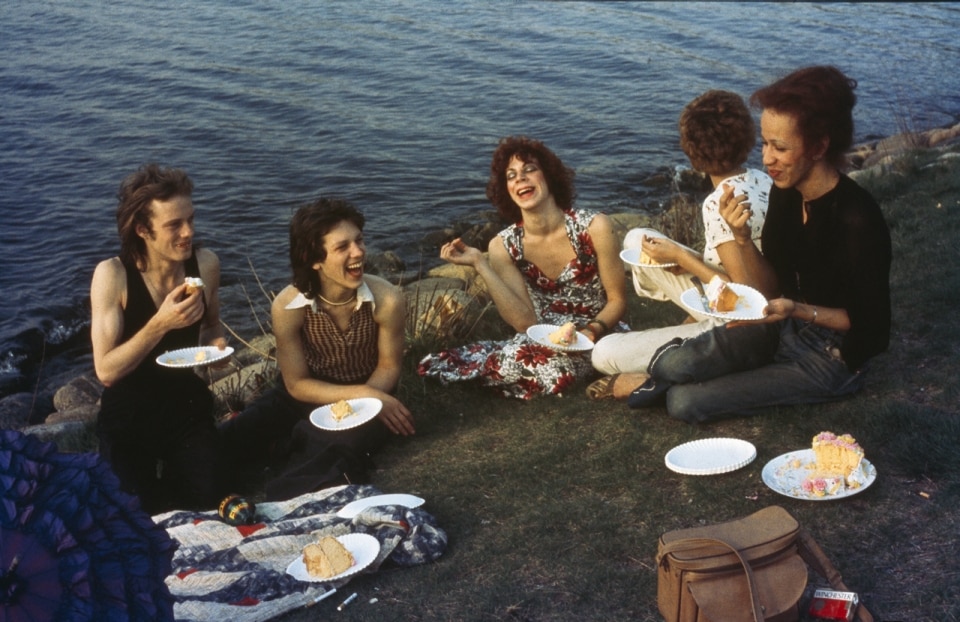
From a very young age, Nan Goldin found in photography a way to overcome the trauma of loss. At Satya Community School, a libertarian school in Massachusetts, she learned to use the Polaroid camera and in the 1970s moved to Boston, where there was The Other Side, a queer club that also gives the title to one of the slideshows in the exhibition. It is a tribute by Nan Goldin to her transgender friends, her family of choice, whom she began photographing at that time of strong social stigma. The work, spanning from 1992 to 2010, witnesses – as the artist writes in 2019 – "the courage of those who transformed the panorama to allow trans people the freedom they have today. The invisible has become visible".
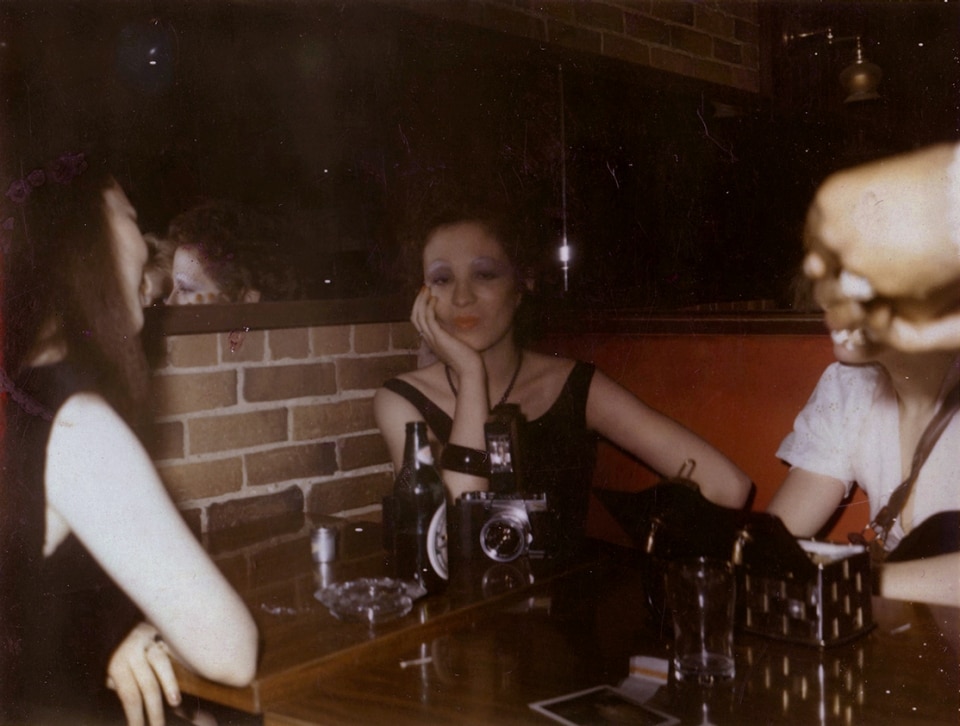
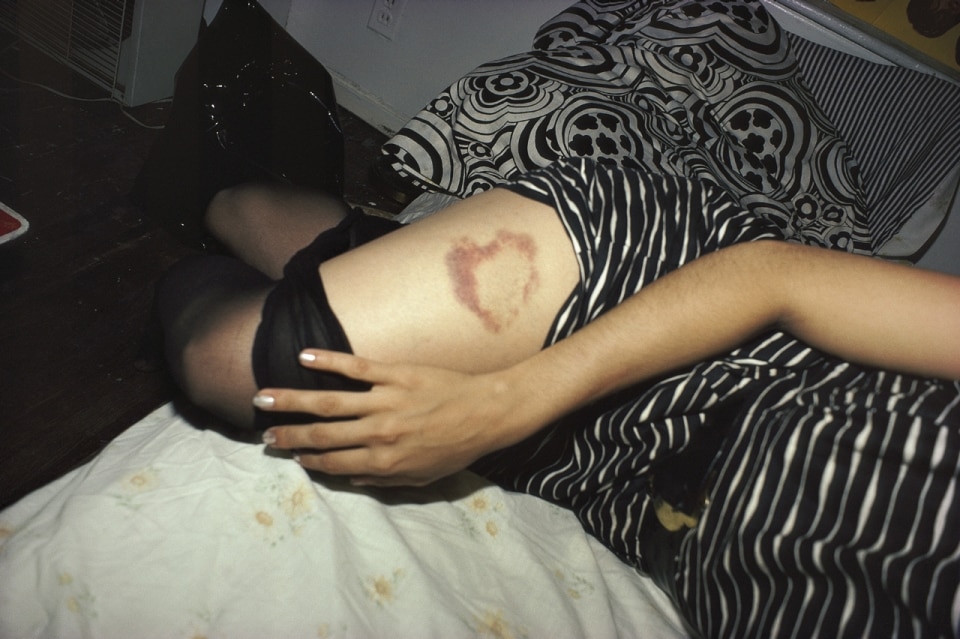
In 1978, she moved to New York, on the Lower East Side, gravitating between the Bowery and Times Square's Tin Pan Alley where she worked with Maggie Smith, a woman very important to Goldin, who helped her focus also on the political potential of her work. It is from her life in New York's queer community that comes The Ballad of Sexual Dependency (1981-2022), Nan Goldin's richest and most significant work, a stream of more than seven hundred slides projected in sequence, accompanied by a soundtrack that mixes Velvet Underground, Yoko Ono and Louisiana Red, which has been reworked several times by the artist over the decades. Not a reportage, but a visual diary, in which love, violence, friendship, and loss are interwoven without mediation. From the eyes of the people portrayed, where all their vulnerability resides, Nan Goldin's presence is felt, reflected in the faces of her friends. "When she photographs people naked, it's always the face that looks the most undressed", writes Anne Swärd in the exhibition catalog. This is what distinguishes Nan Goldin from her contemporary photographers and what makes her a pioneer of a certain way of photography that is more popular today: she is always inside the picture, even when she can't be seen, never just behind the lens.
All the beauty and the bloodshed
In the late 1980s, Goldin, meanwhile working with ACT UP and Visual AIDS, brought together HIV-positive artists, artists who had died from the disease or whose art responded to the crisis in the exhibition Witnesses: Against Our Vanishing (Artist Space, New York, 1989), an occasion that transformed grief into collective memory. Out of the losses that AIDS and addiction have inflicted on Nan Goldin's community, begins Memory Lost (2019-2021), one of the most poignant works in the Milan retrospective and the most relevant since The Ballad, in which Goldin confronts the effects of opioid addiction, a health emergency still ongoing in the United States, through photographs and video fragments retrieved from her own archive, restoring the vertigo of broken memory. Sirens (2019-2020), projected in the pavilion next door, is its counterpoint: a montage of film sequences and dreamlike visions that evoke ecstasy and drift, the promise and doom of pleasure.
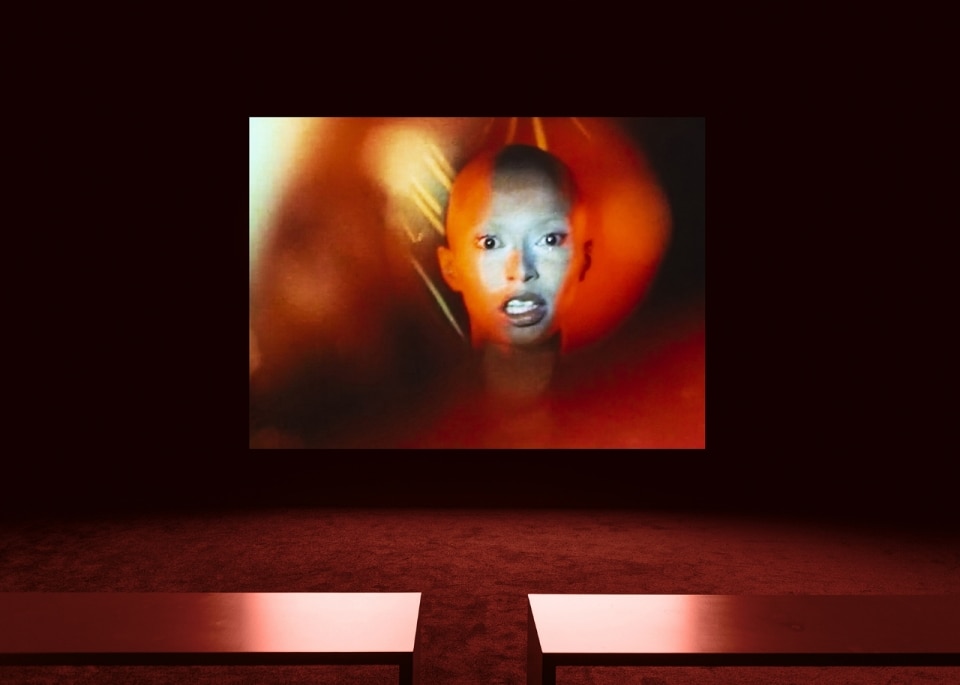
All the Beauty and the Bloodshed - the title of Laura Poitras's 2022 documentary that chronicles Nan Goldin's biography with an emphasis on her public battle with the P.A.I.N collective against the Sackler family and the opioid crisis - stems from a note written by Nan Goldin's sister Barbara's doctor: in the report, the doctor observes that her vision of the future seems to anticipate "all the beauty and the bloodshed". That phrase, simple and terrible, encapsulates like an omen an existence suspended between grace and injury, between the urgency of art and the necessity of struggle.
Childhood, myth, and desire as language
Beginning in the 2000s, Goldin expands her thematic horizon, yet maintains the same emotional urgency. In Fire Leap (2010-2022) Nan Goldin portrays the children of friends and godchildren, capturing the freedom and autonomy of children as creatures "from another planet", endowed with an original knowledge that the patterns of society eventually erase. These images, made between 1978 and 2014, and collected in the volume Eden and After (Phaidon, 2014), chronicle birth, play, affection, and discovery, observing the way young children relate to each other and to adults. Accompanied by a sound montage of songs sung by children's voices – including a moving choral version of Space Oddity – Fire Leap is a great childhood album, like the one every parent keeps in a drawer, and which every child goes back to flip through every now and then in search of something that is different for each one each time.
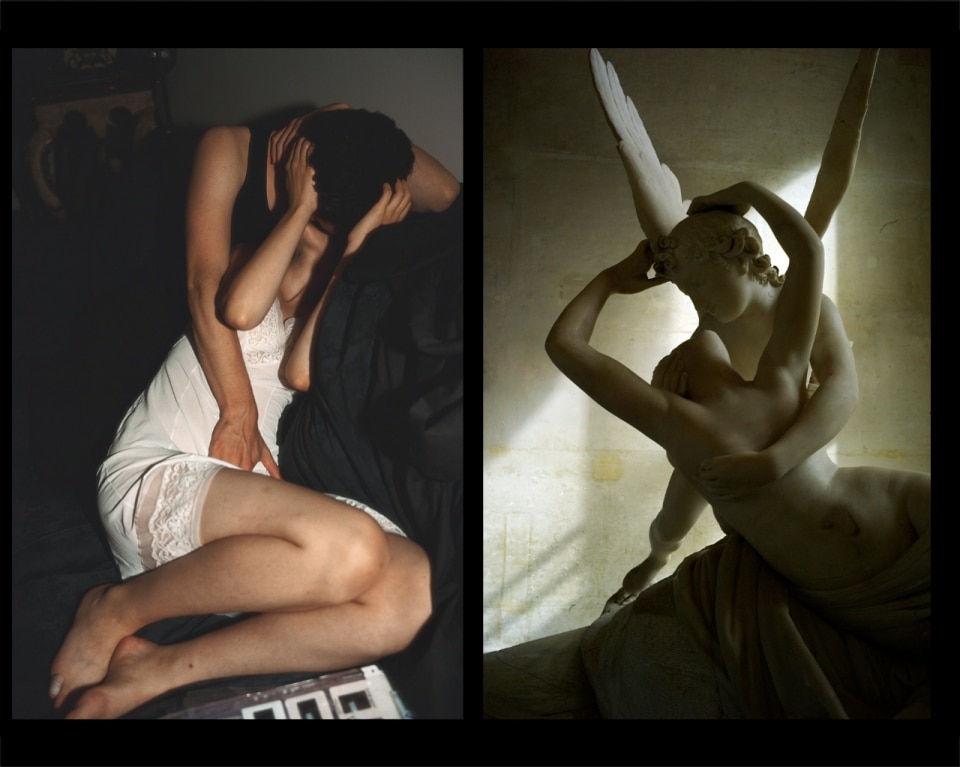
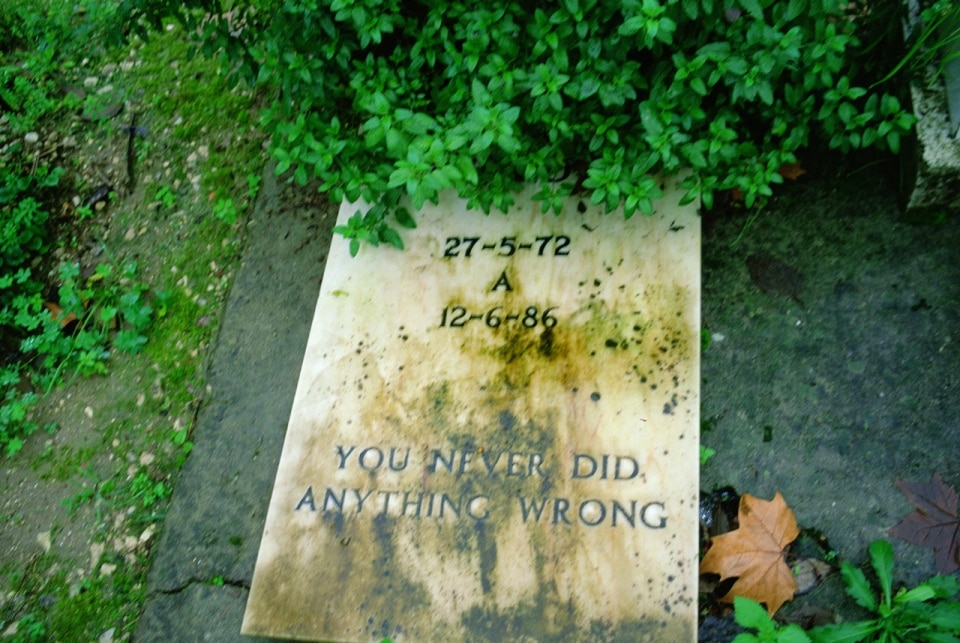
Among Nan Goldin's favorite works in the exhibition, other than Memory Lost, is You Never Did Anything Wrong (2024), a film shot in 16mm and Super 8, which stems from an ancient belief that a total solar eclipse occurs because animals stole the sun. Goldin calls it the most abstract and moving work in this exhibition, and gives a poetic and apocalyptic vision: "A world without humans, but inhabited by all other species. And that is what I desire today, for the future". With Stendhal Syndrome (2024), Goldin instead returns to the museum as a place of desire. The work, a reworking of another series entitled Scopophilia (2010), interweaves the faces of her friends with masterpieces of Western art, entangling a dialogue in which the hierarchies of history dissolve: love and beauty, as in the myth of Pygmalion, become engines of metamorphosis. In these more recent works, Goldin achieves an almost mystical dimension, in which pain is transformed into knowledge and light becomes spiritual matter.
Today, Nan Goldin's message resonates with a new urgency. Her work reminds us that the human is fragile and political territory, made up of relationships and glances at each other, but also glances at ourselves and our emotionality. By putting herself and her community in front of the lens, Goldin subverts the traditional hierarchies of art, creating a discussion about the power relations that run through love, gender issues and society, and consequently calls the viewer to recognize the value of one's own looking, as a political and caring act, toward oneself and others.
Opening Image: Nan Goldin Untitled, 1982 © Nan Goldin Courtesy Gagosian