



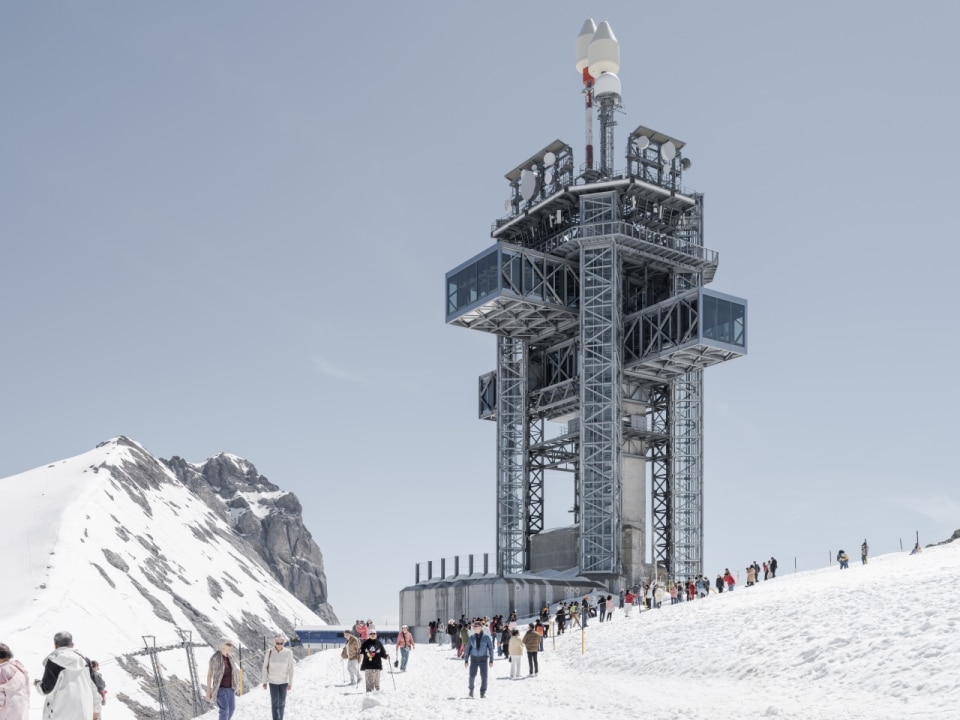
While the next chapter of the James Bond saga takes shape, destined to bring cinema’s most famous secret agent back to the big screen, Herzog & de Meuron seems to have already built one of his perfect backdrops in the Swiss Alps.
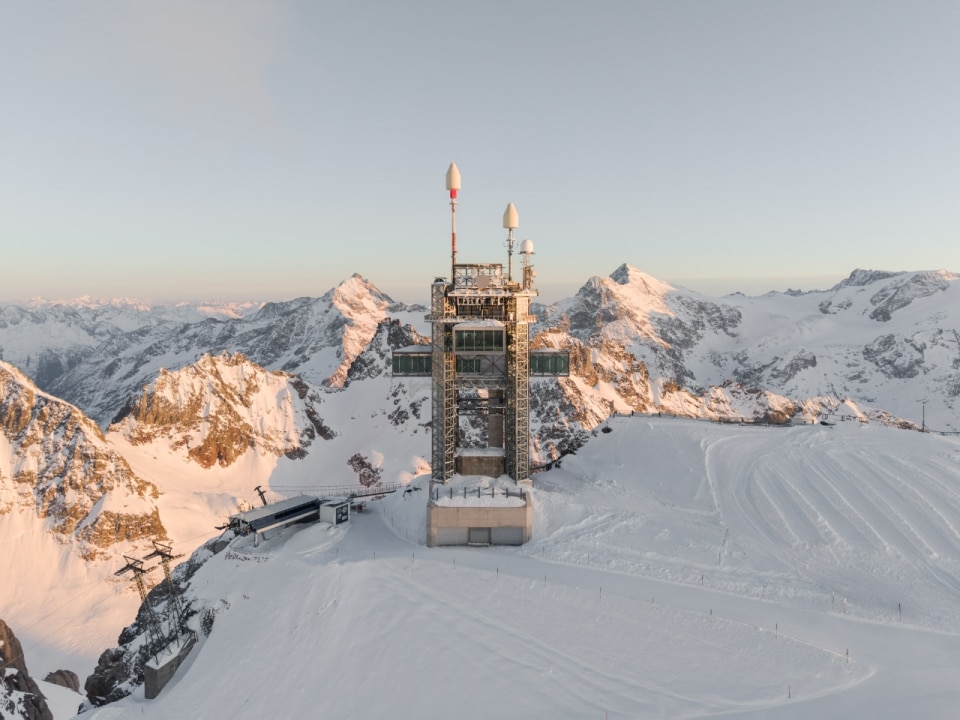
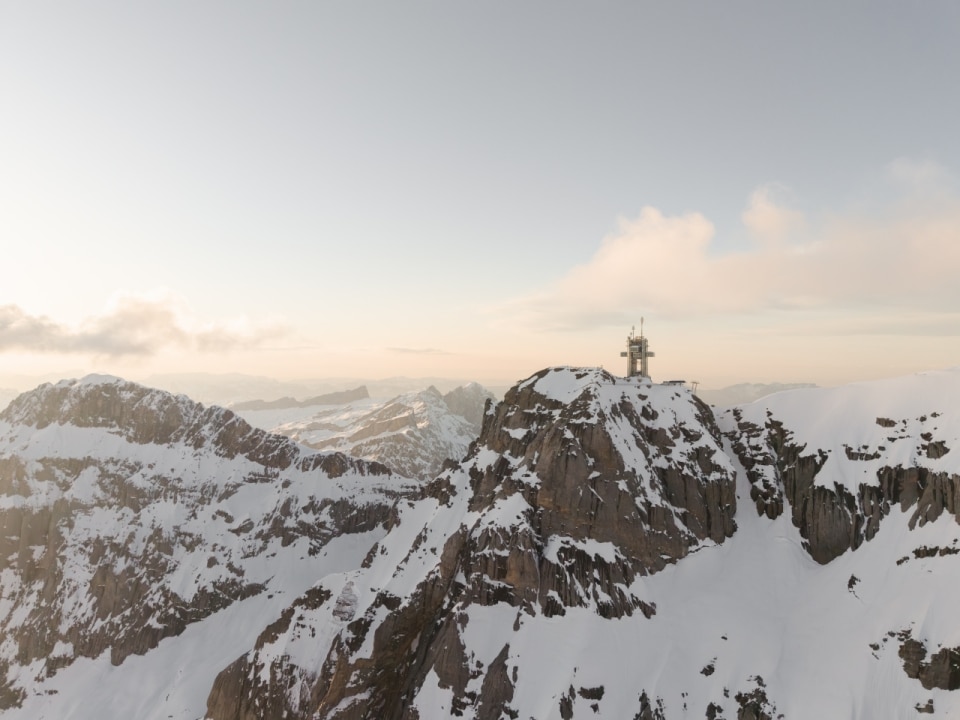
At more than 3,000 meters above sea level on Mount Titlis—one of Central Switzerland’s leading tourist destinations, shaped by glaciers, fierce winds, and extreme alpine conditions—the architecture firm founded by Pritzker Prize winners Jacques Herzog and Pierre de Meuron has transformed a 1980s telecommunications tower into an architectural landmark that looks as if it were lifted from a high-altitude spy thriller: the new Titlis Tower.
The studio, renowned for projects including the Tate Modern in London and the Elbphilharmonie in Hamburg, and most recently for the tower set to reshape the Palace of Congresses in Tirana, has reimagined the structure as a striking new presence on the mountain.
A telecommunications tower from the 1980s
Indeed, Jacques Herzog himself suggests the parallel. “The first impression of Titlis evokes James Bond more than a mountain cabin,” the architect states. “But this image, too, is part of the Swiss alpine landscape.”
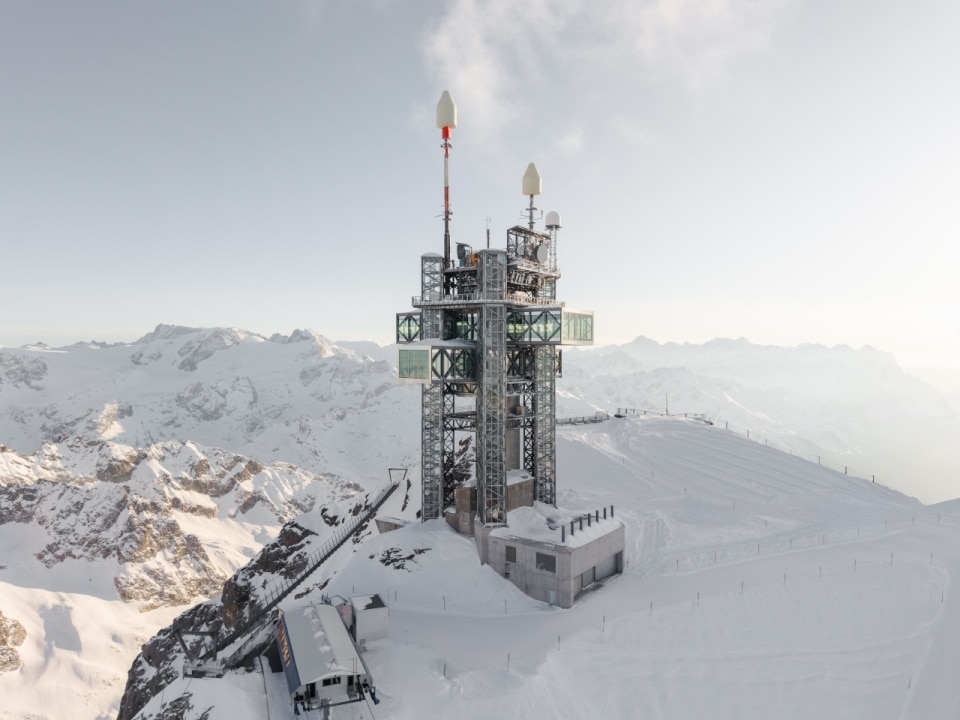
Before becoming a panoramic observatory, the Titlis Tower was a telecommunications infrastructure. Built in the mid-1980s and standing 56 meters tall, it occupies one of the most extreme locations in the Swiss Alps: over 3,000 meters above sea level, exposed to violent winds, ice, and temperatures that render construction and maintenance work impossible for most of the year.
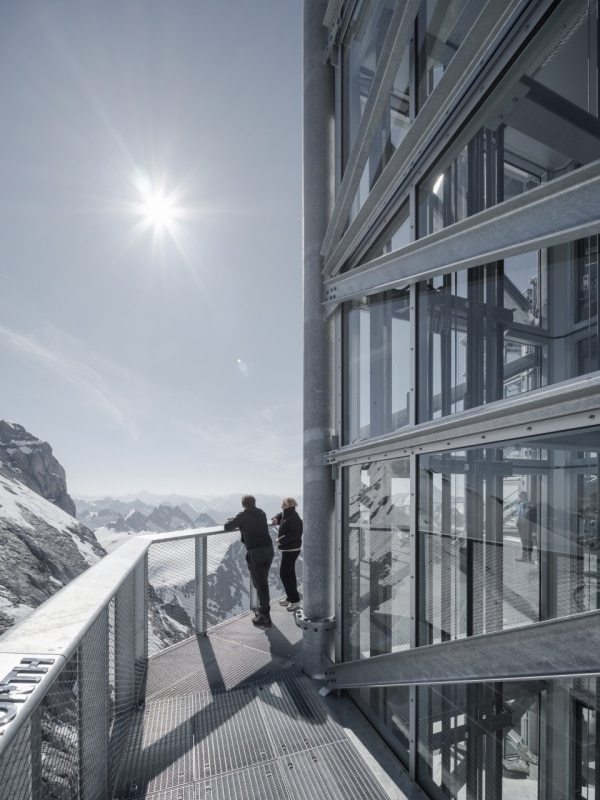
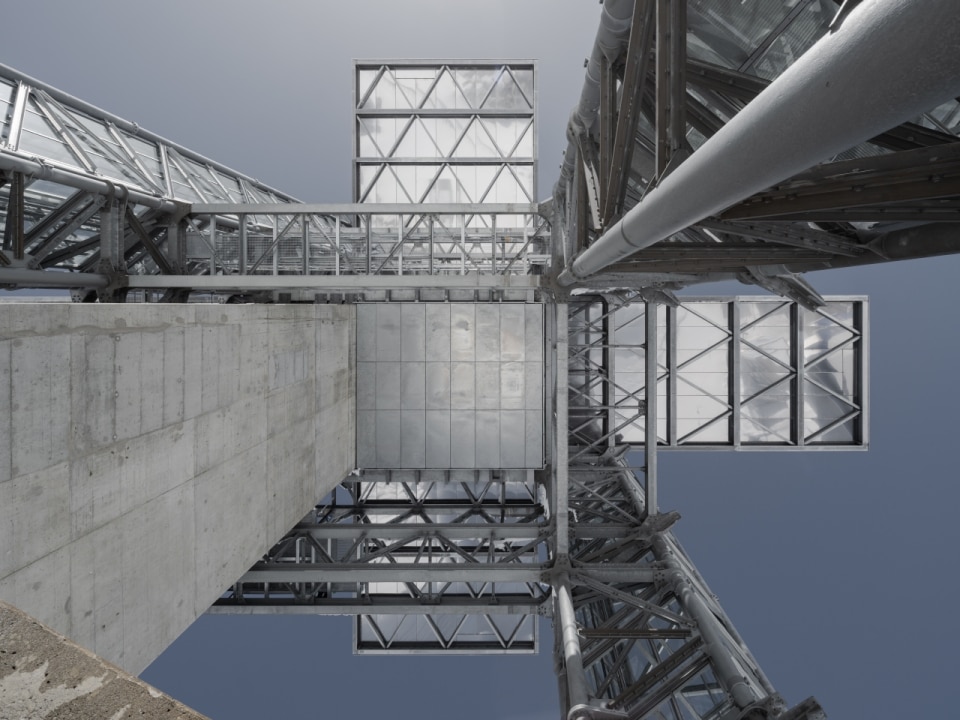
To withstand these conditions, the structure was anchored deep into the limestone mountain with a massive reinforced concrete base and completed with a lightweight yet sophisticated steel space frame.
A signal in the sky above Titlis
When Titlis Bergbahnen entrusted Herzog & de Meuron with the master plan for the renewal of the entire ski resort in 2017, the architects identified this very tower as the starting point for the project. Rather than demolishing and replacing it, they decided to transform it into the first piece of Projekt Titlis, the master plan set to redesign the mountain by 2029.
“We immediately focused on a resource-conscious development of the existing infrastructure,” Pierre de Meuron explained. “As the first completed element within this overall strategy, the tower symbolizes the transition from purely functional structures to a new generation of alpine architecture.”
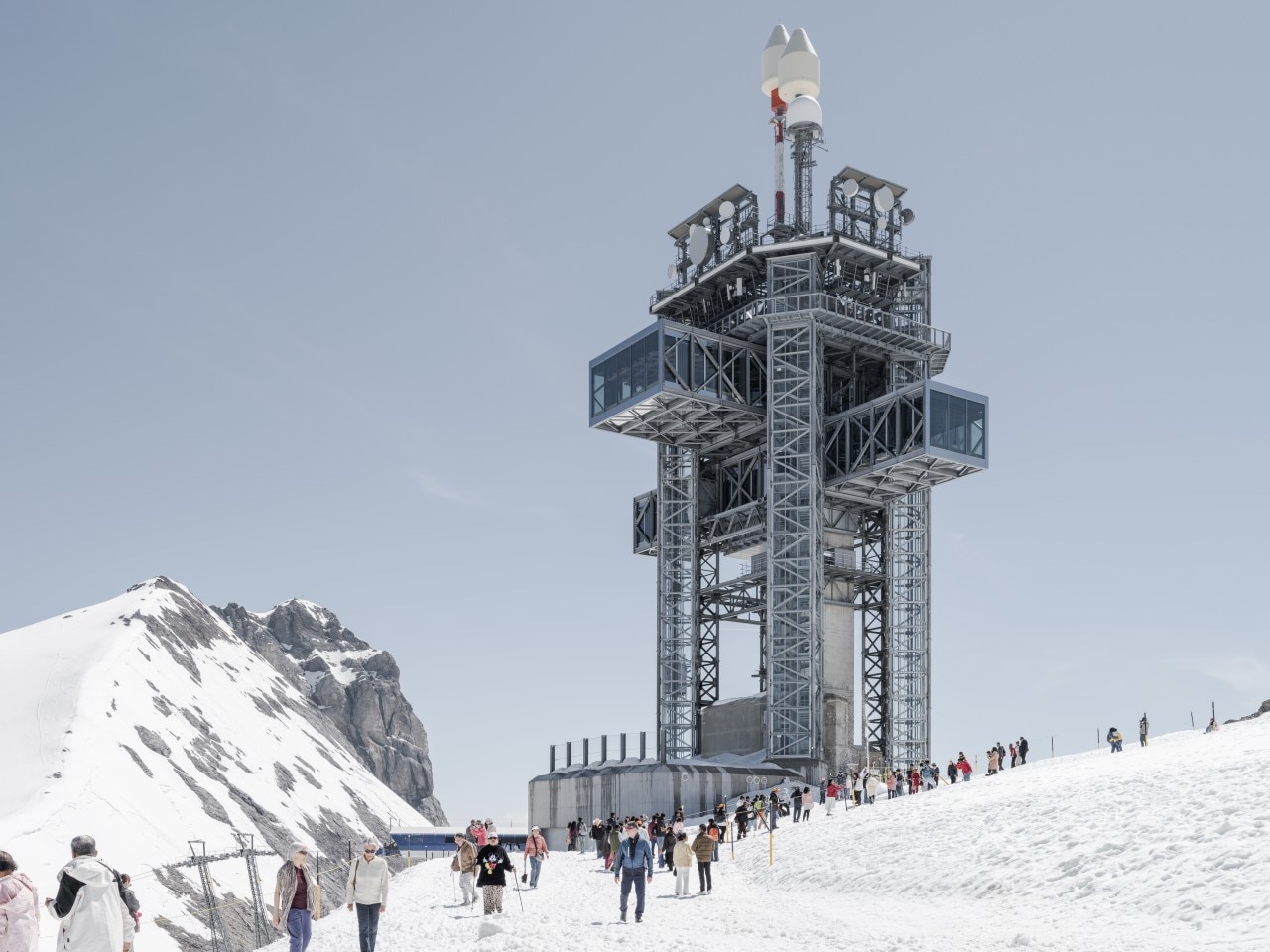
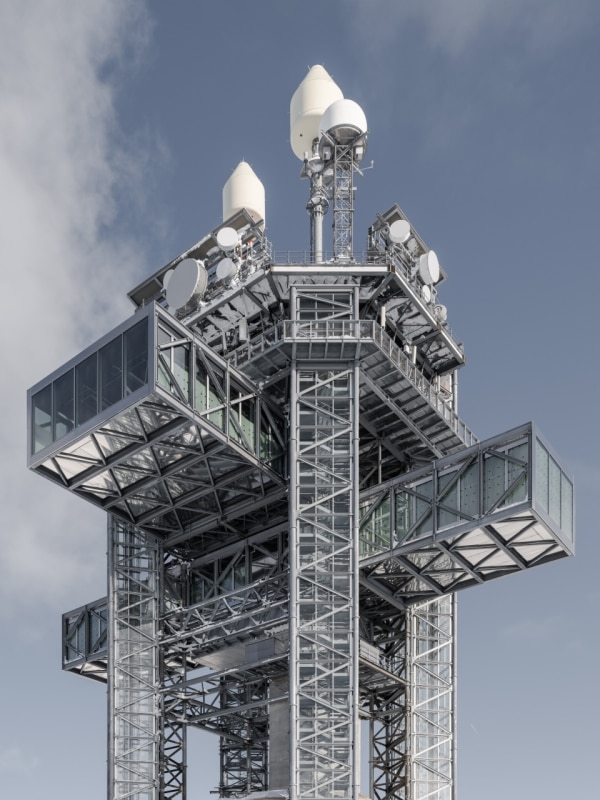
In the current design, the slender steel structure of the original tower remains fully visible and is enhanced by the addition of two cantilevered glass volumes that intersect in space to form a cross. Four new vertical towers house stairs and elevators, while the external load-bearing structure allows the interiors to remain completely column-free.
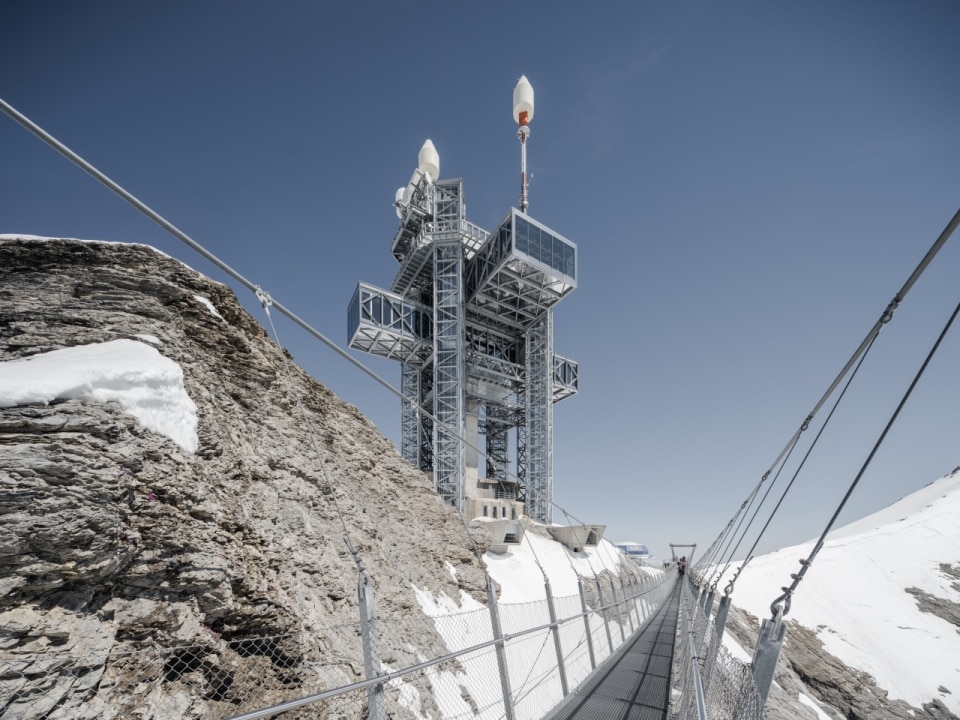
“Rarely do we encounter something that already possesses such high quality,” Jacques Herzog observed. “Our main task was to bring these existing qualities into even greater focus: the expressive steel structure, which we completed with two horizontal beams, transforming it into an iconic sculpture. A kind of signal rising into the sky above Titlis.”
A journey through the mountain
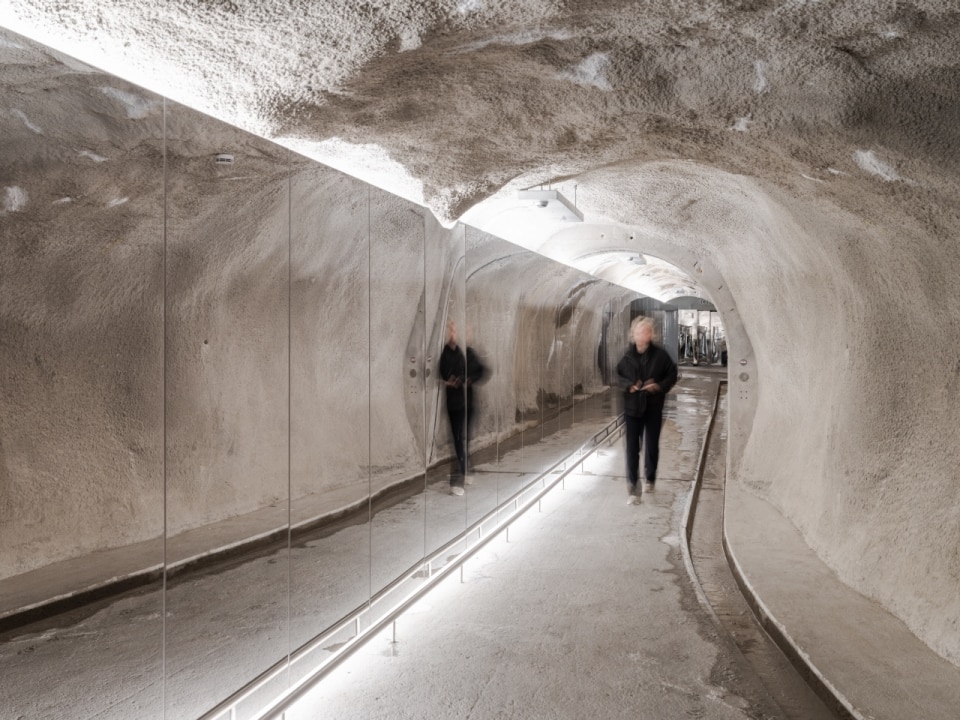
However, the visitors’ experience begins well before they reach the tower. An underground tunnel built alongside the original structure connects the building to the upper station and the glacial cave. Herzog & de Meuron describe it as a sort of “infrastructural umbilical cord” carved into the mountain.
From this underground path, visitors gradually emerge into the light, passing through a large cavernous hall and finally ascending to the panoramic restaurant and the public observation platform, which dominates the landscape with a 360-degree view.
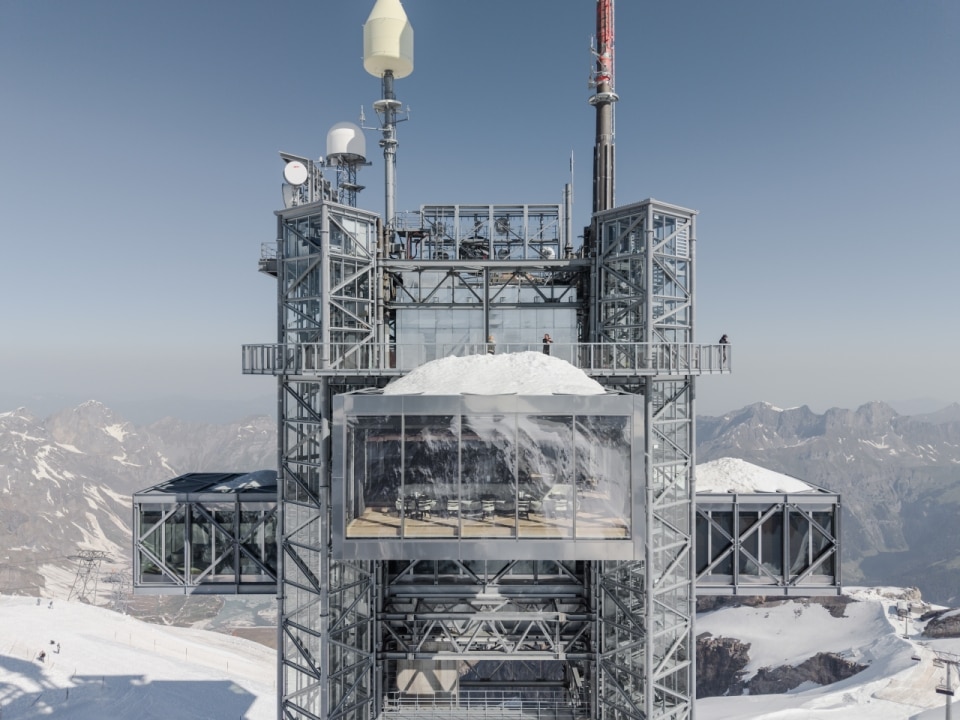
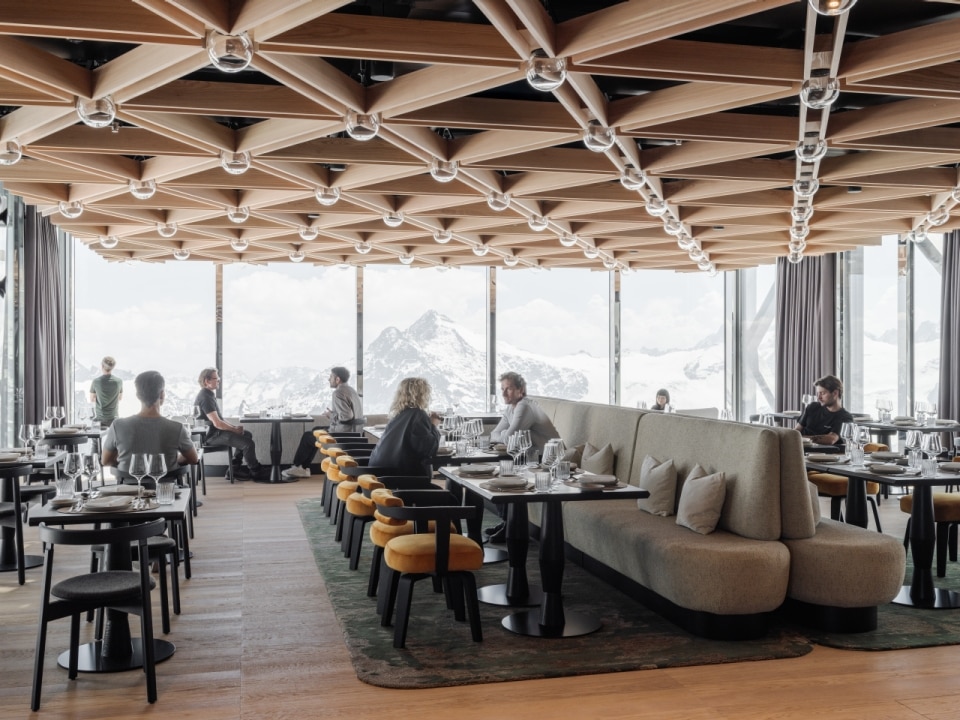
From afar, the Titlis Tower looks like a machine suspended above the glacier; inside, however, it becomes a fully inhabitable space. The two suspended volumes house a retail area and a 140-seat restaurant respectively, while a panoramic mountain platform is situated at the top.
The materials also tell a story of continuity between old and new. Galvanized steel, stainless steel, glass, and concrete make up nearly the entire vocabulary of the intervention. Only the restaurant deliberately breaks this technical atmosphere with surfaces fully clad in wood, envisioned as a place of refuge within an extreme environment.
Europe's highest construction site
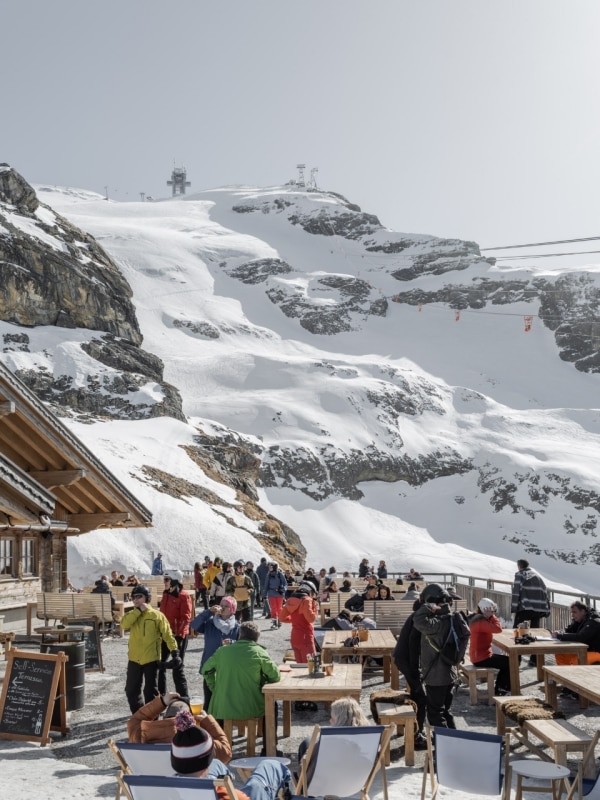
Located at an altitude of over 3,000 meters and described as one of the highest permanent construction sites in Europe, the Titlis Tower project required a complex organizational machine. Materials and components were transported via cable car and helicopter, while the scheduling of the work had to constantly adapt to snow, wind, and sudden shifts in visibility.
At first glance, the Titlis looks more like something out of a James Bond movie than a mountain cabin, but even this image is part of the Swiss Alpine landscape
Jacques Herzog
“Strong winds and freezing temperatures require an exceptionally robust structure and pose extraordinary logistical challenges,” said Andreas Fries, a partner at the firm. “Through this process, the former antenna tower has been transformed into an iconic building, capable of asserting its presence across the entire region.”
The Titlis Tower represents only the first completed chapter of the broader Projekt Titlis: a construction site that will continue in the coming years with the realization of a new summit station. Alongside the historic Rotair, the revolving cable car inaugurated in 1992, the new Titlis Connect is already operational, having entered service in 2025, also designed by the Swiss firm.
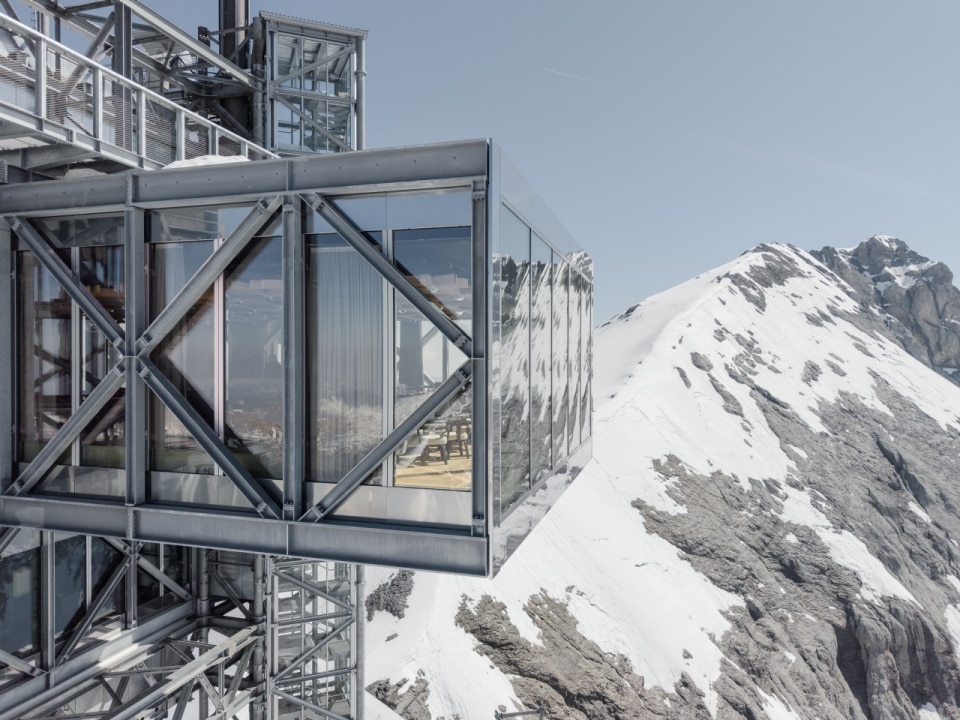
“Depending on the light and the season,” Jacques Herzog concludes, “the changing appearance of the steel beams and glass surfaces evokes ice, water, or crystals.” More than a building, the Titlis Tower thus appears as a new form of landscape infrastructure: the first piece of a project that will redesign one of Switzerland’s most visited mountains by 2029, and which, in the meantime, has already found its icon.