



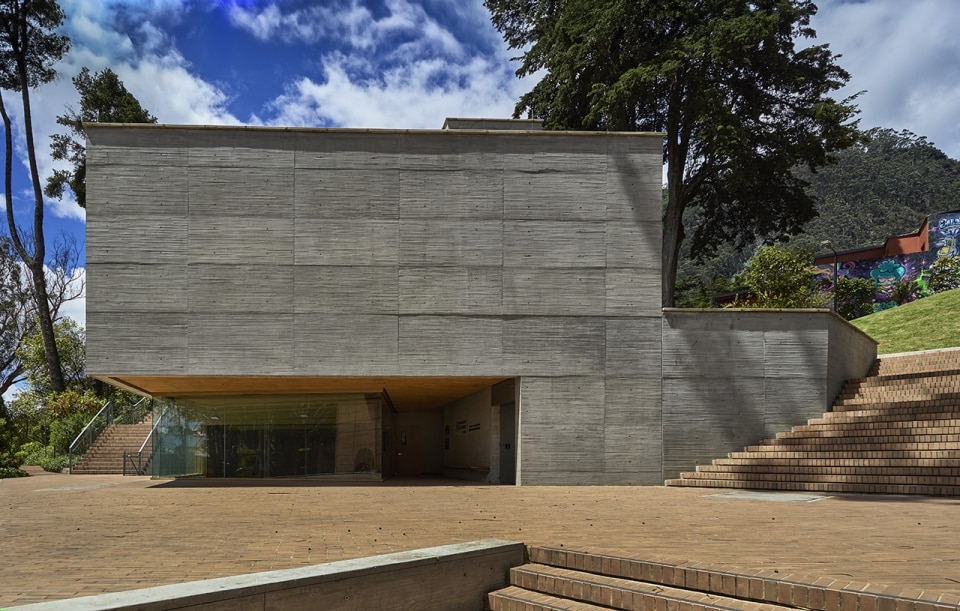
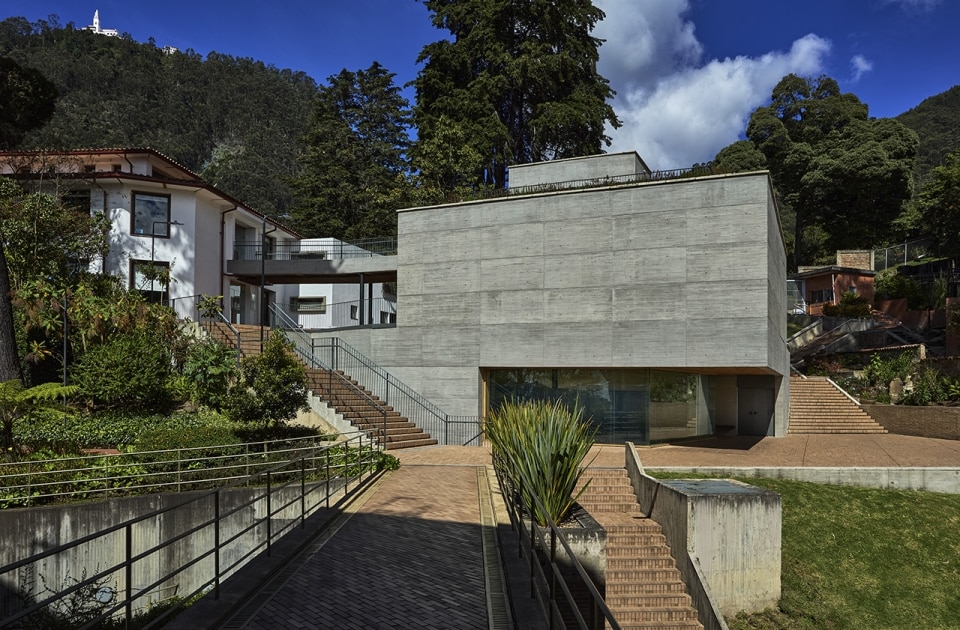
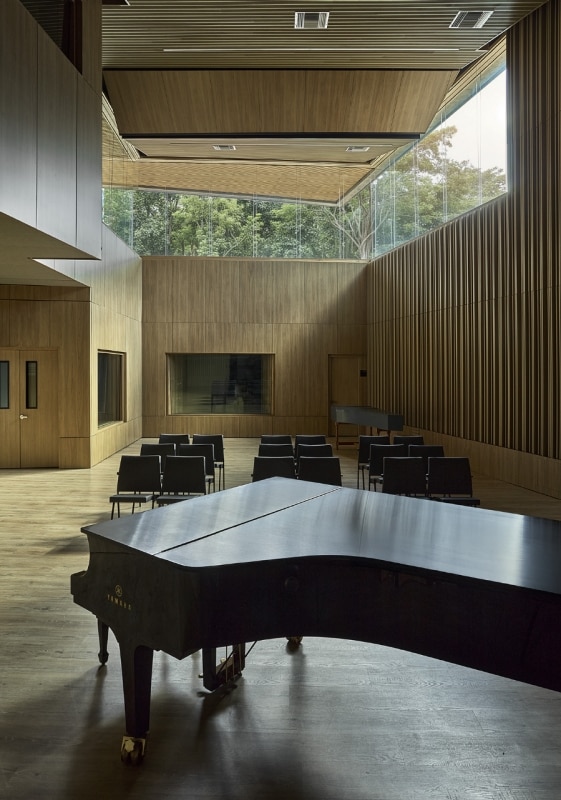
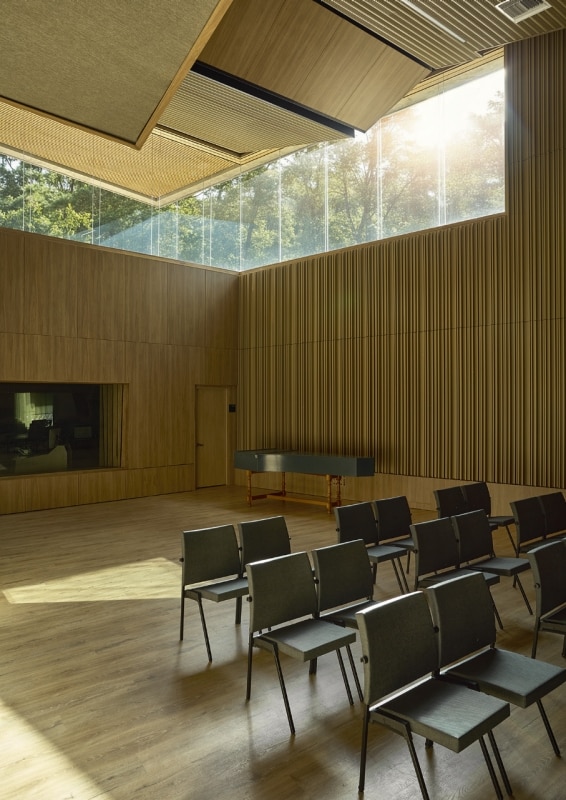
For the three architects—Carolina Jaimes, Juan Esteban López, and Alejandro Puentes—former students of the Universidad de los Andes in Bogotá, the design of the small auditorium building, located precisely at the crossroads between the Faculty of Architecture and the Faculty of Arts and Humanities, becomes an act of gratitude and responsibility toward the place where they grew up and received their professional training.
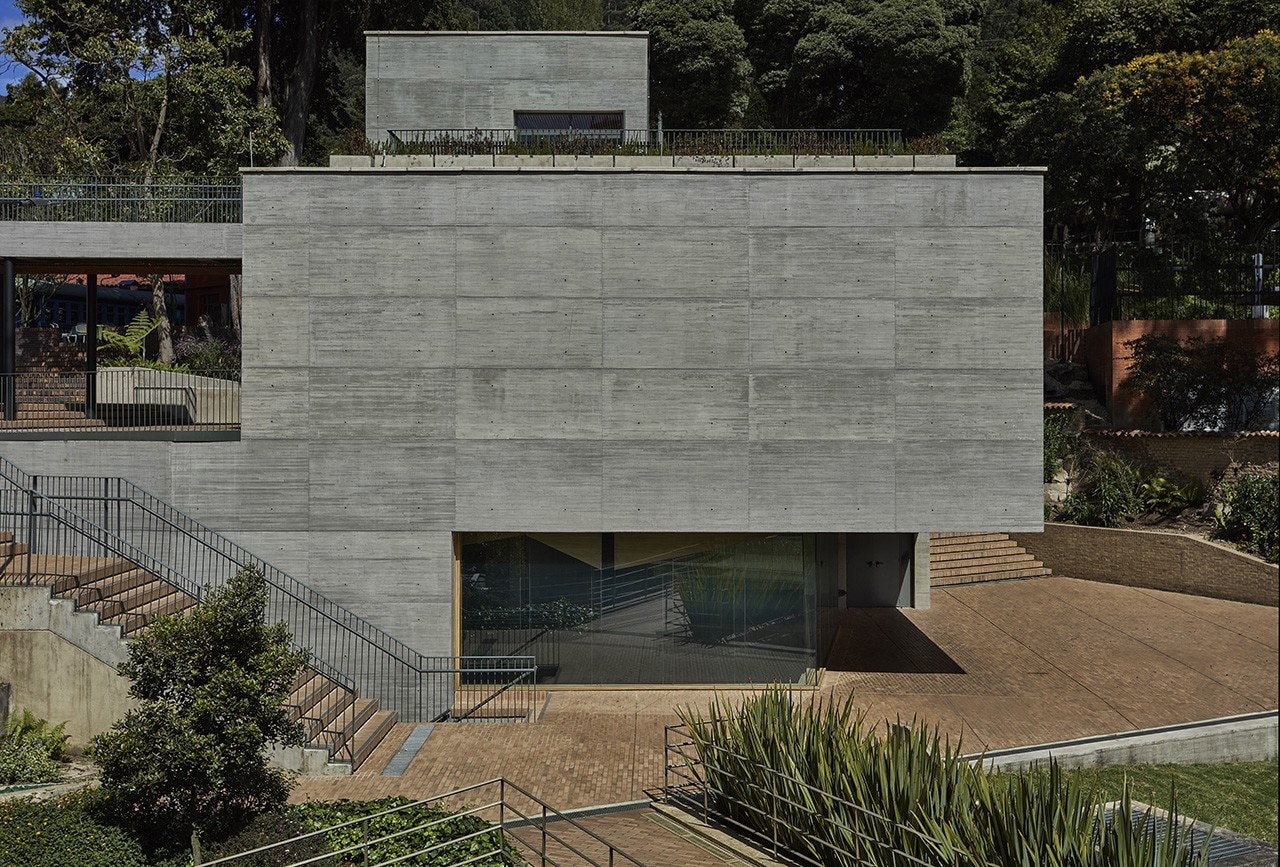
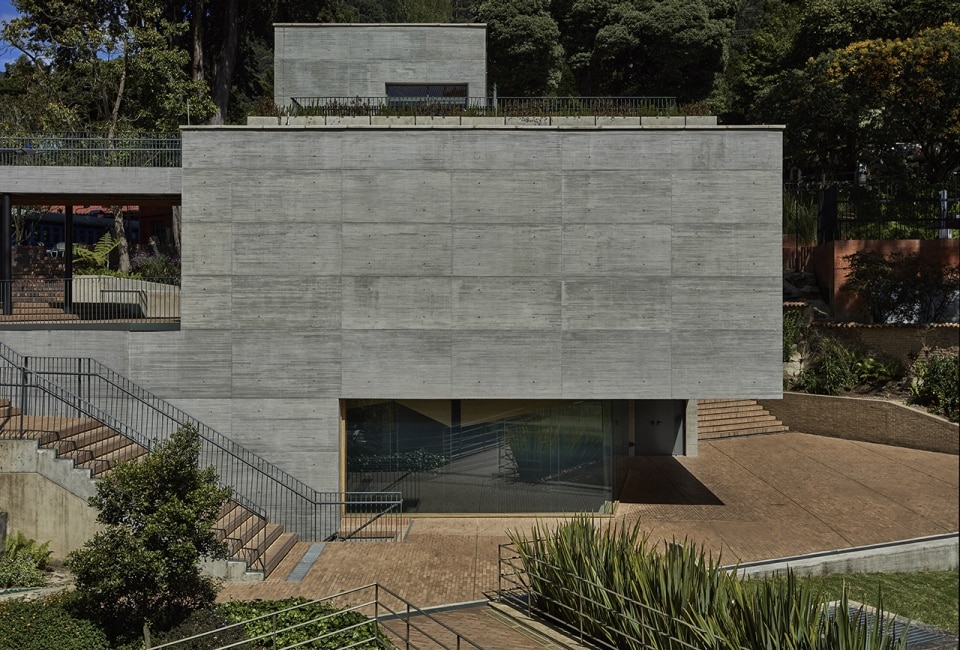
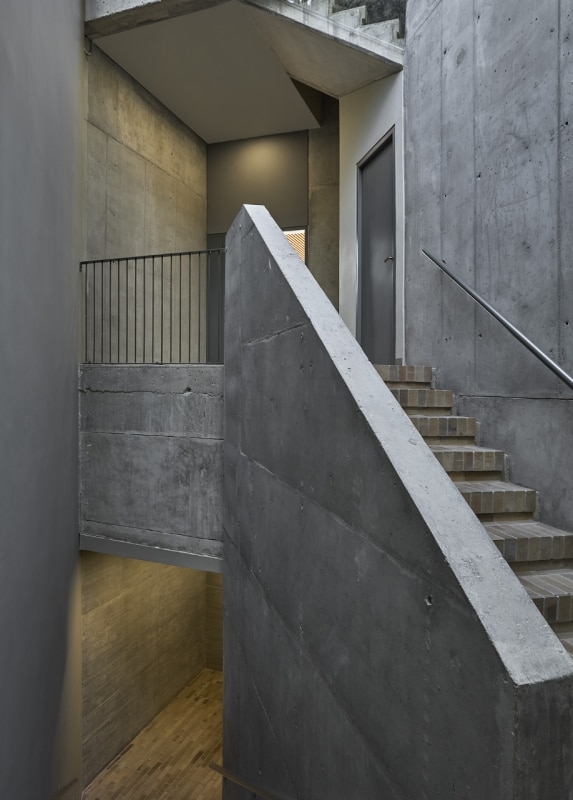
The building is conceived as a true sound box, and its placement—partly hypogeal and underground—supports the development of the spatial program, which called for levels with varying acoustic intensity. The lower floors house rehearsal and recording rooms, designed by adapting international standards for acoustic insulation and vibration control to Bogotá’s tropical conditions of humidity and air pressure. The upper levels accommodate circulation areas, control booths, and shared spaces, featuring a large central void atrium conceived as a true resonance chamber connecting the different levels.
We had never worked together before, but it seemed like a great opportunity to do something meaningful.
Juan Esteban López
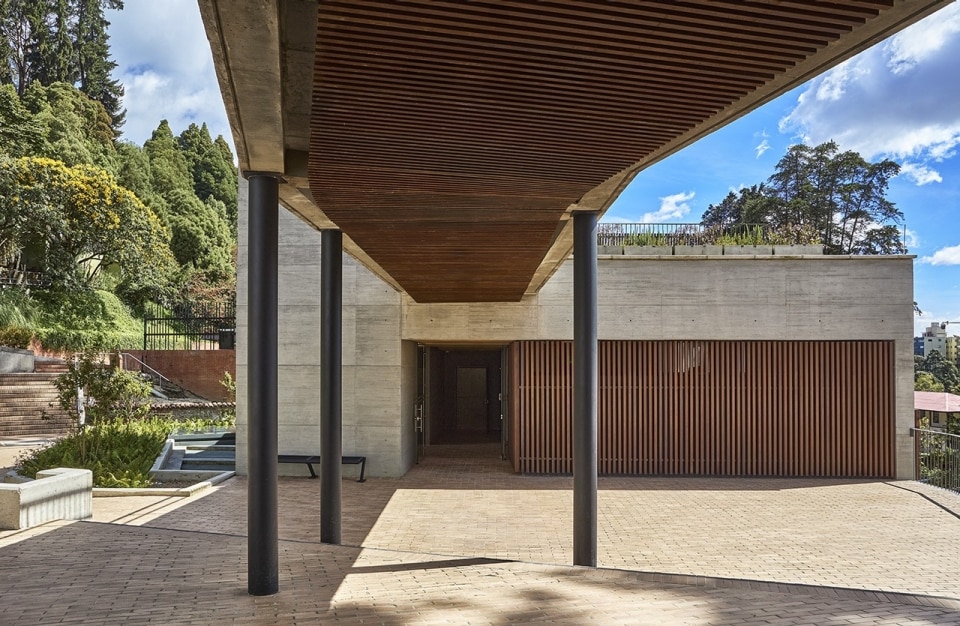
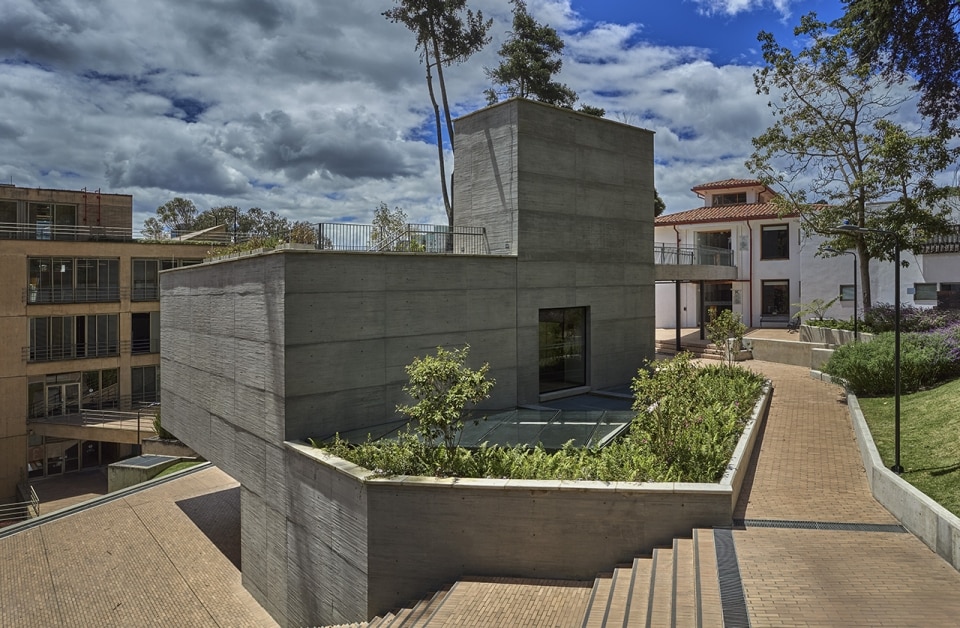
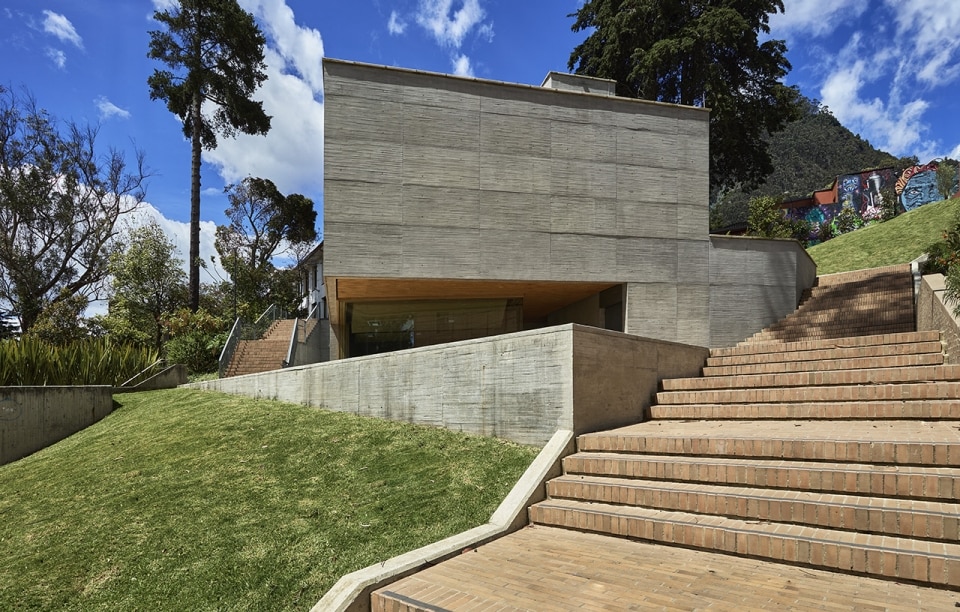
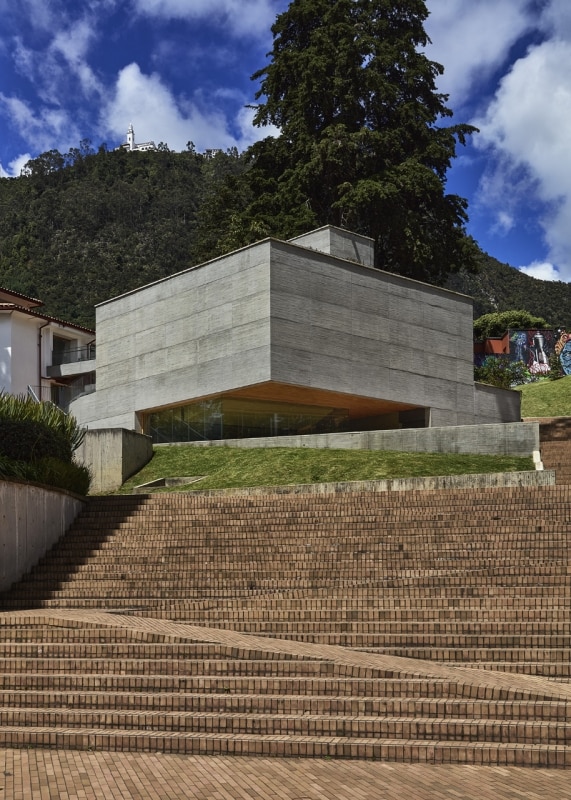
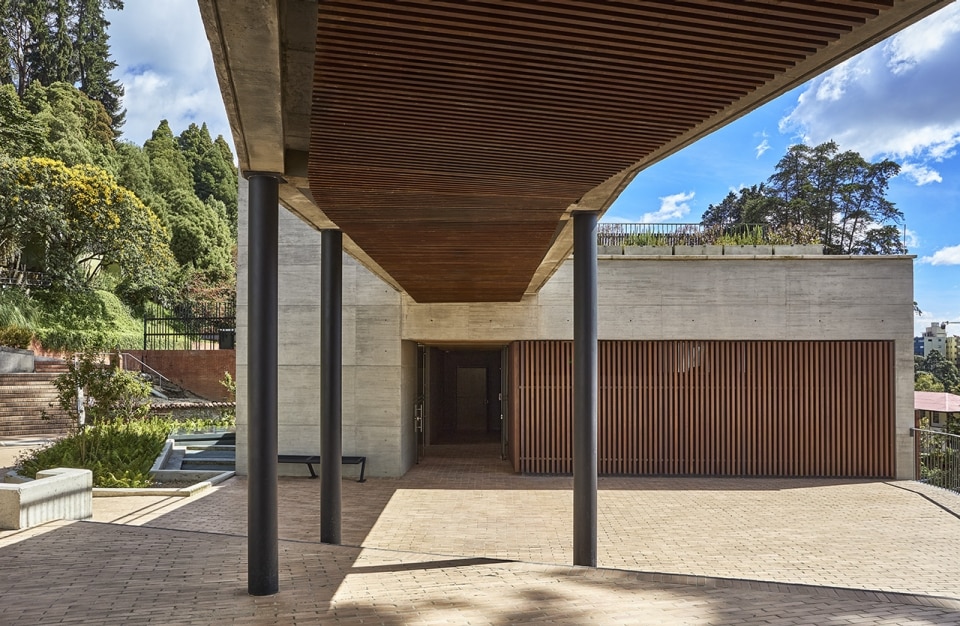
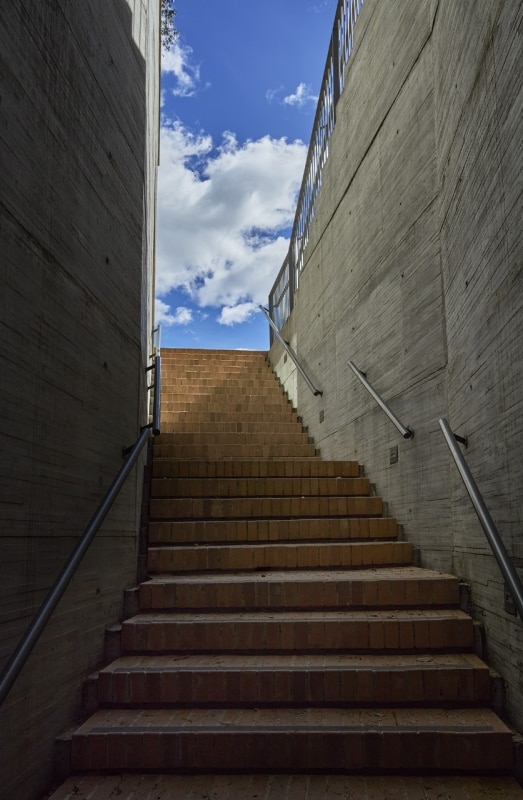
Lowering the building also creates a harmonious dialogue with the eastern mountainous landscape of Monserrate, while the choice of materials aims at integration with the surroundings: the exterior concrete blends with Bogotá’s cloudy sky, while green roofs and rain gardens planted with native species merge with the site’s topography, along with new pedestrian pathways that follow the natural slope of the land without altering it.
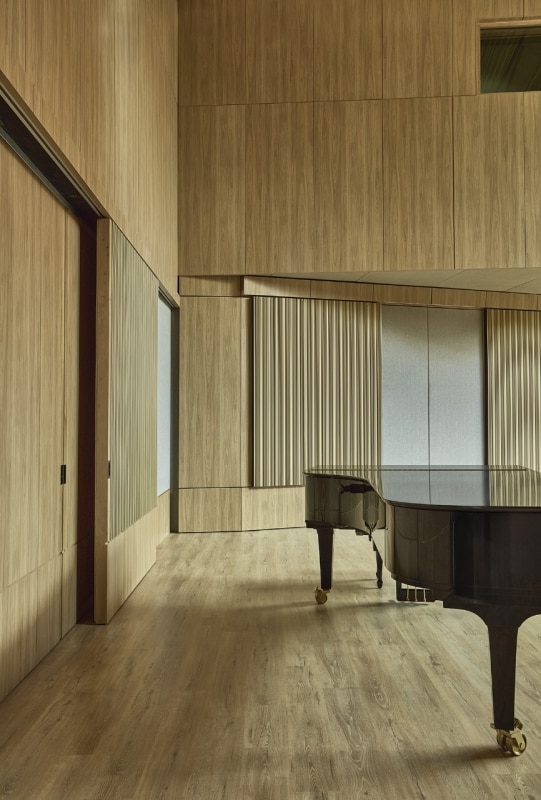
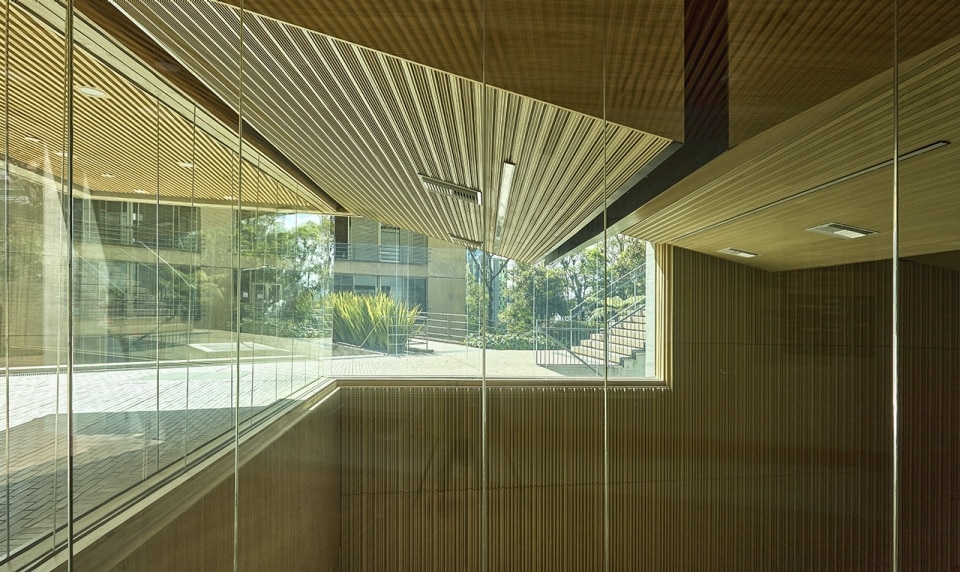
The wooden interiors lend warmth to the music spaces and soften both acoustics and light, transforming each room into a distinct sonic microclimate.
The “carillon” is located in the immediate vicinity of the historic Campito de San José building, the social, cultural, and artistic heart of the university campus. The project is the result of a competition launched in 2017 and dedicated to alumni under 40, and the winning proposal by the trio takes shape as a sophisticated architectural object—one that not only fully meets acoustic and functional requirements, but is also perfectly integrated into the existing landscape, generating new collective spaces for the university community.