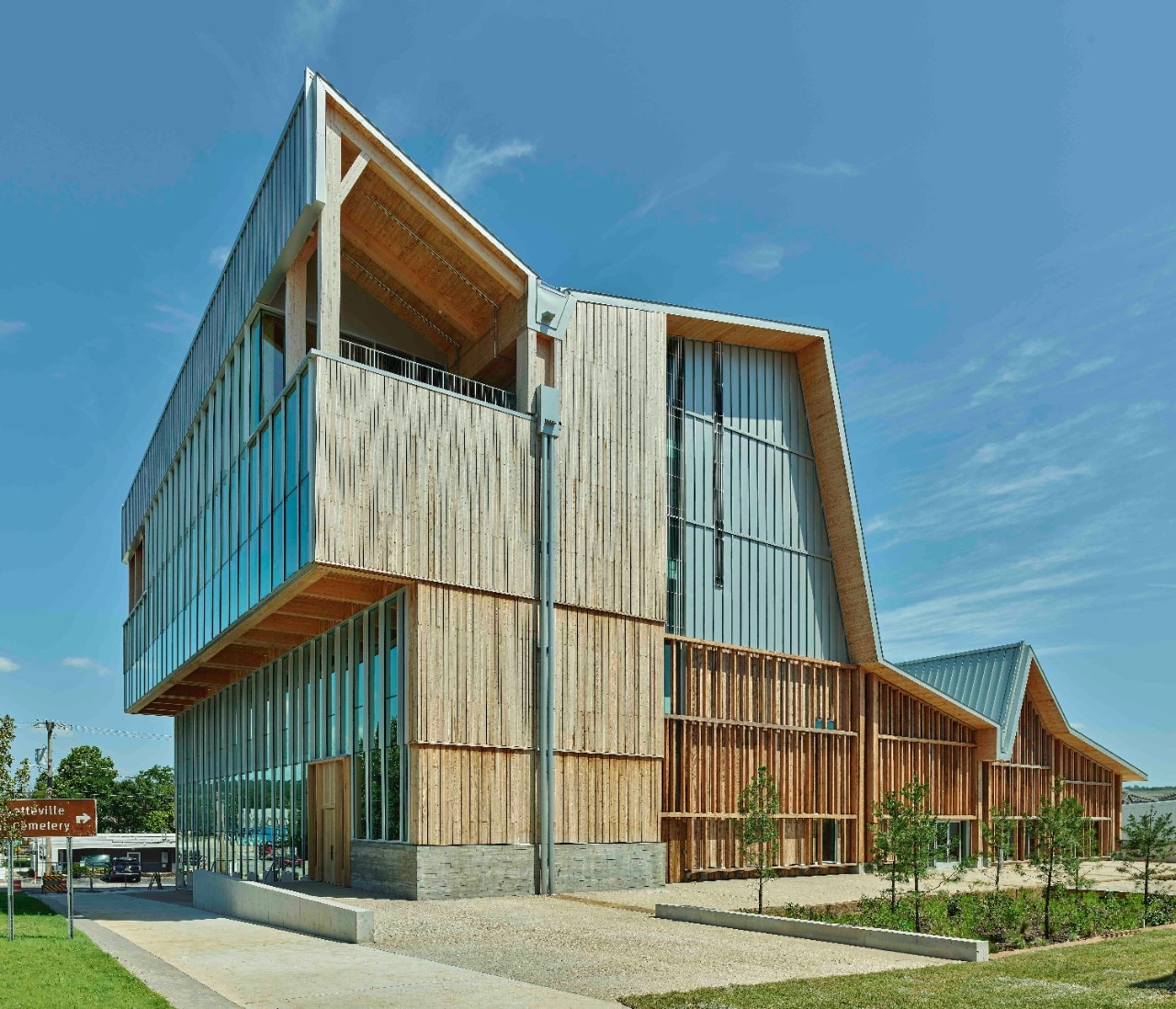

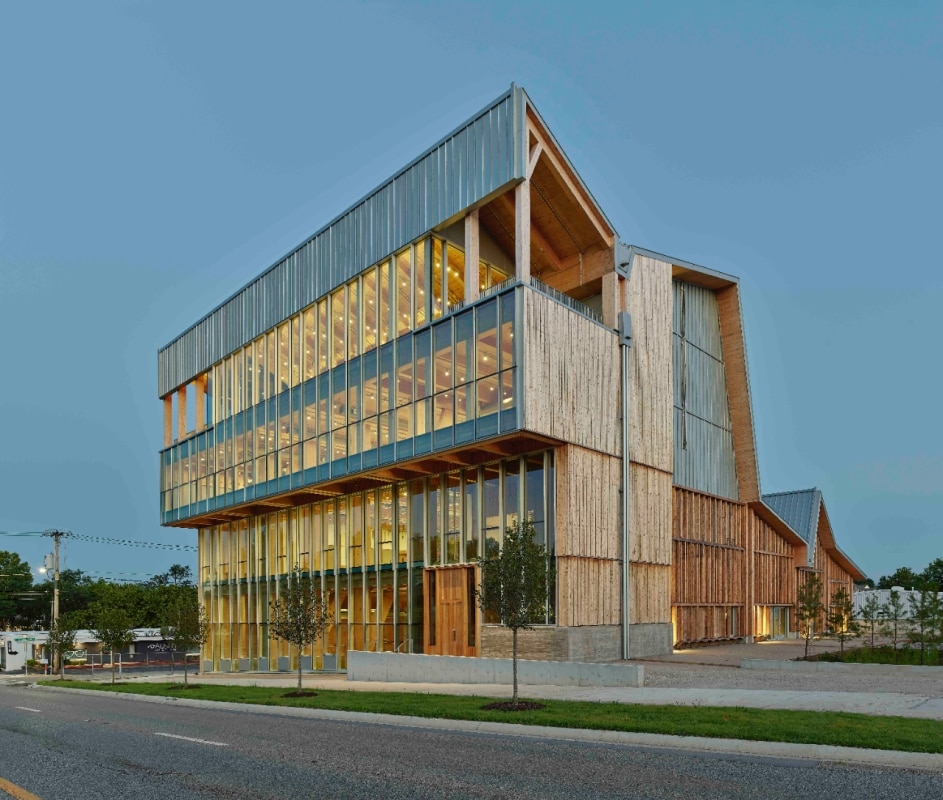
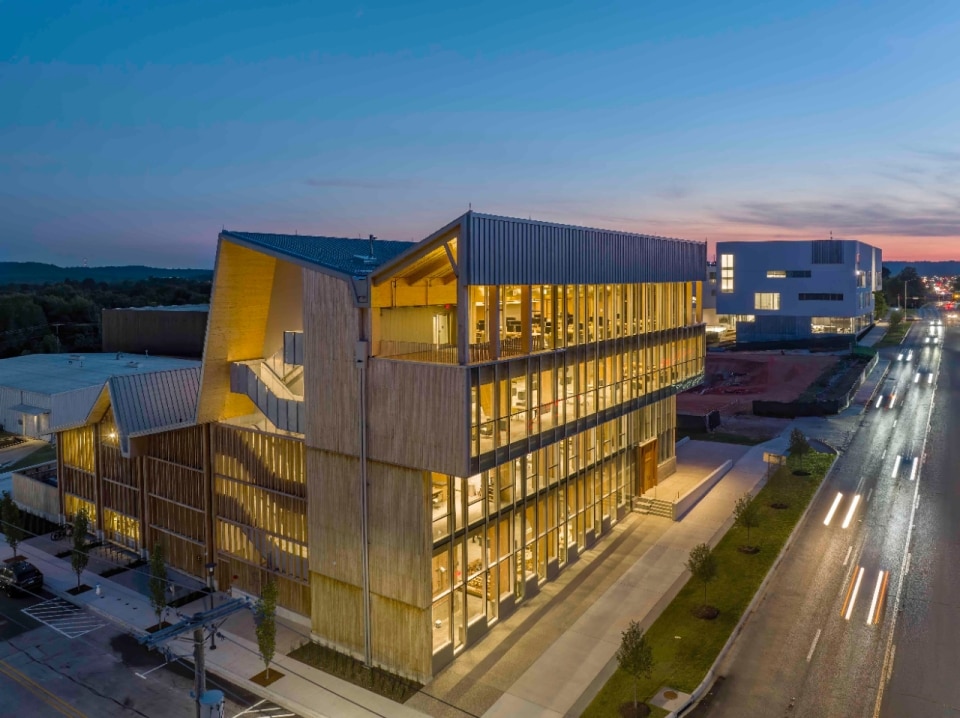

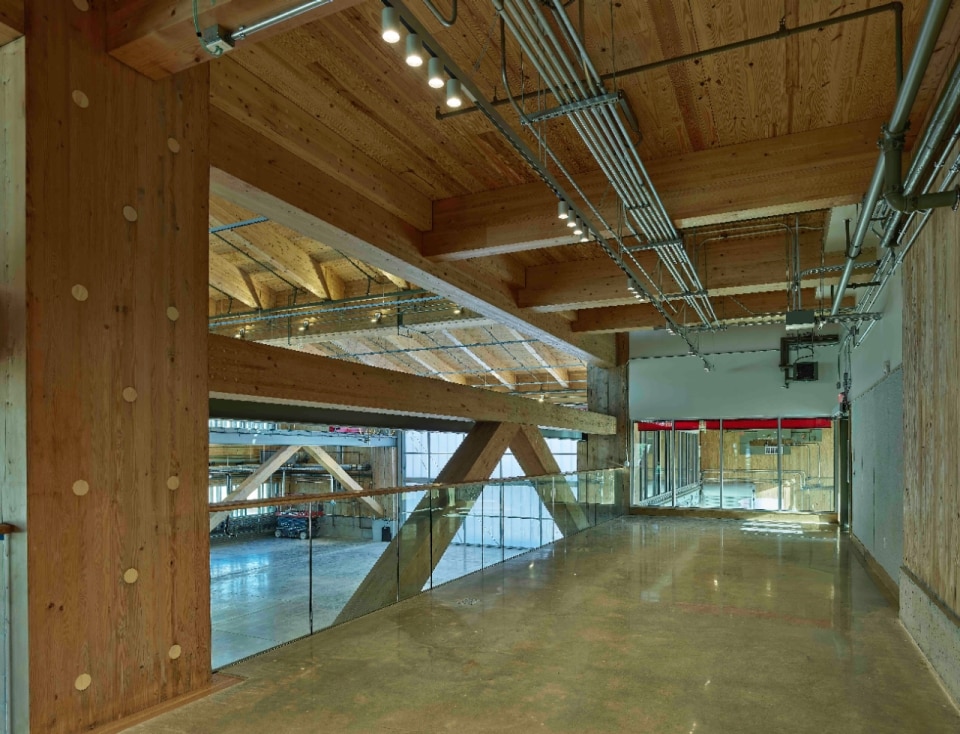
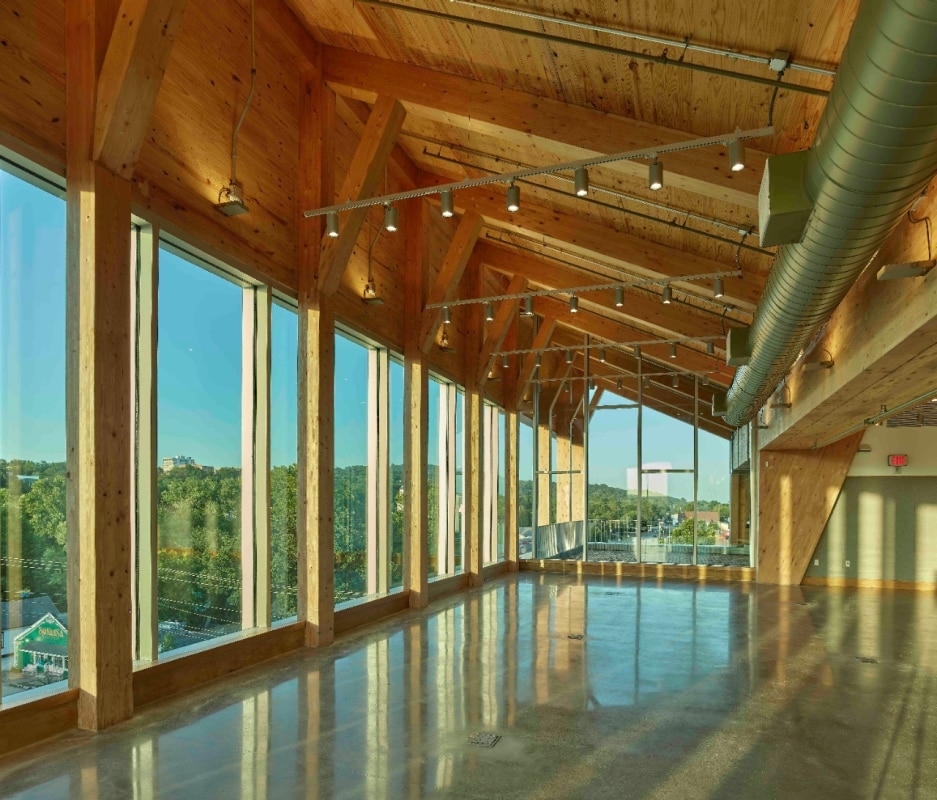
Inside the Fay Jones School of Architecture and Design in Fayetteville, Arkansas, Grafton Architects (Pritzker Prize 2020) in collaboration with Modus Studio has designed the Anthony Timberlands Centre, the studio's first building in the United States, characterised by the use of wood as the primary material.
This design choice is in line with recent trends across North America of mass timber constructions – starting with projects by T3-MGA – which attribute high structural, energy and climatic performance to this material, making it competitive compared to other building materials. Furthermore, in the Anthony Timberlands Centre, the wooden “gesamtkunstwerk” is a manifesto of the functional programme of the building, which houses learning spaces and workshops for wood design and construction.
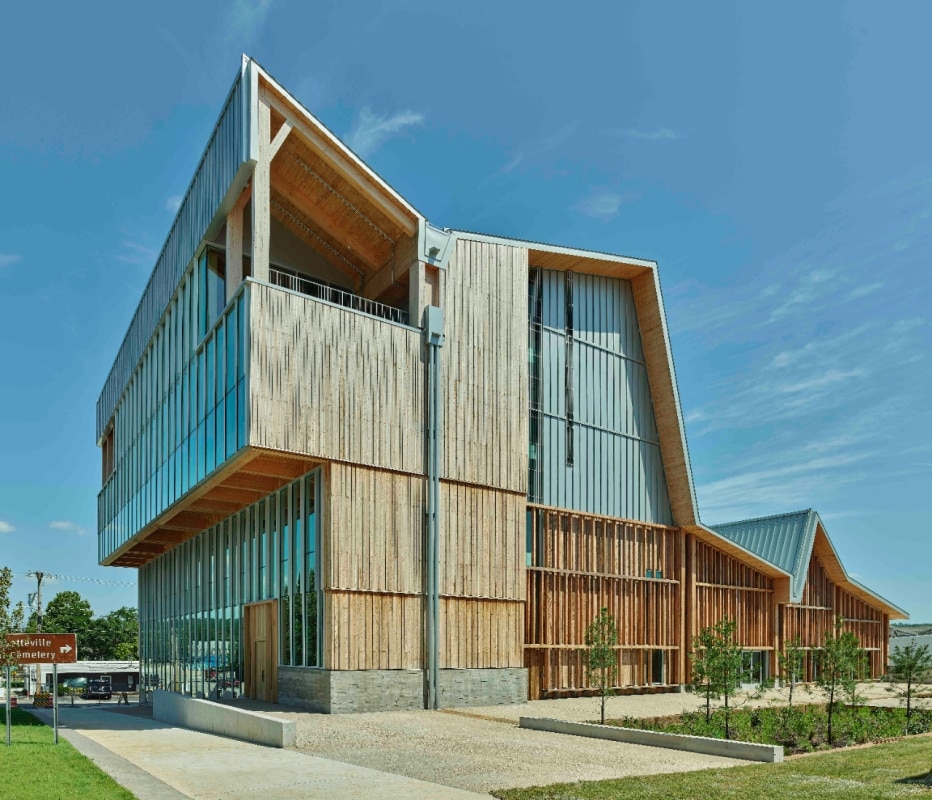
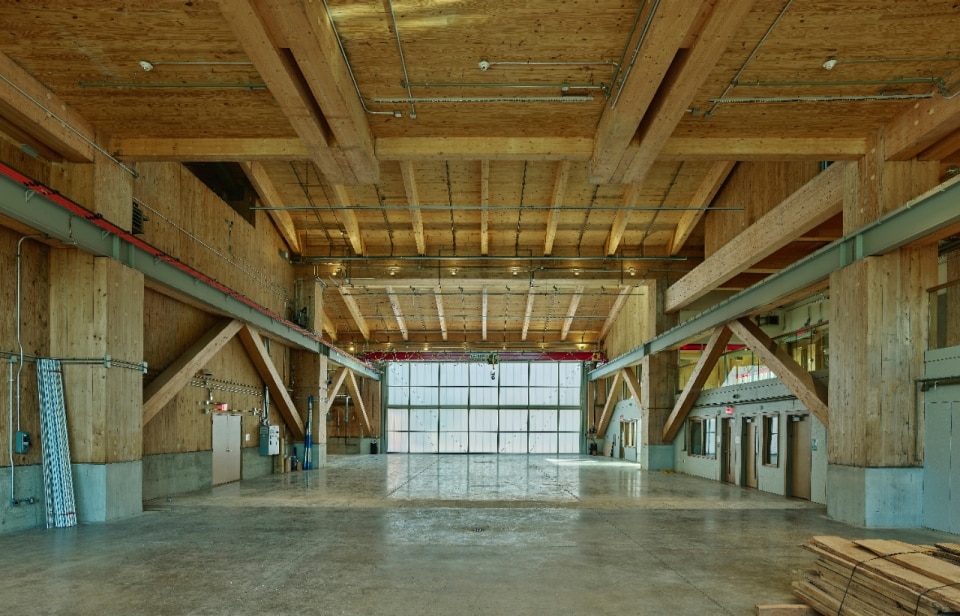
The building is characterized by an unusual, jagged volume which, disregarding formalism, stems from a careful study of wind and rainwater flows, which are collected and recycled. The façades are enlivened by vibrant wooden elements, alternating with metal panelling and glass openings depending on the orientation and views, in a textural ensemble that gives the building a vaguely industrial character. On the ground floor, a large double-height space houses the laboratories, while the upper floors accommodate the lecture hall, studies and conference rooms.
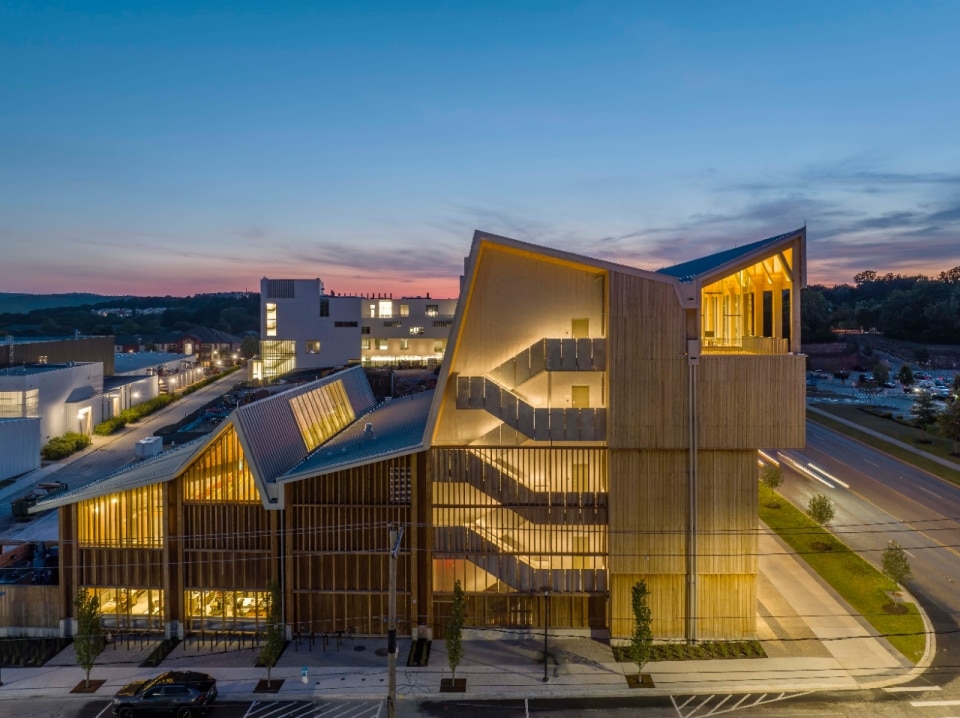
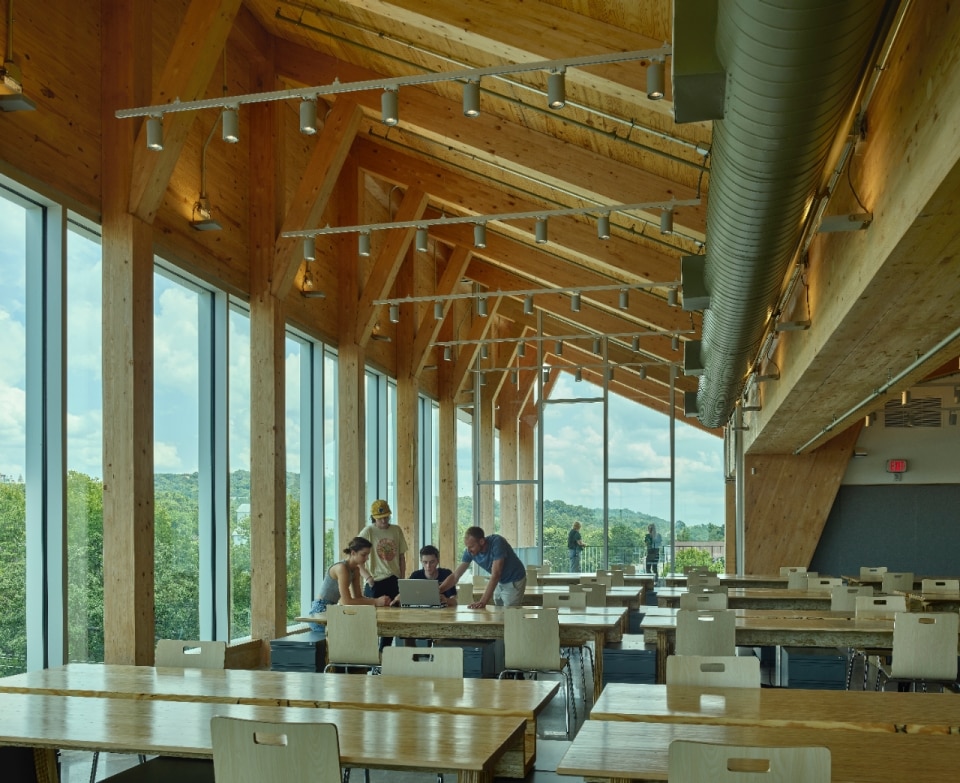
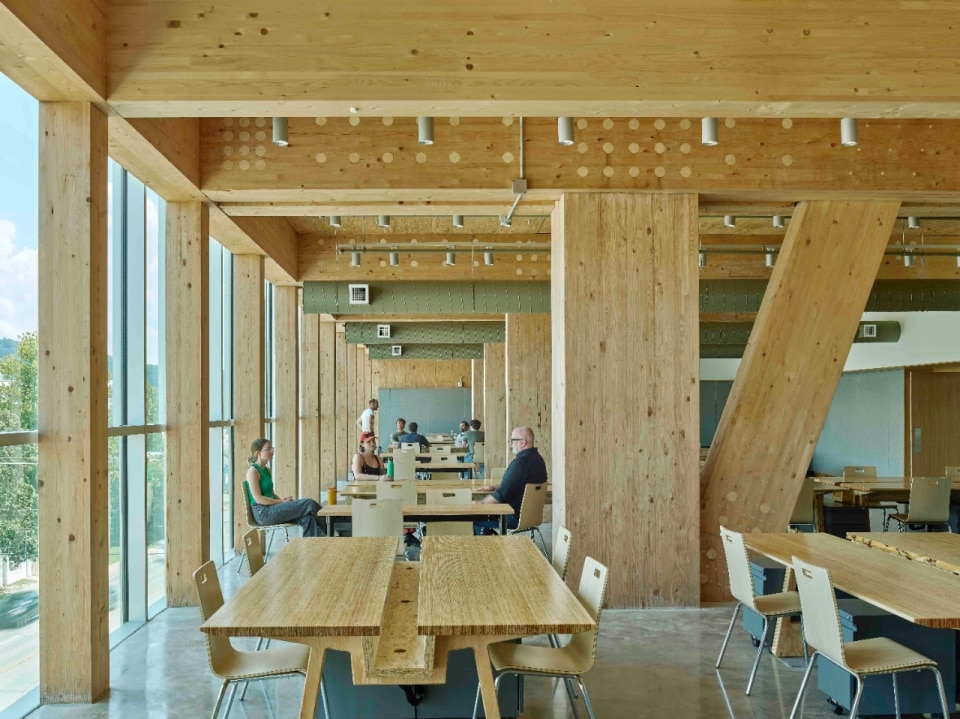
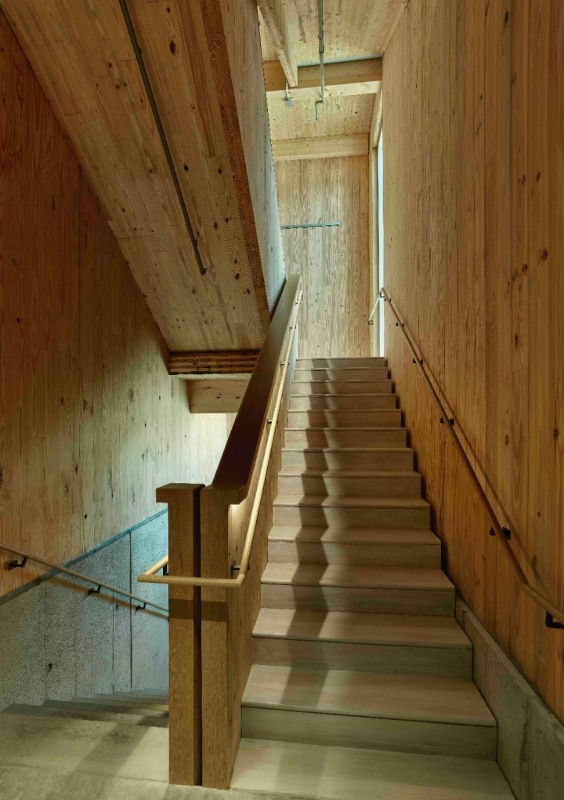
A straightforward and concise grammar of exposed tectonic elements – from the load-bearing structure to the external cladding and internal finishes – characterises the construction, allowing students to clearly read and understand the spatial and structural hierarchy of the building.
This explicit language is also reflected in the lighting design (by TM Light) which, due to the absence of a multi-layered building shell in which to “hide” the systems, superimposes them on the structure: a web of lines and lighting devices openly revealed within the rhythm of the pillars, at the intersection between beams and ceiling or in the changes of inclination of the surfaces, generating a “scenic” effect that emphasises the material and “tactile” character of the space.