


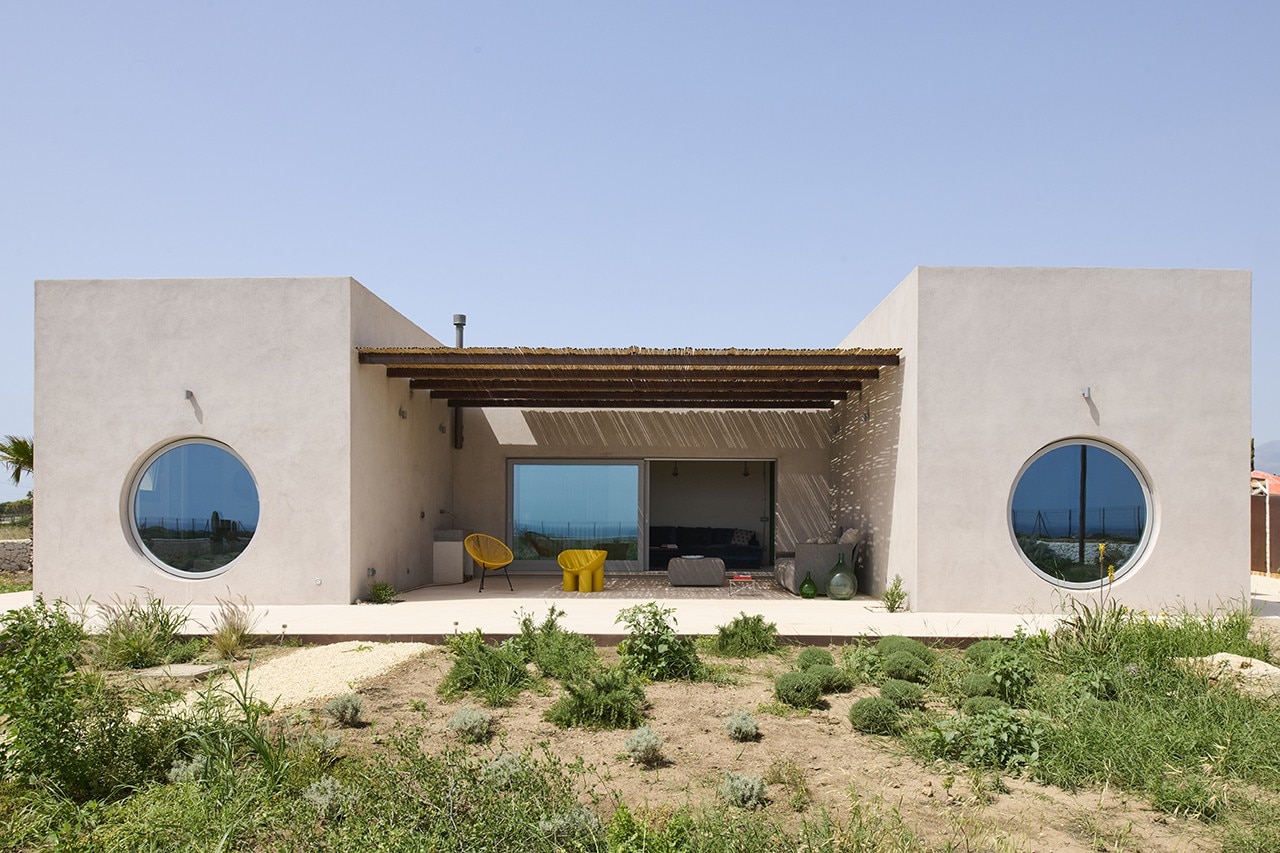

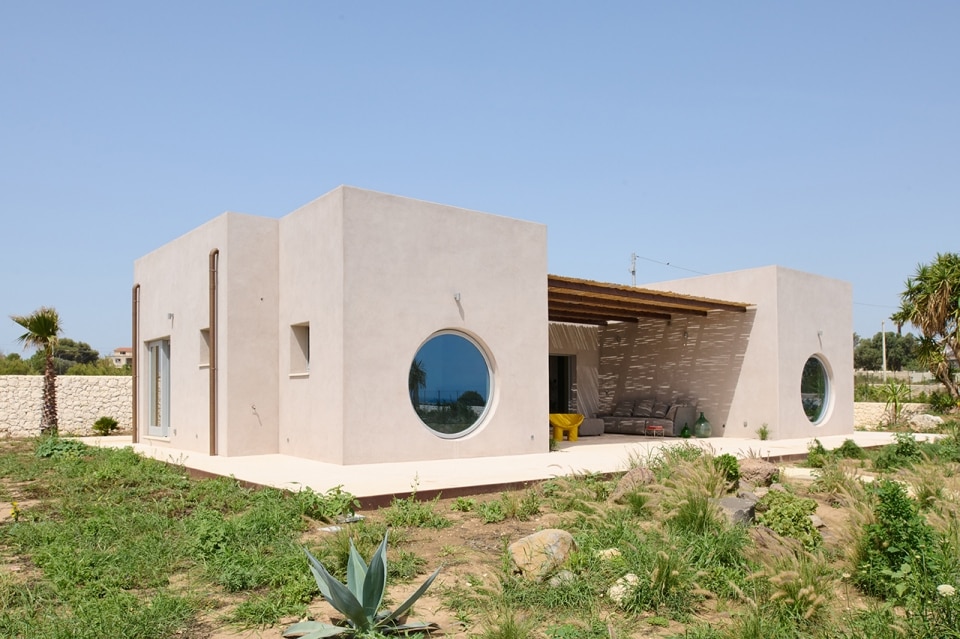
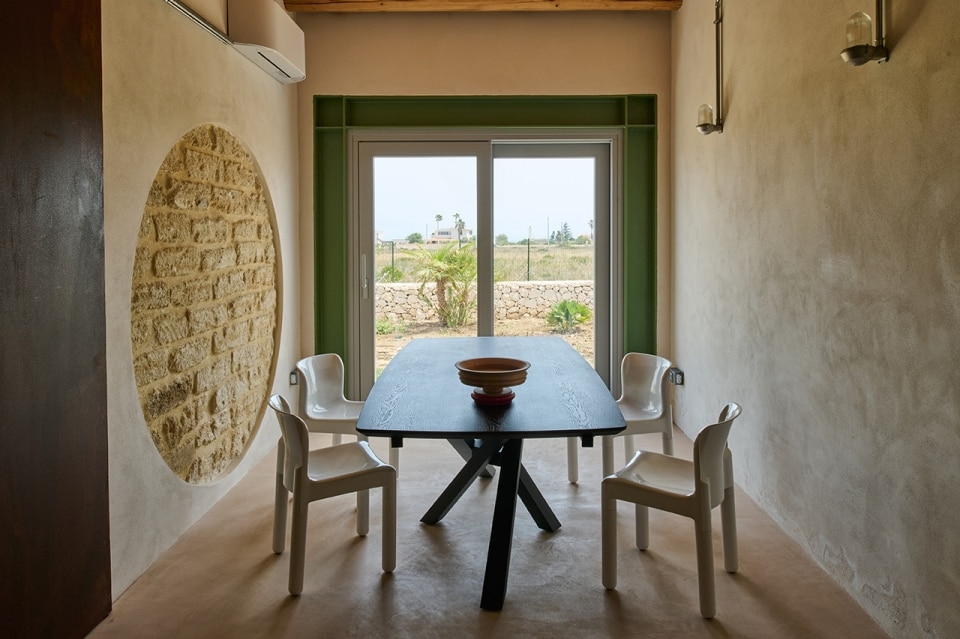
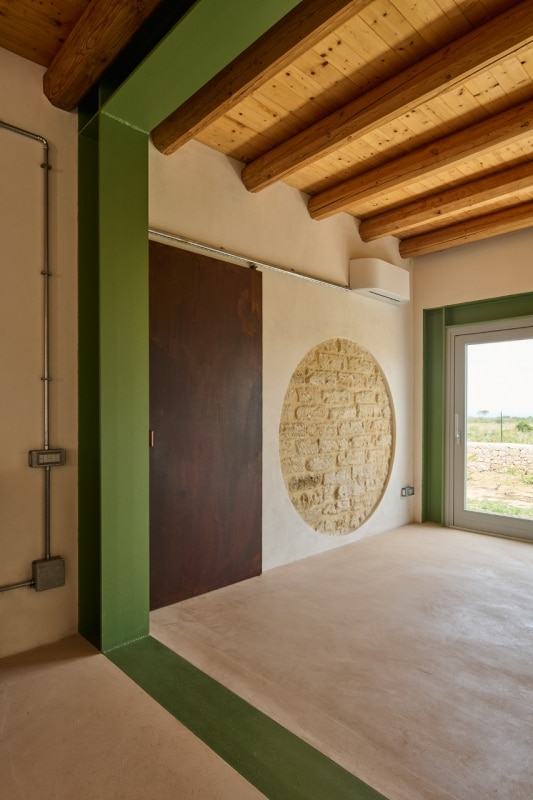
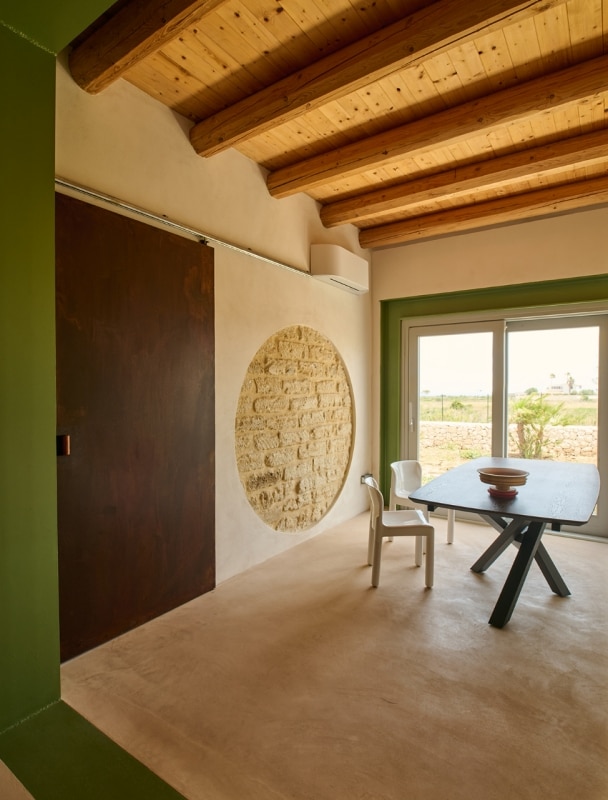
In the heart of the marine reserve of Plemmirio, in Syracuse, architects Francesco Moncada and Mafalda Rangel worked on the renovation of a pre-existing building, creating a new dwelling immersed in an unpolluted natural environment, overlooking the sea from the extreme front of the reserve, where the lighthouse of Capo Murro di Porco acts as a lookout.
The foundation of all design choices is the desire not to conceal the pre-existence of the old building, and equally to decisively signal the new intervention, showing not only its more exquisitely aesthetic aspects but especially those related to the structural condition of the building, as well as its entire technical systems anatomy, disclosing a true stratigraphy of its different phases of life.
Not concealing the preexistence of the old building, while at the same time clearly marking the new intervention; revealing not only the most purely aesthetic aspects, but above all those related to the building’s structural condition.
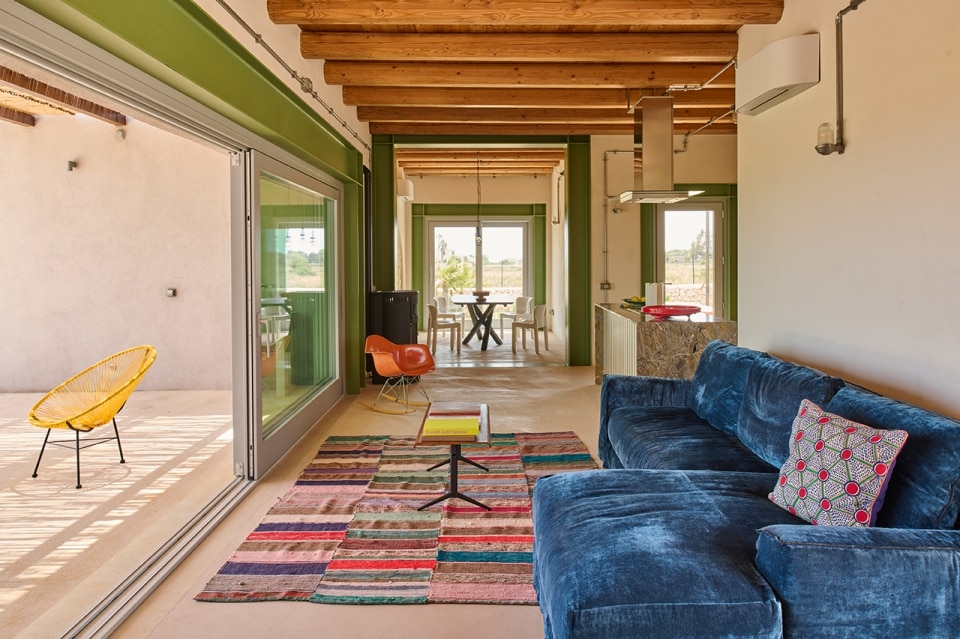
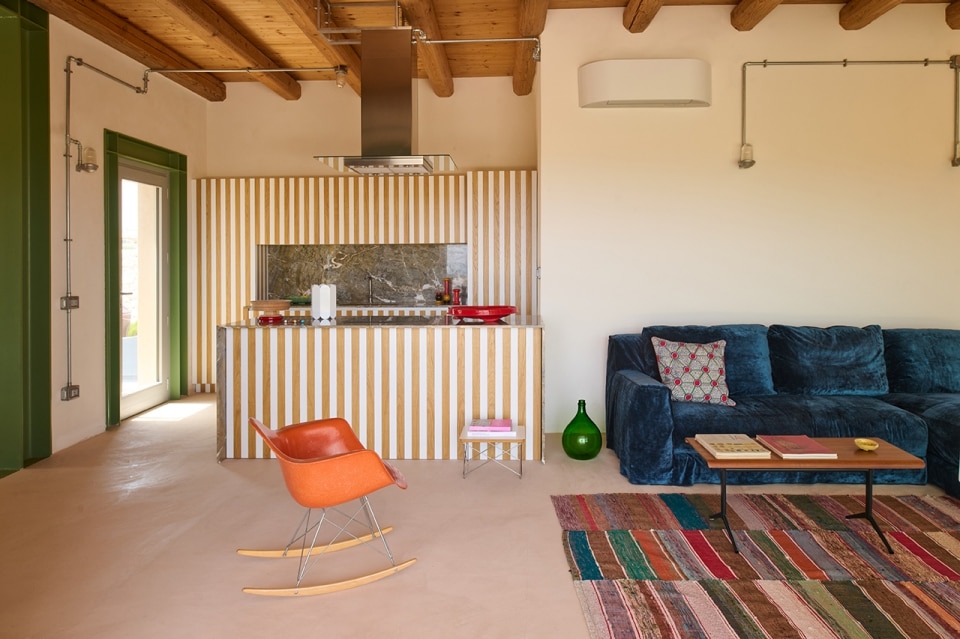
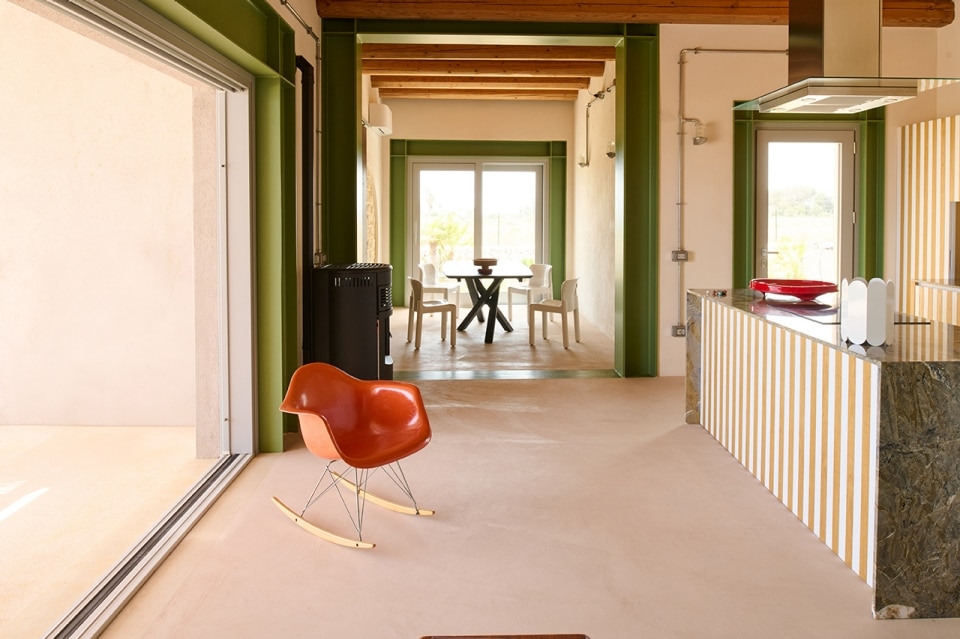
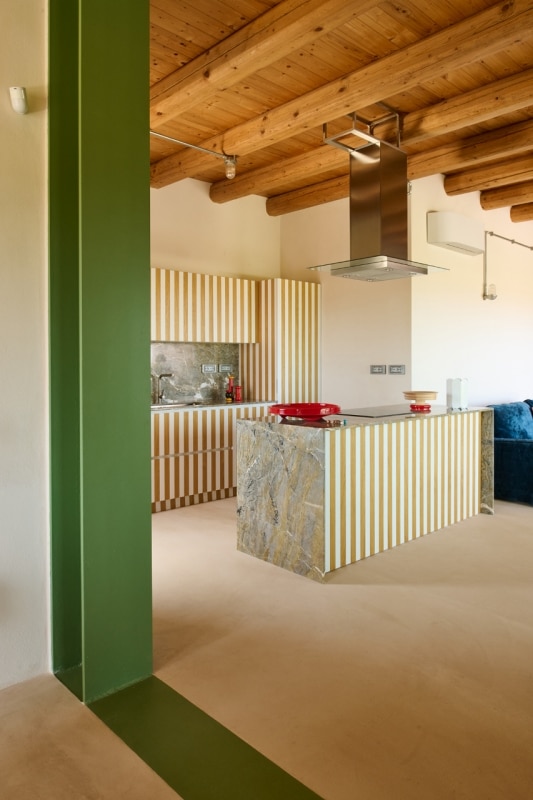
So in keeping with the original U-shape, the dwelling made entirely of load-bearing walls, and previously composed of three separate units, is reconfigured into a single core where new anti-seismic steel reinforcement are introduced and deliberately left exposed, and characterized by a bold green tone painting, as are the fixtures that run undisturbed across the apartment's walls and ceilings.
In some parts, the interior wall plaster is removed to expose the original masonry, framing it in circular forms and generating artistic elements integrated into the space.
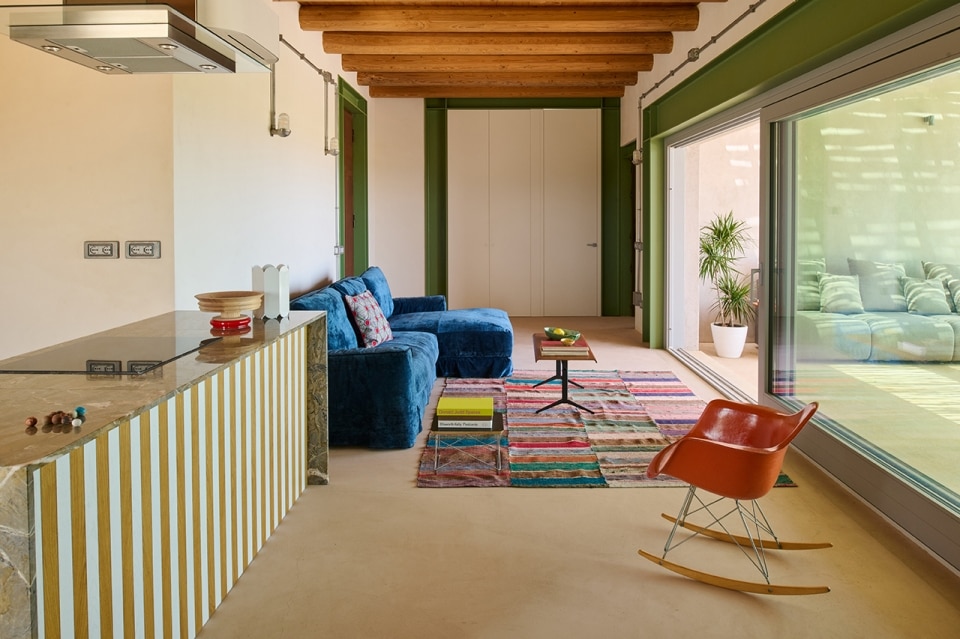
Inside, spaces are organized around the large central core of the kitchen, set in a custom-built cabinet with striped oak slats, its image replicated in the kitchen island, recalling the classic striped aesthetics of classic beach resorts.
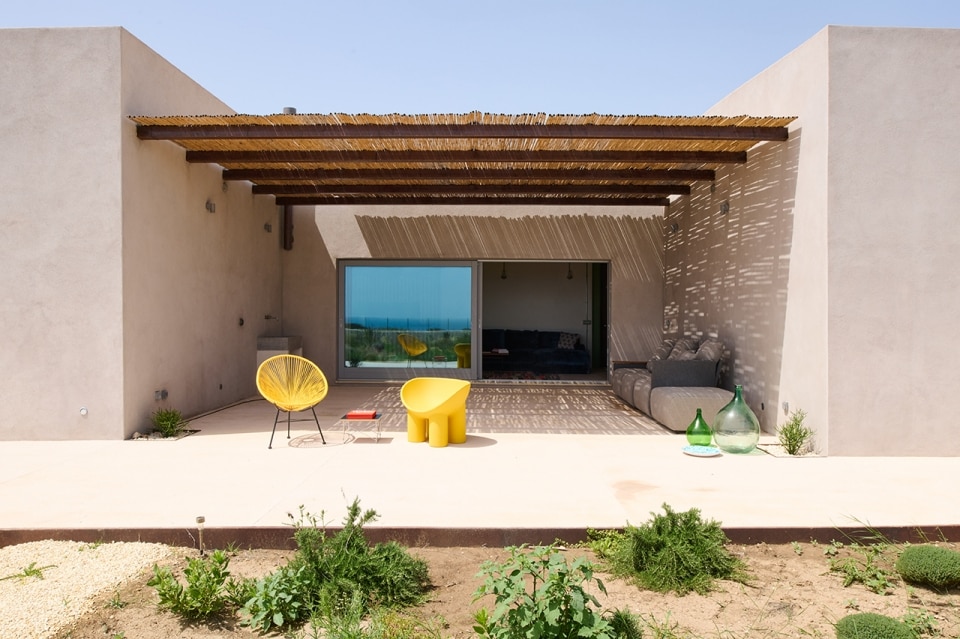
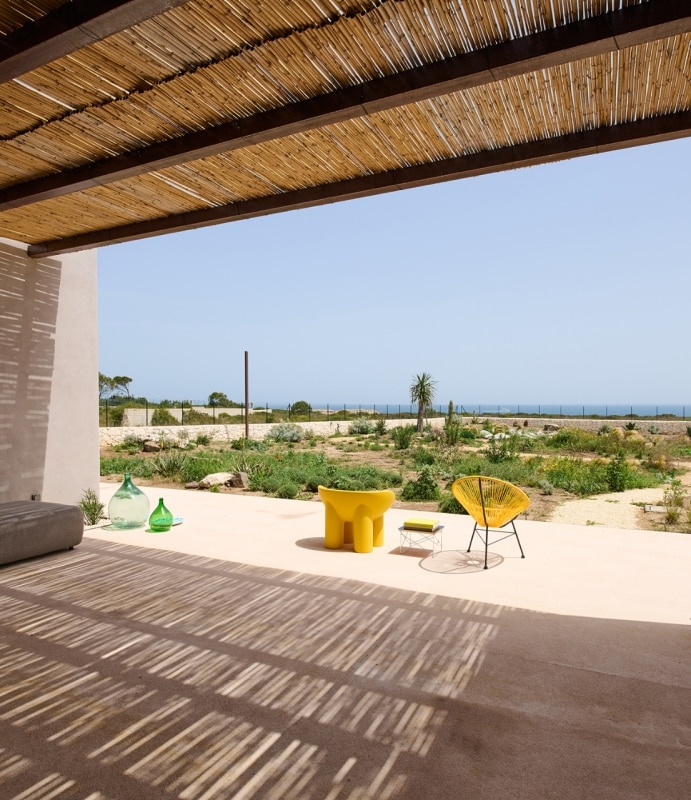
The living area in front of the kitchen features a large glass window and is designed in continuity with the outdoor space enclosed by the two side volumes and protected by a light canopy lying on wooden beams.
The side volumes of the dwelling accommodate the bedrooms, characterized by large porthole windows, which project the inhabitants toward the seascape of the eastern Sicilian coast.
The use of simple, authentic materials—such as local cocciopesto, natural stone, and iron—anchors the project in its local roots and reflects a conscious integration of the building with the landscape memory of the Plemmirio Reserve.