









Space in our cities is becoming increasingly scarce and this is hardly news. But at the same time it is what makes the phenomenon of the tiny houses one of the most explored in contemporary architecture. Last year we compiled a list of the most interesting projects of 2024 designed for minimal spaces. This year we just had to up the ante by asking: but what, really, is the smallest house in the world?"
Without setting ourselves either spatial or temporal limits, we set out to find out, and an official record does, in fact, exist: the Guinness Book of World Records awards the title to the Casa del Dispetto (or Casa du currivu) in Petralia Sottana, Sicily. Barely a meter wide, it was built in the 1950s as a personal vendetta during a feud between neighbors. It is not habitable, but it has become a curious tourist attraction and has certainly served its purpose.
Whether it still holds the record today is hard to say. Competing with it are, on the one hand, increasingly extreme architectural experiments that challenge the very concept of "minimum habitable" on the other, projects that celebrate the small as shelter, micro-architectures immersed in nature, mobile and transportable modules that are redefining the boundaries of living.
So how to proceed? Is the width assessed? The floor area? The amenities? The actual habitability? Without an unambiguous answer, drawing up a true podium is impossible.
What is certain is that trying - in the wide spaces of our studio apartments - is a good way to feel a little less lonely, a little less Renato Pozzetto upon his arrival in the city, in that famous scene from the Italian film Il ragazzo di campagna (Country Boy).
Keret House - Warsaw, Poland: 14.5 sqm
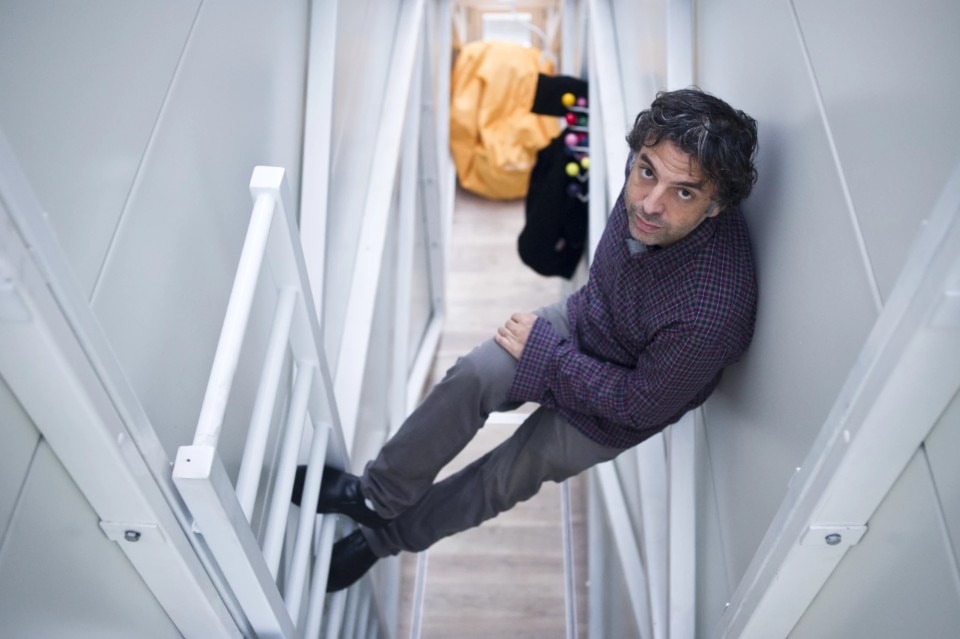
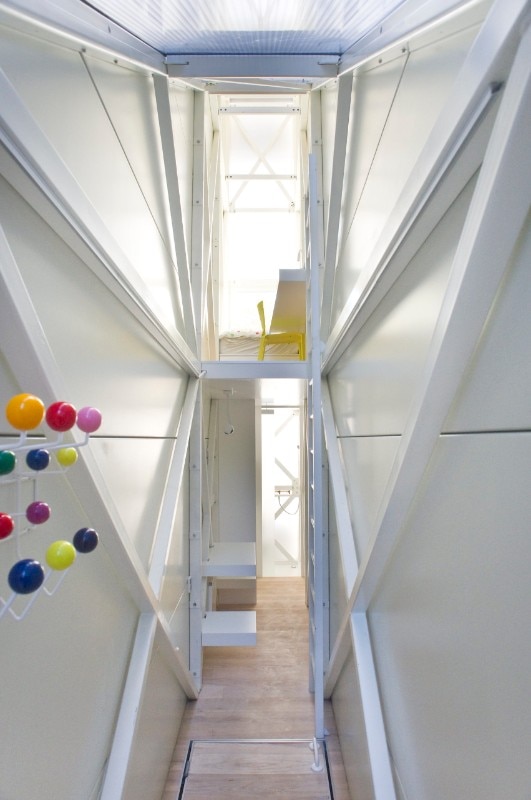
Designed by Jakub Szczęsny between a prewar building and a Soviet prefab building, the Keret House wedges into a space just 92 cm wide at the minimum point and 152 cm wide at the maximum point, totaling about 14.5 sq m spread over several levels. It houses a bed, bathroom and kitchenette, and is supplied with electricity and utilities from adjacent buildings. Dedicated to Israeli writer Etgar Keret-the symbolic first resident-it is as much a work of art as it is a reflection on urban space and historical memory in the neighborhood. It has inspired articles, tours and memes, becoming world famous. But at 14.5 square meters, it is hardly the smallest.
TOW's Land - Portugal: 13 sqm
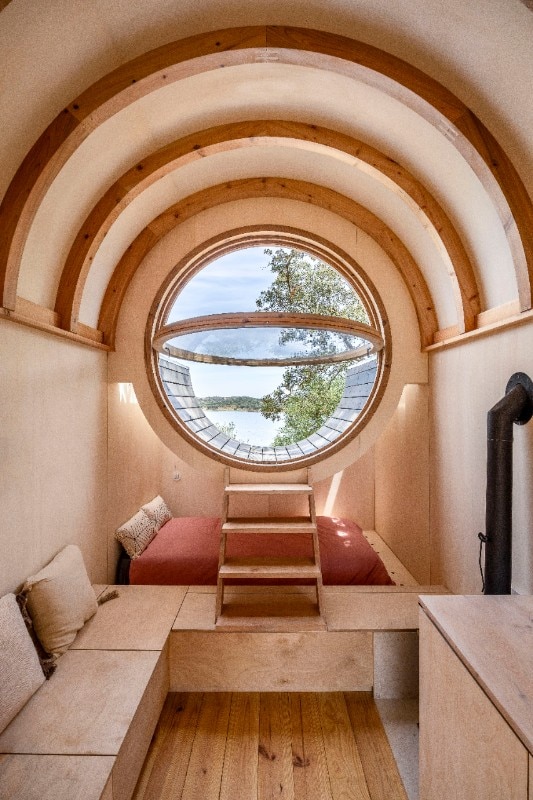
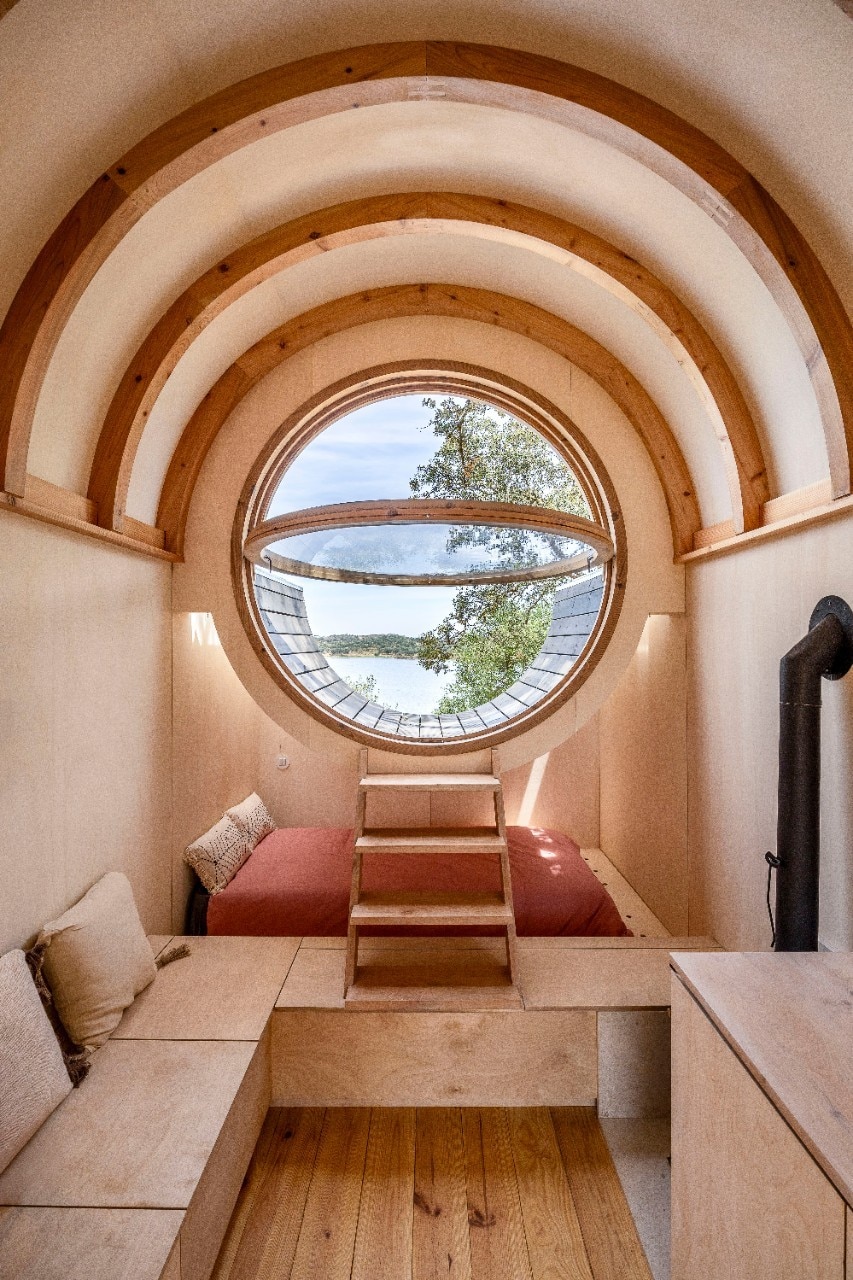
Situated in the Alqueva region of southeastern Portugal, these three tiny houses are born within a regenerative agriculture farm in the heart of the Alentejo, an area also known for astronomical tourism due to the almost total absence of light pollution. Madeiguincho has interpreted this context with monolithic volumetries: white lime for interiors and rough cork for exterior cladding that recall the archaic forms of megalithic dolmens in the area. Each unit is conceived as a different project, habitable and self-sufficient, united with the others by the terrace-observatory.
10 smart sqm - Sweden: 10 sqm
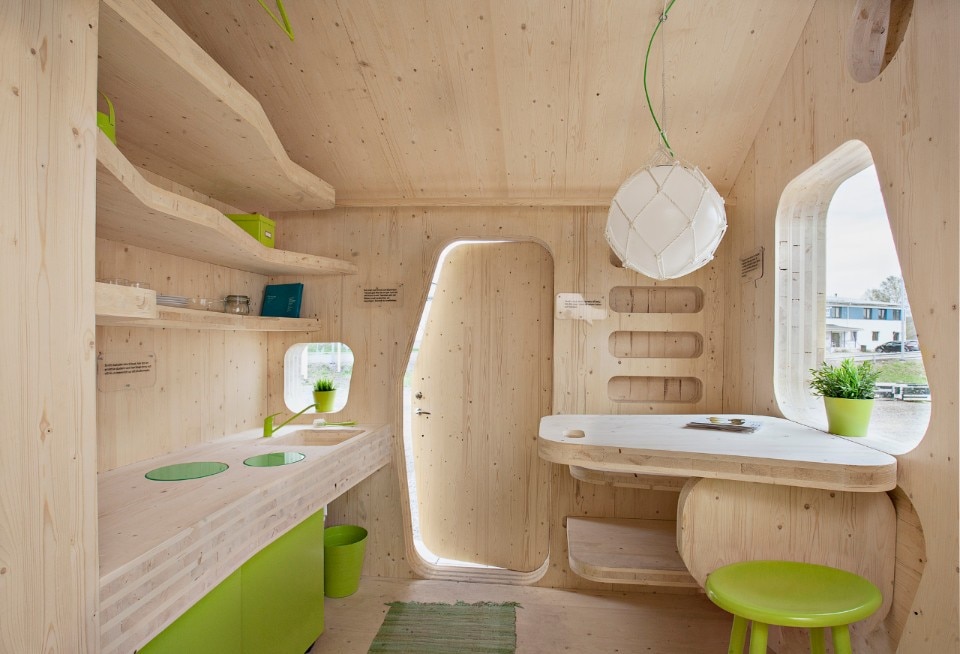
Designed by the Tengbom studio in collaboration with Lund University, Martinsons and AF Bostäder, these 10-square-meter units are constructed of cross-laminated timber (CLT) and reduce the cost of rent by up to 50 percent compared to traditional housing. Each module includes a raised bed, kitchen, bathroom, study area, and even a small outdoor patio. The compact design takes advantage of transformable solutions: tables built into windows, storage stairs, and curved walls to amplify the perception of space. The project, developed together with the students, was presented at the Virserum Art Museum and subsequently implemented in 22 units in Lund, proving that 10 square meters can be enough to live with comfort, functionality and sustainability.
The Cabanon - Rotterdam, Netherlands: 6.89 sqm
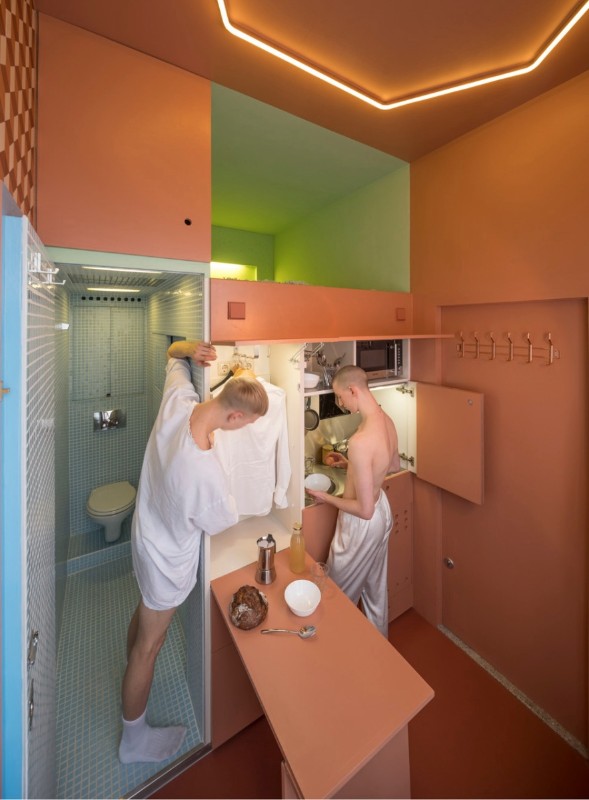
Designed by architects Beatriz Ramo of STAR strategies + architecture, and Bernd Upmeyer, of BOARD Bureau of Architecture Research and Design, The Cabanon transforms an unused space into a 6.89-square-meter micro-apartment consisting of four distinct rooms: living room, bedroom, bathroom, and even a mini spa with sauna and hot tub. Every element is designed to the millimeter to maximize comfort in a small space, eschewing any aesthetics of austerity and focusing instead on quality materials, height variations, and intelligent use of volume. A radical example of "compact luxury."
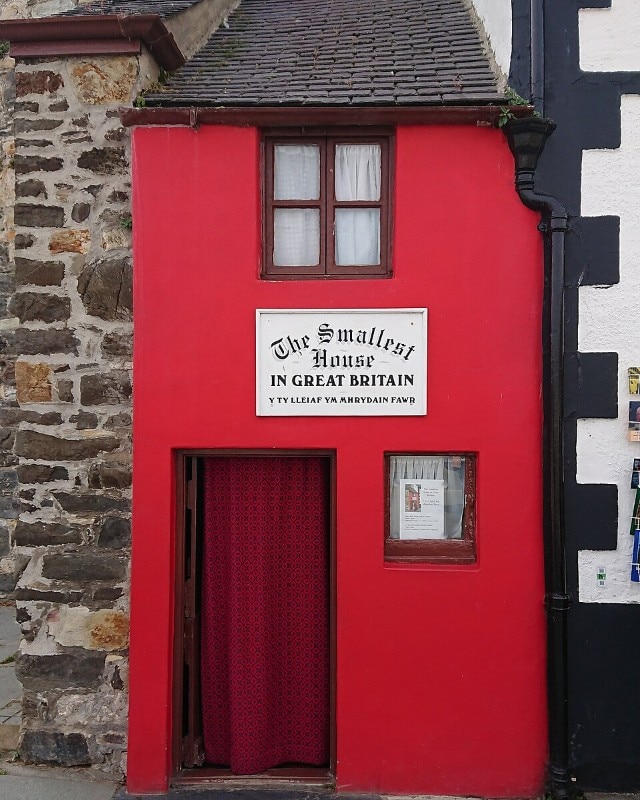
Smallest House in Britain - Conwy, Wales: 5.49 sqm
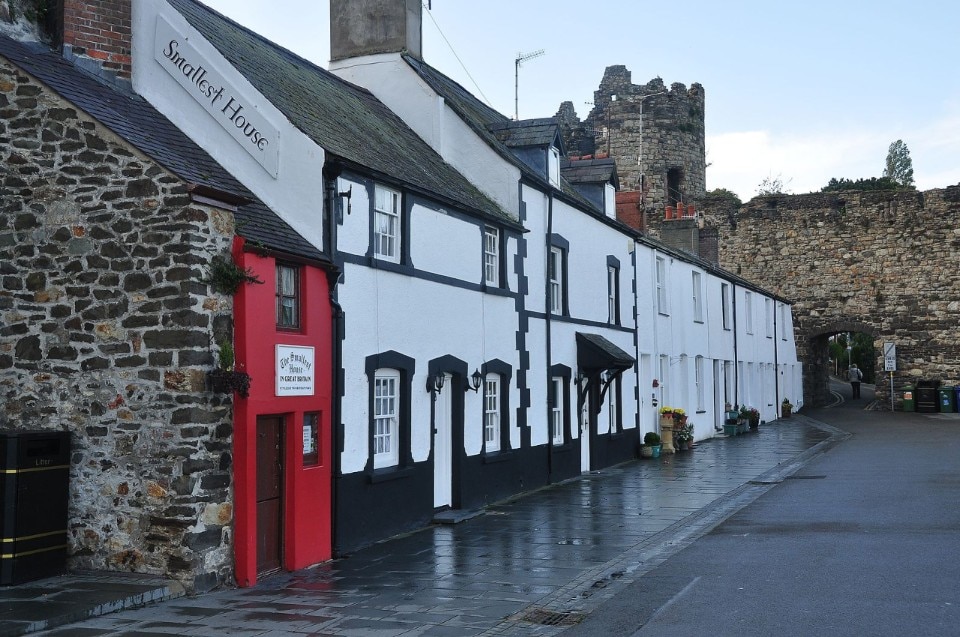
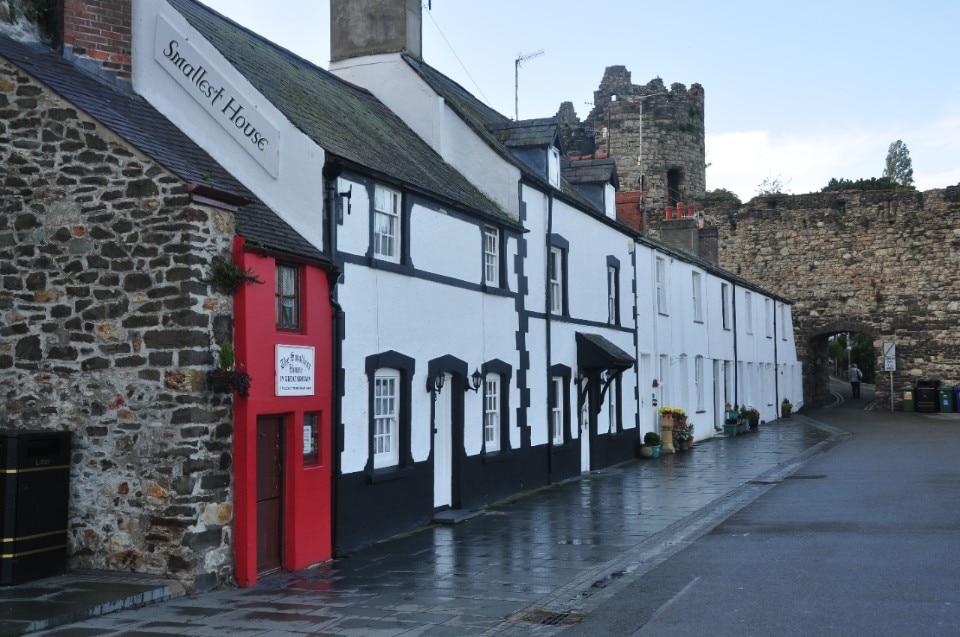
Known as "The Quay House," it is a small red house on the waterfront in Conwy, North Wales. It is two stories high, but in total measures 5.49 square meters. It is said to have been inhabited until 1900 by a fisherman nearly two meters tall. Today it is a tourist attraction and one of the world's smallest houses, officially registered by the Guinness Book of World Records.
One Square Meter House - Berlin, Germany: 1 sqm
Without a doubt, the smallest solution is the one designed by architect Van Bo Le-Mentzel, founder among others of the Tiny Foundation research project. One Square Meter House is a one-square-meter house. Self-assembling, collapsible and transportable, it is designed to be placed in outdoor spaces but also inside other dwellings to carve out your own personal space. More than an actual dwelling, it is a conceptual provocation: a political and individual gesture against the crisis of space and living.