


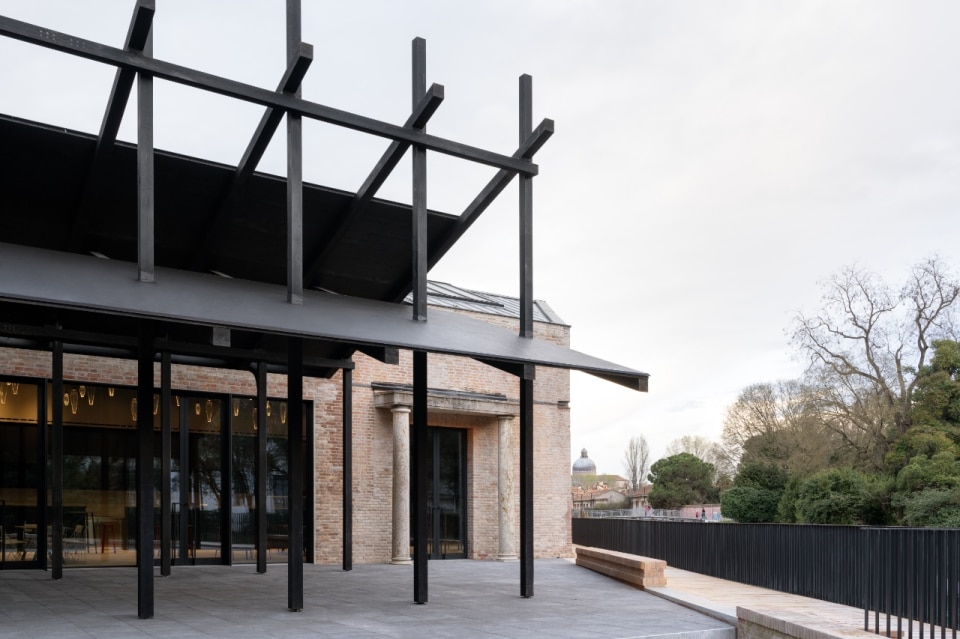
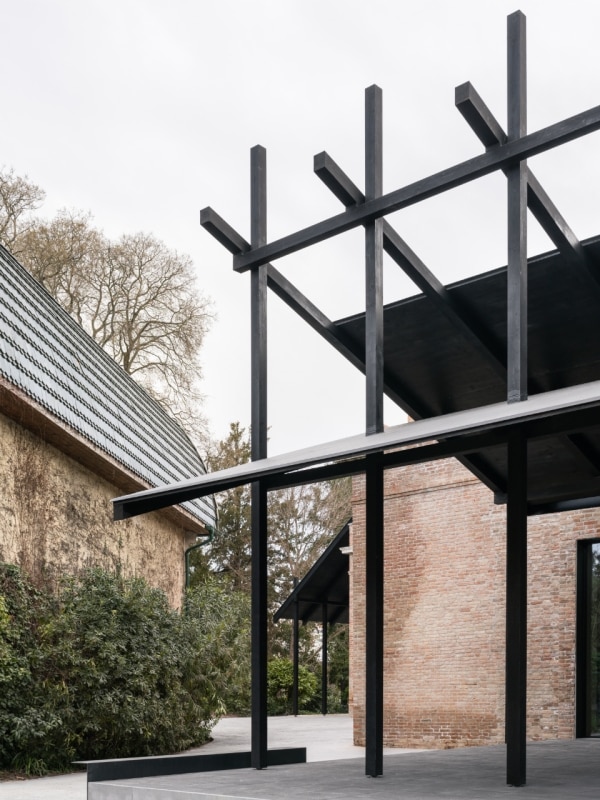
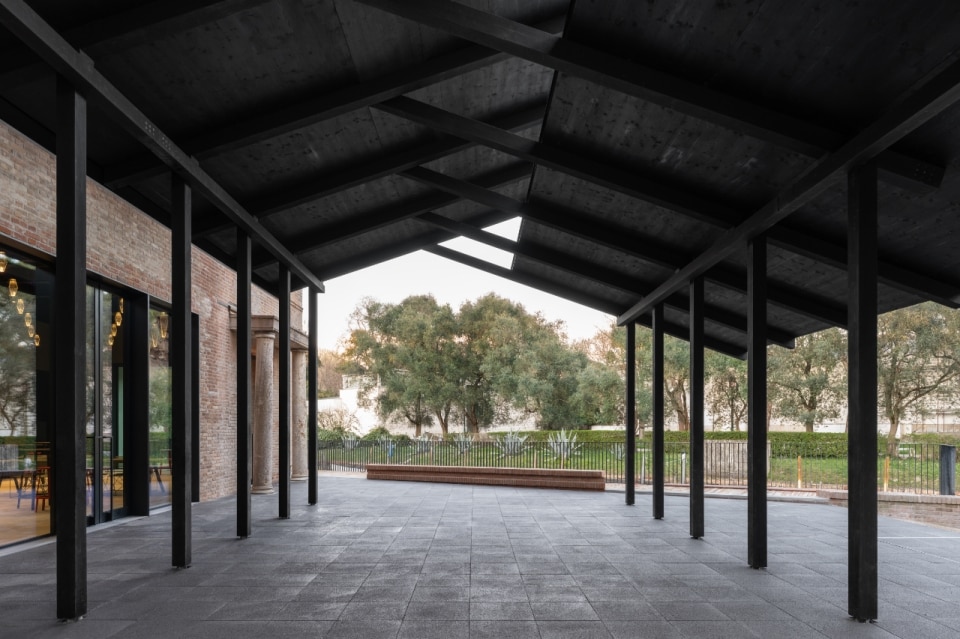
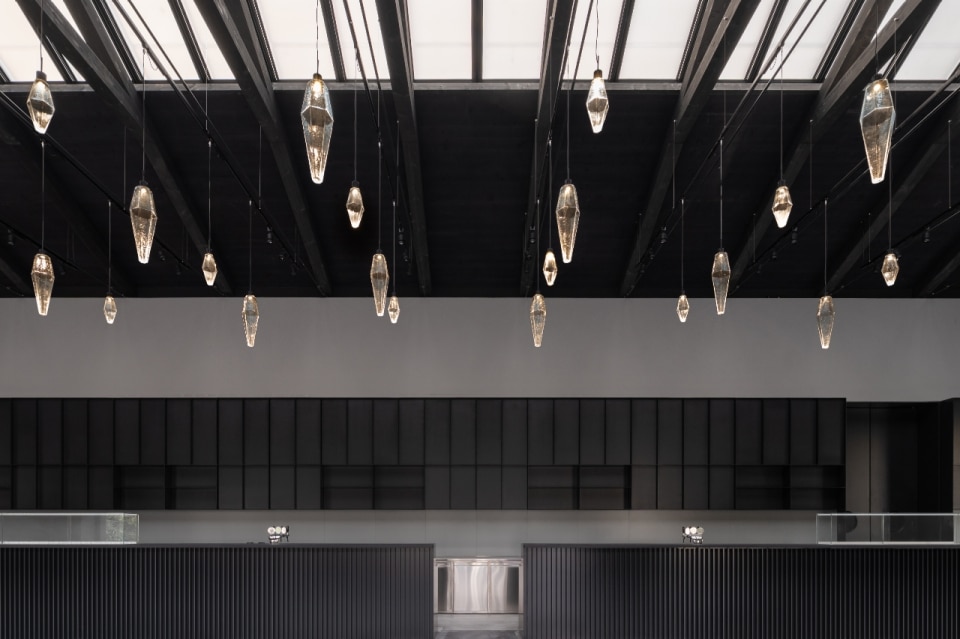
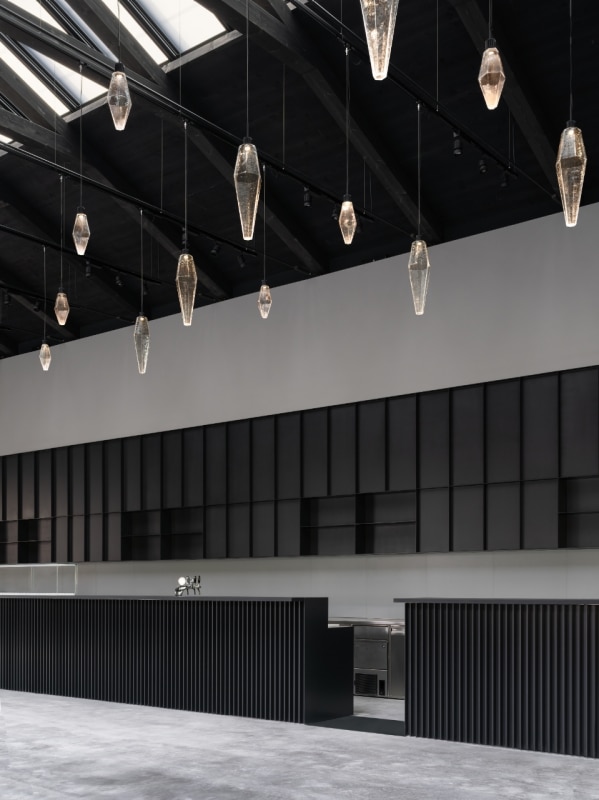
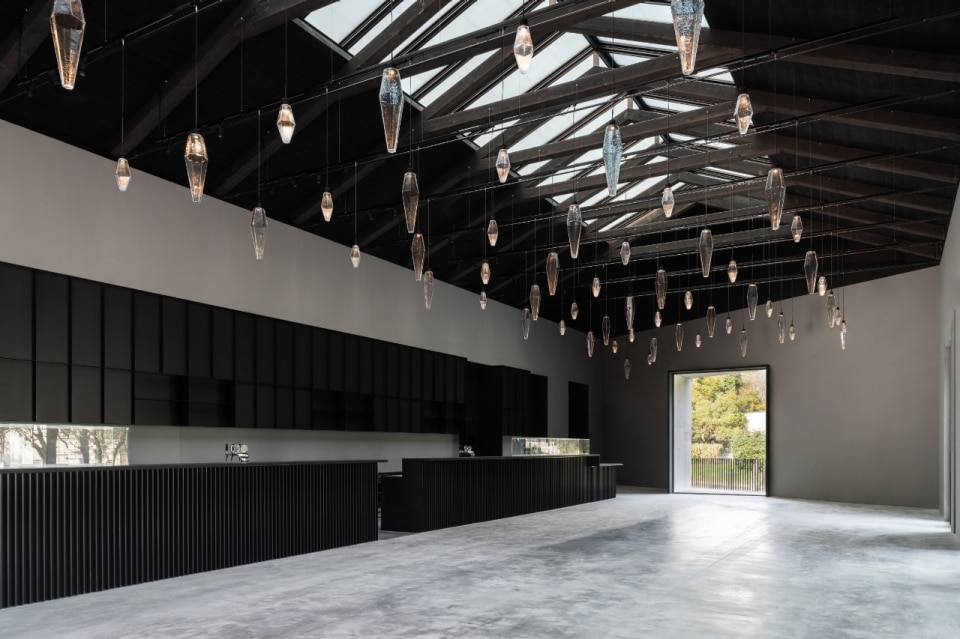
The cafeteria at the Giardini of the Venice Biennale, designed by Tobias Rehberger and awarded the Golden Lion in 2009, has been removed as part of the renovation of the Central Pavilion. News of its removal comes with the first images of the new space, which from this year will replace the now-historic artist-designed cafeteria.
The intervention is part of a broader redesign of the building’s interiors by the Rome-based architecture and design firm Labics.
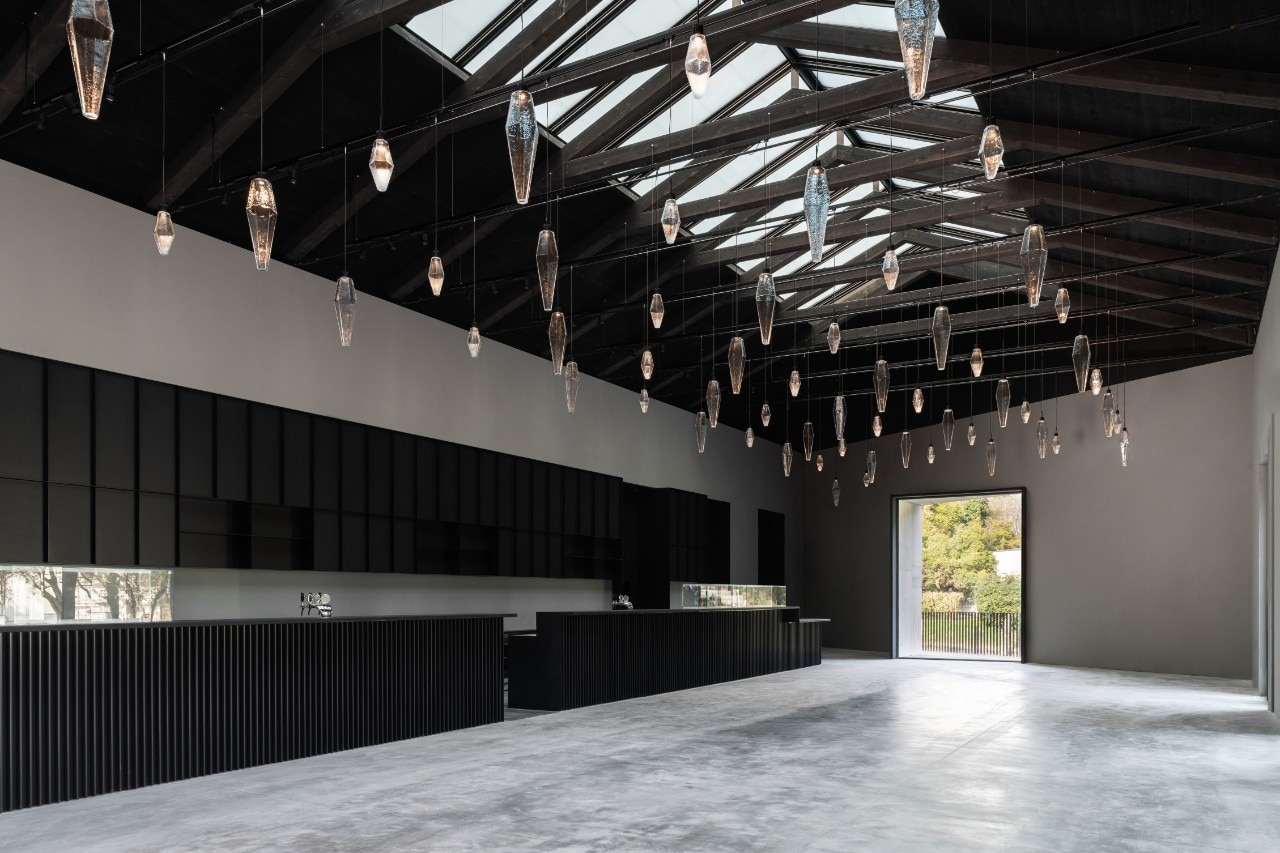
The images show an environment that stands in stark contrast to its predecessor. Rehberger’s bar was a saturated, optical and highly immersive interior, built around graphic contrasts, mirrored surfaces and brightly colored sculptural furniture. The new design, by contrast, adopts a restrained, functional and rarefied language.
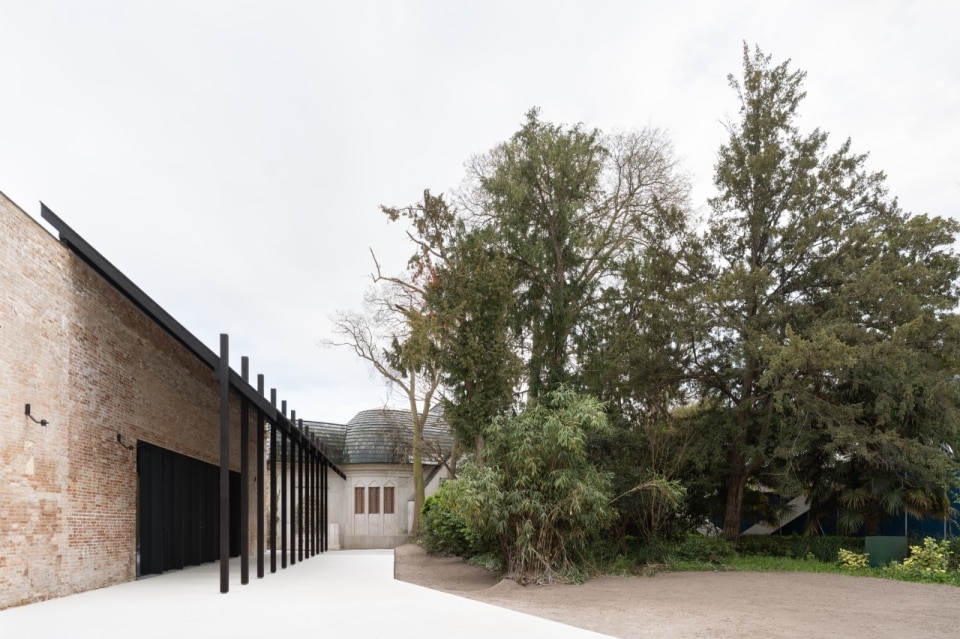
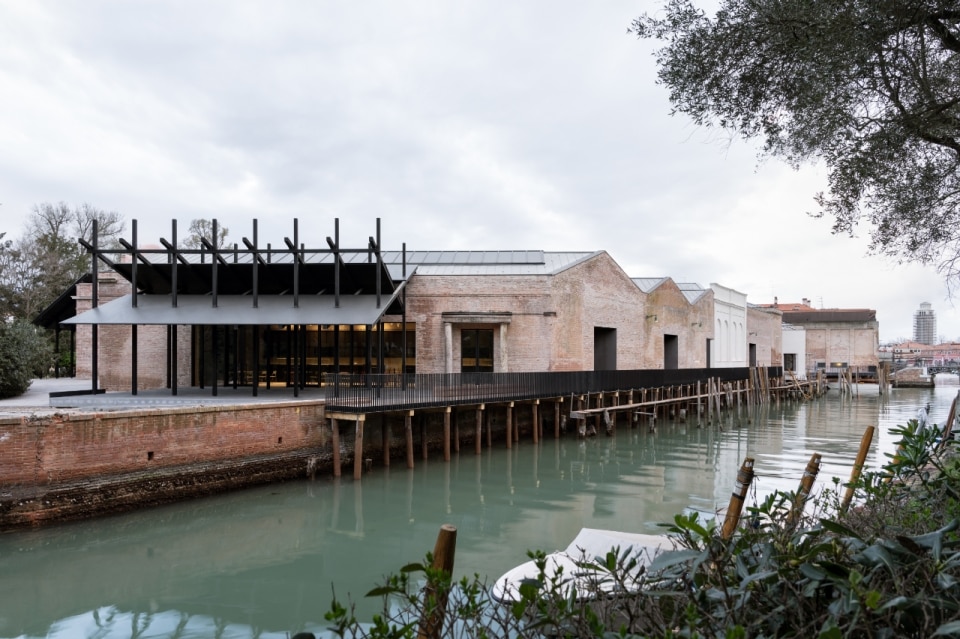
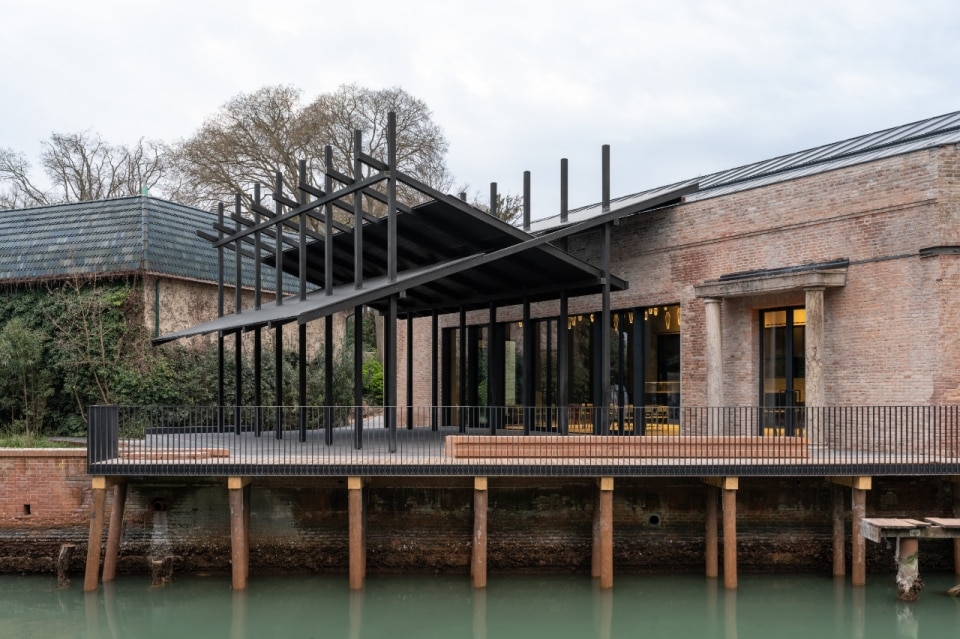
Neutral walls, dark counters, suspended glass lamps and a new arcade define a space that is more open, brighter and in dialogue with the outdoors.
The removal of the bar immediately sparked controversy, not least because Rehberger’s intervention was not merely a service space but a work of art in its own right.
What drew criticism, beyond the loss itself, was the way it happened. Artribune wrote that, for the end of the bar, “not a single word of farewell was spent,” while the artist told the magazine he had been informed only a few weeks before the removal and had no time to imagine a different reworking of the project’s conclusion.
What is certain is that the bar, initially conceived as a temporary intervention, after seventeen years of unexpected use was showing clear signs of deterioration, despite the various restoration efforts carried out over time, including the one undertaken for the 2023 Architecture Biennale.
This is far from a secondary issue.
For an optical work, it is in fact crucial. The effectiveness of the artist’s environment depended on the precision of the design, the sharpness of its contrasts, the integrity of its surfaces, and the continuity of the perceptual effect they produced. All of these elements had long been compromised, to the point of affecting the very integrity of the work itself. If, in a public space, a certain degree of dysfunction can still be tolerated when it belongs to the language of the work, the situation changes when that work is no longer able to exist as its author intended.
At that point, time takes over.