

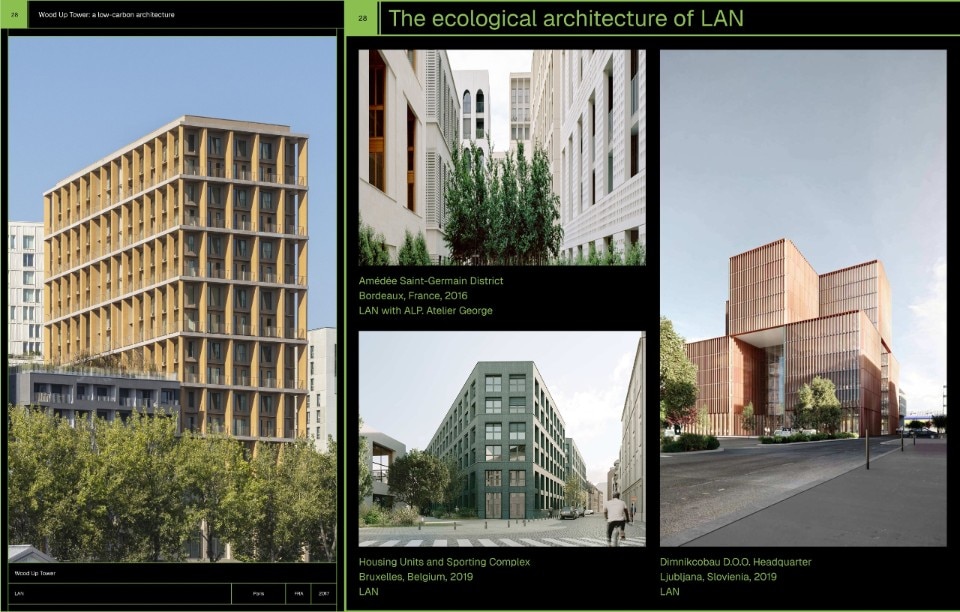
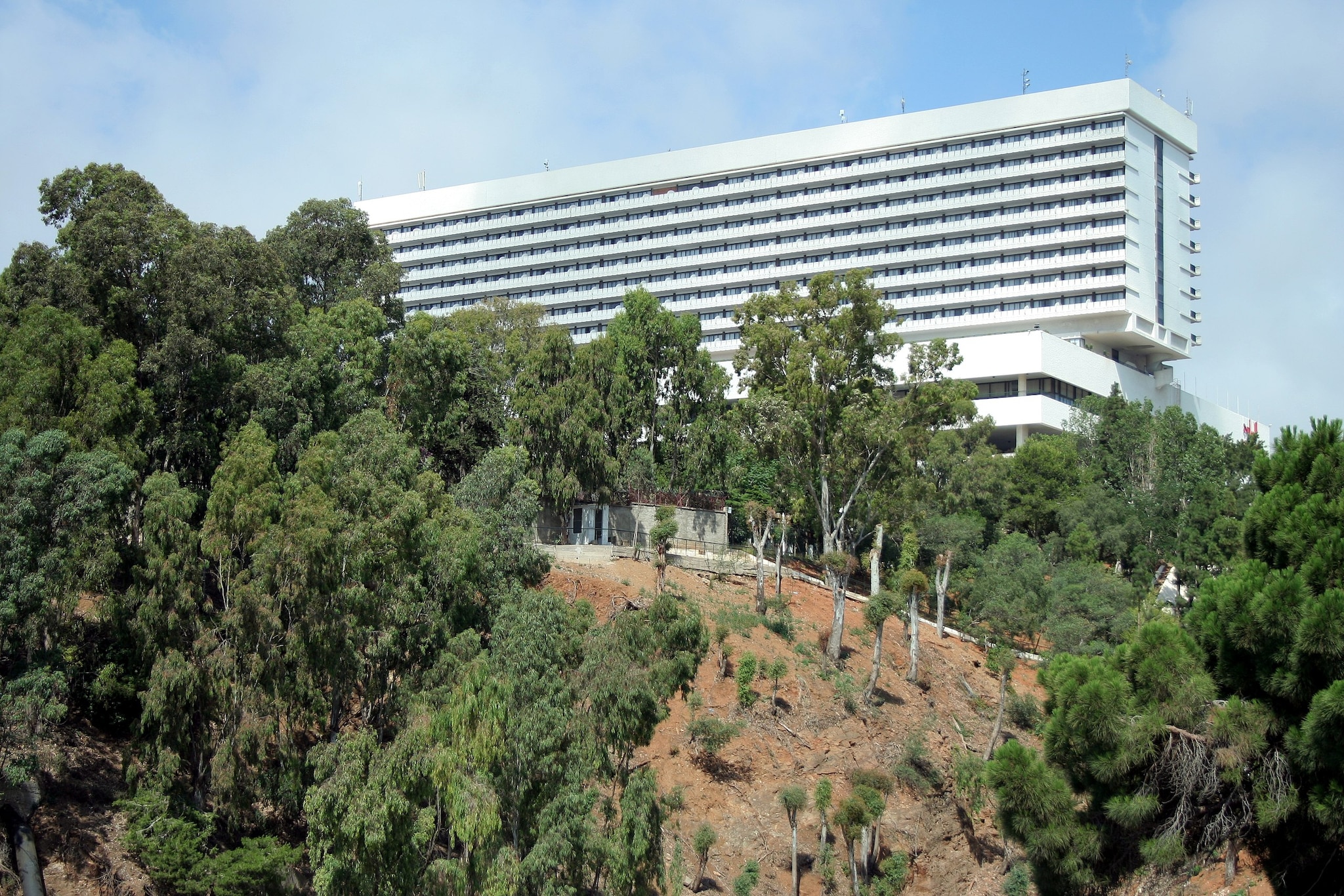
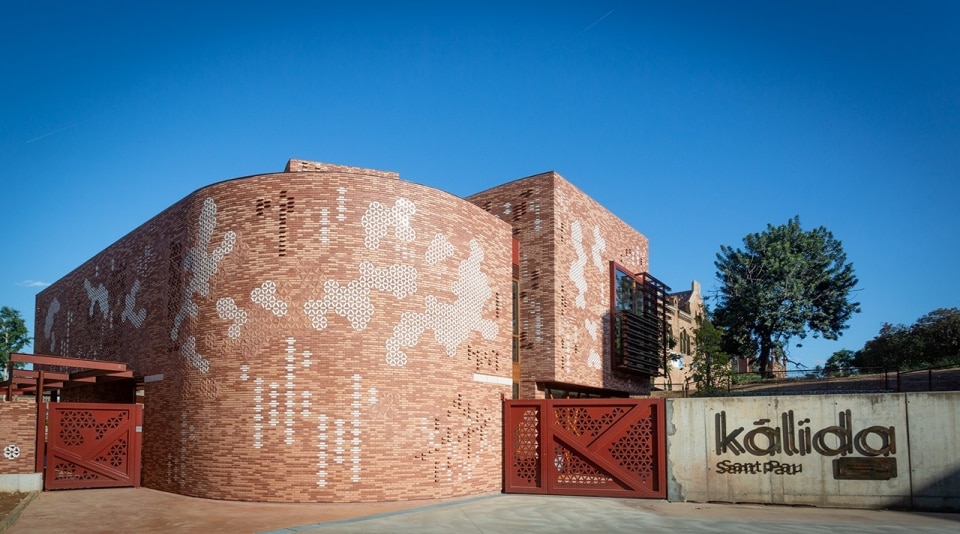
The works of Luigi Moretti in Algeria and Arturo Mezzedimi in Ethiopia, the public spaces of Benedetta Tagliabue in Barcelona, the Olivetti factory of Franco Albini in Buenos Aires, Archea Associati's World Ceramic Art City in Lilin, Orizzontale's Urbanaut's Unit in Utrecht, and Renzo Piano's museums around the world: for centuries the Italian genius has left an indelible mark on the global architectural landscape, designing or constructing important buildings, monuments, and public spaces that have transformed the face of cities and landscapes around the planet.
The exhibition "Italian Architecture Worldwide" promoted by the Ministry of Foreign Affairs and International Cooperation and the Ministry of Culture, with contributions from the Iuav University of Venice and Sapienza University of Rome, and Accurat explores the widespread contribution of Italian architects from 1500 to the present, highlighting how their works have left tangible and cultural traces all over the world. A tradition symbolic of Italian creativity, combining ingenuity, aesthetics and functionality, emerges powerfully here.
Central themes of Italian architecture worldwide are the movement of Italian architects understood both as a geographical shift and as an evolution of the ideas and traces they have left on the continents, bridging peoples and traditions to build solid and lasting relationships across borders.
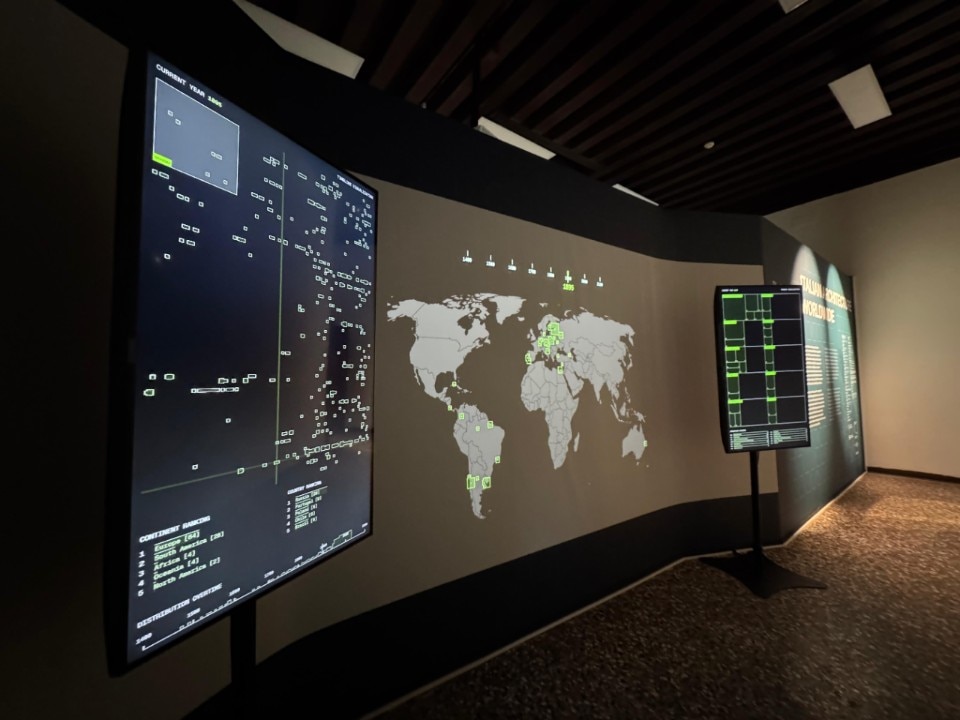
From Michele Sanmicheli to Renzo Piano, the mapping of Italian architecture brings together a significant sampling of more than 500 works, stretching at varying densities across five continents and five hundred years of history. A kind of atlas of the expansion of Italian genius in the world, traveling on a double level: the distribution of works over time and the link with the country that hosts them. Thanks to the interactive installation created by Accurat Studio, a leading agency in the creation of immersive experiences that combine data, technology and design, the number of buildings created in a given historical period, the foreign states richest in Made in Italy works, the variety of styles and types of buildings created and the relationship between a given period and a country emerge at a glance.
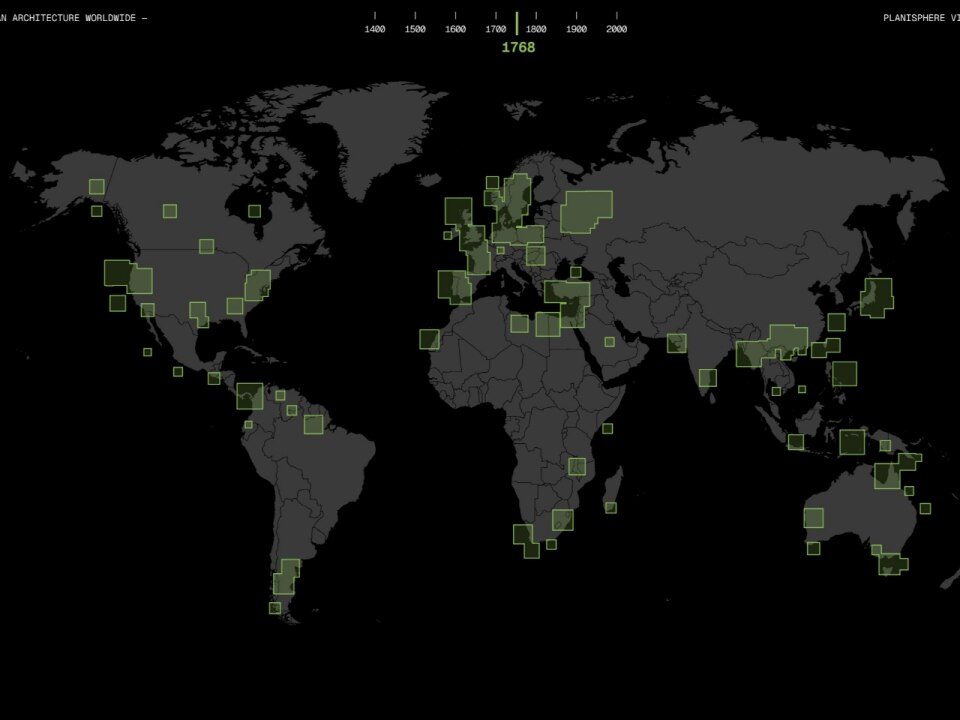
The exhibition is divided into two sections: Planisphere Italy and Transnational mosaics and microstories. The installation Planisfero Italia, a triptych visualized by a projector and monitor, signed by Accurat Studio, a division of Accurat, highlights the spread and distribution of major Italian architecture around the world. "Our digital installation combines storytelling and analysis with the aim of enhancing the contribution of Italian architects around the world from the 16th century to the present. Through a triptych of visualizations and thanks to data collected by universities and ministries on about 500 works," explains Matteo Fabbri, design director, "it has been possible to reconstruct the evolution of architectural typologies and geographical flows. The analysis highlights the shift from religious and cultural buildings to residential, civic, and leisure works, and a spread that, from Europe, South America, and Russia until the 1960s, has gradually shifted to the United States, Africa, and the Middle East."
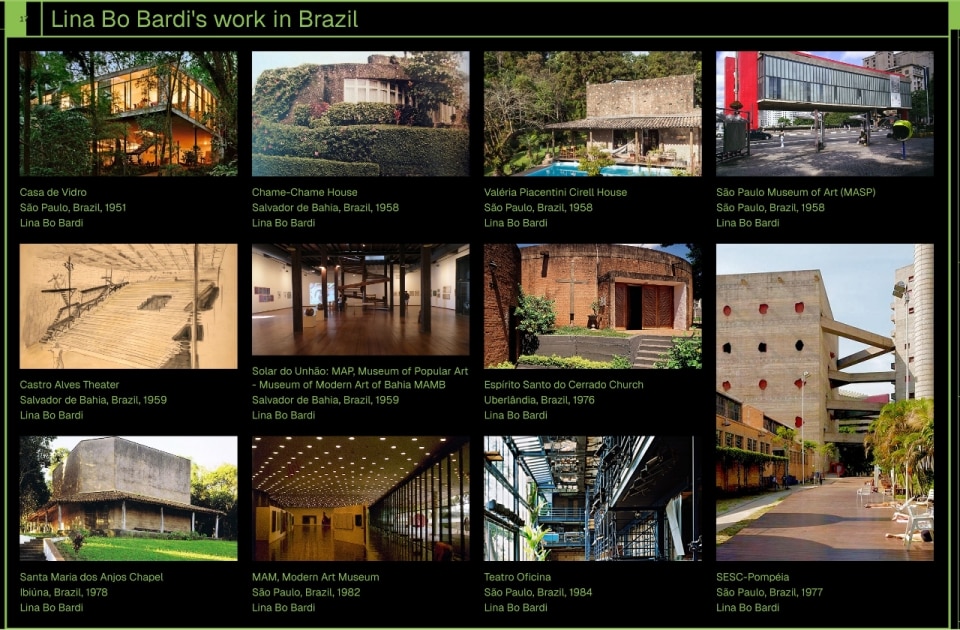
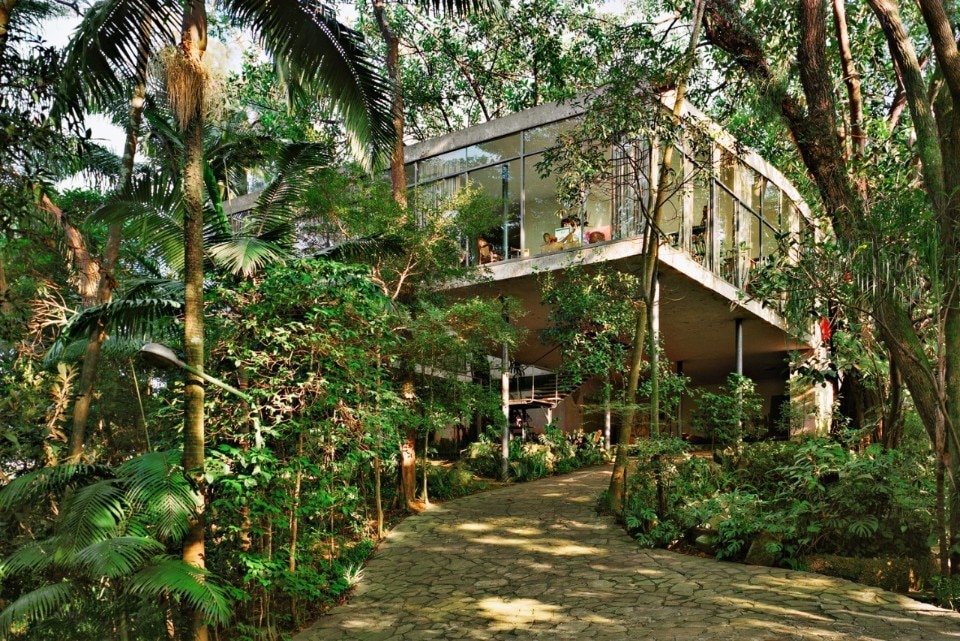
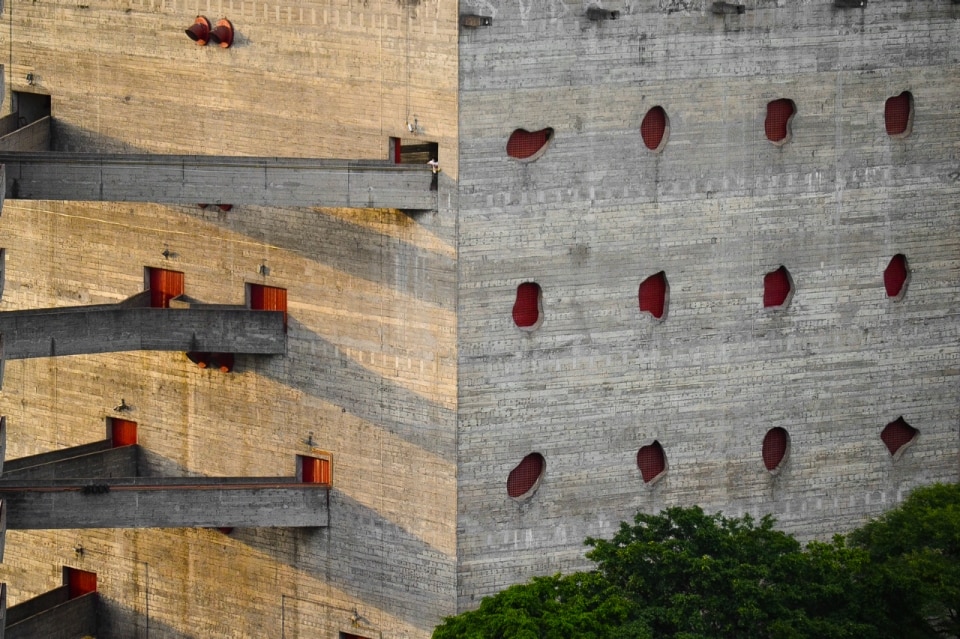
Transnational Mosaics and Microhistories proposes a focus on thirty case studies of modern and contemporary Italian architecture, made outside national borders. The projects are organized into three main areas: the concentration of works in a particular city or country, "monographs" of individual architects or studios particularly active abroad, whether it be specific places where they have worked (such as Luigi Moretti in Algeria, Lina Bo Bardi in Brazil, and Romaldo Giurgola in the United States), whether it is an important professional outlet for one's work (as in the case of the Archea Associati or Barozzi Veiga studios), or the quite exceptional affair of Renzo Piano who, with 28 buildings in 23 different cities, is the architect with the absolute record for quantity and quality of exhibition spaces created, and the scope of typologies (places of worship, train stations and airports, residences, but also factories, stores and showrooms made for Corporate Italian as the case of Olivetti). Each of these "mosaics" corresponds to a specific microhistory, that is, a focus on several works in comparison.




The complex archival work, which led to this mapping, was carried out by Accurat Tech, a division of Accurat: "The visualizations under study are the result of a multidisciplinary approach that integrates design, artificial intelligence, and data analysis with the goal of making the contents of complex archives accessible, readable, and narratively engaging."
- Show:
- "Italian Architecture Worldwide"
- Edited by:
- Benno Albrecht, Marco Marino, Iuav University of Venice Alessandra Capuano, Benedetta di Donato, Sapienza University of Rome Filippo De Dominicis, University of L'Aquila
- Where:
- Ca' Tron Palace, IUAV Venice Headquarters
- Dates:
- May 9-November 23, 2025