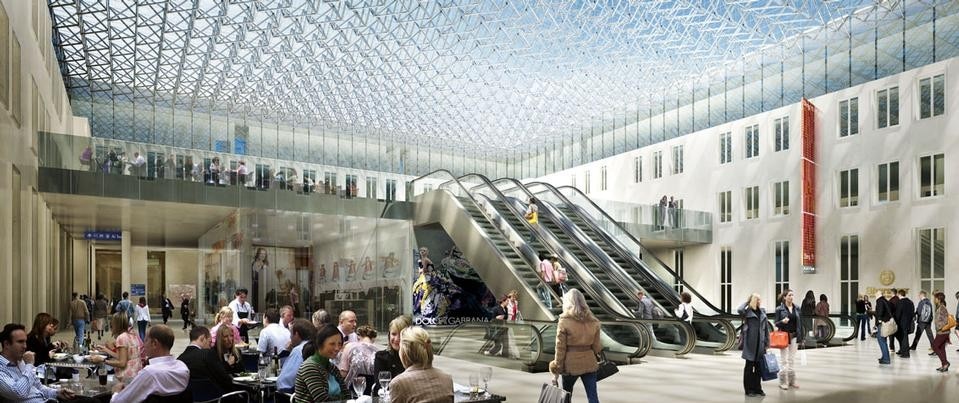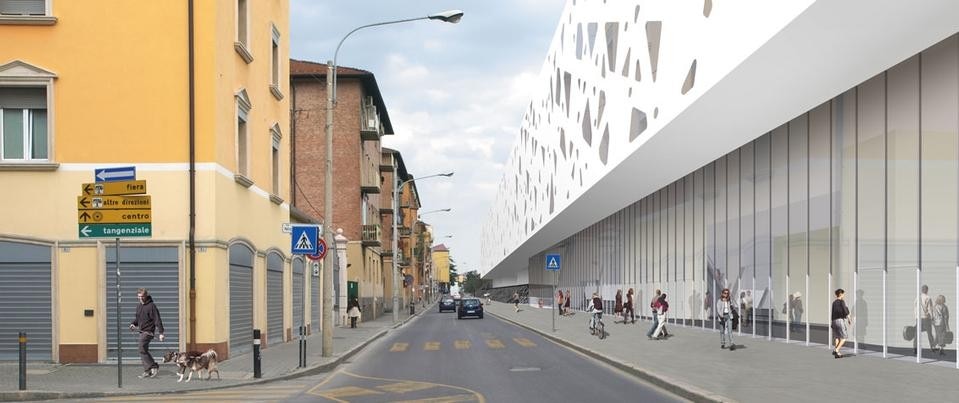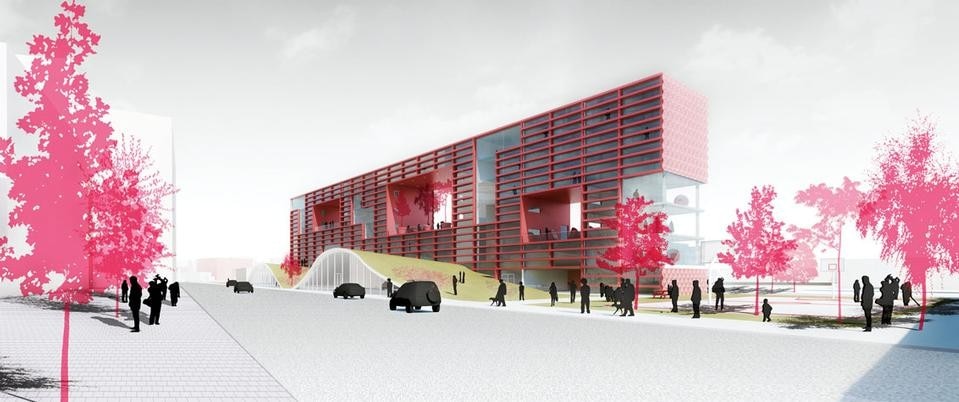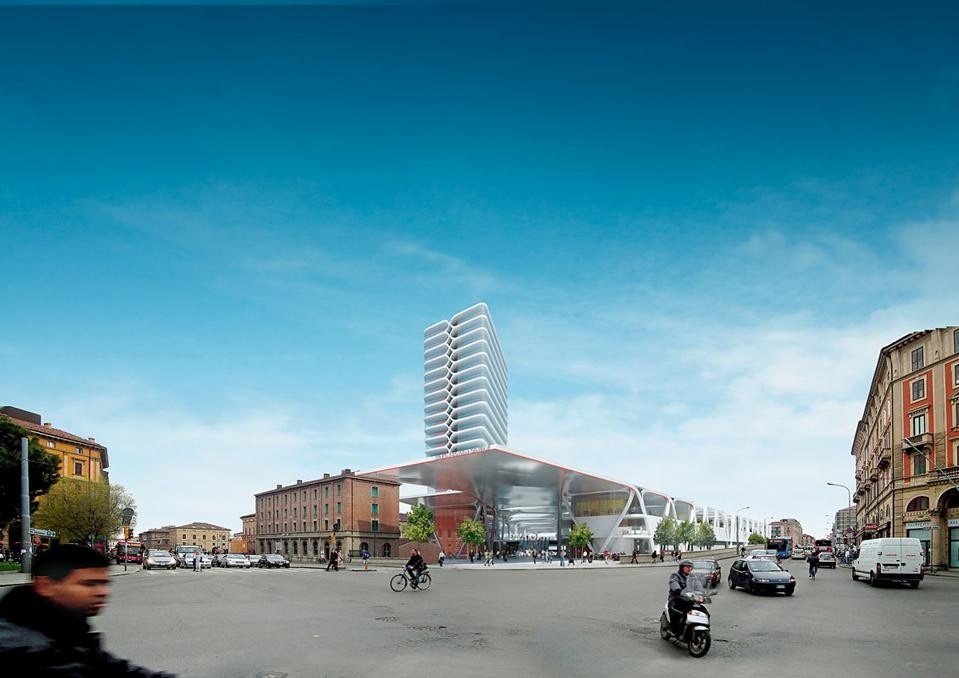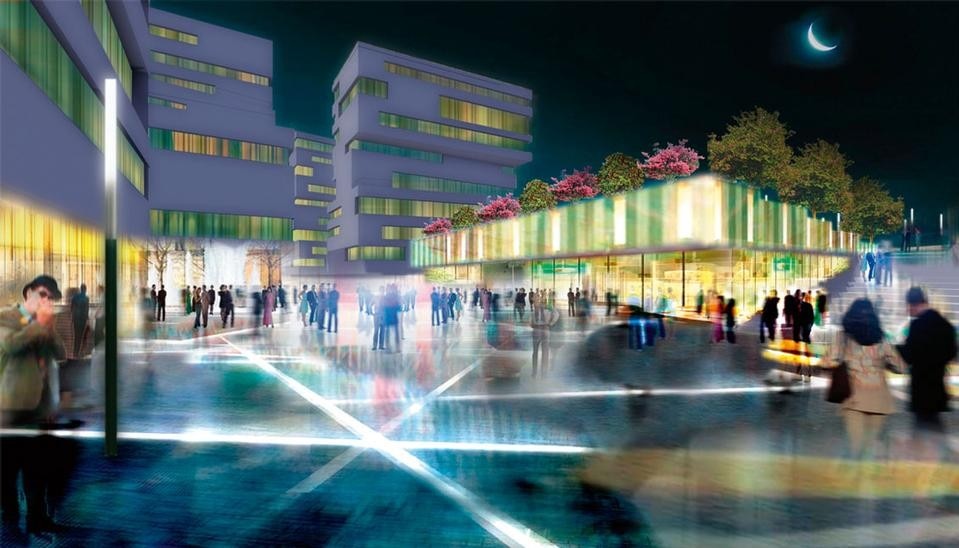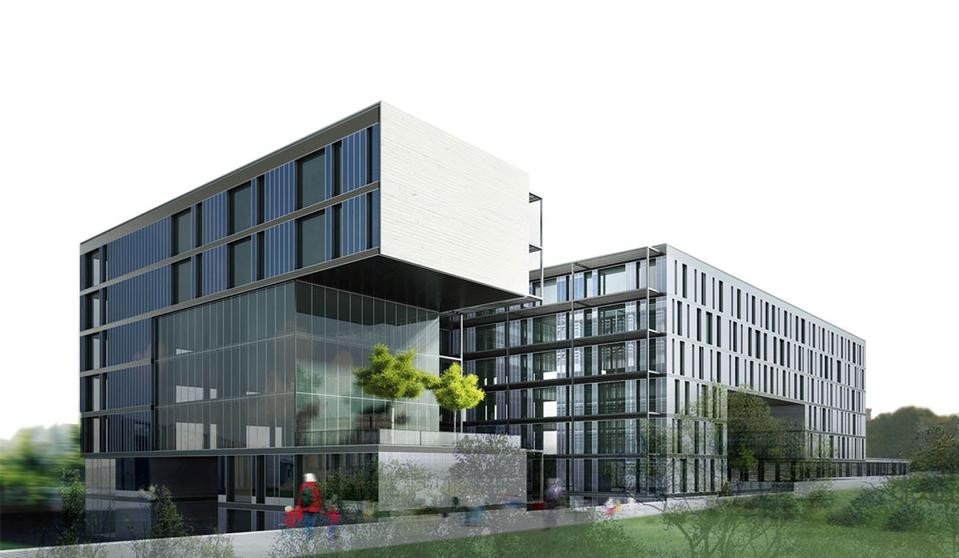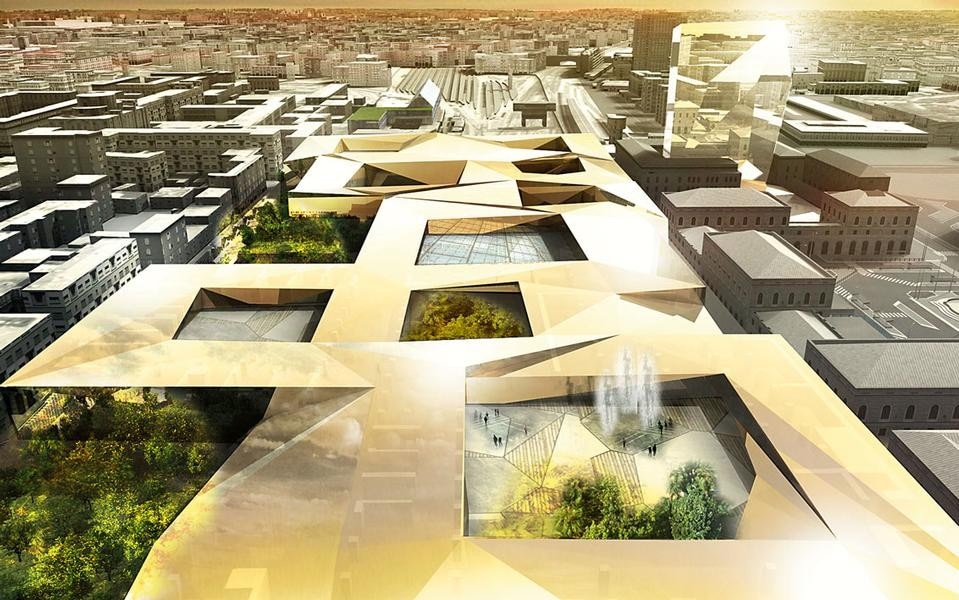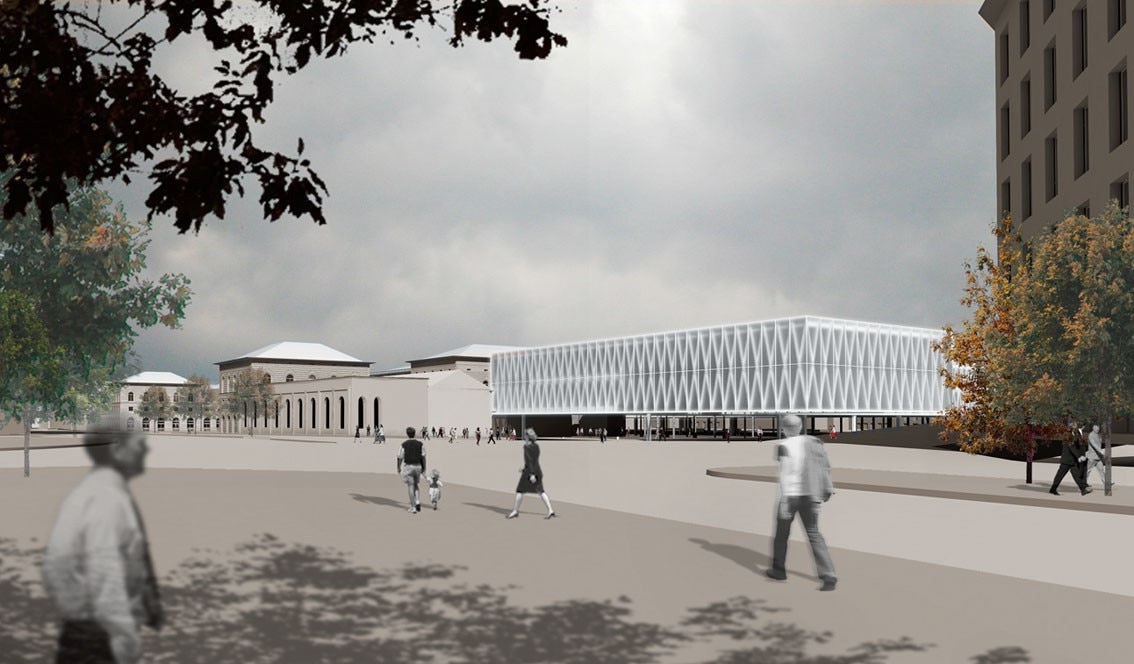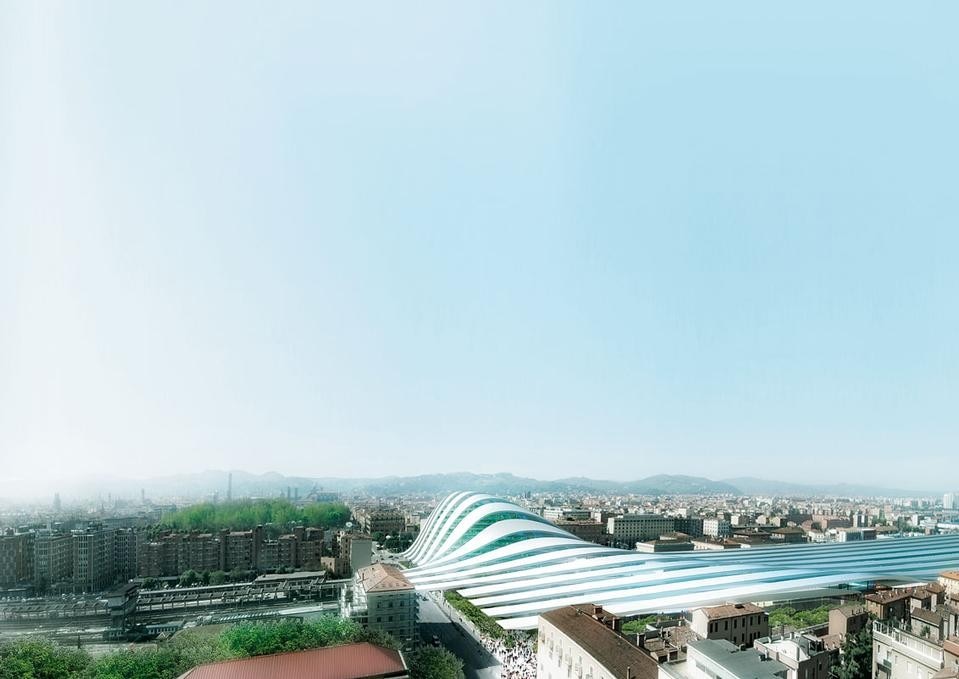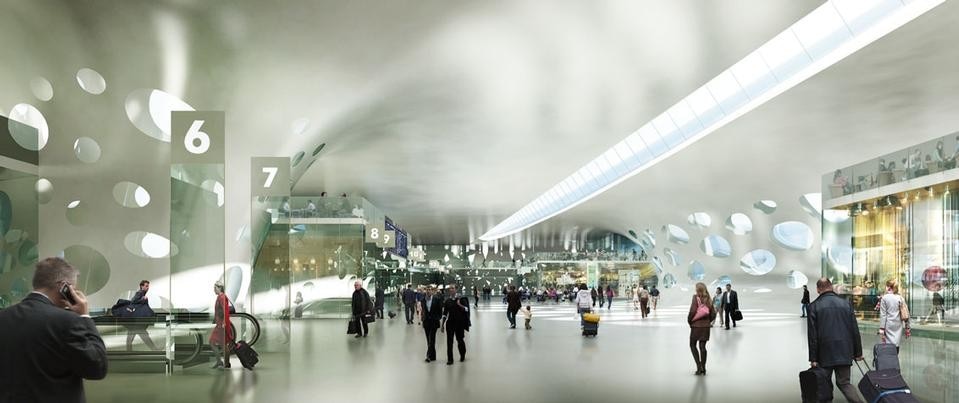
Futura 787 (Arata Isozaki) The winning project directed by Isozaki (with Ove Arup and M+P & Partners) is presented as a closed but fascinating body. Defi ned as a “condensate of city”, it fi ts quietly and unobtrusively into the heart of Bologna, with no excessively high-rise volumes. The Japanese architect’s design suggests a reconstructed urban centrality for the specifi ed zone, through the concepts of continuity, horizontality and decomposition. Isozaki moreover, has attempted to establish a link between the future of Bologna Station and its tragic past (...) by perforating the membrane of his structure with lacerations and apertures redolent of the physical and spiritual wounds infl icted by the bomb attack on the place and the city as a whole.
(F. A.)
MVRDV (Natalie De Vries- Winy Maas) This piece of city is suspended above the railway lines which will operate without interruption during construction of the new complex.
UNStudio The roof over the two station levels, allocated to commercial, recreational and catering purposes, is the project’s most striking feature.
Cruz y Ortiz Arquitectos The station volume is a single compact shell with a maximum height of 20 metres.
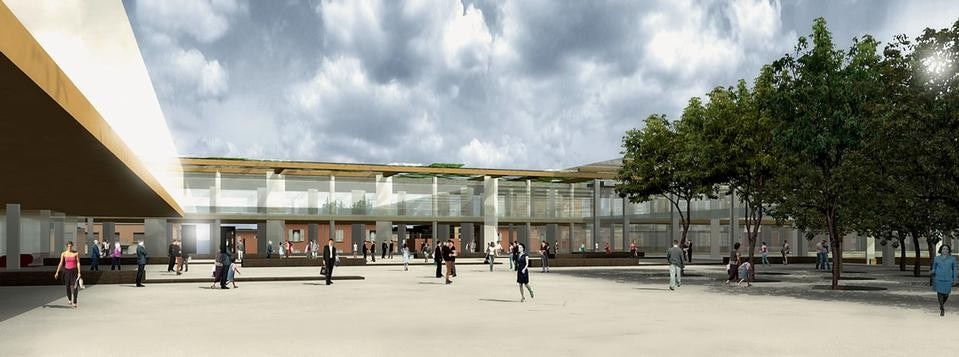
M.B.M. (Oriol Bohigas) The solution proposed is a slab, which alternates the presence of public squares and green areas.
Agenzia di architettura 5+1AA (Alfonso Femia) The multipurpose slab covering the platforms is treated as a tissue of courtyards on three levels
Souto Moura Arquitectos Clarity volumetric in the horizontality of the design and its limited impact on context.
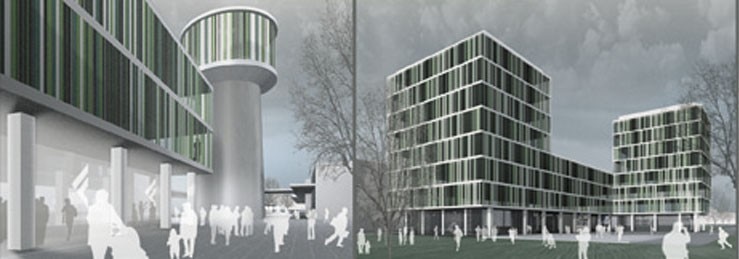
Ingenhoven Architekten The three fundamental parts of the station are independent and can be built separately.
Ricci & Spaini The architects start from an analysis of the pedestrian fl ows relating to the station’s various routes and uses.
Stefano Boeri The six volumes designed are laid out under a large suspended and constantly changing rectangular roof.
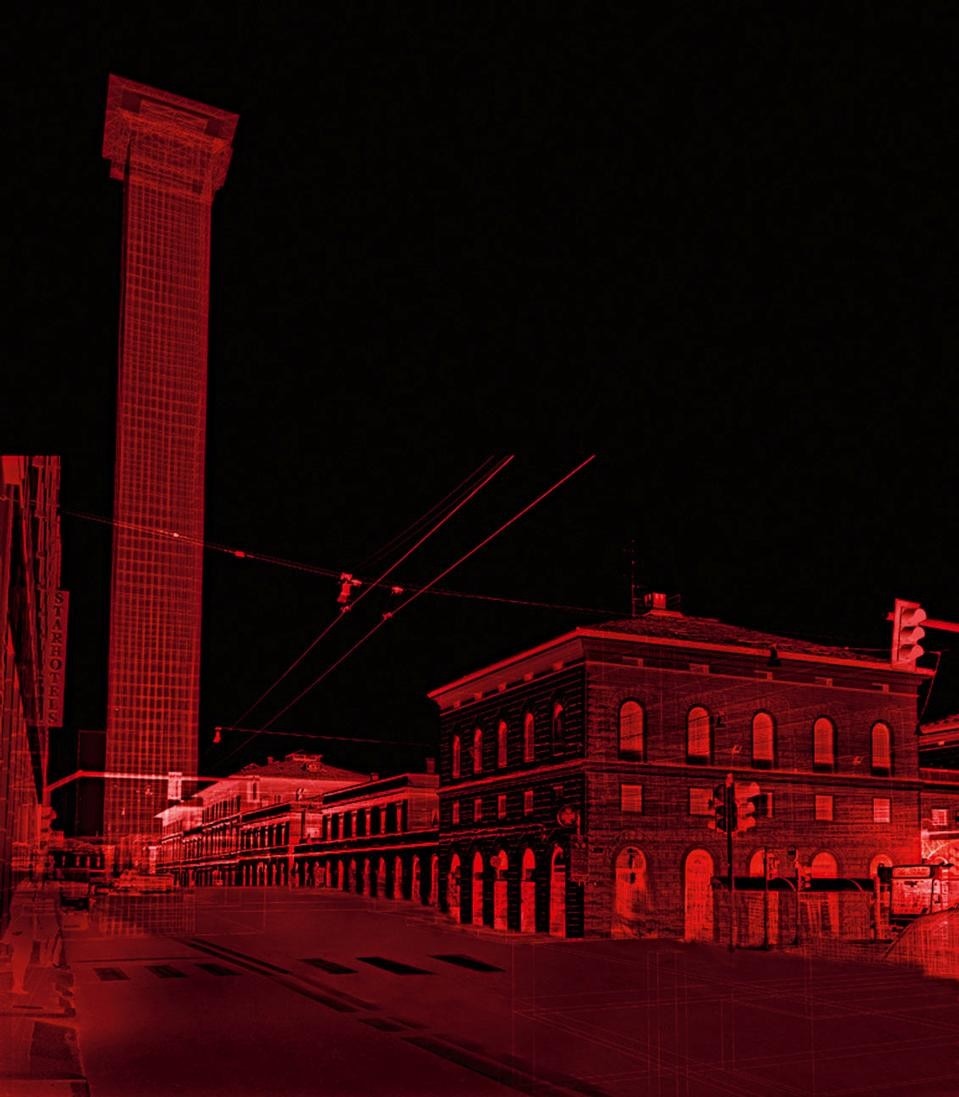
Jean Nouvel The most characterizing choice has been to place the intermodal arcade 15 metres below rail level.