



In the 1960s, the small seaside hamlet of Castiglioncello, 15 kilometers from Livorno, served as the set for Dino Risi’s iconic film Il Sorpasso. Vittorio Gassman and Jean-Louis Trintignant set off from Rome aboard a Lancia Aurelia B24 and, on the first leg of their improvised journey, arrive on the Etruscan Coast.
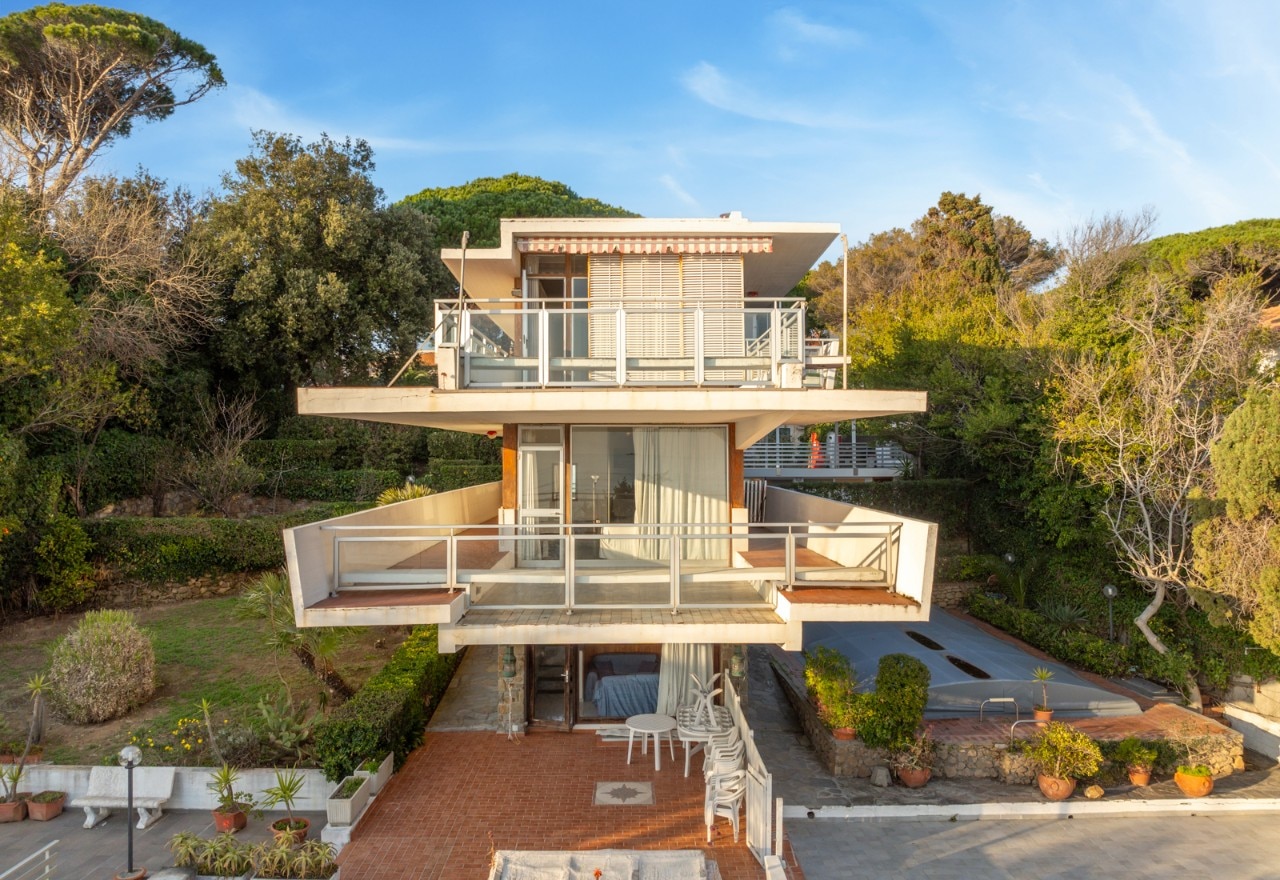
While the film that would make this stretch of coastline famous across Italy was being shot, Villa Cardon was already taking shape nearby: a house commissioned from Leonardo Ricci overlooking the Tyrrhenian Sea, now back on the market for just under €3 million. Beyond the usual headlines of high-end real estate, the sale offers an opportunity to revisit the work of a figure who remained on the margins of the canonical narrative of postwar Italian architecture, despite being one of its most eccentric and radical voices.
Who was Leonardo Ricci?
Born in Rome in 1918, Leonardo Ricci studied at the Faculty of Architecture in Florence under Giovanni Michelucci and belonged to the generation of architects tasked with rebuilding Italy after the war.
While many of his contemporaries operated within the boundaries of rationalist modernism, Ricci pursued a more unconventional path. He looked to Frank Lloyd Wright for his commitment to material honesty and the relationship between architecture and landscape, while also engaging with ideas emerging in Europe through Team 10: a focus on the lived experience of dwelling and the search for an architecture capable of accommodating human behavior.
Yet Ricci remained difficult to place alongside his peers. Architect, painter, writer, professor at both the University of Florence and MIT, he authored Anonymous of the Twentieth Century (1962), a hybrid work somewhere between essay, manifesto, and—as he described it himself—“a book for everyone.” He believed in architecture as an open organism: a structure not exhausted by its completed form, but one that remained available to experience, transformation, even error.
It seems to me that the house should be born as the things of nature are, which in themselves contain all possibilities and exclude none.
Leonardo Ricci on Domus 337, December 1957
This philosophy is evident in his best-known works, from the villa he designed on Elba for French couturier Pierre Balmain to Florence’s Palace of Justice, a controversial project begun in 1988 and completed only in 2012. But perhaps his clearest architectural statement can be found in his own house-studio at Monterinaldi, along with the fourteen other houses he designed on the same site. Not a villa in the conventional sense, but a structure that grew over time like a geological formation—rejecting any notion of completion and, in doing so, questioning the very idea of the finished work.
Villa Cardon, the house on the cliff
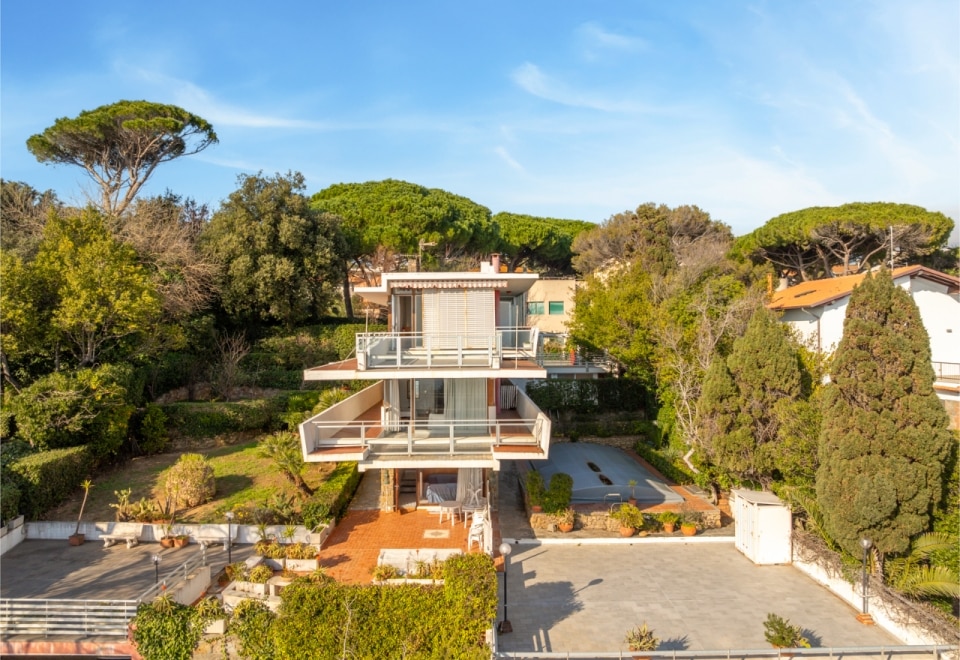
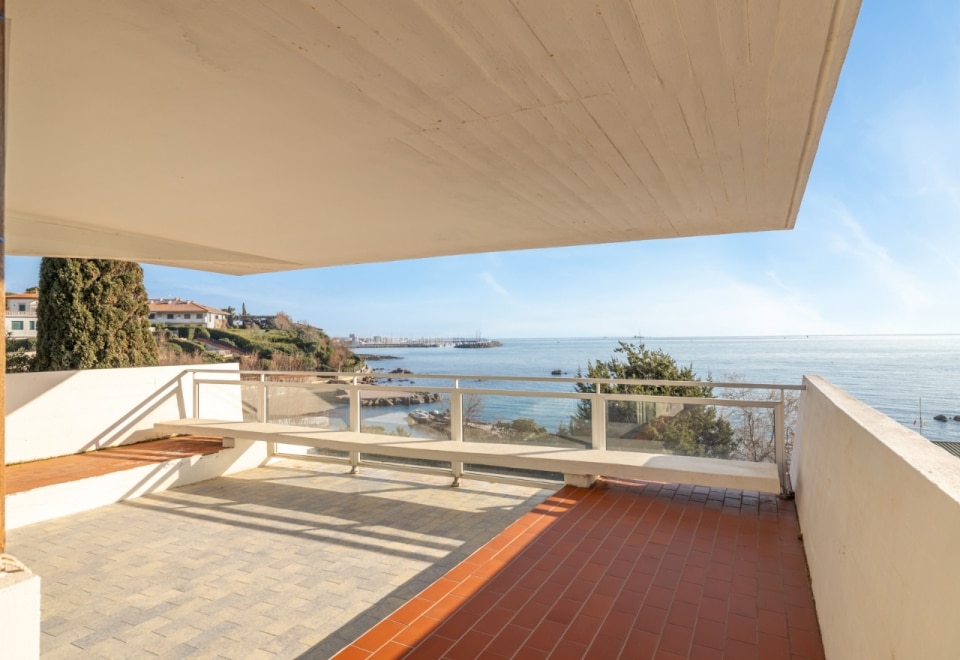
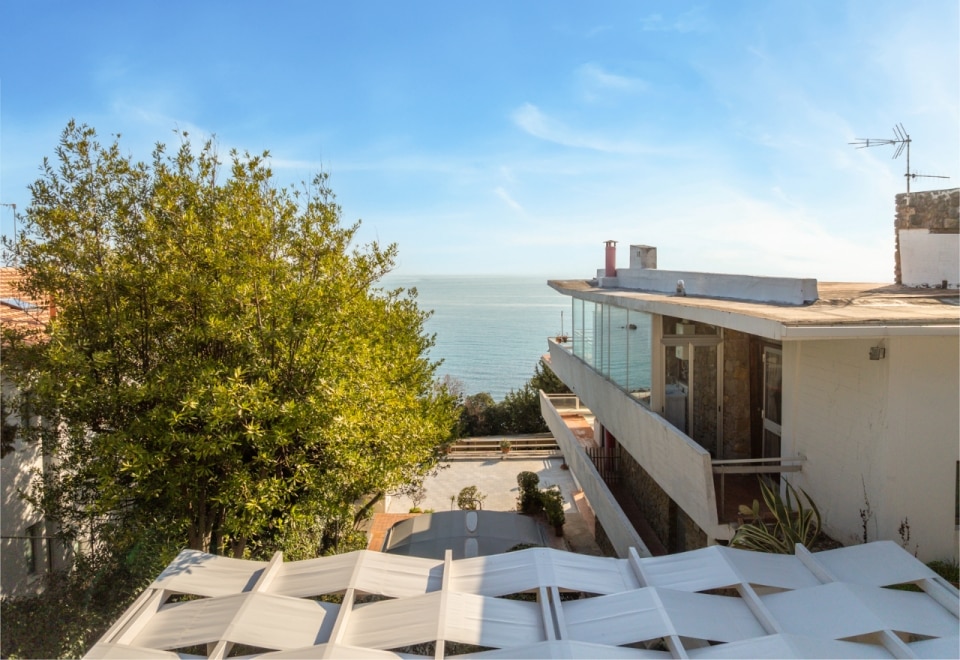
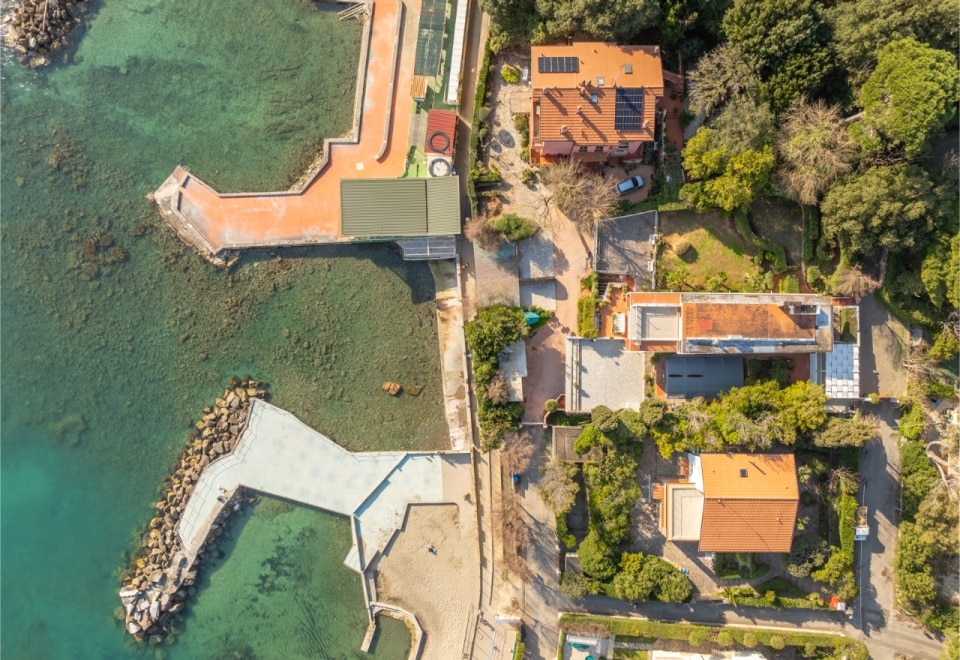
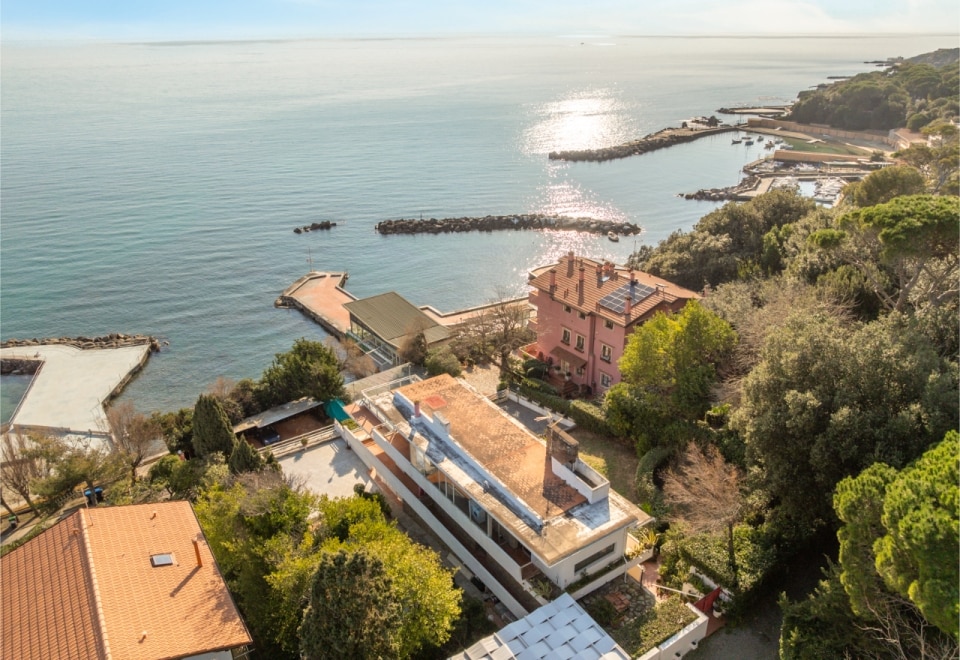
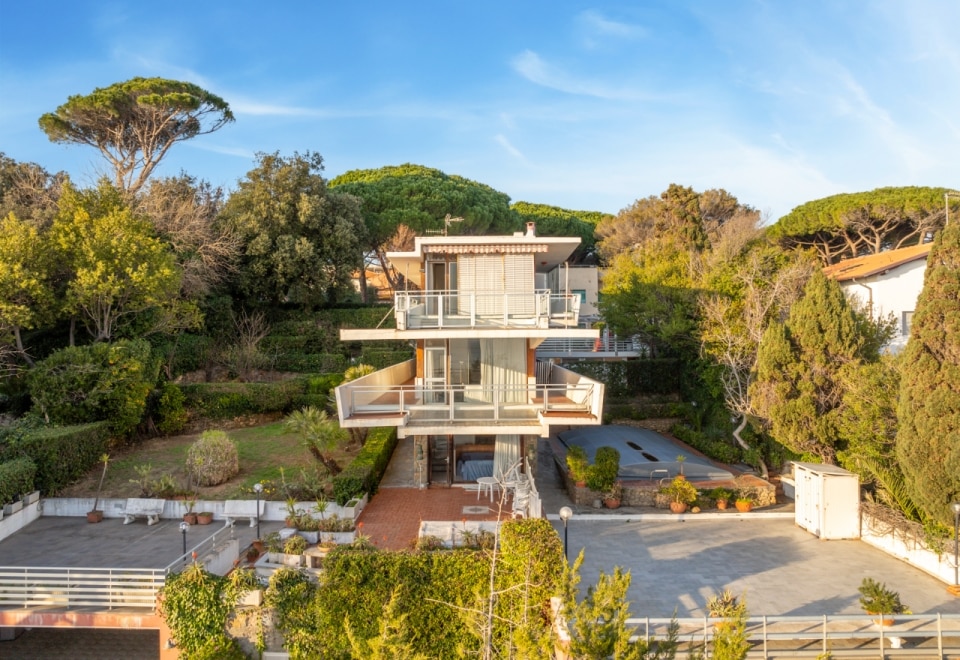
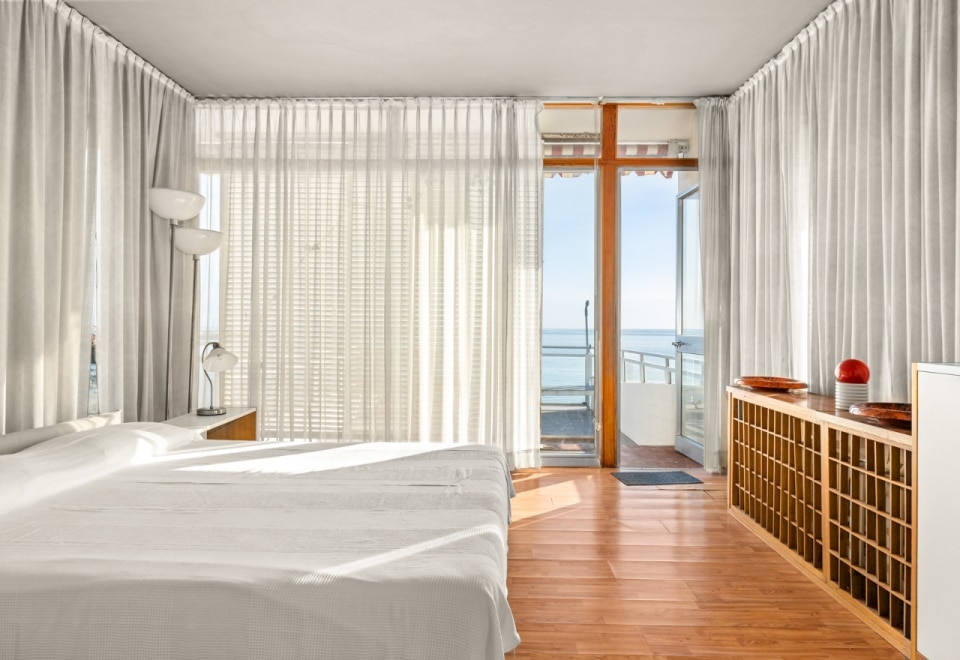
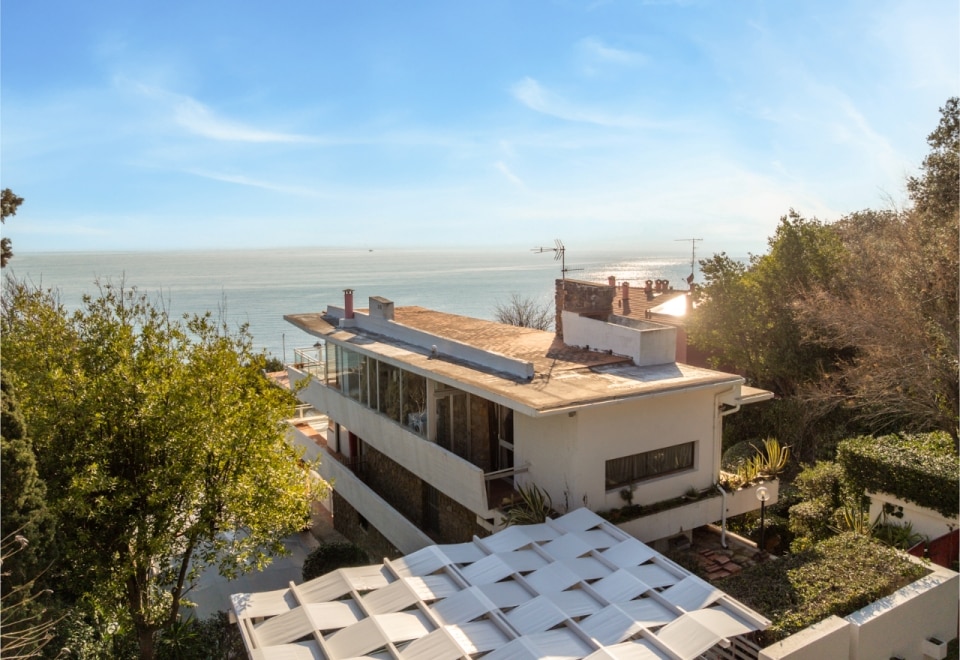
Designed by Ricci between 1961 and 1963, Villa Cardon is now back on the market through Lionard Luxury Real Estate. Seen from the sea, the house—perched on one of the ruggedest points of the promontory—appears strikingly unfinished. Rather than presenting a conventional façade, its front facing the Tyrrhenian reads almost like a cross-section. The dramatic cantilever of its ship-bow terraces gives the impression that the villa continues beyond what is visible, as though part of the house had vanished into an invisible extension.
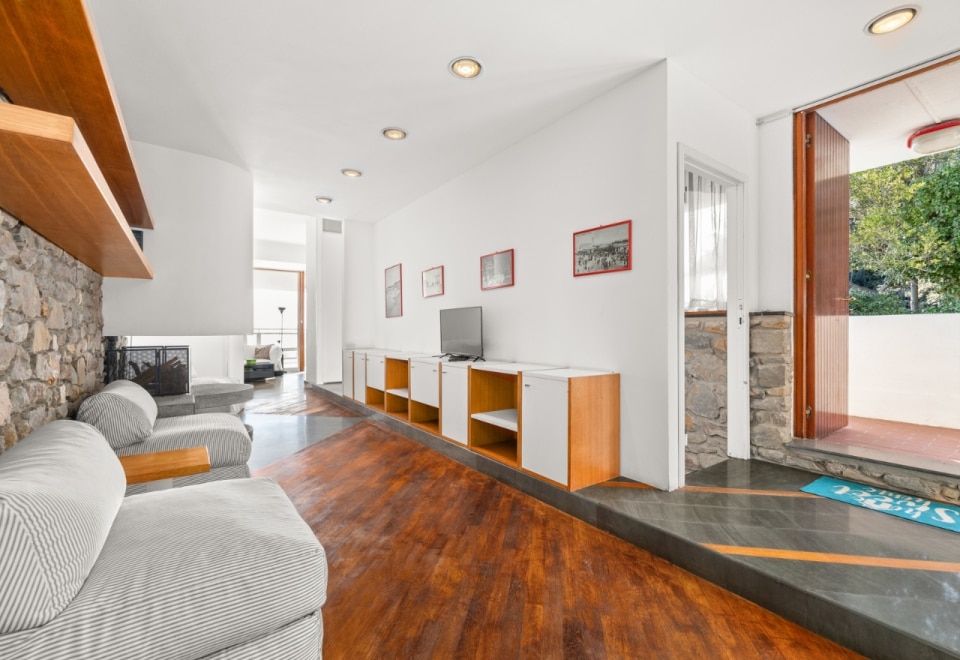
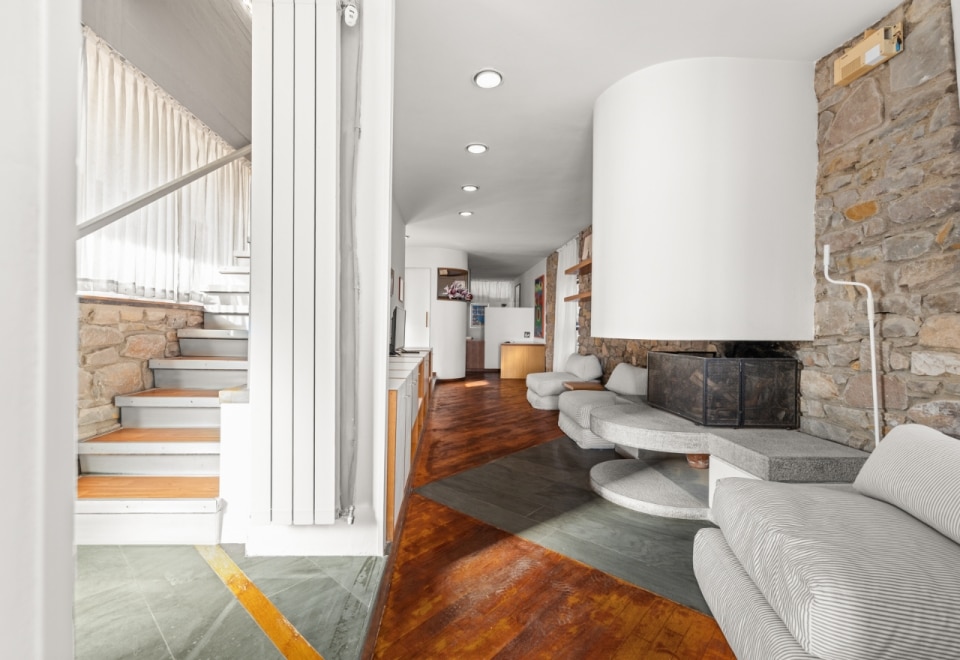
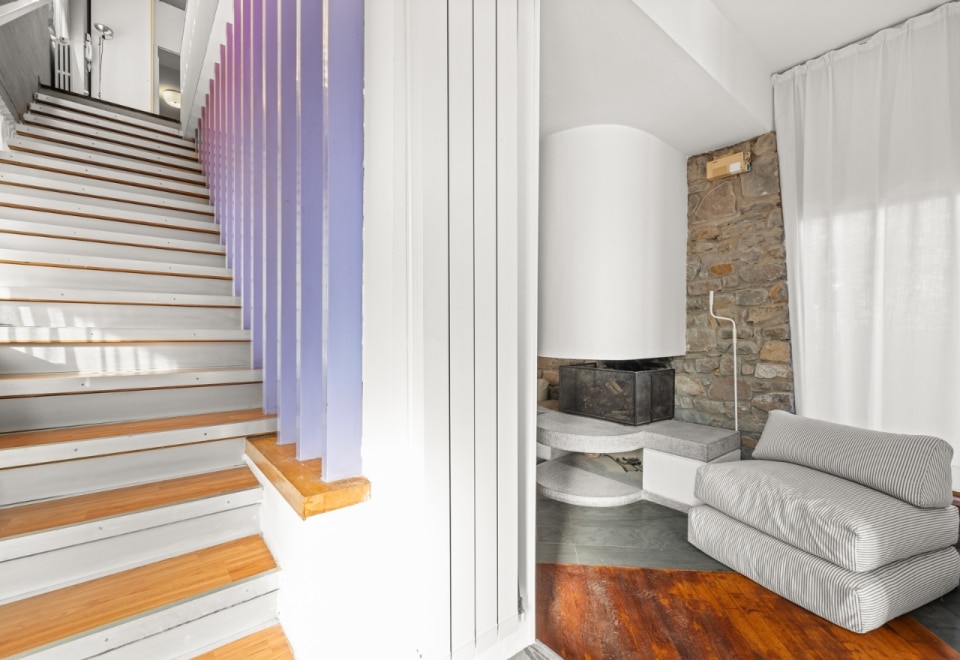
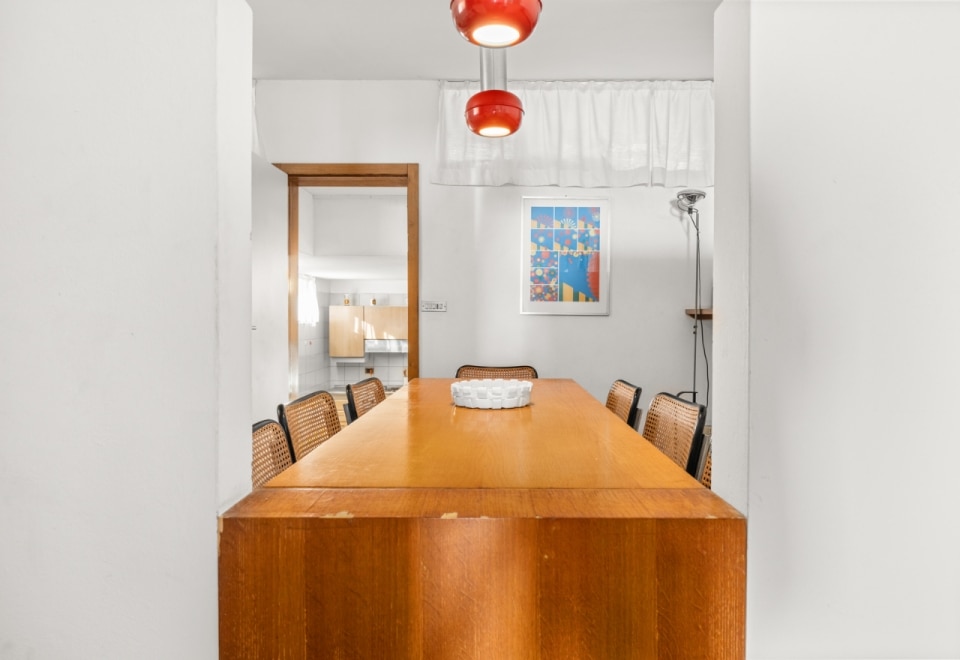
Inside, the large living area is organized around a central fireplace that serves as the home’s social and spatial anchor. Expansive glass surfaces dissolve the boundary between interior and exterior, interacting with the exposed concrete of the balustrades, the local stone walls, and the wooden flooring.
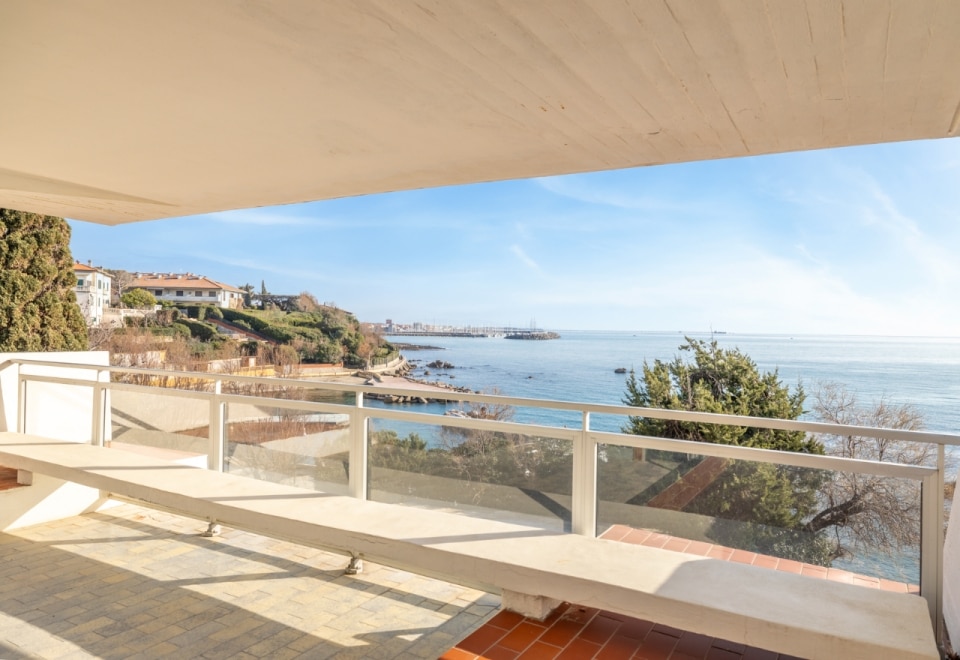
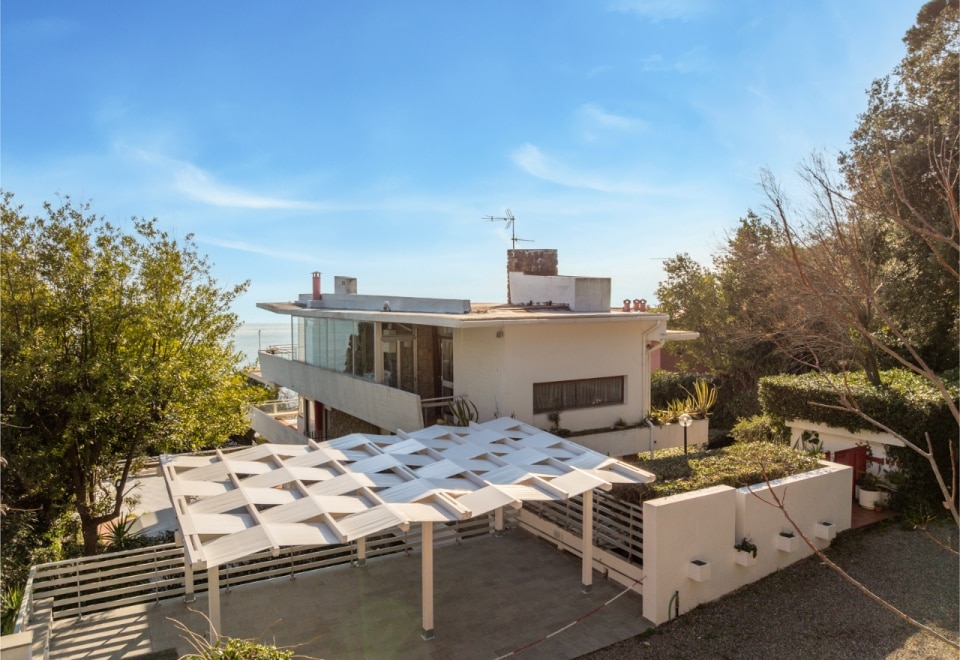
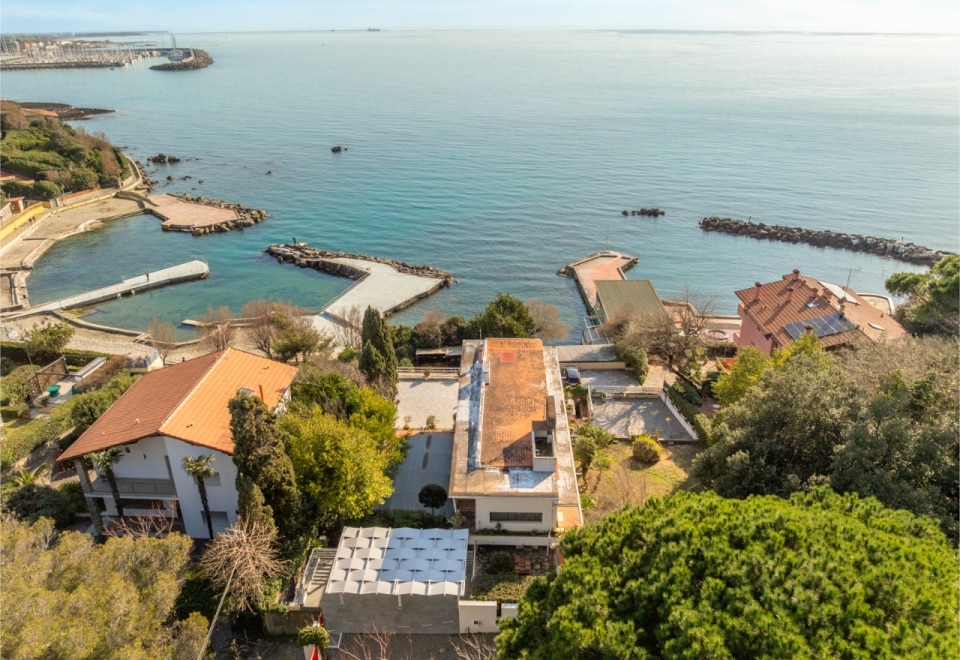
The same approach shapes the property’s 1,000 square meters of outdoor space, where the design avoids any notion of the garden as a domesticated frame. Terraces, patios, the swimming pool, and patches of greenery instead form an artificial topography that extends the interior spatial system. In other words, the house remains distinctly present, grafting itself onto the landscape without dissolving into it.
The unfinished as a way of inhabiting
“I believe a house should come into being the way things in nature do, containing within themselves every possibility and excluding none,” Leonardo Ricci told Domus in December 1957.
That statement captures his architectural vision with remarkable clarity: design should not prescribe behavior, but create a field of possibilities.
In this sense, the idea of the “unfinished” takes on a precise meaning. Not incompletion as flaw, but openness to change and transformation. Not a rejection of form, but of finality. Above all, it reflects a belief that architecture must leave room for indeterminacy.