



Twenty years after work began, through suspensions and intermittent resumptions, announced and denied openings, “monumental” delays (as much as the ambitions of the project) amidst the Arab Spring, pandemic and political and financial instability, the Grand Egyptian Museum designed by Dublin-based Heneghan Peng Architects, in collaboration with Arup and Buro Happold for structures and systems is finally opening in its full state.
The official opening will be announced with celebrations on 1st November and will culminate in the opening to the public on 4th November when, in addition to the spaces already accessible since the partial opening in 2024, the Tutankhamun Gallery will also be open to visitors, with a collection of over 5,000 artefacts.
The date is no coincidence: 4 November (1922) is the day Howard Carter discovered the tomb of the child king, delivering one of the greatest discoveries in modern archaeology to humanity.
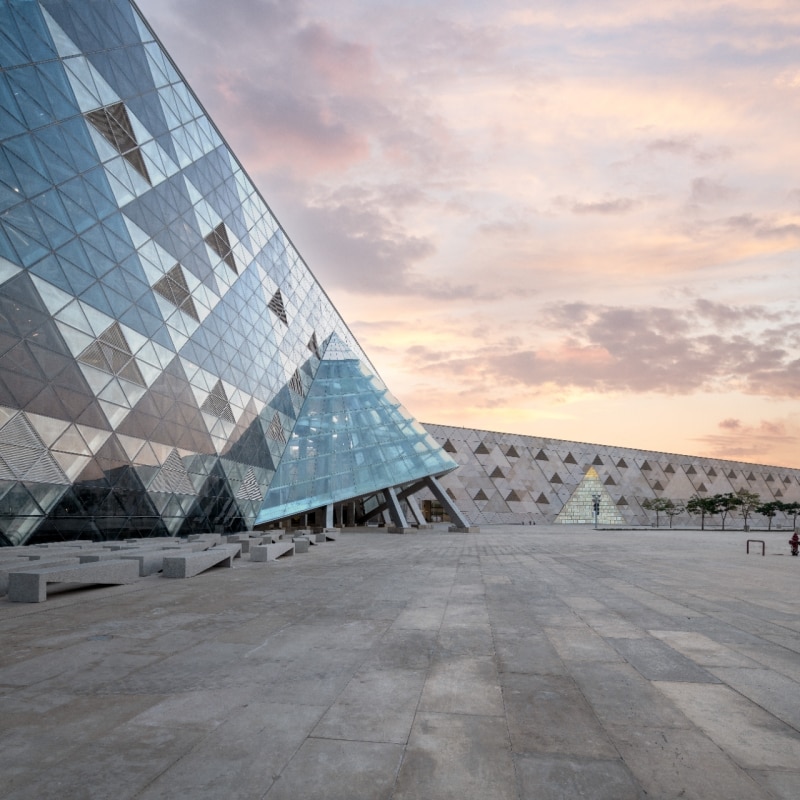
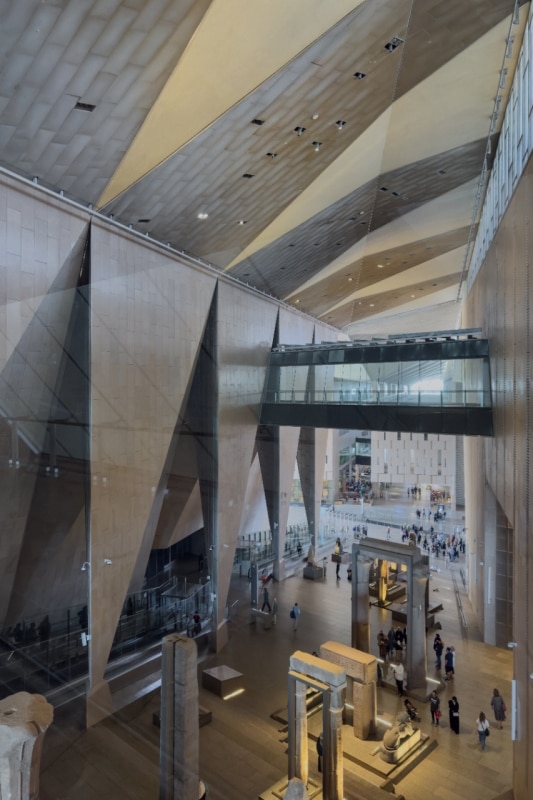
Detaching from the understatement of the “neutral” exhibition container in respect of its content, the GEM is an explicitly epic and narrative work, weaving a “visceral” relationship with the context and the collection from a dimensional, topographical, perceptive and symbolic point of view.
A high-profile strategic operation, inscribed in the track laid down by iconic works from the Guggenheim Bilbao onwards which, through their gigantism (both dimensional and semantic), acted as territorial marketing and social-cultural affirmation tools for their host countries.
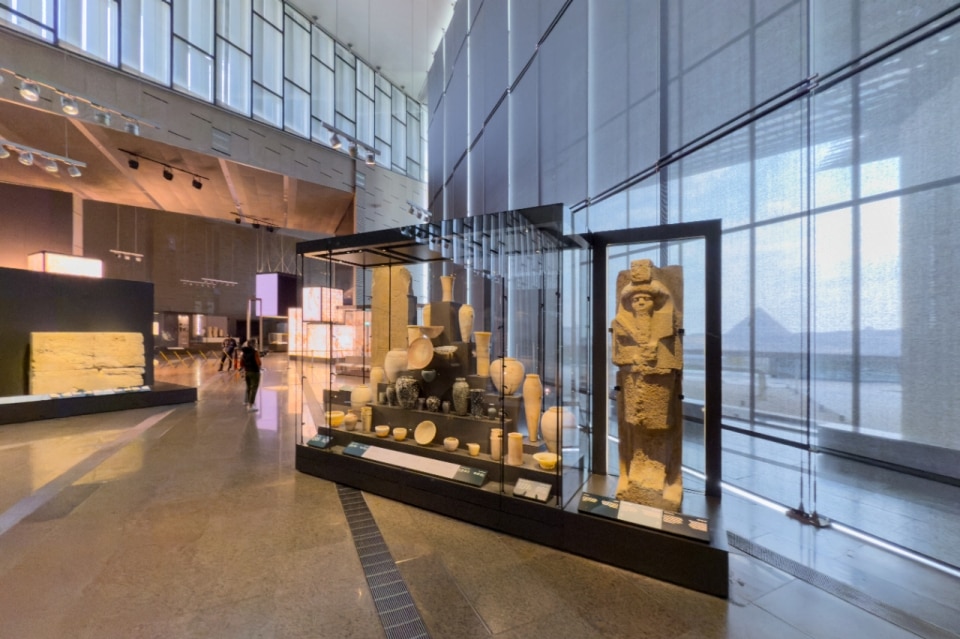
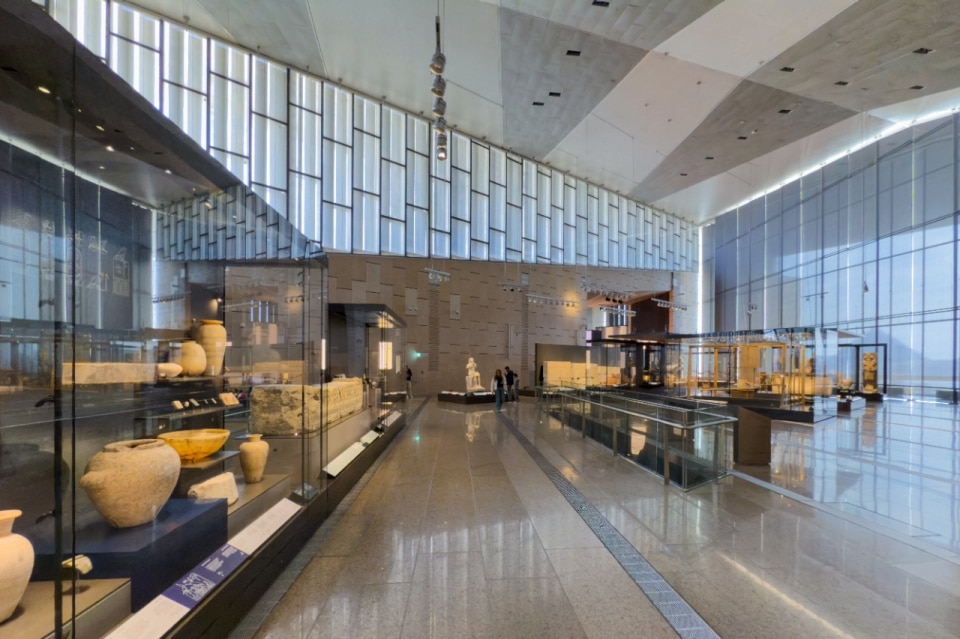
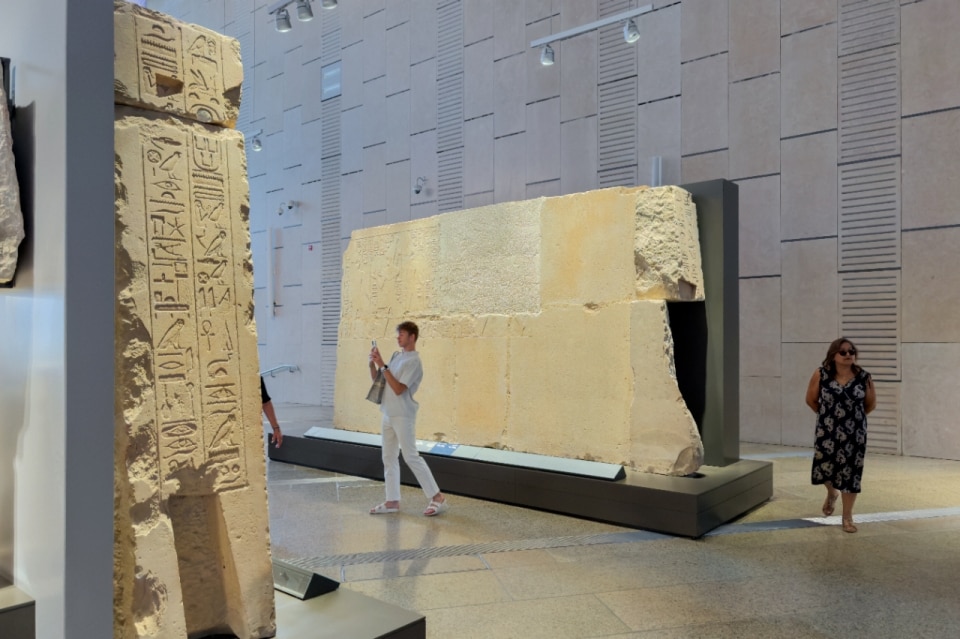
By gathering 100,000 artefacts from the predynastic to the Coptic era (some of which have never been exhibited before), from the historic museum in Tahrir Square and from storage facilities throughout the country, the GEM will in fact be the largest archaeological museum in the world dedicated to a single civilisation.
This is a museum that houses a collection spanning almost four millennia, so the question was how the design could powerfully communicate this extraordinary time span.
Róisín Heneghan, Founding Partner at Heneghan Peng Architects
“Designing a museum of this caliber, in such close proximity to a landmark as monumental and symbolic as the pyramids, is a once-in-a-lifetime opportunity,” said Róisín Heneghan, Founding Partner at Heneghan Peng Architects. “Our design works to strengthen that connection to history and place, providing a home for some never-before-seen artifacts that rests upon the very land from which they were created. The result is an experience that evokes a sense of awe at the breadth and depth of ancient Egypt’s fascinating history in a way that feels both modern and timeless”.
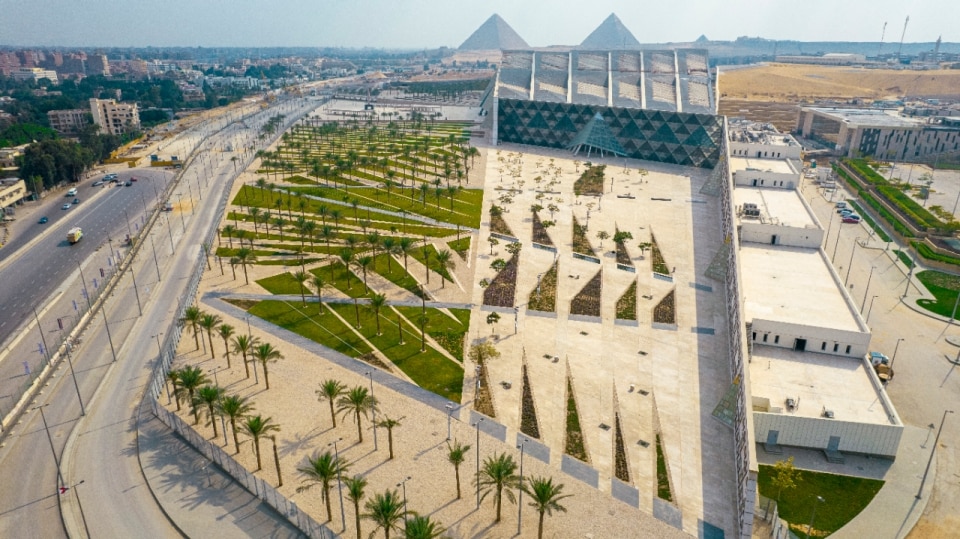
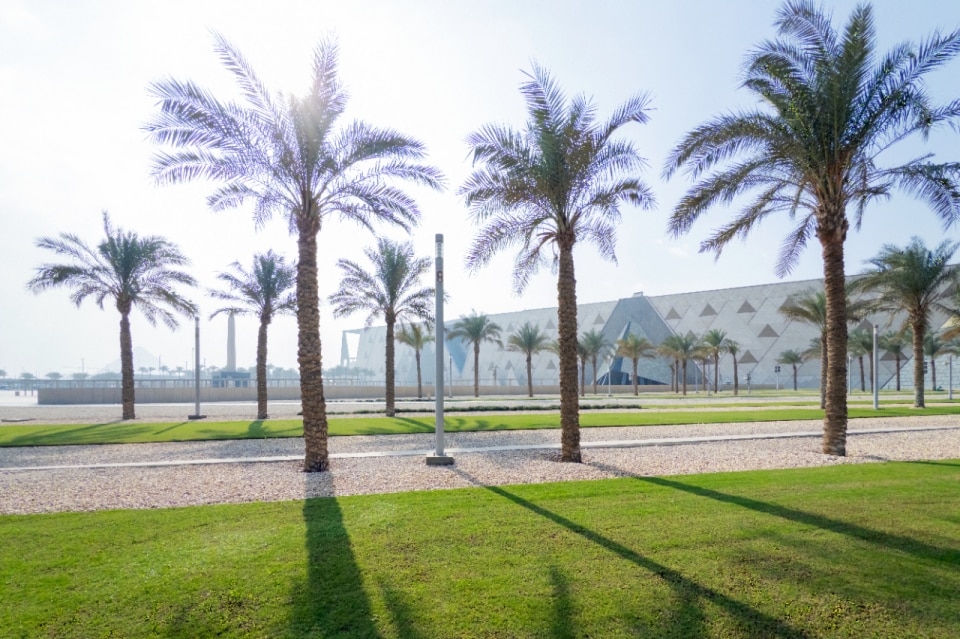
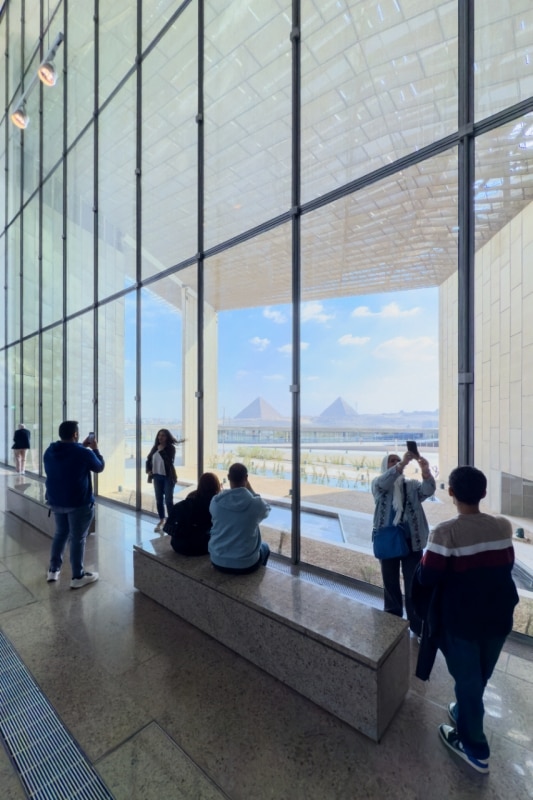
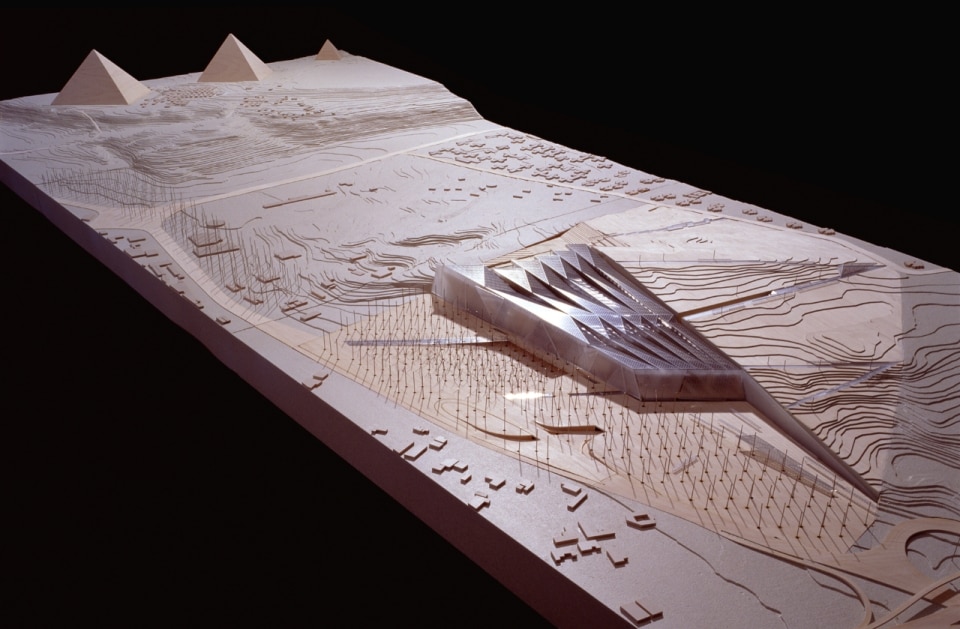
The complex, incorporating exhibition spaces, conference and teaching rooms, a children's museum, a conservation centre and extensive gardens covering 50 hectares, is located on the edge of the Giza plateau, a couple of kilometres away (and about twenty from Cairo). Taking advantage of the existing 50-metre difference in height between the plateau and the project area, carved out by the Nile over thousands of years, the building is “recessed” under the slope so as not to interfere with the monumental profile of the pyramids and not to exceed their height. The wedge-shaped layout, generated by the alignment of the east side of the building with the archaeological site, opens up like a fan through six radial axes – converging at a focal point outside to the north and visible as a structural backbone – towards the pyramids to the south, rising towards them through the sloping roof to visually and symbolically introject them.
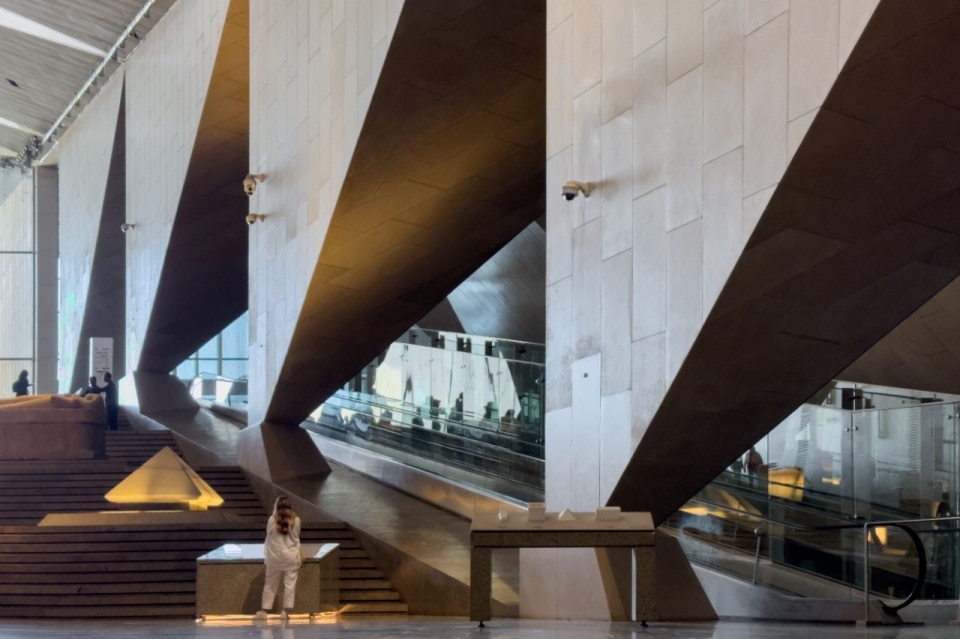
The symbolism of the pyramids is reiterated in the exterior, through triangular decorative patterns carved into the main east façade in alabaster panels, the side façades in concrete and metal, and the surface of the entrance plaza, dotted with native vegetation (designed by West 8).
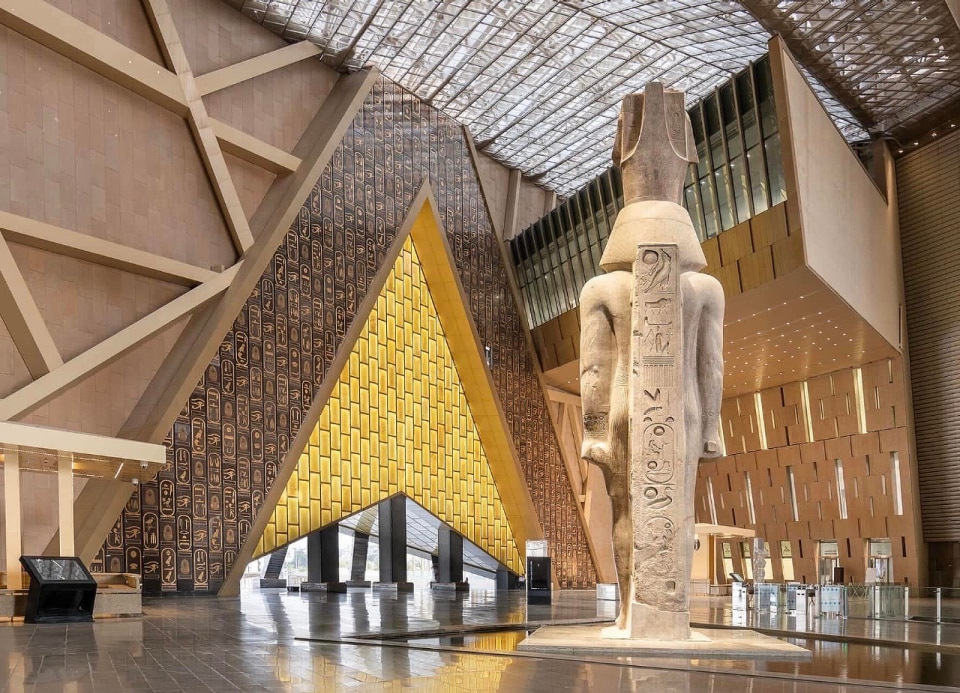
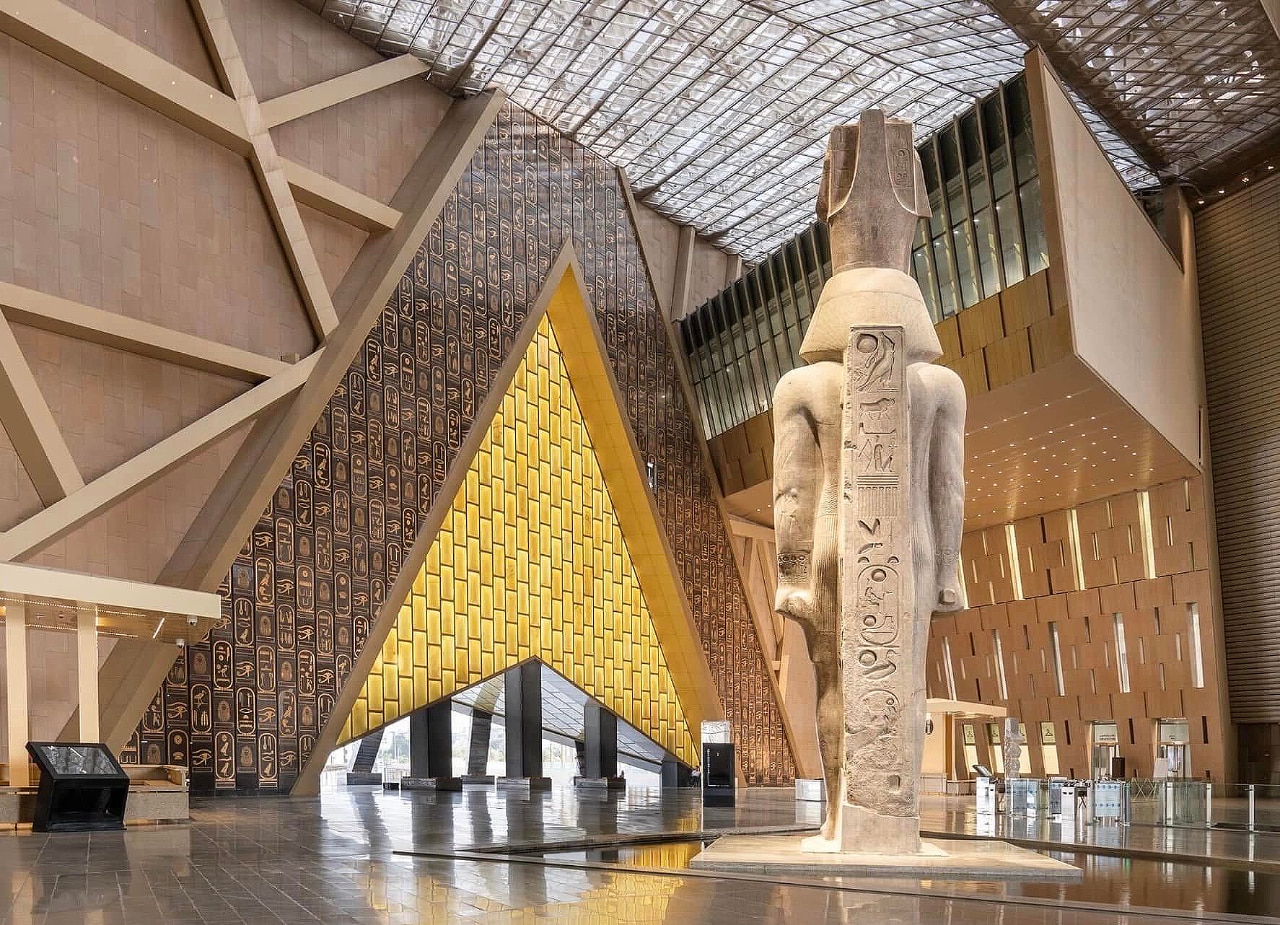
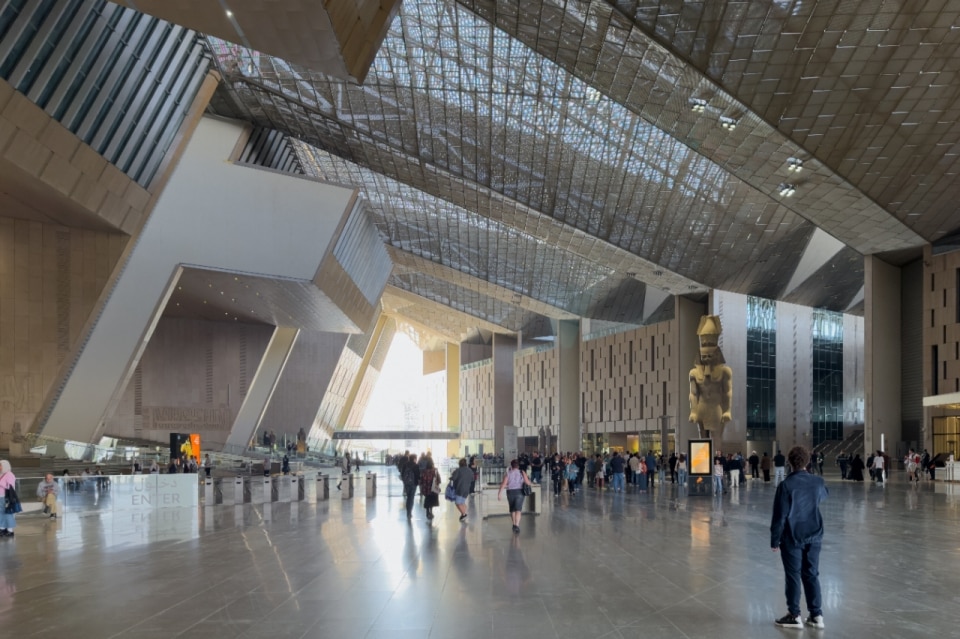
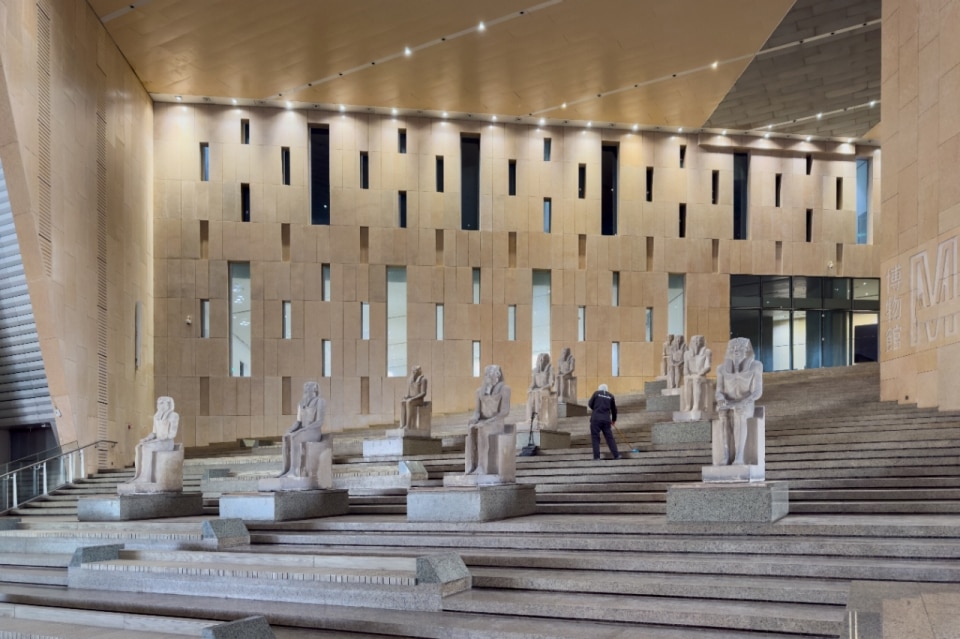
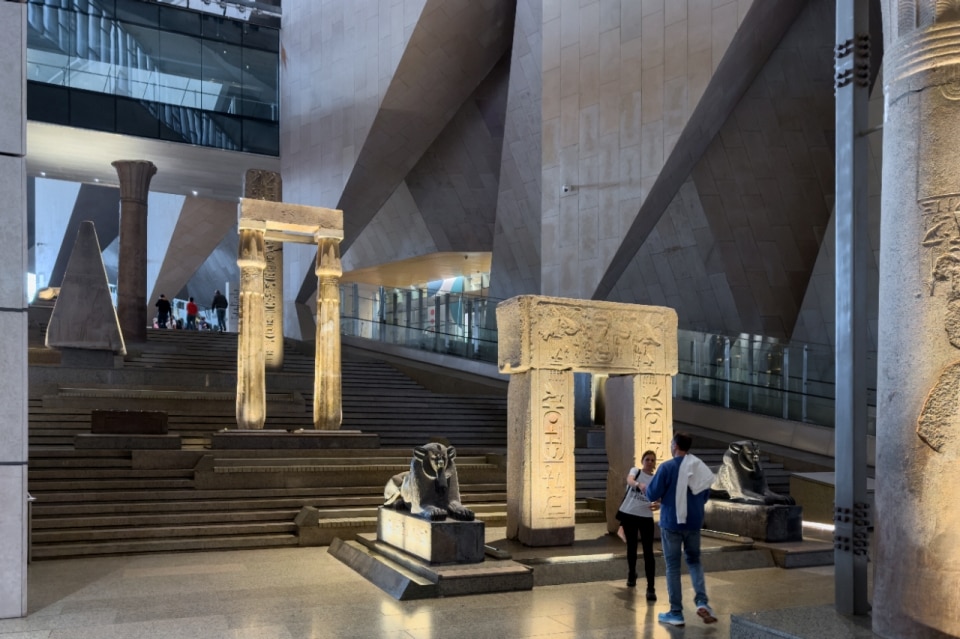
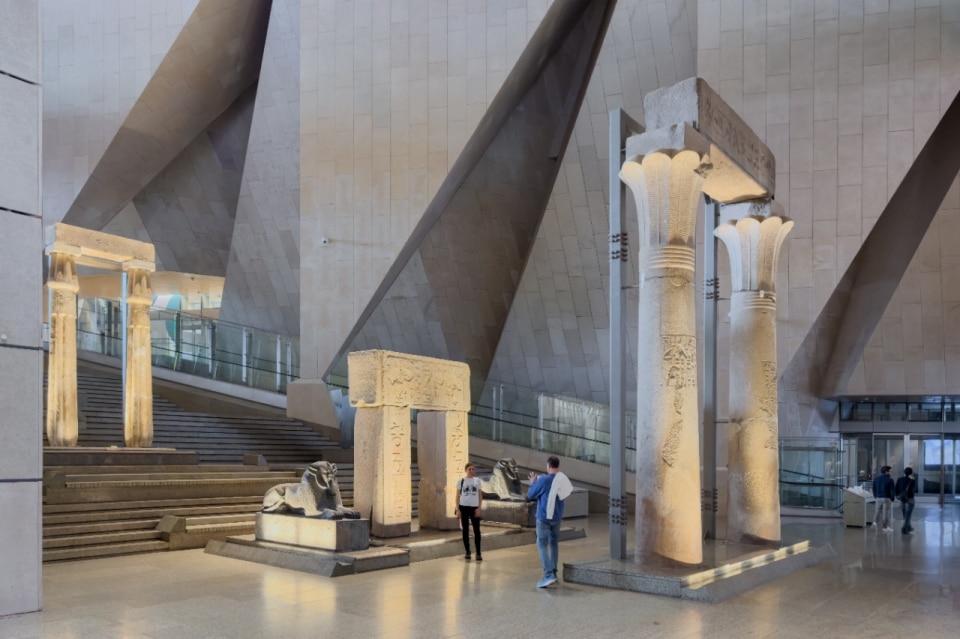
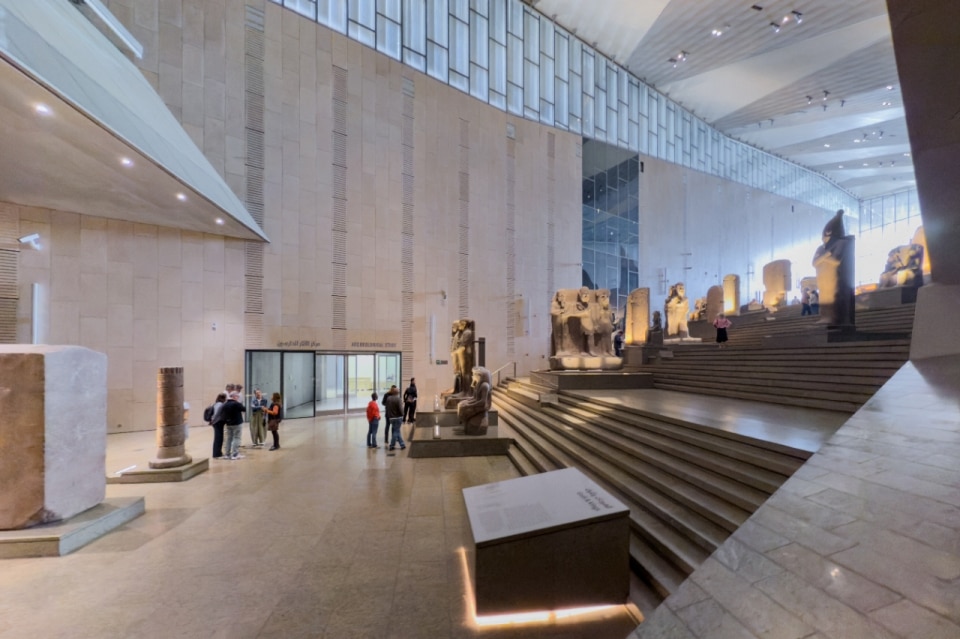
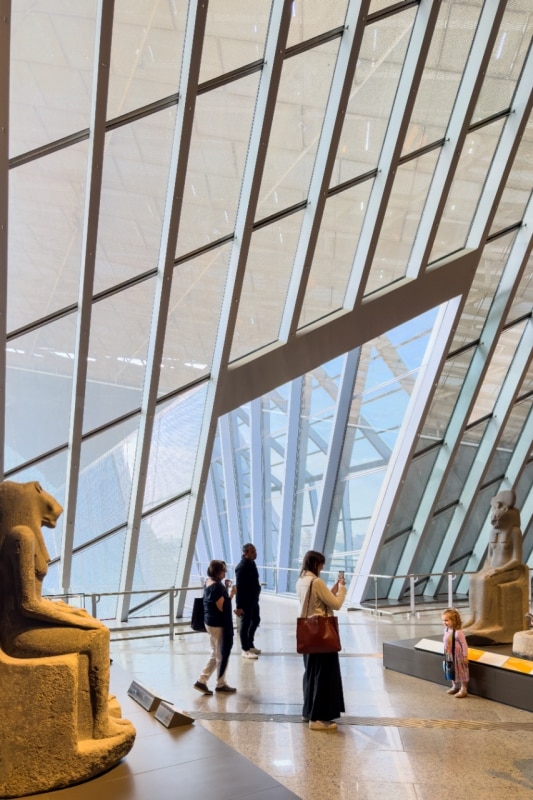
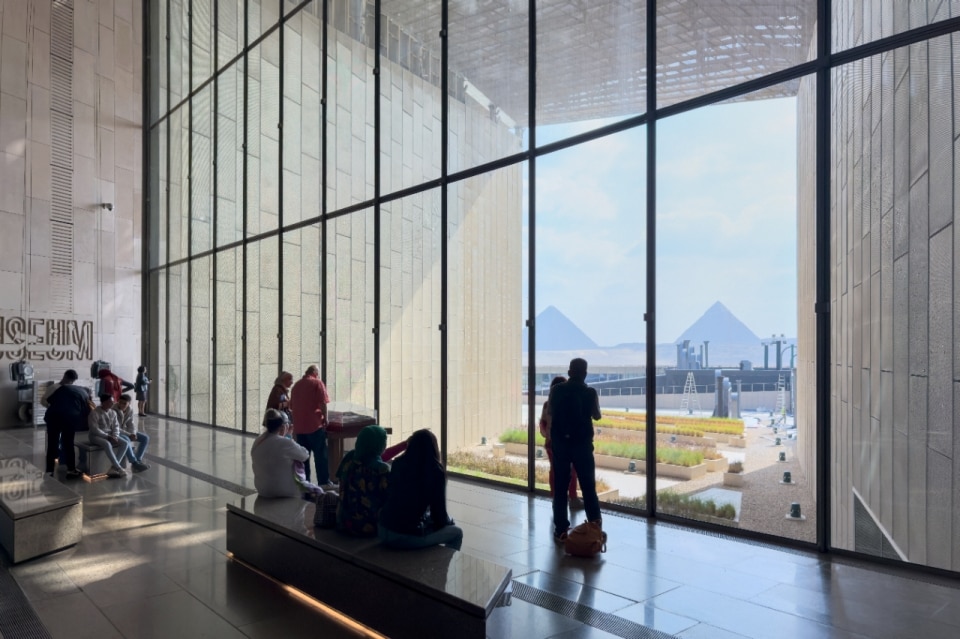
A filtering space between the exterior and interior – and between the contemporary and the ancient world – gradually introduces visitors to the exhibition spaces, suggesting a change of pace from the accelerated rhythm of the nearby megalopolis. A colossal granite statue of Ramses II welcomes visitors to the grand hall, where natural light filtering through the translucent roof emphasises the hieratic character of the space. From here, a monumental staircase dotted by sculptures connects the six levels of the complex through an ascensional (and “initiatic”) procession culminating on the top floor, in the spectacular view of the pyramids from the permanent galleries.
We focused on elements that we knew would stand the test of time, so that even when this place becomes an archaeological site itself, the design would still be legible.
Róisín Heneghan, Founding Partner at Heneghan Peng Architects
Covering 4,000 years of history, the Grand Egyptian Museum turns the spotlight on a concept of permanence in architecture that is increasingly compromised by the whims of fashion and technologies, processes and products that are quickly replaceable and replaced. Because, if on the one hand the work is designed to meet the needs for flexibility and technological advances necessary in a museum of such scope, on the other hand, through its strong roots in the centuries-old context, the clarity of its design addresses a “dilated” time.
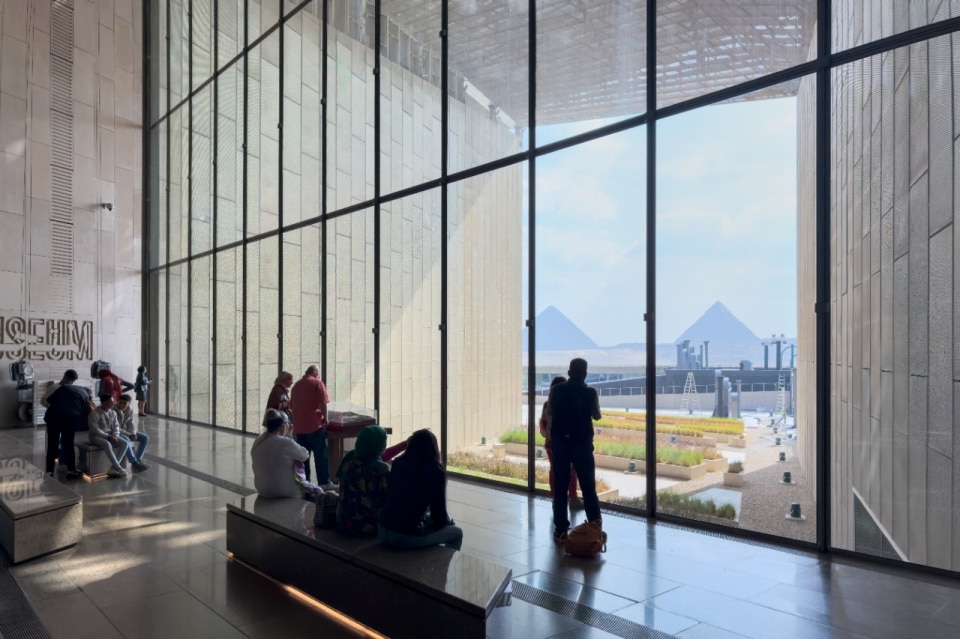
As Heneghan confirms: "Time was an important element in the design in many ways. This is a museum that houses a collection spanning almost four millennia, so the question was how the design could powerfully communicate this extraordinary time span. Time also influenced our approach to design: it is a huge building, a huge site, built over a long period of time with the involvement of many voices, including exhibition designers and engineers. We focused on elements that we knew would stand the test of time, so that even when another millennium has passed and this place becomes an archaeological site itself, the design would still be legible".