



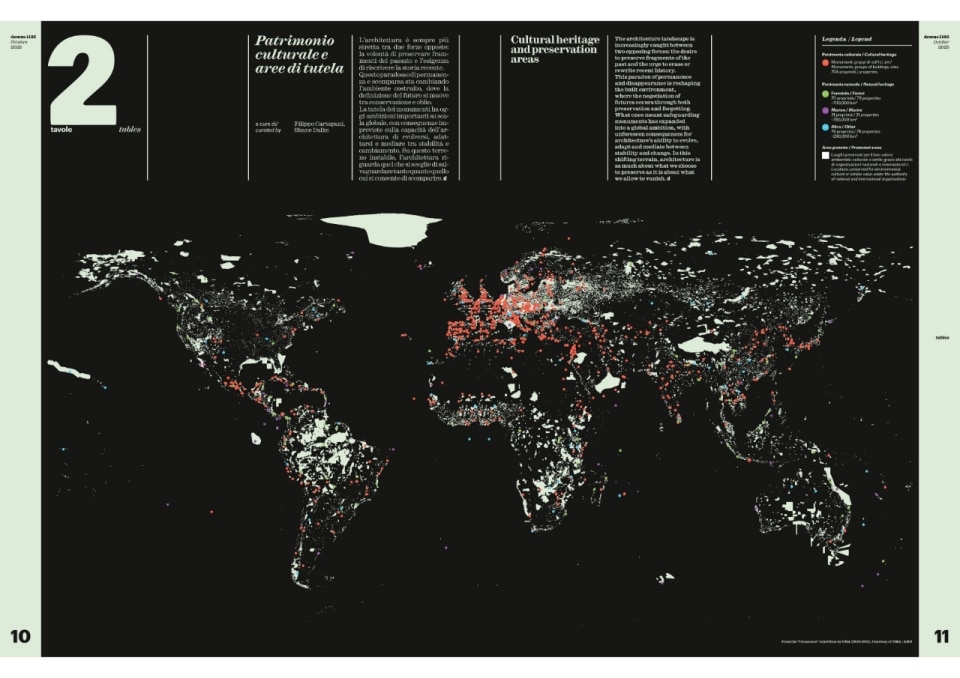

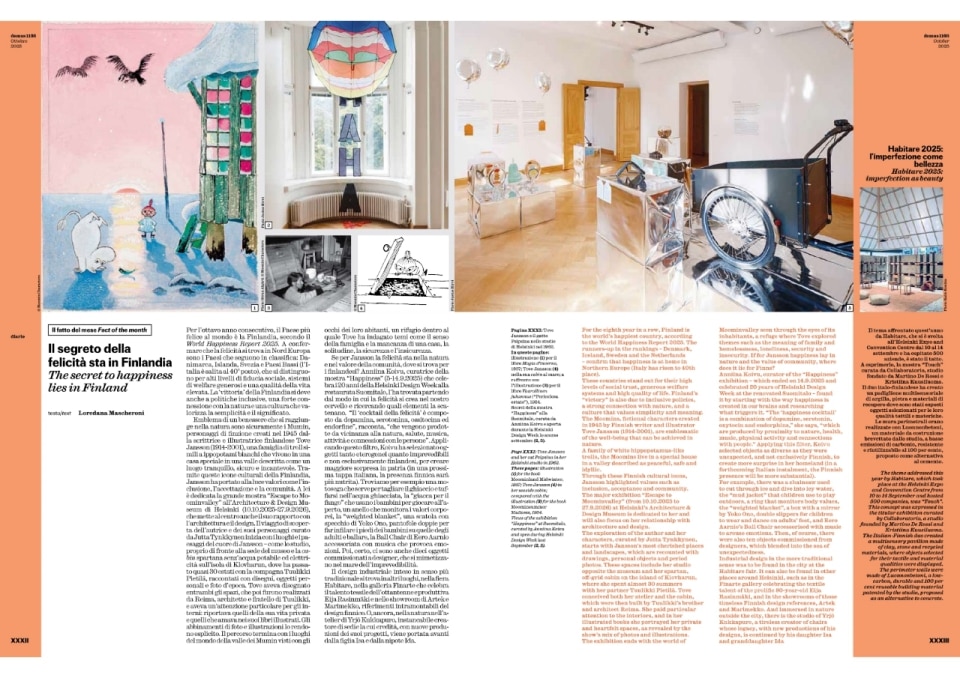

The journey of Domus in this fall edition opens with an investigation into the secret to happiness, a Scandinavian oxymoron cemented in Finland for the eighth year, as Loredana Mascheroni tells us. The formula is crystal clear: social trust, welfare, and a culture that honors simplicity.
This lightness connects to the architecture of affections, symbolized by Tove Jansson's Moomins and explored by Anniina Koivu in the exhibition “Happiness.” The Habitare 2025 fair, focused on imperfection and touch, with Collaboratorio's pavilions in Luonnonbetoni (Natural Concrete), reveals that matter itself seeks a more honest form.
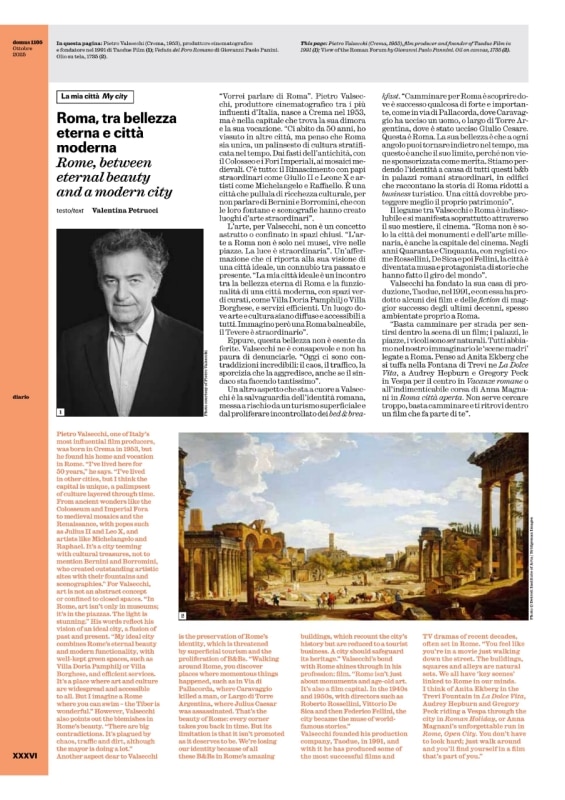
The magazine then delves into emotional and physical geographies: Valeria Casali analyzes Sigurd Larsen's Sehnsuchtsorte (places of longing); Loredana Mascheroni traces Fauciglietti Engineering's “method as the key to design”; and Elena Sommariva evaluates Italian architecture in its relationship with the territory and its masters. Valentina Petrucci captures the vision of film producer Pietro Valsecchi on Rome, denouncing the loss of identity due to superficial tourism while simultaneously exploring the Rome-Cinema pairing. Design becomes personal with Francesco Franchi, who, in the special feature on customized bicycles, sees the frame as a “moving canvas.”
In environmental complexities, Stefano Mancuso warns us about the “future we don't want,” predicting the increase of cities exposed to extreme heat. Roberto Battiston celebrates the Sun and architecture as the art of mediation with light, a theme echoed by Marco Soravia of Velux.
Javier Arpa Fernández sees a global warning in the Aral Sea. At the opposite extreme, Valentina Sumini discusses spatial architecture with the NASA Mycotecture Off Planet project, where lunar habitats could be cultivated from fungal mycelium, marking the shift from extraction to cultivation in the cosmos.
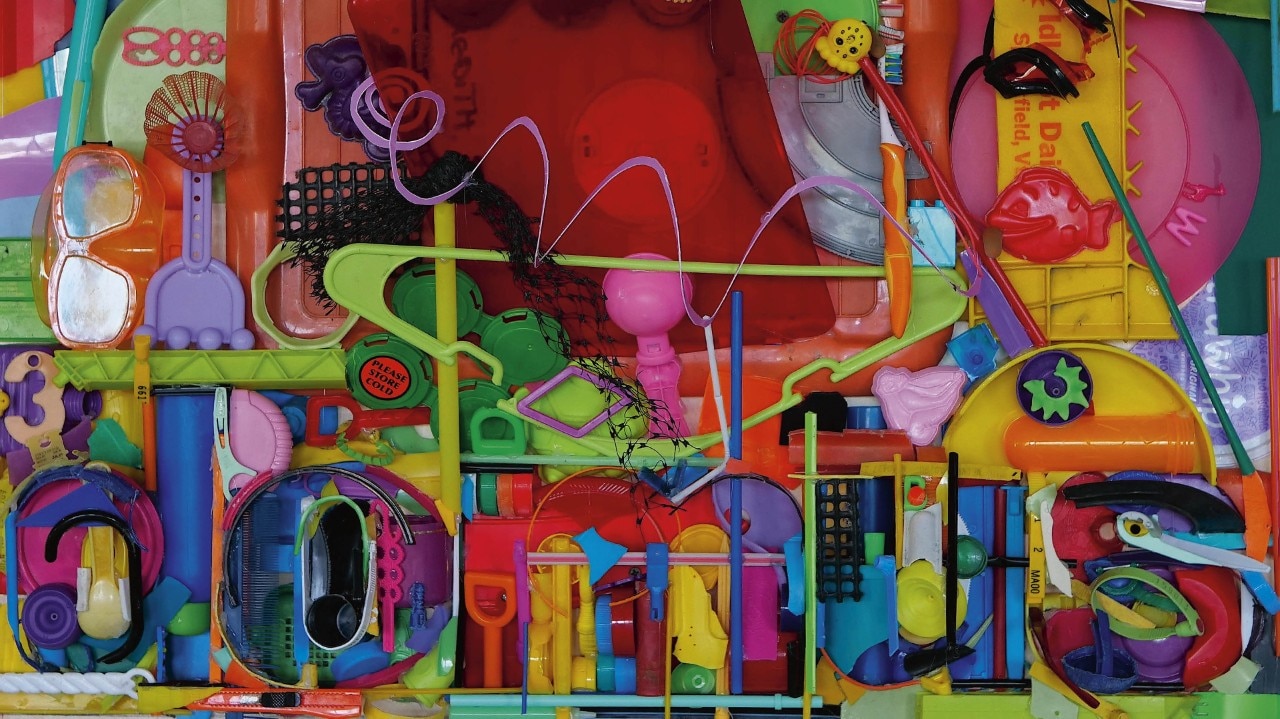
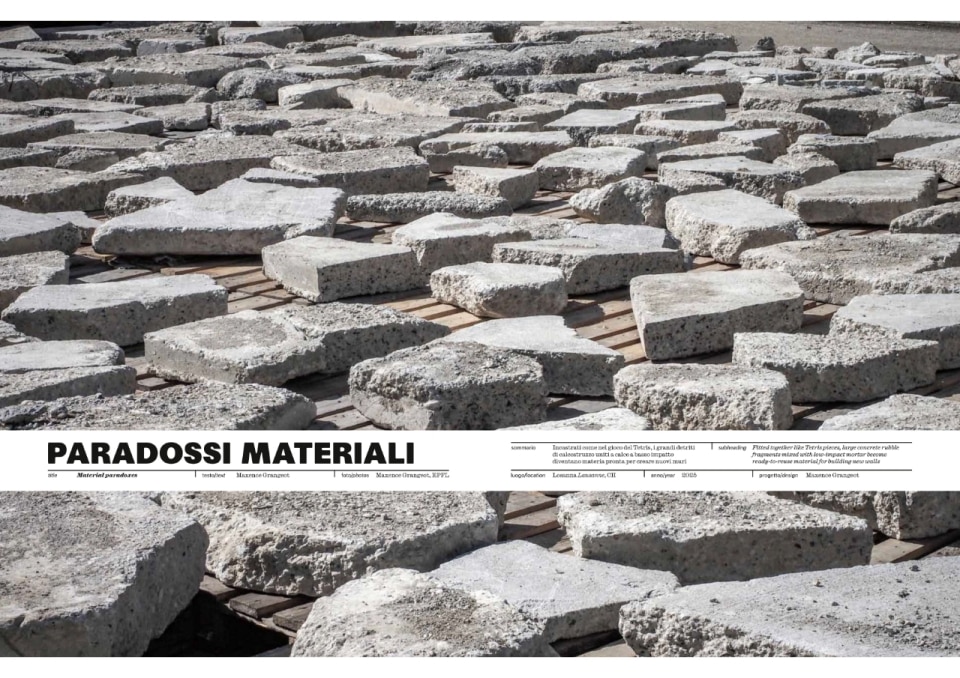
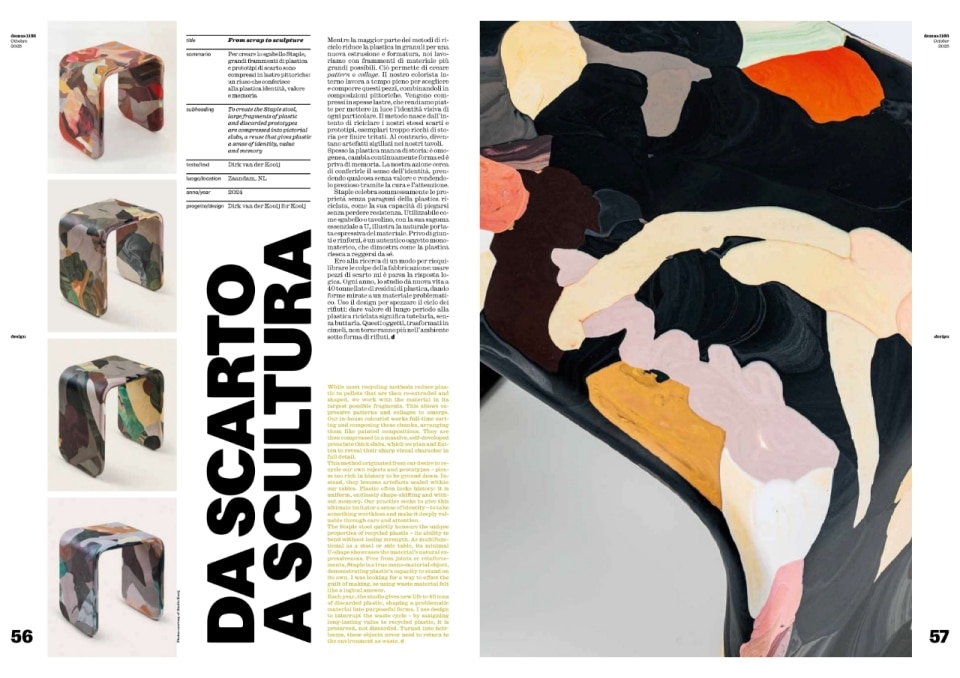
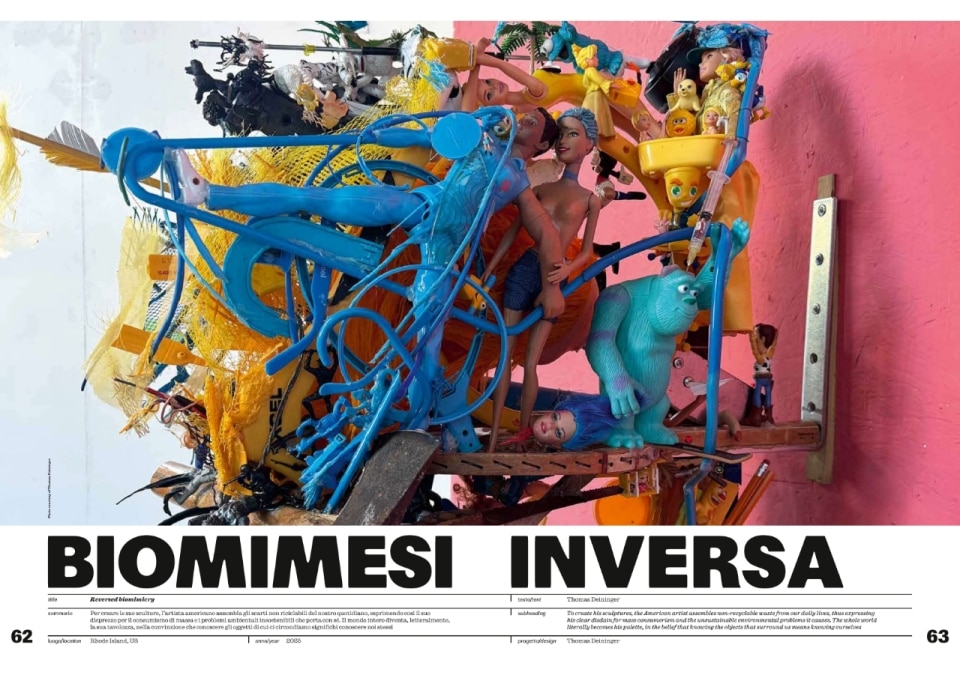
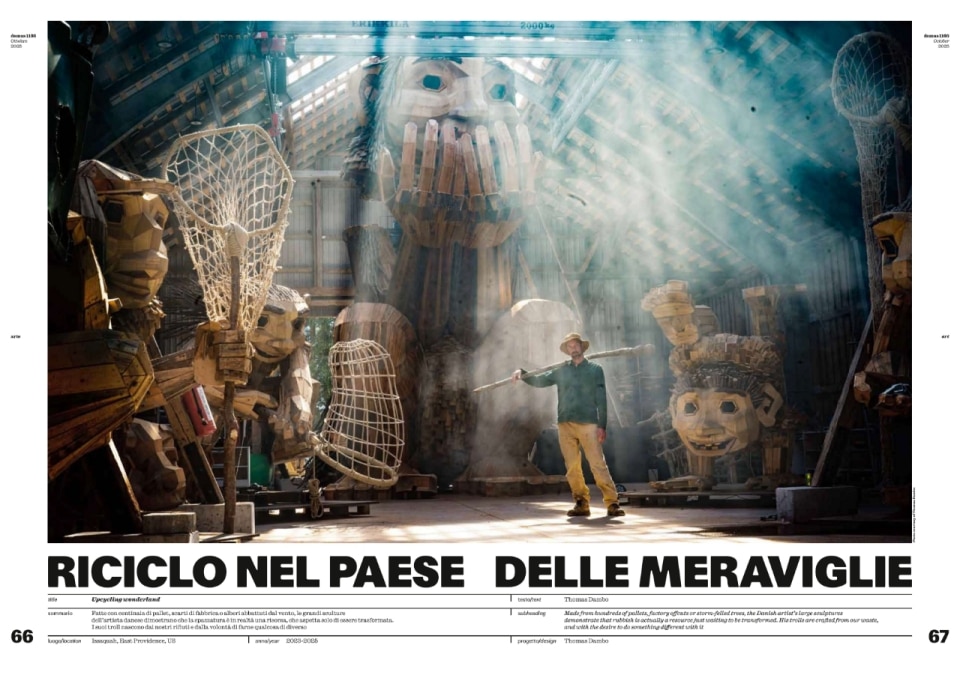
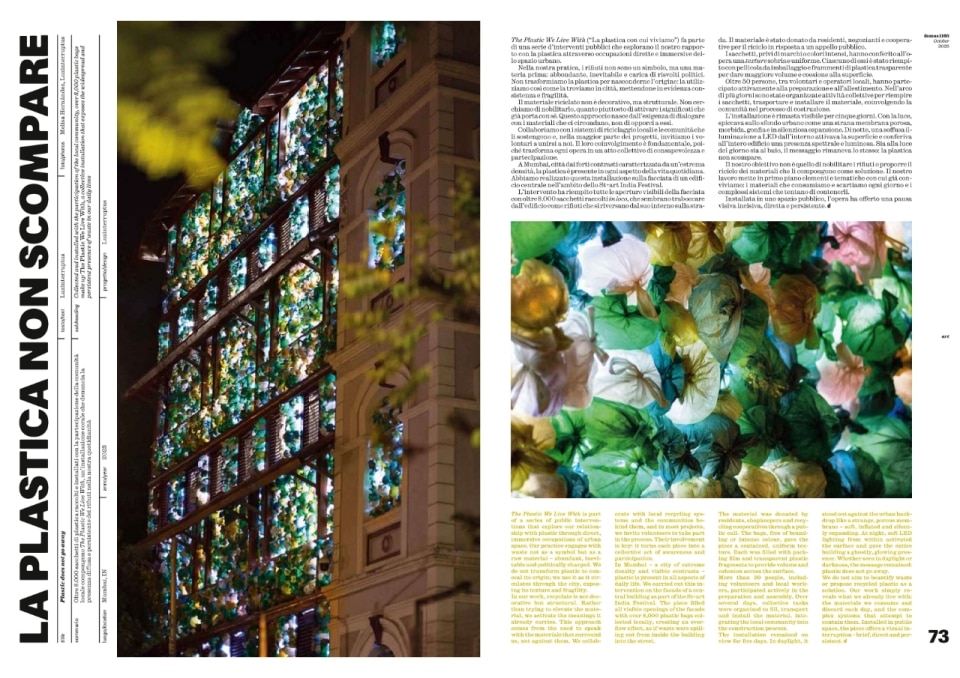
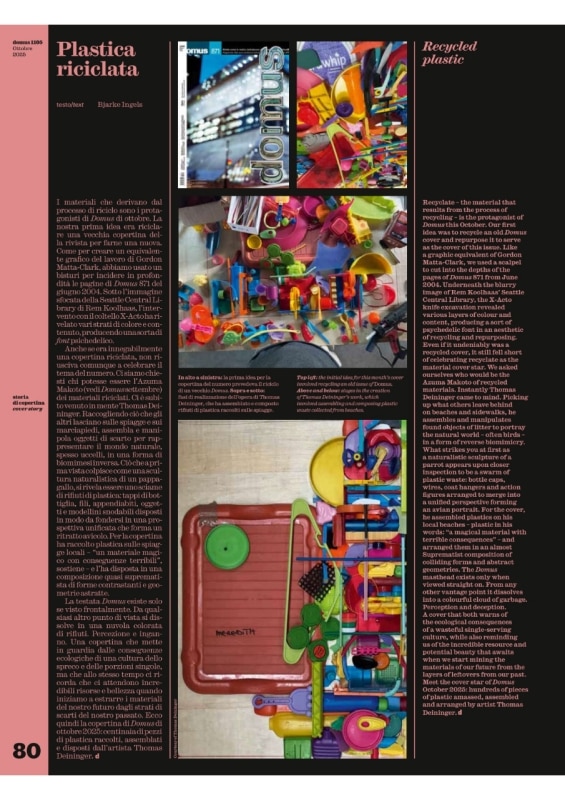
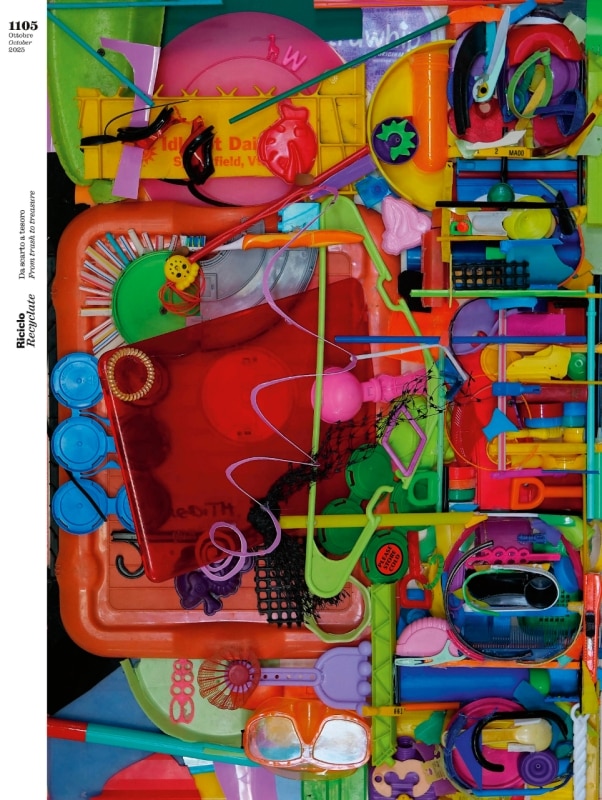
Design and art elevate scrap into treasure: Maxence Grangeot transforms concrete debris into cyclopean masonry; Eran Chen shows how adaptive reuse can convert a parking lot into an urban park. Thomas Dambo assembles pallets and waste into his giant Troll sculptures, while Thomas Deininger (the cover artist) performs an act of “inverse biomimicry,” creating figurative sculptures from non-recyclable plastic.
In this issue of Domus we have distilled a categorical imperative: Recycling is not a trend, but the ethical and design practice for the 21st century.
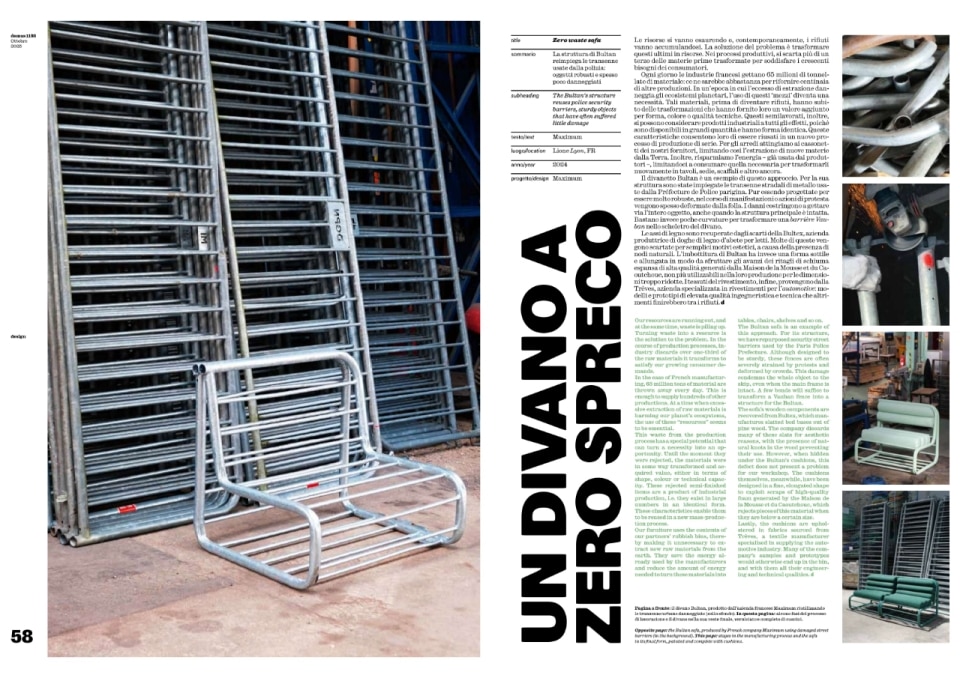
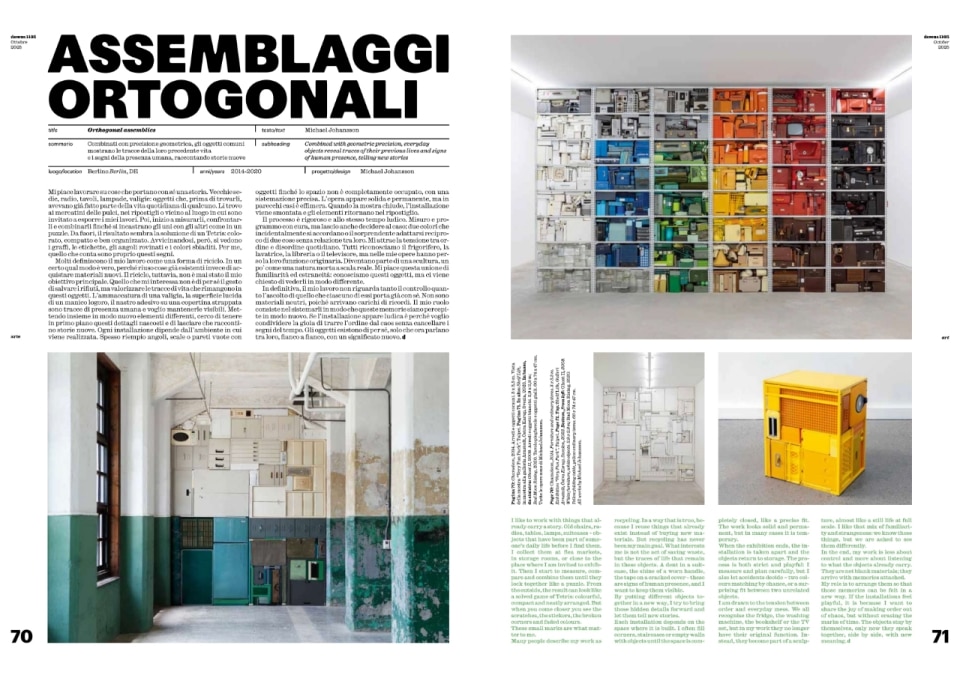
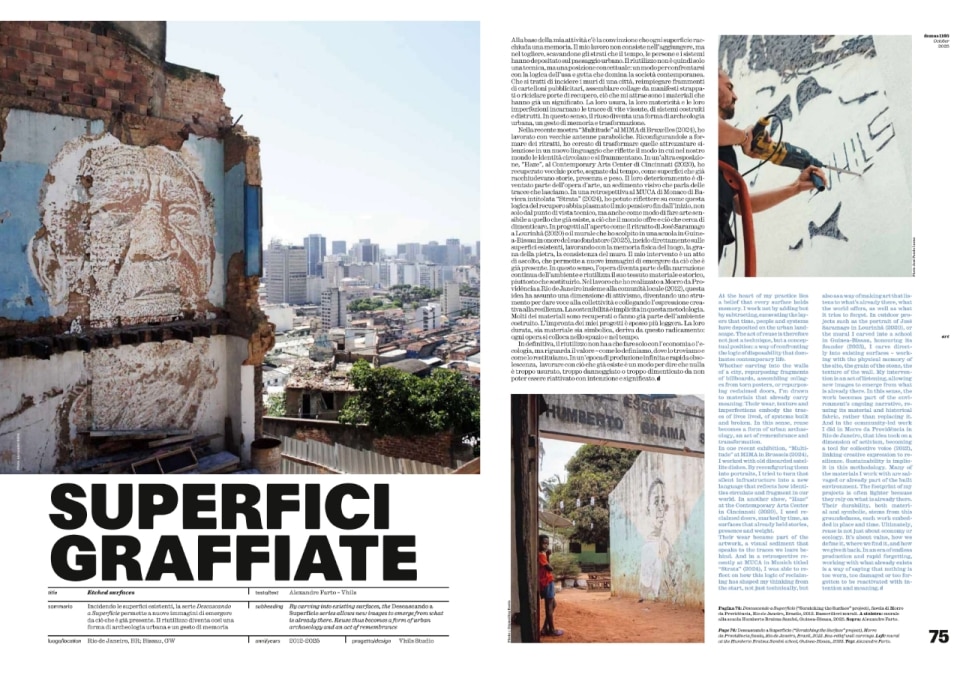
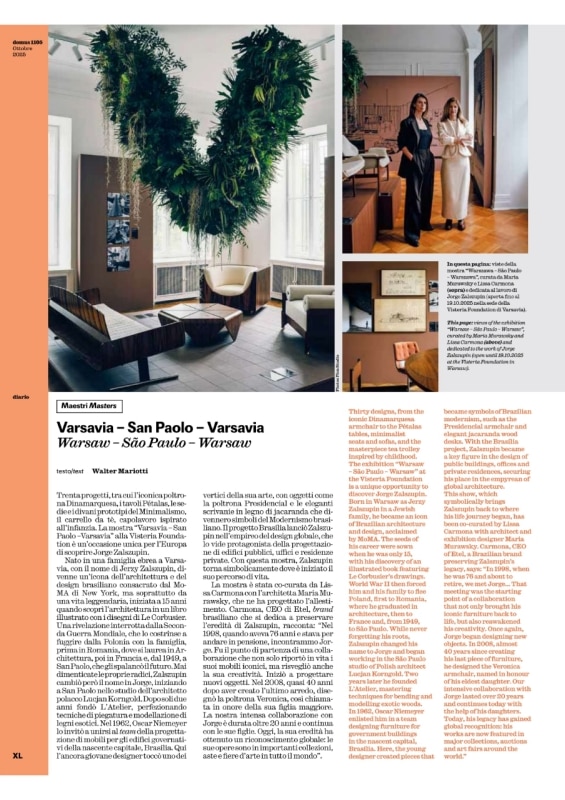
The recovery of sound waste in the Noon speakers and defective wood in Yamaha's Upcycling Guitars demonstrates how imperfection generates beauty. Michael Johansson (Orthogonal Assemblies) arranges discarded objects with obsessive precision, honoring the traces of life. The artist Vhils (Alexandre Farto) carves urban surfaces, transforming the intervention on the wall into a gesture of urban archaeology and memory. Walter Mariotti himself introduces us to the work of Brazilian designer Jorge Zalszupin and the philosophy of hospitality at Villa Le Volte in Tuscany.
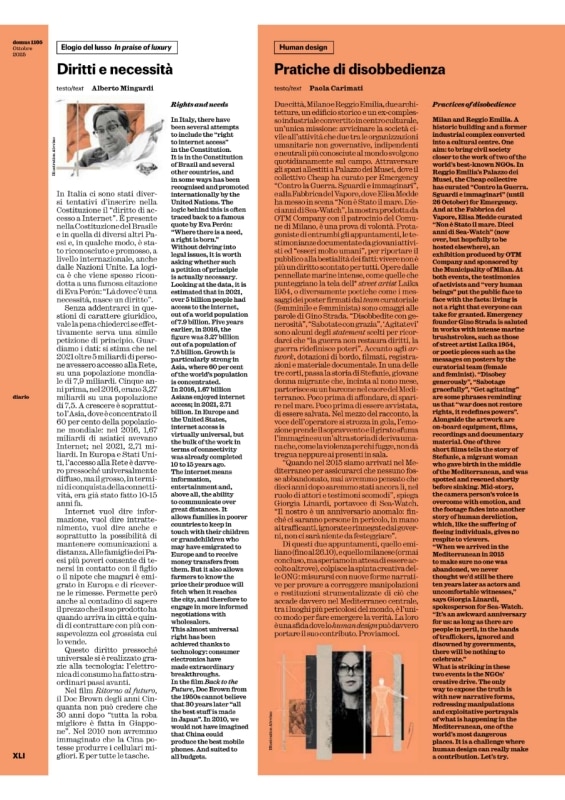
Silvana Annicchiarico celebrates the talent of the winners of the Muuto Design Contest 001. Simona Bordone questions the civilization of the book or the image in the era of Artificial Intelligence, while Alberto Mingardi reflects on Internet access as an acquired right. Paola Carimati's Pratiche di disobbedienza (Practices of Disobedience) highlights the human design of NGOs in bringing out the truth about the migratory crisis. Friendship is the key to redefining entire sectors, as demonstrated by the partnership that regenerated the Planet Farms facility (with Luca Travaglini and Carlo Molteni, analyzed by Mariotti), transforming a post-fire necessity into a manifesto of technology and design.
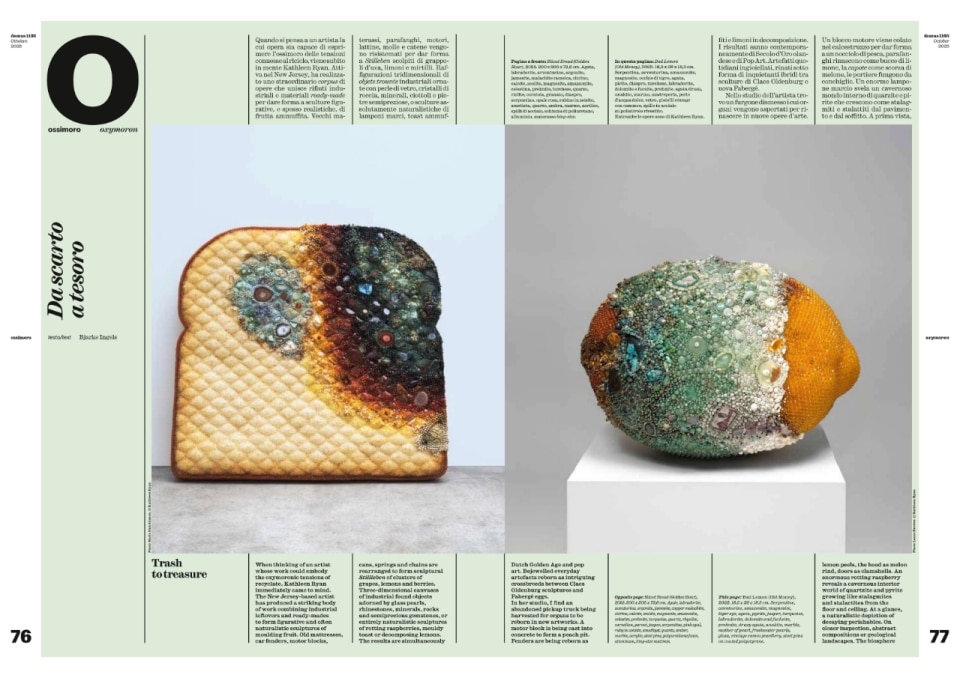
The entire work concludes with the oxymoron par excellence from Kathleen Ryan (analyzed by Bjarke Ingels), who transforms industrial scrap into sculptures of moldy fruit adorned with precious stones, completing the ultimate alchemical act of turning waste into treasure.
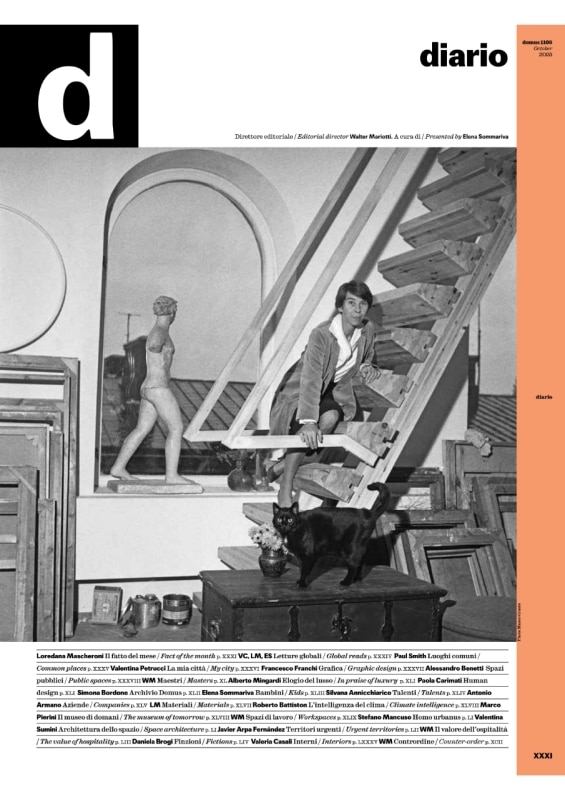
Paul Smith's Diary reflects on public clocks and Sommariva herself on photographer Fosco Maraini and the value of visual memory.
In this issue of Domus, whose cover is Deininger's work–a true act of “inverse biomimicry” that transforms plastic debris into an illusion of form and color–we have distilled a categorical imperative: Recycling is not a trend, but the ethical and design practice for the 21st century.
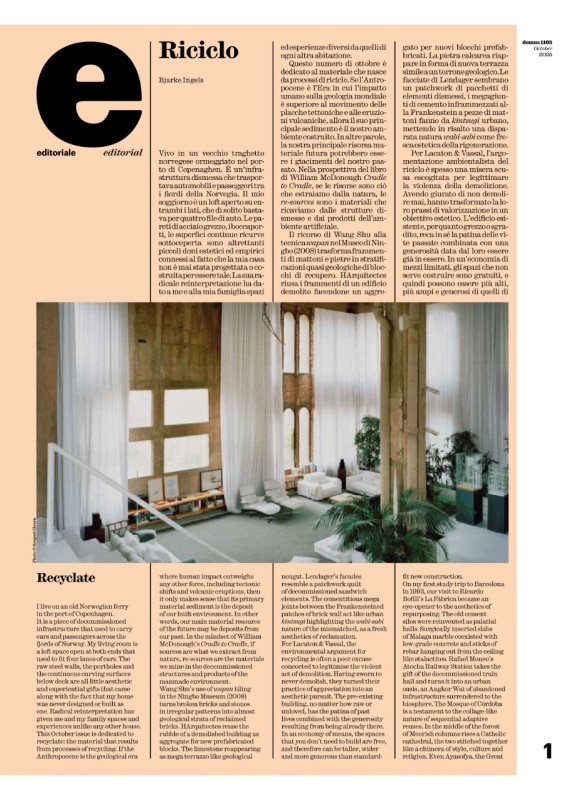
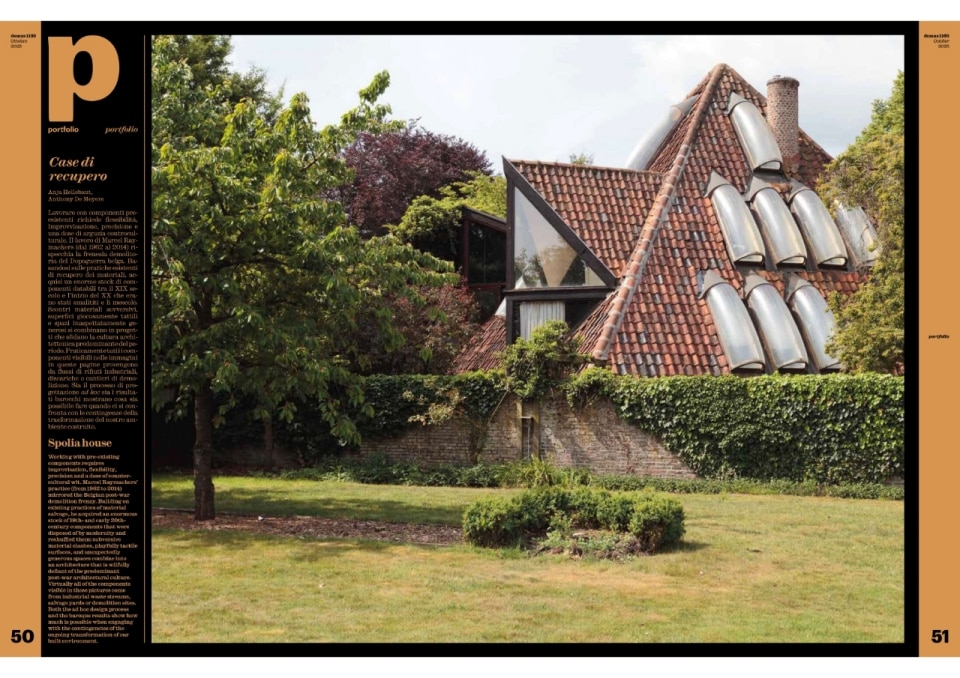
Guest Editor Bjarke Ingels immediately establishes the premise: in the age of the Anthropocene, where the human footprint is geological sediment, the deposits of the future are not in the earth, but in the scraps of our past. His own home, a decommissioned ferry, embodies the aesthetic of radical redefinition, where the existing offers a spatial generosity that the new could not match.
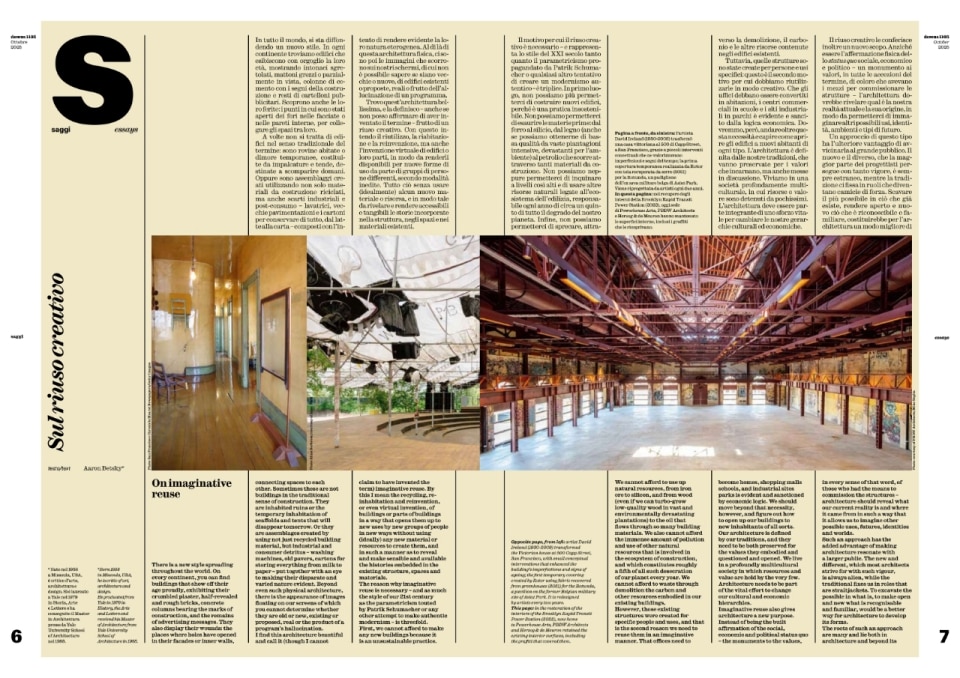
Aaron Betsky's essay elevates creative reuse to the style of our time, supported by a three-fold, inescapable logic: sustainability in the face of unsustainable extraction, social justice that breaks the hierarchy of “new is always better,” and the beauty inherent in the familiar. Architecture must evolve from an “affirmation of the status quo” to a revelation of the possible.
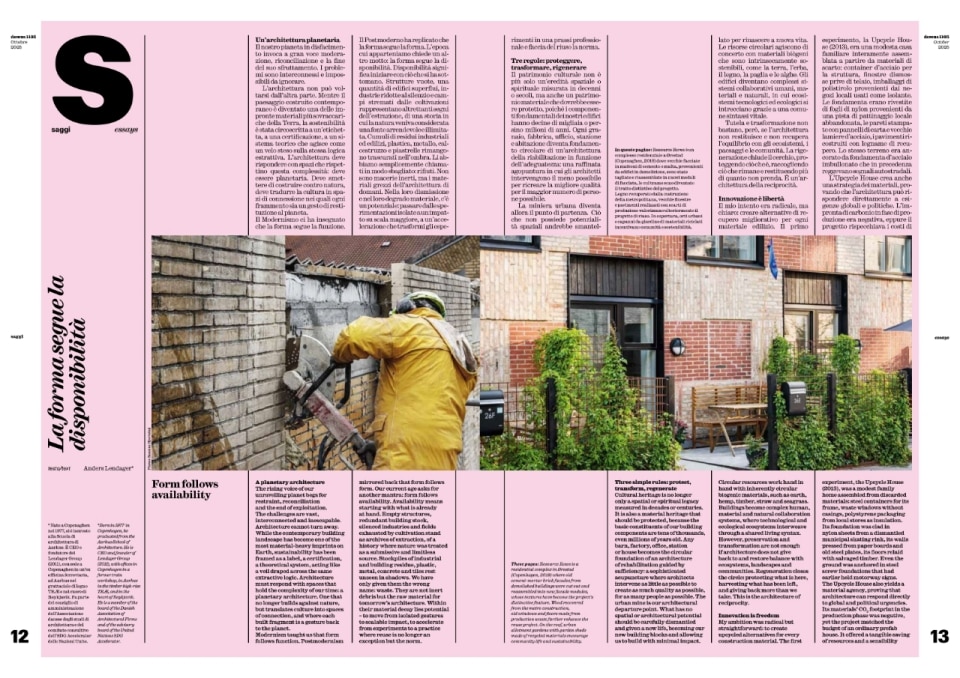
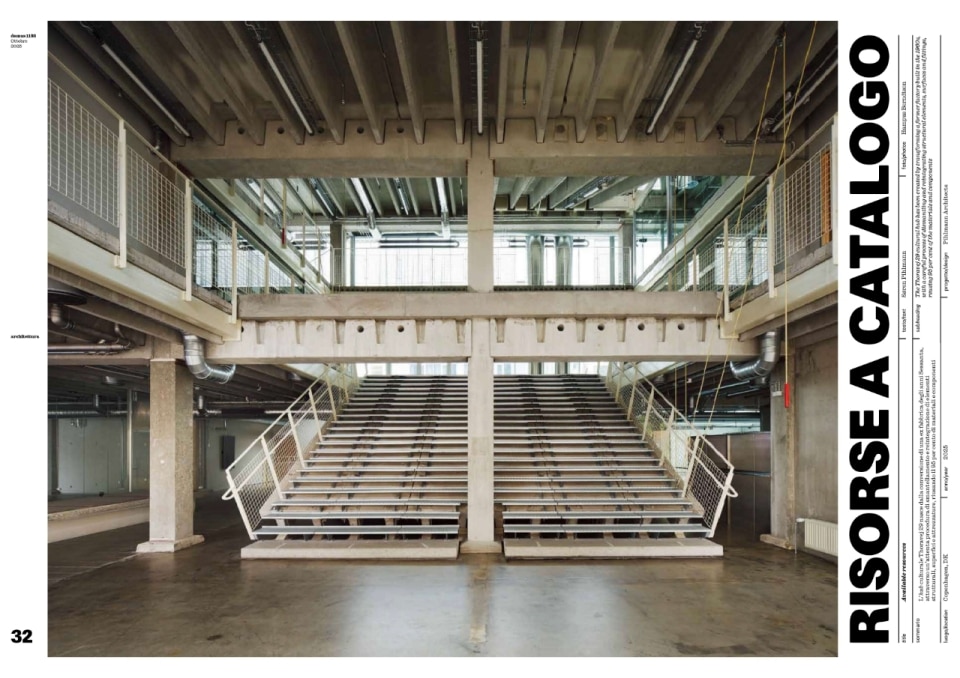
Architect Anders Lendager concretizes this philosophy with the premise “Form follows availability.” He confronts us with the only path forward: protect, transform, and regenerate. His Upcycle Houses are not utopian experiments but orchestral proofs of an architecture that demonstrates up to a 90% reduction in emissions, transforming the fragment into a catalogue of circular materials and the exception into an industrial norm.
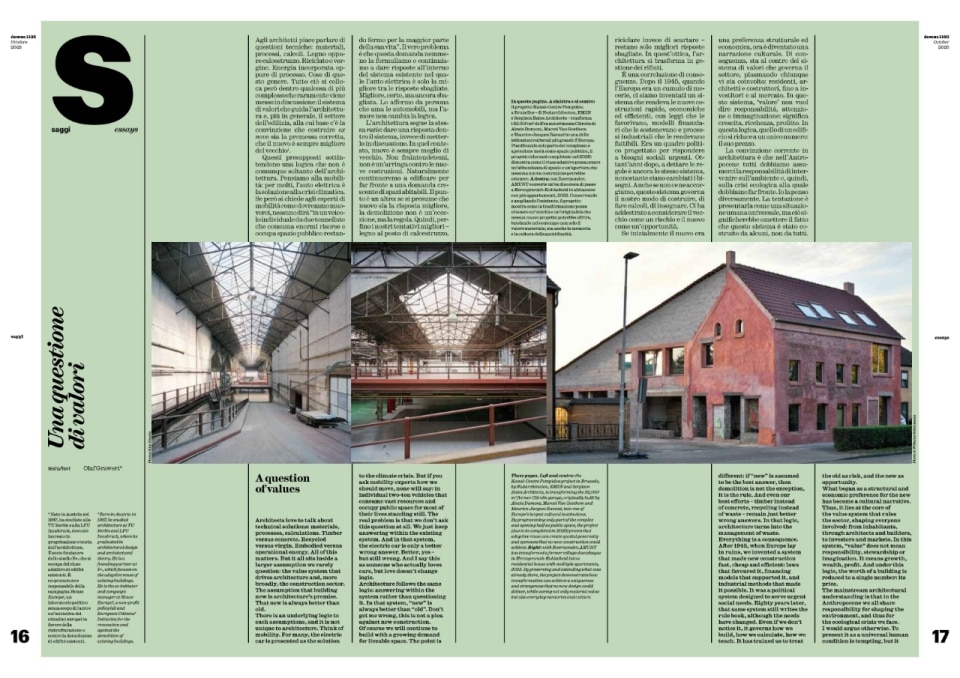
The coup de grâce to the system is delivered by Olaf Grawert, who, with his usual lucidity, attacks the Capitalocene, the value system that has reduced buildings to a financial asset whose demolition is the rule, not the exception. Demolition – which in Europe occurs at a rate of one building per minute – is an act of violence that is not only material but social, wasting embodied energy and sweeping away history. Grawert points us to the only correct answer: renovation, which must triple its current rate to meet climate goals.
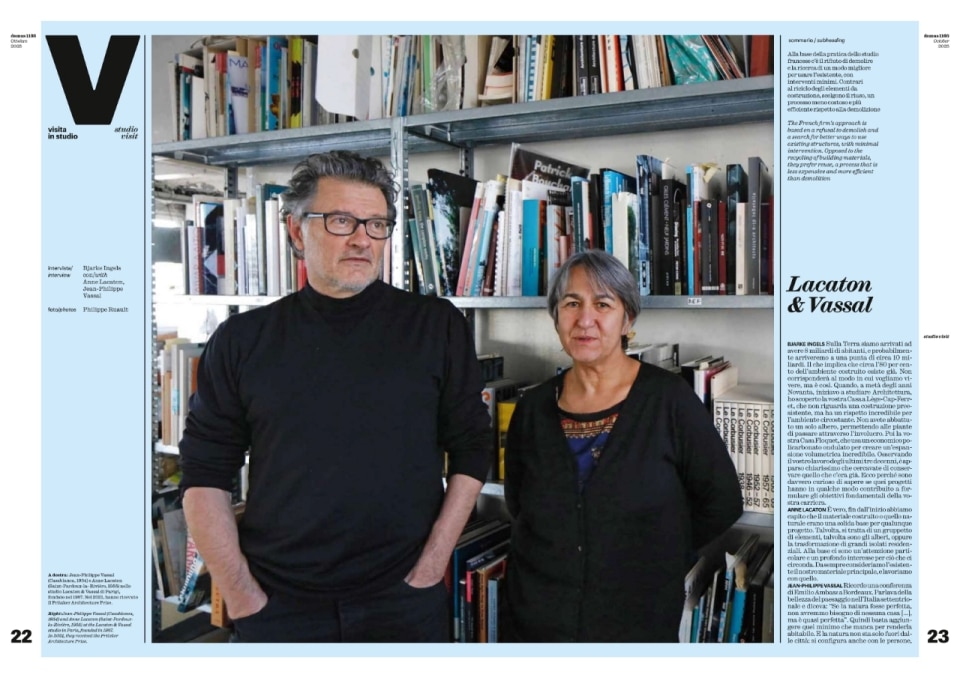
The vision of Anne Lacaton and Jean-Philippe Vassal is the clearest ethical manifesto: the imperative to “Never demolish.” They show us how spatial generosity does not arise from luxury but from the refusal to waste, transforming anonymous and undervalued structures – such as social housing in Bordeaux or the Palais de Tokyo–into places rich with opportunity, where architecture is an act of minimal intelligence for maximum result. For them, recycling demolition materials is a mere alibi that masks the destructive act.
Finally, art and design complete the metamorphosis: from Dirk van der Kooij, who compresses plastic waste into pictorial sheets, to the Troll artist who assembles waste pallets into gigantic Trolls to populate an upcycling wonderland. Johansson orchestrates orthogonal assemblies of common objects that celebrate their wear as a trace of life, and the supreme oxymoron of Ryan (analyzed by Ingels) who encrusts the scrap of engines and fenders with semi-precious gems, completing the ultimate alchemical gesture: turning waste into treasure
A journey that is, as always, extremely fascinating, and therefore, happy reading!