


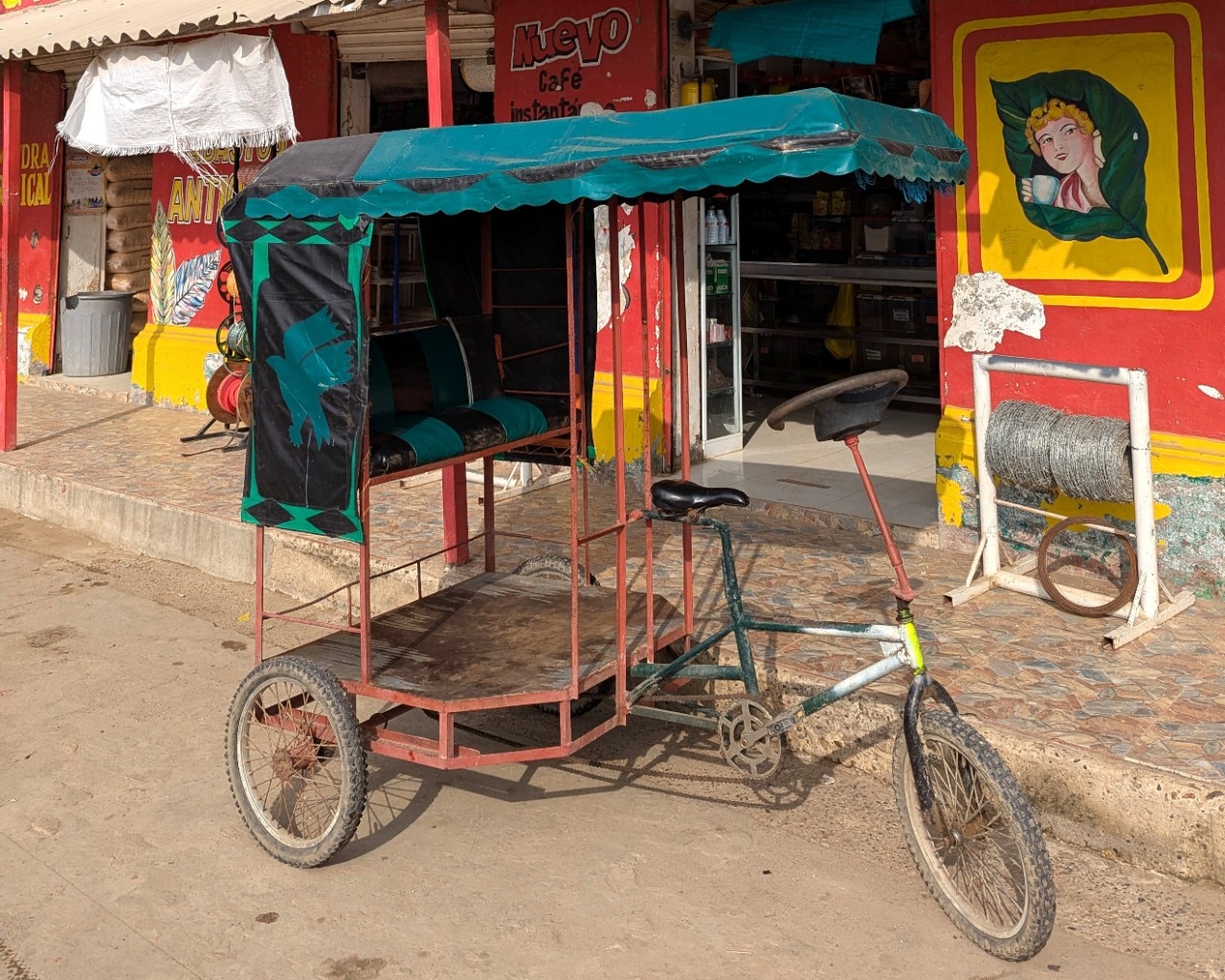


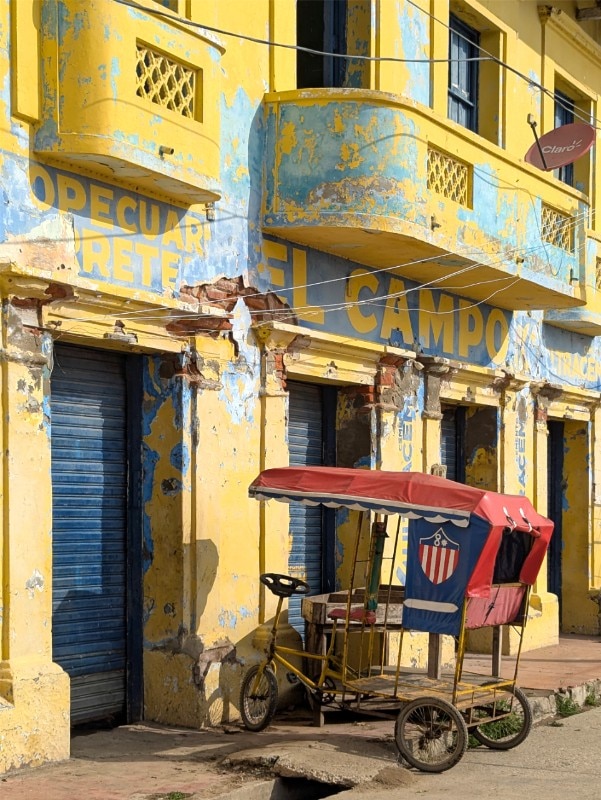


The main street in the Colombian town of Calamar, which connects the fish market with the residential part of town, is the only paved road in town, the rest being dusty roads littered with potholes caused by torrential rains. Few cars or even motorcycles circulate in town, and instead residents pick up their kids from school, do their shopping and visit relatives in bicycle taxis.
Over the past two decades, hundreds of bicycles have been modified to pull what is basically a bench on wheels covered with a carp to protect against the blazing sun. In addition to the damage potholes do to motorized vehicles, bicycle taxis have the advantage of being cheaper, don’t run on gas, and can carry three or four passengers at a time as well as boxes and shopping bags.
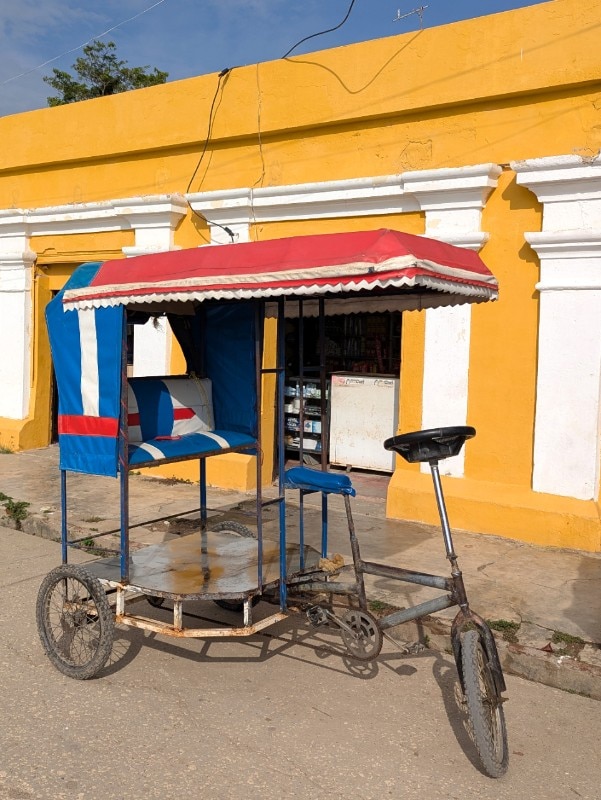
Many of the bicycle taxis boast bright lacquered colors and images on the cab and carp. The local name for these modified bikes is Paola, which comes from the name (written across the back) of the daughter of the man who first built and operated a bicitaxi. Most bicitaxis are already old and creaky, barely held together with soldered nuts and bolts, tape, string, paint. This quaint, antiquated means of transportation reflects the faded glory of the town.
At the start of the 20th century, modern steamships, railroad trains, and sea planes connected Calamar with the modern world beyond. The town enjoyed the benefits of electricity, clean drinking water, an ice factory and a soda factory, modern conveniences that few other towns in Colombia had at that time.

During the town’s years of abundance, steamship companies constructed majestic buildings in Calamar to house their headquarters, and fancy riverfront hotels accommodated visiting executives. Merchants, executives or wealthy families in Barranquilla and Cartagena looking for a weekend or vacation residence built themselves splendid homes in Calamar, often contracting international architects and favoring grandiose 19th century architectural styles decorated with Italian or Middle Eastern details.
By the mid-20th century, when a highway designed to connect major cities in the region by-passed Calamar, this river-front town lost its status as a commercial hub and the town’s economy ground to a halt. Today, as the glorious architecture of by-gone eras slowly decomposes, the town has little contact with the world beyond and mostly keeps to itself, with hundreds of bicitaxis doing the work of keeping the town moving.