



It is 1943 and Milan emerges from the Second World War almost entirely destroyed by bombing. The city launches an ambitious reconstruction plan, calling on artists and architects to rethink its urban fabric and its cultural institutions.
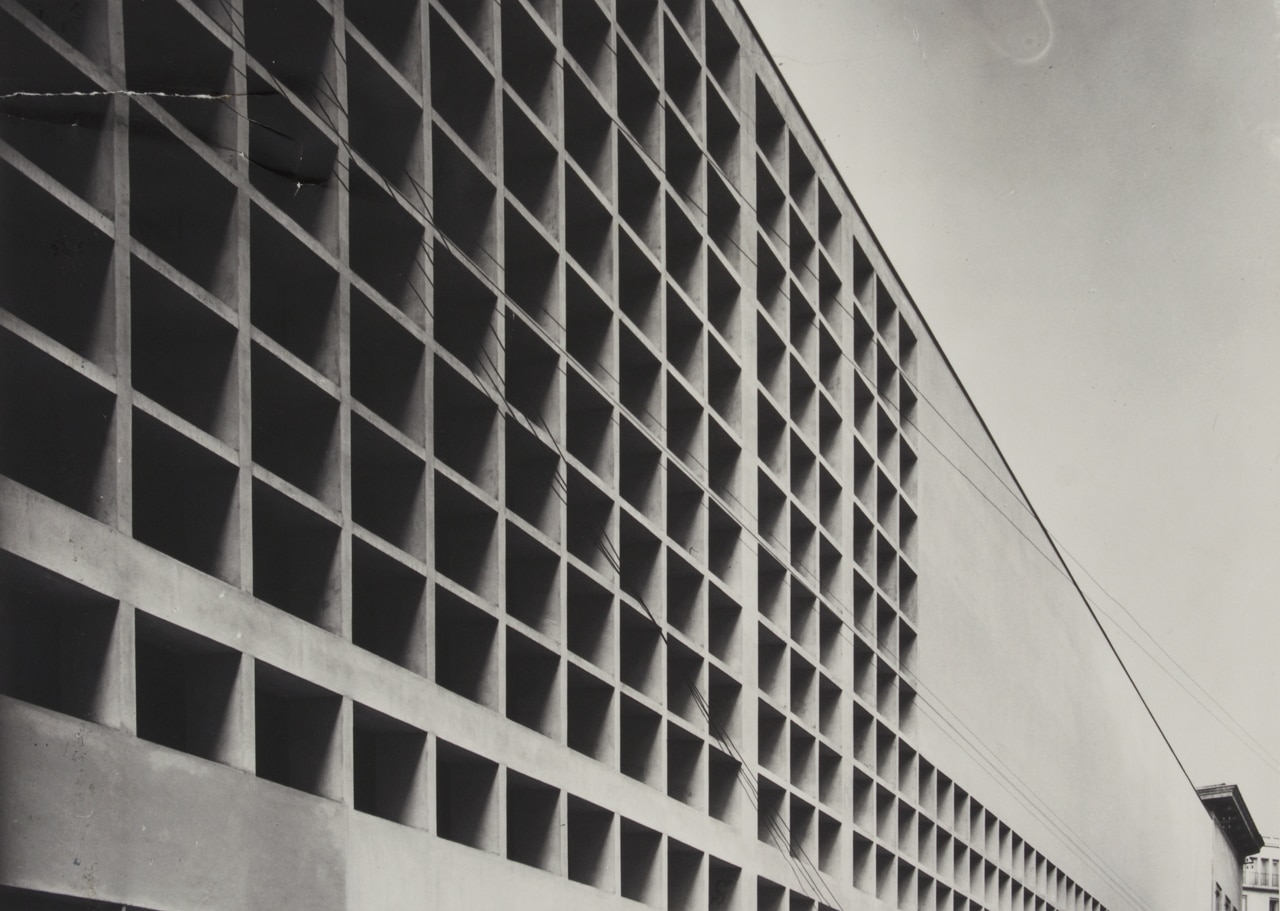
Among them is a very young Arrigo Arrighetti, who has just graduated from the Politecnico di Milano with a thesis imagining the reconstruction of Palazzo Sormani, the eighteenth-century Sormani Andreani residence overlooking Via Francesco Sforza, as a public library.
In 1956 that thesis becomes reality: the Biblioteca Sormani opens — once described as “the most beautiful library in Europe.” Today, seventy years later, it may soon no longer function as a library at all.
The end of the central library
The announcement came from Tommaso Sacchi, Milan’s councillor for culture, who on 8 March revealed the city’s intention to transfer all the functions of the central library to the new BEIC – European Library of Information and Culture, a next-generation cultural complex currently under construction in the Porta Vittoria area and scheduled to open in 2027.


A few days after the announcement, the municipal council approved a policy guideline stating that Palazzo Sormani must remain a cultural venue and cannot be converted into offices or administrative facilities. “We want to preserve the strong bond between Milanese citizens and this symbolic place of the city’s cultural life,” Sacchi said.
The definition, however, remains intentionally broad. The building could become a cultural centre, a museum, or a space dedicated to the arts and contemporary production. This uncertainty has already sparked debate across the city and will likely become a major issue in the 2027 municipal elections. It also follows another potential loss in Milan’s bibliophile landscape: the famed Hoepli bookshop, located not far away, which in recent days has been rumoured to be facing liquidation.
What the city centre risks losing
Sormani, after all, was (and still is) one of the few large infrastructures for citizens that remains public and free in the historic centre of the city, just a few minutes from the Duomo, next to the University of Milan and the Giardini della Guastalla. Today it houses around one million volumes and is the heart of Milan’s library system.
A large inner courtyard, invisible from the street, hosts open-air cinema screenings in summer, exhibitions and retro displays connected to the history of Milan, as well as endless programmes of book presentations and meetings with authors, including BookCity Milano and beyond. Sormani has always been more than a library: it is a civic infrastructure in a city where very little public space remains. Not to mention the enormous archive of newspapers and periodicals preserved here — the microfilm reading room where they can be consulted has achieved an almost mythical reputation over the years.
Not only a place for study and work, but one of the few spaces in a city centre overwhelmed by overtourism that still belongs to residents rather than tourists: a kind of stronghold of a Milan where people still met near the Duomo instead of avoiding it like the plague. “In 1956 the director Giovanni Bellini called it ‘the home of Milanese scholars,’” Sacchi himself recalled.
Arrighetti’s project
Arrigo Arrighetti’s project brings together two typical elements of Milan’s post-war reconstruction: the restoration of the historic building and the architecture of rebuilding. On one side, the historic interiors of the aristocratic palace were restored — monumental staircases, decorated halls and the large inner courtyard. On the other, a new wing was built along the street, recognisable by its rationalist façade.
Sormani has always been more than a library: it is one of the last truly public spaces in the heart of Milan.
But the real intuition of the project lies not only in the architecture, but in the idea of the library as a space for the city.Arrighetti imagined Sormani as a civic infrastructure where every space is designed to be crossed and inhabited: bright reading rooms overlooking the courtyards, simple and accessible circulation paths, and the large central courtyard that becomes a true green square in the heart of the historic centre.
In the post-war context this choice also carried an almost ideological meaning: transforming a private aristocratic palace into a public place of knowledge open to all citizens.
Even today, entering from the street and crossing the palace, one passes almost suddenly from the traffic of the city centre into a quiet space of trees, gravel and eighteenth-century façades: a small urban suspension in the heart of the city. In this sense Sormani remains one of the most successful examples of how Milan transformed the wounds of war into cultural infrastructures.
The future of Sormani
In recent days many proposals have circulated regarding the future of Sormani. Within the cultural debate, among others, the idea has emerged of transforming the library into a space for contemporary art — not like the Museo del Novecento, but truly contemporary: a “kunsthalle for young art,” as Massimiliano Tonelli wrote in Artribune.
From the world of architecture, however, no strong position has yet emerged.
One thing is certain: by the end of 2026 the famous “tele del Grechetto,” the seventeenth-century cycle of paintings created by Giovanni Benedetto Castiglione that once belonged to one of Sormani’s halls and was removed in 2019 for restoration, will be returned to the palace.
Meanwhile, celebrations for the seventieth anniversary of the library are underway, with a programme of events and activations.
Opening image: Palazzo Sormani in Milan. By Paolobon140 - Own work, CC BY-SA 4.0, via Wikimedia Commons