


What is a home?
A collection of walls, rooms, windows and square metres – as Clara, the protagonist’s daughter, pragmatically suggests – or something more fragile and profound: a repository of life?
“What things are we?” Alessandro Mendini once asked in the memorable 2010 edition of the Triennale Design Museum. Objects, he argued, are never neutral: they are material autobiographies, extensions of ourselves, traces of our choices, our loves, our habits.
This is precisely the beating heart of Calle Málaga by Maryam Touzani: a delicate, heartrending film in which the true protagonist is not only María Ángeles, but her house in Tangier – and above all, the things that inhabit it.
Tangier, a city of passage
Tangier is a frontier city, suspended between Africa and Europe, between overlapping languages and cultures. Once an international port under Spanish protectorate, a place of crossings and exchanges, it retains that atmosphere of a crossroads – felt in its markets, its voices, the scents of the souk.
At the beginning of the film, we follow the hands of María Ángeles – the extraordinary Carmen Maura, an unforgettable face of Almodóvar’s cinema – as she selects peppers, mandarins, spices, buys eggs still hoping for the lucky double yolk. Back home, she places a vinyl on the turntable: Toda una vida by María Dolores Pradera. The gesture is slow, ritualistic.
The film enters the house through hands: cooking, cleaning, touching, arranging. As though dwelling were, first and foremost, a manual practice.
A house made of things
The house is a dense universe: copper pots, blue Moroccan ceramics, crocheted tablecloths, doilies, family photographs, vases, owls in wood, ceramic and straw. A wicker rocking chair, warm lampshades, rugs worn by time, curtains and wallpapers rich in natural motifs. On the balcony, red geraniums – and the muezzin’s call drifting through the rooms.
Our houses are three-dimensional autobiographies.
Every room is full, yet never cluttered: it is the stage set of a long, sedimented life. A quiet theatricalisation of the everyday.
Then Clara arrives, the daughter from Madrid. And the first thing she says, stepping into her old room, is: “I told you to get rid of all this stuff.”
For Clara, these objects no longer speak. They no longer tell her who she has become. They are simply excess.
For María Ángeles, by contrast, every single object coincides with a fragment of her identity.
Walls or memory?
The conflict is simple and brutal: Clara wants to sell the house. She needs money, she is divorcing, her life is precarious. The house is legally hers – she can do it.
“It’s just a house,” she says. “What do you need all this space for if you only ever live in a corner?”
But for her mother, the house is not space: it is inhabited memory. It is the presence of a deceased husband, of friends now gone, of daily routines, of the souk traders who greet her by name.
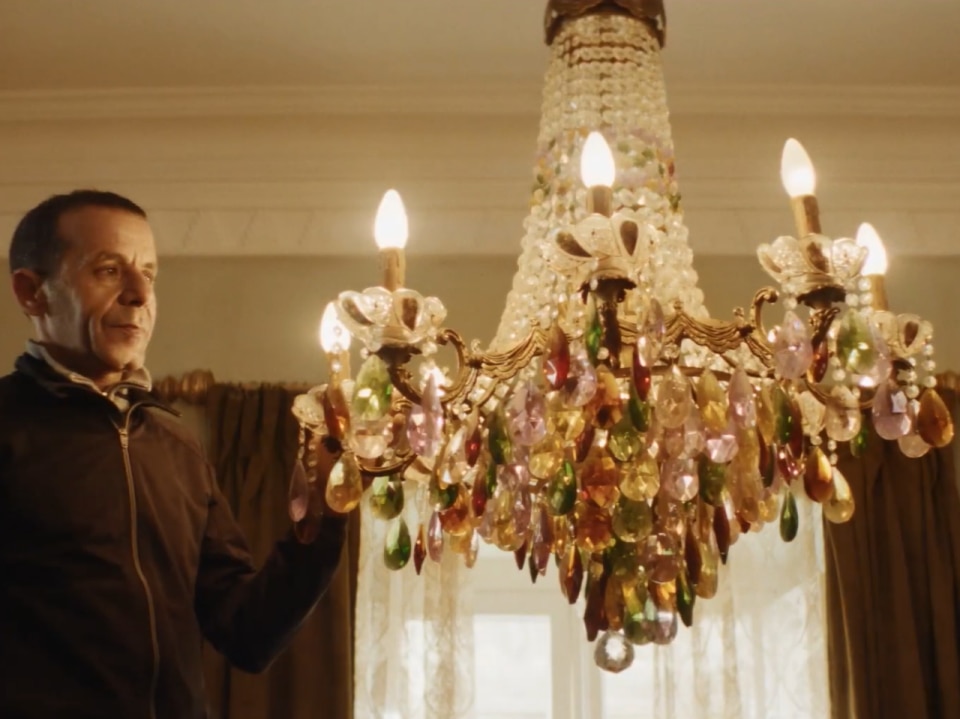
When the emptying begins, the film becomes devastating. Boxes are filled, clothes folded, objects catalogued for sale. The antique dealer comes to collect furniture and ornaments, touches the crystal chandelier, assesses, devalues, buys for a pittance.
Every object that leaves takes a piece of life with it.
All but the turntable. That, María Ángeles refuses to part with. It is her time, her music, her story.
The empty house
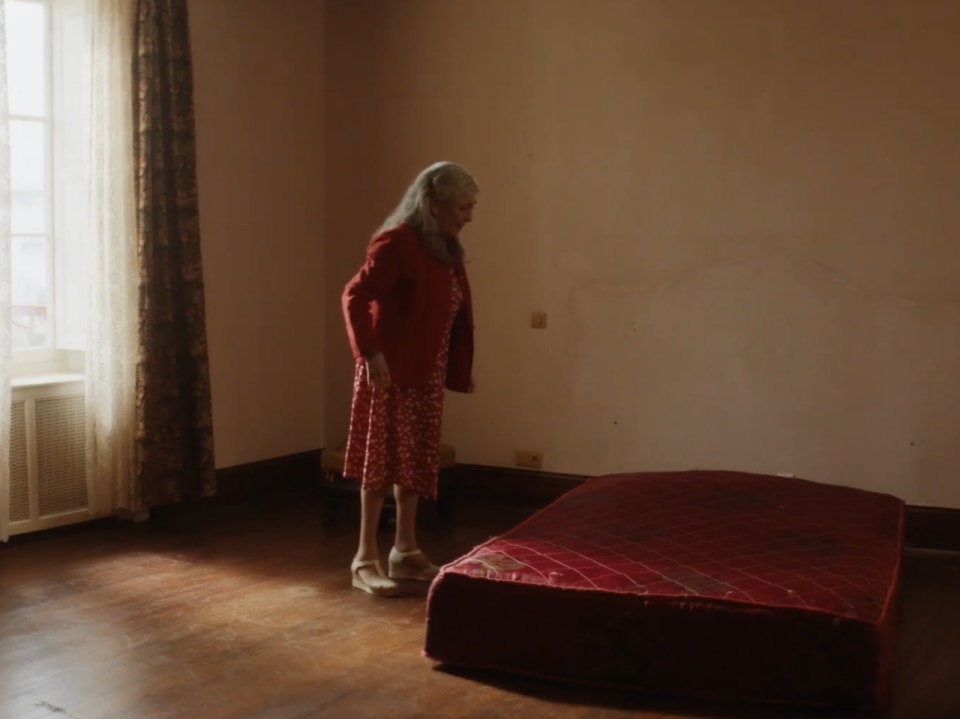
The most painful sequence comes when María Ángeles returns clandestinely to the now-empty house. Bare walls, power cut, stripped rooms. The house has become nothing but walls.
She moves through it, disoriented, lays a mattress on the floor, arranges a few doilies over boxes, lights candles. Very little is needed to rebuild a domestic corner: because a home is made of gestures, not walls.
Here the film reveals its deepest theme: without objects, without traces, identity begins to crumble.
Buying back one’s life
María Ángeles then attempts the unthinkable: to buy back her own furniture from the antique dealer, on instalments, one piece at a time. The rocking chair returns home, then the chandelier, then other objects.
The dealer, initially detached, comes to understand that this is not nostalgia, but a matter of survival – of identity itself. A complicity grows, then a late love: tender, passionate. Together, in an old convertible resurrected for the occasion, they even set out in search of the lost turntable.
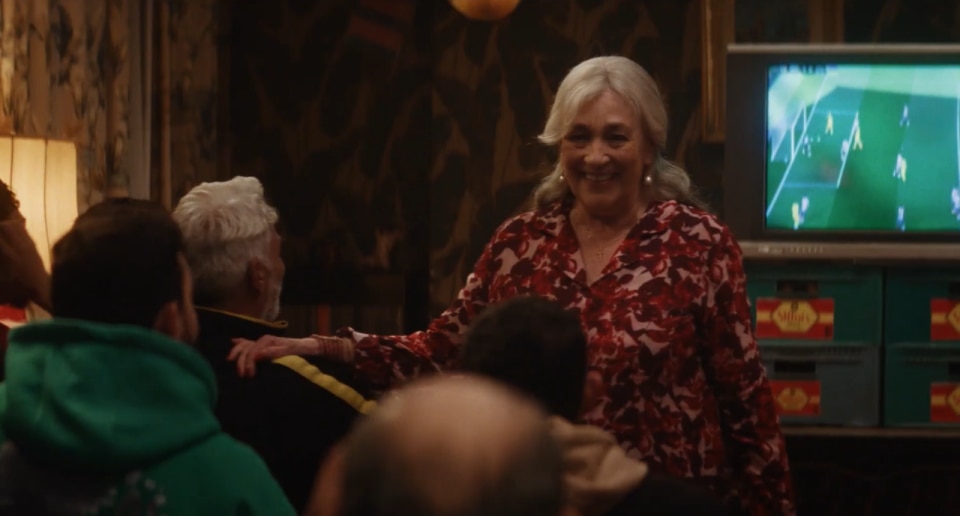
Meanwhile, the house changes function: in order to survive, María Ángeles transforms it into an improvised bar for football fans, cooking for her guests. The domestic space temporarily becomes a place of business – in order to remain a home.
When objects speak
In the end, as the sale seems inevitable, it is Clara who shifts her gaze. She touches the owls, runs her hand along the rocking chair, feels the weave of the wicker beneath her fingers. At last she sees what her mother saw: not things, but memory.
She understands that objects safeguard life.
The film closes with María Ángeles on the balcony, in the Tangier night, while Clara remains inside, in silence, touching what remains.
Objects as autobiography
Calle Málaga is, ultimately, a film about design without ever speaking of design. It shows us what we often forget: that things are not merely functional or decorative, but instruments of identity.
Our homes are three-dimensional autobiographies. Every object is a choice, a memory, an emotional trace. To throw them away is not simply to tidy up: it is to erase parts of oneself.
As Mendini said, objects are documents of life.
And perhaps the question the film leaves hanging is this: when we empty a house, what truly remains of us?