

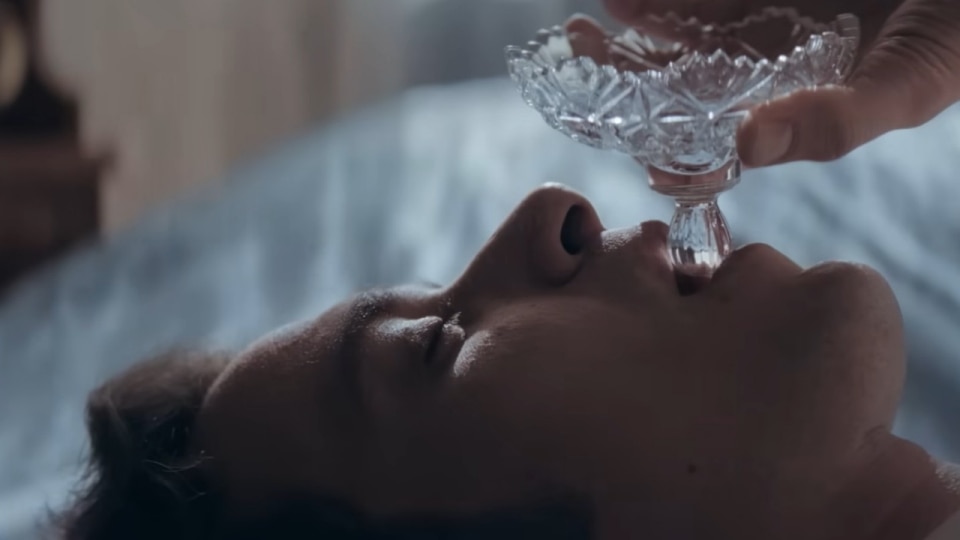
Everything begins with a white handbag.
A Jenny Colon displayed in a shop window on April 26, 1975.
Kemal buys it for his official fiancée—cultured, refined, socially impeccable.
But she, with a gesture that already contains a fracture, tells him: it’s fake.
Returning it becomes a pretext.
An opening. A desire.
In the shop, behind the window, there is Füsun.
This is where The Museum of Innocence, the series based on Orhan Pamuk’s novel, begins. But it is also where something more radical emerges: an idea of the world in which objects are not accessories to life, but its true custodians.
The handbag is fake.
The love is not.
And yet it will be the object—not the passion—that survives.
Objects are more faithful than people
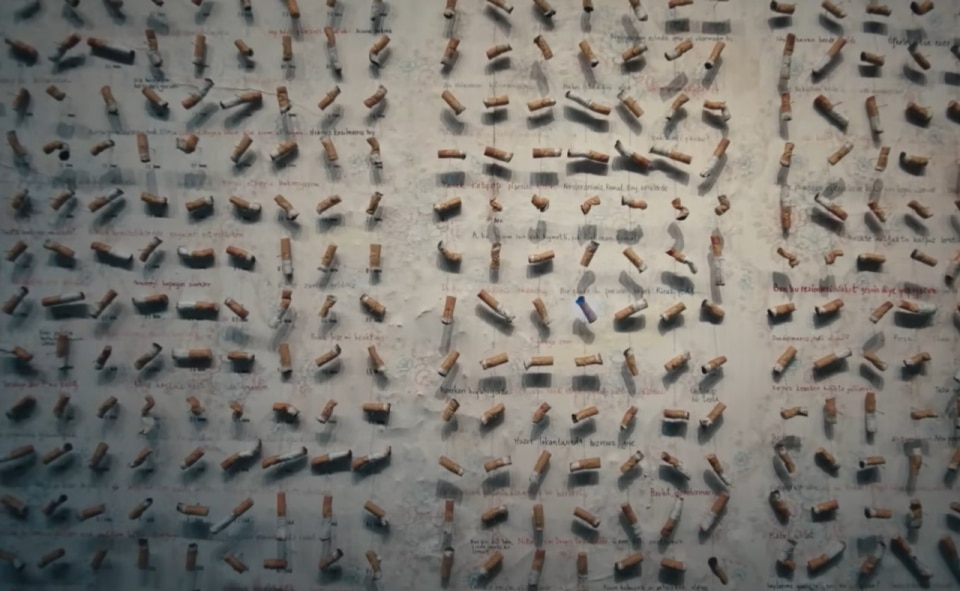
Four thousand cigarette butts.
The first one—the one that “changed my life.”
The figurines that silently witness a love being born.
The stairwell, the hand gliding along the banister.
The crow perched on the window.
The butterfly earring slipping free and landing on the bed.
The lace curtains reflected on naked bodies.
Every episode is an inventory.
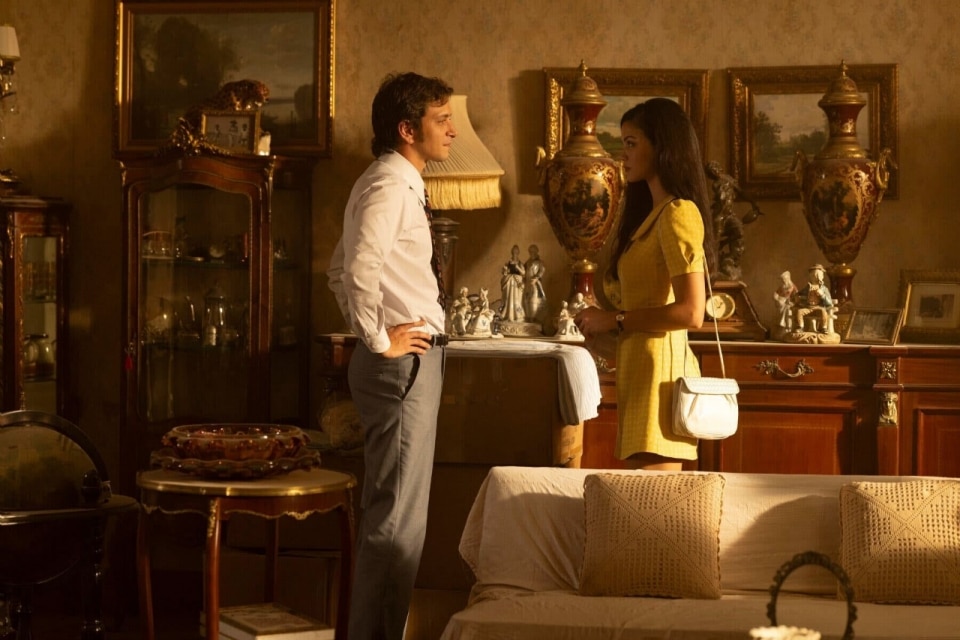
“When we think of the happiest moment of our lives,” Kemal says, “we realize it belongs to the past. It will never return. That is what makes it unbearable.”
The only way to make that pain bearable is to keep an object tied to that moment.
That is the key.
It is not people who guarantee memory. It is things.
Things retain a temperature, a scent, a position in space.
The museum is a gesture against death. It does not save the life. It saves the trace.
People drift away, betray, die.
Things remain.
The cigarette butt holds the moisture of lips.
The lipstick stolen in the bathroom keeps the rose scent of her mouth.
The salt shaker caressed during dinner becomes a relic.
A teaspoon resting on lips can be more powerful than a kiss.
Every encounter between people and objects has its own story.
Pain has an anatomy
When Füsun stops showing up, time begins to measure the wait.
The apartment at Palazzo della Pietà is filled with clocks.
A Peter alarm clock with two dials: on one side, 2:15 p.m.; on the other, a ballerina spinning endlessly. Time becomes double: chronological and circular. Love is linear. Memory is obsessive.
Kemal studies a diagram of the human body in a pharmacy window and tries to locate his suffering: first on the right side of his stomach, then beneath his chest, then everywhere.
The pain is not metaphorical. It is physiological.
Brain. Teeth. Neck. Esophagus.
And yet relief does not come from medicine. It comes from the museum.
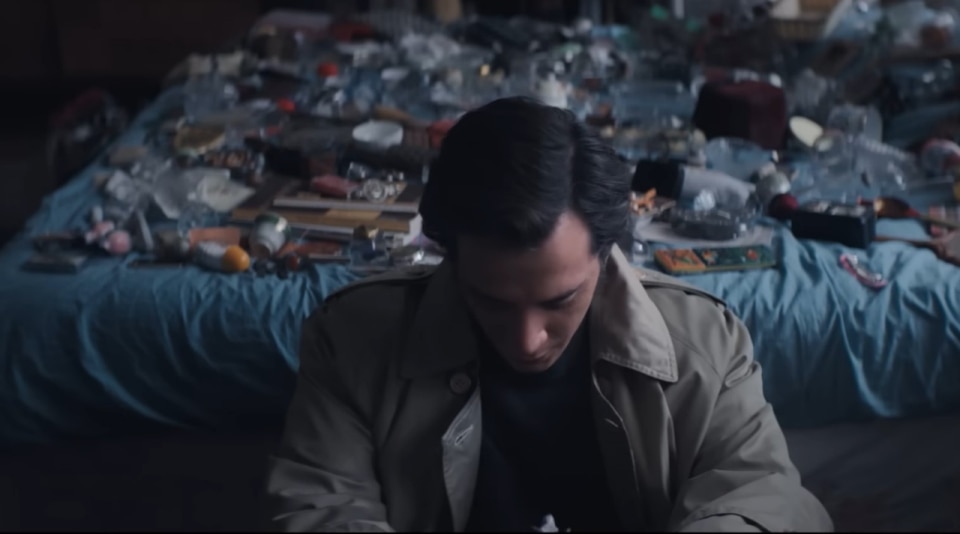
To ease the agony he retreats into objects. He smells a cigarette butt that is already a week old.
He wants to smoke it, but stops himself. He does not want to consume it. He does not want to lose the last material trace of her.
Objects must no longer be used. They must be preserved.
At that moment the object changes status. It is no longer a tool, no longer a commodity. It becomes a sign.
Removed from use, it enters another economy: the economy of memory.
This is what happens to every object when it crosses the threshold of a museum: it loses its function and acquires meaning.
The collector as a lover
When Kemal discovers that Füsun’s family has left the apartment, he enters the empty house.
He tears off a piece of wallpaper. He picks up a marble. He finds the arm of a fallen doll.
He flushes the toilet and the handle comes off in his hand. He slips it into his pocket.
Then, with the broken arm of the doll, he caresses his own face.
It is an extraordinarily powerful scene.
This is not fetishism. It is survival.
Those objects, he says, “are beautiful because they helped me look at that wonderful creature.” Their beauty is reflected.
Here the story opens onto a broader question: what makes an object worth preserving?
Its quality?
Its economic value?
Its authenticity?
Füsun says: some objects are not bought not because they are fake, but because others would know they were cheap.
It is a devastating statement. Social identity is built through price.
Kemal instead builds a secret, interior identity through subtraction.
He takes salt shakers, little dog figurines, thimbles, clothespins, matchboxes with birds drawn on them, an orange wax crayon, a ceramic puppy.
He accumulates them at Palazzo della Pietà.
And he is no longer ashamed.
The museum as consolation
After the tragedy—the crash against the tree in the sunflower field, the same field that appeared in Füsun’s mind during their first lovemaking—Kemal survives.
A month in a coma.
When he returns to the apartment, the bed is covered with objects.
He flees to Paris. He does not visit the Louvre.
Instead he seeks out small museums: the house of Edith Piaf, filled with teddy bears and combs; the home of Ravel, with its iron nightingale in a cage; the museum of Gustave Moreau.
He is no longer ashamed of his collection.
In the markets of Baghdad he sees lighters identical to the one he gave Füsun.
In New Delhi he finds the same salt shaker.
In Rome he sees the same industrial form again.
Then he understands: objects are serial, but stories are unique.
Millions of salt shakers exist in the world.
Only one stood on Füsun’s table.
This is where the final idea emerges: to tell one’s life through things.
It is not people that guarantee memory. It is the things.
Modernity has accustomed us to serial production—objects made in millions of identical copies, replicable, interchangeable. Yet identity does not arise from material uniqueness but from relationship.
An industrial salt shaker can become irreplaceable if it was touched in a moment that will never return.
The aura no longer belongs to the singular work of art, but to the experience deposited within it.
The real museum
Pamuk’s most radical gesture is not literary. It is architectural.
The Museum of Innocence actually exists in Istanbul, in a house in Çukurcuma.
The house has been transformed into a permanent exhibition of those objects: the 4,213 cigarette butts, the marbles, the shoes, the earrings, the matchboxes.
Fiction becomes space.
And here the question expands.
What is a museum?
A place that preserves objects important to a community?
Or a device that makes a private story universal?
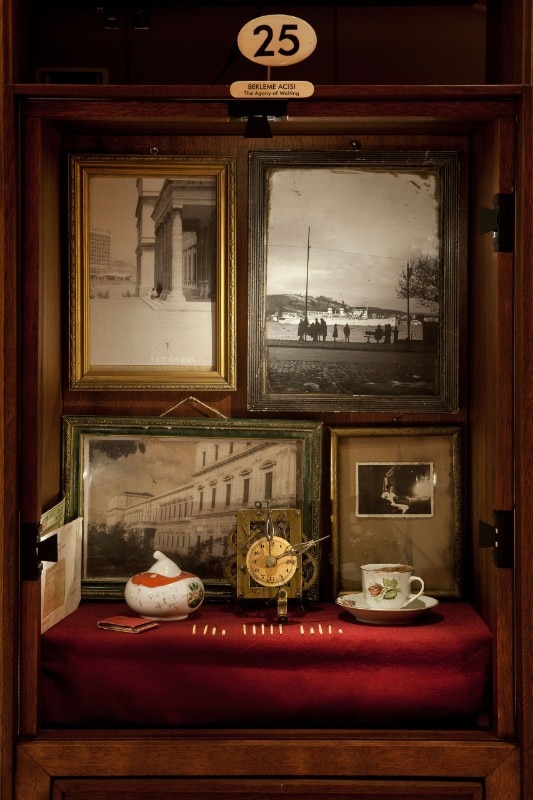
Pamuk overturns the Western paradigm of the great encyclopedic museum.
Not the Louvre.
Not the monumental institution.
But a house.
An apartment.
A bed crowded with domestic relics.
It is a museum of the ordinary.
A museum of fragile identity.
Every museum, ultimately, is a narrative device.
It does not merely preserve objects: it constructs invisible connections between things and absences.
The objects on display become mediators between what we see and what is no longer there.
They do not show life.
They show its trace.
Things shape who we are
The objects that “shaped Füsun.”
It is a decisive expression.
We are not only biography.
We are also what we have touched, used, consumed.
A tricycle passed from hand to hand.
A lost earring.
A box of matches.
A clock with a ballerina.
Füsun’s father decides how to arrange two ceramic dogs on top of the television: one facing the family, the other facing its companion, so that “they won’t get bored.”
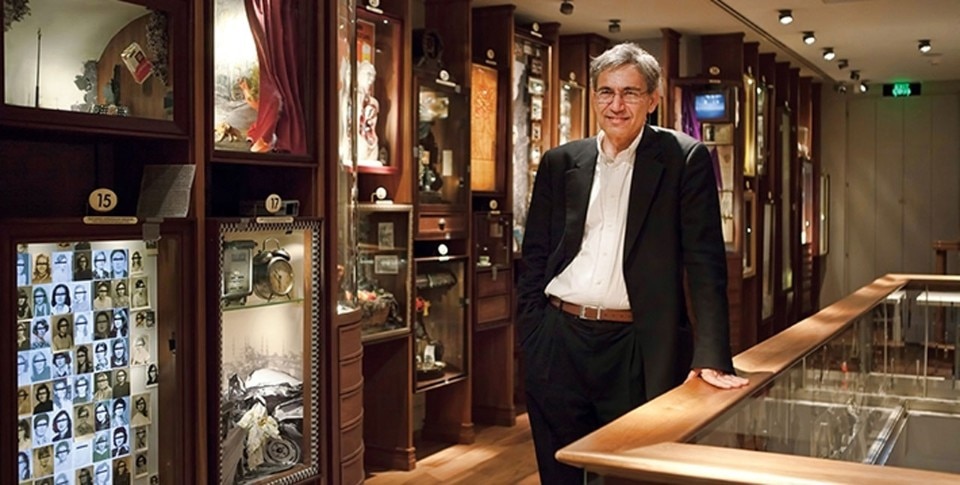
Objects are never neutral.
They have a precise place.
They either enter the family—or they do not.
And perhaps this is the most powerful question the series asks:
If someone you loved were gone, what would you prefer?
To gather friends and evoke their spirit?
Or to keep an object that once belonged to them?
Collective memory—or an intimate relic?
Identity and permanence
In the final moment, just before the accident, Füsun asks: “Have you seen my earrings?” Kemal suddenly understands. He, obsessed with objects, had never noticed the butterflies in her hair.
Objects should no longer be used. They are to be kept.
Because sometimes love looks at things more than at people.
And yet it is precisely through things that it tries to eternalize that love.
The museum is a gesture against death.
It does not save life. It saves the trace.
And Milan
There is a revealing moment: Kemal recalls visiting small museums around the world. Not grand celebratory museums or monumental institutions, but houses turned into memory.
Among the five most important museums of his life he includes the Bagatti Valsecchi Museum in Milan.
This is not a random detail.
Casa Bagatti Valsecchi is not simply a collection of Renaissance objects. It is an interior built like a coherent dream, inhabited down to the smallest detail: armor, cabinets, pitchers, cassoni, textiles.
Everything is in its place—but not to be contemplated from a distance.
To be lived.
It is not a neutral collection.
It is a world.
Like Kemal’s museum.
Like Füsun’s house.
Bagatti Valsecchi, like the Museum of Innocence, does not narrate History with a capital H. It tells a private passion that has taken spatial form.
It tells a gaze.
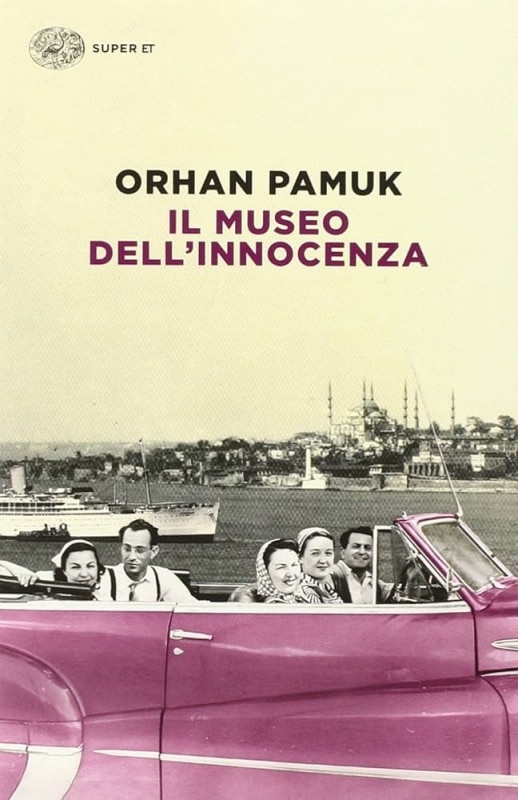
A museum is not created only to preserve the past.
It is created to make visible the world someone carried within.
Kemal’s salt shakers, ceramic dogs, thimbles and clothespins are not so different from the armor and majolica collected by the Bagatti brothers: objects that built an identity, that gave substance to a desire.
It does not matter whether they are authentic or fake, serial or unique.
What matters is that they were chosen.
Every house turned museum is a habitable self-portrait.
An identity crystallized in space.
And so the question that The Museum of Innocence ultimately leaves us with is not nostalgic but radically contemporary:
Which objects are shaping our identity today?
Which would deserve a display case?
Which will outlive us?
Perhaps every love, if it is not to dissolve entirely, must become a museum.
And perhaps every museum, in the end, is a form of love that has decided not to disappear.