

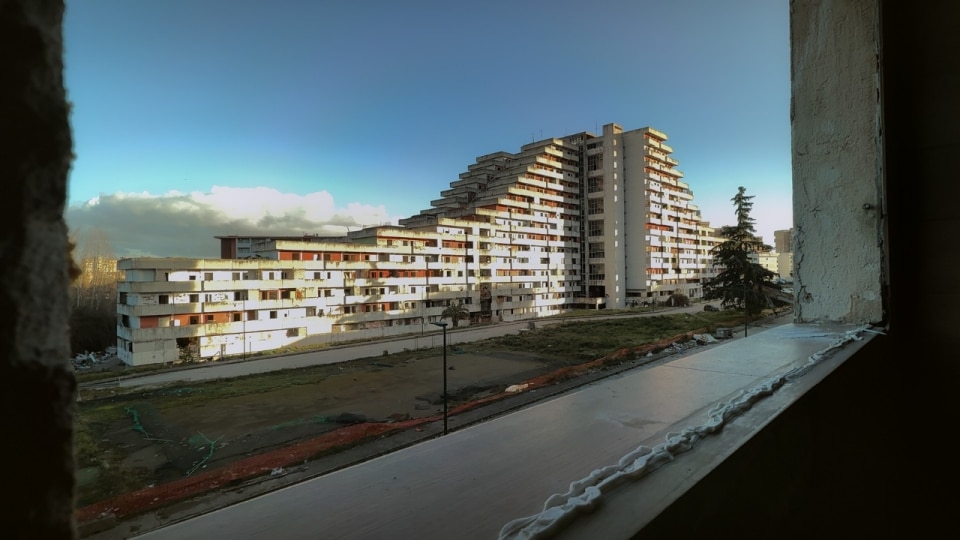
The Vele are an urban mythology, the Vele are extraordinary brutalist buildings, the Vele are a monument to the desolation of the periphery.
The Vele are hideous, the Vele are the breaking point where the modern dream of collective housing cracked, the Vele are the unease of the twentieth century.
The Vele are the ones from Gomorrah, the Vele are not the ones from Gomorrah.
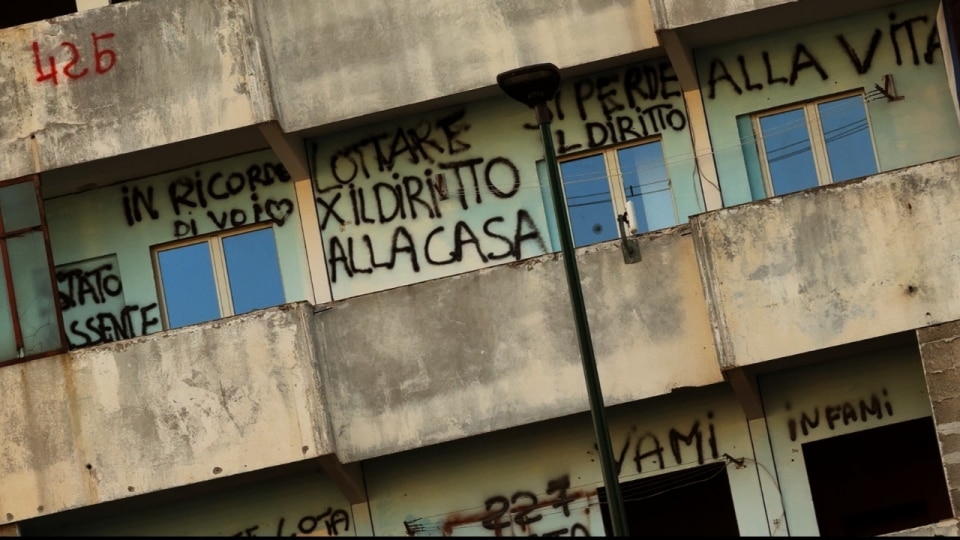
After the collapse of a walkway and the acceleration of demolition plans, the Vele of Scampia — the massive terraced social housing complex designed in the late 1960s by architect Franz Di Salvo on the northern outskirts of Naples, which at one point may have housed more than 8,000 people — were evacuated. For years they were a symbol of modernist failure, urban marginality, and media-amplified criminality. Long portrayed in Italian media as a stronghold of the Camorra and as an emblem of the collapse of public housing policy, Scampia became internationally recognizable through that representation. The TV series Gomorrah turned the Vele into a global sign. Today they remain enormous concrete skeletons, exposed corridors, emptied apartments, walls marked by graffiti. Many messages are addressed directly to the building: “home I love you,” “I will not forget you,” left by those who for years, for decades, called that place “home.” The second person is insistent, almost affectionate. Because for many residents those buildings were not a symbol but a biography. There they raised children or were raised, built relationships, found a form of recognition.
The diaspora
La diaspora delle Vele by Francesca Comencini, produced by Cattleya & Sky Studios and available on Sky Documentaries, begins with a fracture that Comencini summarizes this way: “Without a community you die.” And it is precisely that community that the evacuation disrupted. Where did its inhabitants end up?
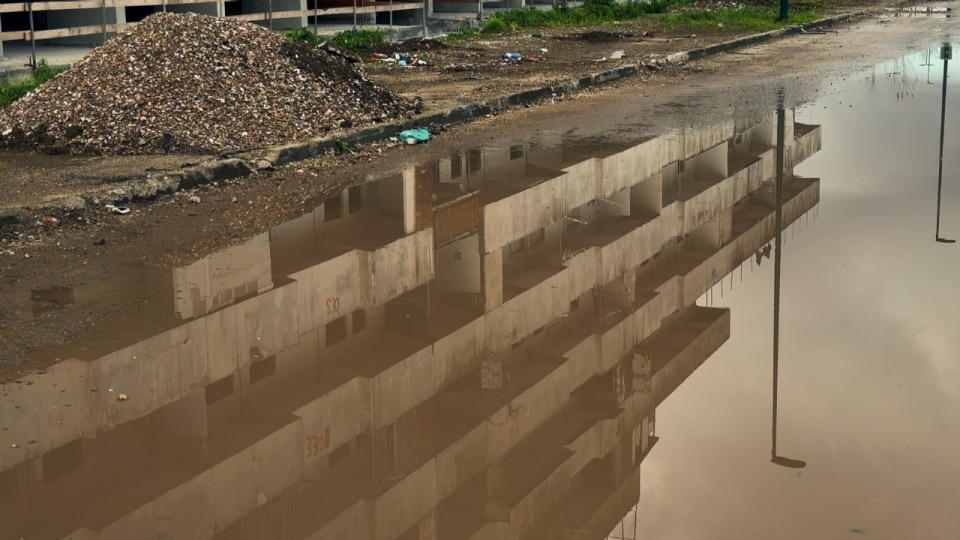
They are a diaspora, in fact. Like an exile: “It is a forced dispersion,” the director says. It is not simply the end of a housing complex, but the disarticulation of a configuration of proximity. Many former residents do not mourn the modernist project or the utopia of public housing. They mourn what happened inside those enormous buildings, concrete ships run aground on the outskirts of Naples, where life opened onto shared walkways and could not avoid encountering itself. An architecture we have labeled hostile and abusive created a unique and immensely powerful sense of community.
Without a community you die.
Francesca Comencini
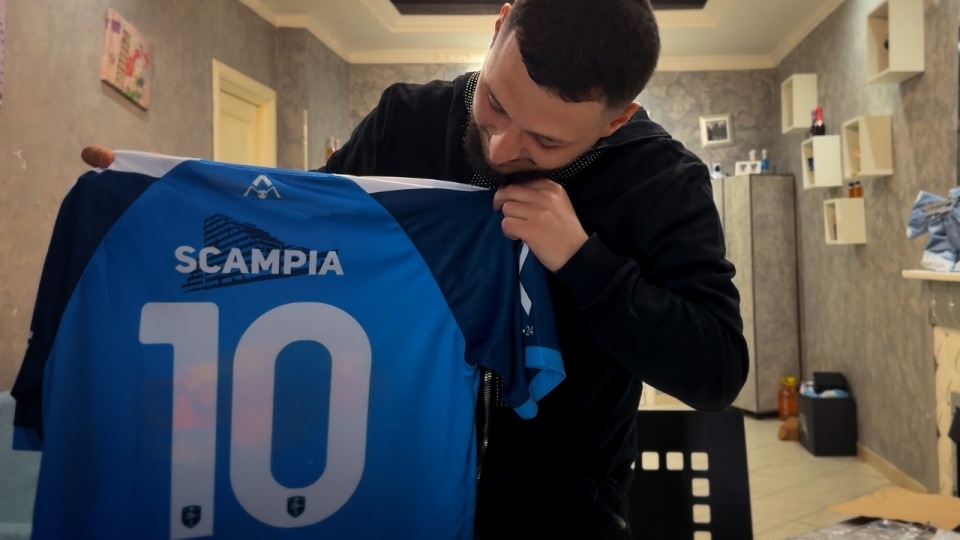
In their new homes today, former residents recount in the documentary what it meant to live in the Vele. They do so with emotion and nostalgia. “They speak to the house as if to a loved one,” says Comencini. Or even better, the director adds: “like a sister you fight with but always stay together.” The effect is disorienting. For those who have learned to read those structures exclusively as urban dystopia, that affection creates a short circuit. One might think of a sort of “Scampia Syndrome,” an updated version of Stockholm Syndrome applied to architecture. And yet in those elevated corridors and in those seemingly claustrophobic apartments hopes, loves, entire lives unfolded. And above all sacrifices — a word that returns several times in the documentary. The film gives back a voice to those who truly lived in the Vele, after years in which news and cinema turned those lives into backdrop, narrative material, permanent set design. There is no folklore here, no criminal epic. “For me it was also a sense of restitution,” explains Comencini, who knows Scampia well, having been part of the team behind the TV series Gomorrah.
Interiors and exteriors
The film is built on a very precise dual visual axis. The exteriors are exclusively at the Vele, abandoned, as they appear today: the walkways, the voids, the modular repetition of the façades, the concrete now resembling a carcass. The interiors, instead, are elsewhere: in the temporary homes where the diaspora has relocated. But in some way those interiors are still encapsulated within the gigantic structure designed by Franz Di Salvo. The house and the building no longer coincide. The Vele remain outside, as a massive and silent body.
“A gigantic panopticon”: this is how Comencini defines the building she came to know closely during the filming of Gomorrah. The continuity of balconies, the mutual visibility, the impossibility of isolation produced an ambivalent effect. It was a form that could facilitate control and domination, but it also made interdependence inevitable. “It is a reflection on architecture as sociology,” she observes. Form is not neutral: it organizes relationships. In the Vele that organization generated conflicts, but also solidarity.
In the apartments former “velisti” inhabit today, that dimension appears suspended. The environments are cared for, orderly, sometimes carefully finished, but they have a temporary quality: neutral walls, uniform light, furnishings that seem unwilling to sink into the floor. They are inhabited spaces, but not yet rooted. Comencini describes them as environments “sometimes anonymous and cold,” in which, however, “there is a very strong need to say: I exist.”
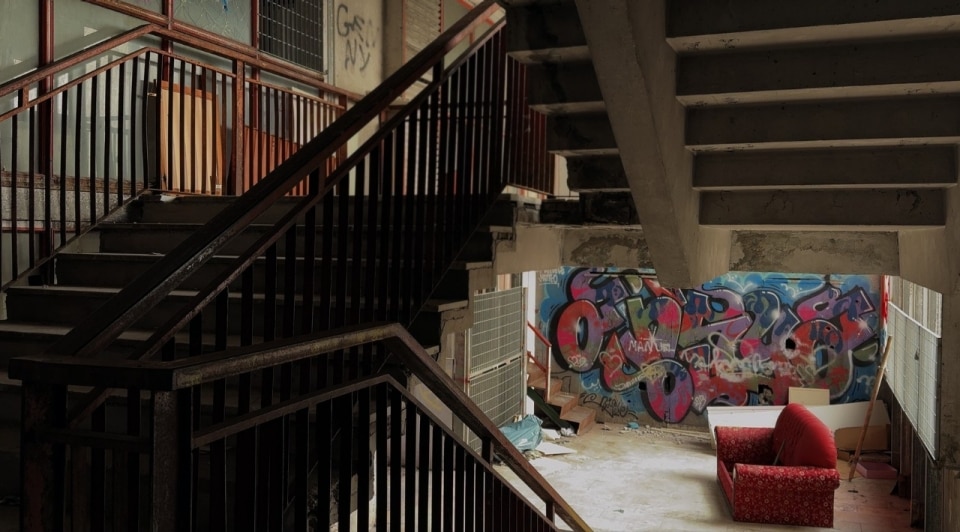
For a few hours the documentary brings former residents back to the Vele. The rooms are empty, but traces of transformation remain: colored walls, improvised solutions to make a standardized space more welcoming. They were not simply assigned or occupied housing units. They were environments worked on, modified, made one’s own. Calling them “home” meant having transformed them enough to recognize oneself within them.
The technical choice
The individual stories move in this direction as well. Gioacchino speaks of the love of his life, whom he met while he was about to be arrested. The director recounts that she nicknamed him “Prince Andrei,” after the character from War and Peace — reframing an apparently ordinary story within a frame of absolute meaning. In the documentary, when the terrible collapse of July 2024 is recounted, Gioacchino-Andrei remembers having had to leave a friend’s body behind to save children. It is there that architecture ceases to be a symbol and returns to being lived space. And Gioacchino, the romantic big guy who knew prison and rebuilt his life sacrifice after sacrifice, becomes emotional and cries without shame in front of the lens.
Cinema is being able to synthesize in one powerful image what a million words cannot say.
Francesca Comencini
Which is not a traditional camera. It is an iPhone, actually two. “Using the iPhone does not mean using it like an iPhone, but like a film camera,” Comencini explains. And again: “Such a light device creates fewer filters.” To the mass of concrete of the building, investigated with the wide-angle lens Comencini particularly appreciates, corresponds the minimal, close, domestic gaze of the interviews. The one in which the iPhone allowed an unfiltered conversation. And without performance. “You can see that they are speaking to someone,” the director comments. “Because it’s not having a camera that helps, but making people forget it’s there.”
The dance
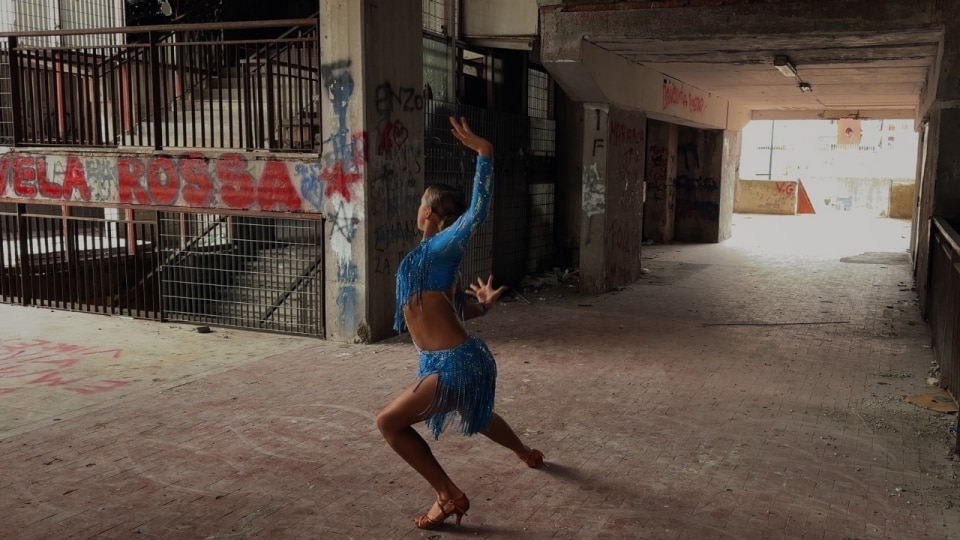
It is in the dance scene that the documentary reaches the peak of its cinema. A young girl moves her body through the concrete space, oxidized metal, debris, and graffiti of the abandoned Vele. It is not aesthetic embellishment, but a temporary appropriation. We saw her on the living room sofa moments earlier in the film, but now she is different. It is as if she were someone else. Returning to the Vele has transformed her into something sublime and heroic. For a few minutes the infrastructure ceases to be a device and becomes a human stage. “Cinema is being able to synthesize in one powerful image what a million words cannot say,” observes Comencini. In that image the Vele are neither ruin nor television icon: they are a place that, for someone, was home.
Complexes like the Vele probably existed everywhere in the world. The Walled City of Hong Kong, Pruitt–Igoe in St. Louis, or Robin Hood Gardens in London echo the story of the housing blocks of Scampia, but each of these places has its own history. And stories like the one we hear in this documentary fill Italy — and beyond. Public housing born out of emergency, modernist promises only partially fulfilled. The cinema of a certain generation — that of Scola, Risi, and Francesca’s father, Luigi Comencini — had been able to narrate something that today it no longer seems capable of telling: “a cinematic narrative, not pietistic, not ideological, but very powerful, about social groups that today struggle greatly to be represented.”

Today that ability seems suspended between the aspirational life of social media and the middle-class life of much contemporary cinema. “Today this thing does not exist. It is something I am reflecting on a lot.” La diaspora delle Vele neither rehabilitates nor condemns. It observes. And it shows how cinema, even thanks to “light” tools that today we all carry in our pockets, can return to telling emblematic and anything but obvious stories. “Voices little listened to and yet immensely powerful.” Because, as Francesca Comencini explains, cinema is nothing other than “bringing together the conditions for the planets to align.”
All images: Courtesy Cattleya and Sky Studios