

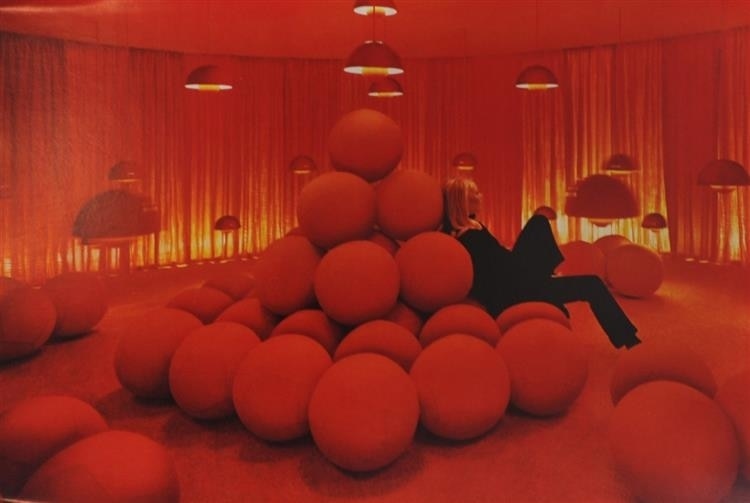
Synthetic materials, artificial colors, psychedelic environments: perhaps you remembered Scandinavian design differently. Yet, in the very years and places when organicist modernism defined the Nordic design language, Verner Panton (1926-1998), Danish architect and designer, signed bold furnishings and interiors, proposing a novel vision of design.
His tension toward an informal, pop idea of space is expressed most notably in the seating that rethinks archetypes and in the wholly original designs for residences and restaurants; but his most radical formulation finds space in the "Visiona" projects, where Panton transforms the domestic interior into an experimental environment.
Panton works with a holistic approach that, beyond shapes and colors, is about smells and sounds: as you walk, you hear nightingale song, the sound of waves, mooing and humming.
One possible reading sees his work not as a contradiction but as an evolution of that of the Scandinavian masters. After all, his training and first professional experience take place in that context: while still a student, he works with Arne Jacobsen, a central author of Danish modernism, whose studio, however, he will abandon after only two years (during which he participates in the birth of the Ant Chair) to open his own in a refurbished World War II camper on which he will travel around Europe in search of companies and entrepreneurs interested in financing his work.
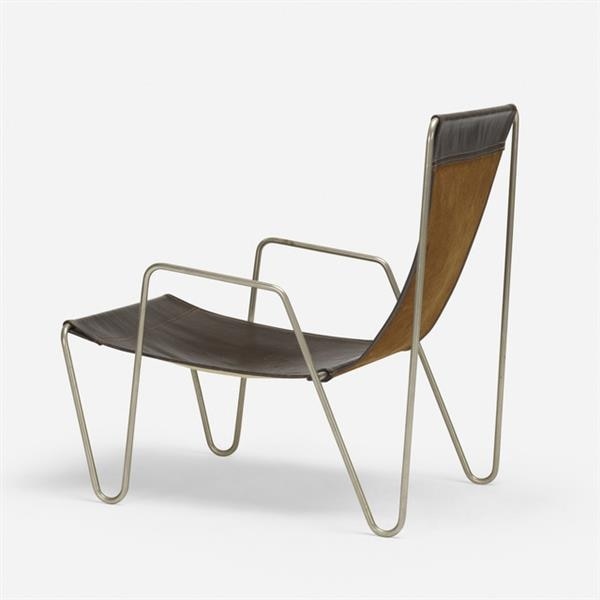
After an initial, brief phase in which he indulges the principles with which he was trained, expressing them in products such as the Bachelor Chair (1955), Panton's design approach takes a different path. The formal outcomes resemble those with which later Italian radicals would discuss rationalism, while in substance Panton remains tied to the concepts of the Scandinavians: empathy as a design tool and comfort understood as liberation from rigid structures.
Of this approach the best-known expression takes the form of the cantilever chair that bears Panton's name, but the most radical is an experimental installation that discusses the concept of domestic space and to which he himself gives the name "Visiona."
Between 1968 and 1972, the German chemical company Bayer set up a temporary installation on a pleasure boat moored on the Rhine during the Cologne Furniture Fair. The goal is to show the possible applications of the man-made fibers they produce. For this, each year, a designer is approached to take charge of the installation and propose his or her vision of contemporary living by making use of those fabrics. For the first edition, Visiona 0 (1968) and for the third, Visiona 2 (1970) Verner Panton is called upon, while Joe Colombo curates Visiona 1 (1969) and Olivier Mourgue Visiona 3 (1971). On each of the four occasions, the designers reveal avant-garde proposals that activate collective interest in the subject of living and still represent landmark case studies in the history of design.
On each of the four occasions, designers reveal avant-garde proposals that activate collective interest in the subject of living and still represent landmark case studies in the history of design.
The first edition of Visiona curated by Panton opens with the Cologne Fair in January 1968. Dralon stretch fabric on the Visiona 0 boat covers the surfaces. Monochromatic rooms follow one another in a "house" designed not only as a space but, in a broader sense, as an environment. Panton works on it with a holistic approach that, beyond shapes and colors, concerns smells and sounds; as you walk through, you hear nightingale song, the sound of waves, bellowing and humming. The hanging chandeliers are covered with small hanging shell discs that move with the mere passage of people, causing the light to vibrate on the walls.
None of the seating resembles a seating object: there are swings hooked to the ceiling, dozens of spheres about forty centimeters in diameter, again covered in Dralon, scattered on the floor, and there is even the famous chair without back legs, the Panton Chair, a futuristic object then almost unknown, first presented less than a year earlier, in the Danish magazine Mobilia. Everything is colorful.
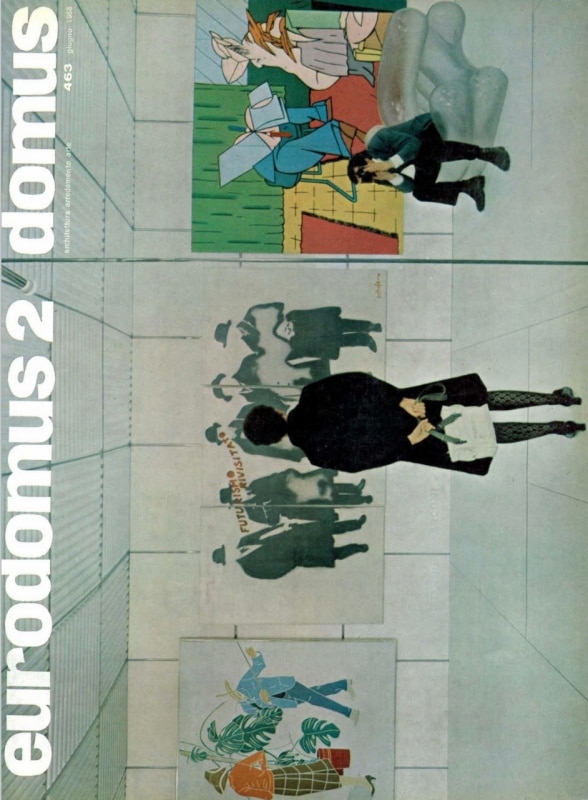
A month later, the designer made his mark at the second edition of Eurodomus, the "Pilot exhibition of the modern home inspired by Domus magazine," directed by Gio Ponti, which that year was held at the Palazzo delle Esposizioni in Turin. On this occasion, too, Panton designed a display for Bayer, proposing, on a smaller scale, something similar to Visiona 0: "Bayer of Leverkusen (Germany) to promote the use of Dralon presented an evocative environment by Verner Panton in which the yarn itself became the material of the furniture, creating a volumetric ceiling and colored stalactites" (Domus 463, June 1968).
But if Visiona 0 rethinks the workmanship and form of what usually makes up a domestic landscape, Visiona 2 negates everything about that same landscape that we take for granted.
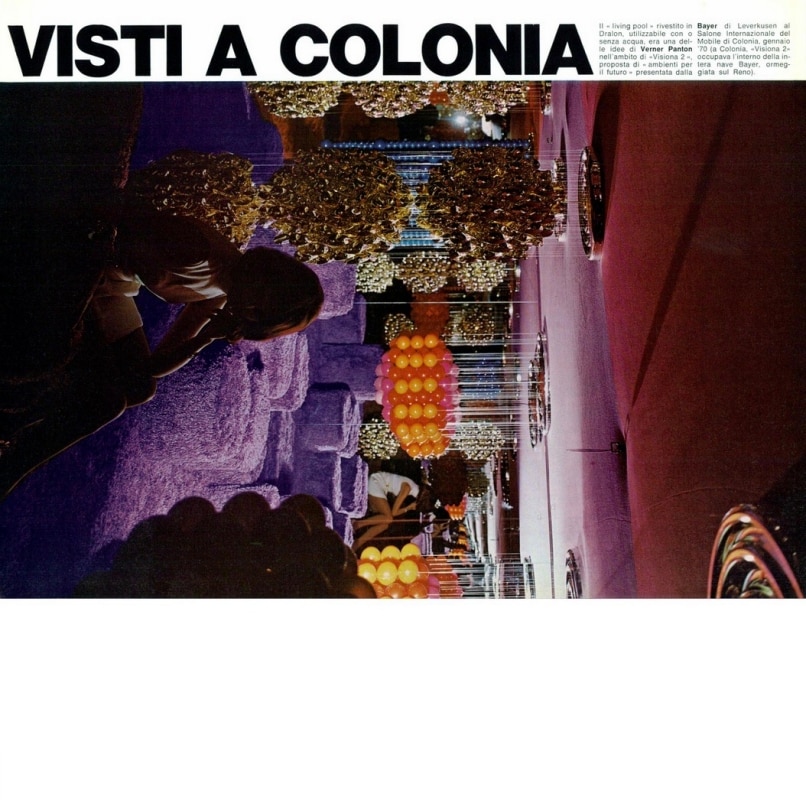
The same characters of the first edition are exasperated in a space that escapes all categories. In addition to the various rooms, this time the radical approach is best expressed in a specific environment: the "Fantasy Landscape" is a kind of corridor in which sinuous volumes peek out from all sides, composing a forest of curves covered in synthetic fiber that do not suggest a mode of use, but prove in their own way surprisingly ergonomic when users explore them, moving, interlocking or leaning on the surfaces.
In this cavern it is difficult to say what is floor, what is ceiling, what is lamp, what is furniture, what is for sitting, what is for walking, what is for one person, what is for two, what is for more. It is a space that is futuristic and alien, but also primitive and ancestral, looking like an open tunnel in the atmosphere of a distant galaxy but also like the inside of a mother's womb. Some of the furnishings, developed in a few months for this occasion, will later be adapted for industrial production and put on the market. These include, for example, the famous Living Tower.
In this cavern it is difficult to say what is floor, what is ceiling, what is lamp, what is furniture, what is for sitting, what is for walking, what is for one person, what is for two, what is for more.
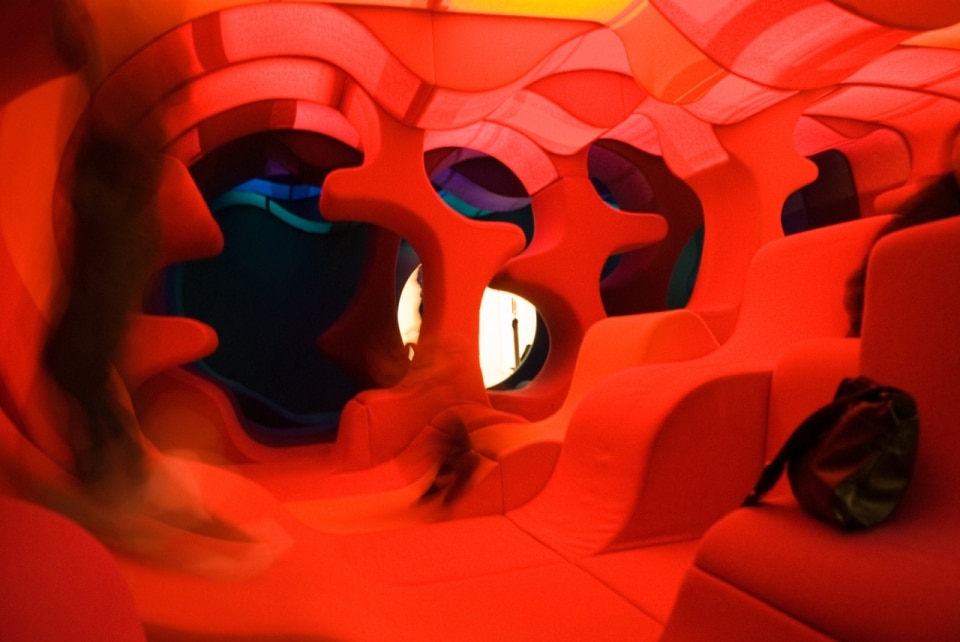
In the most colorful landscape that interior design has ever been able to produce, the synthesis of Verner Panton's thinking is revealed, as well as the outcome of his very personal interpretation of the Scandinavian philosophy, whereby designed space is capable of acting on mental and physical well-being, and of stimulating new behaviors free from impositions and patterns.
Of the "Fantasy Landscape" we see photos in high definition thanks to a very faithful rearrangement that Vitra curated in 2014 in its design museum, to celebrate the genius that first of all companies had decided to support, supporting him from research to prototyping to the distribution of iconic furniture that it still boasts in its catalog. This year it returns to celebrate Verner Panton with a schedule of initiatives organized to mark the 100th year since his birth.
Opening image: Verner Panton, Visiona 0, Cologne, Germany, 1968. Photo from Wikiart.com