

In recent years, supermarket shopping bags have stopped being simple containers for groceries and have entered an ambiguous zone between everyday utility and symbolic construction. Platforms like TikTok have played a decisive role in making this shift visible, turning ordinary gestures — doing the grocery run, showing what you bought — into micro-narratives of taste and identity. In this context, some totes become recognizable not for their material value but for what they signal socially.
This is where we can speak of an invisible phenomenon: a system of distinction that operates without declaring itself, relying instead on shared codes and the implicit reading of objects. Following Bourdieu, the capital at stake is cultural, tied to the ability to assign meaning to what is common. The aestheticized shopper functions as a discreet sign of belonging, legible only to those who know the context — and precisely for that reason, effective.
The turning point is datable. In 2017 Demna Gvasalia, then creative director of Balenciaga, presented a blue leather bag that almost literally replicated IKEA’s FRAKTA — the less-than-one-euro sack half the world uses for moving house, laundry, or groceries. The Balenciaga version cost around €2,000. IKEA declared itself “flattered” and published an ironic guide to telling the original from the copy (“if it doesn’t rustle when you shake it, it’s not the real one”).
Seeing one of those bags in the street, people would know they had something in common.
Ingvar Kamprad, founder of Ikea
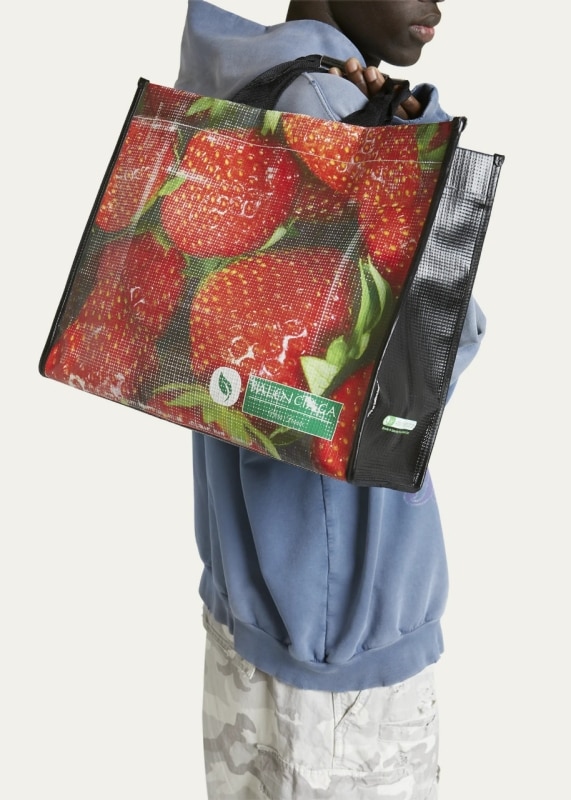
From that moment on, Demna built an entire language around the appropriation of the banal: the calfskin Trash Pouch at €1,790, the “destroyed” sneakers sold at €1,850 in limited edition, the Tesco shopper of spring 2022 at €1,100, up to the Antwerp Tote printed with fruit and vegetables for spring–summer 2024. In every case, the logic is the same: empty the everyday object of its context and refill it with the brand’s meaning. It is not the material that sets the price — it is the meaning.
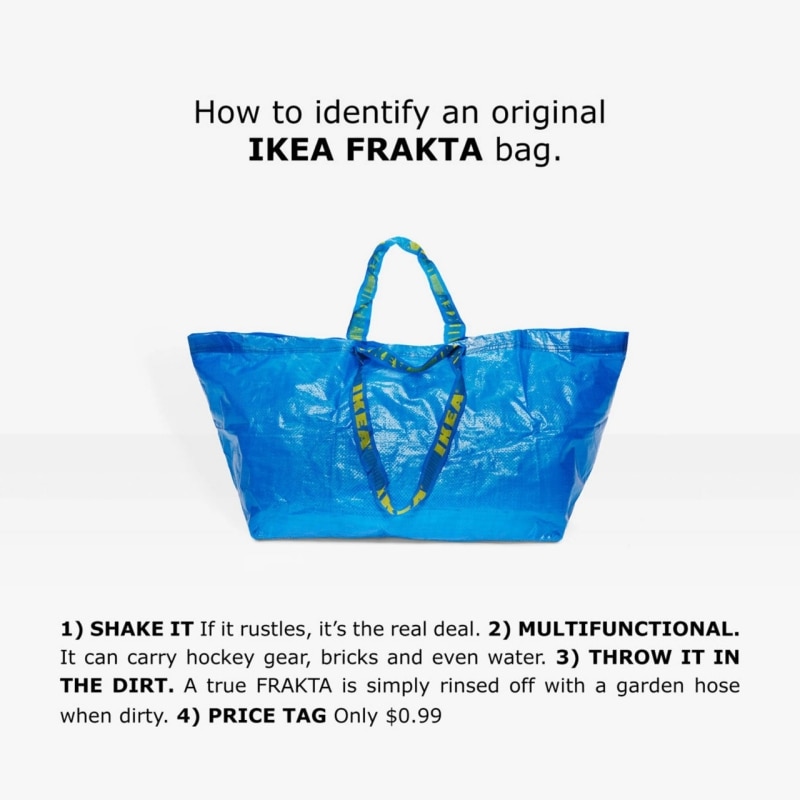
And the original FRAKTA now occupies a singular place in this story. In January 2026 IKEA announced that the classic blue version of the bag would be phased out by April to make room for an updated model. The news triggered a wave of collective nostalgia across social media and Scandinavian media outlets. After all, the FRAKTA had never been just a bag. Able to carry fifty kilograms and sold for less than one euro, it had become a totem object: moving day, laundry, beach trips, Sunday groceries.
In the United Kingdom nearly half of households owned one, and a third had kept it for more than five years. When in 2024 IKEA opened the “Hus of FRAKTA” pop-up on Oxford Street — an homage to the bag in the heart of London’s fashion district — it treated it as a piece of democratic design. Founder Ingvar Kamprad had sensed this with an almost prophetic line: “Seeing one of those bags in the street, people would know they had something in common.” It is exactly what Bourdieu would call a marker of shared habitus: a sign of belonging all the more powerful for being understated.
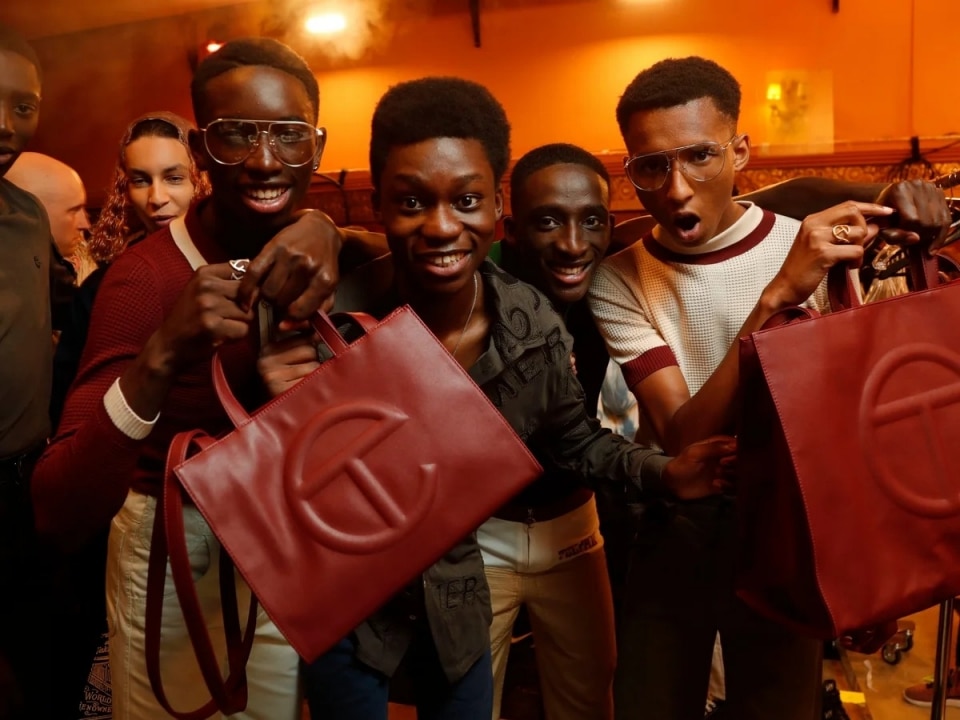
If Demna operated from above, provoking the system from within, Telfar Clemens built a parallel one. His Shopping Bag — a rectangular tote in vegan leather starting at around €140 — was born in 2013 from observing passersby loaded with shopping bags outside a New York department store: Clemens and his collaborator physically measured one to design theirs. From that gesture came what critics dubbed the “Bushwick Birkin”: a democratic counterpoint to Hermès, conceived for those who cannot or do not want to spend thousands of euros to signal taste. The brand’s slogan — “Not for you — for everyone” — is the exact opposite of the exclusivity logic on which luxury has always built its value.
The new it bag is not such because it costs more, but because it means more.
But the Telfar is above all an identity object: founded by a Black, queer designer from Queens, it has become a recognition marker for LGBTQIA+ and African American communities. Carried by Solange Knowles as well as Alexandria Ocasio-Cortez, it is the clearest case of how a shopper can function as a device of distinction in the full Bourdieusian sense: not luxury as an economic barrier, but taste as a social practice that signals, includes, positions.
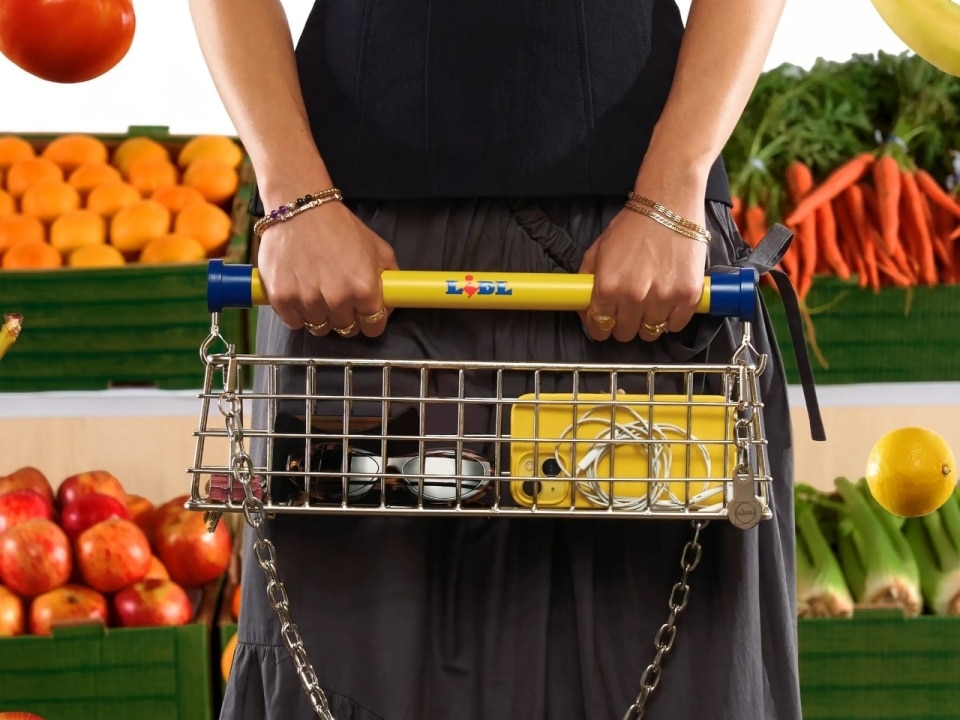
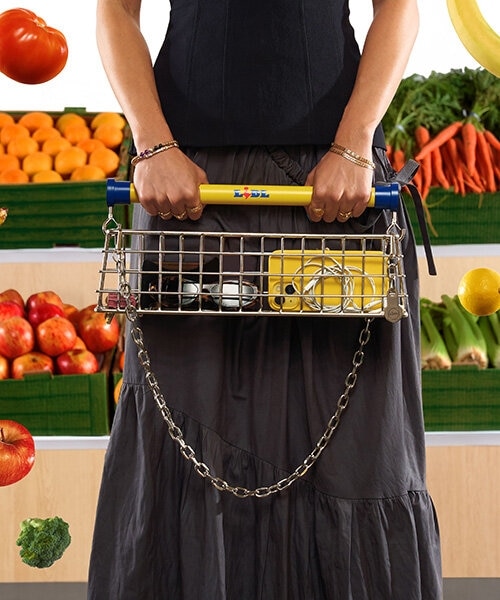
The latest chapter comes from below — and from the most unlikely place. Lidl launches the Trolley Bag designed by Nik Bentel: a mini bag in stainless steel that literally replicates the shopping cart — yellow-blue handle and token included — transforming the discount chain’s most functional icon into an ironic and overtly viral collector’s item.
As early as 2020, in the middle of the pandemic, the discount chain had begun selling sneakers at €12.99 in the corporate colors yellow, red, and blue. What started almost as a joke — its first appearance was an April 1, 2019 Facebook post — became an uncontrollable phenomenon. In Italy, queues formed outside stores from as early as eight in the morning; on eBay, resale prices reached €1,000 per pair, with markups approaching 42,000 percent.
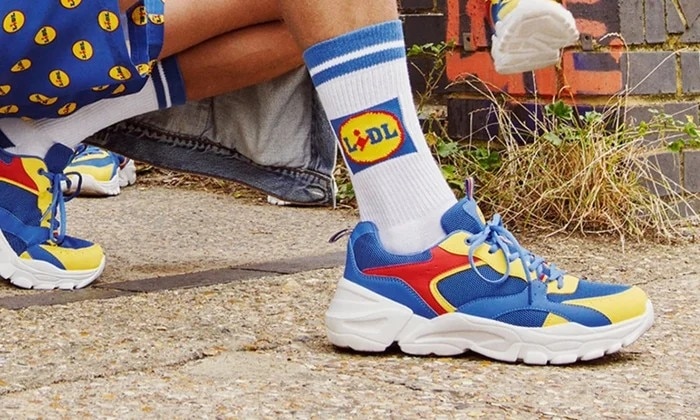
Sociologist Frédéric Godart has described this as “upward cultural appropriation”: not elites imitating the popular, but the popular colonizing elite codes, using irony as a tool of reappropriation. Wearing a discount logo as if it were a luxury brand is, structurally, the same operation Balenciaga performs in reverse when it turns a grocery bag into a €1,100 accessory. The difference is that Lidl did not need a creative director: the gesture emerged from memes and resell culture.
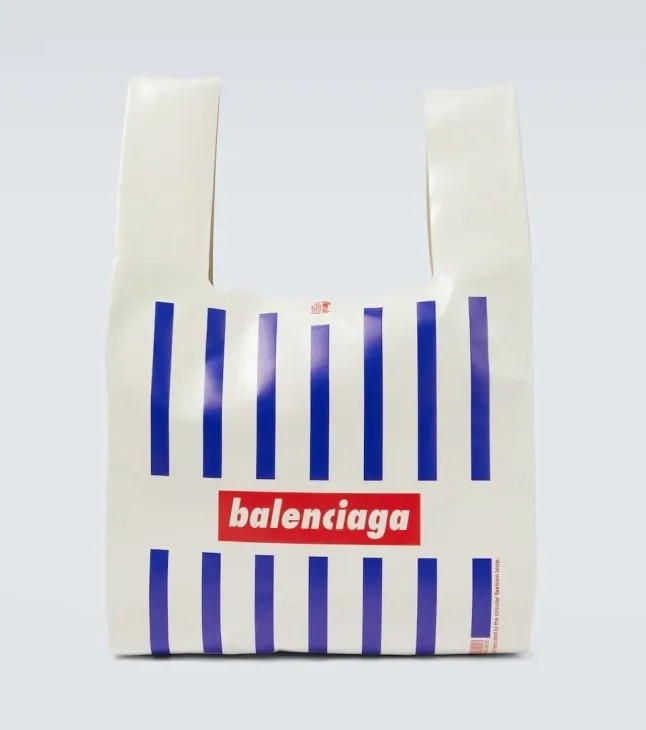
All these phenomena converge within a single frame. Whether it is the FRAKTA at 0.75 cents, its Balenciaga replica at over 2,000 euro, the Telfar at 140 euro, or the Lidl sneakers at 12.99 euro, the everyday object functions as a surface for identity projection. Contemporary luxury no longer sells only material and craftsmanship: it sells the possibility of saying, “I belong to this world.” And in an era in which identity is built through the accumulation of minimal signs — a logo on a tote, a color, a recognizable texture — even the grocery bag becomes a stage.
The new it bag is not such because it costs more, but because it means more. As the Tesco slogan printed on those bags Demna turned into luxury accessories reads: “Every little helps.” Every small thing helps — even a plastic shopping bag, if you know how to read it.
Opening image: Ikea Frakta. Courtesy Ikea