


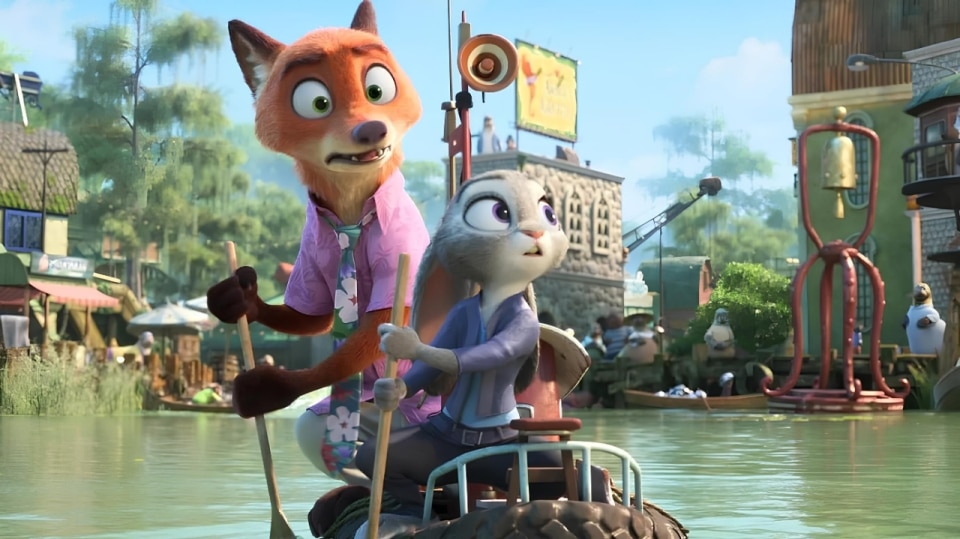
To conceive the most interesting and successful urban utopia of our time (in films, that is) it took an animated movie about a little rabbit who wants to be a police officer. And now its sequel is in cinemas, delving even further into the meaning of the utopian city in which everything is set and that gives the two films their title: Zootropolis 2.
In 2016 Zootropolis told the story of a world of anthropomorphic animals, a Disney classic, in which a prey and a predator (a fox and a rabbit) ended up allied and uncovering the villains’ plan to dominate the city. A crucial detail was that this city, which gives the film its title, was a place where animals of all kinds could live together not by erasing their differences but by making them compatible. Historically, in animated films—especially Disney ones—animals coexist by imitating humans: they are all anthropomorphized in the same way, adapted to a standard and stripped of their animal nature except for their looks. Their habits and needs are essentially human.
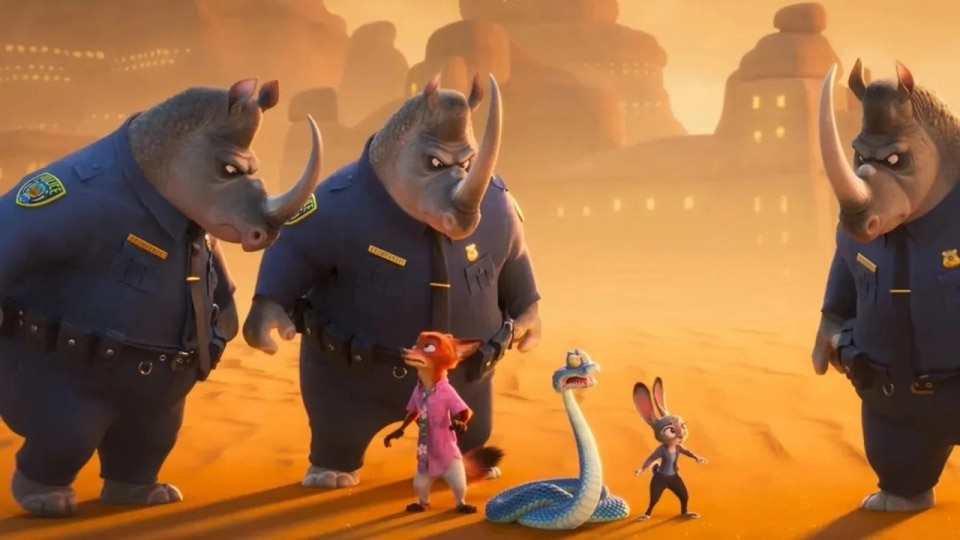
In the two Zootropolis films, instead, anthropomorphic animals are used to say something about the differences that exist among human beings. Not only ethnic differences, but also cultural, religious, and ideological ones. A good portion of these two films is devoted to moving the characters across the urban fabric in order to show streets, offices, shops, squares, as well as the circulation of traffic in the city of Zootropolis, designed so that small animals can coexist with large ones, each with their own differentiated paths. So that water animals can frequent the same places as land animals, and so on.
A Pixar film from a few years ago tried something similar, Elemental, but there the perspective was the opposite: in a city where the inhabitants are natural elements (the water people, the fire people, the air people, and the earth people), each group has its own separate district and their nature confines them to different zones. As in our world. Zootropolis, instead, aims further ahead and imagines different cities.
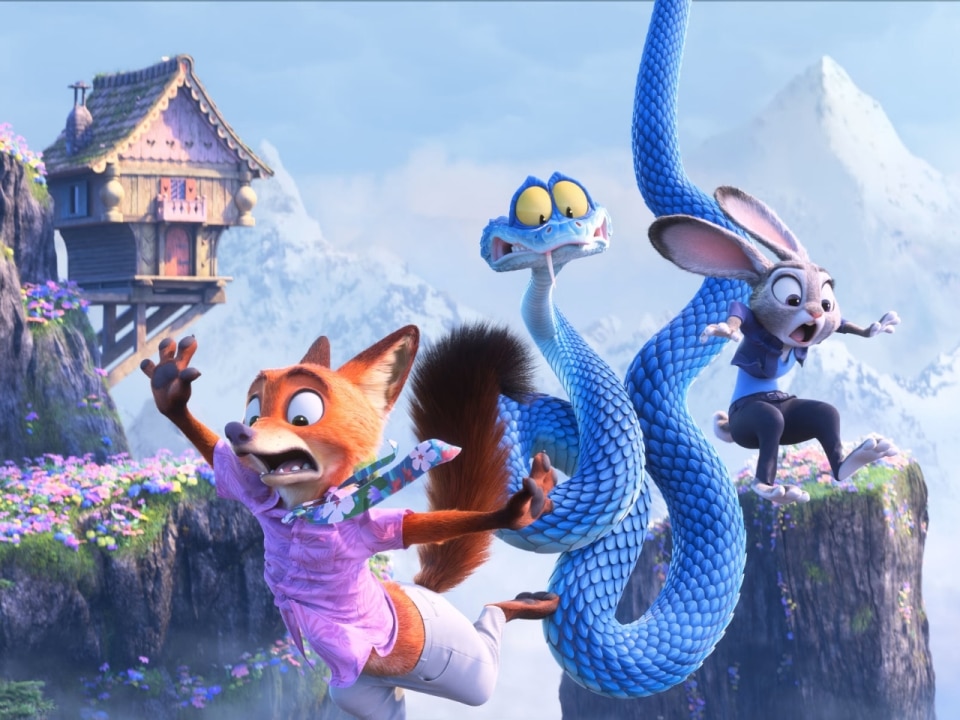
It is no small step to suggest that coexistence in the same spaces is not a matter of conforming various diversities to a common standard, but of enhancing differences; that the real challenge is neither that everyone stays at home nor that everyone must sacrifice a piece of themselves to coexist, but that spaces and places can play a role in making differences compatible. Zootropolis 2 further expands the discourse on the city and its centrality in the story, confirming that although these are always detective stories of investigations and mysteries, the theme is coexistence and the role urban design plays in it.
As a society, therefore, we can indeed achieve a utopia, as the builders and politicians of Zootropolis have done, but that will not be enough to change people’s minds, their old beliefs, and their preconceptions.
In the first film, the little rabbit police officer whom no one trusts (because police officers are all fierce animals) investigates several apparently unrelated cases of docile animals turning predatory. The social plague of the city of Zootropolis is the belief among predator animals that they are superior, relegating prey animals to less important jobs. What in our world we simply call classism. It will emerge that this wave of violent crimes is the plan of a seemingly harmless little sheep, tired of being relegated to subordinate classes and determined to wage armed struggle. What in our world we call terrorism. Even more: terrorism that is condemned (she is the villain) but fuelled by a real injustice, which the film presents as such.
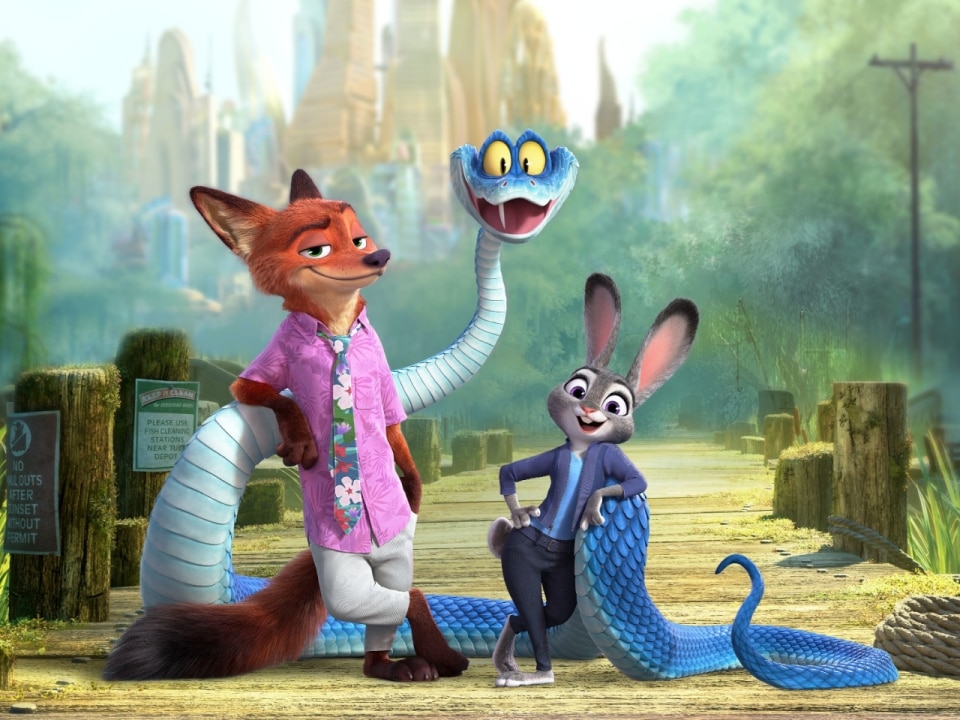
In this second film, however, there is an even more urbanistic problem: there is a district of Zootropolis that has been hidden and concealed, and its inhabitants (reptiles) expelled because some other species wants to speculate and expand its own territories. The struggle is therefore always between someone tolerant, who seeks to foster inclusion, and someone who wants to promote differentiation and class division. There is thus an ethical principle at stake. And even the characters, in their personal lives, struggle to work in pairs because they are very different.
To recount the search for this lost district—whose very existence and architecture, clearly designed to host reptiles, will prove to everyone that they are not evil and were indeed part of the original plans—the film delves even deeper into explaining how the city works. Beyond the central area that hosts everyone, there are four main zones with different habitats (cold, hot, humid, and dry) for the animals that require those environments, linked by a system of conduits and technologies to maintain their conditions. It is therefore not only a matter of showing a utopian situation but also of having fun imagining the (fantastical) ways and (impossible) engineering solutions through which it could function.
On a deeper level, the two Zootropolis films go further than usual on an overused theme—the theme of integration—creating a clear divide between people and urban spaces. As mentioned, the city in both films is a utopia that speaks of an advanced society. Everything we understand by looking at the water highways next to normal roads, the entrances for small animals in buildings for large animals, and the fluid way traffic moves (there is no congestion), tells us that those who run that place have a political vision of exceptional modernity. And yet the stories of the characters are full of intolerance. In this way, the two films tell what we most see in our own world: that even if societies try to give themselves rules to advance ideas of tolerance and inclusion, it does not mean that the inhabitants of those societies share those ideas.
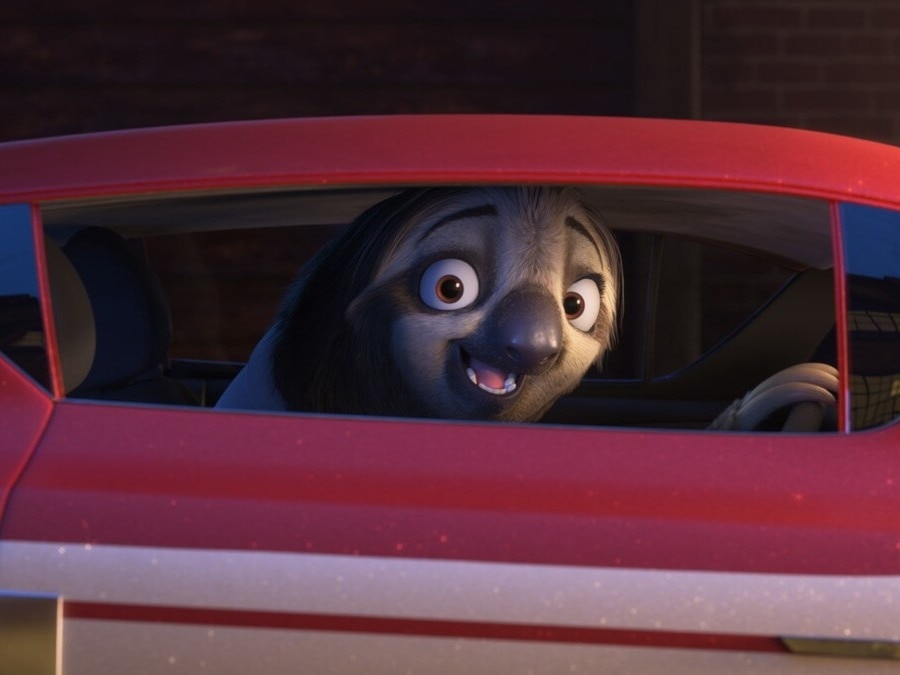
As a society, therefore, we can indeed achieve a utopia, as the builders and politicians of Zootropolis have done, but that will not be enough to change people’s minds, their old beliefs, and their preconceptions. The Zootropolis films are full of animals with a backward mentality; they are all around the protagonists. The little rabbit is allowed to join the police because the state does everything to integrate her, but no one accepts her, and the bully weasels threaten her to stay in her place and not lift her head. The two films speak of integration of many different types not only to say that it is good and just, but that it is a struggle that never ends, that the resistance of many is normal, and that it must be fought one by one. Without end. And this is expressed precisely through the contrast between the progressive policies embodied in the city’s urban organization and the mentality of those who inhabit it.
All images: Courtesy Disney