

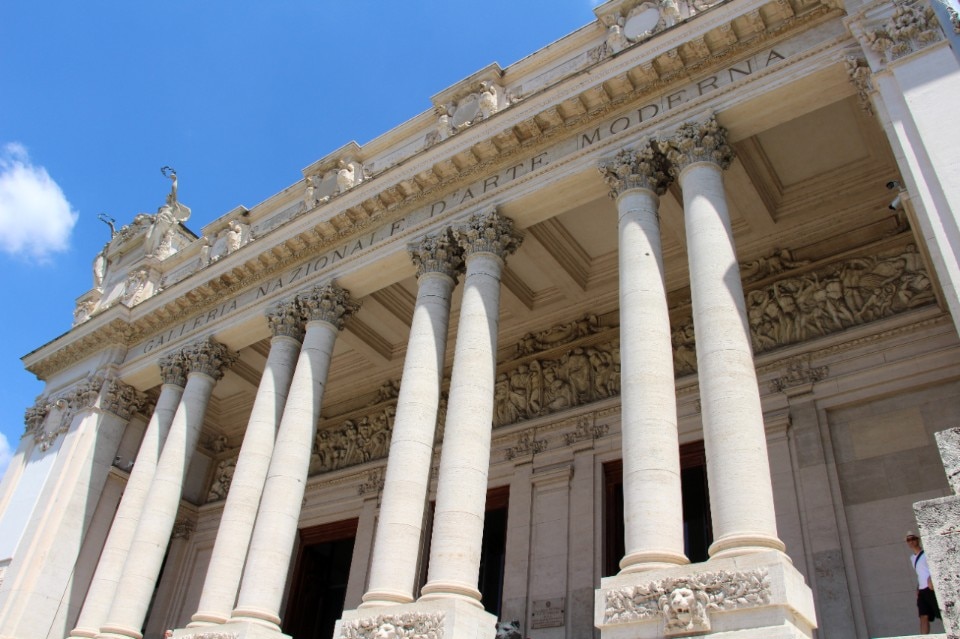
It is always valuable to pause and reflect on the vital relationship between the artistic and cultural sphere and the worlds of politics, economics, business, and preservation. Understanding how connections and implications unfold between cultural "soft power" and the broader — and at times wild — spirit of the age. Engaging in discussion without complacency, and seeking new paths forward. This is precisely the aim of The Art Symposium, taking place at the Galleria Nazionale d’Arte Moderna e Contemporanea (GNAMC) in Rome on Monday, May 19. The event, curated by Guido Talarico and Renata Cristina Mazzantini, was created to foster a high-level dialogue on the role of culture and art in today’s world.
The day, organized and promoted by Inside Art and GNAMC, with The Skill as communication partner, will open with an address by Italy’s Minister of Culture, Alessandro Giuli.
He will be joined by leading figures from the institutional, business, academic, cultural, and media sectors, including: Evelina Christillin (President, Egyptian Museum Foundation), Fabio Pompei (CEO, Deloitte Italy), Luboš Veselý (Director, Karel Komárek Family Foundation),
Christina Chandris (Board Member, Tate Gallery), Ambassador Francesco Maria Talò, Giulia Zamagni (Head of CUBO – Unipol Group Corporate Museum), and Stefano Genovese (Head of Institutional Relations, Unipol Group).
The core of the Symposium will be a series of thematic panels, addressing — from diverse but complementary perspectives — today’s most pressing issues surrounding the interplay between culture, power, and the market.
The first panel, "Cultural Diplomacy: The Value of Soft Power in an Era of International Tensions", will examine the role of culture as a strategic lever in geopolitical relations, questioning how states employ cultural tools to build consensus, influence, and stability — and exploring the potential dangers of cultural instrumentalization.
Next, "The Role of Public and Private Institutions in the Management of Cultural Resources" will feature a critical debate on the effectiveness of national and European policies in promoting and protecting cultural heritage. In the afternoon, "The Economic Value of Culture: Successful Investments" will explore cases where cultural initiatives have generated tangible economic impact without compromising their integrity, offering a critical look at art washing and the delicate balance between financial returns and ethical responsibility.
Opening image: Photo Fred Romero from Adobe Stock