


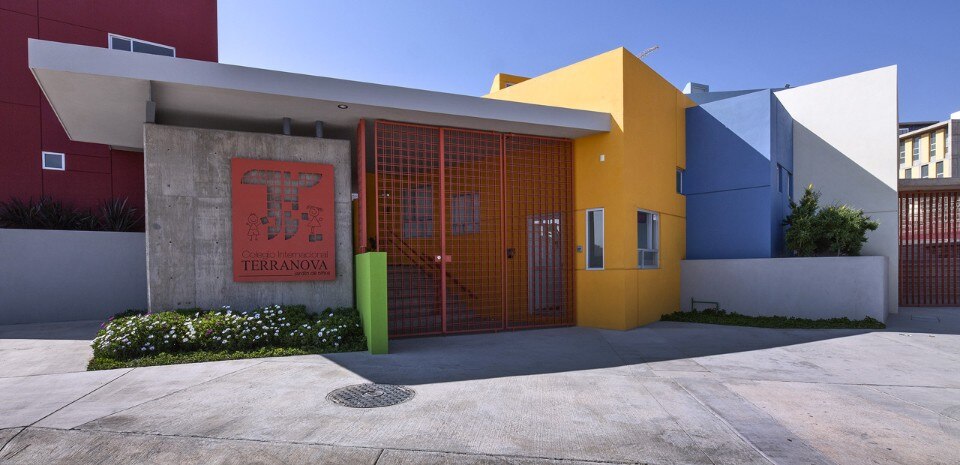
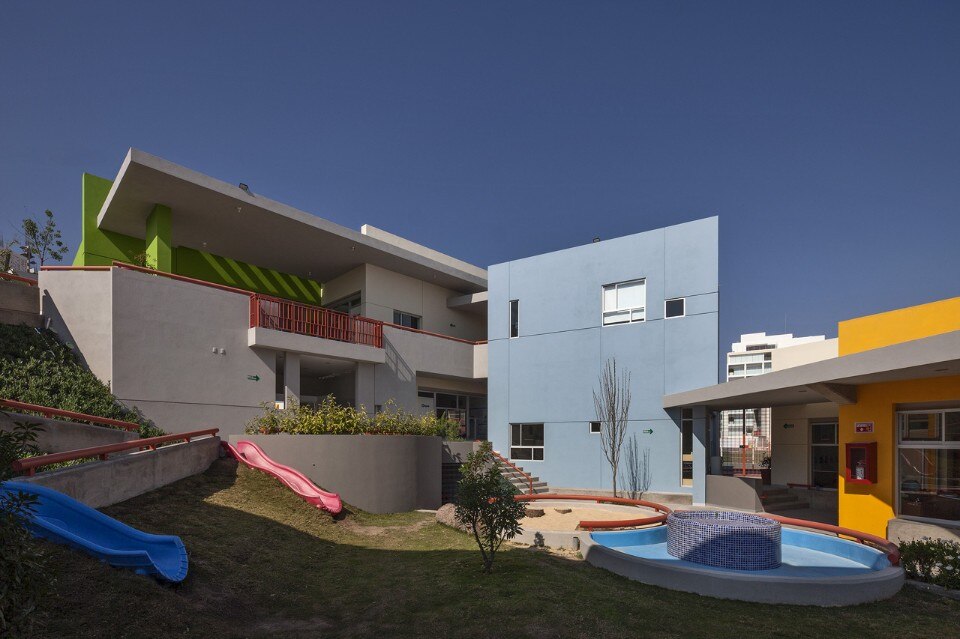
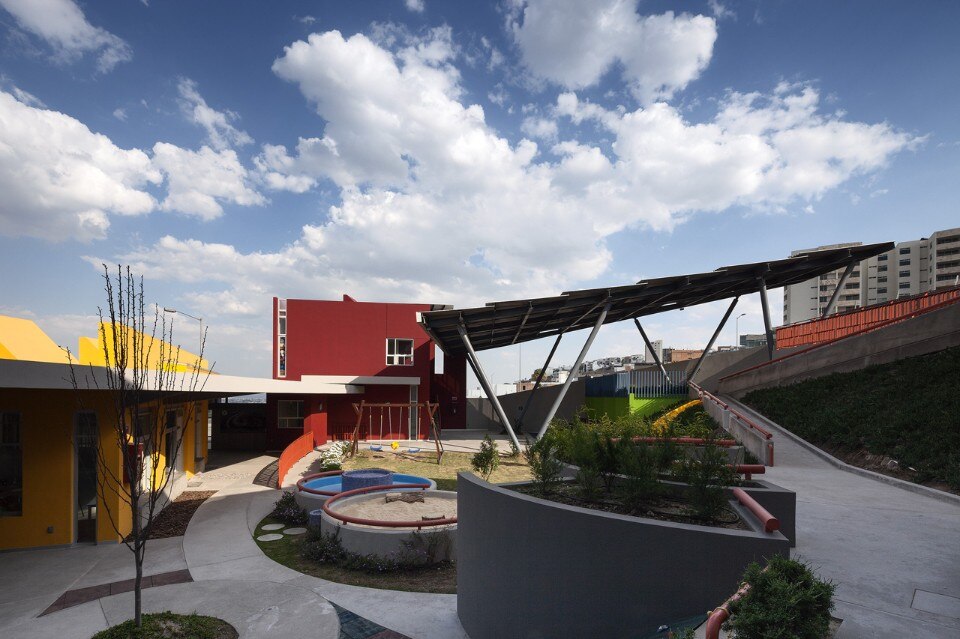
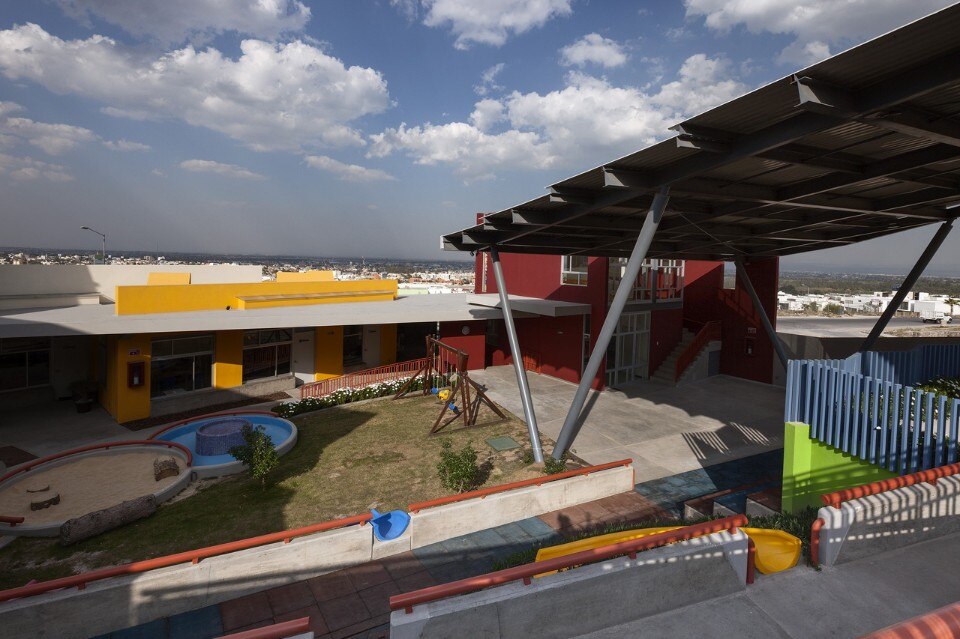
This central courtyard is the heart of the school, the main common space that everyone shares, where children play, community activities take place, and parents are welcomed on especial occasions. The site has a steep topography, so the project has been designed in two levels, following the contours of the terrain.
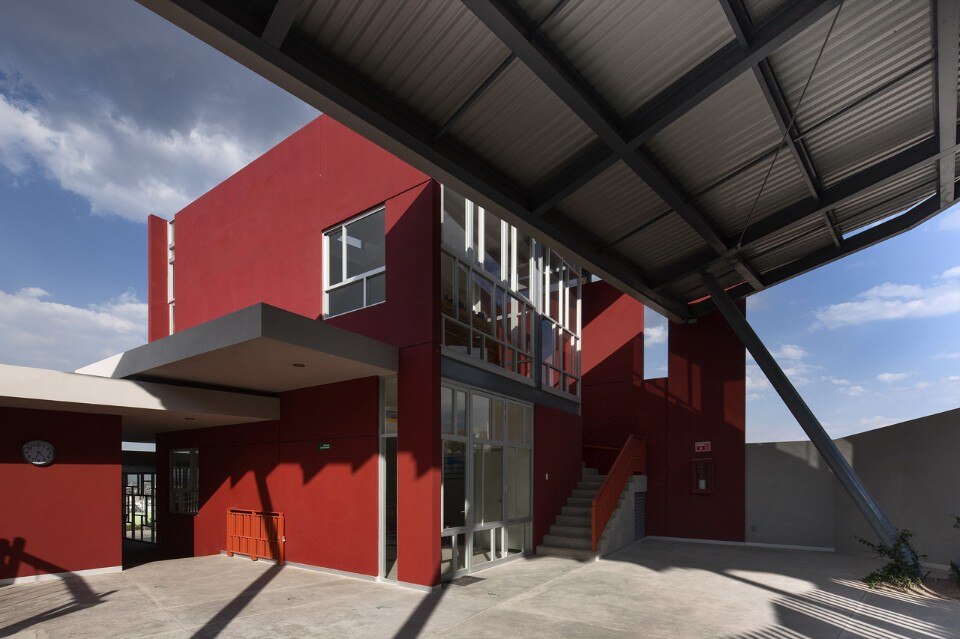
The color volumes are connected by several horizontal slabs with a planar expression, painted in neutral colors, in contrast with the cubes. These slabs cover exterior circulations, and shade the perimeter of the courtyard. The school is designed following the idea of “assembly”. The pieces forming the composition are clearly expressed. Each element is distinct and singled through the use of geometry and color.
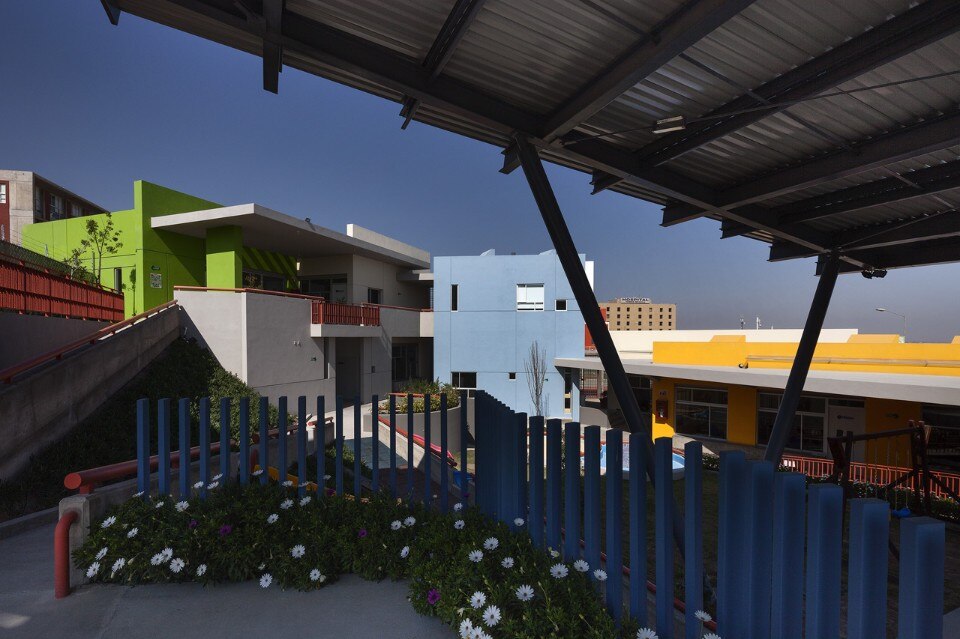
The colored volumes themselves are detailed following this principle of “assembly”, in the composition of openings, the treatment of wall surfaces, and the design of window frames. Elements in the central courtyard are designed with a playful geometry. Curves and circles in planters, walkways, the sandbox and water play area. The ramps and berms form triangular shapes. One wall, painted bright green, follows a zigzag pattern.
A large steel structure shades a large area of the play area. It has a vaguely zoomorphic shape and will eventually be covered by vegetation. North-facing skylights allow the entrance of natural light to all spaces and create an attractive element on the roofs, which can be seen from other buildings in the school above.
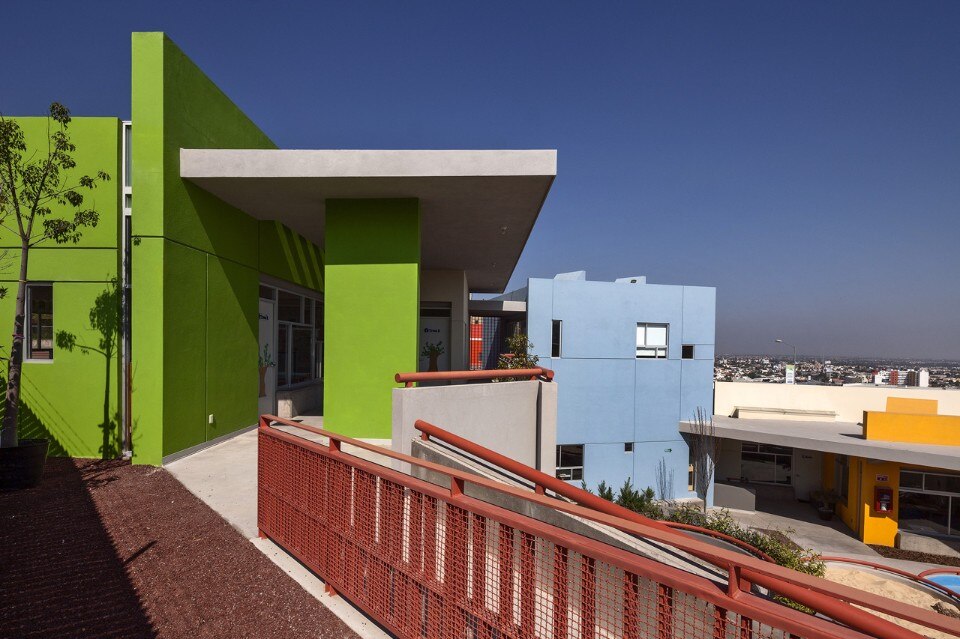
The colors of the main volumes follow various shades of primary and secondary colors forming a sort of “color circle”. The idea is that the children can identify each space and tectonic element in the design, in a diverse and playful way. The mobility and safety of children was a constant concern of the design. Many elements have didactic, ludic and motor development functions.
For example, the vertical connection between the two levels is through ramps that follow the contour of the site creating triangular berms. These the kids can climb or descend using slides. The design allows the children to move freely with minimal adult supervision, increasing their freedom, feeding their curiosity, and facilitating social interaction with other classmates and their teachers.

 View gallery




Terranova Kindergarten School, San Luis Potosí, Mexico
Program: kindergarten
Architects: Cadena Arquitectos
Area: 950 sqm
Completion: 2014