

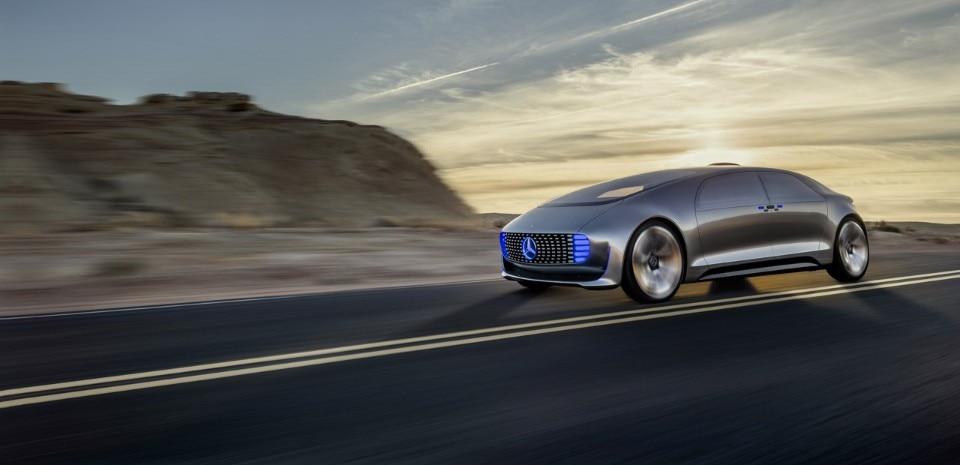
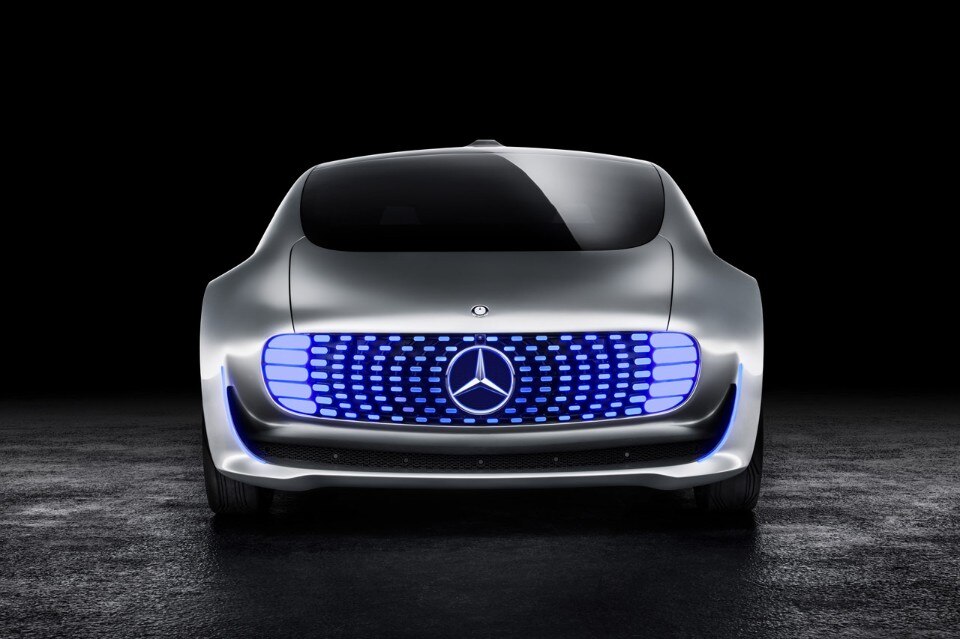
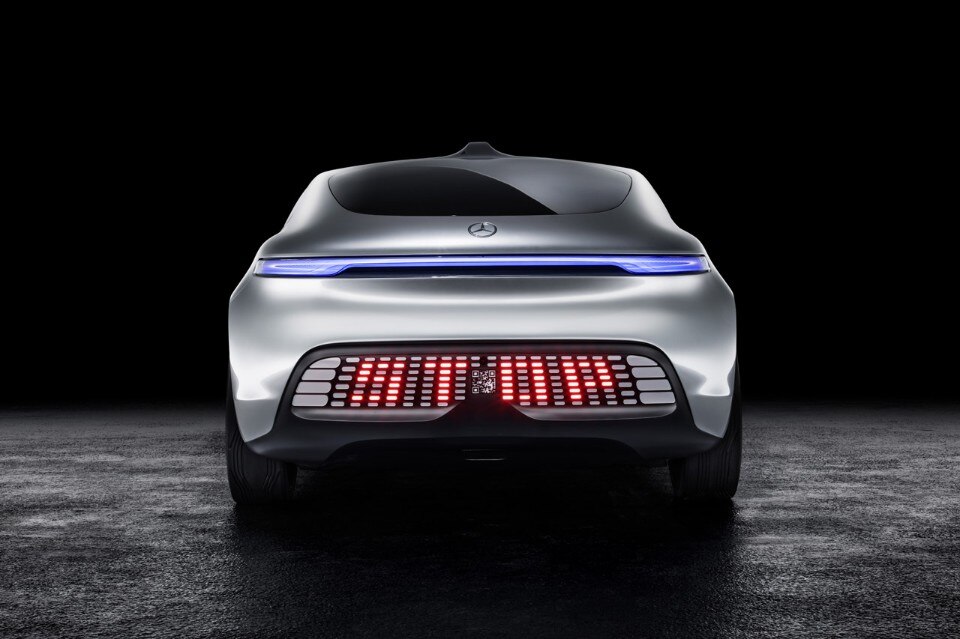
This innovative four-seater is a forerunner of a mobility revolution, represents the vision of a brand new vehicle concept, starting from its unusual proportions, its seamless, monolithic exterior and its large LED light modules at the front and rear.
A range of different lighting functions can be provided through these LED fields. At the same time, the vehicle communicates and interacts with the outside world by means of the LED fields. These LED fields show for example, if the F 015 is driving autonomously (blue) or is controlled manually (white).
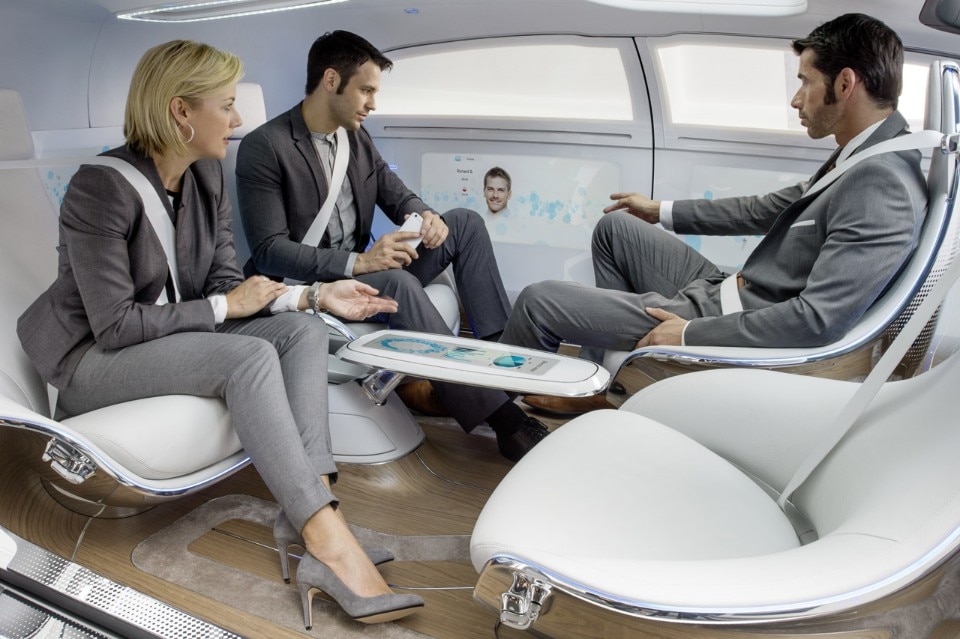
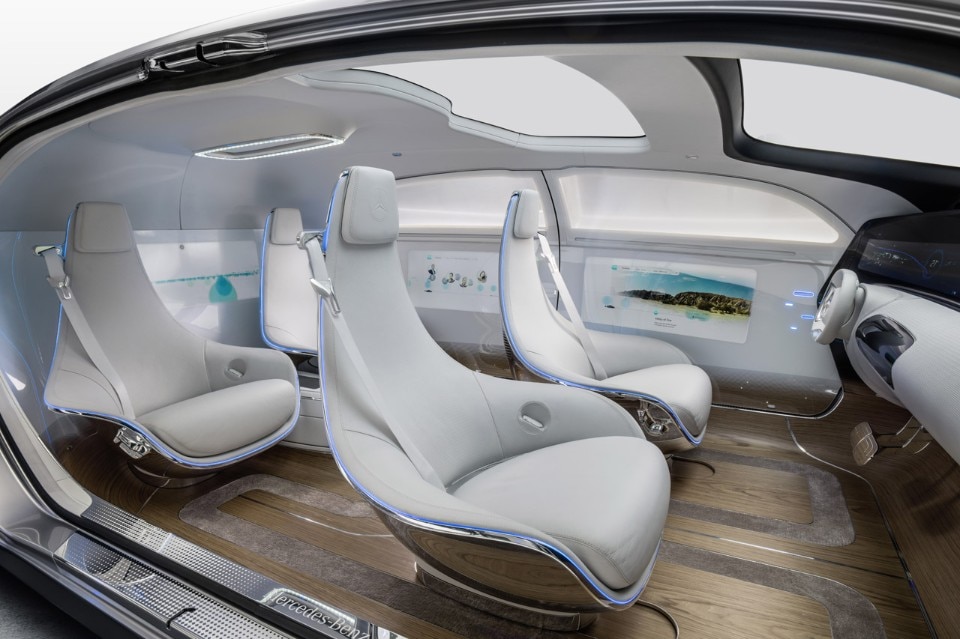
In the interior the designers have created a lounge-like space with a feel-good ambience characterised by elegance, quality and lightness. Sensual, flowing transitions and warm, organic materials such as open-pore walnut wood shaped into a three-dimensional veneer, and extremely soft ice white nappa leather contrast with clearly-defined metal and glass surfaces with a cool and technical feel.
The pivotal feature of the innovative interior concept is the variable seating system, with four rotating lounge chairs that allow a face-to-face seat configuration. In order to make getting in and out of the car easier, the electrically powered seats also swing outwards by 30 degrees as soon as the doors are opened. If necessary, the driver and front-seat passenger can also turn their eyes and attention towards the front – a prerequisite for manual driving. To this end the steering wheel extends automatically from the dashboard.
The leather-covered cushions of the lounge chairs are set in curved mounts of highly-polished aluminium. Each seating mount has a contrasting light band of blue LED lights and can also be manually swivelled.
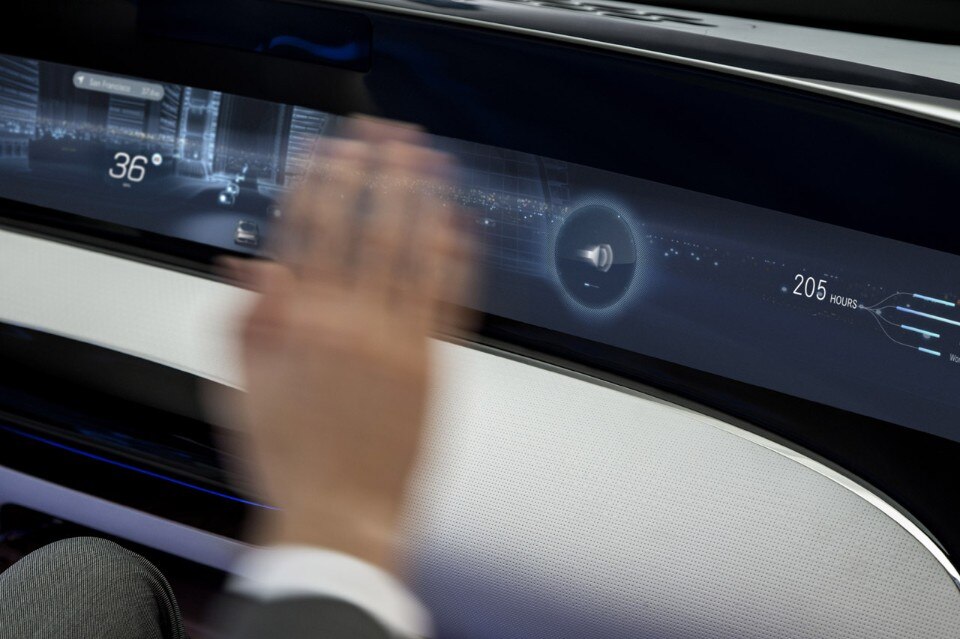
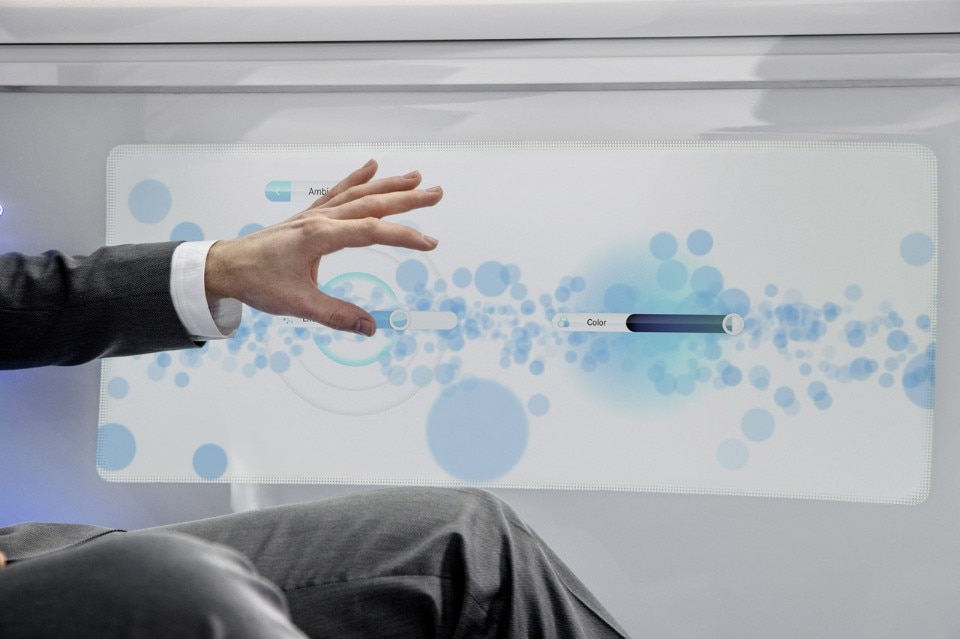
One key aspect of the research vehicle is the continuous exchange of information between vehicle, passengers and the outside world. This is facilitated by six display screens harmoniously integrated into the instrument panel and the rear and side panels, which turn the interior of the F 015 Luxury in Motion into a digital arena. Passengers can interact intuitively with the connected vehicle through gestures, eye-tracking or by touching the high-resolution screens. Sensors recognise the passengers’ hands and offer them user interfaces within convenient reach that present appropriate operating options for each particular situation. Particle streams on the displays visualise the vehicle’s movement.
As a foundation for creating the F 015 Luxury in Motion, experts from all areas of Mercedes-Benz developed a future scenario entitled “City of the Future 2030+”, which considered many aspects of mobile living. The greater the advance of urbanisation, the greater is the desire of the individual to be able to retreat to a private sphere. Autonomous driving will become a given. As drivers are relieved of work and stress in situations in which driving is not enjoyable, the time gained while in their car takes on a whole new quality. Time and space will become the luxury of the future.
New technologies and forms of communication open up numerous new possibilities for interaction, both between the vehicle and its passengers and between the vehicle and other road users.
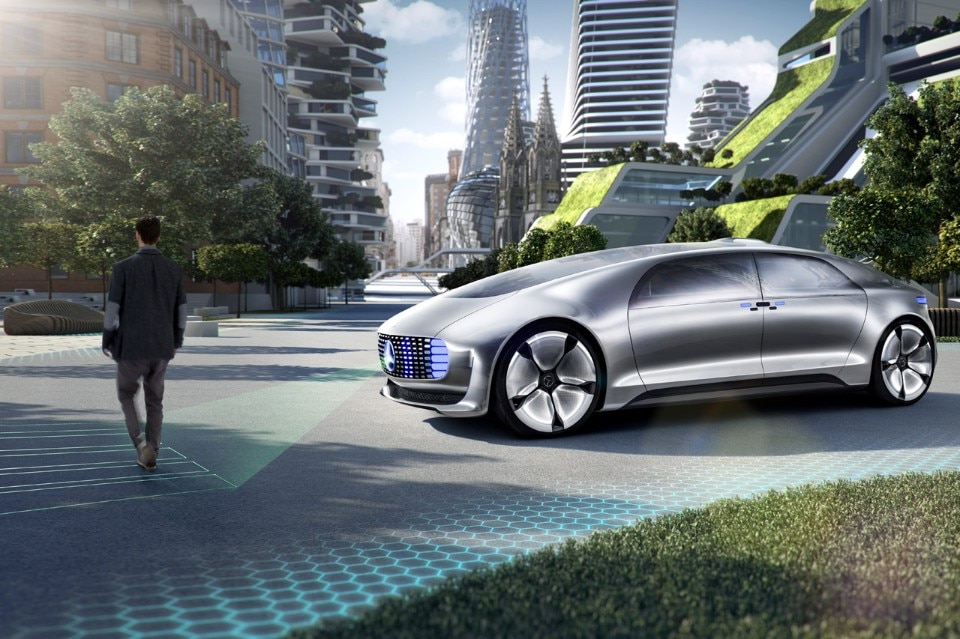
Autonomous cars also open up new possibilities for urban infrastructure design. Following the example of today's low-emission zones in city centres, special "safety zones" that are only accessible to autonomous vehicles could be created. Urban space would be regained by autonomous vehicles parking themselves on the periphery.
In the shared space of the future, humans and machines share the roads. The “car-friendly city” is transformed increasingly into the “people-friendly city” without any loss of individual freedom. The divide between residential, recreational and traffic areas therefore melts away. The result is superior quality of life for all urban dwellers.
 View gallery


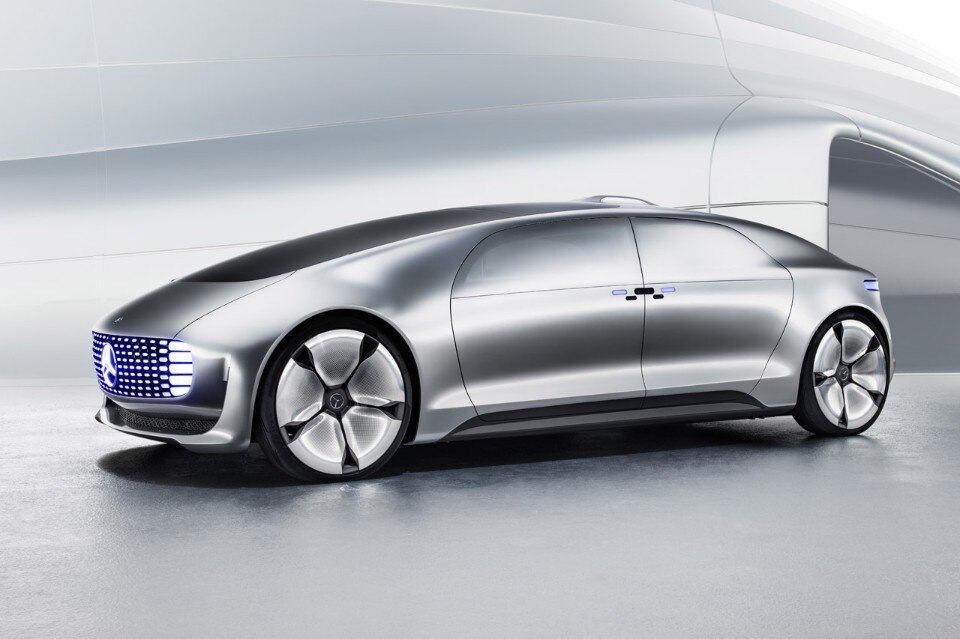
F 015 Luxury in Motion
Designer and producer Mercedes-Benz