
From Eindhoven arrives a critical take on the most recent Dutch Design Week, while from Tokyo, a series of photos displays a fresh approach to the city's vast and complex metropolitan landscape. In Barcelona, Ethel Baraona Phol surveys the current architecture scene in Spain, a country where "capitalism, as we know it, is not an option anymore, when the exploration of the everyday and the understanding of the relational city is what we need".
Clay-bound utopia
An architecture report from Gando by Jeanette Kunsmann
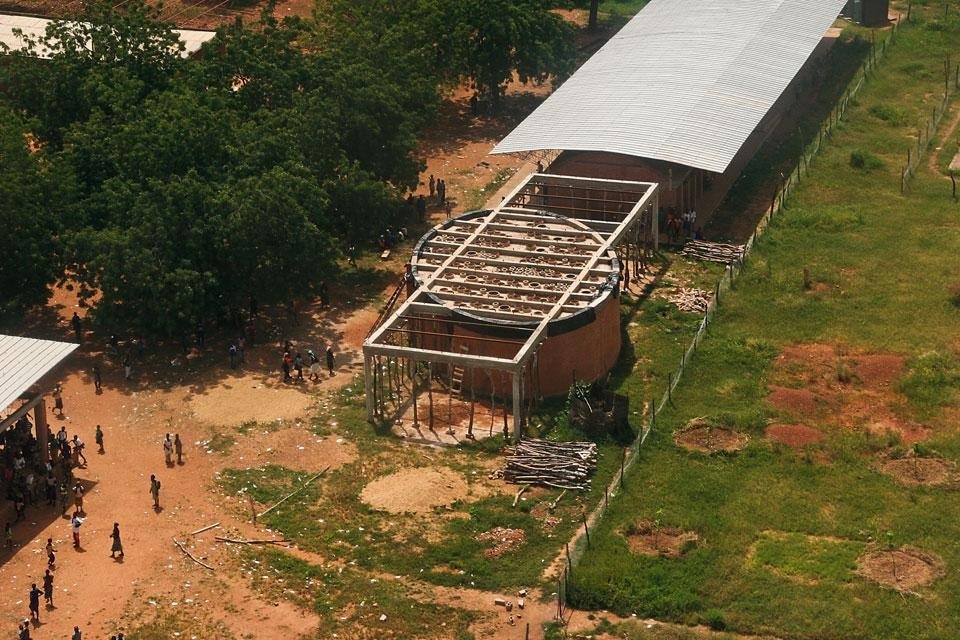
It's been more than ten years since Diébédo Francis Kéré built his first school in Burkina Faso. In 1998 the architect planned a climate friendly clay school building in his home village of Gando, 200 kilometres west of the capital of Ouagadougou. It was finally built in 2001 with the help of villagers and the foundation Schulbausteine für Gando ("School Building Blocks for Gando"), which he established specifically for this purpose.
Until then many had looked down on his work with condescension. But the clay building was still standing after the first rainy season and further buildings followed — a school extension, residential buildings for teachers and an infirmary, and soon the library and women's centre will be completed too. The award-winning architect is currently constructing his largest clay building to date, in the form of a high school for more than 1,200 students, which will be made of wall panels prefabricated from clay and concrete. The village of Gando is his building site, and in his architecture, Kéré combines what he has seen in Europe with what he finds in Africa.
[Read the full article]
An interview from Milan by Filipa Ramos
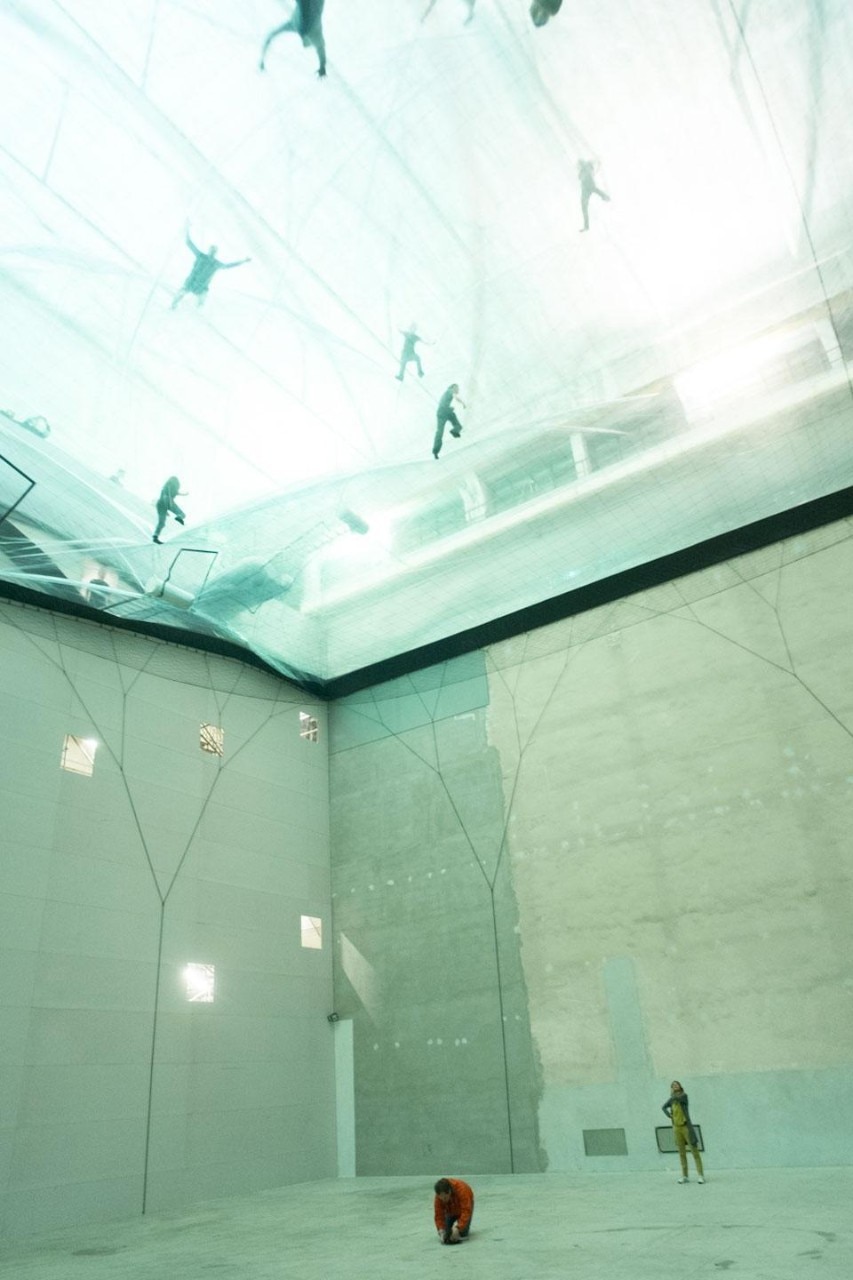
Enrico Fermi is famous for exclaiming: "Where is everybody?" inquiring about the whereabouts of everyone in the universe. Perhaps we have never managed to have any contact with anyone because we ever managed to play a unison musical piece. I have been talking with Bruno Latour about collaborating in a project for a theatre play he is doing in Toulon. I thought of transforming all the nets and spheres of the Venice Biennale work, Galaxy forming along filaments, like droplets along the strands of a spider´s web, in strings, in a huge collective instrument ready to be played. Let us invent an instrument that all the humans in the planet can play at the same time, so that when you play one string it reverberates in all the other strings. That will tune us all. When we are able of producing a harmony as a species then maybe somebody else will hear us. It is like what is happening at the HangarBicocca, I am trying to make people engage and tune with each other.
[Read the full article]
Dutch Design Week 2012
A design report from Eindhoven by Tamar Shafrir
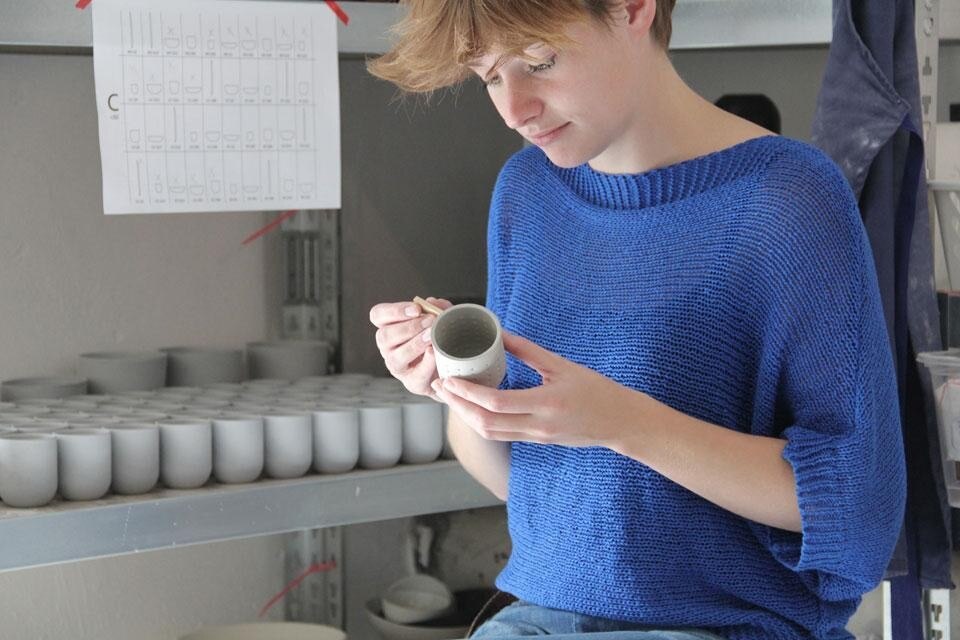
A casual visitor to Eindhoven last week for the annual Dutch Design Week would be forgiven for thinking that in the world of Dutch design, everything is business as usual. The attendance has continued to rise (this year, more than 200,000 visitors), the number and diversity of events has grown, and every venue seemed to have its own elegant café, offering organic €7 sandwiches in a tasteful setting. Fresh-faced young graduates stood hopefully by their products, while last year's bright young stars returned to show their work alongside the established set in repurposed old factories, the de facto galleries of choice in this once-industrial town, home to the Philips light bulb.
Yet this impression of artistic independence combined with a healthy commercial momentum disguises the political and financial upheavals taking place in the Netherlands over the past six months, which have had disastrous consequences on the infrastructure of Dutch design in terms of education, fabrication, and exhibition. In April 2012, the notorious Geert Wilders withdrew the support of his PVV party over austerity measures, necessitating the formation of a new coalition government, who agreed on budget cuts of €12 billion at the time (and another €16 billion last Friday), with huge impacts on the cultural sector.
[Read the full article]
An op-ed from Barcelona by Ethel Baraona Pohl
In the past five years the primary motor of human history has radically changed. Capitalism, as we know it, is not an option anymore, when the exploration of the everyday (la vie quotidienne proposed by Henri Lefebvre) and the understanding of the relational city is what we need. The increasing presence of media technology and digital tools is one of the key points to understand how rapidly communication and organization are now creating new arenas for self-organization. The city, then, is no longer a static object but part of the global village where digital and physical are part of the same urban system. Instead of thinking on the same terms of the past, which was mostly based in economic growth, the new decision-making process allows citizens to work closely with architects to find urban and shelter solutions. Tiago Mota Saraiva stated that "architects will have to stand where they are needed": I believe that in Spain, some architects have started to understand where they are needed and the first attempts to create another kind of architecture are emerging. With the vast number of abandoned urban developments that can be found in the Spanish territory, urban voids in the middle of the cities and forgotten public spaces, several groups of young architects are working together with geographers, sociologists and people from a wide range of disciplines. They are seeking a renewed form of involvement, claiming a space for opinion and dealing with issues of politics, economy, unemployment, and the urban space.
[Read the full article]
Tokyo, first look
A photo-essay from Tokyo by Midori Hasuike
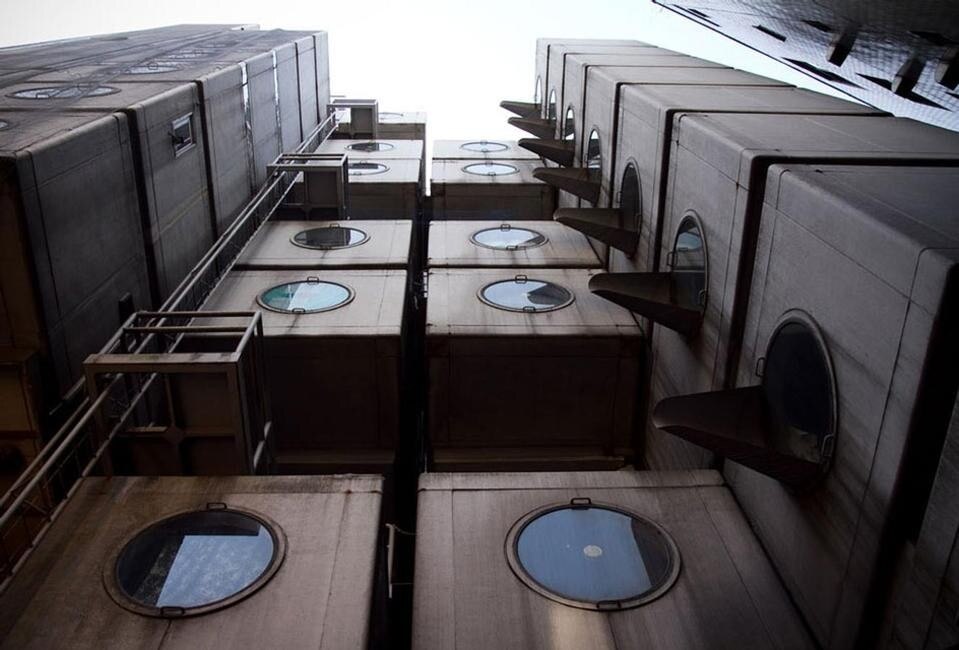
As one of Tokyo's most recent residents, Milan-born architect and photographer Midori Hasuike found herself recording her surroundings, with the remarkably crisp and lucid gaze that characterises her work. As a recorder of the built environment, whether in Japan or India, Hasuike displays a fundamentally architectural approach, recording sharp angles, oblique architectural vistas and poetic details of human interaction in the built environment. Her series of images on Tokyo displays a fresh approach to such a vast and complex metropolitan landscape.
[Read the full article]