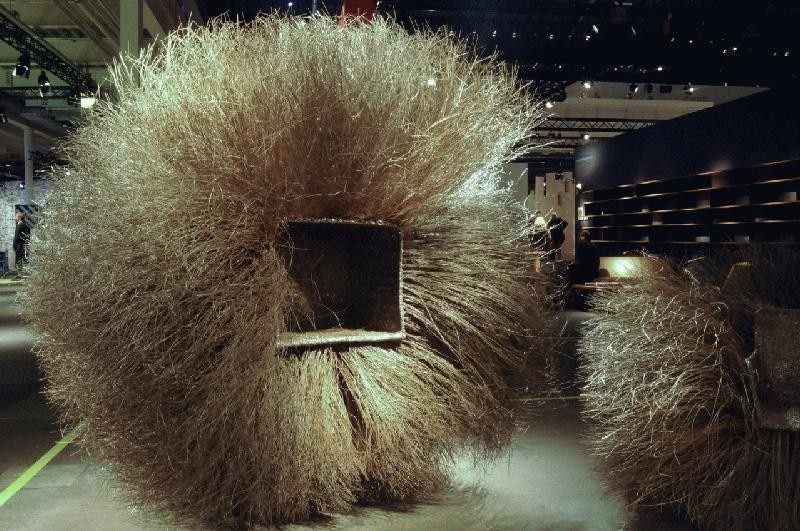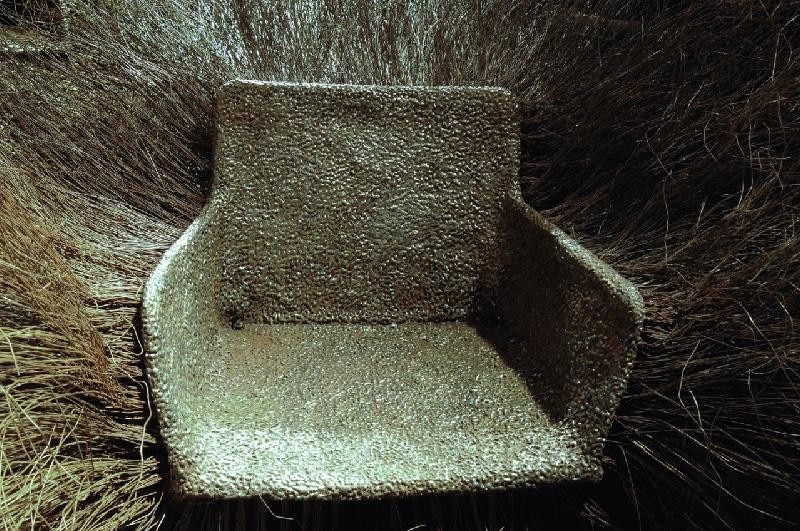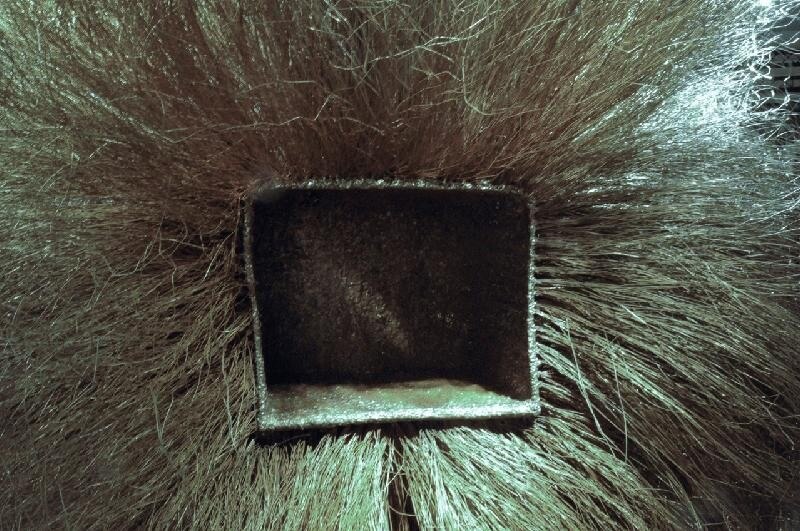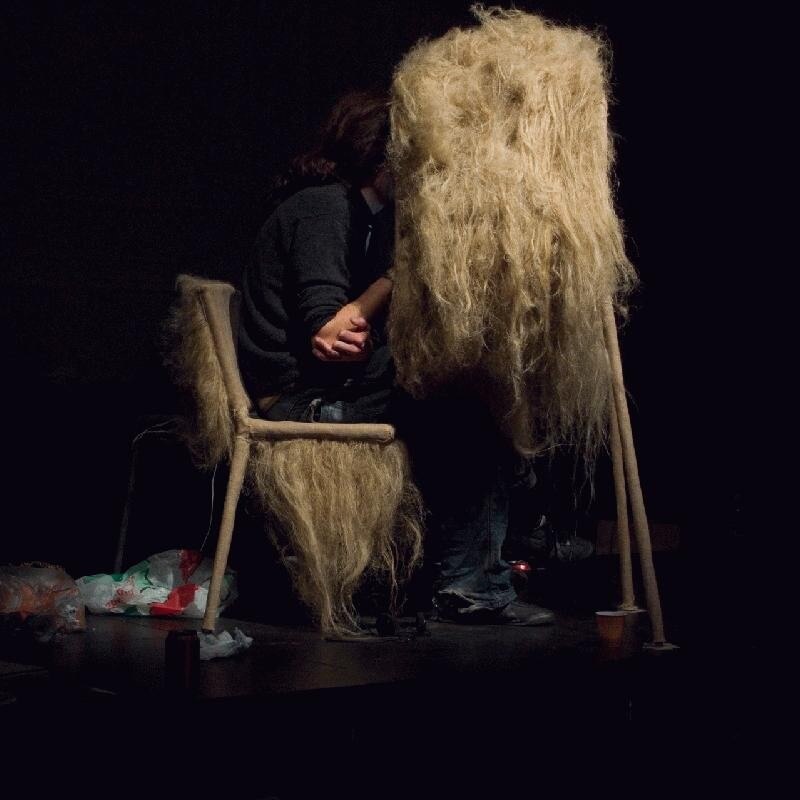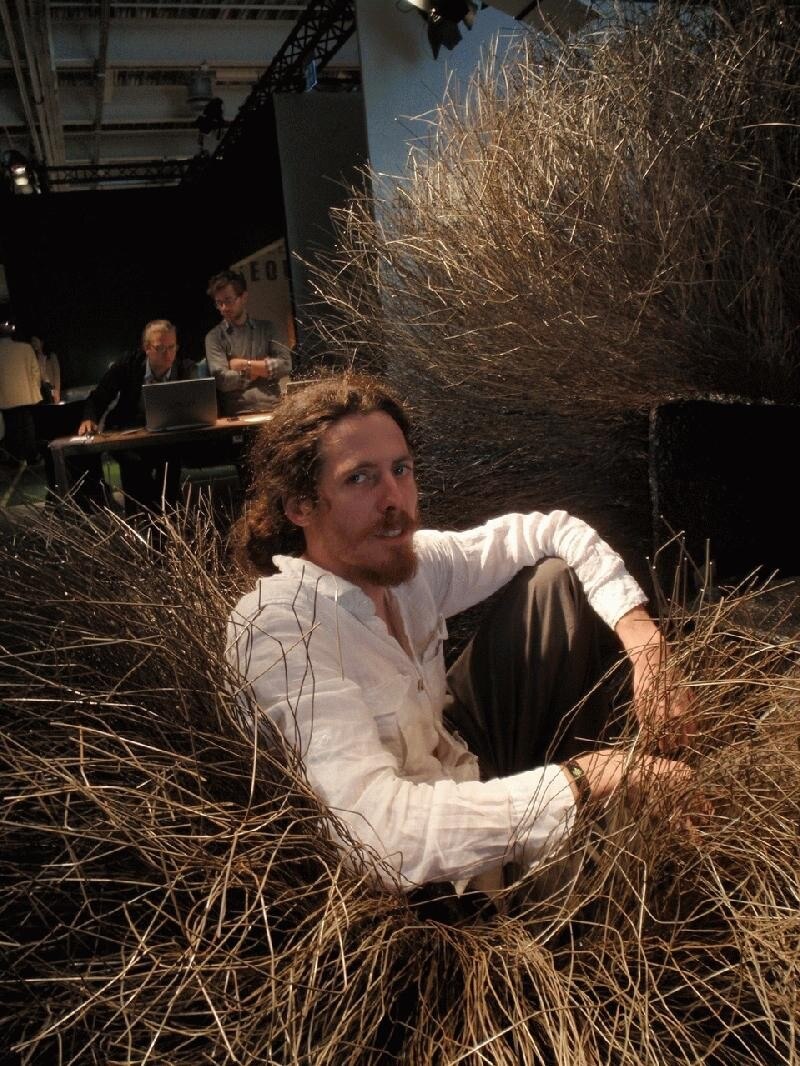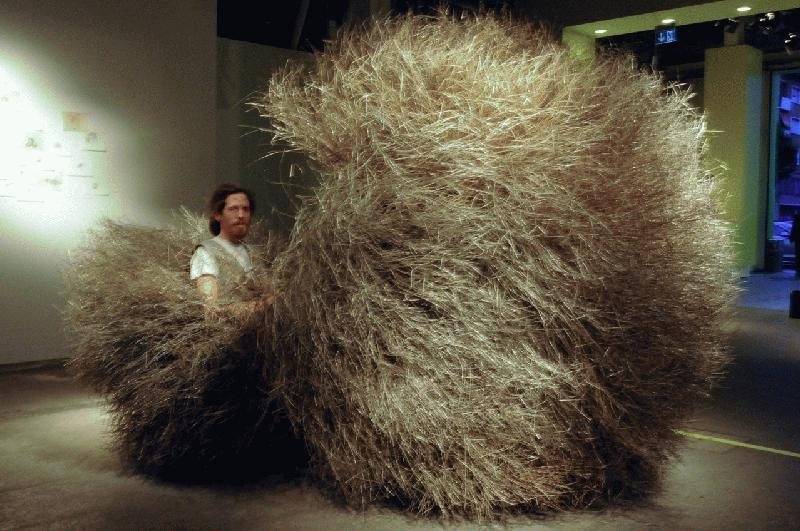
Nacho: What you see today in Basel is the result, like the finalized idea of what we presented in the Spazio Ferré during the Salone del mobile in Milano this year. While it is all the maquettes that you have seen there that we produced them in scale 1:1. This collection is called Diversity. I am a designer...artist whatever you want to call me that likes to experiment a lot with materials, to keep myself very involved in the process. To really digest everything. Sometimes when we finish our project, I'm intrigued by the question what would happen if I applied another material. What kind of emotion or look or message will it transmit? I like to transmit a lot of messages in my work, in a way. My own symbolism, my own symbols and people just try to read it or interpretate in a wrong way. Anyway we did this collection and this is like a kind of a the final aspect of “Diversity.”
PC: If I ask you to define your messages with a short sentence, what would you say?
Nacho: For me it's about why we do things and the way we do them. I want to explore this feeling. The emotions that objects are giving us. Basically objects are something else than just objects. They are communicative. They can communicate something other than just giving you a function. I.e. You own and wear a t-shirt. But you are not wearing it because you need to wear a t-shirt. You are wearing this special t-shirt because it gives you a feeling and emotions. These days maybe are just influenced by the objects of the emotions we are wearing.
PC: Of course nobody of us is dressing up just to protect ourselves from the weather. Anyway every designer, I mean every fashion designer has its own style, which is his way of communicating. Your "..." somehow evokes memories of architect Thomas Heatherwick’s British Pavilion in the Shanghai expo where Heatherwick’s architectural shape is exploding in millions of points.
Nacho: I think I have a very different approach. I might use this definition that came out in those days, until I was working in the chair and you saw me there sketching: My objects could be seen as a physical reinterpretation of our energy when we are involved in something. Or at least this is what happens to me. If I am in working according to a schedule or if I am in my office or I am focusing on something, I see that I can create my own borders. I mean there are invisible borders but in this case they are physical borders. Something like I’m telling you "don’t cross this border when I am enclosed in my object” I want to keep this distance. So I see "..." as a woking unit and a representation of such an energy that we all have when we are within borders.
PC: Andrea Branzi designed quite a large desk and you are sitting in the center, basically keeping the same distance from the people staying around it. In your case you designed a curl dived in a chair and in a box. Are you working so isolate and lonely?
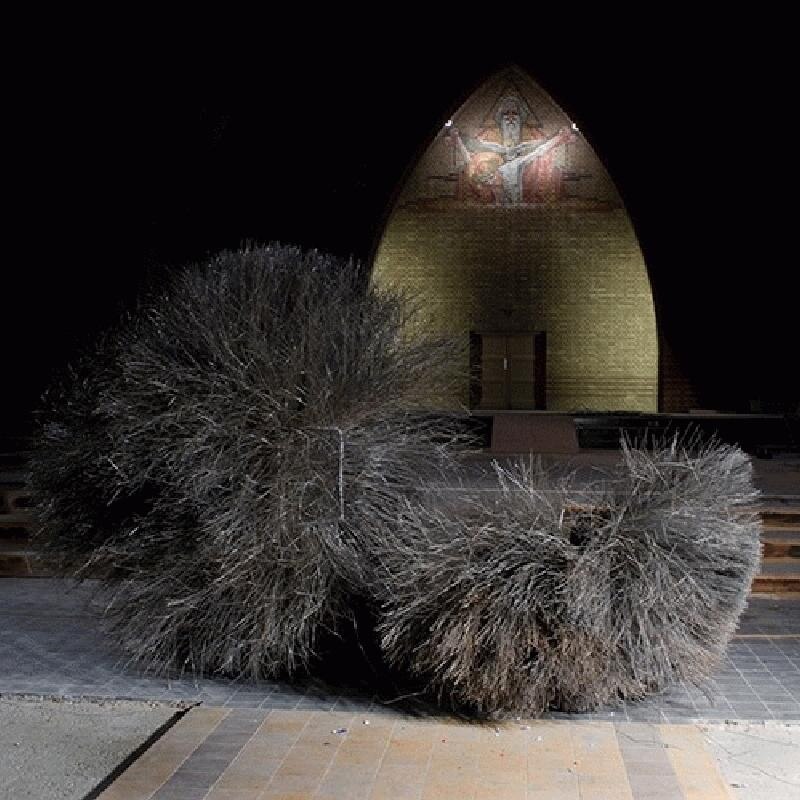
Nacho: Yes. The entire idea, I mean the first initial shape of the maquette comes from an exercise that I did in my studio for myself: to have my own desk in the middle of it. We have been working for four years inside an empty church: 25 meters high -a really wide and open space where we can do almost anything. And I already told you I need to be involved in the process. I used to create everything basically myself in my studio. Now I am working with 8 - 10 people that help me make everything happen. But I love to sketch while I do not I allow someone else to think my pieces. I think that is very essential. At the same time there is a necessity of being able to handle everything. Being placed in my territory and to sketch and to send some images at the same time made me design the desk. From that moment on I placed all the experiments that we are doing in the studio and the collection started growing.
PC: And you are also radically changing materials.
Nacho: After that moment I started to realize realizing that depending on which material a piece consists of, the mood and the personality change. Some of them are done in metal and you feel they have a caracter cold like the steel or soft like hair..shady..like the glass. I think that I see them all as very unique characters.
PC: When I visited your exhibition here in Basel I saw all the small models and they immediately reminded me of the image of the furniture miniatures of Vitra. Since you said you are basically producing everything your own, are there any ironic references in your exhibition towards the design considered as a big serial production, to the design approach you lead in Valencia?
Nacho: Again of course I really like to play with these symbols and there is a lot of irony in my projects. Basically we created those maquettes out of a necessity. We wanted to bring all the pieces here but it was not possible. Since I wanted to keep the entire collection together we reduced the scale and we produced them in the same way that maybe Vitra does. Just yesterday someone said that Vitra faced to a similar problem when they were organizing a big exhibition with all their items and eventually it was cancelled because it would have exceeded their budget. That was why they did all their small scale models. It's a funny story that it can also be applied to this case. This humorist irony we were saying referring to the small scale limited edition is also existing there.
PC: And now what’s up next? Where are you going?
Nacho: Right now we are starting to work with more and more museums and I am very happy about that. So for my personal approach to design we like to keep experimenting and to keep exploring. If I look at my career like a story, I see myself like I am with my first piece -a chair called Pampital: you sit down on it and then you give birth to some animals. Four years later looking back I see that I was giving birth to those animals and I was giving birth to my career as well. I see my own development. The studio is like in the prehistoric moment of it. For example with this pieces we just discovered the wheel. This is a new element that we will place into my objects. We have started some experiments with some lights. I see that some technology is coming and will probably jump into our path and I think that with all those elements adding in my objets I will really develop my next step.
PC: So basically you see your world more as a world of objects than a world made of spaces?
Nacho: It is a combination of both. When I see objects I see them in spaces and all the world around. This object was created out of the need for both intimacy and being at the center of the deconsecrated church that is my studio.