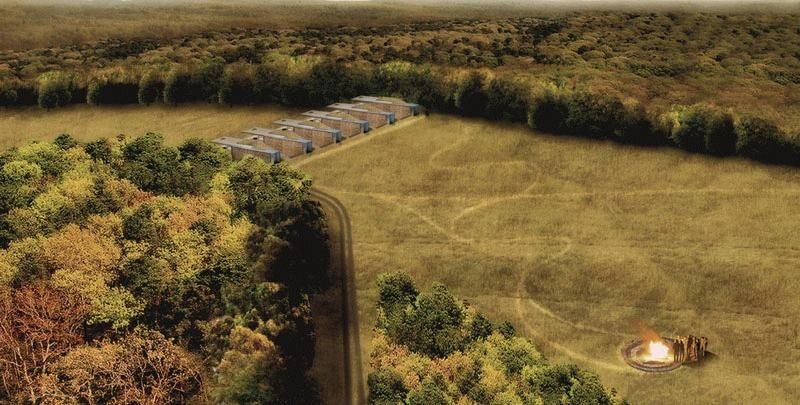
One well intended convention for fitting multiple cottages into settings like that at Fallingwater is to scatter them somewhat distant from one another, with the belief that this will ensure sufficient privacy and diminish disturbance of the land. Another common strategy is to cluster individuated cottages with intentional disorder and picturesqueness as a primary goal. We believe that these are not appropriate strategies for the cottages at Fallingwater. We respect Fallingwater’s request that this not be seen as an artist “retreat” and to bring people together as a community is the better thing.
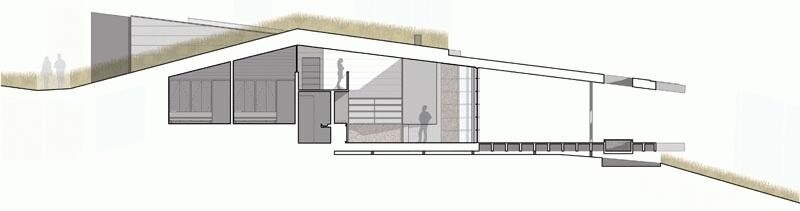
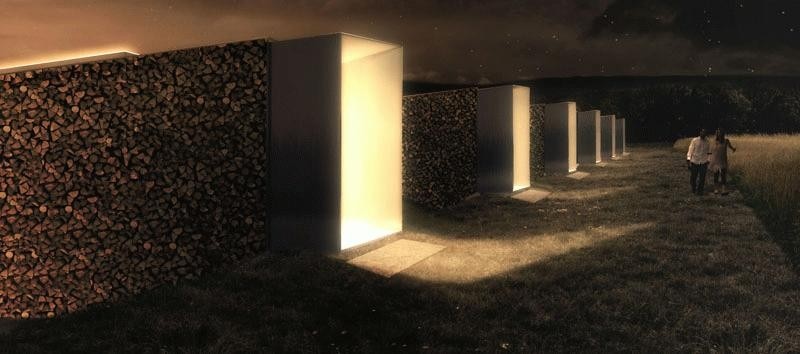
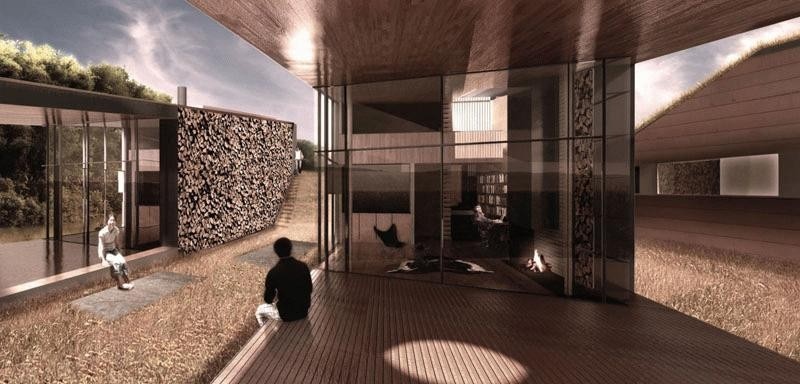
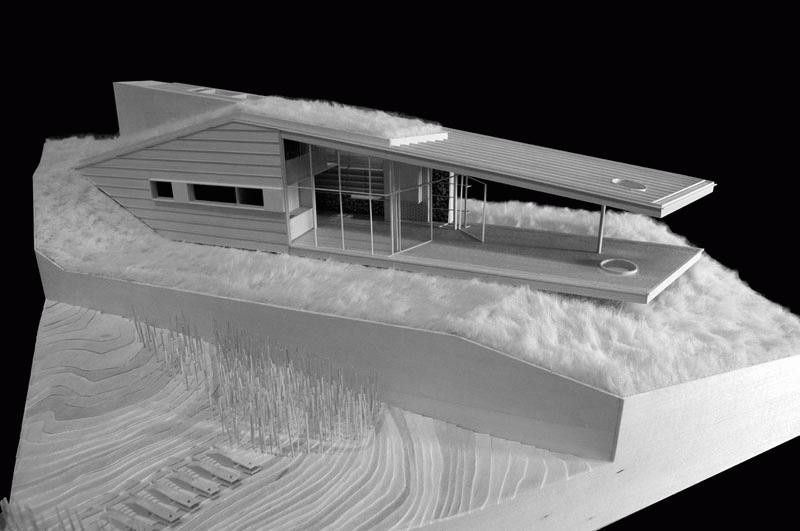
Respectful in the way suggested by Frank Lloyd Wright that architecture should be of the site, not upon it, the cottages at Fallingwater become integral with the landscape. At an edge between forest and meadow the cottages nest lightly and sit low in the landscape, neither invisible nor too intrusive, an architectural threshold at the spatial transitions within the site. The repetition six times of one cottage design provides for economy in construction and for coherence and subtlety in the composition of six cottages on the site. The carefully calibrated space between cabins and the gentle rise of green roofs complement the slope of the landscape as it drops gently toward the west. The six cottages will maintain their integrity should the meadows be reforested.
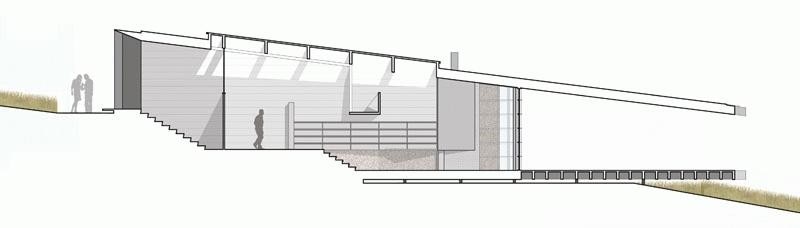
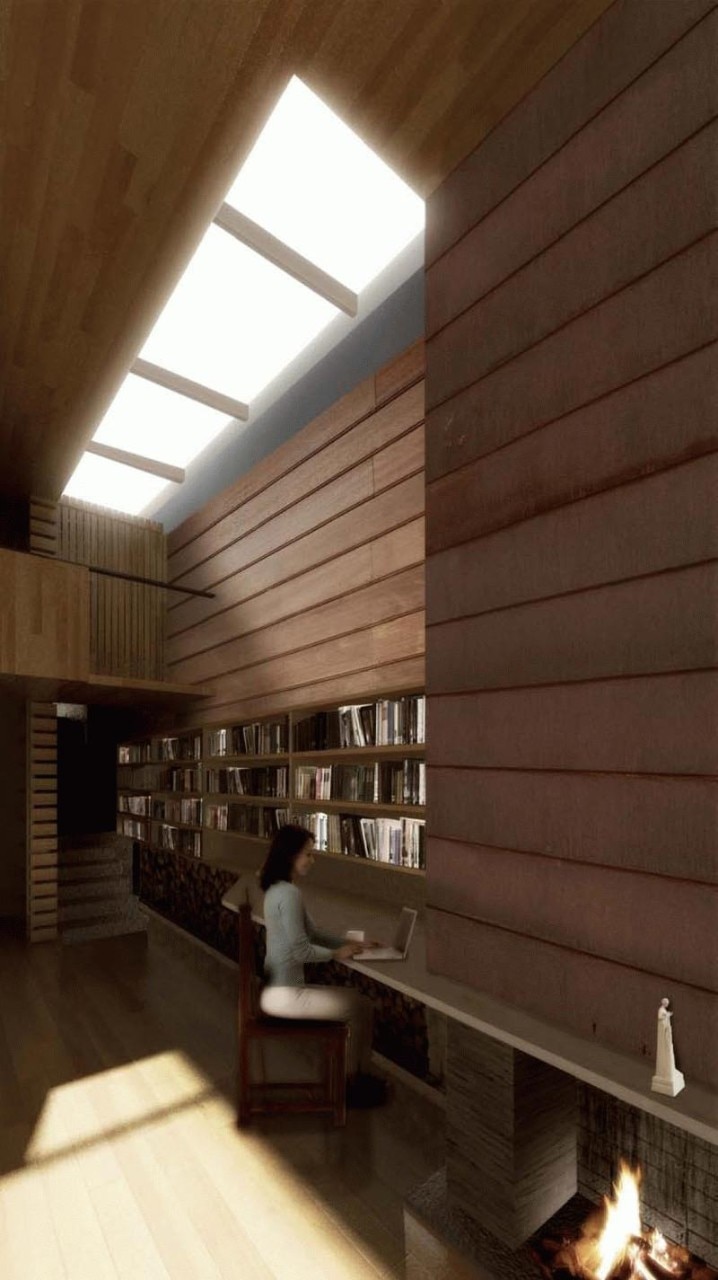
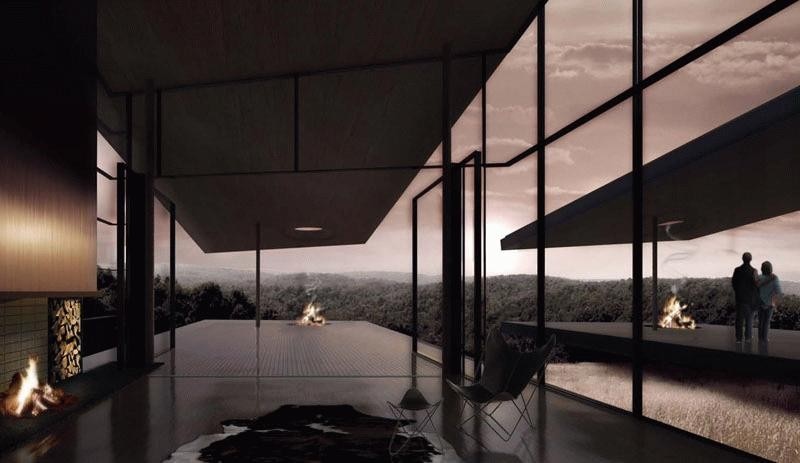
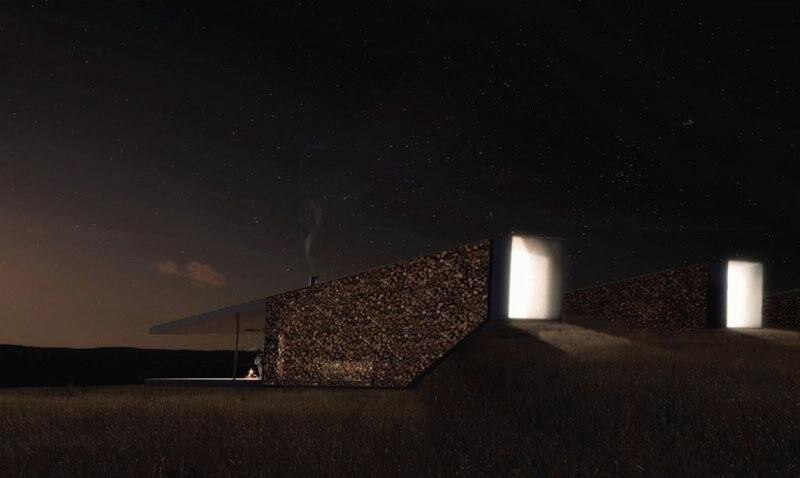
Well proportioned rooms and a simple plan, free of unnecessary complications, support the essential qualities and comforts of shelter in cottage interiors. Supported by a single column, the sheltering roof of a west facing porch frames the panoramic view of the west meadow. The horizon, the profile of the forest edge and the gentle upward slope of the topography of the west meadow provide an experience of space that is expansive and intimate at the same time. The changing qualities and color of light in the landscape, on the sunniest of days and the stormy, are part of that experience as well. A permeable wall built with cordwood that is harvested, milled and dried on site is characteristic of the sustainable elements that further connect the cottages to the site. Each cottage has an interior fireplace, while metal fire boxes are provided on each porch as an enhancement of one’s experience, and to connect the ideas of fire and Fallingwater.
Soft east light is captured by monitors at the threshold between the outside of the landscape and the inside and is brought into the space of the cottages. The row of six monitors is symbolic of the historic industry of western Pennsylvania and rows of coke ovens that today are known mostly from photographs.
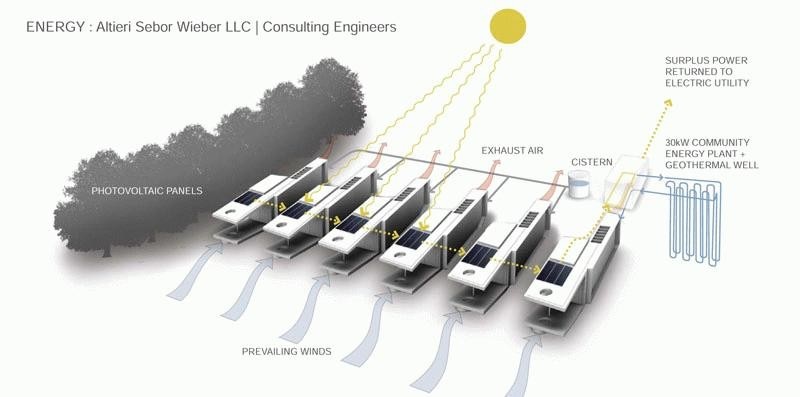
The Cottages at Fallingwater shall be engineered as site zero energy buildings and will share a community energy plant that features a shared geothermal well.
As each cottage is constructed, it will be connected to the community energy plant, receiving conditioning from the geothermal well, while sharing electrical power generated by photovoltaic panels on each cottage, integral to the standing-seam metal roof. Since the power supply will often exceed the demand, power will be both drawn from and supplied to the utility power grid. The peak electrical demand for the (6) units is expected to be between 10 and 12 kilowatts (100 amps). The peak generation capacity of the photovoltaic collectors is anticipated at 32 kilowatts.
The building will be ventilated by the prevailing wind pressure. When available, free cooling will be provided by the geothermal system. In extreme weather, the water-to-water heat pumps may provide mechanical cooling for indoor temperatures above 80 degrees. The building shall be heated by a radiant floor system. The central heating system shall be a closed loop geothermal well system and water-to-water heat pumps. In summer, domestic hot water shall be produced by a solar water heater. In winter, the water-to-water heat pumps manufacture domestic hot water. Rainwater and gray water are collected and stored in a cistern for use in plumbing and irrigation.
A central building automation system shall supervise the consumption of electricity, shutting off lights when the cottages are not occupied or when natural light levels are sufficient. A high performance building envelope will be provided. Low emissivity glass will allow natural light to enter from the south and through high performance skylights, while minimizing heat gain. Screens and overhangs shall screen direct sunlight from the west and south in summer while allowing solar gain to offset heat loss during winter.