


.jpg.foto.rmedium.png)
.jpg.foto.rmedium.png)
.jpg.foto.rmedium.png)
.jpg.foto.rmedium.png)
.jpg.foto.rmedium.png)
.jpg.foto.rmedium.png)
.jpg.foto.rmedium.png)
.jpg.foto.rmedium.png)
.jpg.foto.rmedium.png)
.jpg.foto.rmedium.png)
.jpg.foto.rmedium.png)
.jpg.foto.rmedium.png)
.jpg.foto.rmedium.png)
.jpg.foto.rmedium.png)
.jpg.foto.rmedium.png)
.jpg.foto.rmedium.png)
.jpg.foto.rmedium.png)
.jpg.foto.rmedium.png)
.jpg.foto.rmedium.png)
.jpg.foto.rmedium.png)
.jpg.foto.rmedium.png)
.jpg.foto.rmedium.png)
.jpg.foto.rmedium.png)
.jpg.foto.rmedium.png)
.jpg.foto.rmedium.png)
This 1970s apartment in the Shinagawa district offers a chance to rediscover the forgotten qualities of Japanese tradition and reinterpret them for modern urban living. The focal point of the project is the spacious living area, which is filled with light and enriched by architectural features such as a curved niche in raw earth that can be used as a seat or a surface for displaying objects and flowers.
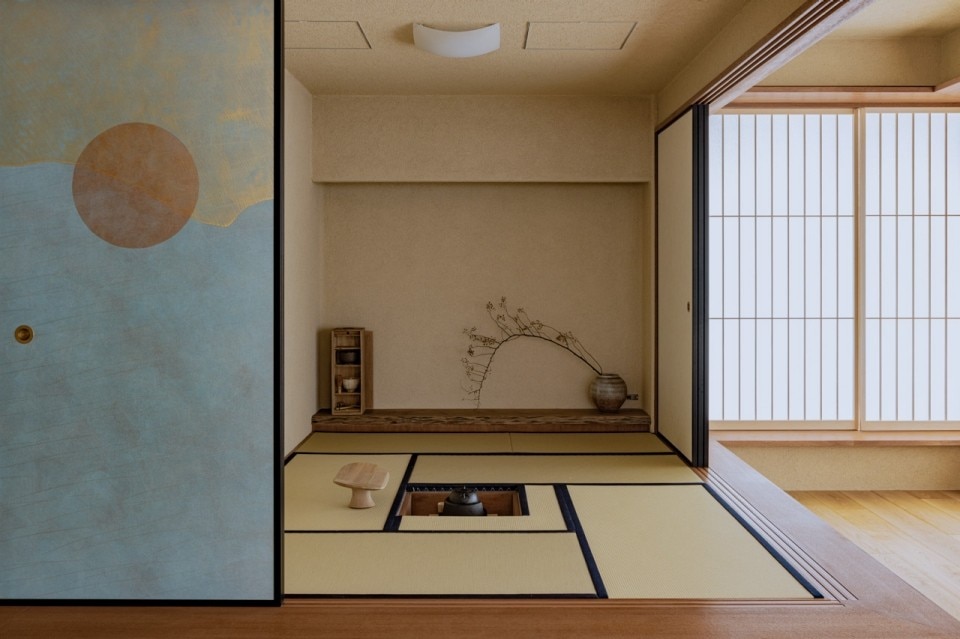
A sequence of themed rooms then unfolds from here, connected by fluid passages. These include a tea room, a cosy study and a room dedicated to wine. Traditional elements are evident in subtle details, such as the pebbled entrance that mimics the feel of stone beneath the feet, and the fifteen-metre shoji made of rice paper, crafted by artisans to diffuse natural light and create a sense of continuity. This transforms the interiors into a landscape that evolves throughout the day.
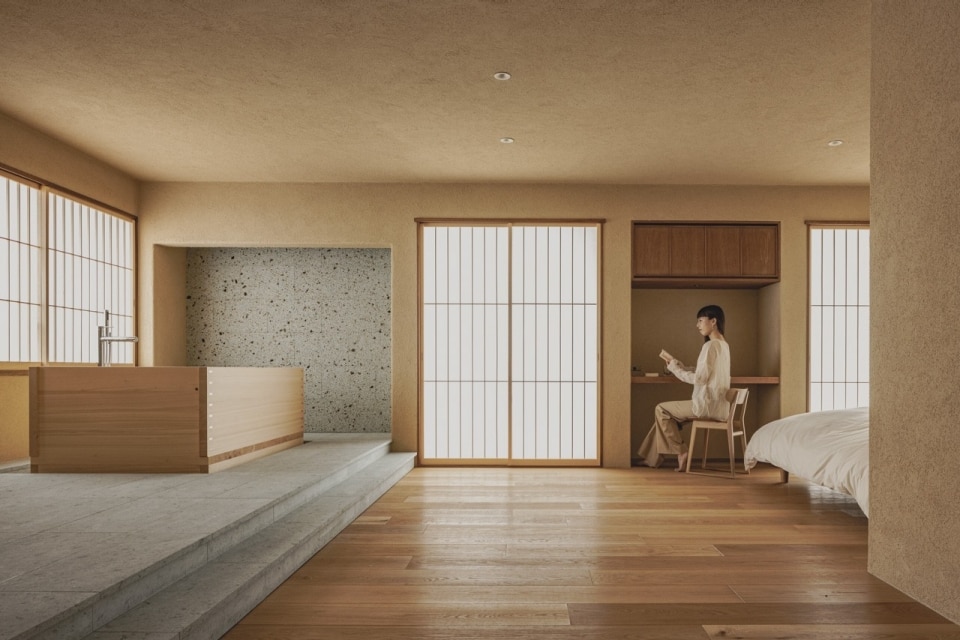
The tea room can be isolated thanks to illustrated movable panels that react to light and modulate the atmosphere. In the bathroom, a bathtub made of hinoki wood — a noble material in Japanese tradition — transforms everyday body care into a regenerative ritual.
Kooo Architects does not view tradition as a constraint, but rather as an open resource. Apartment Kairou is a prime example of how tradition can transcend nostalgia to become the very fabric of a project.