


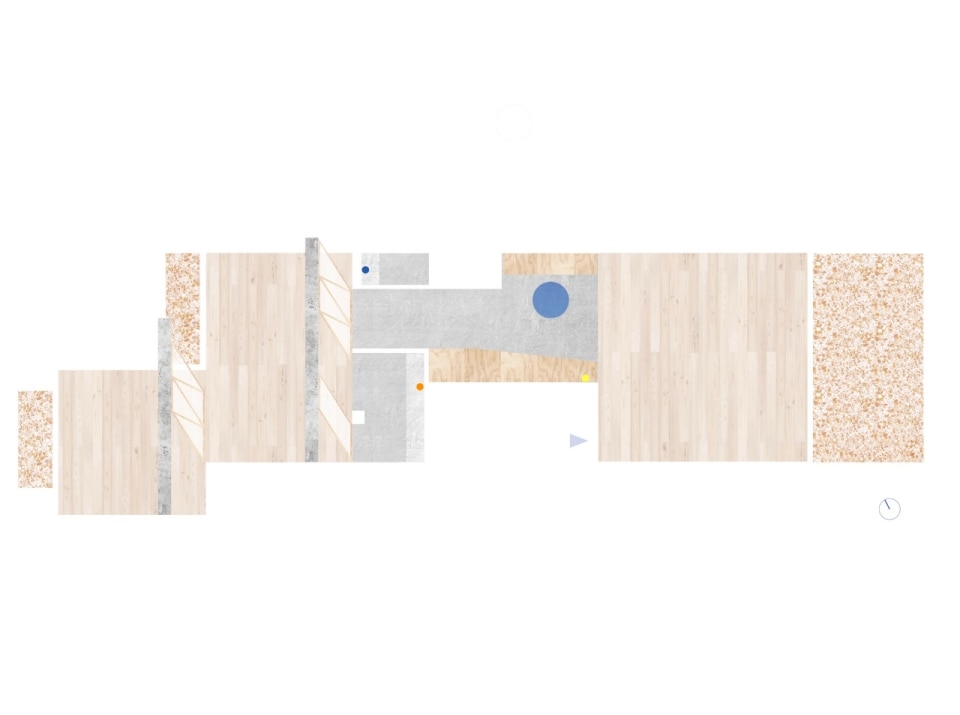
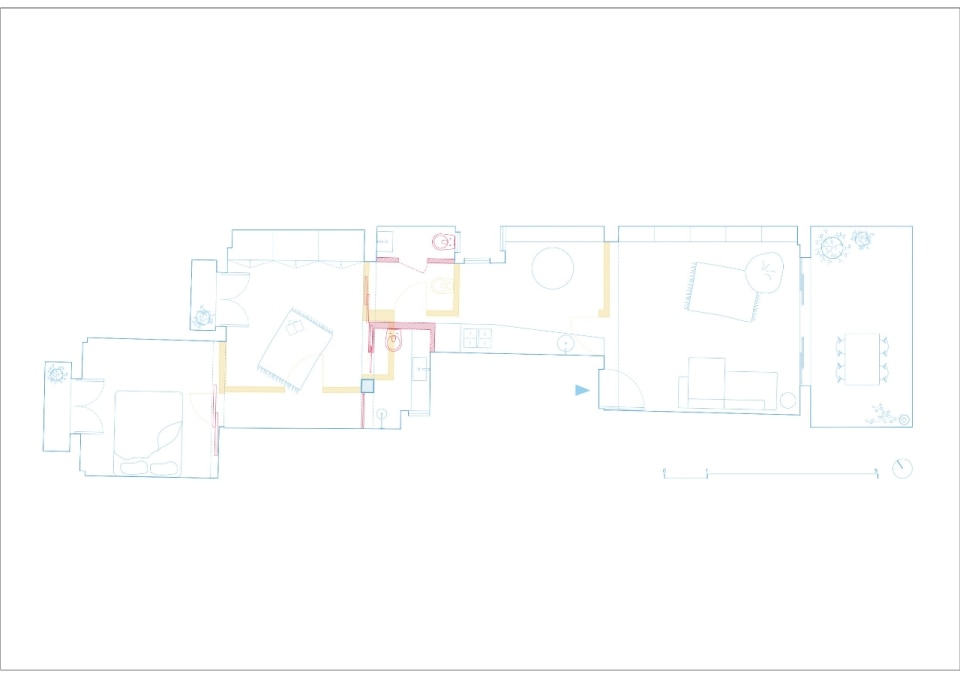
A small apartment in Exarcheia, one of Athens’ most vibrant neighborhoods, with a deep cultural and political history, has been completely reconfigured by Federica Scalise. Among the client’s main requests – a couple in their forties – was the desire for a multi-purpose space, clearly distinct from a bedroom dedicated exclusively to rest, all within a minimal and luminous domestic landscape.
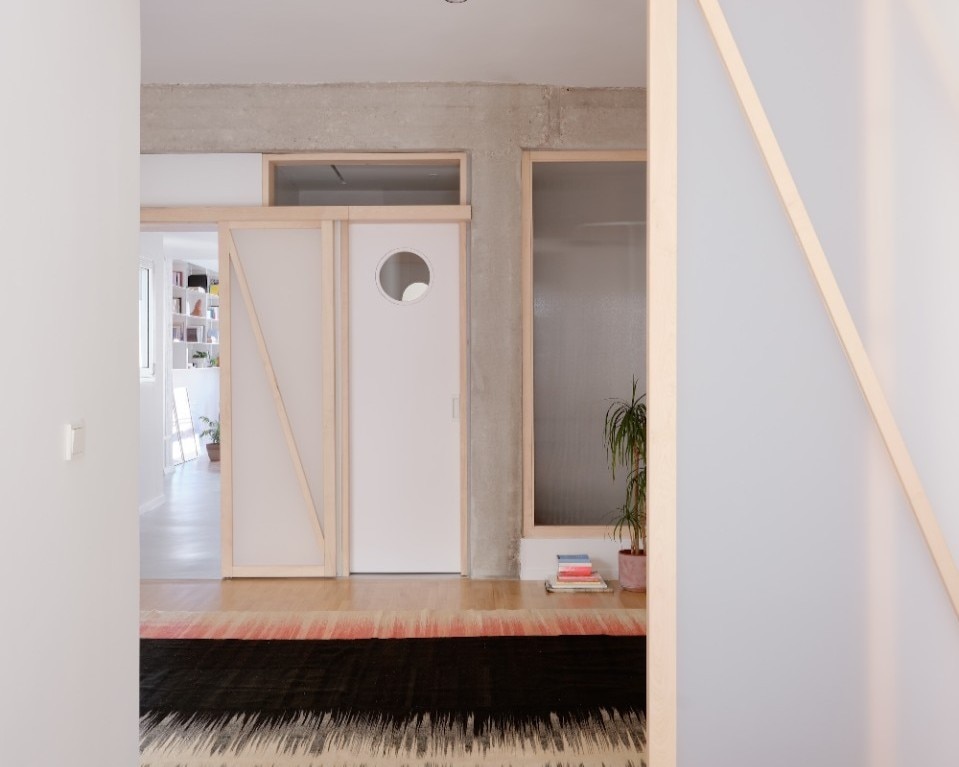
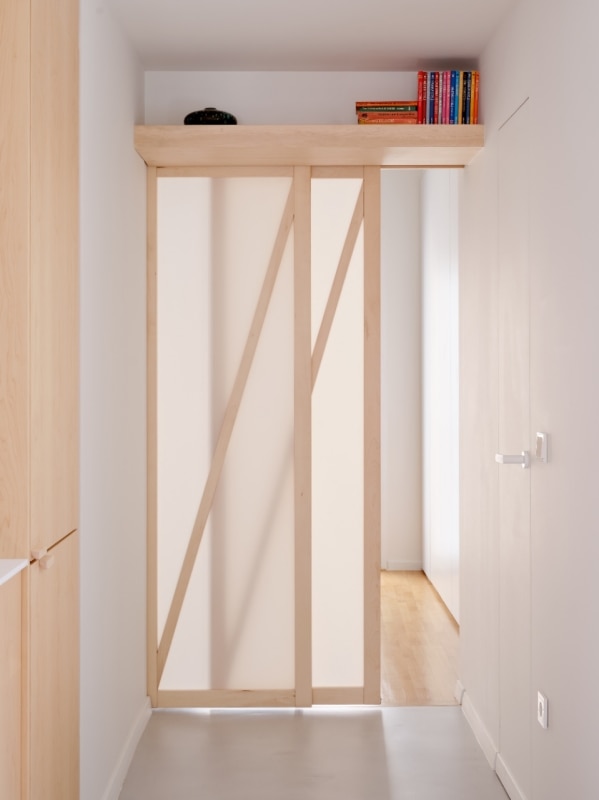
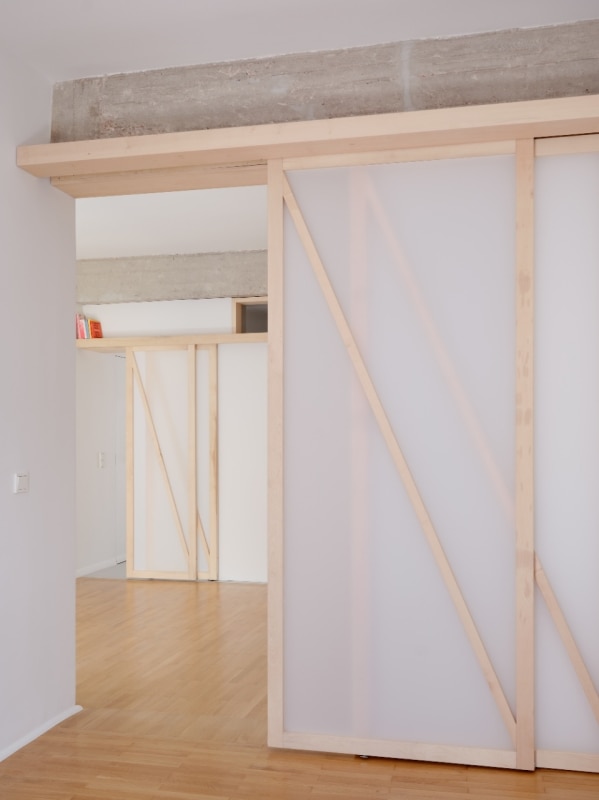
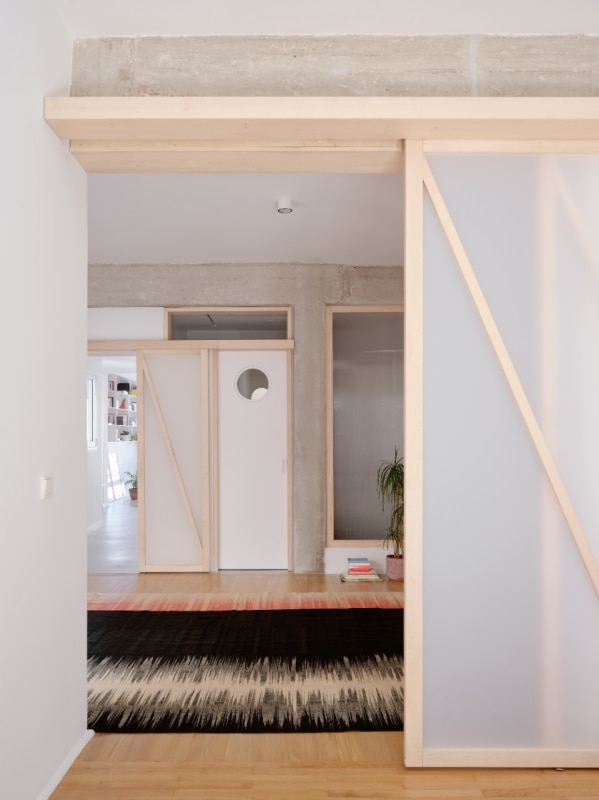
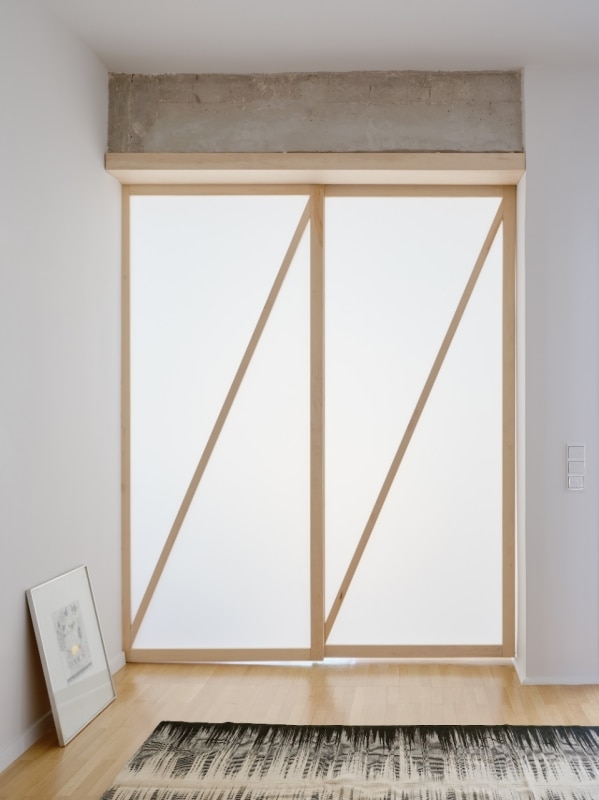
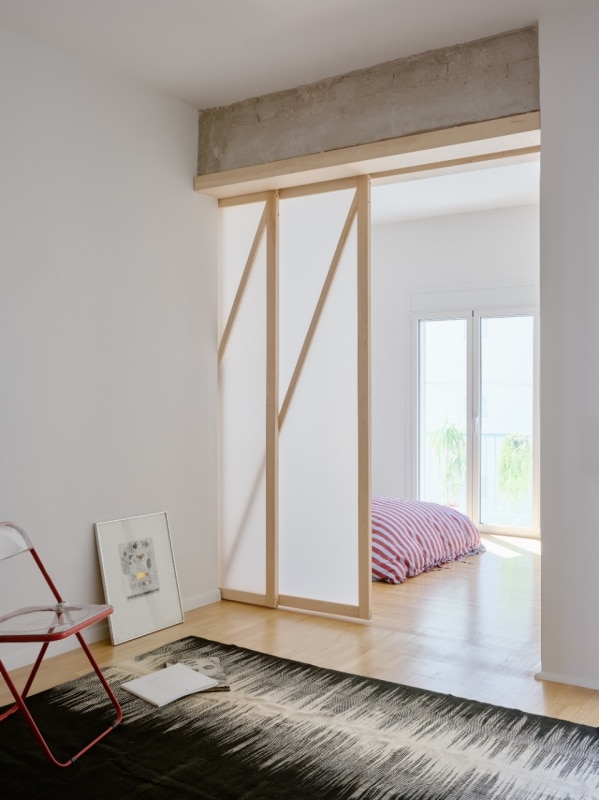
Postwar Athens architecture has a distinctive feature that makes it almost unique: structurally, buildings are nearly identical throughout the city, yet each neighborhood transforms them through its own interior uses and street-level life, starting from human factors rather than architectural. In this 1960s building in Exarcheia, the architect drew inspiration from traditional Japanese shoji partitions, thus meeting the clients’ needs and highlighting the modernist essence of the structure at the same time. The result is not a project where some “style” turns into exoticism, but the invention of an entirely new spatial identity, with a language of its own, a dialogue between Greek and Japanese ways of living.
Here, in a 1960s Exarcheia building, what is born is not a project where some ‘style’ turns into exoticism, but the invention of an entirely new spatial identity, with a laguage of its own.
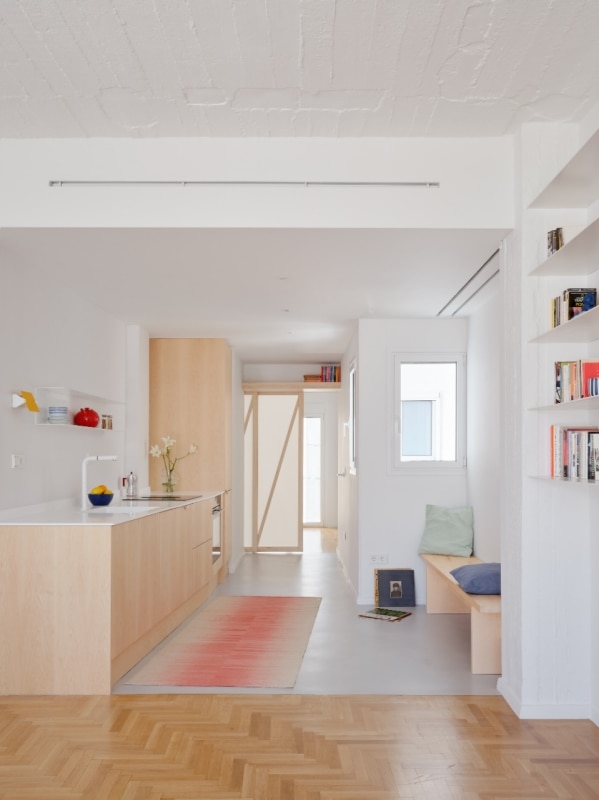
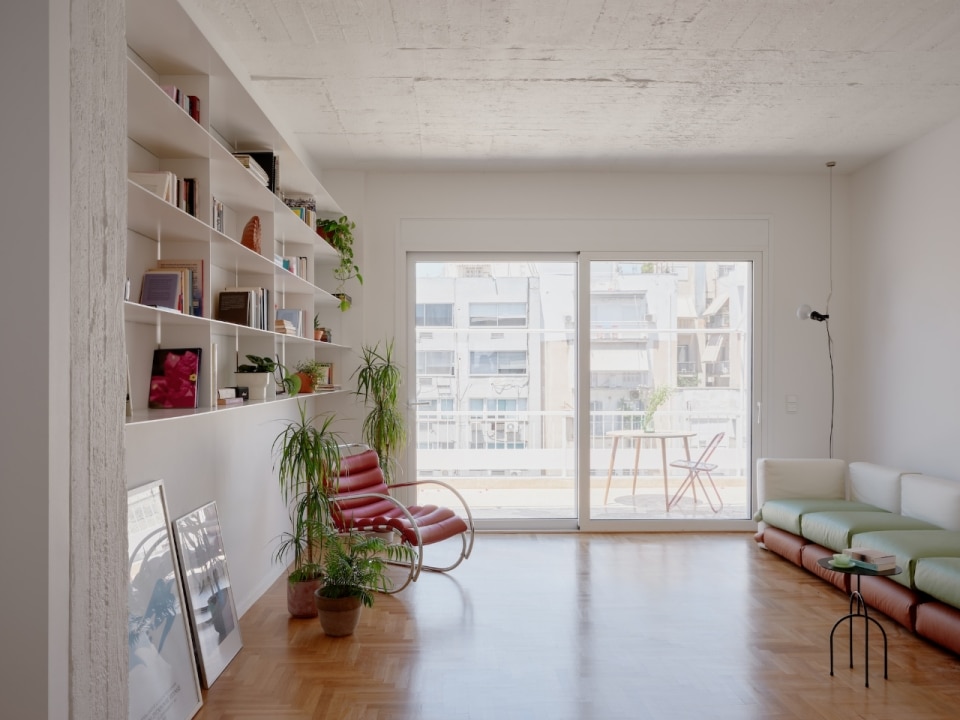
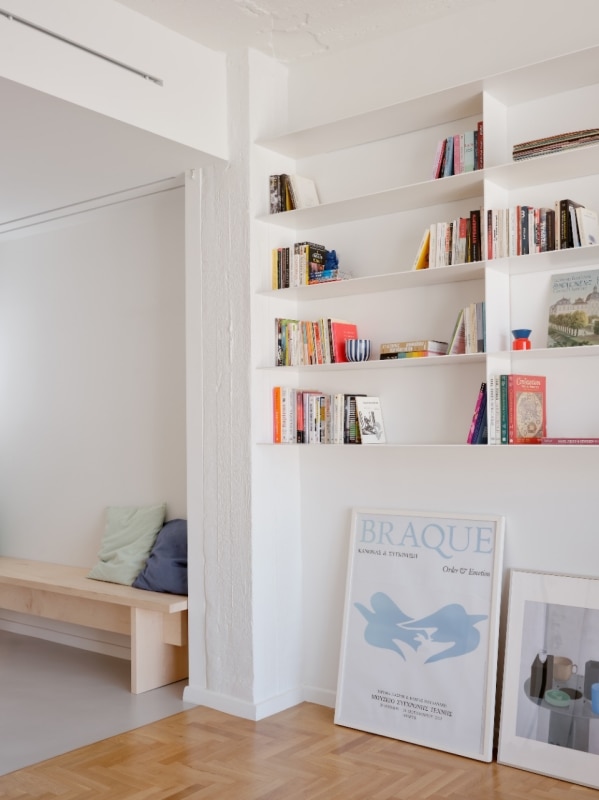
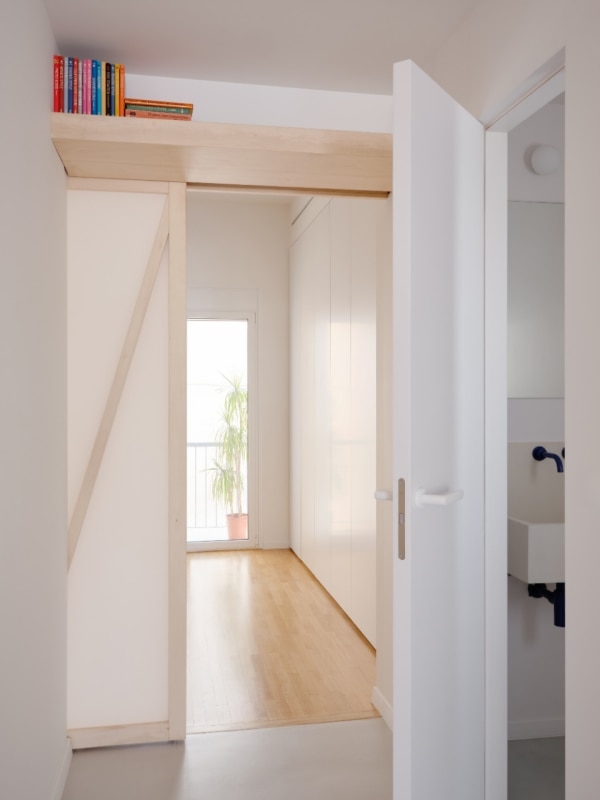
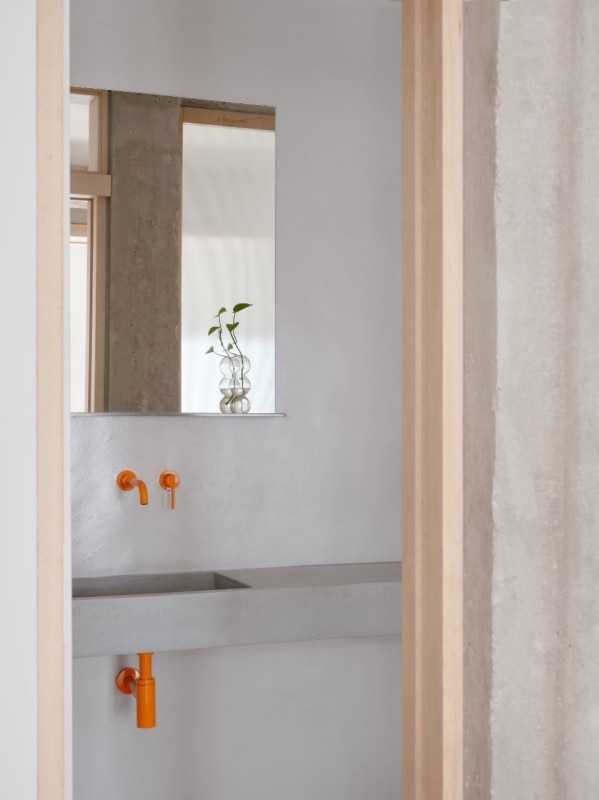
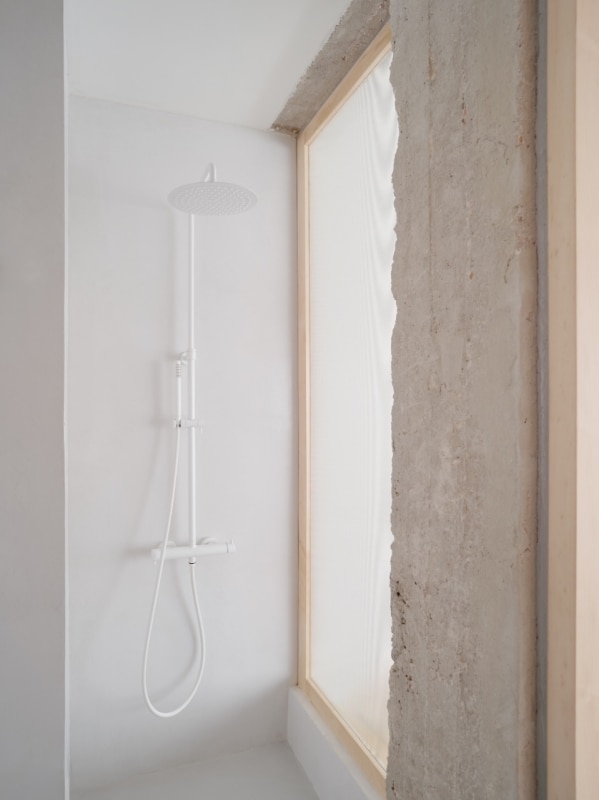
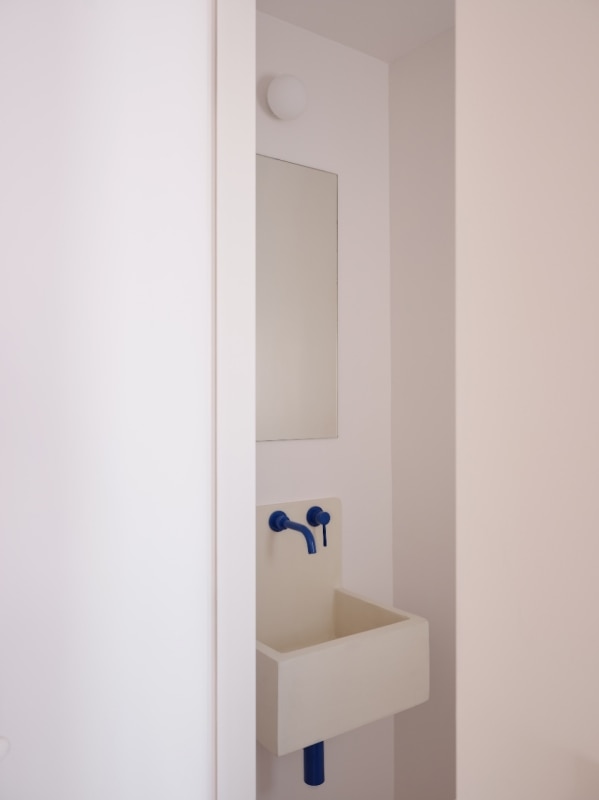
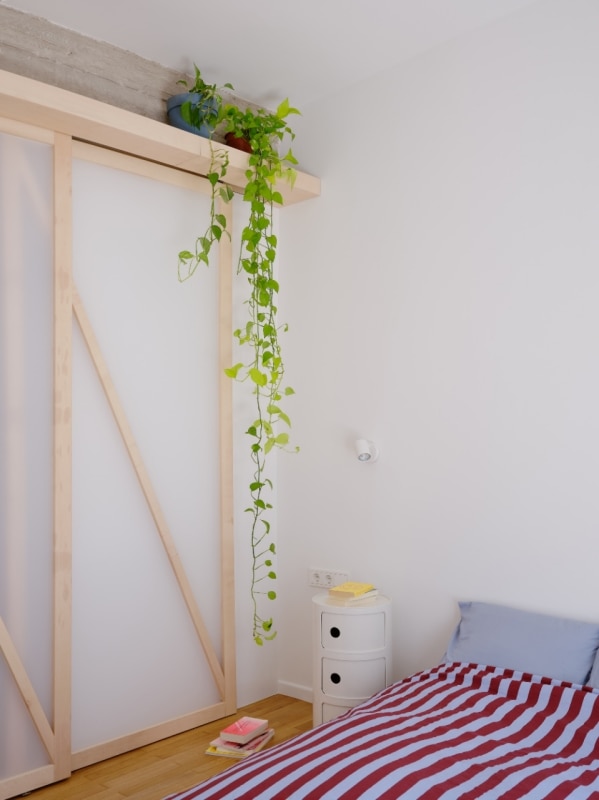
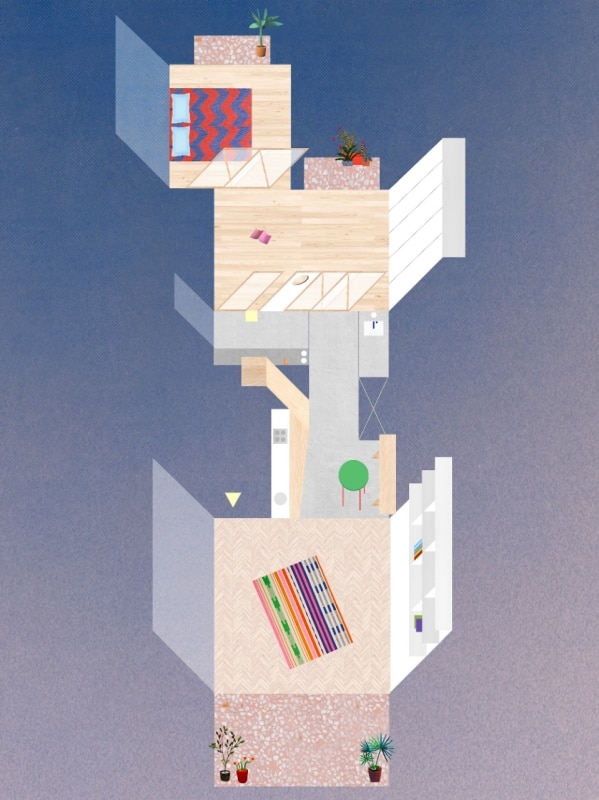
The interior unfolds along an axis that connects, both conceptually and physically, sunrise and sunset, the private zones of the home with the spaces for shared living. This axis is built on flows: of light, of movement, of everyday gestures. The fixed partitions were removed to reveal the raw concrete framework, while the new translucent, movable partitions, central to the project’s shoji-inspired concept, integrate shelving, frame interior perspectives, and act as conduits for light, even in enclosed spaces such as bathrooms.
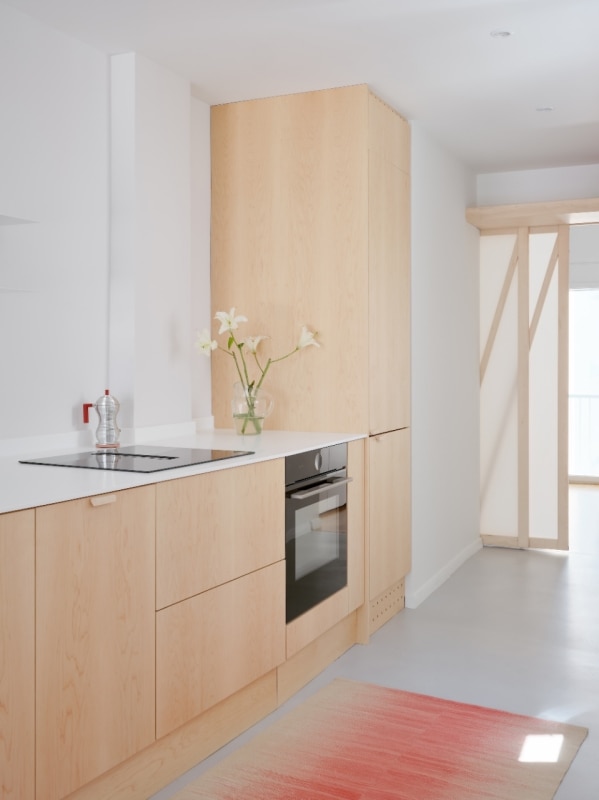
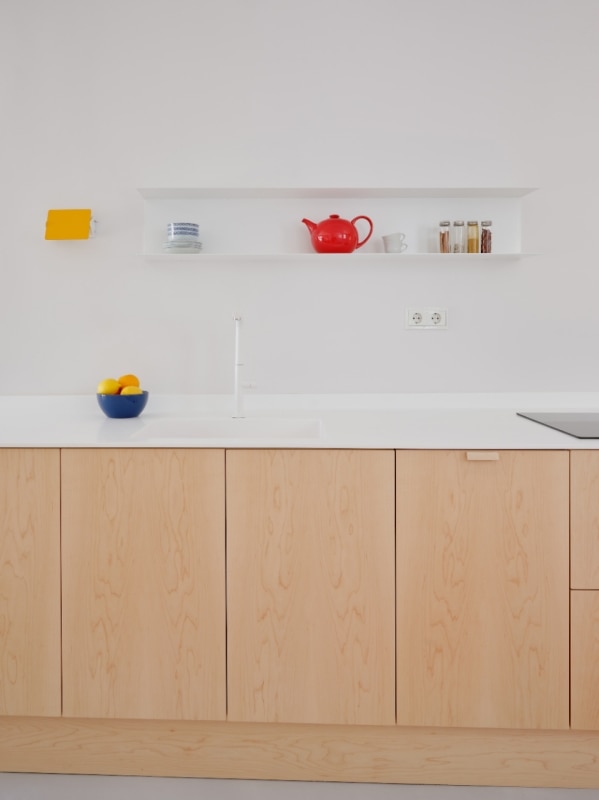
The open living room, facing the terrace, flows seamlessly into the kitchen – turned into a hybrid between convivial and transitional space by the addition of a low bench with a table along the wall – then crosses the service areas and leads into the private zone, with the now well-known multipurpose room and en-suite bathroom, culminating in the intimacy of the bedroom.
In recent years, the opportunity to work on the abstract matrix of Athens’ modernist heritage has given rise to a range of approaches—from preservation of its spirit to the celebration of non-structure, from the creation of hybrid, flexible interiors to the use of color as a means of interpreting the existing. Here, Scalise chooses to engage with minimalism not as a stylistic gesture, but as an experiential approach, recalling, as John Pawson once told Domus, that “minimalism is not all about painting it white.”