

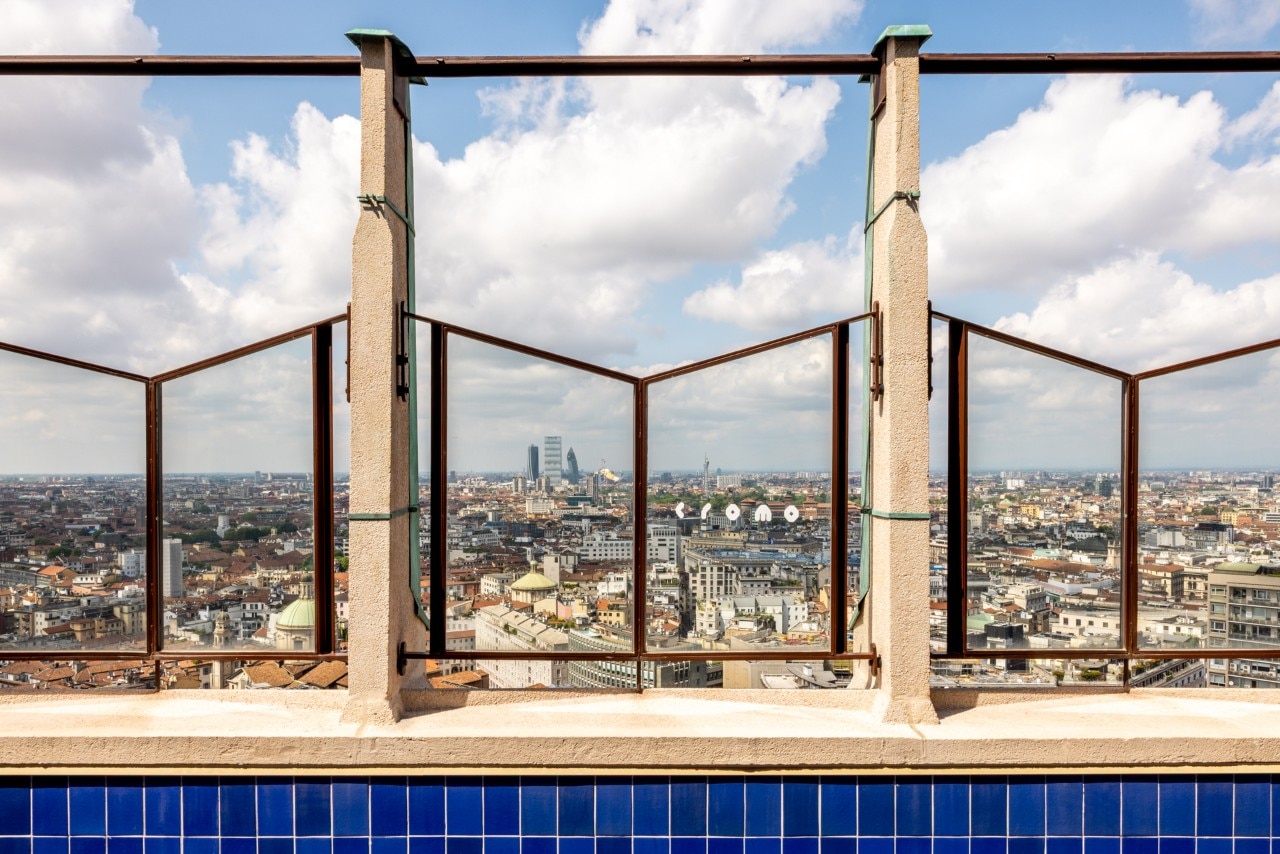

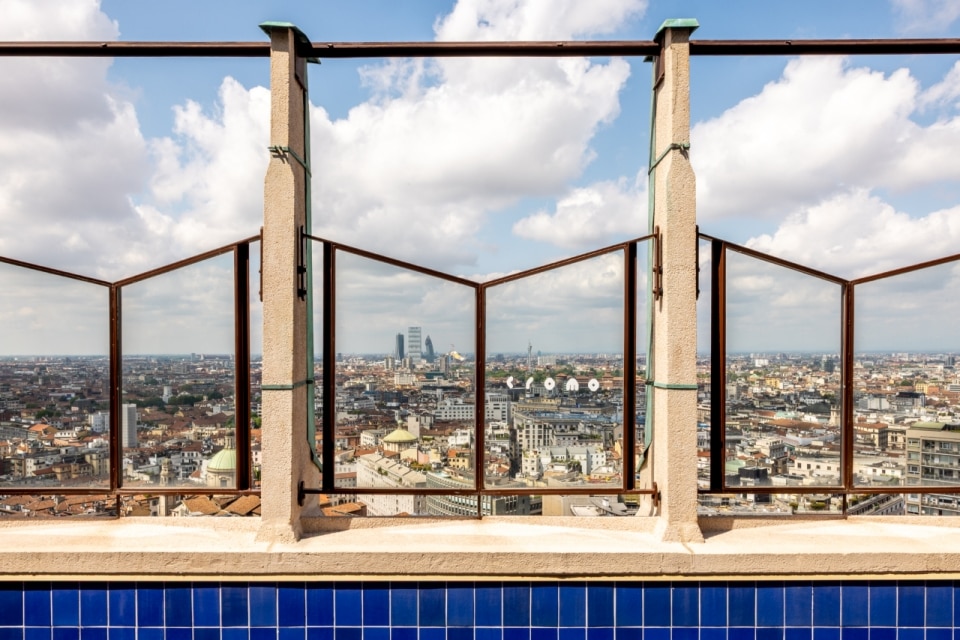
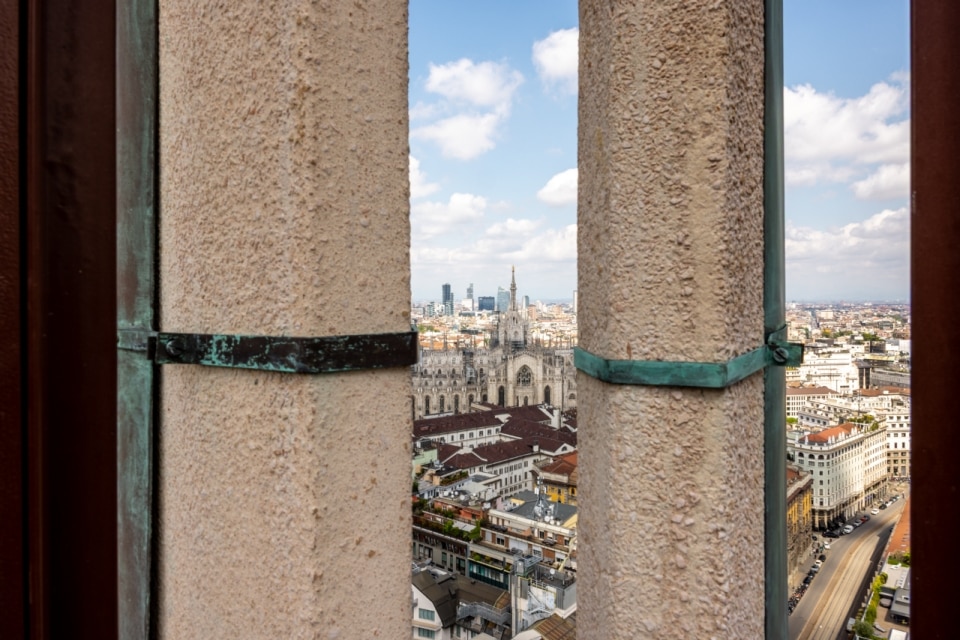

A mixed-use building just a few hundred meters from the Duomo—never anonymous, always unusual. The Torre Velasca was designed in 1958 by BBPR—the studio founded in 1931 by Gian Luigi Banfi, Lodovico Barbiano di Belgiojoso, Enrico Peressutti, and Ernesto Nathan Rogers—at the heart of Milan’s postwar reconstruction, conceived as a “gift to the city.”
Tomorrow, however, could be the last day the city is allowed access to its summit.
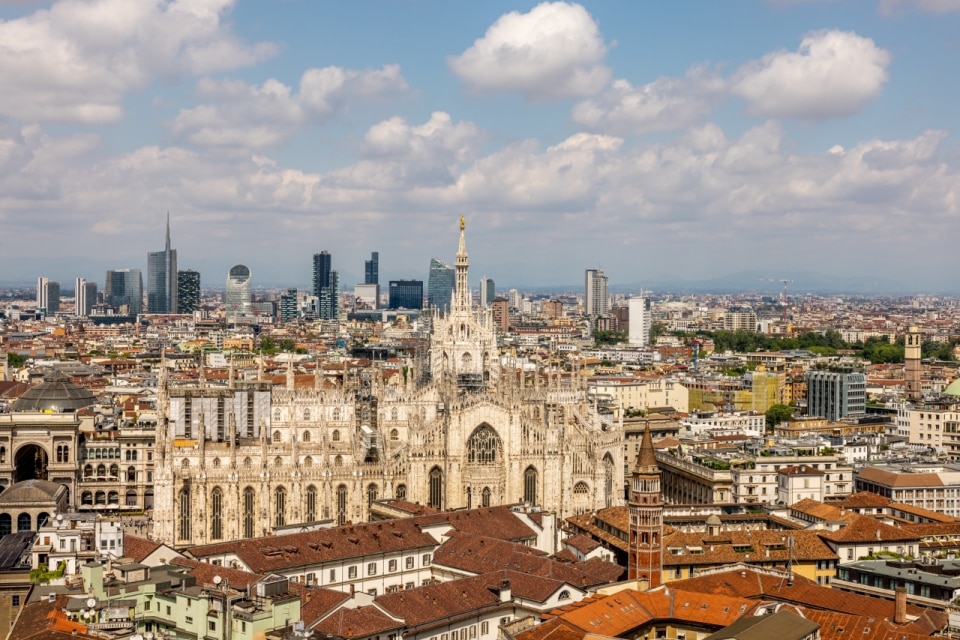
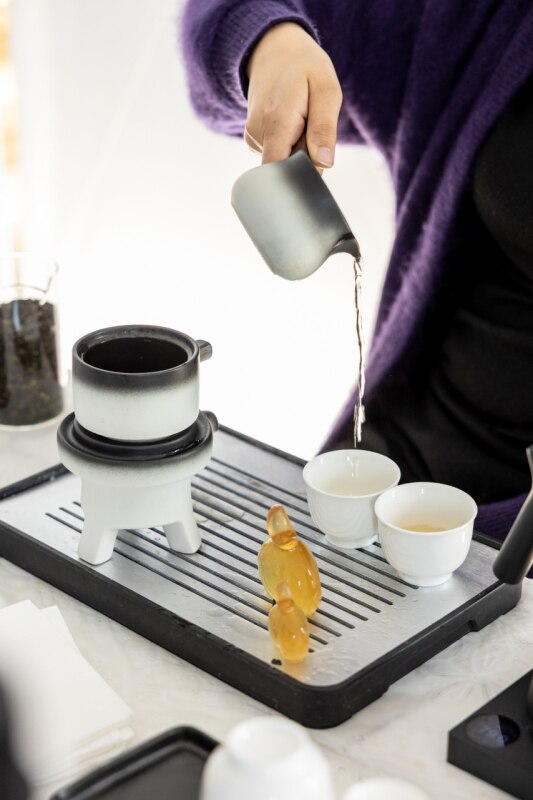
That possibility comes thanks to Fuorisalone and Cromo’s temporary tea house. The tea brand—operating at the intersection of design, wellness, and contemporary culture—has exceptionally opened the tower’s 25th floor. Until tomorrow, from 9 am to 1 pm, visitors can register and queue (a line that already seems very long) to reach the terrace and experience one of Milan’s most iconic—and least accessible—views.
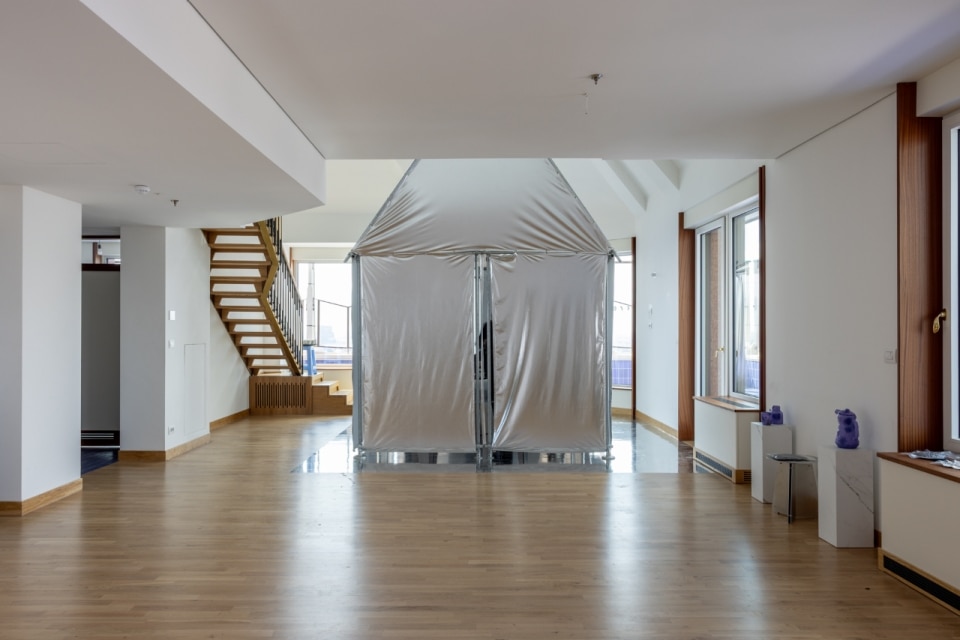
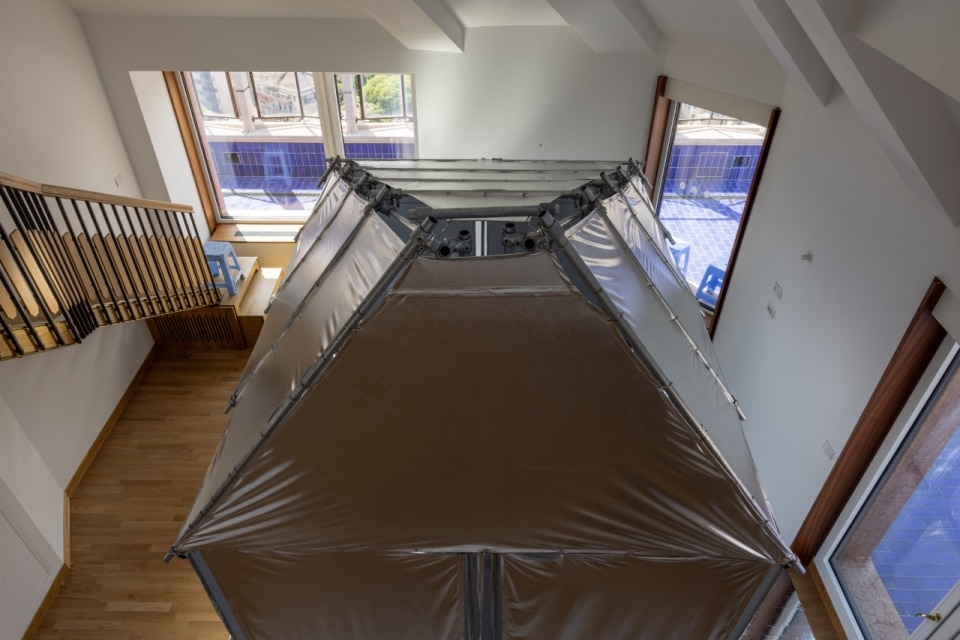
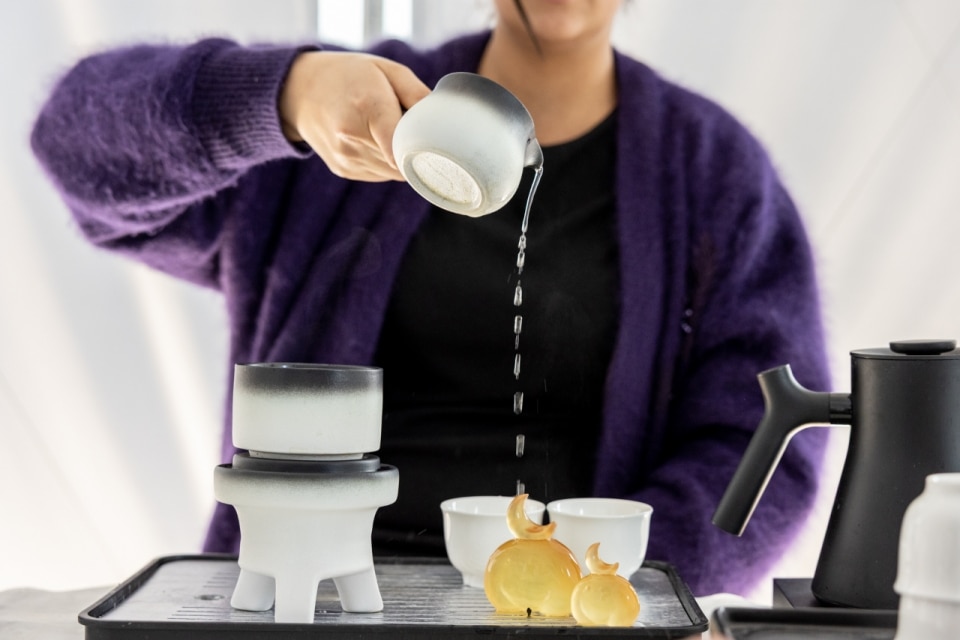
The intervention is as simple as it is disorienting. Inside a small tent inspired by Vietnamese ceremonial architecture, designed by Bogdan Martoiu using reflective, ultra-contemporary materials, visitors follow a guided tea tasting. Outside, seated on stools, they can sip a mini matcha by Oatly overlooking the city.
Curated by Phil America and Jenny D. Pham of Objects Are By, the project aims to transform the top of the tower into a shared space. The point, however, is that it probably never will be again.
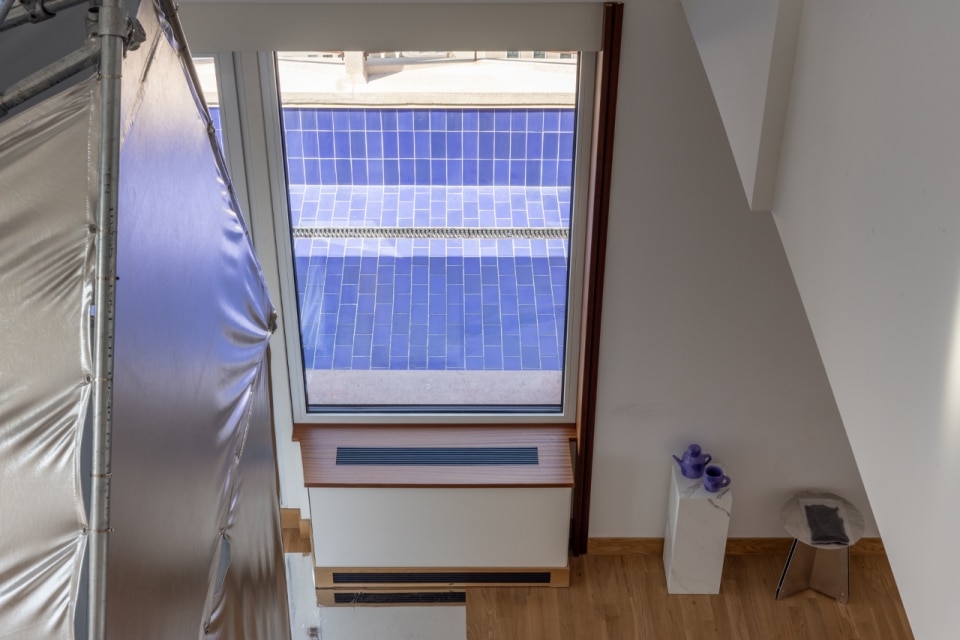
In fact, the organizers themselves describe this as the “last cultural moment” before these spaces are removed from public use. This is not just press-release language—it is a fairly accurate description of what is happening to the BBPR tower. By the end of the year, the upper levels will host Madison House, a private members’ club set to redefine how—and for whom—the tower is accessible.
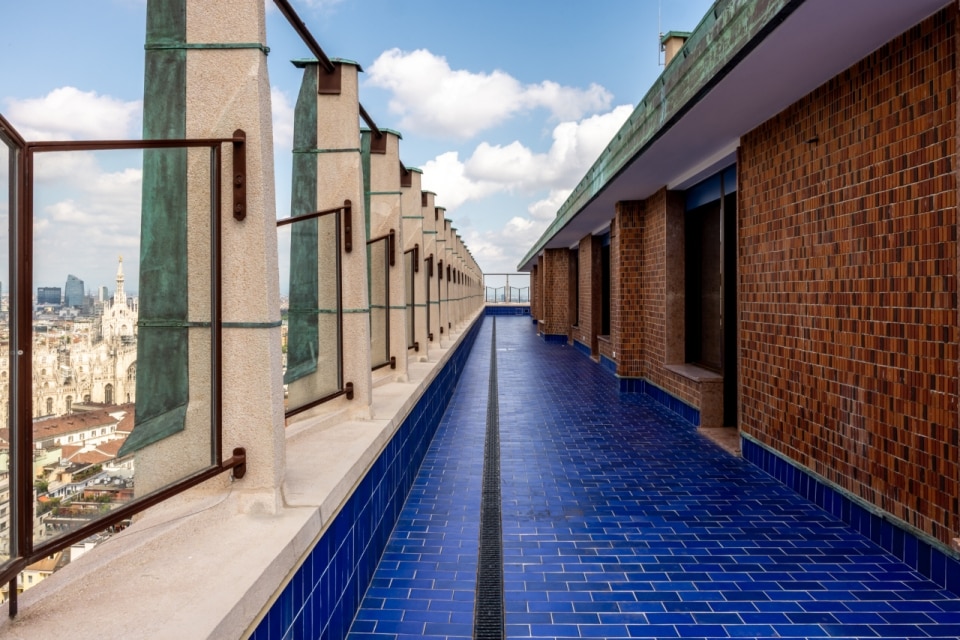
To be precise, the most iconic part of Torre Velasca—the projecting upper volume, often compared to the head of a mushroom—has always been the least accessible. From the beginning, the upper floors were designed as private residences, while offices and commercial activities occupied the lower levels. In other words, Torre Velasca has always been a hybrid building, but never truly public in its entirety.
And while information about its future remains fragmentary, one thing is certain: tomorrow, the distance between the tower and the city will disappear—if only for the time it takes to drink a cup of tea.